
2027 Can You Get Into a Construction Management Bachelor's Degree Program with a Low GPA? Admission Chances & Workarounds

Co-Founder and Chief Data Scientist
A low GPA does not automatically close the door to a construction management bachelor's degree, but it does change how you should choose programs and build your application. Admissions teams may start with GPA because it signals academic readiness, especially for math, estimating, scheduling, and technical coursework. Still, many programs also consider work history, recommendations, essays, grade trends, transfer coursework, and evidence that you understand the construction field.
This guide is for applicants who are worried their transcript will weaken their chances and want realistic options rather than vague reassurance. Nearly 22% of construction management students nationwide face academic challenges in their first year, affecting retention rates, so schools have a practical reason to look for signs of readiness beyond one number. Below, you will learn what GPA expectations usually look like, which admissions workarounds are worth considering, how conditional admission and community college transfer routes work, and how to present a stronger case for admission.
Key Things to Know About Construction Management Bachelor's Degree Program Admission Chances & Workarounds
- Applicants with low GPA can pursue community college transfer pathways, enhancing their profile by completing relevant coursework and demonstrating improved academic performance.
- Many programs use holistic review, considering work experience, letters of recommendation, and personal statements alongside GPA.
- Strengthening an application through internships, certifications, or extracurriculars related to construction management increases admission chances despite GPA challenges.
Can I Get Into a Construction Management Bachelor's Degree With a Low GPA?
Yes, applicants with a low GPA can still be admitted to a construction management bachelor's degree program, but the best strategy is to target schools that review more than grades. Approximately 65% of students nationwide gain admission to public universities, though admission rates vary by institution, major, campus capacity, and applicant pool. A low GPA is more difficult to overcome at highly selective programs, but it is often manageable at regional public universities, transfer-friendly colleges, online programs, and schools with conditional admission options.
Construction management is an applied field, so admissions committees may give weight to evidence that you can handle both classroom work and project-based learning. Relevant work experience, a strong recommendation from a supervisor, OSHA or trade-related training, improved grades in recent courses, and a focused personal statement can help explain why your GPA does not fully reflect your current ability.
The key is to avoid applying as if GPA is the only issue. A stronger application should answer three questions clearly:
- Can you succeed academically now? Show recent grade improvement, completed prerequisites, tutoring, or successful college-level coursework.
- Do you understand the construction field? Include field experience, internships, jobsite exposure, or construction-related projects.
- Why this program? Connect your goals to the program's curriculum, format, transfer policies, or career preparation.
If your long-term plan includes business leadership after completing an undergraduate degree, you can also compare future graduate options such as an online MBA, but admission to a bachelor's program should be your immediate focus.
What Is the Minimum GPA for Construction Management Bachelor's Degree Programs?
The minimum GPA for many construction management bachelor's degree programs is often around 2.5 on a 4.0 scale. The average admission GPA for construction management degrees typically falls between 2.5 and 3.5, but this range should be treated as a guide, not a guarantee. Programs use GPA to estimate whether a student is ready for courses involving construction methods, estimating, scheduling, safety, contracts, building systems, and quantitative problem-solving.
Requirements vary widely. More competitive schools may expect GPAs closer to 3.0 or higher, while less selective colleges might admit students with lower than a 2.5 GPA, particularly when the applicant has strong work experience, transferable credits, or a clear upward academic trend. Some schools publish a hard minimum; others list a preferred GPA and still review applicants below that level.
Applicants with lower GPAs should pay attention to the type of GPA being evaluated. A school may consider your cumulative GPA, high school GPA, transfer GPA, last 30 credits, prerequisite GPA, or grades in math and science courses. If your overall GPA is weak but your recent grades are stronger, look for programs that consider academic trends.
- If your GPA is near 2.5: Apply broadly and emphasize readiness, recent coursework, and construction-related experience.
- If your GPA is below 2.5: Prioritize community college transfer pathways, conditional admission, open-admission institutions, or programs with holistic review.
- If your grades are uneven: Explain the pattern briefly and professionally, then point to evidence of improvement.
Students who are comparing broader management or business routes may also look at an online business degree, but construction management remains the more direct path for those seeking roles tied to building projects, estimating, scheduling, and site operations.
What Factors Matter Besides GPA for Construction Management Bachelor's Degree Admission?
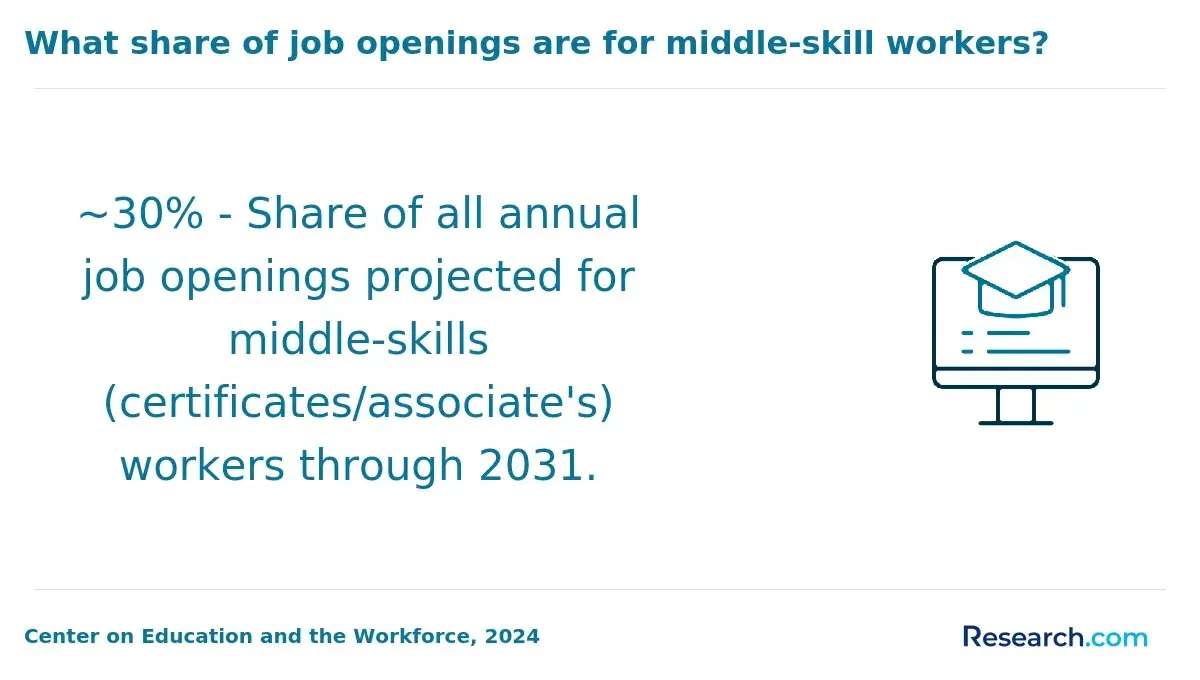
Many colleges use a holistic admissions process for construction management applicants, especially when GPA alone does not tell the full story. According to the National Association for College Admission Counseling, over 60% of colleges weigh multiple criteria to assess a candidate's overall potential. For low-GPA applicants, the goal is to provide credible evidence that you are prepared, motivated, and likely to persist.
- Standardized test scores: At schools that still consider SAT or ACT scores, strong results can help offset a weaker GPA. This is most useful when your test scores show stronger math, reading, or analytical ability than your transcript suggests.
- Personal statement: A good essay does more than say you are passionate. It explains what happened academically, what changed, why construction management fits your goals, and how you plan to succeed in college-level coursework.
- Construction-related experience: Field work, internships, summer jobs, volunteer building projects, trade exposure, or family business experience can show practical understanding. Admissions readers may value this because construction management programs connect classroom learning with real project constraints.
- Letters of recommendation: Strong letters from teachers, counselors, employers, foremen, project managers, or supervisors can confirm your reliability, work ethic, communication skills, and ability to learn from feedback.
- Academic trends: Recent improvement matters. An upward grade pattern, especially in math, science, business, drafting, or technical courses, can reassure admissions staff that your earlier GPA is not the best predictor of future performance.
- Certifications and training: Safety training, trade credentials, software exposure, or documented technical skills can make your application more concrete, particularly for applied programs.
A recent construction management graduate described entering the process with weak early grades but stronger recent performance and a local internship. His recommendation letters and essay helped admissions staff see the difference between his old transcript and his current readiness. The lesson is practical: do not ask a committee to overlook a low GPA without giving them better evidence to consider.
Which Colleges Accept Low GPA for Construction Management Bachelor's Degree Programs?
Colleges most likely to accept low-GPA applicants are usually those with flexible admissions policies, transfer pathways, high acceptance rates, or adult-learner-focused formats. Some regional universities have acceptance rates surpassing 70%, and these institutions may be more willing to consider applicants whose strengths include work experience, maturity, or recent academic improvement rather than a high cumulative GPA.
- Open-admission colleges: These institutions prioritize access and may accept most applicants who meet basic documentation requirements. They can be a useful starting point for students who need to rebuild their academic record before moving into upper-division construction management coursework.
- Less selective public universities: Regional public universities often serve local workforce needs and may offer construction management or related programs with more flexible GPA expectations than highly selective campuses.
- Online-focused institutions: Online programs may be designed for working adults, transfer students, and applicants with nontraditional academic backgrounds. If you need flexibility, compare admission requirements, accreditation, transfer credit policies, and student support before enrolling in a construction management degree online accredited pathway.
- Community colleges: Community colleges may not always offer the bachelor's degree itself, but they can help you complete general education and prerequisite courses, raise your transfer GPA, and qualify for admission to a four-year program later.
- Programs with conditional admission: Some colleges admit students below the regular GPA threshold if they agree to meet specific performance requirements during their first term or first year.
When comparing schools, do not focus only on whether they will admit you. Also check whether the program offers construction-specific advising, internship connections, transfer-credit clarity, tutoring, and realistic scheduling. Getting admitted is only useful if the program gives you a fair chance to graduate.
Are There No-GPA or Test-Optional Construction Management Bachelor's Degree Programs?
Test-optional construction management bachelor's degree programs are increasingly common, but true no-GPA admissions are less common. More than over 1,900 U.S. colleges have adopted test-optional policies as of 2023, which means many applicants no longer need SAT or ACT scores for consideration. However, most bachelor's programs still ask for transcripts and evaluate academic history in some form.
For low-GPA applicants, the important distinction is between test-optional, holistic review, and no-GPA admission. Test-optional means standardized tests are not required or are not central to the decision. Holistic review means GPA is considered alongside experience, essays, recommendations, and other evidence. No-GPA admission means the school does not rely on GPA as a formal admissions criterion, which is relatively rare for construction management bachelor's programs.
Some programs may accept alternative evidence of readiness, including portfolios, certifications, documented work experience, military training, apprenticeships, or successful completion of prerequisite courses. These options can help if your academic record is weak but your practical background is strong.
One graduate who entered with a low GPA said the admissions office paid close attention to her work experience, certifications, and recommendations from industry professionals. Her essay explained why her earlier grades did not reflect her current discipline. That kind of application works best when it is specific: name the skills you have built, the projects you have supported, and the academic habits you now use to stay on track.
What Is Conditional Admission for a Construction Management Bachelor's Degree?
Conditional admission allows a student who does not fully meet standard admission requirements to begin a construction management bachelor's degree under specific academic terms. Nearly one in five colleges that offer construction management programs provide conditional admission as a way to increase access to these degrees. This option can be valuable if your GPA is below the regular cutoff but the school sees enough evidence that you may succeed with structure and support.
- Eligibility: Conditional admission is often offered to applicants who fall short of regular GPA standards but show potential through experience, recent coursework, recommendations, or a strong statement of purpose.
- Academic expectations: Students may need to complete remedial, prerequisite, or introductory courses before advancing into major coursework.
- Performance requirements: You may be required to earn a minimum term GPA, pass specific courses, or avoid withdrawals and failing grades during the conditional period.
- Transition to full admission: If you meet the conditions, you may move into regular admission status and continue in the degree program without the conditional label.
- Support systems: Advising, tutoring, writing support, math help, and academic success workshops are often part of the plan, but students must use them consistently.
Before accepting conditional admission, ask for the terms in writing. Confirm the required GPA, which courses count, how long the conditional period lasts, whether financial aid is affected, and what happens if you miss one benchmark. Conditional admission can be a strong second chance, but it is not the same as unrestricted admission.
Does Starting at Community College Improve Construction Management Bachelor's Degree Acceptance?
Starting at a community college can improve your chances of admission to a construction management bachelor's degree program, especially if your high school GPA or earlier college GPA is weak. Community college gives you a chance to build a stronger academic record, complete general education courses, take math or technical prerequisites, and show that you can succeed in college-level work. Nearly 40% of bachelor's degree recipients in the U.S. have attended community colleges, which shows how common this pathway is.
This route works best when you plan for transfer from the beginning. Meet with an advisor, identify target four-year programs, and confirm which courses transfer into the construction management major rather than only counting as electives. Pay special attention to math, physics, business, computer applications, drafting, estimating, and construction materials courses if the bachelor's program expects them.
- Main advantage: You can replace a weak academic record with stronger recent college performance.
- Cost benefit: Community college may reduce the total cost of the first two years of study.
- Flexibility: Evening, weekend, online, and part-time schedules can help students who work or have family responsibilities.
- Transfer risk: Credits may not transfer cleanly unless you follow an articulation agreement or approved transfer plan.
- Timing risk: Taking the wrong courses can delay graduation, even if you earn good grades.
If your GPA is low, aim to earn strong grades in transferable courses before applying to a four-year construction management program. A high transfer GPA in relevant coursework is often more persuasive than a promise that you will do better later.
How Can I Improve My Construction Management Bachelor's Degree Application With a Low GPA?
You can improve a low-GPA construction management application by building evidence that directly addresses academic risk. Data shows that candidates with below-average GPAs who bolster their applications strategically see acceptance rates improve by over 15%. The strongest applications are not defensive; they are organized, specific, and honest about both past challenges and current readiness.
- Explain the GPA briefly and responsibly: If there were personal, health, family, work, or adjustment issues, explain them without over-sharing or making excuses. Then focus on what changed.
- Show recent academic improvement: Highlight higher grades in your most recent terms, especially in math, science, business, technical writing, computer applications, or construction-related classes.
- Complete missing prerequisites: If a program expects readiness in algebra, statistics, physics, or technical communication, completing those courses successfully can reduce concern about your transcript.
- Document construction experience: Include internships, jobs, volunteer builds, trade work, site exposure, estimating tasks, safety responsibilities, or project coordination experience.
- Build a simple portfolio: A portfolio can include project photos, schedules, estimates, drawings, safety documentation, software screenshots, or descriptions of your role. Keep it professional and concise.
- Choose recommenders carefully: A strong letter from a supervisor or instructor who can describe your reliability, problem-solving, and growth is more useful than a generic letter from someone with an impressive title.
- Contact admissions before applying: Ask whether the program considers conditional admission, transfer coursework, last-credit GPA, work experience, or supplemental materials.
Your personal statement should connect the dots. Explain why construction management fits your career goals, what you have already done to prepare, and how you will use campus resources to succeed. After earning the bachelor's degree, students who want to move into broader leadership roles may later consider a masters in organizational leadership, but the immediate priority is proving readiness for undergraduate study.
Can I Succeed in a Construction Management Bachelor's Degree After a Low GPA Admission?
Yes, students admitted with a low GPA can succeed in a construction management bachelor's degree program, but success usually requires changing the habits that produced the low GPA in the first place. Prior grades matter because they may reveal gaps in preparation, time management, or study strategy. They do not permanently define your ability to complete the degree. The National Center for Education Statistics reports that about 58% of students with lower high school GPAs who pursue bachelor's degrees complete them within six years.
Construction management programs can be demanding because they combine technical, managerial, and communication skills. Students may study estimating, scheduling, building systems, safety, contracts, project controls, and leadership while also completing general education requirements. If you were admitted after academic difficulty, treat the first term as a reset period rather than proof that the hard part is over.
- Use advising early: Confirm your course sequence, prerequisites, and workload before registration.
- Do not overload your schedule: If you work many hours, a lighter course load may protect your GPA and progress.
- Get help before midterms: Tutoring and office hours are most effective before you are failing.
- Build a weekly study system: Estimating, scheduling, and technical courses require repeated practice, not last-minute reading.
- Join study groups: Construction management often involves collaborative problem-solving, and peers can help you stay accountable.
- Connect coursework to field experience: Internships, part-time construction work, or site visits can make classroom concepts easier to understand.
Students in other quantitative programs, including those pursuing a math degree online, often face similar concerns about whether past grades predict future success. The practical answer is the same: prior performance matters, but structured support, better habits, and steady engagement can change the outcome.
Do Employers Care About GPA After Completing a Construction Management Bachelor's Degree?
Employers may ask about GPA for internships, entry-level roles, or competitive training programs, but GPA usually becomes less important as your work history grows. Research shows that only about 27% of employers still value GPA for candidates with several years of experience. In construction management, employers often care more about whether you can communicate clearly, coordinate people and materials, understand project documents, manage deadlines, and solve problems under pressure.
- Work experience: Field experience, internships, co-ops, assistant project roles, estimating support, or site coordination work can carry significant weight.
- Internships: Internships help employers evaluate your reliability, professionalism, and ability to apply classroom concepts to active projects.
- Technical skills: Familiarity with scheduling tools, estimating software, spreadsheets, plan reading, project documentation, and construction technology can strengthen your candidacy.
- Professional achievements: Certifications, safety training, licenses where applicable, or documented project contributions can show competence beyond the transcript.
- Soft skills: Communication, teamwork, conflict resolution, attention to detail, and leadership are critical because construction managers coordinate owners, architects, engineers, subcontractors, suppliers, and field crews.
If your GPA is low, be prepared to discuss it briefly if asked, then redirect to stronger evidence: recent academic improvement, internships, recommendations, projects, certifications, and measurable work results. After your first full-time role, your professional record will usually matter more than your admissions story.
What Graduates Say About Construction Management Bachelor's Degree Program Admission Chances & Workarounds
- : "When I realized my low GPA might hold me back, I researched various pathways to enter a construction management bachelor's degree program that valued practical experience over grades. I focused heavily on building a strong portfolio and gaining field experience, which complemented my application well. Completing the degree truly transformed my career by opening doors I hadn't imagined and gave me the confidence to thrive in the industry. —Alfonso"
- : "Having a low GPA was initially discouraging, but I dedicated time to improving my academic skills and sought guidance from admissions counselors about alternative entry options. The preparatory courses and workshops I undertook helped me not only get accepted but also feel ready for the challenges ahead. Finishing a construction management bachelor's degree shifted my professional trajectory entirely, giving me credibility and a clear advantage in project leadership roles. —Eduardo"
- : "I took a reflective approach by assessing different programs and their acceptance criteria, prioritizing those with flexible admission policies for students with lower GPAs. I prepared by enhancing my technical skills and networking within the construction field, which proved invaluable during my studies. This degree was critical in enabling my career change, providing both the knowledge and the credentials necessary to enter a competitive job market confidently. —Thiago"
Other Things You Should Know About Construction Management Degrees
Yes, many programs accept transfer credits only for courses with a grade of C or better, and some require a minimum 2.0 GPA on all transfer work. In 2027, the registrar or admissions office decides which classes count toward the degree, especially for math, physics, and technical electives.
Yes, strong letters of recommendation can significantly improve your application by providing personalized insights into your abilities, work ethic, and potential to succeed in construction management studies. Letters from professionals or instructors familiar with construction or related disciplines carry extra weight. They help admissions officers see beyond GPA and recognize your strengths and readiness for the program.
References
- Employability of Graduate Students in Construction Management | Journal of Professional Issues in Engineering Education and Practice | Vol 139, No 2 https://ascelibrary.com/doi/10.1061/%28ASCE%29EI.1943-5541.0000139
- Construction Technology https://www.monroecc.edu/academics/majors-programs/stem/construction-technology-associate-degree/
- Tips For Beginning a Career in Construction Management https://aic-builds.org/tips-for-beginning-a-career-in-construction-management/
- Construction Management (BS) https://www.morgan.edu/construction-management-bs
- Construction Management BS Degree https://www.mtu.edu/academics/construction-management/
- How to Get a Bachelor's Degree in Construction Management - NewSchool of Architecture & Design https://newschoolarch.edu/how-to-get-a-bachelors-degree-in-construction-management/
- Civil Engineering and Construction Management https://catalog.csun.edu/academics/cecm/programs/bs-construction-management/
- Honours Bachelor of Technology Program (Construction Management) T312 | George Brown College https://www.georgebrown.ca/programs/honours-bachelor-of-technology-program-construction-management-t312
- Low GPA ??! Is there a solution | Forum | Archinect https://archinect.com/forum/thread/149942786/low-gpa-is-there-a-solution
- Which Colleges Offer an Online Construction Management Master's? https://www.gograd.org/online-masters-programs/best-construction-management-degrees/


