
2027 Is 40 Too Late to Earn a Construction Management Bachelor's Degree?

Co-Founder and Chief Data Scientist
At 40, the question is rarely whether you are “too old” for a construction management bachelor’s degree. The real question is whether the degree fits your career goals, schedule, finances, and expected return. Construction management can be a practical path for adults who already understand jobsite realities, operations, trades, logistics, safety, budgeting, or team leadership and want credentials that support advancement.
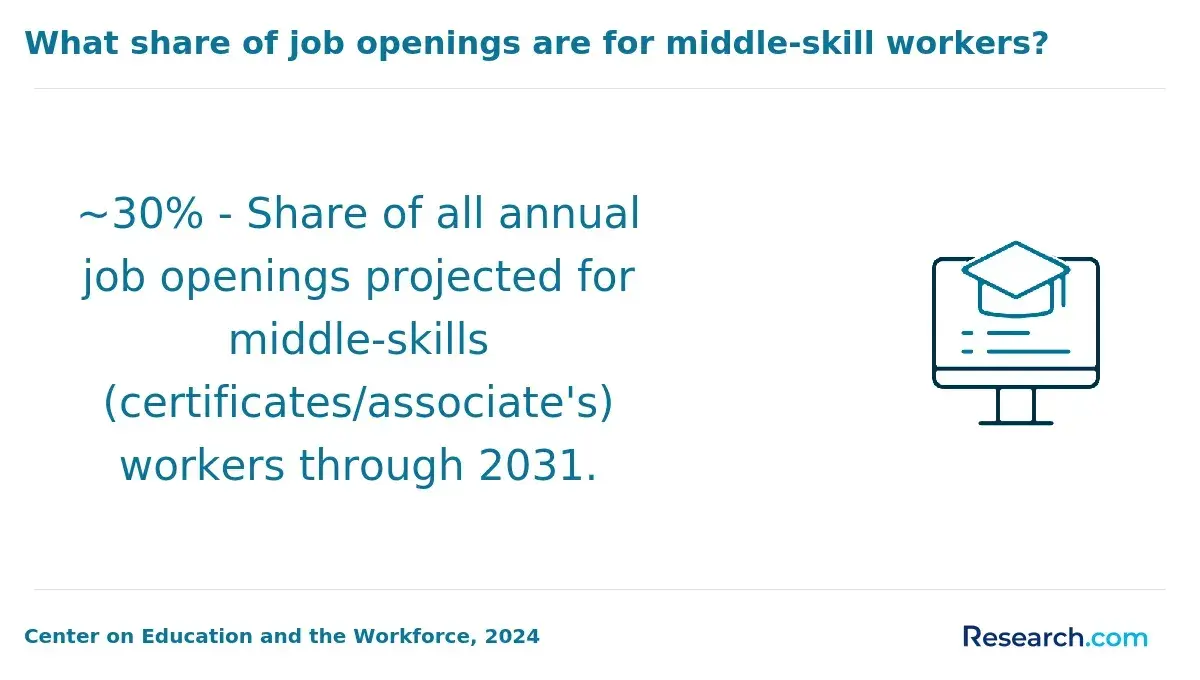
The timing can also make sense because the construction sector is projected to grow 8% through 2031, creating demand for managers who can coordinate people, schedules, budgets, compliance, and technology. A bachelor’s degree is not the only route into the field, but it can help formalize experience, strengthen project management skills, and make you more competitive for supervisory or management roles.
This guide explains what it means to start a construction management bachelor’s degree at 40, the challenges to expect, flexible study options, likely timelines, costs, employer perceptions, and the steps to take before applying.
Key Things to Know About Whether 40 Is Too Late to Earn a Construction Management Bachelor's Degree
- Career relevance at midlife is strong; many employers value practical experience combined with a degree, making 40 a viable age to enter or advance in construction management roles.
- Modern degree pathways offer flexibility through online classes and part-time schedules, accommodating adult learners balancing work and family commitments.
- Long-term benefits include higher earning potential and expanded leadership opportunities, with construction management projected to grow 8% through 2031, supporting sustained career growth.
Can you start a construction management bachelor's degree at 40?
Yes. You can start a construction management bachelor’s degree at 40, and many adult students are well suited for the field because they bring work experience, discipline, and practical judgment. Colleges typically evaluate applicants based on academic eligibility, transcripts, transfer credits, prerequisites, and program requirements—not age.
For adults who have been away from school for years, the best starting point is to review admission requirements and map your current education against the bachelor’s curriculum. Some students enter directly into a four-year program. Others begin with lower-division coursework, community college classes, or an online associate degree pathway before transferring into a bachelor’s program.
Your prior experience may also matter. If you have worked in construction, facilities, real estate development, engineering support, logistics, safety, estimating, procurement, or supervision, you may already understand concepts that younger students are encountering for the first time. That experience can make coursework in scheduling, contracts, project controls, and site coordination more meaningful.
What to check before assuming you qualify
- Admission standards: Confirm GPA expectations, prerequisite math or science courses, and whether standardized tests are required.
- Transfer credit policies: Ask how previous college credits are evaluated and whether there is a time limit on technical coursework.
- Credit for experience: Some institutions may evaluate professional training, military education, certifications, or portfolios, but policies vary widely.
- Program format: Adults often need online, hybrid, evening, weekend, or part-time options to stay enrolled consistently.
- Accreditation and recognition: Verify that the institution is properly accredited and that the program’s outcomes align with the roles you want.
Starting at 40 is realistic. The bigger issue is choosing a program that respects your time, accepts as much appropriate prior credit as possible, and prepares you for the level of responsibility you want next.
What are the biggest challenges of going back to college at 40?
The biggest challenges are time, money, technology, academic adjustment, and sustained motivation. According to recent studies, nearly 40% of adult learners face significant obstacles in balancing education with existing life commitments. For construction management students, those pressures can be sharper because projects, labs, software assignments, and group work may require steady weekly engagement.
- Time management: Full-time work, family responsibilities, commuting, caregiving, and home obligations can leave little uninterrupted study time. Construction management coursework often includes plans, estimates, schedules, reports, and team projects, so last-minute work is risky.
- Financial pressure: Adults may be paying a mortgage, supporting dependents, saving for retirement, or managing existing debt. Tuition is only part of the calculation; books, software, fees, transportation, childcare, and reduced overtime can also affect the budget.
- Technology demands: Modern programs may use learning management systems, digital plan sets, scheduling tools, estimating platforms, collaboration software, and online proctoring. Students who prepare early usually adjust faster.
- Academic confidence: Returning after a long gap can make math, writing, research, or test-taking feel intimidating. This is common and manageable with tutoring, office hours, and realistic pacing.
- Competing priorities: Adult learners may miss assignments not because they lack ability, but because work emergencies or family needs interrupt study routines. Building a backup plan matters.
How to reduce the risk of being overwhelmed
- Start with one or two courses if you are unsure about your workload.
- Block study hours on your calendar before the term begins.
- Tell family members what support you will need during exam weeks and major projects.
- Use school resources early, including tutoring, writing centers, advising, library support, and technology help desks.
- Compare flexible technical programs, including online engineering degree programs, to understand how different schools support adult learners in demanding fields.
The challenge is not simply “going back to school.” It is designing a sustainable routine that can survive busy work seasons, family obligations, and the normal stress of multi-year study.
Can you work full-time while earning a construction management degree at 40?
Yes, many adults work full-time while earning a construction management bachelor’s degree at 40, but the schedule must be planned carefully. Success usually depends less on motivation alone and more on course load, employer flexibility, family support, commute time, and the predictability of your work schedule.
Construction management can be a good fit for working students because the coursework often connects directly to real job responsibilities. If you already work in construction or a related field, classes in estimating, scheduling, safety, contracts, quality control, and project delivery may help you understand your current work at a higher level. That connection can improve retention and motivation.
What full-time workers should consider
- Course load: Taking fewer credits may extend the timeline, but it can reduce burnout and help you maintain stronger grades.
- Work seasonality: If your job has peak construction seasons, avoid stacking difficult courses during the busiest months when possible.
- Supervisor communication: You do not need to share every detail, but letting your employer know about exam weeks or required class meetings can prevent conflicts.
- Group projects: Construction management programs often require teamwork. Choose programs that support asynchronous collaboration if your work hours are unpredictable.
- Energy management: A schedule that looks possible on paper may fail if you are exhausted every night. Protect sleep and recovery time.
A professional enrolled in a construction management bachelor’s program described the experience as manageable but demanding. “Some weeks are more demanding than others, especially when project deadlines coincide with exams,” he explained. He said setting realistic expectations and communicating with supervisors helped him manage stress.
He also found that applying classroom concepts directly to his job kept him motivated. The work-school balance was tiring at times, but the connection between academic learning and daily project decisions made the degree feel practical rather than abstract.
What are the most flexible ways to earn a construction management bachelor's degree at 40?
The most flexible options are online, hybrid, part-time, evening, weekend, and self-paced formats. The best choice depends on how much structure you need, whether you want face-to-face interaction, and how predictable your work and family schedule is.
Online learning
Online programs allow students to complete coursework from home, work during nontraditional hours, and avoid commuting. This format is often the most practical for adults with full-time jobs or family responsibilities. If you need a program designed around jobsite schedules and adult responsibilities, compare an online construction project management degree with traditional campus options before applying.
Online learning is not automatically easier. Students still need reliable internet, strong organization, comfort with digital tools, and the discipline to keep up with weekly assignments.
Part-time enrollment
Part-time study reduces the number of courses taken each term. This can be the safest option for adults who are working full-time, raising children, caring for relatives, or returning to academics after a long break. The trade-off is a longer completion timeline.
Evening or weekend classes
Evening and weekend formats can work well for students who prefer in-person instruction but cannot attend during the day. These programs may also provide stronger local networking with classmates, faculty, and employers in the regional construction industry.
Hybrid programs
Hybrid programs combine online coursework with occasional campus meetings, labs, intensives, or exams. This format can offer a useful balance: more flexibility than a fully in-person degree, but more structure than a fully online program.
Self-paced study
Self-paced courses can help students move faster through familiar material or slow down during difficult periods. However, they require strong self-direction. Before choosing this format, ask whether courses have maximum completion windows, required proctored exams, or limited instructor access.
To evaluate flexibility across fields, you can also look at how another adult-friendly program, such as an online criminal justice degree, structures asynchronous coursework, advising, and student support. The subject matter differs, but the delivery model can help you compare how online programs serve working adults.
How long does it take to finish a construction management bachelor's degree at 40?
Completion time depends on your transfer credits, course load, program format, and life responsibilities. Students who enter without prior college credit and attend full-time generally finish closer to four years. Adult learners who study part-time may take six or seven years, especially if they pause during demanding work or family periods.
- Course load: Full-time enrollment can shorten the timeline but may be difficult with full-time employment. Part-time enrollment is often more sustainable but extends the degree.
- Prior credit: Transfer credits from earlier college work can reduce completion time. Relevant certifications or work experience may also help in some programs, depending on institutional policy.
- Prerequisites: If you need to complete math, science, writing, or general education requirements before upper-division courses, your timeline may lengthen.
- Course sequencing: Some construction management courses must be taken in order. Missing one required course can delay the next step if it is offered only once per year.
- Life commitments: Work travel, family responsibilities, jobsite deadlines, and health issues can affect how many credits you can handle each term.
How to estimate your personal timeline
- Request a transfer credit evaluation before enrolling.
- Ask for a term-by-term degree plan for both part-time and full-time options.
- Identify courses that have prerequisites or limited availability.
- Decide how many hours per week you can realistically study.
- Build in one lighter term each year if your work schedule has predictable busy periods.
An adult learner who started college at 40 and later earned her construction management degree said the process required discipline, especially while balancing a full-time job and family. She described working on demanding projects late at night and using her field experience to understand course concepts more deeply.
Her journey took about five years, reflecting a balance between ambition and life demands. Her experience shows that finishing later in life is realistic when the pace is intentional and sustainable.
How much does it cost to get a construction management bachelor's degree at 40?
The average cost of earning a construction management bachelor’s degree in the United States is approximately $30,000 to $60,000, depending on the institution, residency status, delivery format, and number of credits required. For adults returning at 40, the financial decision should include both direct school costs and the indirect costs of studying while managing a household.
- Tuition: Tuition is usually the largest expense. Public and private institutions, in-state and out-of-state rates, and online versus campus pricing can produce very different totals.
- Fees: Technology, lab, administrative, graduation, online learning, and course-specific fees can add meaningful costs beyond advertised tuition.
- Books and materials: Students may need textbooks, digital resources, plan-reading materials, estimating tools, scheduling software, or other technical resources.
- Enrollment intensity: Full-time students may finish faster, while part-time students spread tuition across more years. Part-time enrollment can be easier for cash flow but may involve longer exposure to fees and price changes.
- Transfer credits: Accepted transfer credits can reduce the number of credits you must pay for. Before enrolling, ask for an official or formal credit evaluation.
- Indirect expenses: Childcare, transportation, parking, internet upgrades, reduced overtime, unpaid time off, or lost wages may affect the real cost of attendance.
Questions to ask the financial aid office
- What is the total estimated cost to complete the degree based on my transfer credits?
- Are online students charged different tuition or fees?
- Can adult students qualify for scholarships, grants, payment plans, or employer tuition benefits?
- Are there additional costs for software, labs, internships, or required campus visits?
- What happens financially if I need to pause enrollment for a term?
Cost should be weighed against your career goal. If the degree helps you move into project engineer, assistant project manager, construction manager, estimator, superintendent, safety, scheduling, or owner’s representative roles, the investment may be easier to justify. If your current role already offers advancement without a bachelor’s degree, compare the degree with certificates, licensing-related training, or employer-sponsored professional development before committing.
What are the risks of going back to college at 40?
The main risks are financial strain, burnout, delayed completion, academic frustration, and choosing a program that does not match your career goal. These risks do not mean you should avoid college; they mean you should enter with a clear plan and realistic expectations.
- Academic workload: Construction management programs can be demanding. Students may complete technical assignments, group projects, reports, presentations, scheduling exercises, estimating work, and exams.
- Adjustment to learning methods: If you have been away from school for years, online platforms, digital submissions, research databases, and collaboration tools may take time to learn.
- Burnout: Working, studying, and managing family responsibilities can become exhausting if you overload your schedule for too many terms in a row.
- Financial uncertainty: Tuition and fees are only part of the risk. Adults should also consider debt, cash flow, retirement savings, family obligations, and whether the degree is likely to support their target role.
- Program mismatch: A program may be accredited and legitimate but still poorly matched to your needs if it lacks flexibility, transfer support, career services, or relevant construction management coursework.
- Social disconnect: Some adult learners feel isolated from younger classmates. Online discussion groups, cohort models, professional associations, and faculty engagement can help.
- Loss of motivation: A bachelor’s degree takes sustained effort. Without a clear career reason, it is easier to stop when work or family pressures increase.
How to make the decision safer
- Choose the lowest-risk starting pace you can sustain.
- Confirm transfer credits before committing to a program.
- Calculate total cost, not just first-term tuition.
- Ask employers or mentors whether the degree is valued for the roles you want.
- Review graduation requirements, course sequencing, and support services before enrolling.
- Set a stop-loss point, such as reassessing after the first term or first year.
The strongest adult students are not the ones who ignore risk. They are the ones who identify likely problems early and build a practical plan around them.
Can you start a new career at 40 with a construction management bachelor's degree?
Yes. A construction management bachelor’s degree can support a career change at 40, especially if you already have transferable experience in construction, trades, operations, logistics, facilities, engineering support, military leadership, business management, safety, procurement, or client coordination.
The degree can help you build formal knowledge in project planning, budgeting, scheduling, contracts, safety regulations, building methods, communication, and team coordination. For career changers, it can also provide credibility when applying for roles that require or prefer a bachelor’s degree.
Common ways adults use the degree
- Moving from field work to management: Tradespeople, foremen, or site supervisors may use the degree to compete for assistant project manager, superintendent, or project management tracks.
- Shifting from a related industry: Adults from logistics, manufacturing, real estate, facilities, or engineering support may use the degree to enter construction operations.
- Advancing within a current employer: Some students pursue the degree because their company requires it for promotion into management.
- Strengthening business skills: The degree can help future contractors or small business owners understand estimating, contracts, scheduling, and risk management more formally.
A career change is most realistic when you connect the degree to a specific target role. “Construction management” is broad, and the requirements for a scheduler, estimator, project engineer, site superintendent, safety coordinator, or owner’s representative can differ. Before enrolling, review job postings in your region and note which roles require a bachelor’s degree, which prefer experience, and which mention specific software or certifications.
Adult learners in other fields often make similar calculations. For example, programs such as online master’s in social work programs also attract working adults who are using education to move into a more defined professional path. The lesson is the same: the degree is most valuable when it is tied to a clear career outcome.
Do employers value construction management bachelor's degrees earned at 40?
Yes, employers can value a construction management bachelor’s degree earned at 40, particularly when it is paired with relevant experience, strong communication skills, and evidence that the candidate can manage people, deadlines, budgets, and risk. Most employers care less about the age at which the degree was earned and more about whether the applicant can perform the job.
A 2022 survey by the Society for Human Resource Management highlighted that 75% of employers appreciate candidates who pursue continuous learning later in their careers. For construction employers, that signal can matter because project delivery methods, safety expectations, building technology, software, and regulations continue to evolve.
- Current technical knowledge: A recent degree may show exposure to updated construction methods, project controls, safety practices, sustainability topics, and digital tools.
- Experience plus theory: Adults who combine jobsite experience with formal coursework may be better prepared to connect practical decisions with budgets, contracts, schedules, and stakeholder expectations.
- Adaptability: Completing a degree while working or managing adult responsibilities can demonstrate discipline and resilience.
- Leadership potential: Mature students often bring professional communication, conflict resolution, and team management experience from previous roles.
- Career seriousness: Earning the degree later in life can signal that the candidate is intentionally preparing for construction management rather than casually exploring the field.
That said, a degree alone does not guarantee promotion or hiring. Employers may still look for construction experience, software familiarity, safety knowledge, internships, certifications, references, and a track record of reliability. The best strategy is to use the degree as part of a broader professional profile.
If you are comparing technical career paths, an online mechanical engineering degree option can provide another example of how working adults evaluate employer value, program flexibility, and long-term career fit.
What steps should I take before applying to a construction management bachelor's program?
Before applying, clarify your career goal, evaluate your academic record, compare program formats, confirm costs, and verify that the degree aligns with the jobs you want. Nearly 40% of adult learners conduct thorough preparation prior to enrollment, which enhances their likelihood of success and persistence in college.
- Define your target role: Decide whether you want to become a project manager, assistant project manager, superintendent, estimator, scheduler, safety professional, owner’s representative, or construction business owner. The best program for one role may not be ideal for another.
- Review job postings: Look at current listings in your region and note degree requirements, preferred experience, software expectations, and certifications. This helps you avoid choosing a program that does not match employer demand.
- Assess your academic background: Gather transcripts and identify whether you need math, writing, science, or general education refreshers before starting upper-division coursework.
- Request transfer evaluations: Ask each school how many credits it will accept before you compare cost and completion time.
- Check program requirements: Review prerequisites, GPA standards, application materials, portfolio options, and any work experience expectations.
- Choose the right format: Compare online, hybrid, evening, weekend, and in-person programs based on your actual weekly schedule—not an idealized version of it.
- Confirm accreditation and institutional legitimacy: Make sure the school is properly accredited and that the credential will be recognized by employers, graduate schools, or certification pathways relevant to your goals.
- Build a financial plan: Calculate tuition, fees, materials, indirect expenses, financial aid, employer benefits, payment plans, and the effect of part-time versus full-time enrollment.
- Talk to an advisor: Ask for a degree map, course rotation, estimated completion date, and support resources for adult learners.
- Prepare your support system: Discuss schedule changes with family, supervisors, and anyone who depends on your time. Adult students are more likely to persist when the people around them understand the commitment.
The best application is not just complete; it is informed. By the time you submit it, you should know why you want the degree, how long it is likely to take, what it will cost, and how it connects to your next career step.
What Graduates Say About Earning a Construction Management Bachelor's Degree at 40
- : "“Returning to college at 42 was a challenge I embraced to shift my career trajectory. I chose a construction management bachelor's degree because I wanted to combine my hands-on experience with formal education, giving me a competitive edge. Earning this degree has opened doors to leadership roles I once thought were out of reach.” — Alfonso"
- : "“At 45, going back to school felt daunting, but I knew I needed to gain specialized knowledge to stay relevant in the construction field. Construction management offered practical skills that aligned perfectly with my desire to oversee projects efficiently. The degree dramatically enhanced my confidence and credibility with clients and employers alike.” — Eduardo"
- : "“Deciding to earn a construction management bachelor's after 40 was motivated by my passion for sustainable building practices. This degree equipped me with the latest industry standards and project oversight techniques. Professionally, it's been transformative-I've secured several advanced positions and now mentor younger colleagues.” — Thiago"
Other Things You Should Know About Construction Management Degrees
In 2027, prerequisites for a construction management bachelor's degree for individuals aged 40 or older typically include a high school diploma or equivalent, prior college credits may be transferable, and some programs might require relevant work experience. Basic knowledge in mathematics, science, and computer applications may also be necessary.
Prior work experience in construction or project supervision can enhance learning by providing practical context to theoretical material. It may also qualify students for advanced standing or credit for prior learning, potentially shortening the time to graduate. Experienced students often find it easier to relate coursework to real-world scenarios, improving retention and engagement.
The expected duration is typically four years, but it can vary. Some programs offer accelerated paths or part-time options, allowing older students to complete the degree faster or balance study with work, potentially affecting the time to graduation.
Colleges often offer academic advising, tutoring, and career services tailored to adult learners. Online platforms and flexible course formats help accommodate different schedules. Many programs also provide mentorship options, connecting older students with faculty or industry professionals to help navigate both coursework and career steps within construction management.
References
- Going Back to School at 40? Here’s How to Succeed | Outlier https://articles.outlier.org/going-back-to-school-at-40
- Whirlpool https://forums.whirlpool.net.au/archive/2458004
- Returning to College at 40+: What to Expect https://www.buzzfeed.com/jenniferadams2/people-over-40-sharing-what-its-like-to-go-back-to-college
- The Ultimate Guide for a Construction Management Degree https://www.boomandbucket.com/blog/the-ultimate-guide-for-a-construction-management-degree
- Facts about working full-time as a full-time student https://www.luminafoundation.org/topics/todays-students/working-adults/
- Common Obstacles for Mature-Age Students Returning to Study - Sero Institute https://seroinstitute.com.au/common-obstacles-for-mature-age-students-returning-to-study/
- Going back to college in your early 40s...sounds like a terrible idea...but Im considering it. https://rokslide.com/forums/threads/going-back-to-college-in-your-early-40s-sounds-like-a-terrible-idea-but-im-considering-it.397621/
- Can I Work Full-Time While Earning an Online Degree? https://www.athens.edu/online-degree-completion-programs-working-adults/can-i-work-full-time-while-earning-an-online-degree/
- How (and why) to make a successful career change at 40, 45, and beyond https://www.learningpeople.com/au/resources/career-guides/career-change-at-40/
- How to Pursue a Career as a Construction Site Manager https://www.oshaeducationcenter.com/become-a-construction-manager/


