2027 Can You Get Into a Computer Science Program with a Low GPA? Admission Chances & Workarounds

Co-Founder and Chief Data Scientist
A low GPA can make computer science admissions feel out of reach, especially when many applicants are competing with strong math grades, programming experience, and polished portfolios. At many competitive computer science programs, the average admitted GPA often exceeds 3. 5, but that does not mean every lower-GPA applicant is automatically denied.
The real question is whether your full application can prove readiness for a demanding technical curriculum. Programs may look at recent grades, prerequisite performance, transfer coursework, professional experience, test scores, essays, recommendations, and evidence of sustained interest in computing. This guide explains how GPA minimums work, when alternatives may help, and which strategies can make a low-GPA computer science application more credible in 2026.
Key Things to Know About Admission Chances Into a Computer Science Program with a Low GPA
- Strengthen your application by showcasing relevant projects, internships, or coding bootcamps, which can offset a low GPA and demonstrate practical skills.
- Enroll in additional coursework or online programs in foundational computer science topics to improve knowledge and signal commitment to admissions committees.
- Highlight professional experience or certifications in tech roles, as 62% of computer science programs value industry exposure alongside academic records.
What Is the Minimum GPA Required to Apply for a Computer Science Program?
The minimum GPA required to apply for a computer science program depends heavily on the school, applicant type, and selectivity of the major. Many universities set a baseline between 2.5 and 3.0 on a 4.0 scale, while more competitive computer science programs typically expect GPAs of 3.5 or higher. Public universities may list admission GPA cutoffs for computer science degrees near 2.5 to 2.7, while elite private schools and top-ranked programs generally expect GPAs above 3.7.
The posted minimum is not the same as the GPA that makes admission likely. A minimum GPA often means the school will review your application, not that you are competitive. Computer science is frequently more selective than general university admission because of demand, limited seats, and required preparation in math, programming, and analytical coursework.
- Cumulative GPA: Schools may review your overall academic record to judge consistency and college readiness.
- Major-specific GPA: Some programs care more about grades in calculus, discrete math, programming, data structures, or related technical courses.
- Freshman vs. transfer standards: Transfer applicants may face separate GPA rules because they already have college-level coursework.
- Hard cutoffs vs. holistic review: Some programs automatically screen out applicants below a GPA threshold, while others allow exceptions when the rest of the application is strong.
- Recent academic trend: A student who struggled early but later earned strong grades in relevant courses may be viewed differently from a student whose grades declined over time.
Before applying, read the computer science department’s admission page rather than relying only on the university’s general admission requirements. If your GPA is below the stated standard, contact admissions or a department advisor and ask whether conditional admission, transfer pathways, prerequisite completion, or appeal options are available. Students also comparing shorter career-oriented options may want to research high-paying certificate programs alongside degree pathways.
How Do Admissions Committees Evaluate Computer Science Program Applicants with Low GPAs?
Admissions committees usually evaluate low-GPA computer science applicants by asking a practical question: is there enough evidence that the student can succeed in a rigorous computing curriculum despite weaker grades? GPA matters, but it is rarely the only signal. In holistic review, committees look for patterns, context, and proof of current ability.
- Coursework rigor: A lower GPA in a demanding schedule may be read differently from a similar GPA earned in less relevant courses. Strong performance in math, programming, and science courses can help show preparation.
- Academic trends: Improvement over time is one of the clearest ways to reduce concern. A transcript showing stronger recent grades suggests better study habits, maturity, or recovery from earlier challenges.
- Performance in key prerequisites: Grades in programming, calculus, discrete math, statistics, and data structures often carry more weight than unrelated electives.
- Personal statement: A strong essay should explain the GPA briefly and responsibly, then focus on what changed, what you learned, and why you are now ready.
- Recommendation letters: Letters from instructors, supervisors, or technical mentors can validate work ethic, problem-solving ability, and readiness for computer science study.
- Relevant experience: Coding projects, internships, technical jobs, hackathons, research, open-source contributions, or certifications can make the application more concrete.
According to the Computing Research Association, about 40% of admitted applicants with GPAs below 3.0 exhibited upward academic trends or strong supplemental skills. That figure reinforces an important point: low-GPA applicants need evidence, not excuses. The strongest applications connect the transcript, essay, recommendations, and technical work into one consistent story of growth and readiness.
Applicants who are unsure whether computer science is the right fit may also compare adjacent options, including more accessible bachelor's degree paths, but the best choice should still match long-term career goals, not only admission difficulty.
Can Professional Experience Offset a GPA Below the Computer Science Program's Minimum?
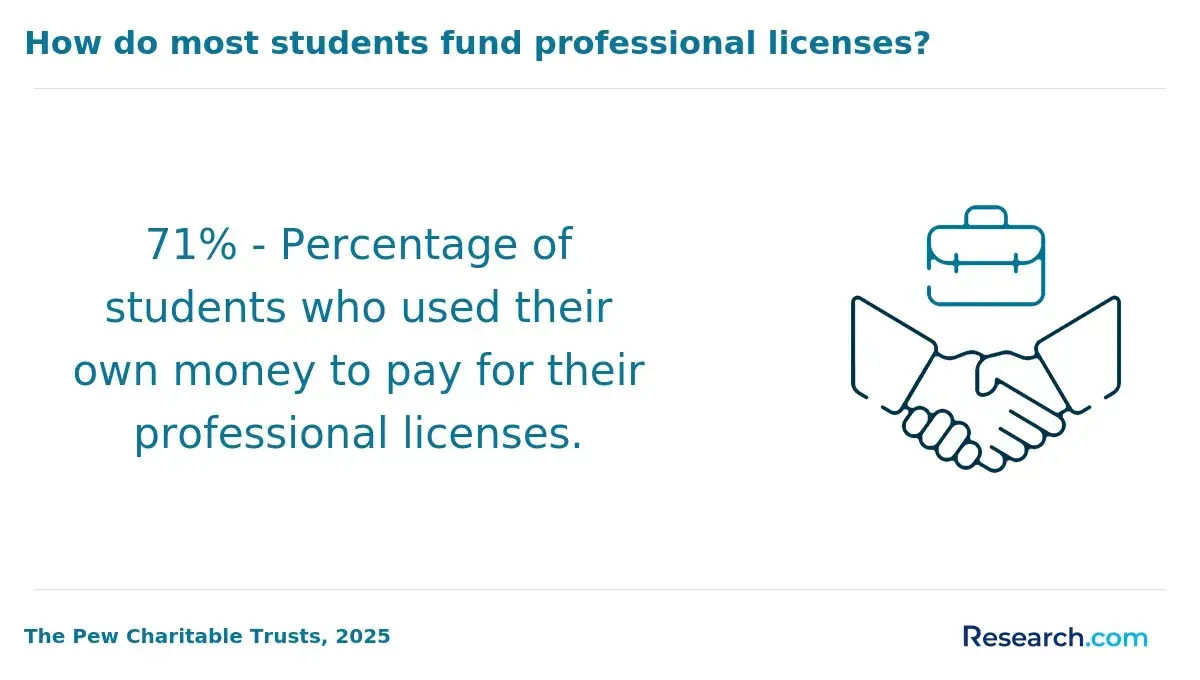
Professional experience can help offset a low GPA, but it usually cannot override a strict published minimum by itself. Its value depends on the program’s policy. Some schools must enforce GPA cutoffs, while others may consider work experience as part of a holistic, conditional, transfer, or appeal-based review.
Relevant experience is most persuasive when it shows the same abilities a computer science curriculum requires: logical thinking, persistence, technical communication, debugging, independent learning, and comfort with abstract problem-solving.
- Technical work experience: Roles such as software developer, IT specialist, systems support technician, data analyst, QA tester, or web developer can show practical exposure to computing concepts.
- Project leadership: Leading a technical team, managing a software rollout, or coordinating a coding project demonstrates collaboration and responsibility.
- Portfolio evidence: GitHub repositories, apps, websites, scripts, automation tools, or documented technical projects can help admissions reviewers see what you can actually build.
- Certifications and training: Relevant certifications may support your case when they align with programming, systems, databases, networking, cloud computing, cybersecurity, or data work.
- Employer or supervisor recommendations: A detailed letter describing technical ability and reliability can carry more weight than a generic character reference.
The key is to translate experience into academic readiness. Do not simply list job titles. Explain the technical problems you solved, the tools you used, how you learned independently, and why that experience prepares you for computer science coursework. If a program states that no applicant below the minimum GPA can be admitted, ask whether experience can support conditional admission or a transfer route instead.
Can Standardized Test Scores Help Offset a Low GPA for Computer Science Admission?
Strong standardized test scores can help a low-GPA computer science applicant, especially when the scores show strength in math, quantitative reasoning, and college readiness. However, test scores are usually a supporting factor, not a complete substitute for the transcript. They are most useful when they confirm that the applicant has the academic ability to handle technical coursework.
- Score thresholds: Meeting or surpassing institutional benchmarks can reassure reviewers that the applicant is ready for college-level work despite a weaker GPA.
- Math performance: For computer science, strong math results are especially relevant because the major often requires logic, calculus, statistics, algorithms, and discrete structures.
- Percentile rankings: High percentile performance helps committees compare the applicant with a broader pool and may reduce concern about earlier grades.
- Consistency with the rest of the application: Scores are more persuasive when they align with recent academic improvement, strong prerequisite grades, technical projects, and credible recommendations.
Applicants should be strategic. If a school is test-optional, submit scores only when they strengthen the application. Weak or average scores are unlikely to offset a low GPA and may draw more attention to academic concerns. If your test results are strong, use the application to connect them to a broader pattern of preparation: improved grades, completed prerequisites, and demonstrated technical work.
Can Completing Prerequisite Courses for a Computer Science Program Improve Your Admission Chances with a Low GPA?
Yes. Completing prerequisite courses is one of the most practical ways to strengthen a low-GPA computer science application because it gives admissions committees fresh, relevant academic evidence. A cumulative GPA can be difficult to repair quickly, but strong recent grades in the right courses can show that the applicant is now prepared for the major.
Prerequisite coursework is most helpful when it directly matches the program’s expectations. Common examples include introductory programming, object-oriented programming, calculus, discrete math, statistics, computer systems, and data structures. Before enrolling, confirm that the course will transfer or satisfy the target program’s requirement.
- Mastery of core concepts: Strong grades in programming and math courses show readiness for the foundation of the computer science curriculum.
- Targeted GPA repair: Good grades in relevant courses may improve a major-specific or transfer GPA even when the overall GPA remains modest.
- Proof of current ability: Recent coursework can matter because it reflects the student you are now, not only the grades you earned earlier.
- Commitment to the field: Completing prerequisites before admission signals that you understand the demands of the major and are willing to prepare.
Students comparing affordable ways to build or rebuild academic credentials may also explore an online bs computer science pathway if they need flexibility while completing relevant coursework.
One computer science graduate who faced a low GPA barrier described prerequisite coursework as the turning point. “I was anxious because my earlier grades did not reflect how much I wanted this,” she said. “Taking those courses taught me to manage my time better and solidified my understanding of the basics.” Her program required at least a 3.0 in these classes to consider admission, which she reached after retaking some courses. The lesson is clear: when older grades are weak, recent performance in the right subjects can make the application more convincing.
Can Applying Early Improve Your Chances of Getting Into a Computer Science Program If Your GPA Is Low?
Applying early can help some low-GPA computer science applicants, but it is not a guarantee. The advantage depends on the school’s admission model, how selective the computer science major is, and whether early applicants receive a meaningful review advantage. In some cases, applying early means more seats are still available and the application may be reviewed before the regular pool becomes more crowded.
- More available seats: Early in the cycle, programs may not have filled as many spaces in the major, which can matter in high-demand fields like computer science.
- Time for a fuller review: A complete early application with strong essays, recommendations, and evidence of improvement may receive closer attention than a late or rushed application.
- Signal of preparation: Applying early can show that the applicant planned carefully, met deadlines, and is serious about the program.
- Potentially reduced competition: Some applicants wait for regular decision, so early applicants may face a different review pool.
Admission trends from the National Association for College Admission Counseling (NACAC) reveal that early decision acceptance rates for competitive STEM disciplines, including computer science, can be 10 to 15 percentage points higher than regular decision. That said, applicants should understand the difference between early action and early decision. Early decision may be binding, so it should only be used when the school is clearly affordable and a top choice.
A low-GPA applicant should not apply early with a weak or incomplete file. If waiting allows you to add strong prerequisite grades, a better test score, or a stronger recommendation, regular decision may be smarter. For students thinking beyond undergraduate admission and planning future graduate study, questions such as whether all PhD programs require a dissertation can also shape long-term academic planning.
Can You Get Conditional Admission to a Computer Science Program with a Low GPA?
Yes, some students with low GPAs can receive conditional admission to a computer science program, but the option is school-specific. Conditional admission means the program is willing to admit or provisionally accept the student only if certain academic requirements are met. It is a structured way for applicants to prove they can handle the curriculum before receiving full standing.
- Bridge or prerequisite courses: Students may need to complete foundational programming, math, or computing courses before progressing into the full major.
- Minimum grade requirements: Programs may require specific grades during the first term or in designated courses to remain enrolled.
- Probationary status: Students may be monitored closely until they demonstrate consistent academic performance.
- Progress timelines: Conditional admission often includes deadlines for completing courses, raising grades, or meeting program benchmarks.
Data from 2023 reveals that around 15% of U.S. computer science programs utilize conditional admission or similar probationary methods to facilitate access for promising students with lower GPAs. This route can be valuable, but it also carries risk. Failing to meet the conditions may lead to removal from the major or a required change of program.
Before accepting conditional admission, ask for the requirements in writing. Confirm the required GPA, which courses count, how many attempts are allowed, whether financial aid is affected, and what happens if you miss a benchmark. Conditional admission is most useful when the conditions are realistic and you have a clear academic support plan.
Can Starting in a Related Field and Transferring to the Computer Science Program Help Low-GPA Applicants?
Starting in a related field and transferring into computer science can help low-GPA applicants, especially when direct admission is too competitive. This strategy gives students time to build a stronger college record, complete prerequisite courses, and prove they can succeed in technical subjects.
- Showcasing relevant skills: Strong grades in mathematics, information technology, data analytics, engineering, or computational courses can demonstrate readiness for computer science.
- Strengthening the transcript: A new record of better grades may reduce the impact of earlier academic struggles.
- Meeting internal transfer requirements: Some universities allow students to transfer into computer science after completing required courses with specific grades.
- Clarifying fit: Related majors can help students confirm whether they prefer software, systems, data, cybersecurity, information systems, or another technology path.
This route requires careful planning. Computer science internal transfers can be highly competitive, and some universities restrict movement into the major after enrollment. Before choosing this strategy, ask whether transfer seats are available, which courses are required, what GPA is needed, and whether students are commonly accepted from related majors.
One graduate described starting in a related major as a “second chance” after an earlier low GPA. He focused on supporting courses, rebuilt his confidence, and used improved grades to make a stronger transfer case. “The process was not easy—I had to prove myself every semester—but seeing my improvement reflected in grades really motivated me,” he said. For him, the transfer felt like confirmation that his later academic record better represented his ability.
Are There Scholarships for Computer Science Program Applicants to Help Improve Their GPA?
Scholarships do not directly improve a GPA, but they can make GPA recovery more realistic. Students with low GPAs often need to retake courses, complete prerequisites, pay for tutoring, reduce work hours, or enroll in additional academic support. Financial aid can help cover those costs so students can focus on improving their academic record.
There are no scholarships specifically designed to raise a GPA, but several forms of support may indirectly help low-GPA computer science applicants strengthen their admission profile:
- Merit-recovery scholarships: These may support students who show recent improvement or strong potential after earlier academic setbacks.
- Need-based grants: Grants can reduce financial pressure, giving students more time and stability to focus on challenging computer science and math courses.
- Academic support funding: Some universities and nonprofit programs help pay for tutoring, workshops, software, lab access, or skill-building programs.
- Continuing education support: Funding for post-baccalaureate courses, boot camps, or extension coursework can help applicants demonstrate recent learning and commitment.
According to data from the National Center for Education Statistics, combined financial aid and targeted academic support can significantly improve admission prospects for applicants with subpar GPAs. The key is to use funding strategically. Taking random courses is less useful than completing prerequisites that the target computer science program recognizes.
Students looking for flexible institutions and support options can review a list of online colleges and compare academic advising, transfer policies, tutoring access, tuition, and course availability. When searching for scholarships for low GPA computer science applicants 2026, prioritize aid that helps you produce measurable academic improvement.
Can Mentorship or Academic Advising Help Overcome GPA Barriers for Computer Science Program Applicants?
Mentorship and academic advising can make a significant difference for low-GPA computer science applicants because they turn a vague goal into a structured recovery plan. Advisors can identify which grades matter most, which courses to retake, and which programs are realistic. Mentors can help applicants build technical confidence, choose projects, and prepare a stronger application narrative.
- Personalized study plans: A mentor or advisor can help the student focus on weak areas such as programming fundamentals, math, time management, or exam preparation.
- Strategic course selection: Advisors can recommend courses that improve the academic record without creating an unrealistic workload.
- Application positioning: Good guidance helps students explain a low GPA honestly while emphasizing growth, readiness, and evidence of technical skill.
- Profile enhancement: Mentors may point students toward research, internships, coding projects, competitions, or portfolio work that strengthens the application beyond grades.
- Accountability: Regular check-ins can help students stay on track and avoid repeating the habits that contributed to earlier academic problems.
Data from the National Center for Education Statistics indicate that about 65% of admitted computer science students have GPAs above 3.0, reflecting a competitive admission landscape. For students below that mark, mentorship benefits for computer science admission with low GPA include clearer planning, better course choices, and a stronger demonstration of resilience.
Students who need flexible or lower-cost routes to rebuild their records may also compare affordable online universities for working adults. The right advisor can help determine whether online coursework, community college transfer credits, retakes, or conditional admission is the best next step.
What Graduates Say About Getting Into a Computer Science Program with a Low GPA
- : "Despite my initial low GPA, I kept looking for computer science programs that considered more than one number. I focused on showing motivation, technical interest, and readiness to improve. The cost of attendance was manageable compared to other fields, and the degree became a worthwhile investment. It helped me move into software engineering and opened doors I could not have accessed otherwise. Lawrence"
- : "My GPA was below the typical cutoff when I first applied, but guidance and persistence helped me find a program that was affordable and willing to evaluate my full record. Lower tuition reduced stress and made it easier to concentrate on my classes. The skills I gained are now central to my work as a data analyst. Yitzchok"
- : "Entering a computer science degree program with a low GPA was challenging, but it forced me to become more disciplined. The reasonable cost helped me focus on learning new technologies instead of worrying constantly about finances. Professionally, the degree gave me the tools to grow and compete in a demanding tech environment. Cameron"
Other Things You Should Know About Computer Science Degrees
Participating in coding clubs, hackathons, or technology-related volunteer work can demonstrate passion and practical skills in computer science. Building a portfolio of personal or open-source projects also shows initiative and real-world experience. Admissions committees often look for evidence of commitment beyond grades, which can help offset a low GPA.
Yes, recommendation letters can significantly enhance your application. They provide insights into your skills and potential beyond grades. Strong endorsements from professionals or educators can offset a low GPA by highlighting your competencies and dedication specific to computer science.
Personal projects can significantly enhance a low GPA application by showcasing practical skills and passion for the field. In 2027, admissions committees might look favorably on unique projects that demonstrate problem-solving abilities, innovative thinking, and a proactive learning attitude.
In 2027, earning computer science certifications or completing online courses can significantly enhance the profile of applicants with low GPAs. These demonstrate a proactive attitude towards learning and improve technical skills, highlighting dedication and capability to program faculty.
References
- Can a High SAT Score Compensate for a Low GPA? - Princeton Review https://www.princetonreview.sg/sat-score-compensate-for-a-low-gpa/
- Admissions Committee: The Review Process https://www.ivywise.com/ivywise-knowledgebase/how-the-admissions-committee-review-process-works/
- How To Get into Grad School With a Low GPA https://www.princetonreview.com/grad-school-advice/how-to-get-into-grad-school-with-low-gpa
- Computer Science GPA Range by UC Fall 2017 | CA College Transfer https://cacollegetransfer.com/2018/05/computer-science-gpa-range-by-uc-fall-2017/
- How I Got Into A Top Computer Science Program With No Experience | by Emily Chang | Medium https://echang9.medium.com/how-i-got-into-a-top-computer-science-program-with-no-experience-81bea41bb026
- A Brief Guide to Getting into College as a Computer Science Major https://www.thecoderschool.com/college/college-guide-for-cs-majors/
- Scholarships https://undergrad.cs.umd.edu/scholarships/
- Colleges That Accept Low GPA Scores | Find Options https://www.educationconnection.com/resources/colleges-that-accept-low-gpa/
- Admission Requirements & Deadlines - Computer Science (M.S.) https://www.towson.edu/fcsm/departments/computerinfosci/grad/computersci/admission.html
- Navigating the Challenge of a Low GPA in Your Application : The B-School Applications https://gmatclub.com/forum/navigating-the-challenge-of-a-low-gpa-in-your-application-411654.html