2027 Can a BS in Business Administration Prepare You for a Distribution Operations Supervisor Role? Skills and Entry Requirements
Audited and Verified:
Our Editorial and Data Verification Process
Research.com uses government datasets, official education statistics and primary institutional information to support its career and degree guides. Our review process checks factual accuracy, occupational definitions, source dates and the requirements associated with the credentials discussed.
How This Article Was Fact-Checked
Our editorial team verifies salary estimates, employment projections, education requirements and program information against original data providers and official organizations. Salary figures are checked against the relevant occupational definitions and reporting periods. Information about licensure, accreditation and required in-person training is reviewed separately.
Fact-checked and verified on:

Co-Founder and Chief Data Scientist
If you work in a warehouse or distribution center, a BS in Business Administration can strengthen your case for a supervisory role, but it cannot replace experience directing work safely and keeping orders moving. If you are entering the field, the path may be less direct.
This guide connects the degree to daily distribution decisions, explains what employers may expect beyond graduation, and shows how to judge whether a business degree, supply chain study, or workplace training is the better next step.
Key Things You Should Know
- A BS in Business Administration can build budgeting, operations, analytics, and people-management skills; employers may still require hands-on distribution experience before assigning supervisory responsibility.
- The strongest preparation pairs relevant coursework with evidence from a warehouse or distribution site, such as documented work on inventory accuracy, shift handoffs, or safety procedures.
- Published pay and growth figures for logisticians describe a different occupation, not distribution supervisors; compare local supervisor postings and occupation-specific wage data before estimating your return on a degree.
Can a BS in Business Administration Prepare You for a Distribution Operations Supervisor Role?
A distribution operations supervisor typically coordinates a shift or team that receives, stores, picks, packs, or ships goods. The job may involve assigning work, monitoring throughput and accuracy, resolving delays, training employees, and enforcing site safety procedures. A business administration degree can help you understand costs, staffing, processes, and performance measures; it does not by itself demonstrate that you can run a shift.
Your best route depends on where you are starting. A current warehouse employee can use the degree to connect site knowledge with budgeting and leadership. Someone without operations experience will usually need to pursue roles such as inventory clerk, warehouse associate, shipping coordinator, or operations coordinator while building that knowledge.
If you want deeper preparation in purchasing, transportation, and inventory systems, compare the actual curriculum of a BS in Business Administration with online supply chain degrees with cost and outlook details.
What Skills Do Distribution Operations Supervisors Need to Succeed?
Supervisors need to turn a daily operating plan into safe, accurate work. The table connects common responsibilities to evidence you could develop at work or through supervised projects; a classroom assignment is useful practice, but it is not the same as managing a live operation.
| Responsibility | Evidence of readiness |
| Coordinate people and shifts | Training records, clear handoff notes, or documented experience assigning tasks |
| Monitor inventory and orders | Accurate cycle-count work or analysis of order errors and their causes |
| Improve flow | A process map and a feasible proposal to reduce delays without compromising safety |
| Respond to exceptions | Examples of resolving shortages, equipment interruptions, or shipping priorities with appropriate escalation |
Communication and judgment matter as much as spreadsheet ability: a supervisor must explain priorities, respond fairly to employees, and know when an issue requires a manager, HR partner, or safety specialist.
Those considering a career focused on personnel policy rather than distribution can examine human resources degree requirements; HR study serves a different function from leading warehouse operations.
What Are the Education and Experience Requirements for Distribution Supervisors?
There is no single nationwide degree requirement for this job title. Employers set their own standards: some consider experienced warehouse workers without a bachelor's degree, while others prefer a degree in business, supply chain, logistics, or a related field. Requirements may also vary with the facility's equipment, products, labor arrangements, and operating hours.
Read postings for the actual responsibilities, not just the title. A first-line supervisor who directs a shift differs from an operations manager who owns multiple teams, budgets, or facilities. If you already train coworkers, coordinate handoffs, or investigate inventory discrepancies, document what you did and the scope of your responsibility.
If you are new to the field, seek site experience before expecting a degree to qualify you for direct supervision. Employees planning to study alongside shift work can compare business administration programs for advancement while working, then check whether the schedule fits their actual shifts.
Prioritize operations or supply chain management, managerial accounting, statistics, business analytics, organizational behavior, and information systems. Together, these subjects help you interpret service and inventory measures, understand labor and operating costs, and make better-supported staffing or process proposals.
A useful applied assignment might analyze an anonymized pick-error log or map a receiving process; use employer data only with permission and appropriate privacy safeguards.
Compare course descriptions rather than assuming every BS covers warehouse operations in depth. Check whether supply chain courses are required, electives, or part of an officially designated concentration, and whether they have prerequisites that affect your schedule. Business degrees through accelerated online learning may shorten the calendar, but speed is less valuable if it leaves no room for relevant electives or practical experience.
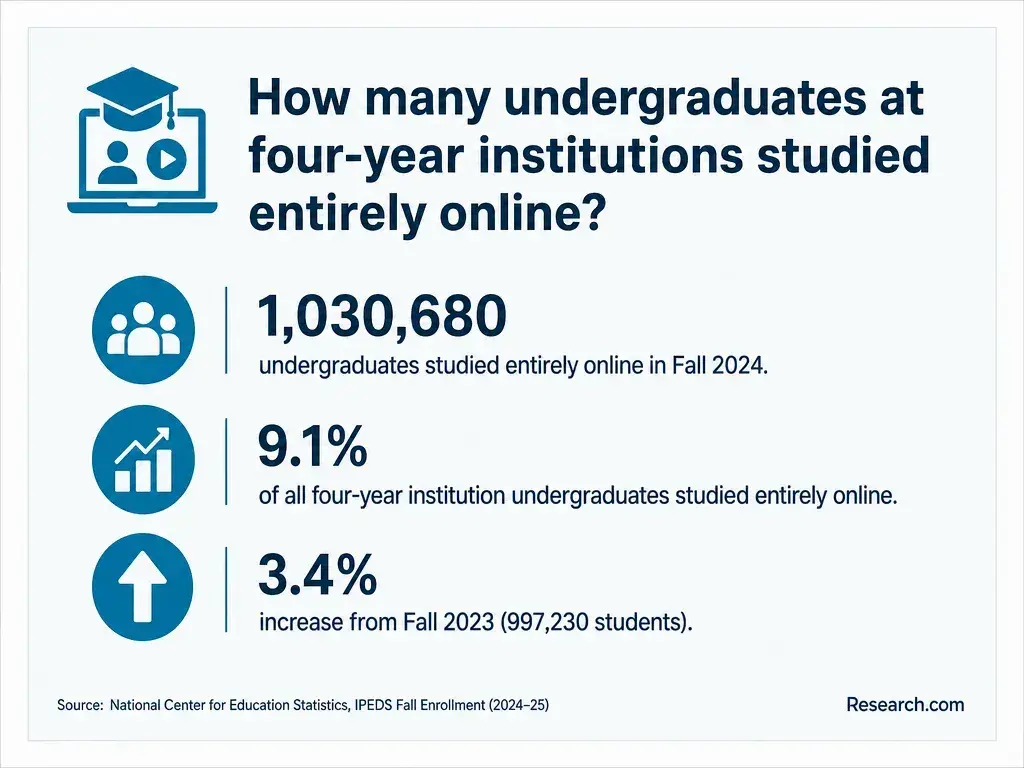
Choose the format you can complete while gaining or retaining relevant work experience. Online study can reduce commuting around warehouse shifts, but it may still require live meetings, group projects, fixed deadlines, proctored exams, or scheduled presentations. Campus study may make in-person collaboration easier, provided travel and class times are realistic.
Ask each program for a sample term schedule and confirm how operations electives, internships, and capstones are delivered. Check whether a current distribution job can support an approved project; employment alone does not automatically earn academic credit. If faster completion matters, compare the weekly demands, not just the advertised finish date, of accelerated study formats for bachelor's students.
A bachelor's degree is commonly planned as a four-year, full-time course of study from the beginning, but your completion time depends on accepted credits, course sequencing, enrollment pace, and required credits taken at the graduating institution. A returning student should request a degree audit: credits accepted by a school do not necessarily satisfy its business core or concentration.
There is no reliable single price for this degree. Compare tuition and mandatory fees for your remaining required courses, then add books, software, travel or technology costs, and any earnings lost by changing work hours.
Ask when employer tuition reimbursement is paid and what grades or employment conditions apply. Cost-effective paths to a business degree are worth comparing, but the lowest advertised tuition may not produce the lowest completion cost for your credit history.
Requirements vary by institution and by whether you apply as a first-year or transfer student. Schools typically request prior academic records; some business majors have additional entry standards or prerequisites in mathematics, accounting, economics, or statistics. Admission to the university does not always mean immediate admission to its business major.
Before applying, send your transcripts and ask admissions which requirements apply to you. Ask an academic adviser or transfer office which prior courses will fulfill the business core, when any missing prerequisites must be completed, and whether operations electives will fit your remaining plan. For a fuller explanation of the distinction between entry and credit application, consult credit and eligibility rules for business administration admission.
Certifications can supplement, but not replace, site experience. ASCM supply chain credentials may be relevant if your work involves inventory, planning, or end-to-end supply chain processes.
OSHA outreach training can support safety awareness, but an OSHA completion card is not a professional license or proof that someone is qualified to manage a facility's safety program. Equipment training and authorization must follow the employer's applicable procedures.
Choose a credential only after comparing its current eligibility rules, exam content, fees, and relevance to local job postings. If your main gap is leading people rather than supply chain terminology, employer mentorship or fast-track undergraduate organizational leadership study may be more relevant than another technical credential. Neither substitutes for evidence that you can supervise distribution work.
Pay varies by location, shift, facility size, industry, and the amount of responsibility attached to the title. For a useful estimate, compare local postings with wage data for the closest matching Bureau of Labor Statistics (BLS) occupation, first-line supervisors of transportation and material moving workers, except aircraft cargo handling supervisors. Check the duties before using that classification: a posting labeled "operations supervisor" may cover different work.
As a caution against using adjacent careers as salary promises, the BLS reports a May 2025 median annual wage of $82,320 for logisticians. Logisticians analyze and coordinate supply chains; that figure is not the median for distribution supervisors or an expected salary for business graduates.
When weighing tuition against likely pay, compare actual local supervisor opportunities with online business administration school cost comparisons, including how much of the degree you still need to complete.
What Is the Job Outlook for Distribution Operations Supervisors?
Distribution sites need people who can coordinate staff, inventory, safety, and shipping, but demand for supervisors will differ across regions and employers. Automation may change the tasks a supervisor oversees rather than eliminate the need for operational judgment; do not assume that growth in an adjacent occupation predicts supervisor openings.
For example, the BLS projects employment of logisticians to grow 18% from 2025 to 2035. That projection concerns logisticians, not distribution operations supervisors. Use local postings to identify recurring requirements and look for internal advancement opportunities at facilities where you could gain experience.
If that research leads you to apply to degree programs, a guide to online colleges without application fees may reduce upfront application costs; it cannot establish which program will improve your hiring prospects.
Other Things You Should Know About Business Administration Programs
Possibly. Some schools offer prior-learning assessment or approved work-based credit, but ordinary employment does not automatically award credits. Ask the school what documentation and assessment it requires.
Not universally. A supervisor who operates powered industrial trucks needs the training and evaluation required for that work; overseeing operators does not create one nationwide forklift-certification rule for the job title.
Usually, if you have permission to discuss it and protect confidential information. Explain your role, method, and limits without disclosing proprietary figures or claiming an unverified result.
Yes, if you meet the posting's requirements. Relevant site experience and demonstrated leadership may matter more to that employer than waiting for graduation; confirm whether the degree is required, preferred, or unnecessary.
- Worker Rights and Protections | Occupational Safety and Health Administration http://www.osha.gov/workers
- Summary of the Major Laws of the Department of Labor https://www.dol.gov/general/aboutdol/majorlaws
- Warehouse / Distribution Supervisor - NC State Online https://online-distance.ncsu.edu/career/warehouse-distribution-supervisor/
- 4 Careers in Supply Chain Management - App State https://onlineprograms.appstate.edu/blog/supply-chain-management-careers/
- 11 Skills Every Great Supervisor Needs | umn.edu https://ccaps.umn.edu/story/11-skills-every-great-supervisor-needs
- Transportation, Storage, and Distribution Managers | onetonline.org https://www.onetonline.org/link/summary/11-3071.02
- Supply Chain and Logistics Jobs Without a Degree | ascm.org https://jobs.ascm.org/career-resources/on-the-job-3/supply-chain-and-logistics-jobs-without-a-degree-2026-80
- Warehouse Supervisor Job Description [Updated for 2026] | indeed.com https://www.indeed.com/hire/job-description/warehouse-supervisor