2027 BS in Business Administration Decision Guide: An HR Focus or a Broad Management Curriculum
Audited and Verified:
Our Editorial and Data Verification Process
Research.com uses government datasets, official education statistics and primary institutional information to support its career and degree guides. Our review process checks factual accuracy, occupational definitions, source dates and the requirements associated with the credentials discussed.
How This Article Was Fact-Checked
Our editorial team verifies salary estimates, employment projections, education requirements and program information against original data providers and official organizations. Salary figures are checked against the relevant occupational definitions and reporting periods. Information about licensure, accreditation and required in-person training is reviewed separately.
Fact-checked and verified on:

Co-Founder and Chief Data Scientist
An HR focus and a broad management curriculum can share the same business foundation but lead to different learning opportunities. If you are choosing a BS in Business Administration - or returning to finish one - the distinction matters more than the concentration label alone.
This guide compares what each path teaches, where each may help you enter the workforce, and how to check whether the added HR courses are worth their time and cost. You will leave with a practical way to choose based on your target role and prior experience.
Key Things You Should Know
- Choose an HR focus if you want deeper preparation for recruiting, employee relations, training, or HR operations; choose broad management if you need flexibility across business functions.
- Compare required courses and approved transfer credits, not just concentration names: an HR focus may add prerequisites or change your graduation plan.
- The U.S. median annual wage for human resources specialists was $75,940 in May 2025, but that occupation-wide figure is not an expected starting salary for graduates.
What Is a BS in Business Administration With an HR Focus or Management Curriculum?
A BS in Business Administration usually combines a general business core with upper-level coursework. An HR focus adds concentrated study of how organizations recruit, develop, support, and manage employees. A broad management curriculum spreads upper-level study across leadership, operations, strategy, and other organizational decisions.
"Focus" does not always mean an officially awarded concentration. At one school, HR may be a named concentration on the academic record; at another, it may be a set of electives. Check the catalog and degree audit for the precise credential. A BS, BBA, and specialized HR degree can also have different requirements despite similar course titles. If you are still comparing degree types, an overview of college pathways into human resources can help frame that choice.
Should You Choose an HR-Focused or Broad Management Business Degree?
Start with the work you want to do next. HR-focused study is most useful when you can connect its specialized courses to an HR role, relevant work experience, or an internship. Broad management study may be the safer choice if you are exploring several functions or already have personnel experience but need stronger preparation in budgets, operations, or strategy.
The comparison below focuses on the incremental value of the coursework beyond the shared business core.
| Decision factor | HR-focused path | Broad management path |
| Best fit | Clear interest in recruiting, HR operations, employee development, or workplace policy | Interest in coordinating teams, processes, and decisions across functions |
| Likely learning advantage | More sustained practice with employee-related systems and decisions | More room to explore operations, finance, marketing, and leadership |
| Main limitation | Fewer electives for other interests, depending on the program | May require additional HR training or experience to compete for specialized roles |
| What could change the choice | Existing HR experience, a strong HR internship, or a target employer's preferences | Uncertain career plans or a need for broader supervisory and operational skills |
If your goal is specifically purchasing, logistics, or distribution, neither option may offer enough functional depth. Compare a supply chain major or low-cost shorter supply chain degree options before committing to a general management track. For any choice, ask whether changing concentrations would add courses or delay graduation.
What Courses Are Included in HR and Broad Management Programs?
Both paths commonly draw on accounting, economics, statistics, marketing, business law, and organizational behavior. The meaningful difference is what comes after that foundation - and whether students can apply it. Course titles and availability vary by school.
An HR path may include staffing, compensation, training and development, employee relations, HR information systems, and employment-law concepts. A management path may place more emphasis on operations, organizational change, project work, strategy, and managerial decision-making. Employment-law coursework builds awareness; it does not qualify a graduate to give legal advice.
Compare syllabi and assignments, not just catalogs. An HR student might analyze a hypothetical hiring process, while a management student might map a workflow and propose improvements. Ask whether the work uses simulations, approved workplace projects, or internships, and what supervision or data permissions each requires. Returning students should also confirm where prior courses apply: resources on how to finish an HR bachelor's using previous college credits are a starting point, but only the receiving school can determine whether a course satisfies its HR requirements.
Requirements depend on whether you are entering college, transferring, or returning after time away. Schools may ask for secondary-school or college transcripts and may set separate standards for entry into the business major. Prior work experience can strengthen your application without necessarily replacing required courses.
Before applying, distinguish admission from credit toward graduation. Ask admissions about entry requirements, the transfer office about course equivalencies, and a business adviser about which accepted credits satisfy the core or concentration. If application costs matter while you narrow your options, review no-application-fee online college choices, then verify each school's current policy directly.
A full-time bachelor's path commonly takes about four academic years from entry, while transfer credits, part-time enrollment, prerequisites, and course scheduling can change the remaining time substantially. An HR concentration is not automatically longer than a management curriculum; the question is whether its required courses fit within the credits you still need.
For a useful cost comparison, request a degree audit and calculate tuition for remaining required courses, then add mandatory fees, books or software, travel, and any income lost to scheduling. Compare financial-aid offers and borrowing separately from the advertised price. An employer benefit may also involve reimbursement after a course ends rather than payment when tuition is due. Listings that compare business administration tuition and FAFSA eligibility can help identify candidates, but the school's aid office must confirm your eligibility and actual costs.
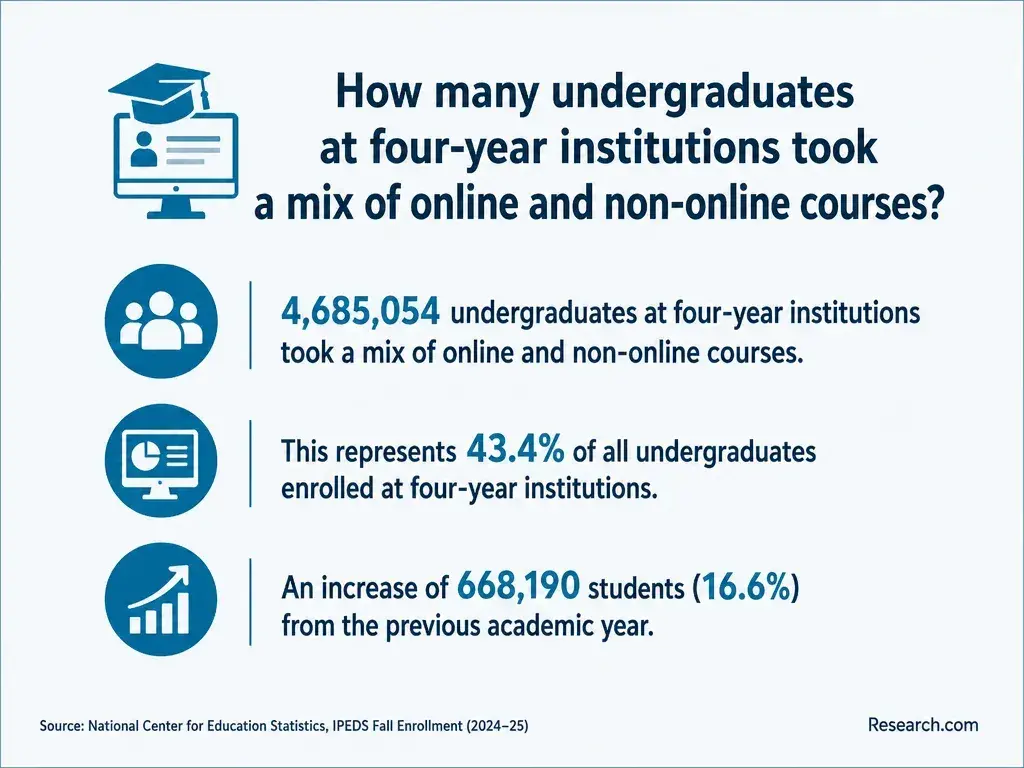
Neither format is inherently better for HR or management. Online study may reduce travel and make it easier to keep working; campus study may offer convenient access to in-person recruiting, group work, and local employers. The stronger option is the one whose required activities you can complete while gaining relevant experience.
Check live-session times, group-project meetings, exam rules, internship access, and whether upper-level HR electives run often enough for your plan. An asynchronous lecture does not necessarily mean a self-paced course. Working learners can compare business administration degrees for working learners, then request sample schedules for the specific concentration before enrolling.
First, confirm the institution's accreditation through the accreditor's directory and the school's current disclosures. Then check whether any advertised AACSB, ACBSP, or IACBE accreditation covers the relevant business school or program. Institutional accreditation and business-program accreditation have different scopes; neither alone proves that a particular HR concentration has strong placement outcomes.
For quality, request the current catalog, a concentration course plan, information about faculty access and internships, and any career-outcome report with its cohort and response rate. Check whether the policies apply to your enrollment term. If speed is part of your search, use lists of online colleges offering accelerated bachelor's to identify programs to investigate - not as evidence that their HR electives, academic support, or outcomes are equivalent.
An HR-focused graduate may seek HR assistant, recruiting coordinator, or HR specialist roles involving hiring administration, employee records, benefits coordination, or training support. A broad management graduate might pursue operations coordinator, administrative specialist, or project coordinator work involving schedules, vendors, processes, and reporting. Job descriptions - not degree labels - show which skills and experience an employer expects.
For early-career applicants, the strongest evidence is often a combination of coursework and supervised work: accurate spreadsheets, clear stakeholder communication, a documented process improvement, or an internship with defined responsibilities. A degree does not by itself qualify someone to manage employees. If you already have substantial work experience and need a bachelor's credential to pursue a specific opening, investigate shorter pathways to an online business degree, but confirm how many of your credits will actually meet graduation requirements.
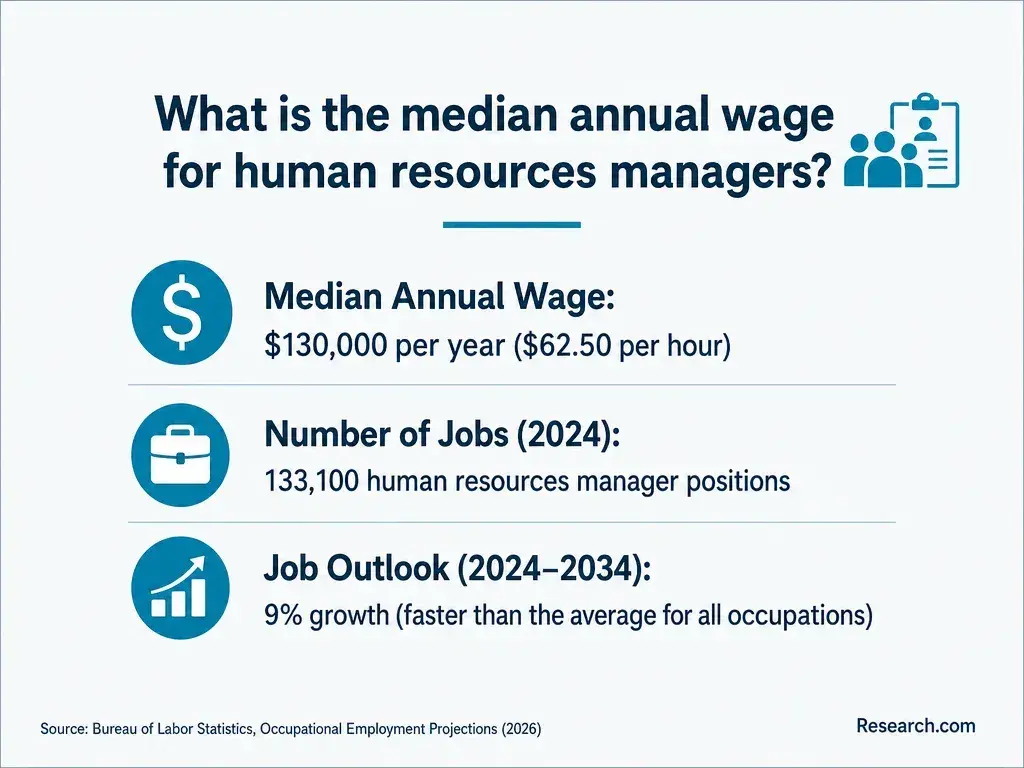
Occupation-wide figures provide context, not a forecast for someone completing either curriculum. According to the U.S. Bureau of Labor Statistics, the median annual wage for human resources specialists was $75,940 in May 2025, with employment projected to grow 6% from 2025 to 2035. Those figures cover workers across experience levels, industries, and locations; an entry-level offer may differ considerably.
For a return-on-investment decision, compare local postings for roles you could realistically pursue with your experience, not manager-level national medians. Set those opportunities against your remaining education cost and time away from work. Resources on economical college choices for business administration majors can help you develop a shortlist, but a lower advertised tuition is valuable only if the program meets your academic and career needs.
Do HR or Management Careers Require Licenses or Certifications?
General HR and business management roles do not have a universal occupational license. Employers may prefer a voluntary HR certification for certain positions, but eligibility rules vary by credential and can involve education, experience, or an examination. Completing an HR concentration does not itself award certification; a management concentration likewise does not confer managerial authority.
Read target job postings before paying for an additional credential. If they primarily require a bachelor's degree, compare degree-completion requirements rather than assuming a certificate will substitute for it. If they emphasize a particular HR system, employment-law knowledge, or demonstrated experience, targeted training and relevant work may be more direct. Students comparing American fast-paced business bachelor's degrees should still verify that the pace leaves room for the experience their intended roles require.
Other Things You Should Know About Business Administration
Often, but the school must approve the change. Ask for an updated degree audit before switching so you can see any new prerequisites, unavailable courses, or added time.
Potentially. Graduate programs set their own entry requirements; some may accept a broad business background, while others expect specific prerequisites or relevant experience.
Yes, if the instructor approves the scope. A fictional case or public-information analysis can demonstrate reasoning without exposing personnel records. Workplace data requires appropriate permission.
That depends on the school's official credential rules. Confirm whether HR is a recorded concentration, a minor, or simply an elective cluster before describing it on a résumé.
- Transfer Resources - Texas Higher Education Coordinating Board https://www.highered.texas.gov/transfer-resources/
- Definitions | Transfer Credit Ohio https://transfercredit.ohio.gov/educational-partners/educational-partner-initiatives/articulation-transfer-policy-policy/articulation-transfer-policy-definitions
- Students & Recent Graduates | U.S. Office of Personnel Management https://www.opm.gov/policy-data-oversight/hiring-information/students-recent-graduates/
- Transfer Credit - Academics - iMpact Web Portal | Ross IT https://rossweb.bus.umich.edu/academics/studentresources/transfer-credit/
- Management vs Human Resource Management Degree | American Military University https://www.amu.apus.edu/area-of-study/business-administration-and-management/resources/management-vs-human-resource-management-degree/
- Human Resources Degrees: How a Bachelor's in Business Administration Can Help Launch Your HR Career | Purdue Global https://www.purdueglobal.edu/blog/business/human-resources-degrees-launch-hr-career/
- Career Paths in Human Resources | Orfalea College of Business https://orfalea.calpoly.edu/student-services/career-readiness/career-paths/career-paths-in-hr
- What Degree Do You Need for Human Resources? | snhu.edu https://www.snhu.edu/about-us/newsroom/business/what-degree-do-you-need-for-human-resources
- What is the career outlook for jobs in human resources? | FIU College of Business https://business.fiu.edu/academics/graduate/insights/posts/what-is-the-career-outlook-for-jobs-in-human-resources.html
- Explore these 8 human resources certifications | Business | Capella University https://www.capella.edu/blog/business/human-resource-management-certifications-for-your-career/