2027 BS in Business Administration and Project Management: Comparing Degree Plans After an AAS
Audited and Verified:
Our Editorial and Data Verification Process
Research.com uses government datasets, official education statistics and primary institutional information to support its career and degree guides. Our review process checks factual accuracy, occupational definitions, source dates and the requirements associated with the credentials discussed.
How This Article Was Fact-Checked
Our editorial team verifies salary estimates, employment projections, education requirements and program information against original data providers and official organizations. Salary figures are checked against the relevant occupational definitions and reporting periods. Information about licensure, accreditation and required in-person training is reviewed separately.
Fact-checked and verified on:

Co-Founder and Chief Data Scientist
An AAS can provide a starting point for a bachelor's degree, but it does not guarantee a short path to graduation. If you want to study business administration and project management, the decisive question is how your existing courses fit each school's degree plan - not how many credits the school accepts.
This guide compares transfer patterns, business and project management requirements, scheduling, cost, and career preparation so you can request useful degree audits and choose a program without paying to repeat avoidable coursework.
Key Things You Should Know
- Compare credits applied to requirements, not just credits accepted: an AAS course counted as an elective may leave a business prerequisite unfinished.
- A business administration BS with a project management concentration and a specialized project management bachelor's degree can require different courses, even when both accept the same AAS.
- The U.S. median annual wage for project management specialists was $102,320 in May 2025, but that occupation-wide figure is not a starting-salary estimate for new graduates.
What Is a BS in Business Administration and Project Management After an AAS?
A Bachelor of Science in Business Administration builds broad preparation in areas such as accounting, finance, operations, and management. Project management may be an official concentration within that BS, a set of electives, or part of a separately named degree. The designation matters: an elective cluster does not become a credential simply because a student chooses project-related courses.
An Associate of Applied Science typically emphasizes occupational preparation. That can be valuable if your AAS and work experience involve scheduling, purchasing, technical operations, or coordinating teams. It can also mean that your transcript contains fewer courses matching a bachelor's general education or business core than an academically oriented associate degree might. Neither pattern is universal.
Start by comparing the exact award and curriculum at each school. A broad business BS may suit someone who wants flexibility across operations and administrative roles; a specialized project management degree may offer more project-focused coursework but less room for other business subjects. A national guide to ranked online business colleges can help build a shortlist, but the individual degree plan and transfer evaluation should determine whether a school fits your AAS.
How Does an AAS Transfer Into a Bachelor's Degree Plan?
Transfer involves two separate decisions: whether a school accepts a course for credit and whether that credit satisfies a particular graduation requirement. The receiving institution makes the final determination. A large accepted-credit total can still leave you with missing prerequisites, upper-division courses, or credits that must be earned at that institution.
This comparison shows where an accepted AAS course might land in a business administration and project management audit. The placement - not merely the transfer total - determines what you must take next.
| Degree-plan area | Possible AAS contribution | What may remain |
| General education | Writing, mathematics, or other qualifying courses | Additional breadth requirements or a specified quantitative course |
| Business core | Equivalent accounting, economics, or introductory business courses | Courses whose content or level does not match the BS requirement |
| Project management focus | Approved planning, operations, or project courses | Upper-division concentration courses or a required capstone |
| Open electives | Accepted technical or occupational courses | Credits that transfer but do not replace required courses |
Before committing, send official transcripts and, where requested, course descriptions or syllabi to each school's transfer office. Ask for a degree audit showing general education, business core, project management requirements, electives, and residency separately. Then ask an academic adviser to confirm prerequisite sequencing and whether any equivalency or substitution needs written approval. A guide to credit mapping for online project management programs offers another way to frame those comparisons; only the receiving school can approve your credits.
What Courses Are Required in Business Administration and Project Management Programs?
Most relevant degree plans combine general education with a business core and project-focused study, but their course lists and depth vary. Compare the requirements you would still need after transfer, especially accounting, statistics, economics, and upper-division business courses that may have prerequisites.
A business administration plan may cover financial and managerial accounting, finance, marketing, organizational behavior, operations, and business law. Project management coursework may address project scope, schedules, budgets, risk, procurement, stakeholder communication, and team coordination. Check whether those topics appear in required courses rather than optional electives - and whether a capstone, simulation, or supervised project is required.
The best plan depends on your goal. If you want to coordinate cross-functional work, look for practice building schedules, explaining trade-offs, and reporting progress. If your AAS and target role point more clearly toward staffing or employee relations, compare the project focus with college pathways into human resources rather than assuming any business concentration provides the same preparation. A classroom project demonstrates learning; it does not establish that you have managed a real employer's budget or team.
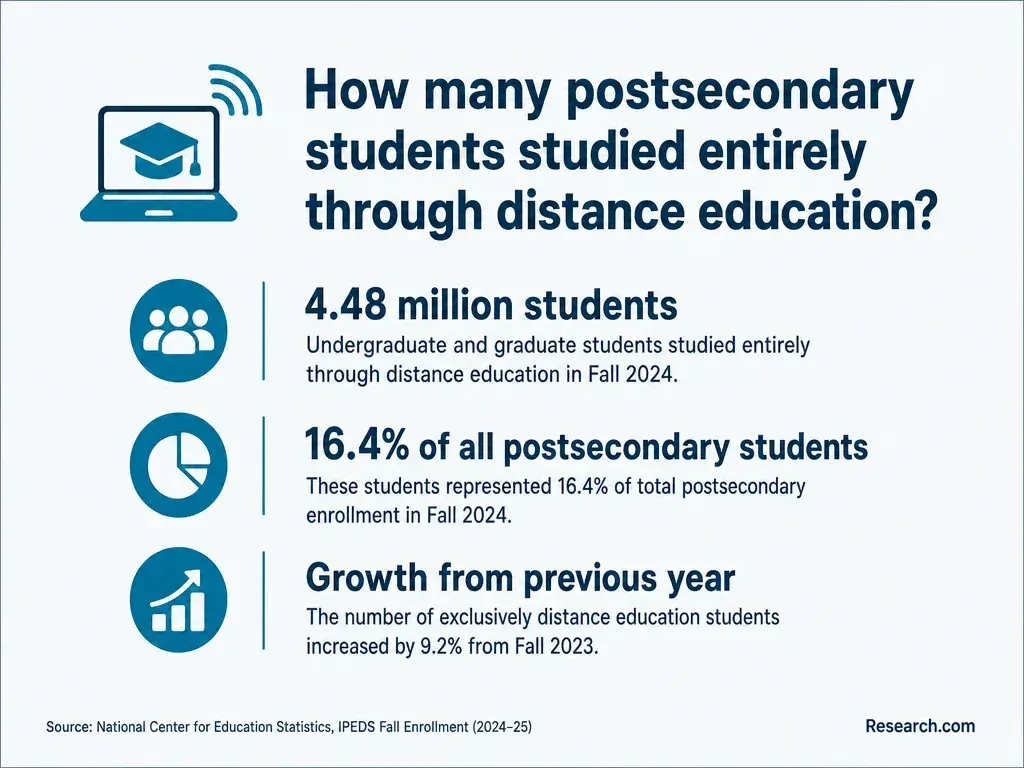
Choose the format you can complete while meeting the degree's actual requirements. Online delivery may remove a commute, but it does not necessarily remove fixed deadlines, live sessions, group meetings, proctored exams, or required campus visits. Campus study may offer easier access to classmates and local employers but require travel at set times.
Request a sample term schedule for the courses you would take first, not just a description of the program format. If you work shifts or have caregiving responsibilities, ask when group projects meet, how presentations are delivered, and whether required courses run often enough to support your planned pace. Confirm how an internship or capstone works if your current job cannot provide an approved project.
Accelerated online business degree programs may be worth comparing if you have usable transfer credit and predictable study time. A shorter calendar does not reduce the work in each course, and faster pacing can be a poor fit when a prerequisite is unavailable or your schedule changes.
Schools may assess your AAS, college GPA, official transcripts, and any required mathematics or business preparation. Admission to the university, admission to the business major, and permission to take a particular course can be separate decisions. An AAS may satisfy an entry qualification without satisfying every BS prerequisite.
Ask admissions which catalog and transfer policies would apply to you. Have the transfer office evaluate your coursework, then have a business adviser identify courses you must finish before entering upper-division accounting, finance, analytics, or project management classes. If you are returning after time away, ask whether older coursework needs review and whether the school offers an approved alternative or substitution.
Programs described as faster undergraduate completion pathways still have admission and graduation rules. Use an approved audit - not an advertised completion time - to judge whether you qualify for the proposed path.
There is no dependable AAS-to-BS timeline or price before your credits are evaluated. Remaining general education, business prerequisites, concentration courses, residency requirements, and course availability all affect the finish date. A school accepting more credits may still take longer if key requirements are offered infrequently.
For a useful cost comparison, start with the remaining required courses on each approved audit. Add tuition and mandatory fees for those courses, then account for books, software, possible travel or proctoring, and any extra terms caused by course sequencing. Compare financial-aid offers separately from sticker prices, and check eligibility and satisfactory academic progress with each financial-aid office. Low-tuition business administration schools accepting FAFSA can be a starting point, not a substitute for your personalized net-cost estimate.
If your employer offers education assistance, confirm eligible programs, grade rules, reimbursement timing, and what happens if you leave the job. Paying first and being reimbursed later can create a cash-flow problem even when the benefit reduces your eventual cost.
Check institutional accreditation and business-program accreditation as separate matters. Institutional accreditation applies to the college or university; AACSB, ACBSP, or IACBE accreditation may apply to a business school or specified programs. A school's general accreditation claim does not establish that its particular BS or project management focus has specialized accreditation.
Confirm accreditation status and scope with the accreditor and institution, then request the receiving school's written transfer evaluation and current degree audit. If you might later transfer again or pursue graduate study, ask the future institution about its own credit and admission policies; no school can promise another institution's decision. Compare online business education on a smaller budget using those checks alongside price, rather than treating a low advertised tuition rate as the whole evaluation.
The most direct targets for many graduates are project coordinator, operations coordinator, program assistant, or administrative and procurement support roles. These jobs can involve maintaining schedules, tracking tasks and spending, preparing status reports, and communicating with stakeholders. An AAS in a technical or service field may be especially useful when applying for projects in that same industry.
A project management specialist role may be possible when your coursework is paired with relevant experience, but responsibility for major budgets or teams generally depends on demonstrated work performance and employer requirements. Build evidence through a supervised internship, an approved workplace project, or work samples you are permitted to share. Show what you personally planned, tracked, analyzed, and communicated rather than describing a team outcome as your own.
If employee programs interest you more than project delivery, compare HR roles and curricula before choosing a concentration. Human resources bachelor's residency and transfer rules may also produce a different completion plan for the same AAS; ask each school for an audit before switching directions.
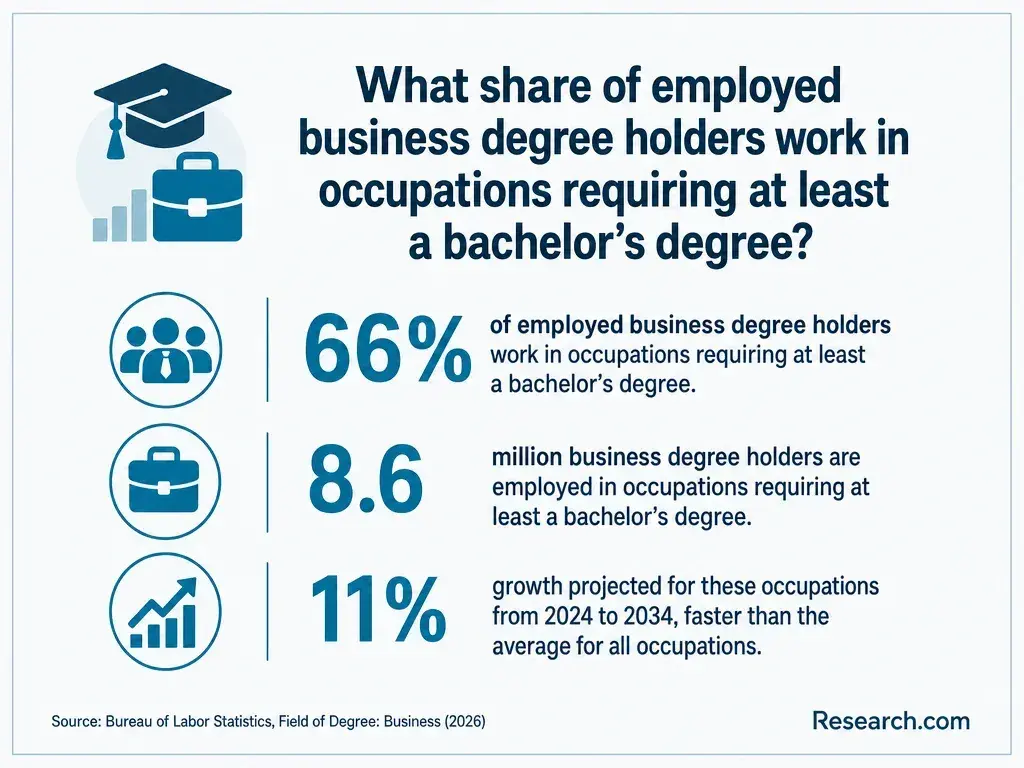
According to the U.S. Bureau of Labor Statistics, project management specialists had a median annual wage of $102,320 in May 2025, and employment is projected to grow 7% from 2025 to 2035. These are occupation-wide figures, not pay or placement forecasts for people completing a BS after an AAS. Experienced specialists, different industries, and different locations are included in the wage figure.
For your decision, compare local postings for roles you could plausibly enter now with postings for roles you hope to pursue after gaining experience. Note which ask for a bachelor's degree, project experience, industry knowledge, or a certification. A shorter degree plan may improve the financial comparison, but it does not make a specialist-level job immediate. Online undergraduate business rankings for shorter study paths can help identify programs to investigate; verify your own completion schedule before weighing it against potential earnings.
Which Project Management Certifications Complement This Degree?
A degree and a professional certification serve different purposes. The BS provides academic study across business functions; a certification assesses requirements set by its issuing organization. The Project Management Institute's Certified Associate in Project Management (CAPM) may interest someone building project knowledge, while its Project Management Professional (PMP) is aimed at applicants who meet specified project leadership experience and education requirements. Check the certifier's current eligibility rules before paying for preparation or an exam.
If you lack project experience, prioritize an affordable degree plan, relevant work, and a portfolio of permitted work samples before assuming an advanced credential is the next step. If you already lead projects, compare the certification's requirements with the job postings you want; the BS may still matter where employers require a bachelor's degree. Scholarship search options for project management majors can help you investigate degree funding, but confirm awards and eligibility separately from certification costs.
Other Things You Should Know About Business Administration
Not necessarily. Schools differ in whether concentrations appear on diplomas, transcripts, both, or neither. Ask the registrar how your completed focus would be recorded.
Often, but a change can affect required courses and graduation timing. Request an updated degree audit before changing concentrations or majors.
A completed bachelor's degree can meet the degree-level requirement for many MBA applications. Each graduate program sets its own admission, prerequisite, and accreditation-related policies.
Only with appropriate employer permission and within the school's rules. Otherwise, use approved, anonymized, public, or hypothetical information, and avoid sharing protected personal or proprietary data.
- Qualified Ed expenses | Internal Revenue Service https://www.irs.gov/credits-deductions/individuals/qualified-ed-expenses
- The Complete Project Manager with CAPM® and PMP® Prep | wa.gov https://careerbridge.wa.gov/learn/program/12763
- Definitions | Transfer Credit Ohio https://transfercredit.ohio.gov/educational-partners/educational-partner-initiatives/articulation-transfer-policy-policy/articulation-transfer-policy-definitions
- Accreditation in the U.S. | ed.gov http://www.ed.gov/laws-and-policy/higher-education-laws-and-policy/college-accreditation/accreditation-in-the-us
- Cost of Attendance (Budget) | 2025-2026 Federal Student Aid Handbook https://fsapartners.ed.gov/knowledge-center/fsa-handbook/2025-2026/vol3/ch2-cost-attendance-budget
- Everything you need to know before choosing an undergraduate business degree - Penn State World Campus https://www.worldcampus.psu.edu/about-us/news-and-features/choosing-a-business-degree-program
- How Do Transfer Credit Equivalencies Work? | University of Bridgeport https://www.bridgeport.edu/news/how-do-transfer-credit-equivalencies-work/
- Articulation and Transfer Credits - CSUF - Office of the Registrar https://registrar.fullerton.edu/articulation-tc/
- Transfer Credit Evaluation - TXST Admissions https://www.admissions.txst.edu/future-students/transfer-credit-evaluation.html
- Transfer Credit Policy | Office of Undergraduate Admissions https://admissions.uci.edu/apply/how-to-apply/transfer-credit-policy.php