2027 BS in Business Administration and Marketing: Evaluating Career Claims Before Requesting Information
Audited and Verified:
Our Editorial and Data Verification Process
Research.com uses government datasets, official education statistics and primary institutional information to support its career and degree guides. Our review process checks factual accuracy, occupational definitions, source dates and the requirements associated with the credentials discussed.
How This Article Was Fact-Checked
Our editorial team verifies salary estimates, employment projections, education requirements and program information against original data providers and official organizations. Salary figures are checked against the relevant occupational definitions and reporting periods. Information about licensure, accreditation and required in-person training is reviewed separately.
Fact-checked and verified on:

Co-Founder and Chief Data Scientist
A business administration degree with a marketing focus may sound like a direct route to a marketing career, but program descriptions and career claims do not always describe what a new graduate can do or earn. If you are considering requesting information from a school, first separate the degree's actual curriculum from its advertised outcomes.
This guide explains which roles are plausible entry points, how to interpret salary figures, and what to verify about costs, accreditation, and applied learning. You can then ask schools for evidence that matters to your career goal.
Key Things You Should Know
- A marketing concentration can strengthen a broad business degree, but neither the concentration nor the degree guarantees a marketing job or a management position.
- The U.S. Bureau of Labor Statistics reports a $78,760 median annual wage for market research analysts in May 2025; that occupation-wide figure is not a starting salary for degree graduates.
- Before requesting information, confirm the official degree and concentration, total remaining cost, and whether students complete marketing work they can discuss with employers.
What is a BS in Business Administration and Marketing?
Typically, this means a Bachelor of Science in Business Administration with a marketing concentration, emphasis, or set of electives. It combines a general business core - such as accounting, finance, management, and operations - with study of customers, markets, promotion, and marketing measurement. The exact credential depends on the school: some award a BS in Business Administration with a named concentration, while others offer a separate marketing major or only marketing electives.
That distinction matters when comparing career claims. Ask whether "marketing" appears on the transcript as an official concentration, which courses are required, and whether they add credits beyond the general degree. A specialized marketing bachelor's may offer greater functional depth; a broad business degree may suit someone who wants room to move among functions. When surveying leading US colleges for online business study, compare the schools' official catalogs rather than assuming similarly advertised programs award the same credential.
What careers can you pursue with a BS in Business Administration and Marketing?
Marketing coordinator, sales support, customer insights, and market research roles are possible directions, depending on the applicant's experience and technical skills. The degree supplies useful preparation; employers still evaluate evidence that you can perform the role's tasks. The table distinguishes common starting responsibilities from more specialized work.
| Career direction | Typical work | Important qualification distinction |
| Marketing coordinator or assistant | Organizing campaign materials, schedules, vendors, and reports | Writing, spreadsheet, and project examples may matter as much as the degree title. |
| Market research analyst | Collecting and interpreting customer or market data | Some positions expect stronger statistics, research, or analytics preparation. |
| Sales or customer-success support | Tracking customer needs, accounts, and sales activity | Customer-facing experience and the employer's product knowledge requirements can be decisive. |
| Marketing manager | Setting strategy, directing campaigns, and overseeing budgets or staff | This is generally an experience-dependent destination, not an automatic first job after graduation. |
The Bureau of Labor Statistics projects 7% growth in market research analyst employment from 2025 to 2035. That indicates demand for the occupation, not a placement rate for any particular program. If your goal is people operations rather than customer-focused work, compare HR curricula and career directions before choosing marketing electives.
How much can you earn with a BS in Business Administration and Marketing?
There is no single salary attached to this degree. The closest useful figures describe occupations, which include workers with different degrees, locations, employers, and years of experience. The Bureau of Labor Statistics reports a $78,760 median annual wage for market research analysts in May 2025. Half of workers in that occupation earned less, and the figure should not be used as a new graduate's expected offer.
Marketing manager wage figures are higher, but applying them to an entry-level candidate would obscure the experience usually required for that role. To assess a school's earnings claim, ask which graduates were measured, how long after graduation, how many responded, and whether the figure covers marketing jobs specifically. If earnings potential is driving your choice of function, an affordable supply chain degree planning guide can help you consider a different pathway - but compare its duties and required skills, not just advertised pay.
A typical business core introduces accounting, economics, finance, management, statistics, and business communication. Marketing study may cover consumer behavior, market research, digital marketing, brand strategy, and campaign measurement. Course titles alone reveal little about depth: a program might teach students to interpret an existing dashboard, while another requires them to design a research question, analyze data, and explain its limitations.
For career preparation, inspect the required assignments. A useful applied project could involve a proposed campaign brief, a public-data market analysis, or a clearly labeled hypothetical budget. None should be presented as a proven business result. If you hope to use your current job for a project, confirm faculty approval and employer permission before using internal data. Business administration programs supporting continued employment are worth comparing on project rules and scheduling, not merely on whether classes are online.
A full-time student entering without college credit commonly plans around four academic years. Your actual timeline depends on accepted transfer work, which credits satisfy degree requirements, prerequisite sequences, course availability, and whether you attend part time. Previously earned credits can be accepted as electives without replacing required business or marketing courses.
Before relying on an advertised completion time, request a program-specific degree audit and a term-by-term course plan. Check when upper-level marketing courses run and whether an internship or capstone has enrollment prerequisites. An accelerated business college program guide may help you find shorter-format options, but a faster calendar does not eliminate required coursework or guarantee that transferred credits apply to the major.
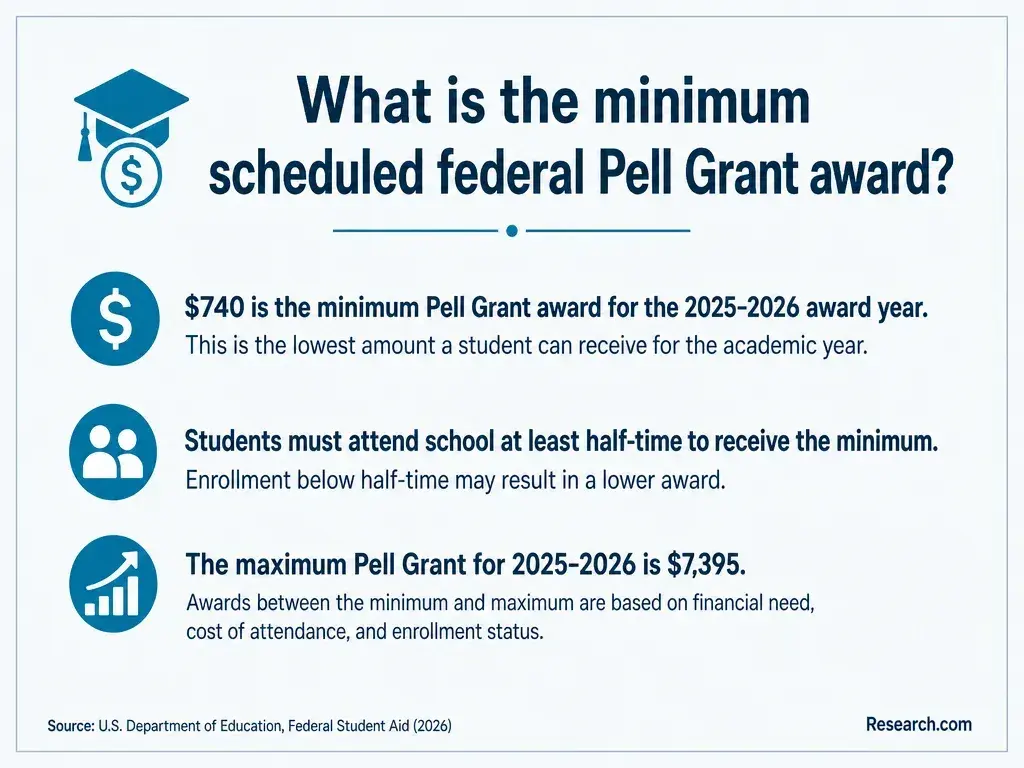
There is no reliable single price without a named school and an evaluation of your remaining requirements. Compare tuition using the same enrollment assumptions, then add mandatory fees, books, software, possible travel, and any extra terms caused by course sequencing. For a returning student, the relevant price is the cost of courses still needed to graduate, not simply the advertised per-credit rate multiplied by credits the school accepts.
Ask for an itemized estimate based on your degree audit, plus the school's current financial-aid and refund policies. If an employer offers tuition reimbursement, check when payment arrives and what grade or continued-employment conditions apply. Cost-effective paths to a business degree can identify schools to investigate, but a lower advertised tuition rate is not necessarily a lower completion cost.
Schools may separate admission to the university from entry into the business major or a marketing concentration. Depending on the program, applicants may need secondary-school or college transcripts, specified academic standing, and preparatory coursework; transfer applicants may face additional business-course prerequisites. Do not assume that prior work experience waives a required course.
Request the current requirements for your applicant category and ask when any missing prerequisites must be completed. If you have college credit, submit official records for an evaluation that shows where each credit applies. A business administration admissions preparation guide can help you organize questions, but the institution makes the admission and credit decisions.
Online delivery alone does not make a degree less credible. What matters is the institution's recognized accreditation, the actual curriculum, appropriate assessment, and whether students can obtain meaningful feedback and career support. Compare the online and campus versions rather than assuming they have identical electives, instructors, internship access, or graduation requirements.
Ask whether classes require live attendance, group meetings, proctored exams, or campus visits. Also ask how online students complete research projects and receive career assistance. An application fee is a separate issue: no-application-fee online college choices may reduce the cost of exploring options, but they should still be judged on academic fit and verified outcomes.
Start with institutional accreditation: check the school's current status with its named accreditor and confirm that the accreditor is recognized by the U.S. Department of Education or the Council for Higher Education Accreditation. Then check any claimed business-school or programmatic accreditation, such as AACSB, ACBSP, or IACBE. Ask the institution whether its particular business administration degree, campus, and delivery format fall within the accreditor's scope.
Accreditation does not certify that graduates obtain marketing jobs. It is also distinct from federal student-aid participation, which should be verified with the school's financial-aid office. If aid eligibility affects your shortlist, FAFSA-accepting colleges for business administration students offer a starting point for checking both issues separately.
Do marketing careers require licenses, certifications, or professional credentials?
General marketing coordinator and market research roles do not have a universal U.S. occupational license. Employers may value platform training, analytics certificates, or demonstrated work, but requirements vary by role and employer. A marketing course or concentration does not automatically award a separate professional certification, and some adjacent activities - such as work in regulated financial products - may have their own licensing rules.
Match any optional credential to job postings for the work you want to do. If postings emphasize a specific tool, targeted training and a sound work sample may be more direct than another degree. If they consistently require a bachelor's degree and broader business judgment, compare the full cost of study - including business administration online programs with competitive tuition - against the narrower training route. Neither route substitutes for evidence that you can do the job.
Other Things You Should Know About Business Administration
Often, but the school must confirm eligibility, available courses, and whether the change affects your graduation date. Request an updated degree audit before switching.
Ask whether the program requires one or offers an approved alternative. Relevant paid work, supervised projects, and coursework may help demonstrate skills, but they do not automatically replace internship credit.
It can, if you explain your objective, evidence, limitations, and what you would change. Obtain permission and remove confidential customer or employer information before sharing it.
Not universally. Employers often weigh relevant marketing results and leadership experience. Check target job requirements before paying for graduate study primarily to pursue a management title.
- Accreditation in the U.S. | ed.gov http://www.ed.gov/laws-and-policy/higher-education-laws-and-policy/college-accreditation/accreditation-in-the-us
- Cost of Attendance (Budget) | 2025-2026 Federal Student Aid Handbook https://fsapartners.ed.gov/knowledge-center/fsa-handbook/2025-2026/vol3/ch2-cost-attendance-budget
- What Can You Do With a Business Administration Degree? | American Military University https://www.amu.apus.edu/area-of-study/business-administration-and-management/resources/what-can-you-do-with-a-business-administration-degree-exploring-options/
- The business analytics skills employers are looking for | wiley.com https://onlinelibrary.wiley.com/doi/10.1111/dsji.70004
- Internships for Business Majors | Oakland University https://www.oakland.edu/business/careers-internships/internships/internships-for-business-majors/
- Internships & Job Search | College of Communication & Information | Kent State University https://www.kent.edu/cci/internships-job-search
- Transfer credit policies - Office of Admissions https://admit.washington.edu/apply/transfer/policies/
- How much does college cost? A complete guide to tuition, fees and financial aid | ASU https://admission.asu.edu/college-planning-advice/how-much-does-college-cost-complete-guide-tuition-fees-and-financial-aid