2027 BS in Business Administration and Human Resources Management: How to Compare Internship and Capstone Requirements
Audited and Verified:
Our Editorial and Data Verification Process
Research.com uses government datasets, official education statistics and primary institutional information to support its career and degree guides. Our review process checks factual accuracy, occupational definitions, source dates and the requirements associated with the credentials discussed.
How This Article Was Fact-Checked
Our editorial team verifies salary estimates, employment projections, education requirements and program information against original data providers and official organizations. Salary figures are checked against the relevant occupational definitions and reporting periods. Information about licensure, accreditation and required in-person training is reviewed separately.
Fact-checked and verified on:

Co-Founder and Chief Data Scientist
An HR-focused business degree can require supervised work, a final project, both, or neither. Those differences matter if you need degree credit from an existing job, cannot take time away for an internship, or want a work sample for HR applications. This guide shows prospective and transfer students how to compare internship and capstone rules, identify hidden scheduling and approval requirements, and choose an applied-learning pathway that fits their access to HR work and their career goals.
Key Things You Should Know
- An internship generally requires approved work and supervision; a capstone is an assessed academic project. Neither automatically substitutes for the other.
- Compare required hours or credits, approval deadlines, site and data-access rules, and whether either requirement can use your current job.
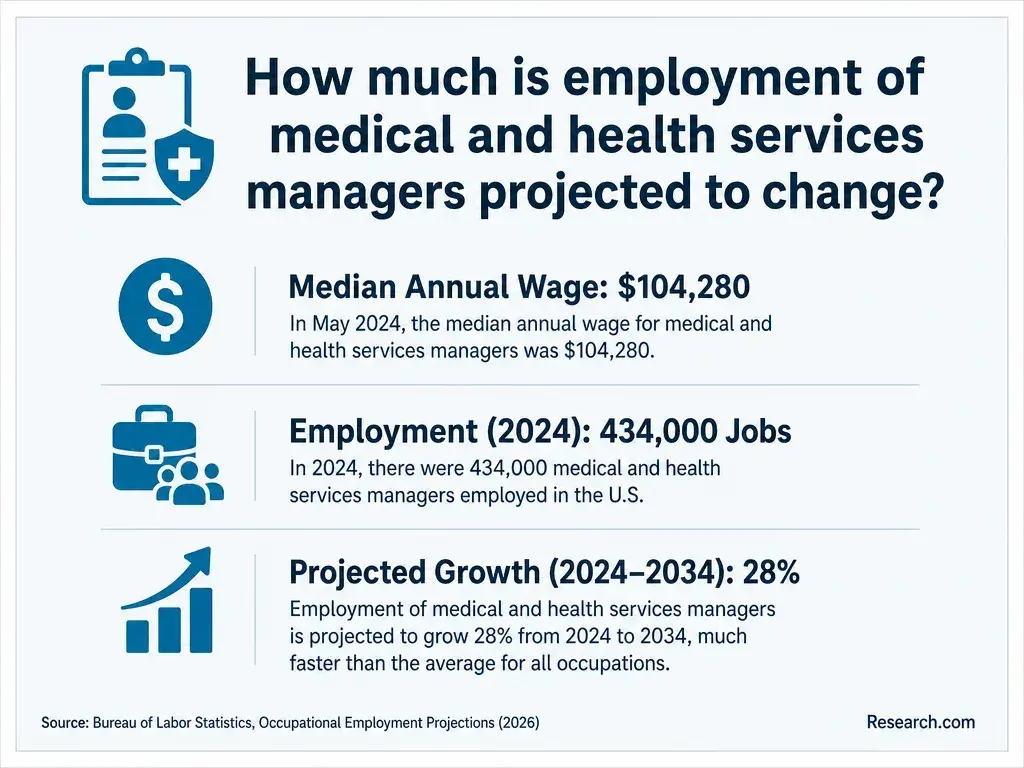
- The Bureau of Labor Statistics reports a $75,940 median annual wage for human resources specialists in May 2025, but that occupation-wide figure is not a starting salary or evidence that one applied-learning format leads to higher pay.
What is a BS in Business Administration and Human Resources Management?
It is an undergraduate business degree with HR-focused study, though the official credential may instead be a BS in Business Administration with an HR concentration. A concentration, a separate HR major, and a group of HR electives are not interchangeable: check what appears on the transcript and which requirements belong to each option.
The business core usually provides context in accounting, management, finance, and operations; HR study focuses more closely on staffing, employee relations, compensation, and workplace policy. For a student aiming at general team leadership rather than HR practice, organizational leadership bachelor's completion planning offers a useful comparison. In either degree, the applied requirement matters more than its label: determine what work you will actually do and who will evaluate it.
How do internship requirements compare across human resources management programs?
An HR internship typically places a student in an approved role to perform and reflect on supervised work. Schools set their own eligibility, minimum hours, credit, and grading rules. Some require an internship for everyone; others make it optional or permit an approved alternative. A current job may qualify only if the department accepts its duties and supervision.
Use the following comparison to distinguish an actual graduation requirement from an attractive but optional opportunity. Request the catalog rule and internship handbook for your intended enrollment term before relying on either.
| Feature | Required internship | Optional internship | Approved current-job placement |
| Graduation effect | Must be completed unless an authorized alternative applies | May add experience or elective credit | Counts only if formally approved under the applicable rule |
| Practical constraint | Securing a suitable site and supervisor | Fitting the experience into the degree plan | Showing that duties meet HR learning objectives |
| Evidence to request | Hours, prerequisites, assessment rubric, and placement policy | Credit and financial-aid treatment | Written approval, supervision plan, and permitted work products |
Ask whether recruiting support, onboarding, training coordination, or HR data work meets the learning objectives; routine office work may not. Confirm who finds the placement, when approval is due, whether it can be paid or remote, and what happens if a placement falls through. Transfer students should also compare HR bachelor's transfer policies: transferred elective credit does not necessarily replace a required internship.
How do capstone requirements compare across business administration programs?
A capstone is a final assessed assignment that brings together earlier coursework. An HR student might develop a training-needs assessment, an onboarding proposal, or an analysis of a hypothetical staffing problem. Other programs require a general business strategy project, team simulation, or presentation. A capstone does not necessarily include workplace hours or an employer supervisor.
The distinctions below show which format is feasible when access to an organization or its data is limited. The assigned course syllabus and rubric - not the word "capstone" alone - determine what you must submit.
| Capstone format | Typical output | Key feasibility check |
| HR-focused project | Evidence-based policy, staffing, or training proposal | Whether the topic and information sources are approved |
| General business capstone | Cross-functional strategy or operating recommendation | Whether HR can be the main focus |
| Team simulation or case | Decisions, analysis, presentation, and reflection | Scheduled meetings and individual grading |
| Employer-based project | Scoped analysis for a workplace decision-maker | Employer permission, data rights, and faculty approval |
Compare the project rubric, prerequisites, course availability, group-work obligations, and options if an employer denies data access. A proposed project is not an implemented workplace improvement. For students considering a project-management degree instead, value-focused project management degree choices can help separate an HR capstone from a different academic and career pathway.
Expect a business foundation alongside HR subjects such as recruitment, compensation, training, organizational behavior, and employment law. The exact sequence matters: a school may require business statistics or an introductory HR course before internship registration, then reserve the capstone for the final stage of study.
Read course descriptions for the skills you can apply, not just familiar titles. For example, a staffing course may teach how to assess a hiring process, while a statistics course can help you interpret workforce measures without claiming that a simple comparison proves a policy caused an outcome. If operations work interests you more than HR, accelerated degree planning for supply chain undergraduates is a separate pathway to examine rather than assuming HR electives will provide that specialization.
Online delivery changes where coursework happens, not necessarily where an internship can happen or when a capstone team must meet. An online student may still need a locally approved site, scheduled video presentations, or access to an employer supervisor. Campus programs may offer nearby employer contacts but require travel and fixed meeting times.
Ask for sample schedules from the internship and capstone courses, including live sessions, deadlines, presentations, and any campus visits. If you work or provide care, compare the actual weekly commitments with your availability. Check separately whether the online program participates in federal student aid; a starting point is online business administration degrees accepting federal aid applications, followed by confirmation with each school's financial-aid office.
First, verify the institution's accreditation with a recognized institutional accreditor. Then check whether the particular business school or program falls within any claimed AACSB, ACBSP, or IACBE accreditation; these are distinct from institutional accreditation, and their scope is not automatically identical across degrees or locations. Accreditation does not, by itself, establish that internship placements are available or that a capstone meets your career goal.
Request confirmation of the degree's accreditation status and ask how the school oversees off-campus internship sites. Those checks are especially useful when comparing the cost of an online degree and its applied requirements. Budgeting for online project management college study illustrates why students comparing a different applied-business field should examine fees and aid alongside accreditation rather than treating the credential label as the whole decision.
Requirements vary by institution and by entry route. First-year applicants generally submit secondary-school records; transfer applicants submit prior college transcripts. Some schools admit students directly to business, while others require introductory courses or a separate major application. Admission to the school does not establish that you have met internship prerequisites or the credits needed to enroll in a capstone.
Before applying, check required credits before entering business administration study, then ask an adviser for a degree audit showing which prior courses apply to the business core, HR requirements, and graduation total. If you hope to use an existing job for applied credit, obtain the separate departmental approval rule in writing.
A conventional full-time bachelor's plan is often organized around four academic years, but transfer credit, course sequencing, enrollment pace, and required applied work can change an individual timeline. An internship may depend on securing an approved site by a deadline; a capstone may be offered only after specified courses are complete. Neither should be assumed available in any term.
Build a term-by-term plan with the adviser and identify the latest safe date to arrange a placement or secure capstone project approval. Compare completion claims against actual course availability using bachelor's programs for faster completion as a starting point, not a promised graduation date. Budget for additional terms if a required course or placement cannot be completed on schedule.
HR assistants, recruiting coordinators, and benefits or training support staff handle different parts of HR operations; specialist roles may involve recruiting, employee records, or policy administration. Internships can provide supervised examples of these tasks, while a strong capstone can show how you frame an HR problem and communicate a defensible recommendation. Neither is a substitute for job-specific experience.
The Bureau of Labor Statistics reports a May 2025 median annual wage of $75,940 for human resources specialists and projects 6% employment growth from 2025 to 2035. The median covers workers across experience levels, so compare entry-level postings and local pay rather than treating it as a new graduate's expected offer. HR manager positions generally call for substantial relevant experience beyond a bachelor's degree. If your target is broader supervision rather than HR operations, evaluate price duration and outcomes of business administration degrees against the roles you actually intend to pursue.
Which HR certifications and professional standards matter after graduation?
SHRM and HRCI offer voluntary HR certifications with different eligibility and examination rules. A degree or HR concentration does not automatically award certification; check the certifying body's current requirements before paying for preparation. Early professional development can also come from supervised hiring, benefits, training, or employee-records work, provided you follow workplace policy and protect personal information.
Match the credential to your intended function rather than collecting unrelated qualifications. For example, someone deciding between HR and project coordination should compare the role requirements before committing to another degree or certification. If a project-management bachelor's is the better fit, FAFSA planning for project management bachelor's students addresses degree funding; it is not an HR certification requirement.
Other Things You Should Know About Business Administration
Usually you can discuss your methods and conclusions, but check course, employer, and intellectual-property rules first. Remove employee information and proprietary details, or use an approved public-data or fictional version.
The school's designated academic authority decides. Ask the internship coordinator or program director for the written policy and appeal process before starting work you expect to count.
It may be, if the duties provide meaningful supervision and relevant evidence of skill. Weigh that benefit against lost earnings, travel, and the availability of paid or other approved options.
Do not use restricted records without permission. Ask the instructor whether a public-data case, simulation, or hypothetical proposal satisfies the rubric.
- Fact Sheet #71: Internship Programs Under The Fair Labor Standards Act | U.S. Department of Labor https://www.dol.gov/agencies/whd/fact-sheets/71-flsa-internships
- Management (BSBA) - Human Resources Concentration | University of South Alabama https://bulletin.southalabama.edu/programs-az/business/management/management-bsba-human-resources-concentration/
- Internships and Work Experience - Construction Management | Social Work https://www.chhs.colostate.edu/cm/careers-internships-and-recruiting/students/internships-and-work-experience/
- Internship Course FAQ | Current Students - Tippie College of Business | The University of Iowa https://students.tippie.uiowa.edu/undergraduates/tippie-rise/internships/course-faq
- Capstone Experiences | Assessment and Curriculum Development Office https://manoa.hawaii.edu/assessmenttest/resources/how-to/capstone-experiences/
- What Is a Capstone Project? - Boston University Questrom https://www.bu.edu/questrom/blog/what-is-a-capstone-project/
- Capstone + Internships - Global Health Studies https://global-health.as.miami.edu/resources/internships-capstones/index.html
- Internship Policies and Procedures | The University of Texas at Dallas https://jindal.utdallas.edu/career-management-center/student-resources-cmc/internship-policies-procedures/
- Work-Based Learning: Information for Employers | skagit.edu https://www.skagit.edu/internships-learning-into-action/for-employers.html
- What Is a Capstone Project? | DeVry University https://www.devry.edu/blog/what-is-a-capstone-project.html