2027 BS in Business Administration and Digital and Social Media Management: How to Check Whether a Job Needs a Separate Credential
Audited and Verified:
Our Editorial and Data Verification Process
Research.com uses government datasets, official education statistics and primary institutional information to support its career and degree guides. Our review process checks factual accuracy, occupational definitions, source dates and the requirements associated with the credentials discussed.
How This Article Was Fact-Checked
Our editorial team verifies salary estimates, employment projections, education requirements and program information against original data providers and official organizations. Salary figures are checked against the relevant occupational definitions and reporting periods. Information about licensure, accreditation and required in-person training is reviewed separately.
Fact-checked and verified on:

Co-Founder and Chief Data Scientist
A job posting may ask for a business degree, digital marketing experience, and a certification - but those are different qualifications. If you are considering a BS in Business Administration with digital and social media management coursework, the distinction affects what you study and what you pay for.
This guide explains how to check a specific employer's requirements, what the degree can help you demonstrate, and when a separate certification or more practical experience is the better next step.
Key Things You Should Know
- Most digital and social media roles do not have a government-issued occupational license; a posting's "required certification" is generally an employer hiring condition, not a legal requirement.
- A digital media concentration is part of a degree, not automatically a separately awarded credential. Check the transcript and catalog before describing it as a certification.
- The BLS reports a May 2025 median annual wage of $78,760 for market research analysts, an occupation that includes some related work - not an expected starting salary for social media graduates.
What Is a BS in Business Administration and Digital and Social Media Management?
It is a business administration bachelor's degree that combines a general business core with study of digital channels, audiences, content, campaigns, and measurement. "Digital and social media management" might be an official concentration, a track, or simply a group of electives. The school's catalog and transcript - not the program's marketing language - determine which designation you earn.
The broad business core can be useful when a campaign role involves budgets, customer research, or coordination with sales and operations. It is less specialized than some marketing degrees. If your target job instead centers on employee relations or recruiting, compare the curriculum with HR degree coursework and entry requirements rather than assuming all business concentrations prepare you for the same function.
Does Digital and Social Media Management Require a Separate Credential?
Usually, no. In the United States, digital and social media management is not generally a licensed occupation. An employer can still require a particular degree, platform certification, or level of experience for its own vacancy. The distinction is between legal permission to practice and an employer's conditions for hiring.
These labels describe different kinds of evidence. Compare the exact wording in the posting before paying for another qualification.
| Posting language | What it usually means |
| "Bachelor's degree required" | A degree requirement; confirm whether the employer accepts business administration or specifies another major. |
| "Digital marketing concentration preferred" | A preferred academic focus, not necessarily a separate award. |
| "Platform certification required" | An employer-specified certification; check its issuer, name, and validity requirements. |
| "Portfolio and campaign experience required" | Evidence of work performed; coursework alone may not meet it. |
For a specific vacancy, use this verification sequence:
- Separate every "required" qualification from "preferred" qualifications and record the exact credential name.
- Check whether the requirement appears in the employer's current posting, rather than only in a job-board summary.
- If a certification is named, confirm its issuer and whether an equivalent is accepted; ask the recruiter when the wording is unclear.
- Compare the requirement with your transcript, certificates, and documented work. Do not describe a concentration as a separate certification.
A posting for project coordination may call for a different qualification altogether. Before switching academic paths to satisfy it, compare both the job requirements and the education expense; tuition and aid questions for project management students concern a distinct pathway, not a prerequisite for social media work.
What Jobs Can You Get With This Business Administration Degree?
Potential entry routes include social media coordinator, marketing assistant, content coordinator, and digital campaign assistant. Coordinators may schedule approved content, track engagement, prepare reports, and work with designers or customer-facing teams. Employers may expect writing samples, spreadsheet skills, familiarity with their platforms, or prior campaign work in addition to a degree.
Jobs titled social media manager or marketing manager often involve strategy, budgets, staff, or accountability for results. Graduation does not by itself establish readiness for those responsibilities. If you already have customer service, communications, or small-business experience, use examples of audience research, clear writing, and measured projects to show how those skills transfer.
If your strongest interests are purchasing, logistics, or inventory rather than campaigns, online supply chain degrees with cost and outlook details offer a more relevant comparison than a digital media concentration.
Expect a business foundation that may include accounting, economics, marketing, management, statistics, and business communication. Digital-focused coursework may cover content planning, consumer behavior, social platforms, search, paid media, and campaign analytics. Course titles and required tools vary; check the current catalog for prerequisites, electives, and whether the concentration adds credits or delays graduation.
For job readiness, look beyond course names. An assignment that requires an audience brief, campaign budget, accessible content, and a measurement plan can produce stronger evidence than platform familiarity alone. A class project should be labeled as such in a portfolio; do not present projected results as an employer campaign. If operations coursework proves a better fit, compare the sequencing of fastest online supply chain bachelor's programs before changing concentrations, since a faster advertised schedule may not fit your completed credits.
First, verify the university's institutional accreditation and that it is recognized by the U.S. Department of Education or the Council for Higher Education Accreditation. Then check whether any advertised business accreditation - such as AACSB, ACBSP, or IACBE - actually covers the school or program offering the BS. Business accreditation is not a certification for individual graduates, and it does not establish that employers will accept a particular concentration.
National online business program rankings can help build a shortlist, but verify accreditation scope, the awarded degree name, and the digital coursework directly with each institution before applying.
Either format can support the same career goal if the institution awards a credible degree and you can complete meaningful projects. The more useful distinction is access: campus study may make in-person collaboration easier, while online study can reduce travel but may still require live meetings, group deadlines, proctored exams, or scheduled presentations.
Ask how students get feedback on campaigns, build portfolios, and find internships in each format. If speed matters, online leadership bachelor's programs with compressed schedules illustrate an alternative scheduling model; confirm whether its subject matter and weekly workload fit a digital marketing goal before treating a shorter calendar as better value.
Requirements depend on the school and whether you apply as a first-year or transfer student. Schools commonly request prior academic records; some set separate standards for entry into the business major or particular courses. A transfer student should request an official evaluation showing which credits satisfy general education, business core, and concentration requirements - not merely how many credits were accepted.
Ask admissions about application charges, transcript requirements, and any prerequisite sequence before submitting materials. Online universities with no application charge may reduce the cost of applying, but that alone says nothing about credit applicability or the cost of completing the degree.
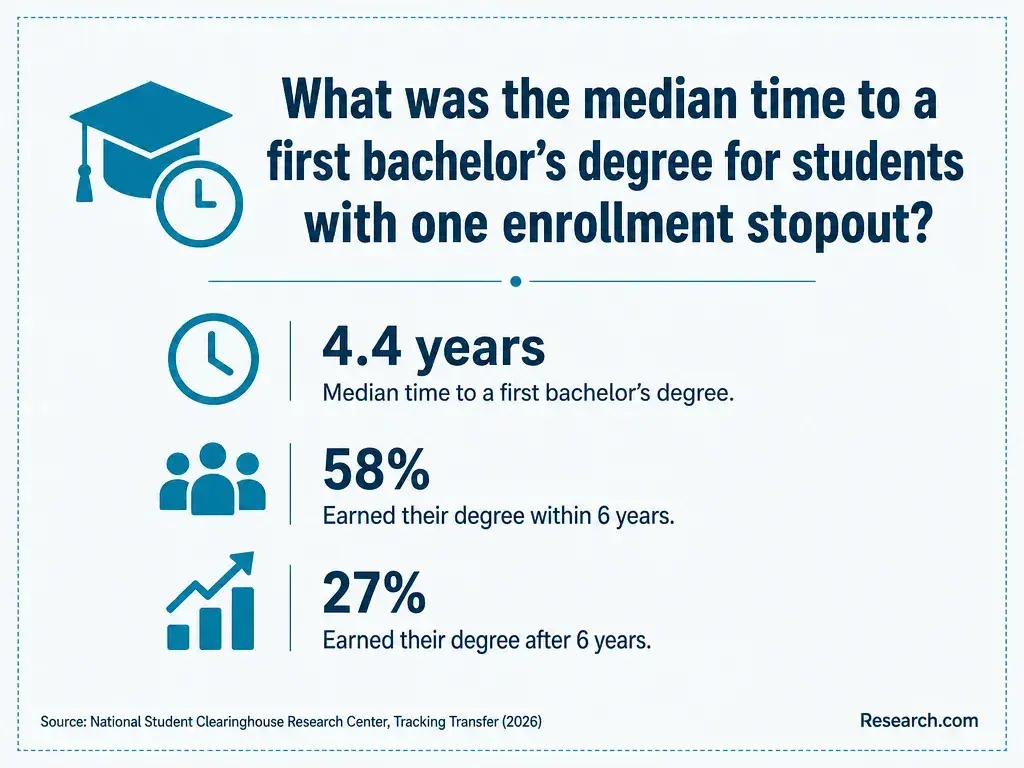
A bachelor's degree commonly takes about four academic years of full-time study, but remaining credits, transfer evaluations, enrollment pace, and course availability determine an individual completion date. Ask for a degree audit and a term-by-term plan that includes every required digital course, especially if electives rotate or have prerequisites.
Compare total remaining tuition and mandatory fees, not a quoted price per credit alone. Add books, software, possible travel, and the cost of extending enrollment if a required class is unavailable. The business degree tuition comparison guide is a starting point; obtain a personalized cost estimate and financial-aid information from each school before deciding that one program is cheaper.
Certifications or completion certificates in advertising platforms, analytics, or email marketing can help demonstrate familiarity with specific tools. Their value depends on the employer's software, the credential's assessment and renewal rules, and whether you can apply the skill in a defensible work sample. A course completion badge should not be represented as a professional license.
Prioritize a named certification when target postings repeatedly request it. Otherwise, a focused project with a clear audience, budget assumptions, and honest interpretation of results may address a more important experience gap. If you are weighing a different, project-management-focused degree rather than a short marketing credential, paying for project management bachelor's study with grants is a separate financial decision; do not take on degree costs solely to collect an unrelated certificate.
What Are the Salary and Job Outlook for Digital Media Careers?
There is no single BLS occupation covering every social media job. One related category, market research analysts, had a $78,760 median annual wage in May 2025, and BLS projects 7% employment growth from 2025 to 2035. Those figures describe an occupation-wide labor market, not starting pay or a placement forecast for graduates of this concentration. Social media coordinator roles can differ substantially from research analyst roles in duties and pay.
Use local postings for the titles you actually want to compare compensation, experience expectations, and requested credentials. Then weigh those opportunities against your remaining education cost; business administration college affordability and FAFSA participation can help frame that comparison, but financial-aid eligibility and the final price must be confirmed with the school.
Other Things You Should Know About Business Administration
Yes, if it is an official part of your academic record. Use the school's exact wording and list it under your degree; call a group of electives "relevant coursework" instead.
Usually, you should obtain employer approval before sharing internal results, customer data, creative assets, or screenshots. If permission is unavailable, describe your responsibilities without disclosing protected information.
No. Credit typically depends on the school's approval, supervision, documented work, and assessment rules. Confirm the requirements before accepting an internship on the assumption that it will count.
Often, yes. If the certification is listed as preferred rather than required, present relevant work samples and explain how you would learn the tool. Follow any application instructions the employer sets.
- Advertising and Marketing | Federal Trade Commission https://www.ftc.gov/business-guidance/advertising-marketing
- Professional Licensure | U.S. Department of Education http://www.ed.gov/about/initiatives/international-affairs/professional-licensure
- 8 Digital Marketing Certifications to Increase Your Potential | Wharton Executive Education https://executiveeducation.wharton.upenn.edu/thought-leadership/wharton-online-insights/digital-marketing-certifications/
- What is a business administration degree? | Northwest Media Center https://www.nwmissouri.edu/media/news/2025/07/what-is-a-business-administration-degree.htm
- 10 Key Subjects Taught in a Bachelor of Business Administration Program | Carson-Newman University https://www.cn.edu/cps-blog/10-key-subjects-taught-in-a-bachelor-of-business-administration-program/
- College Credit for Work and Life Experience | Purdue Global https://www.purdueglobal.edu/transfer-students/work-life-experience/
- License vs. Credential: What's the Difference? | Goodwin University https://www.goodwin.edu/enews/choosing-a-career-path-what-is-the-difference-between-a-license-and-a-professional-credential/
- Social Media Manager Jobs: Career Guide & Salaries | Arkansas State University Online https://degree.astate.edu/online-programs/undergraduate/bs-digital-technology-design/strategic-communication/social-media-jobs-career-guide/
- Social Media Jobs: 6 Roles to Explore by Experience Level | Coursera https://www.coursera.org/articles/social-media-jobs
- 10 Marketing Certifications to Build Must-Have 2026 Skills | cmswire.com https://www.cmswire.com/digital-marketing/10-marketing-certifications-that-can-help-you-earn-a-better-salary/