2027 Best Online Two-Year Degrees for Military Spouses

Co-Founder and Chief Data Scientist
A permanent change of station can interrupt a degree just as a required course or clinical placement becomes available. For military spouses, the best online two-year degree is one they can realistically finish across moves and use toward a clear career goal.
Cost matters, too: the College Board reported average published tuition and fees of $4,050 for in-district students at public two-year colleges in 2024-25. That figure is a starting point, not a total program price. This guide compares six degree fields and shows what to verify before enrolling.
Key Things You Should Know
- For maximum geographic flexibility, compare online business and information technology programs first; check for scheduled classes, proctored exams, and internship requirements before enrolling.
- Healthcare and nursing can offer direct occupational pathways, but an online course schedule does not remove in-person clinical work or state licensing requirements.
- Many associate degrees require about 60 credits, but accepted transfer credit, course sequencing, and enrollment pace determine the actual timeline; eligible spouses may be able to use up to $4,000 in My Career Advancement Account assistance under current program rules.
Top 10 Best Online Two-Year Degrees for Military Spouses
Business Programs
An online Associate of Arts (AA) or Associate of Science (AS) in business is often a good fit for spouses who expect to transfer into a bachelor's program. An Associate of Applied Science (AAS) in accounting, office administration, or business technology may focus more on immediate employment.
Coursework commonly covers accounting, spreadsheets, communication, and operations. Business skills travel well, but management positions generally require experience beyond an associate degree. Ask whether courses are asynchronous and whether a prospective bachelor's institution will apply them to the intended major - not merely accept them as electives.
Healthcare Programs
Healthcare options include health information technology, medical office administration, and allied-health associate degrees. Health information and administrative programs may be easier to complete at a distance; hands-on fields may require labs, supervised practice, or clinical placements.
An AAS may prepare students for a defined role, while an AS may emphasize transfer prerequisites. Before choosing a program, match its curriculum to the exact occupation, check any required program accreditation or certification eligibility, and ask whether placements can be arranged after a move. "Online" does not mean every requirement can be completed from home.
Information Technology Programs
Online AS and AAS programs in information technology, cybersecurity, and networking can suit spouses seeking portable technical skills. Look for hands-on virtual labs, current software, and opportunities to build a portfolio. An AS may support transfer into computer science or another bachelor's major; an AAS may emphasize support or network operations.
Certifications can strengthen an application but have separate exams and fees. Entry-level roles are more realistic targets than cybersecurity analyst positions, which often require a bachelor's degree or substantial experience. Ask how the program updates courses as tools and employer expectations change.
Nursing / Pre-Nursing Programs
An associate degree in nursing (ADN) combines academic coursework with supervised, in-person clinical education. Graduates must also meet a state board's requirements and pass the NCLEX-RN to become registered nurses. An online pre-nursing AS is different: it typically covers prerequisites and does not itself qualify someone for RN licensure.
Nursing may be worth the scheduling constraints for spouses committed to patient care, but frequent moves can complicate clinical placements and admission to selective cohorts. Check board approval, clinical locations, admission requirements, and how the program handles relocation before applying.
Criminal Justice Programs
An online AA, AS, or AAS in criminal justice typically covers law, courts, corrections, and public safety. The degree can build relevant knowledge, but police and correctional hiring also involves agency-specific screening and training; requirements vary by jurisdiction. Some federal roles require a bachelor's degree.
A transfer-oriented degree may be the better choice if that is the goal. Military spouses should investigate whether a desired job requires local residency, a state credential, or an academy, since those conditions can make frequent relocation difficult.
Psychology / Counseling Programs
An online AA or AS in psychology is primarily a transfer pathway, not a license to practice counseling or provide psychotherapy. Licensed counselor roles generally require graduate education, supervised experience, and state licensure. The associate degree can still help spouses test their interest in behavioral health and complete general education requirements before a bachelor's program.
Compare transfer agreements and required statistics or science courses. If near-term employment is the priority, ask employers what entry-level support roles are available locally and what qualifications those roles actually require.
What Are the Best Online Two-Year Degrees for Military Spouses?
The best choice depends on what must remain workable after a move: online access, predictable course availability, manageable cost, and a credible path to either employment or a bachelor's degree. There is no single best major for every military spouse. The comparison below summarizes where each field tends to fit - and where "online" may have important limits.
| Degree field | Best fit | Main trade-off to verify |
| Business | Broad administrative skills or a bachelor's transfer pathway | Whether credits meet the destination major's requirements |
| Healthcare | A defined health information, administrative, or allied-health goal | Clinical, certification, or local placement requirements |
| Information technology | Hands-on technical learning with location-flexible coursework | Lab quality, current tools, and realistic entry-level roles |
| Nursing / pre-nursing | A firm commitment to patient care or nursing prerequisites | Selective admission, in-person clinicals, and state licensure |
| Criminal justice | Public-safety interests or transfer to a related bachelor's degree | Agency hiring rules, local training, and residency requirements |
| Psychology / counseling | Preparation for further study in behavioral health | Additional degrees and licensure for counseling practice |
An AA or AS often emphasizes transfer, while an AAS often emphasizes occupational coursework, but the label alone is not enough. Review the actual curriculum and the receiving institution's requirements. If you are still comparing formats, an overview of 2-year online degrees can help you frame questions about transfer, scheduling, and delivery.
How Much Do Online Two-Year Degrees Cost for Military Spouses?
Compare the cost to finish, not just the advertised price per credit. The following figures provide two useful reference points, but neither is a quote for a particular spouse or program.
- $4,050: Average published 2024-25 tuition and fees for in-district students at public two-year colleges, according to the College Board; books, supplies, travel, and other expenses are additional.
- Up to $4,000: My Career Advancement Account assistance may be available to eligible military spouses for approved education plans; confirm current eligibility, covered costs, and school participation before budgeting for it.
Request a written estimate covering all remaining credits, mandatory online and technology fees, materials, exams, and any required travel or clinical costs. Check residency rules after a move and whether accepted transfer credit reduces both time and charges.
Federal aid eligibility depends on the student and institution; transferred GI Bill benefits depend on separate service-member and benefit rules. A low-cost associate degree can also be a route to a bachelor's degree, but compare that full pathway with a cheapest online college option before assuming it will cost less overall.
Which Online Two-Year Degrees Offer the Best Career Outcomes?
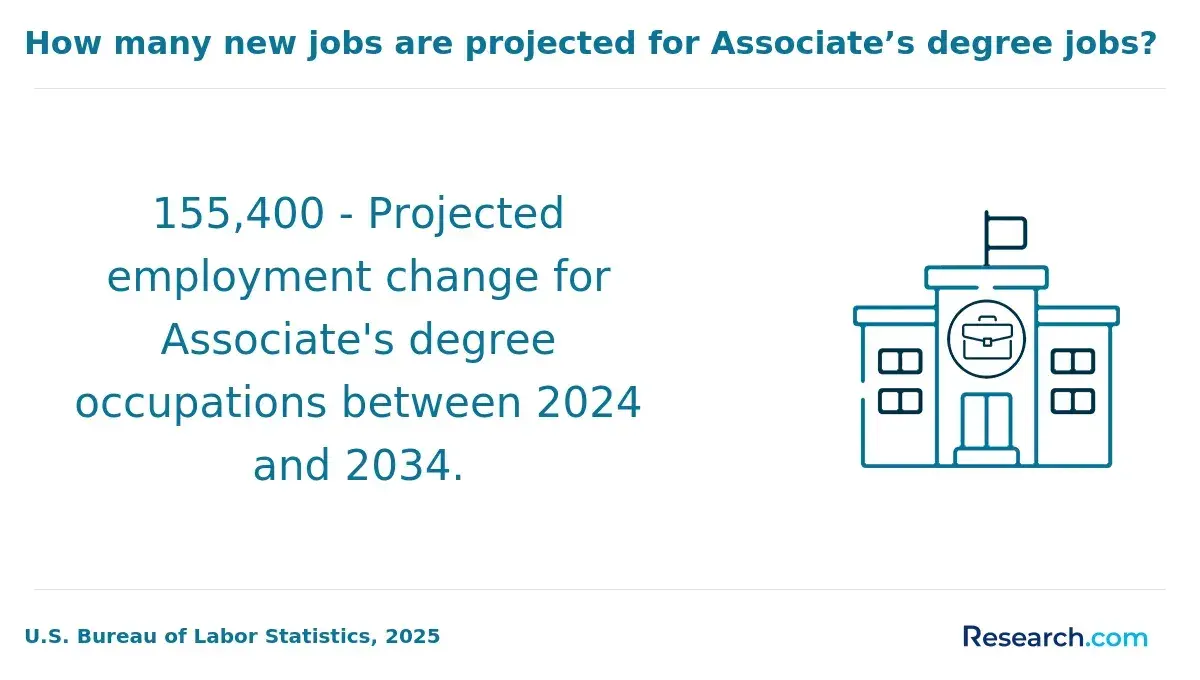
Career outcomes are strongest when the degree matches a specific next step. An ADN can lead toward RN licensure after board requirements and the NCLEX-RN; an appropriately designed allied-health program may connect to another regulated occupation. IT and business degrees offer broader entry-level possibilities, but employers may weigh technical skills, work samples, certifications, and experience heavily. Psychology is usually a first step toward further education rather than a direct counseling credential.
For a practical return-on-investment comparison, identify a target occupation first. Then compare local job requirements with each program's courses, required additional credentials, total cost, and time to completion. Be cautious with a program that advertises a high-paying occupation without showing how its associate degree satisfies that occupation's entry requirements.
What Accreditation Should Military Spouses Look for in Online Programs?
Start with institutional accreditation recognized by the U.S. Department of Education. It matters for federal aid eligibility and can affect whether another institution considers transfer credit. Accreditation does not, however, guarantee that a course will count toward your intended bachelor's major.
For a licensed or certification-linked occupation, also check the requirements of the relevant state board or credentialing organization. Nursing applicants, for example, should verify state board approval and ask whether programmatic nursing accreditation matters to their future employment or transfer plans. Before enrolling, get written answers about eligibility in your current state and what happens if you relocate during the program.
How Long Do Online Two-Year Degree Programs Take to Complete?
Many associate degrees require roughly 60 semester credits, so two years is a reasonable full-time planning baseline - not a completion promise. Part-time attendance, prerequisite sequences, limited course offerings, or clinical placements can extend it. Previously earned college credit can shorten it only when the institution accepts those credits and applies them to remaining degree requirements.
Ask for a term-by-term plan showing when every required course is offered, whether classes meet at fixed times, and how a move would affect enrollment. Short classes are not the same thing as a short degree: compare fast online degrees using the entire program timeline, not the length of one course.
What Are the Admission Requirements for Online Two-Year Degrees?
Typical associate-degree applications request proof of high school completion or an equivalent credential and transcripts from previous colleges. Placement measures or prerequisite courses may affect where a student begins. Admission to a college is not necessarily admission to a major: nursing and some allied-health programs may have separate prerequisites, grades, applications, and clinical eligibility requirements.
If you have prior college work or military-related training, request an official credit evaluation before committing. Ask which credits satisfy general education or major requirements, how many credits must be earned at the institution, and whether older coursework still qualifies. Application fees are a smaller cost than tuition, but spouses comparing universities with no application fee should still check total price and program fit.
How Do Online Programs Compare With Campus-Based Degrees for Military Spouses?
Online study can make coursework easier to continue through a move, especially when lessons are asynchronous. It can also require strong self-direction, fixed assignment deadlines, scheduled video sessions, proctored exams, or local placements. Campus study may provide easier access to equipment, clinical partners, and face-to-face support, but commuting and relocation can disrupt progress.
A hybrid program may be the best compromise for hands-on training if its in-person requirements are predictable and available where you expect to live. Do not choose by the "online" label alone. Ask for the complete list of required in-person activities, how often courses start, and whether an adviser can help revise your plan after a permanent change of station.
Which Careers Require Licensure or Professional Certification After Graduation?
An associate degree and permission to practice are separate things. Nursing graduates seeking RN licensure must satisfy state board requirements and pass the NCLEX-RN. Some allied-health roles require a state license or professional certification, with eligibility tied to specific program features or clinical experience. IT certifications also require separate examinations, although they are generally not occupational licenses.
Rules can differ across states and employers. Before enrolling in a regulated pathway, check the requirements where you live now and where you may relocate. Ask the program which licensing or certification requirements it is designed to meet, whether it arranges placements across state lines, and what options exist if you move before completing clinical work.
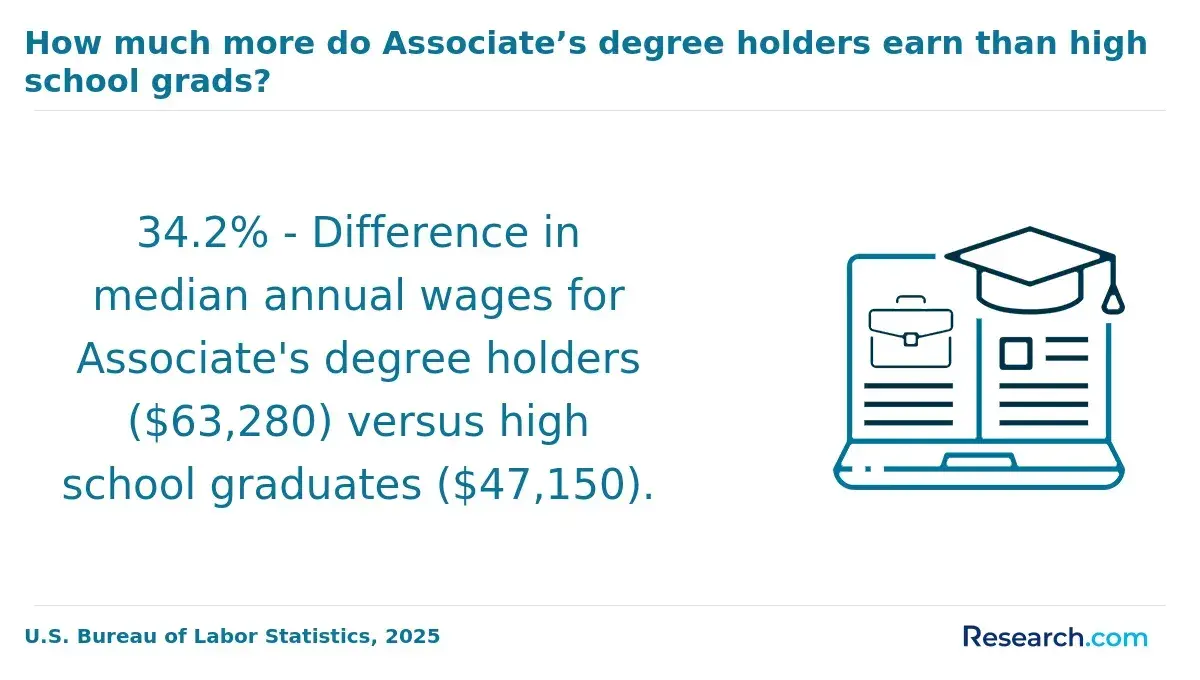
What Salaries and Job Outlook Can Graduates Expect After Earning These Degrees?
Occupation-wide wages and projections can help compare career directions, but they are not earnings predictions for graduates of a particular associate program. The U.S. Bureau of Labor Statistics reports a May 2024 median annual wage of $93,600 for registered nurses and projects 5% employment growth from 2024 to 2034. RN licensure requires more than earning an ADN; the figure covers nurses with varied education, experience, and locations.
For IT, BLS projects 29% growth for information security analysts over the same period. That strong outlook should not be mistaken for an entry-level promise: analysts typically need a bachelor's degree and related experience. When weighing any field, compare the qualifications on actual job postings in places you might live, then decide whether the associate degree is an employment credential, a transfer step, or both.
Other Things You Should Know About
Sometimes. Business and some IT programs may have no required campus visits, but individual courses can still have scheduled or proctored activities. Nursing and many allied-health programs require in-person clinical work.
No. Eligibility, approved education plans, participating schools, and covered expenses must be confirmed under current program rules before enrollment.
Not automatically. Request a transcript evaluation from the new college and confirm that accepted credits apply to your specific degree requirements, not only as electives.
Choose based on your next step. An AA or AS often suits a planned bachelor's transfer; an AAS often emphasizes occupational preparation. Check the program curriculum and any transfer agreement rather than relying on the degree abbreviation.
References
- Transfer Your Post-9/11 GI Bill Benefits | Veterans Affairs https://www.va.gov/education/transfer-post-9-11-gi-bill-benefits/
- NYS Licensed Professions - Military Spouses Relocated to New York State - Expedited Process https://www.op.nysed.gov/about/military-spouses-relocated-new-york-state-expedited-licensing-services
- Transferring Your Professional License - Military OneSource https://www.militaryonesource.mil/benefits/transferring-your-professional-license/
- Rule 3357:15-13-25 | Transfer and articulation. - Ohio Laws https://codes.ohio.gov/ohio-administrative-code/rule-3357:15-13-25
- Post-9/11 GI Bill For Service Members | af.mil https://myairforcebenefits.us.af.mil/Benefit-Library/Federal-Benefits/Post-9/11-GI-Bill
- Transfer College Credits via Prior Learning Assessments | coloradotech.edu https://www.coloradotech.edu/military/credit-transfer/faqs
- Reimagining Military Spouse Employment | syracuse.edu https://ivmf.syracuse.edu/reimagining-military-spouse-employment/
- Supporting Veteran and Military-Connected Students | Teaching and Learning Resource Center https://teaching.resources.osu.edu/teaching-topics/supporting-veteran-military
- Frequently Asked Questions | APUS - American Military University https://www.amu.apus.edu/transfer-credit/faqs/
- Point University Catalog https://catalog.point.edu/policy/standinghonors/creditforpriorlearning