2027 Best Online Sport Psychology Doctorate Programs for Government and Public Sector Careers

Co-Founder and Chief Data Scientist
Choosing an online sport psychology doctorate is a high-stakes decision if your goal is public service, not private coaching alone. Government is a large employment market: BLS data show more than 23 million people worked in federal, state, and local government in 2024.
This guide is for working professionals comparing doctoral options for roles in military readiness, public health, corrections, education, recreation, research, and leadership. You will learn how accreditation, cost, flexibility, curriculum, dissertation design, and public-sector employer expectations affect program value.
Key Things You Should Know
- The best online sport psychology doctorate for public sector careers is usually a regionally accredited PhD, PsyD, or EdD with applied performance psychology, research methods, ethics, and public-service-relevant practicum or dissertation options.
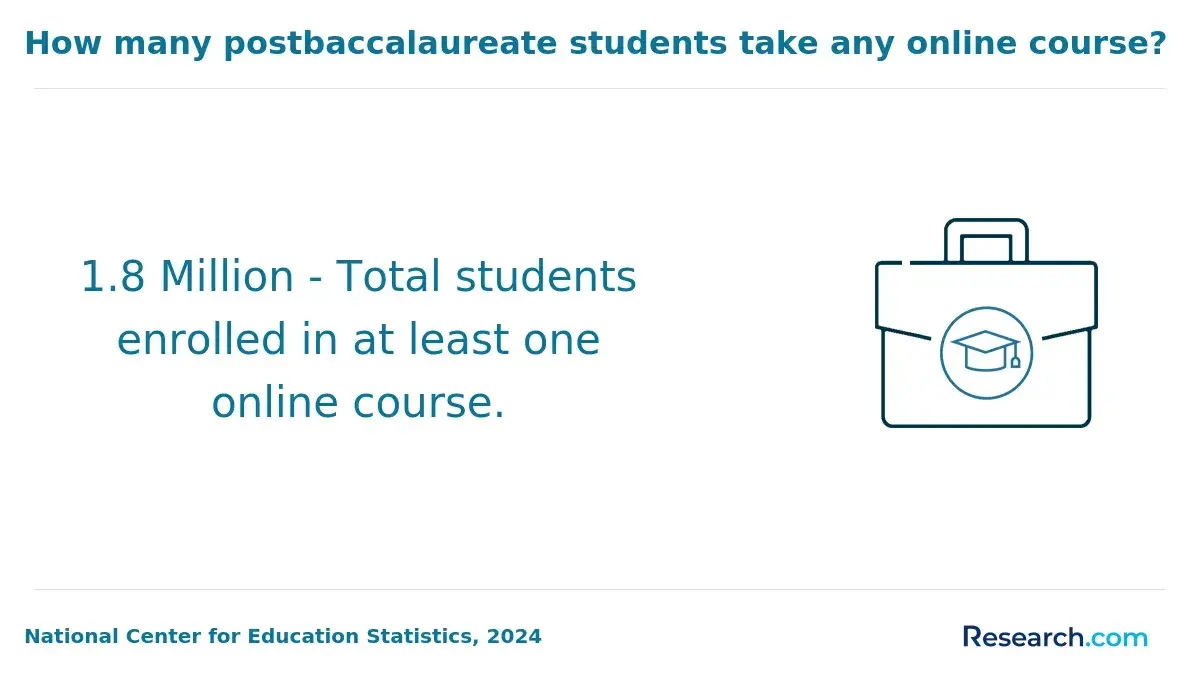
- Cost varies widely; NCES data published in 2024 show average graduate tuition and required fees were roughly $12,600 at public institutions and about $30,000 at private nonprofit institutions, before program-specific doctoral fees and travel costs.
- Career fit matters more than the word "online"; BLS May 2024 data place the median annual wage for psychologists at $94,310, but government roles may use civil-service pay bands, licensure rules, and specialized qualifications instead of degree title alone.
What Are the Best Online Sport Psychology Doctorate Programs for Government and Public Sector Careers?
The best online sport psychology doctorate programs for government and public sector careers are not necessarily the programs with the flashiest athletic branding. They are the programs that combine recognized institutional accreditation, rigorous research training, applied performance psychology, ethical practice, and flexibility for working professionals in public agencies.
Because "sport psychology doctorate" can refer to several degree structures, the strongest choice depends on whether you want to work in applied mental performance consulting, licensed psychological practice, research, education, or public-sector leadership. The table below compares the main doctorate types by public-sector fit.
| Doctorate type | Best public-sector fit | Typical strengths | Key limitation to check |
| PhD in Sport, Performance, or Exercise Psychology | Government research, military performance programs, public health, higher education, policy analysis | Strong research methods, dissertation depth, evidence-based program evaluation | May not qualify graduates for psychologist licensure unless it is part of an eligible clinical, counseling, or school psychology pathway |
| PsyD with sport or performance psychology focus | Behavioral health, performance intervention, clinical-adjacent roles, veteran or first-responder services | Practice-focused training, assessment, intervention design, supervised experience | Licensure eligibility depends on APA accreditation, state rules, internship structure, and clinical curriculum |
| EdD in Sport and Performance Psychology | Public education, parks and recreation leadership, coaching education, training administration | Applied leadership, organizational change, adult learning, practitioner capstone options | May be less research-intensive than a PhD for federal research roles |
| PhD or EdD in Psychology, Kinesiology, or Human Performance with sport psychology specialization | Interdisciplinary public-sector roles in wellness, injury prevention, human performance, and workforce readiness | Broader curriculum, useful for agencies that value health, exercise science, and behavioral performance together | Specialization depth may vary; review course titles and faculty expertise carefully |
For public sector goals, a "best" program should meet several conditions at once: it should be accredited, transparent about total cost, clear about dissertation or capstone expectations, supportive of working adults, and connected to settings such as military, public safety, public health, education, recreation, corrections, or community wellness.
A strong program is usually a good fit if you already work in coaching, counseling, athletic administration, occupational health, military readiness, education, public safety, kinesiology, or psychology and want doctoral-level expertise. It may be the wrong investment if your primary goal is entry-level counseling licensure, because many sport psychology doctorates are not designed as licensure programs.
How Should You Compare Online Sport Psychology Doctorate Programs for Your Public Sector Career Goals?
Start with the job you want, then work backward to the degree. Public sector employers often care about recognized accreditation, minimum qualifications, civil-service classification, research ability, leadership experience, and whether your training matches the population served.
Use the following comparison sequence before requesting admissions calls or applying. It helps separate programs that are merely convenient from programs that are strategically useful for government and public service careers.
- Define your target setting: federal agency, military-affiliated program, state health department, public university, school district, corrections agency, parks and recreation system, or nonprofit public-sector partner.
- Identify whether the role requires licensure, research credentials, teaching experience, leadership experience, or applied performance consulting.
- Verify institutional accreditation through a recognized accreditor and confirm whether any programmatic accreditation is relevant to your intended role.
- Compare curriculum against public-sector needs such as trauma-informed practice, group performance, evaluation research, ethics, diversity, public health, and organizational behavior.
- Ask how online students complete residencies, supervised experiences, dissertation research, and faculty mentoring while employed full time.
- Calculate total cost, including tuition, fees, books, residencies, travel, dissertation continuation credits, and lost work time.
- Review faculty biographies for government, military, public health, public safety, school, or community-based research experience.
One common mistake is choosing the cheapest program without checking whether it supports your intended public-sector path. Another is assuming that any doctorate in performance psychology will qualify you for licensed psychologist roles. If you want a broader human performance pathway rather than a psychology doctorate, an online exercise science degree may be a more direct and less expensive route for some wellness, fitness, and public recreation roles.
PhD programs often make the most sense for research, policy, teaching, and program evaluation. Professional doctorates such as PsyD or EdD programs can make more sense for applied consulting, leadership, and practice-oriented improvement projects. Hybrid programs can be worthwhile if they offer stronger mentoring or supervised skill development, but they require more travel planning than fully online options.
Are Online Sport Psychology Doctorate Programs Accredited and Respected by Government Employers?
Online doctorate programs can be respected by government employers when they come from properly accredited institutions and match the role's qualification standards. Public employers generally do not reject a degree simply because courses were delivered online, but they do scrutinize whether the institution is legitimate, whether the degree meets minimum qualifications, and whether the graduate has required licensure or experience.
The most important distinction is institutional accreditation versus programmatic accreditation. Institutional accreditation confirms that the university meets recognized academic and administrative standards. Programmatic accreditation applies only to certain professional fields and may be essential for specific licensed roles.
| Accreditation or credential factor | Why it matters for public sector careers | What to verify before enrolling |
| Institutional accreditation | Usually required for federal financial aid, transfer recognition, and government employer acceptance | Confirm the school is accredited by an accreditor recognized by the U.S. Department of Education or CHEA |
| APA accreditation | Often important for clinical, counseling, or school psychologist roles, including many VA, correctional, and public health positions | Confirm whether the specific doctoral program, not just the university, is APA-accredited if licensure is your goal |
| State licensure alignment | Licensure rules vary by state and role; sport psychology alone may not meet psychologist licensure requirements | Ask the program for written licensure disclosures for your state |
| Applied certification preparation | May support performance consulting credibility but does not replace licensure where licensure is legally required | Check whether coursework and supervised mentorship align with credentials such as Certified Mental Performance Consultant preparation |
| State authorization | Online programs must be authorized to enroll students in certain states | Confirm the school can legally enroll you where you live and where you plan to complete fieldwork |
For government careers, respect also depends on relevance. A dissertation on resilience training for first responders, performance under stress, adaptive sports, injury recovery, or military readiness may be more useful than a purely athletic topic if your goal is public service. Ask programs whether faculty have supervised projects in public agencies, veteran services, school systems, emergency services, or community health settings.
Red flags include unclear accreditation language, promises of licensure without state-specific documentation, no faculty with doctoral expertise in sport or performance psychology, and vague answers about practicum or residency requirements. If a school cannot clearly explain how its degree is evaluated by public employers or licensing boards, treat that as a serious warning sign.
Admission requirements vary by degree type, but most online sport psychology doctorate programs expect applicants to show graduate-level readiness, professional purpose, and a clear match between their goals and the program's faculty expertise. Competitive applicants often have backgrounds in psychology, kinesiology, counseling, coaching, athletic training, exercise science, education, public health, or public administration.
Most programs ask for a combination of academic records, professional materials, and writing samples. The following requirements are common, though exact thresholds vary by school.
- Master's degree or substantial graduate coursework in psychology, sport psychology, counseling, kinesiology, exercise science, education, or a related field
- Official transcripts showing prior graduate performance and prerequisite coursework when required
- Statement of purpose explaining doctoral goals, research interests, and public-sector career alignment
- Professional resume or curriculum vitae showing relevant work, coaching, research, clinical, military, education, or public service experience
- Letters of recommendation from faculty, supervisors, or professional mentors who can assess doctoral readiness
- Academic writing sample, research paper, or scholarly essay
- Interview with faculty or admissions staff, especially for cohort-based or dissertation-intensive programs
- English proficiency documentation for applicants whose prior education was not in English
Applicants aiming for youth sport, school-based wellness, or community prevention work should pay close attention to developmental psychology preparation. If your long-term goal is more focused on children and adolescents than adult performance, reviewing child psychology master's programs can help you decide whether a doctorate is necessary now or whether a specialized master's degree is the better next step.
Admissions committees usually want to see that you understand the difference between performance consulting, mental health treatment, and licensed psychological practice. A strong application explains the populations you want to serve, the public problem you want to address, and why doctoral-level training is needed for that work.
The best curriculum for government careers blends sport psychology with public-sector realities: diverse populations, ethical boundaries, evidence-based intervention, crisis-aware communication, data analysis, program evaluation, and leadership inside complex organizations. A program that only focuses on elite athletes may be too narrow for public service.
Look for coursework that helps you serve people who perform under pressure, not just people who play organized sports. The following curriculum areas are especially useful for federal, state, local, and public nonprofit settings.
- Performance psychology, motivation, attention control, confidence, imagery, and stress regulation
- Research methods, statistics, qualitative methods, and program evaluation for public-sector accountability
- Ethics, scope of practice, informed consent, confidentiality, and referral decision-making
- Multicultural psychology, disability inclusion, adaptive sport, and equity in public recreation or education
- Group dynamics, team cohesion, leadership, and organizational behavior
- Trauma-informed approaches, resilience, burnout prevention, and recovery after high-stress events
- Health behavior change, exercise psychology, injury rehabilitation, and wellness programming
- Teaching, supervision, consultation, and adult learning for public-sector training roles
Specialization choice should follow your intended employer. Military and first-responder settings value resilience, stress exposure, team performance, sleep, recovery, and decision-making under pressure. Public health and recreation agencies may value wellness, injury prevention, community engagement, adaptive sport, and equity. Public universities and research agencies usually value statistics, grant writing, publication experience, and dissertation quality.
If your interest is public safety, correctional rehabilitation, victim services, or court-adjacent behavioral work, sport psychology may not be the most direct specialization. In those cases, comparing forensic psychology master's programs can clarify whether a forensic pathway better matches the government population you want to serve.
AI and digital performance tools are also changing the field. Some agencies and public institutions are using wearable devices, learning analytics, telehealth platforms, and digital training systems. A strong doctorate should teach students how to evaluate technology ethically rather than simply adopt every new tool.
Online sport psychology doctorates usually combine asynchronous coursework, live seminars, faculty advising, research milestones, and periodic residencies or intensive experiences. The format can work well for government employees, teachers, coaches, military-connected professionals, and public health staff who cannot relocate for doctoral study.
The delivery model matters because doctoral success depends heavily on mentoring and sustained research progress. The table below summarizes common formats and what they mean for working students.
| Program feature | Common online format | What it means for working professionals |
| Coursework | Asynchronous modules with weekly deadlines, live discussions, or cohort meetings | Offers schedule flexibility but still requires steady weekly study time |
| Residencies | Short campus visits, virtual intensives, or regional skill labs | Can improve networking and applied training but adds travel and time-off costs |
| Practicum or supervised experience | Local placement, approved workplace project, or remote supervision | Useful for public-sector relevance if the program permits agency-based projects |
| Dissertation | Original research with committee supervision | Best for research, teaching, policy, and evaluation careers |
| Capstone or doctoral project | Applied project solving a professional problem | Often useful for leadership, training, and program improvement roles |
A dissertation is usually the stronger option if you want to publish, teach at the university level, compete for research positions, or evaluate government programs. A capstone can be practical if your goal is to design a resilience curriculum, improve a public wellness program, or implement performance training in an agency.
Before enrolling, ask how many online students finish the dissertation or capstone, how committee matching works, and whether you can study public-sector populations. A common mistake is assuming you can conduct research inside your agency without permission; public agencies may require institutional review board approval, data-sharing agreements, supervisor clearance, or restrictions on employee participation.
Most working adults should plan for several years of doctoral study. The exact timeline depends on whether the program accepts master's-level credits, how many courses you take each term, whether the dissertation progresses smoothly, and whether residencies or supervised experiences fit your work schedule.
The most realistic comparison is not "fast versus slow," but "sustainable versus risky." Accelerated pacing can reduce tuition exposure and help you finish sooner, but it can also increase burnout if you work full time in a demanding public-sector role.
| Enrollment pattern | Typical fit | Main advantage | Main risk |
| Full-time doctoral study | Students with flexible work, employer support, or reduced family obligations | Faster momentum through coursework and research milestones | Hard to sustain with shift work, military duties, emergency services, or school-year demands |
| Part-time doctoral study | Full-time government employees, educators, coaches, and public health professionals | More manageable workload and easier integration with workplace projects | Longer time to completion and possible continuation fees |
| Accelerated online format | Students with strong academic preparation and clear dissertation interests | Shorter course cycles and frequent start dates | Less time for reflection, networking, and research development |
| Cohort-based format | Students who benefit from structure and peer accountability | Stronger community and predictable progression | Less flexibility if work obligations change |
A practical plan is to ask each program for a sample part-time schedule, not just the advertised minimum completion time. You should also ask whether dissertation credits start only after coursework or can begin earlier through research seminars.
Working students can improve their odds of steady progress by selecting a dissertation topic connected to their current agency, professional network, or public-service mission. However, the topic must still be feasible, ethical, and approved by the university and any participating organization.
Online sport psychology doctorate costs vary by institution type, credit requirements, transfer policy, residency travel, and dissertation timeline. Tuition is only one part of the total cost. NCES data published in 2024 show that average graduate tuition and required fees were much lower at public institutions than at private nonprofit institutions, which makes school type an important starting point for affordability.
When comparing programs, request a full cost estimate based on your transfer credits and expected pace. Prices should be listed clearly and should include both direct and indirect expenses.
- Per-credit tuition multiplied by the number of required doctoral credits
- University fees, technology fees, library fees, graduation fees, and dissertation continuation fees
- Residency, intensive, or campus visit costs, including travel and lodging
- Books, software, statistics tools, assessment materials, and research expenses
- Lost income or leave time if residencies, fieldwork, or research require time away from work
- Licensure, certification, or professional association costs if relevant to your career path
Funding options may include federal student aid for eligible accredited institutions, employer tuition assistance, military or veteran education benefits, agency professional development funds, graduate assistantships, scholarships, and payment plans. Public-sector employees should ask whether their agency supports tuition reimbursement for degrees tied to workforce development, leadership succession, behavioral health, wellness, or training roles.
Debt should be evaluated against realistic career pathways, not best-case salary assumptions. BLS May 2024 data provide national wage context for psychologists, but public-sector pay may be governed by General Schedule grades, state pay bands, union contracts, or university salary schedules. A doctorate may improve competitiveness for certain roles, but it should not be treated as a guaranteed pay increase.
An online sport psychology doctorate can support several public-sector pathways, especially when paired with relevant experience, research skills, and the right credentials. The degree is most useful for roles involving performance, resilience, behavioral training, wellness, research, leadership, education, or program evaluation.
Government demand is broad but not automatic. BLS data show government employment exceeded 23 million workers in 2024, yet only a small share of those jobs are explicitly titled "sport psychologist." Graduates often succeed by translating sport psychology into human performance, organizational resilience, health behavior, training, and evaluation language.
| Career path | Public-sector settings | Relevant doctorate preparation | Important caveat |
| Performance psychology consultant | Military, police, fire, emergency management, public safety academies | Stress regulation, team performance, resilience, applied consultation | Consulting roles may require experience and security or agency clearance |
| Behavioral health or licensed psychologist role | VA, corrections, public hospitals, school systems, community clinics | Clinical assessment, intervention, ethics, supervised training | Usually requires an eligible licensure pathway; sport psychology alone may not qualify |
| Public health or wellness program leader | Health departments, recreation agencies, employee wellness programs | Health behavior change, evaluation, community programming, equity | Public health credentials or administrative experience may be needed |
| Higher education faculty or researcher | Public universities, community colleges, research centers | Dissertation research, statistics, publications, teaching | Tenure-track roles are competitive and often favor strong research output |
| Training and organizational development specialist | Government training offices, leadership academies, workforce development units | Adult learning, leadership, performance systems, evaluation | Public administration or HR experience can be as important as the doctorate |
| Adaptive sport or rehabilitation program director | Veteran services, parks and recreation, disability services, nonprofit public partners | Motivation, injury recovery, inclusion, program design | May require grant management and community partnership skills |
Salary context depends on the role. For federal jobs, 2024 General Schedule base pay for GS-13 ranged from $88,520 to $115,079 before locality adjustments, which shows how pay may be tied to grade and qualifications rather than degree title alone. For forensic, correctional, or court-adjacent psychology roles, it can also help to compare adjacent career economics, including resources on how much do forensic psychologists make.
This doctorate is most likely to be worth it when it helps you qualify for a specific role, promotion pathway, research agenda, consulting niche, or leadership responsibility. It is less likely to be worth it if you are seeking a broad salary boost without a clear job target.
Which Online Sport Psychology Doctorate Programs Offer the Best Public Sector Career Support and Professional Networks?
The strongest online sport psychology doctorate programs do more than deliver courses. They help students build credible professional networks, complete public-sector-relevant research, and translate doctoral training into agency language.
Career support is especially important because public-sector sport psychology roles may not appear under one obvious job title. Look for programs that help students connect the degree to human performance, training, wellness, behavioral health, public education, and research positions.
- Faculty with experience in military performance, public safety, public health, adaptive sport, education, corrections, or government-funded research
- Dissertation or capstone advising that supports public-sector topics and applied program evaluation
- Career coaching that includes federal resumes, state job applications, public university hiring, and civil-service language
- Partnerships or alumni connections with public agencies, military-affiliated organizations, schools, public hospitals, or recreation systems
- Support for conference presentations, publications, certification pathways, and professional association involvement
- Transparent outcomes data, including completion rates, dissertation timelines, and examples of alumni roles without overstating placement guarantees
Ask admissions advisors specific questions before applying. Do not settle for generic statements about "career advancement" or "flexible online learning."
- Which faculty members supervise research related to public-sector populations?
- Can online students complete applied projects with their current government or nonprofit employer?
- What support is available for students seeking military, VA, correctional, public health, school, or university roles?
- How does the program prepare students for ethical boundaries between performance consulting and mental health treatment?
- What are the typical dissertation or capstone completion challenges for working adults?
- Does the program publish completion, retention, or alumni outcome information?
Common red flags include no public-sector examples, weak dissertation mentoring, unclear fieldwork policies, no discussion of licensure limits, and career services focused only on private practice or collegiate athletics. The best program for a government career should make your public-service goal easier to explain, easier to document, and easier to pursue.
Other Things You Should Know About Sport Psychology
Not always. The title "psychologist" is regulated by state law. If your doctorate is not part of a licensure-eligible psychology pathway, you may need to use titles such as mental performance consultant, performance specialist, researcher, educator, or coach-consultant, depending on your credentials and state rules.
Certification is not always required, but it can strengthen credibility for applied performance consulting roles. It does not replace state licensure when a job involves diagnosis, psychotherapy, or protected psychological services.
Possibly, but you need approval. Most projects involving employees, students, service members, patients, or agency records require university review and may also require agency permission, data-use agreements, confidentiality safeguards, and supervisor approval.
Many applicants do. A master's degree can help you build research skills, clarify your specialization, and reduce doctoral coursework if transfer credits are accepted. Applicants without a related master's should confirm whether the program admits bachelor's-level students and how much additional coursework is required.
- Federal occupations by college major https://help.usajobs.gov/working-in-government/unique-hiring-paths/students/federal-occupations-by-college-major
- Top 5 Highest-Paying Psychology Careers - Rivier Academics https://www.rivier.edu/academics/online/resources/program-resources/top-5-highest-paying-psychology-careers-rivier-university/
- How To Become A Sports Psychologist | Psychology.org https://www.psychology.org/careers/sports-psychologist/
- Federal Employment Programs https://youth.gov/youth-topics/youth-employment/federal-programs-support-transitioning-employment
- How to Build a Successful Sport Psychologist Career: A Step-by-Step Guide https://www.drpaulmccarthy.com/post/how-to-build-a-successful-sport-psychologist-career-a-step-by-step-guide
- Sport and Exercise Psychology (Online) https://springfield.edu/graduate-programs/sport-and-exercise-psychology-online
- PhD Scholarships: Explore Your Online Education Aid Options https://www.oedb.org/phd-scholarship/
- Educational Funding https://phdproject.org/educational-funding/
- Online Ed.D. in SPP with M.S. in CMHC at UWS https://www.uws.edu/academics/programs/sport-performance-psychology/edd-cmhc-specialization/
- Five Steps for a Successful Doctoral Internship and Beyond! - National Register https://www.nationalregister.org/five-steps-for-a-successful-doctoral-internship-and-beyond/