2027 Best Online Human Services Degree Programs at Nonprofit Universities

Co-Founder and Chief Data Scientist
Choosing an online human services degree means balancing affordability, schedule needs, fieldwork requirements, and career goals - not simply selecting a nonprofit name. The U.S. Bureau of Labor Statistics projects 8% growth for social and community service managers through 2033, faster than the average for all occupations.
This guide helps prospective associate, bachelor's, and master's students compare nonprofit programs, verify quality, estimate costs, and select a degree path that fits work in community organizations, behavioral health, advocacy, and public service.
Key Things You Should Know
- Nonprofit status can include public universities and private nonprofit colleges, but it does not by itself confirm program quality, affordability, transferability, or career value; institutional accreditation and curriculum fit matter more.
- A bachelor's degree is the usual entry point for many case management, community outreach, and program coordination roles, while clinical counseling and social work licensure generally require a state-approved graduate degree and supervised experience.
- For context, the median annual wage for social and community service managers was $77,030 in May 2024, but pay varies substantially by job title, location, employer, experience, and required credentials.
What Makes an Online Human Services Degree Program at a Nonprofit University Different?
An online human services degree prepares students to help individuals, families, and communities connect with services and navigate social challenges. Programs commonly cover case management, crisis intervention, ethics, community resources, behavioral health, advocacy, communication, and program evaluation. They are distinct from social work, counseling, nursing, and psychology degrees, although the fields can overlap in workplace settings.
A nonprofit university reinvests revenue into its educational mission rather than distributing profits to owners or shareholders. Public universities are generally nonprofit institutions, and many private universities are nonprofit as well. That organizational status may affect governance and access to institutional aid, but it is not a substitute for reviewing the actual online program.
Students should compare degree levels against their intended role. The following overview clarifies the typical purpose of each pathway; individual employers and states may set different requirements.
| Degree level | Typical study length | Common use | Important limitation |
| Associate degree | About 2 years full time | Entry-level support roles, human services assistant work, or transfer preparation | May not qualify graduates for positions requiring a bachelor's degree |
| Bachelor's degree | About 4 years full time; less with transfer credit | Case management, community outreach, program support, and nonprofit administration | Usually does not independently qualify a graduate for clinical licensure |
| Master's degree | About 1 to 3 years, depending on format and prior education | Advanced administration, specialized practice, or preparation for further professional study | Licensure eligibility depends on the degree title, curriculum, practicum, and state rules |
| Doctoral degree | Varies widely | Research, college teaching, leadership, or advanced professional practice | Is rarely necessary for entry-level human services employment |
A generalist bachelor's program suits students exploring broad community-service careers. A concentration in addiction studies, gerontology, child and family services, criminal justice, or behavioral health can be more useful when it matches a target population or employer. Students drawn to healthcare coordination should also compare a health information management degree online, which focuses more directly on health records, privacy, data, and healthcare operations.
Nonprofit programs are often a strong fit for working adults who need institutional credibility, federal aid eligibility, and a structured curriculum. A student seeking the lowest possible price, however, may find a public in-state option more practical than a private nonprofit institution. Conversely, a higher-priced private nonprofit may be worthwhile only if its net price, transfer policy, support services, and curriculum provide a clear advantage for that student.
How Can Students Verify Accreditation for an Online Human Services Degree at a Nonprofit University?
Accreditation is a quality-review process, but students should distinguish between institutional accreditation and specialized accreditation. Institutional accreditation evaluates the university as a whole and is especially important for federal financial aid, transfer-credit review, and graduate-school applications. A school should be able to identify its accreditor clearly and provide current documentation.
Human services programs do not all have one universal programmatic accreditor. Specialized recognition can be meaningful, but its relevance depends on the degree and intended occupation. Social work students, for example, should prioritize programs that meet the educational expectations for social work licensure, while counseling students should investigate counseling-specific requirements. A general human services degree should not be assumed to meet either pathway's requirements.
Use these steps before submitting an application. They reduce the risk of enrolling in a program that does not support aid, credit transfer, certification, or future education goals.
- Confirm the university's institutional accreditation through the school's accreditation disclosure and the U.S. Department of Education or Council for Higher Education Accreditation directories.
- Ask whether the specific online human services program holds any specialized accreditation, approval, or professional alignment relevant to your intended role.
- Request written confirmation of whether the curriculum is designed to meet requirements in your state if you intend to pursue a regulated credential.
- Check whether transfer institutions or graduate programs you may attend accept credits from the university.
- Save emails, catalog pages, and degree plans that document what the admissions representative confirmed.
A common mistake is treating "accredited university" as proof that every major leads to professional licensure. Accreditation supports academic legitimacy, but licensing boards - not universities - determine whether a specific degree, practicum, examination, and supervised experience meet state rules.
How Rigorous Are Online Human Services Degree Programs at Nonprofit Universities?
Well-designed online human services programs can be academically rigorous because they use the same learning outcomes expected in campus programs: reading and applying research, documenting client needs appropriately, analyzing ethical scenarios, communicating across cultures, and evaluating community programs. Online delivery changes where instruction occurs, not necessarily the level of work required.
Rigor should be visible in the curriculum rather than inferred from marketing language. Look for courses in human behavior, interviewing, crisis response, cultural humility, policy, research methods, documentation, and program planning. Strong programs also explain how faculty assess applied skills through case analyses, recorded presentations, discussion-based practice, projects, or supervised experiential learning.
The academic structure matters because online formats vary substantially. This comparison helps students identify which model matches their learning style and availability.
| Format | How learning is scheduled | Best fit | Question to ask |
| Asynchronous | Assignments are completed by weekly deadlines without regular live meetings | Students with changing work or caregiving schedules | Are there required live sessions, group meetings, or proctored exams? |
| Synchronous | Classes meet online at set times | Students who value real-time instruction and routine | What time zone are meetings held, and is attendance mandatory? |
| Hybrid | Online coursework includes campus, residency, or local in-person components | Students able to travel or attend required experiences | How often must I be on campus, and who pays travel costs? |
| Accelerated | Courses run in shorter terms with frequent deadlines | Students with substantial weekly study time | How many hours per week should I realistically plan for each course? |
Do not assume an accelerated format is easier. It often compresses the same content into shorter sessions and can be demanding for students managing full-time work. Likewise, internships, field observations, or capstone projects may be required even when all lecture-based classes are online.
How Much Does an Online Human Services Degree Cost at a Nonprofit University?
The cost of an online human services degree depends on more than the published per-credit tuition rate. Residency status at public universities, transfer credits, required fees, books, technology, field-placement expenses, and whether a student studies part time can change the final amount. Online students may avoid commuting and housing costs, but they can still face proctoring, graduation, or distance-learning fees.
As a broad benchmark, the College Board reported average published tuition and fees of $11,610 for in-state students at public four-year institutions and $41,540 at private nonprofit four-year institutions for 2024-25. These figures are not online human services program prices and do not represent net price after grants, but they illustrate why students should compare public and private nonprofit options using individualized estimates.
Request a written program-cost estimate that includes the credits remaining after transfer evaluation. The table identifies the cost categories that should be compared before treating one school as the lower-cost choice.
| Cost factor | Why it changes total cost | What to request |
| Tuition per credit | Rates may differ by residency, online status, or degree level | The applicable tuition rate for your start term |
| Transfer credit | Accepted credits can reduce the number of courses you must pay for | A preliminary or official transfer evaluation |
| Mandatory fees | Technology, course, graduation, and service fees may not appear in tuition advertisements | A complete fee schedule |
| Experiential learning | Background checks, transportation, insurance, and placement requirements can add expenses | An estimate of fieldwork-related costs |
| Time to completion | Extra terms can increase fees and delay earnings or graduate study plans | A term-by-term degree plan |
For value, calculate estimated total educational cost rather than comparing one course price. A lower tuition rate can lose its advantage if few credits transfer or required courses are offered infrequently. A higher-rate program may be reasonable when a grant, employer benefit, rapid transfer evaluation, or required specialization materially lowers the net cost or improves career alignment.
What Financial Aid Is Available for an Online Human Services Degree at a Nonprofit University?
Eligible students at accredited nonprofit universities can generally pursue federal financial aid by submitting the Free Application for Federal Student Aid. Aid may include grants, work-study opportunities, and federal Direct Loans, depending on financial need, enrollment level, remaining eligibility, and other federal requirements. Students should not assume that online enrollment automatically prevents aid eligibility, but they should confirm that the exact program qualifies.
Start financial planning early because institutional scholarship deadlines can precede the first course date. The most useful aid review combines university awards with outside resources and employer support.
- Ask the financial aid office whether online human services students are eligible for institutional scholarships, transfer awards, need-based grants, and departmental funding.
- Check whether your employer offers tuition assistance, particularly if you work for a nonprofit, healthcare organization, government agency, school, or social-service provider.
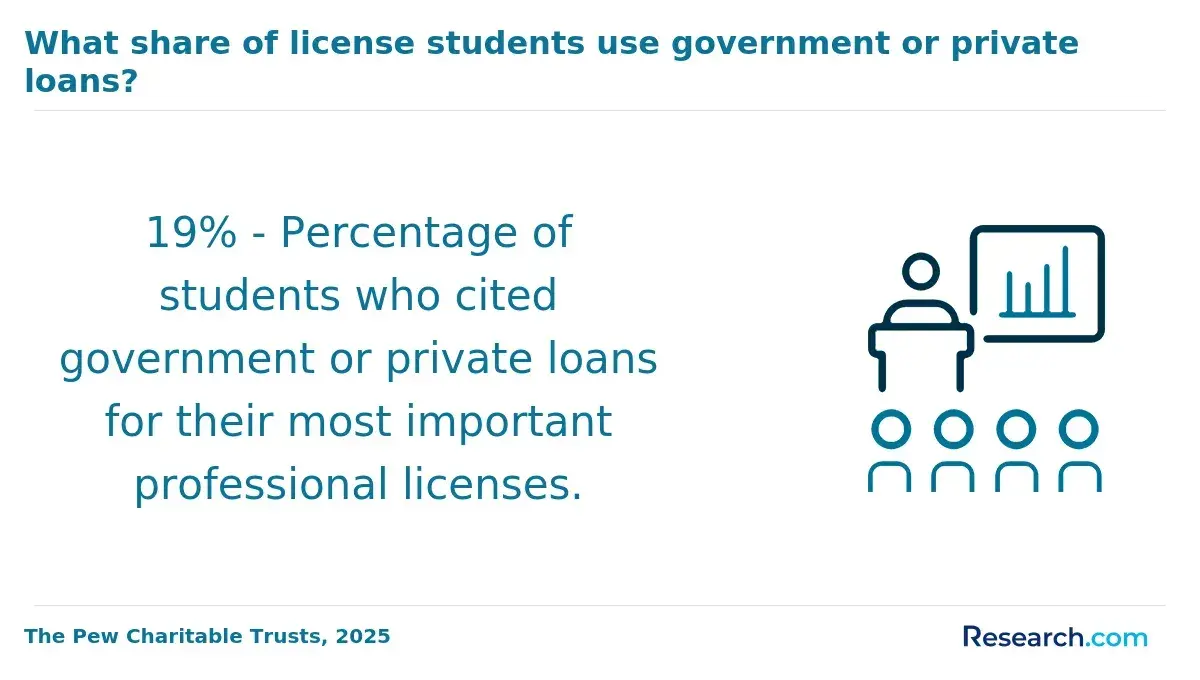
- Compare federal loan options before considering private loans, and review borrowing limits and projected monthly repayment obligations.
- Ask whether part-time enrollment changes grant eligibility, loan disbursement, scholarship renewal, or completion time.
- Request the school's net-price estimate and a financial aid offer in writing before making an enrollment commitment.
Federal Student Aid reported that the FAFSA process for the 2024-25 cycle was redesigned, reinforcing the importance of reviewing current application instructions rather than relying on prior-year guidance. Aid rules and institutional deadlines can change, so students should use the current FAFSA and speak with a financial aid administrator about their personal circumstances.
A red flag is an admissions conversation focused only on monthly payment amounts. Payments do not show the full borrowing amount, interest accumulation, lost income from delayed completion, or whether the credential supports the career being financed.
How Flexible Are Online Human Services Degree Programs at Nonprofit Universities?
Online human services programs can be flexible, but flexibility is not identical to self-paced study. Most programs use scheduled terms, weekly deadlines, group work, instructor feedback periods, and required participation. Students should choose a format based on their actual work, caregiving, travel, and field-placement constraints.
Part-time enrollment often makes a degree more manageable for working adults, while full-time enrollment can shorten completion time. Accelerated programs may help students progress quickly, but they require consistent study time and can make it harder to recover from an unexpected work or family disruption. Traditional 15- or 16-week terms may offer a steadier pace.
Healthcare-oriented students should verify clinical requirements particularly carefully. For example, hybrid ABSN programs generally include hands-on clinical education and are a different pathway from an online human services degree, even when both programs lead to helping professions.
Before enrolling, ask for a sample weekly schedule, course sequence, attendance policy, exam requirements, and fieldwork calendar. Also ask whether internships can be completed near your home, whether the university secures placements or expects students to find them, and whether evening or weekend placement options are realistic. These details determine whether an "online" program is workable in practice.
What Student Support Services Do Nonprofit Universities Provide for Online Human Services Degree Students?
Student support is one of the clearest differences between programs that merely place courses online and programs designed for online learners. Human services students may need academic advising, technology assistance, library access, disability accommodations, tutoring, career coaching, and help arranging experiential learning. The availability, response time, and accessibility of these services can affect persistence and completion.
Evaluate support as carefully as curriculum. The table below identifies services that have direct practical value for online students and the questions that reveal whether those services are accessible.
| Service | Why it matters | Question to ask |
| Dedicated advising | Helps students sequence prerequisites, transfer credits, and field requirements | Will I have one assigned advisor, and how quickly are advising requests answered? |
| Career services | Can support résumé development, interviewing, job search, and employer connections | Do online students receive the same career appointments and events as campus students? |
| Field-placement support | Experiential learning can be difficult to arrange while working | Does the school approve sites, help locate them, or require students to secure their own? |
| Library and tutoring | Supports research, writing, and evidence-based coursework | Are evening and virtual appointments available? |
| Technical support | Reduces disruption during exams, video meetings, and assignment submission | Is support available outside standard business hours? |
Ask to speak with an online program advisor or attend a virtual information session before applying. Admissions staff can explain entry requirements, but current students, faculty, field-placement coordinators, and career staff are often better positioned to explain the daily student experience.
Do Online Human Services Degree Programs at Nonprofit Universities Prepare Graduates for In-Demand Careers?
An online human services degree can prepare graduates for growing service-sector work, especially when the curriculum includes practical communication, documentation, ethics, cultural responsiveness, data literacy, and community-resource navigation. Common settings include nonprofit agencies, community mental health organizations, shelters, youth programs, aging services, public agencies, hospitals, and workforce-development organizations.
The Bureau of Labor Statistics projects employment of substance abuse, behavioral disorder, and mental health counselors to grow 19% through 2033. That outlook signals strong demand for behavioral health services, but students should not interpret it as proof that a general human services degree qualifies them to become a licensed counselor. Many counseling roles require a relevant master's degree, supervised clinical experience, examinations, and state licensure.
The following comparison connects degree choices with broad career directions. Job titles and hiring standards vary by employer, state, and population served.
| Career direction | Typical responsibilities | Common education path | Important consideration |
| Human services assistant or community support worker | Client intake, referrals, records support, and direct service assistance | Associate or bachelor's degree, depending on employer | Some positions require background checks or population-specific training |
| Case manager or community outreach coordinator | Resource navigation, client advocacy, service coordination, and follow-up | Often a bachelor's degree in human services or a related field | Employers may prefer experience with a specific population or service system |
| Program coordinator or nonprofit administrator | Program operations, reporting, partnerships, staff support, and grant-related work | Bachelor's degree; master's degree may help with advancement | Budgeting, data, and leadership skills can be as important as the major title |
| Licensed clinical counselor or social worker | Assessment, therapy, treatment planning, and supervised clinical practice | Approved graduate professional degree plus state requirements | A general human services bachelor's degree alone is usually insufficient |
Students interested in medical settings should compare adjacent options rather than assuming human services is the only helping-profession route. A nursing degree online may fit applicants seeking licensed patient care, while human services more directly emphasizes advocacy, social supports, prevention, and community-based coordination.
Artificial intelligence and digital case-management tools are increasing the value of workers who can protect confidentiality, evaluate information critically, document accurately, and maintain empathetic human relationships. Look for programs that address ethics, privacy, technology, and evidence-based decision-making instead of treating these skills as optional.
Can an Online Human Services Degree From a Nonprofit University Prepare Students for Graduate School?
Yes, an online human services degree from an institutionally accredited nonprofit university can provide a foundation for graduate school, provided that the student completes the prerequisite coursework and meets the receiving program's admissions standards. Graduate admissions commonly consider undergraduate GPA, writing ability, recommendations, prerequisite classes, relevant experience, and sometimes standardized test policies.
A bachelor's degree in human services can support applications to master's programs in human services administration, public administration, nonprofit management, counseling-related fields, social work, public health, and education. However, admissions requirements differ. A Master of Social Work program may have distinct prerequisites and field education expectations, while counseling programs may require specific psychology or statistics coursework.
Students planning graduate study should make undergraduate choices strategically. The following actions can strengthen options without assuming admission to any particular program.
- Select electives in psychology, statistics, research methods, writing, policy, or biology when they match prospective graduate prerequisites.
- Maintain a strong GPA and use tutoring or faculty office hours early if coursework becomes difficult.
- Seek supervised volunteer, internship, or work experience that exposes you to the population or setting you may serve professionally.
- Build relationships with faculty members who can later provide detailed academic recommendations.
- Review admission requirements at several potential graduate programs before finalizing your undergraduate degree plan.
Students pursuing advanced nursing practice should recognize that human services is not a substitute for nursing education and licensure. A DNP program is a separate doctoral pathway for qualified nurses and should be evaluated according to nursing prerequisites, accreditation, clinical expectations, and state practice rules.
How Should Students Compare the Best Online Human Services Degree Programs at Nonprofit Universities?
The best online human services degree is the one that meets your target job's educational requirements at a sustainable net cost and within a format you can complete. A reputable public university may offer lower in-state tuition, while a private nonprofit may offer smaller cohorts, accelerated terms, or more individualized support. Neither model is automatically the better investment.
Begin with a shortlist of three to five institutionally accredited nonprofit universities. Then compare the same facts for each school rather than relying on rankings, tuition headlines, or broad claims about online convenience.
| Comparison priority | What to evaluate | Strong sign | Red flag |
| Career alignment | Required courses, concentrations, field learning, and credential preparation | Curriculum clearly maps to the skills and roles you want | Career claims are vague or imply licensure without details |
| Accreditation | Institutional accreditation and any relevant specialized recognition | Current accreditation information is easy to verify | School cannot clearly identify accreditor or state eligibility |
| Total cost | Tuition, fees, transfer credits, aid, books, and field expenses | Written estimate based on your remaining credits | Only a monthly payment or per-credit figure is provided |
| Flexibility | Meeting times, course length, exams, residencies, and placement hours | Schedule requirements are published and realistic | "Fully online" is used without explaining in-person obligations |
| Student outcomes | Retention, graduation, career support, and placement practices | School discusses outcomes and limitations transparently | Guaranteed job or salary language |
| Transfer policy | Maximum credits, course-age limits, lower-division rules, and evaluation process | Official transfer review occurs before enrollment when possible | Credits are discussed only in general terms |
Use a final decision checklist after receiving admission and aid information. It turns broad comparisons into an enrollment decision based on evidence.
- Confirm that the degree supports your intended job now and any graduate or licensure path you may pursue later.
- Compare each school's estimated net cost for the entire degree, not its advertised tuition rate.
- Verify exactly how many prior credits will apply and obtain the remaining course plan.
- Confirm whether live classes, internships, residencies, or examinations conflict with your work and family responsibilities.
- Review available tutoring, advising, career services, disability support, and field-placement assistance for online students.
- Decline or pause enrollment if the school cannot answer accreditation, cost, transfer, or professional-eligibility questions clearly in writing.
Students considering a faster healthcare credential should not confuse it with a human services degree. A 9-month LPN program online may be relevant for people pursuing practical nursing, but applicants should carefully review clinical requirements, state approval, and eligibility for licensure.
The strongest overall value usually comes from the program that accepts meaningful transfer credit, provides reliable online support, makes experiential requirements manageable, and leads directly toward a realistic career target. If two programs appear similar, choose the one that gives clearer written answers about total cost, scheduling, and outcomes.
Other Things You Should Know About Human Services
No. Human services is a broad interdisciplinary degree focused on helping people access services and improve community well-being. Social work is a distinct profession with specific educational and licensure pathways. A human services degree may lead to related support and coordination roles, but it does not automatically qualify someone for social work licensure.
Many students do, especially in asynchronous or part-time programs. Review weekly workload, mandatory live sessions, group projects, and any internship or practicum requirements before enrolling. Field experiences can be the hardest component to combine with a full-time job.
Commonly valued skills include empathetic communication, cultural responsiveness, documentation, crisis awareness, ethical judgment, resource navigation, teamwork, basic data literacy, and the ability to maintain professional boundaries. Relevant experience with a target population can also strengthen job applications.
Human services is generally more applied to service coordination, community programs, and client support. Psychology often emphasizes behavior, research, and theory. Choose based on the work you want to do, then compare course requirements and graduate-school options; either major may require additional education for clinical practice.
References
- Online Associate in Human Services | AcademicEarth.org https://academicearth.org/associate-in-human-services/
- Health and Human Services: Campus & Online Degrees and Careers https://www.publichealthonline.org/human-services/online-degree-programs/
- Types of Degree Programs https://ecehighered.phmc.org/types-of-degree-programs/types-of-degree-programs
- Online Bachelor's Degrees in Human Services: Top Schools https://www.edumed.org/online-schools/human-services-degrees/bachelors/
- Associate Degree - Human Services - Online | Monroe University https://www.monroeu.edu/academics/undergraduate-programs/school-criminal-justice/online-associate-degree-human-services
- Frequently Asked Questions https://www.aacnnursing.org/essentials/tool-kit/faqs
- Early Childhood Education Degrees: The Differences Explained https://www.pacificoaks.edu/voices/education/early-childhood-education-degrees-differences-explained/
- 2025 Most Affordable Online Human Services Degrees https://www.onlineu.com/most-affordable-colleges/human-services-degrees
- The Building Blocks of High-Quality Early Childhood Education Programs https://learningpolicyinstitute.org/product/building-blocks-high-quality-early-childhood-education-programs
- Online Master's in Human Services Degree Programs - OnlineEducation.com https://www.onlineeducation.com/social-work/human-services-programs