2027 Online Human Services Master's Programs Under $20,000: Total Tuition and Required Fees

Co-Founder and Chief Data Scientist
Keeping an online human services master's degree below $20,000 requires more than finding a low tuition rate: mandatory fees, extra credits, and residency rules can change the final bill. The U.S. Bureau of Labor Statistics projects 8% growth for social and community service managers from 2024 to 2034, faster than the average for all occupations.
This guide helps prospective students compare total program costs, evaluate accreditation and career fit, and identify the questions to ask before enrolling.
Key Things You Should Know
- An online human services master's program is genuinely under $20,000 only when required tuition and institutional fees for every required credit remain below that threshold; books, optional services, and living costs should be budgeted separately.
- Credit count is the central cost variable: a 36-credit program at $500 per credit costs $18,000 before mandatory fees, while the same rate for 42 credits reaches $21,000 before fees.
- For career value, verify institutional accreditation, curriculum alignment, fieldwork requirements, and whether the degree fits the intended nonclinical role; it does not automatically qualify a graduate for social work, counseling, or other state-regulated licenses.
How Much Does an Online Human Services Master's Degree Under $20,000 Cost in Total?
An online human services master's degree under $20,000 should mean the required institutional charges to earn the degree - not simply a promotional tuition figure - are below $20,000. Start with published tuition for every required credit, then add mandatory program, technology, registration, graduation, and distance-learning fees. A program can be affordable without being the least expensive option if its price includes support services, predictable tuition, and a curriculum that fits the student's target role.
Total cost is best calculated using this formula: (required credits × applicable tuition rate) + required per-term fees + required one-time fees. Do not subtract scholarships or employer reimbursement when deciding whether the published program price itself is under the threshold; those awards vary by student and may not continue through graduation.
The examples below illustrate how credit requirements and required charges affect the advertised price. They are calculation examples, not quotations from specific institutions.
| Cost structure | Tuition calculation | Required fees | Estimated institutional total |
| Low-rate 36-credit program | 36 × $450 = $16,200 | $900 | $17,100 |
| Moderate-rate 36-credit program | 36 × $500 = $18,000 | $1,200 | $19,200 |
| 40-credit program near the limit | 40 × $475 = $19,000 | $1,100 | $20,100 |
When comparing related service professions, distinguish degree purpose as well as price. Students seeking preparation specifically for substance-use support roles may also compare an addiction counseling online degree, while checking state rules carefully because counseling licensure normally has specific course, practicum, and supervised-experience requirements.
A low published total may be a strong option for students pursuing nonprofit administration, case management leadership, community outreach, victim services, advocacy, program coordination, or social-service administration. It may be less suitable for a student who needs a clinically focused credential, extensive placement assistance, or a specialization unavailable in the lower-cost curriculum.
What Required Fees Can Increase the Cost of an Online Human Services Master's Degree Beyond $20,000?
Required fees are charges a student must pay to enroll, take courses, use required systems, complete a capstone, or graduate. They matter most when tuition is close to $20,000 because even modest recurring charges can push the institutional total over the limit. Schools do not label fees consistently, so students should review the graduate tuition schedule, online-learning fee schedule, academic catalog, and program page together.
Ask an admissions or student-accounts representative to identify each charge that cannot be waived. The following categories are common items to confirm before making a final comparison.
- Application, enrollment, matriculation, or new-student fees that apply once at admission or registration.
- Per-term charges for technology, online learning platforms, student services, registration, or university administration.
- Course-specific charges for assessments, simulations, proctoring, field experiences, background checks, or capstone projects.
- Graduation, degree-audit, transcript, and diploma fees that apply near program completion.
- Required software, licensing, books, professional memberships, or travel connected with a practicum or residency.
Not every cost belongs in the school's tuition-and-fee total. A laptop, broadband service, childcare, transportation, and lost work time can substantially affect affordability, but they are personal expenses rather than mandatory institutional charges. Keep a second budget for these costs so that a technically under-$20,000 program is also workable for your household.
A common mistake is comparing one school's tuition-only amount with another school's published "estimated cost of attendance." Use the same definition for every program: required school charges for the full degree, followed by a separate estimate of personal and optional expenses.
How Does Per-Credit Tuition Affect the Total Cost of an Online Human Services Master's Degree Under $20,000?
Per-credit tuition is useful only when it is paired with the exact number of credits required for graduation. Human services master's programs may require different totals because concentrations, prerequisite courses, electives, internships, and capstone requirements vary. A lower per-credit rate can still produce a higher degree cost if the program requires substantially more credits.
This table shows the highest average tuition per required credit that keeps a program at or below $20,000 before required fees. Students should leave room below these figures when a school charges per-term or one-time fees.
| Required program credits | Maximum average tuition per credit before fees | Why it matters |
| 30 credits | $666.67 | Programs with fewer credits have more room for fees, but may offer fewer electives or specialization options. |
| 36 credits | $555.56 | A common master's-length structure that requires close attention to recurring fees. |
| 39 credits | $512.82 | Small differences in tuition or one added course can exceed the limit. |
| 42 credits | $476.19 | Higher-credit programs need a lower rate or unusually limited required fees. |
Confirm whether the rate is guaranteed for continuous enrollment or can change each academic year. A program that begins below $20,000 may exceed the target if tuition rises before completion, especially for part-time students. Also ask whether the stated rate applies to graduate students, online students, and the desired concentration.
Flat-rate tuition deserves separate scrutiny. It can offer predictability if it covers all required credits and terms, but it may not cover prerequisite coursework, repeated courses, extended enrollment, or fees. Request a written breakdown showing what the flat rate includes and what circumstances create added charges.
How Long Does It Take to Complete an Online Human Services Master's Degree Under $20,000?
Many online human services master's programs can be completed in roughly 18 to 24 months of continuous full-time study, while part-time schedules often take longer. The actual timeline depends on total credits, course sequencing, transfer credits, start dates, fieldwork, and the number of courses a student can manage alongside work and family responsibilities. Schools may advertise an accelerated timeline that assumes uninterrupted enrollment and a full course load.
Program format affects both time and practical cost. Asynchronous courses allow students to complete work around employment and caregiving schedules, but still use weekly deadlines. Synchronous courses offer scheduled interaction but can conflict with work hours. Hybrid or residency requirements may add travel and lodging expenses even when most classes are online.
Before accepting an accelerated plan, compare it with the pacing demands of other healthcare and service-profession routes. For example, students considering clinical leadership pathways can review fastest online DNP programs, but a DNP serves a nursing-focused goal and has different admissions, clinical, and cost expectations than a human services master's degree.
Use the school's course sequence to test whether the completion estimate is realistic. Confirm the following scheduling details before committing.
- Count the required courses, credits, and terms rather than relying on a general completion claim.
- Check whether key courses are offered every term or only once each year.
- Identify any practicum, internship, capstone, residency, or comprehensive-exam requirement.
- Ask whether taking fewer courses changes tuition, fee totals, or eligibility for a tuition lock.
- Build a contingency plan for a missed course, work change, or family obligation.
A shorter program can reduce exposure to future tuition increases and recurring fees. However, it is not automatically better: students who need more time for demanding coursework or experiential learning may receive greater value from a manageable pace that supports successful completion.
How Can Students Verify Accreditation for an Online Human Services Master's Degree Under $20,000?
Accreditation is an external quality-review process. For most online human services master's degrees, the essential baseline is institutional accreditation from an accreditor recognized by the U.S. Department of Education or the Council for Higher Education Accreditation. This can affect federal aid eligibility, employer confidence, transferability, and admission to future graduate study.
Some human services programs also hold specialized accreditation, but availability depends on the program's curriculum and professional focus. Specialized accreditation can be valuable when it aligns with a student's target profession; it is not a substitute for confirming the institution's accreditation. If the goal is social work licensure, for example, verify whether a program is accredited by the Council on Social Work Education and whether it is specifically a Master of Social Work, rather than assuming that a human services degree meets social work licensing standards.
Accreditation review is particularly important when comparing degrees across health-related fields. A resource on Capella University nursing accreditation illustrates why program-specific accreditation and professional eligibility must be checked separately from general institutional status.
Use these verification steps rather than relying only on marketing language.
- Find the institution and accreditor named on the university's accreditation page.
- Confirm the school's status in the accreditor's current public directory.
- Check the U.S. Department of Education database for recognized institutional accreditation information.
- Ask whether the exact online program, concentration, and delivery format have any additional approval or specialized accreditation.
- Contact the relevant state licensing board before enrolling if the intended role is regulated.
A key red flag is vague language such as "licensed," "approved," or "accredited" without naming the accreditor, approval authority, or program. Another is a claim that a general human services degree automatically meets counseling, social work, or clinical licensure requirements. Requirements are determined by states and licensing boards, not by a broad degree title alone.
Do Out-Of-State Students Pay More for an Online Human Services Master's Degree Under $20,000?
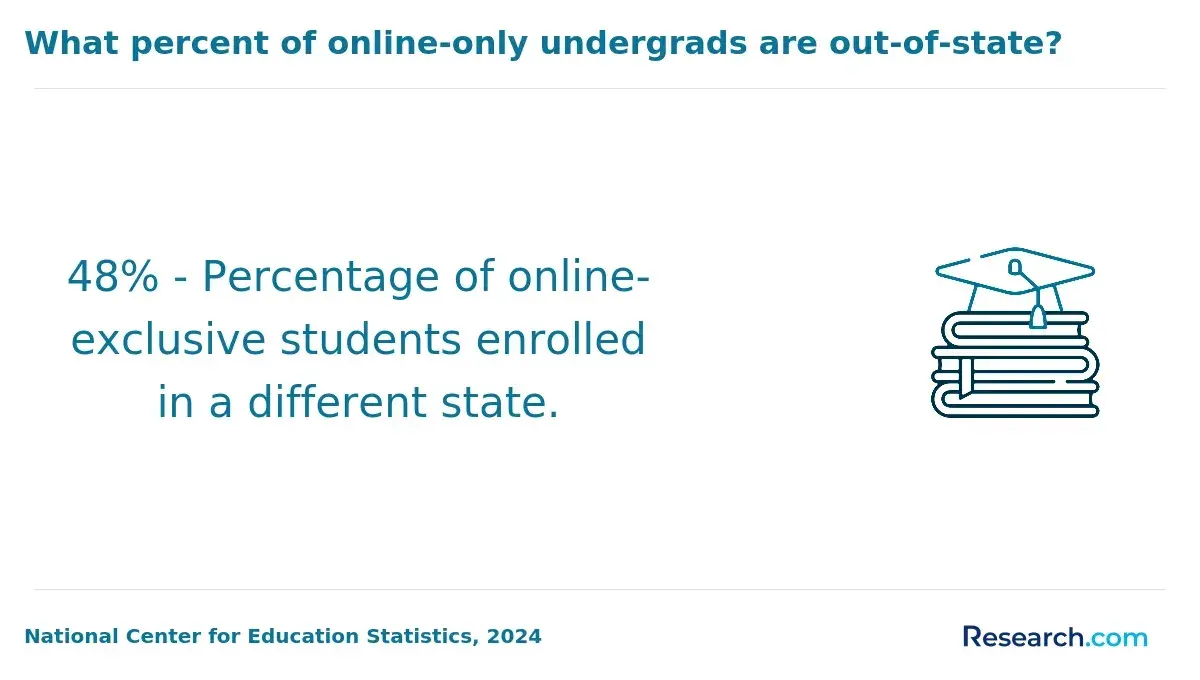
Out-of-state students may pay more, less, or the same as in-state students. Many online programs use a single nationwide tuition rate, while some public institutions charge separate resident and nonresident rates even for distance learners. A program that is below $20,000 for residents may not meet that limit for a student living elsewhere.
Do not assume that online enrollment removes residency rules. Request the tuition rate applicable to your legal residence and ask whether the school participates in a tuition-reciprocity arrangement, offers an online-only rate, or reclassifies residency after enrollment. Military-affiliated students, employees of partner organizations, and alumni may have separate pricing policies, but eligibility should be documented before relying on a discount.
Residency can also affect more than tuition. Field placement rules, background checks, distance education authorization, and state-specific disclosures may determine whether a school can enroll students from a particular state or support placement there. These issues can change the practicality of an otherwise affordable program.
For an accurate comparison, record the same items for every school: your residency category, per-credit or flat tuition, all mandatory fees, the number of required terms, and any discount conditions. If a representative provides a verbal estimate, follow up by email and retain the written response with the academic year and program name.
Can Transfer Credits Keep the Total Cost of an Online Human Services Master's Degree Under $20,000?
Transfer credits can lower the number of credits a student must purchase, but they are not guaranteed. Graduate programs commonly limit the number of transferable credits, require a minimum grade, set an age limit for prior coursework, and evaluate whether a course matches the receiving program's learning outcomes. Credits accepted by one university may not be accepted by another.
Transferability has the most value when a student has completed relevant graduate-level courses from an institutionally accredited school and can apply them directly to required courses. It is less useful when prior courses are too old, do not match the curriculum, were completed at the undergraduate level, or are not allowed to replace core professional coursework.
Before treating transfer credit as part of the financial plan, ask for an official or preliminary transcript evaluation. The following checks prevent a common budgeting error: assuming a maximum allowable transfer amount will automatically be accepted.
- Request the transfer-credit policy and identify the maximum credits that may apply to the degree.
- Provide course descriptions or syllabi if the university needs evidence of content equivalency.
- Confirm which specific degree requirements accepted credits will replace.
- Ask whether transfer evaluation has a separate fee and whether it must be completed before enrollment.
- Recalculate tuition and required fees using the revised credit total and expected completion timeline.
Students should also consider the trade-off between lower cost and curriculum continuity. Transferring out of foundational courses may be efficient for an experienced professional, but completing the school's core sequence can be more valuable when changing career direction or entering a concentration with unfamiliar methods and populations.
Can Financial Aid Bring the Cost of an Online Human Services Master's Degree Below $20,000?
Financial aid can reduce a student's out-of-pocket cost, but it does not change the published tuition and required-fee price of the program. Graduate students who meet eligibility requirements may use federal Direct Unsubsidized Loans and, after those limits, Direct PLUS Loans. Scholarships, employer tuition assistance, veterans' education benefits, state programs, and institutional awards may also help, depending on eligibility and available funding.
Complete the Free Application for Federal Student Aid (FAFSA) early and compare each school's aid offer using the same categories: grants and scholarships that do not need repayment, loans that must be repaid with interest, work-related benefits, and remaining direct costs. Federal Student Aid publishes annual borrowing limits and terms, so confirm the rules for the award year rather than relying on a prior year's estimate.
Financial aid is especially useful when a program's institutional price is just under $20,000 but personal expenses make enrollment difficult. It may also make a higher-priced program reasonable if that program provides a clearly better match for a student's specialization, schedule, employer network, or required experiential learning. Borrowing should still be evaluated against expected repayment obligations and realistic career plans.
Common mistakes include accepting the maximum offered loan without reviewing the total repayment amount, treating loans as discounts, and assuming employer reimbursement is available before checking service commitments or grade requirements. Ask whether tuition assistance is paid upfront or reimbursed after course completion, because reimbursement timing can affect cash flow.
Is an Online Human Services Master's Degree Under $20,000 Worth the Cost for Career Advancement?
An affordable online human services master's degree can be worthwhile when it advances a specific career objective: moving into program management, nonprofit leadership, community outreach, behavioral-health administration, case-management supervision, policy support, or social-service coordination. The degree is generally best for professionals who need graduate-level knowledge in service systems, ethics, program evaluation, leadership, cultural responsiveness, and advocacy but do not need a clinical license.
The U.S. Bureau of Labor Statistics reported a median annual wage of $78,240 for social and community service managers in May 2024 and projects 8% employment growth from 2024 to 2034. This occupation can include roles in community organizations and social-service agencies, but requirements vary substantially by employer. The statistic is useful labor-market context, not a salary promise for human services master's graduates; experience, location, responsibilities, and employer type influence pay.
A human services master's degree is not the same as nursing education or professional nursing licensure. Students whose goal is bedside nursing should investigate a LPN fast track program or another nursing pathway that matches their existing education and state eligibility, rather than selecting a human services degree for a clinical role.
Before enrolling, match the degree to job postings and employer conversations in your desired location. Look for the preferred credential, required years of experience, software and data-analysis expectations, supervisory duties, and any licensure requirement. This approach is more reliable than choosing a degree based solely on broad salary claims.
An under-$20,000 program may not be the best investment if it lacks the concentration, practicum, networking, licensing alignment, or scheduling structure needed for the student's goal. Paying more can make sense when the additional cost delivers a necessary credential or a documented feature that directly supports the intended career - not simply a more expensive brand.
How Should Students Choose the Best-Value Flat-Rate Online Human Services Master's Program?
The best-value flat-rate program is not always the one with the lowest headline price. A strong value comparison asks whether the rate covers all required credits, whether it remains stable through completion, whether the program provides the needed curriculum and support, and whether fees or exceptions could increase the final bill. Flat-rate pricing can be particularly helpful for students who want predictable budgeting, but only if the enrollment assumptions fit their pace.
Use a side-by-side review focused on the features that affect both completion and career relevance.
| Decision factor | Best-value signal | Question to ask |
| Price coverage | The flat rate clearly includes all required degree credits. | Are prerequisites, electives, repeated courses, and extended terms included? |
| Required fees | Recurring and one-time fees are published in writing. | What will I pay from application through graduation? |
| Curriculum | Courses align with the target role or specialization. | Which required courses develop the skills employers seek? |
| Format | Course meetings and deadlines fit work and family commitments. | Are courses asynchronous, synchronous, hybrid, or residency-based? |
| Career fit | The degree supports the intended nonclinical or regulated pathway. | Does this program meet employer or licensing expectations in my state? |
Consider adjacent graduate pathways only when they align with the work you want to perform. For example, masters programs in dietetics are designed for nutrition and dietetics career goals and should be evaluated under their own accreditation, supervised-practice, and credentialing expectations rather than as substitutes for human services preparation.
Make a final decision after obtaining a written total-cost estimate and reviewing the catalog requirements. The most practical choice is usually the program that remains within budget and provides the correct academic preparation, realistic schedule, transparent policies, and recognized accreditation for the next career step.
Other Things You Should Know About Human Services
Graduates may pursue roles in nonprofit administration, community program coordination, case management leadership, advocacy, social-service operations, behavioral-health administration, and program evaluation. Specific job titles and requirements vary by employer, location, prior experience, and whether a role is regulated.
Usually, no. Social work licensure commonly requires a qualifying Master of Social Work degree and other state-specific requirements. Confirm the rules with the licensing board in the state where you plan to practice before enrolling.
Many programs require a bachelor's degree, official transcripts, a minimum GPA, an application, and a personal statement or resume. Some may request recommendation letters, prerequisite coursework, or relevant work experience. Requirements differ by school and concentration.
Employers generally focus on the institution's accreditation, the relevance of the curriculum, your experience, and the skills you can demonstrate. An online format should be disclosed clearly on the application process, but the diploma often does not specify the delivery format. Verify that the program supports the credential and competencies required for your target role.
References
- Master of Science in Human Services https://www.lmc.edu/academics/programs/master-science-human-services/index.htm
- Human Services, MS (Online) https://calbaptist.edu/academics/programs/online-master-of-science-human-services/
- Master of Arts in Human Services Online | Batten University https://online.batten.edu/graduate/master-of-arts-in-human-services
- Human Services, MS Online https://www.nec.edu/programs/human-services-online-m-s
- Master of Science in Human Services | Online MS Degree | TUW https://www.tuw.edu/academics/health/masters-in-human-services/
- Tuition & Financial Aid https://online.howard.edu/msw/admissions/tuition-and-financial-aid/
- Associate Degree - Human Services - Online | Monroe University https://www.monroeu.edu/academics/undergraduate-programs/school-criminal-justice/online-associate-degree-human-services
- Master of Arts in Human Services (MAHS) | Houston Christian University https://hc.edu/online-learning/degrees/mahs-human-services/
- Master of Social Work Programs https://socialworklicensemap.com/social-work-degrees/master-of-social-work-programs/
- Funding Your Online Master's Degree: How to Pay Less with Financial Aid https://www.onlinemastersdegrees.org/financial-aid/