2027 Best Online Health Informatics Degree Programs at Nonprofit Universities

Co-Founder and Chief Data Scientist
Choosing an online health informatics degree means weighing technical training against healthcare knowledge, affordability, and schedule fit. This decision matters because the U.S. Bureau of Labor Statistics projects 15% growth in health information technologist and medical registrar jobs through 2033.
This guide helps prospective students compare nonprofit programs, verify quality, estimate costs, and select a degree level that supports their intended role or graduate-school plans.
Key Things You Should Know
- Nonprofit status is not a quality guarantee: prioritize recognized institutional accreditation, relevant informatics curriculum, total net cost, and evidence of support for online learners.
- Degree level should match the goal: an associate degree can support entry-level records roles, a bachelor's can build analytics and systems skills, and a master's is often better for informatics leadership or advanced analyst positions.
- Demand is favorable but outcomes vary: BLS projects 15% growth for health information technologists and medical registrars through 2033, so students should still evaluate local employers, experience requirements, and certifications before enrolling.
What Makes an Online Health Informatics Degree Program at a Nonprofit University Different?
An online health informatics degree combines healthcare operations, data management, electronic health records, privacy, analytics, and information systems. Programs may award an associate, bachelor's, master's, or doctoral degree. Public universities and private nonprofit universities can both offer these programs; the key distinction is that a nonprofit institution reinvests revenue into its educational mission rather than distributing profits to owners or shareholders.
That structure alone does not establish academic quality, lower tuition, or better career outcomes. A strong program is one that clearly explains its accreditation, faculty expertise, online learning design, transfer policy, experiential-learning expectations, and student outcomes. Public nonprofits may offer favorable in-state tuition, while private nonprofits may provide smaller cohorts, set tuition, or specialized advising. Either model can be a good fit.
Students considering related administrative pathways can also compare affordable online healthcare degrees when their primary interest is organizational management rather than health data, systems, and analytics.
The following comparison clarifies how degree levels generally align with different starting points and goals. Actual job titles and admissions rules vary by employer and institution.
| Degree level | Typical audience | Common curriculum emphasis | Potential direction |
| Associate | New entrants or career changers | Medical terminology, coding foundations, records, basic technology | Health information support or records roles |
| Bachelor's | Students seeking broader technical preparation | Databases, analytics, healthcare systems, privacy, project work | Analyst, systems, quality, or informatics support roles |
| Master's | Working professionals and bachelor's graduates | Advanced analytics, leadership, interoperability, governance | Informatics specialist, analyst, manager, or leadership-track roles |
| Doctoral | Experienced professionals pursuing advanced leadership or research | Applied research, organizational change, strategy, scholarly inquiry | Executive, faculty, research, or senior informatics roles |
Students should not confuse health informatics with clinical licensure programs. Informatics degrees can support work alongside clinicians and administrators, but they do not generally qualify a person to practice nursing, medicine, or another licensed profession.
How Can Students Verify Accreditation for an Online Health Informatics Degree at a Nonprofit University?
Start with institutional accreditation. A legitimate U.S. college should identify its accreditor and accreditation status on its website, and prospective students should confirm that information through the accreditor's public directory or the U.S. Department of Education database. Institutional accreditation affects federal aid eligibility, credit transfer, and whether a future graduate school may recognize the degree.
Then check for programmatic accreditation when it is relevant. Health informatics programs may hold specialized accreditation, but not every sound program has it, particularly at the graduate level. Specialized review can be useful evidence that curriculum, faculty, assessment, and student resources meet field-specific standards; it should supplement, not replace, institutional accreditation.
Use this verification sequence before submitting an application. It reduces the risk of discovering transfer, aid, or credential-recognition problems after enrollment.
- Confirm that the university is institutionally accredited and that the accreditation is current.
- Ask whether the exact online degree, concentration, and delivery format are covered by the institution's approval and authorization to enroll students in your state.
- Check whether the program has specialized accreditation or aligns with recognized health information and informatics competencies.
- Request written confirmation of transfer-credit evaluation rules and whether prior coursework will be accepted.
- For a certification goal, review the certifying organization's eligibility requirements independently of the university.
A common mistake is treating "accredited" as a complete answer. Ask who accredits the school, whether the status is current, and whether the credential meets the requirements of your next step. This is especially important for students who expect to transfer, use employer tuition benefits, or pursue graduate education.
How Rigorous Are Online Health Informatics Degree Programs at Nonprofit Universities?
Well-designed online programs can be academically rigorous because rigor comes from learning outcomes, assessment, faculty feedback, applied assignments, and workload - not from whether a lecture occurs in a classroom. Students commonly analyze healthcare workflows, work with structured data, discuss privacy scenarios, evaluate health technologies, and complete projects that connect technical choices to patient care or organizational operations.
A bachelor's program often builds foundational knowledge in health data and systems. A master's program typically assumes stronger academic preparation and may require statistical reasoning, database work, systems analysis, leadership assignments, or a capstone. Doctoral study adds research, advanced practice, or organizational inquiry. Students without a technology background should identify whether prerequisite courses in statistics, spreadsheets, databases, or programming are required.
Course titles alone can be misleading. Review the syllabus or detailed curriculum map and look for meaningful coverage of the following capabilities.
- Health data standards, electronic health records, interoperability, and workflow design
- Database concepts, data quality, visualization, analytics, and responsible use of AI-enabled tools
- Privacy, security, ethics, and healthcare regulations
- Communication with clinicians, administrators, technology teams, and patients
- Applied projects, simulations, internships, or a capstone tied to a realistic informatics problem
AI is increasingly relevant because healthcare organizations use automation and predictive tools, yet students need more than familiarity with software. The stronger curriculum teaches data governance, bias awareness, validation, privacy, and human oversight. Avoid programs that market AI heavily but provide little detail about data literacy, ethics, or hands-on assessment.
Cost depends on degree level, residency, transfer credits, course load, fees, technology needs, and whether the institution charges the same online tuition to all students. Compare the cost of completing the credential, not only the advertised per-credit tuition. A lower rate can be offset by mandatory fees, additional prerequisite courses, or a limited transfer policy.
For broad context, the National Center for Education Statistics reported average undergraduate tuition, fees, room, and board at $24,030 for public four-year institutions and $56,190 for private nonprofit four-year institutions in 2024. These figures are not online-program prices and include living costs, but they illustrate why public versus private nonprofit cost comparisons require careful attention to the actual online tuition schedule.
Ask each school for a written estimate tailored to your status. The table identifies the cost elements that most often change the final amount.
| Cost component | Why it matters | What to request |
| Tuition per credit or term | May differ by residency, program, or degree level | Rate for the exact online program |
| Credits required after transfer review | Directly affects total tuition and completion time | Preliminary transfer estimate in writing |
| Mandatory fees | Technology, graduation, course, or distance-learning fees can add costs | Itemized fee schedule |
| Course materials and software | Some analytics or coding courses require subscriptions or equipment | Expected materials list by term |
| Experiential requirements | Travel, background checks, or project costs may apply | Internship, residency, and placement details |
A lower-cost program is not automatically the best value. A somewhat higher-cost option may be worthwhile if it accepts substantially more transfer credit, includes career support, offers employer-recognized coursework, or fits a schedule that lets a student continue working. Conversely, students should be cautious about borrowing heavily for a program with vague career preparation or no clear connection to their target role.
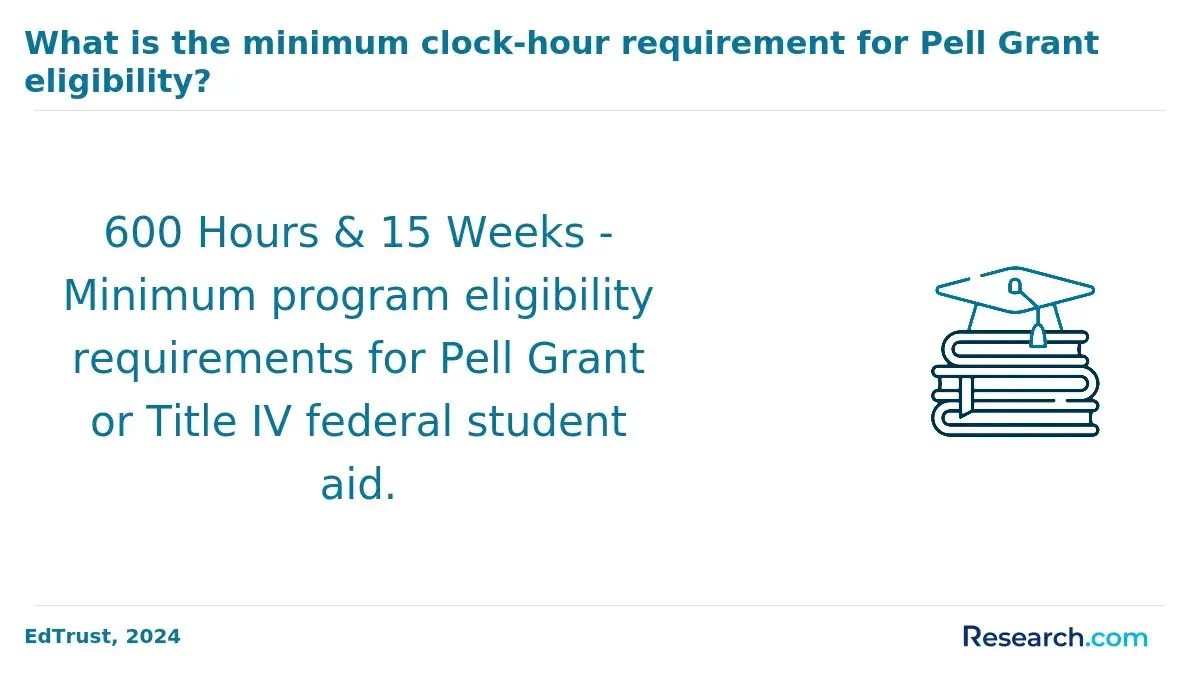
Eligible online students at accredited nonprofit institutions may use federal financial aid, including grants, Direct Loans, and work-study where available, after filing the FAFSA. Eligibility depends on factors such as enrollment status, satisfactory academic progress, citizenship or eligible noncitizen status, program eligibility, and remaining aid limits. Graduate students generally have different aid options than undergraduates, so students should review the school's financial aid office guidance for their degree level.
Institutional scholarships, state grants, employer tuition assistance, military education benefits, and professional-association awards may also help. Employer support can be particularly valuable for people already working in hospitals, insurers, health systems, public health agencies, or health technology organizations, but reimbursement policies often require approved courses, a minimum grade, or continued employment.
Before accepting loans, compare the aid offer using the items below. This helps distinguish assistance that lowers out-of-pocket cost from funding that must be repaid.
- Grants and scholarships that do not normally require repayment
- Federal loans, including interest terms and annual or aggregate borrowing limits
- Institutional discounts or scholarships that require continued enrollment or academic performance
- Employer reimbursement rules, repayment clauses, and approval deadlines
- Estimated remaining balance after all aid, including fees and materials
Students exploring adjacent entry-level roles may find different funding structures in online medical coding programs. That path is narrower than a health informatics degree but may suit learners seeking coding-specific preparation before committing to a longer credential.
Do not assume online attendance makes a program ineligible for aid, or that every scholarship applies to online learners. Confirm each award's enrollment, modality, and program restrictions before building a budget around it.
Online health informatics programs vary substantially in flexibility. Asynchronous courses allow students to complete work within weekly deadlines, while synchronous courses require attendance at scheduled virtual sessions. Some programs use a hybrid structure: recorded content and independent coursework combined with live discussions, group projects, proctored exams, or short residencies.
Accelerated terms can reduce calendar time but increase weekly workload. Traditional 15- or 16-week terms may be easier for students balancing full-time work, caregiving, or uneven schedules. Part-time enrollment usually offers more manageable pacing, although it can extend the time before completion and may affect financial aid eligibility.
Compare the format at the course level rather than relying on a program being labeled "100% online." These questions reveal whether the schedule is genuinely workable.
- Are live sessions required, and if so, on which days and time zones?
- Are group projects common, and how are teams expected to coordinate?
- Must students visit campus for orientation, testing, presentations, or residencies?
- Are internships, practicums, or capstones required, and who secures the placement?
- Can students pause enrollment, take one course at a time, or switch between full-time and part-time study?
Online delivery is usually best for self-directed students who can plan weekly work and communicate proactively. On-campus study may be better for students who need structured access to labs, face-to-face networking, or a fixed learning routine. The right choice depends on the learner's habits and the program's actual requirements, not on a general assumption that online education is easier.
Effective online support should be visible before enrollment, not merely promised in marketing. Health informatics students may need help with academic writing, statistics, databases, career exploration, accessibility accommodations, library research, and technical troubleshooting. Because many online learners work while enrolled, evening access and response-time expectations can matter as much as the number of services listed.
Ask whether advisors are assigned by program, whether faculty hold virtual office hours, and whether career staff understand healthcare and technology roles. Also ask how students access tutoring, disability services, research librarians, and mental-health resources when they do not live near campus.
The following supports are especially useful when evaluating an online program's practical value.
| Support area | What strong support can look like | Why it matters |
| Academic advising | Degree plans, transfer guidance, and regular progress check-ins | Helps prevent delayed graduation and unnecessary courses |
| Technical support | Extended-hours help with learning platforms, software, and account access | Reduces disruption during deadlines and exams |
| Career services | Resume reviews, networking guidance, interview preparation, and job-search tools | Helps students translate coursework into employer language |
| Library and tutoring | Online database access, research consultations, writing and quantitative help | Supports evidence-based assignments and technical coursework |
| Experiential-learning coordination | Clear placement policies and project or practicum guidance | Clarifies whether students must arrange their own experience |
A red flag is an admissions representative who cannot connect you with an academic advisor, faculty member, or current-student resource before you commit. Request direct answers about support availability for online students and retain written information about promised services.
They can, provided the curriculum matches the student's target role and includes demonstrable skills. Health informatics professionals may support electronic health record implementation, clinical documentation improvement, data quality, reporting, privacy operations, workflow redesign, population health, revenue-cycle systems, or healthcare analytics. Job titles are inconsistent across employers, so students should search local postings early and identify recurring education, software, and experience requirements.
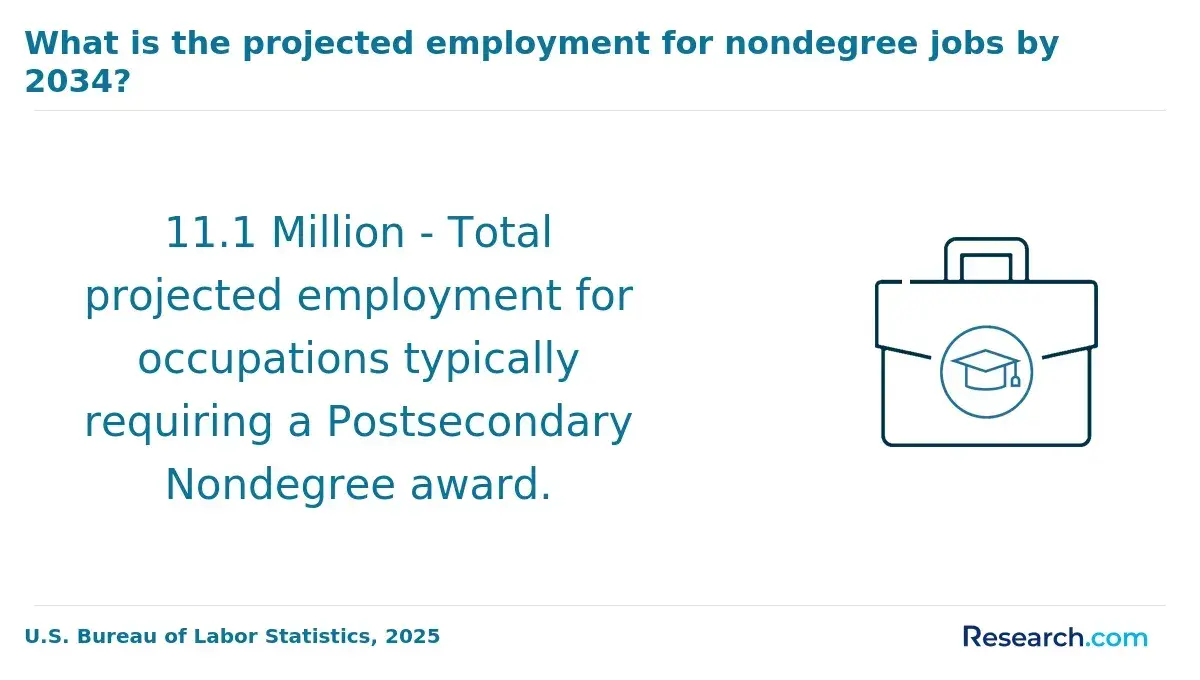
The U.S. Bureau of Labor Statistics projects 15% employment growth for health information technologists and medical registrars through 2033. This is a useful indicator of national demand, but it does not guarantee a position in every location or for every degree holder. Employers may prefer experience with particular systems, certifications, clinical environments, SQL, reporting tools, or project-management methods.
Career preparation is strongest when students can show both technical competence and healthcare context. Prioritize programs that help learners build evidence of these skills.
- Interpreting healthcare data while protecting privacy and data quality
- Understanding clinical and administrative workflows before recommending system changes
- Communicating findings to technical and nontechnical stakeholders
- Using databases, spreadsheets, dashboards, or analytics tools appropriate to the curriculum
- Completing a portfolio, capstone, internship, or applied project that can be discussed with employers
For students who want direct patient-care preparation rather than an information-systems career, online medical assistant programs with financial aid represent a different education route. Medical assisting and health informatics can both serve healthcare organizations, but their daily work, credential expectations, and clinical responsibilities differ.
Before enrolling, ask the program for examples of capstones, internship arrangements, career coaching, and the types of employers that recruit its students. Treat broad salary claims carefully: pay depends on occupation, region, prior experience, responsibilities, and the employer's size and setting.
Yes, an accredited online degree can prepare students for graduate study when it provides a solid academic record, appropriate prerequisites, and evidence of quantitative, technical, and research readiness. Graduate admissions committees usually focus more on institutional recognition, coursework, grades, recommendations, statement of purpose, and fit with the program than on whether an undergraduate degree was completed online.
A bachelor's graduate may pursue a master's in health informatics, healthcare administration, public health, data analytics, information systems, or a related discipline. A master's may support doctoral study, advanced informatics leadership, or specialized certificates. The best next credential depends on the work a student wants to perform, not simply on earning the highest possible degree.
Students planning ahead should take the following steps while completing their current program.
- Review admission prerequisites for likely graduate programs before choosing electives.
- Build strength in statistics, research methods, health data, and written analysis where those courses are relevant.
- Develop relationships with faculty who can comment substantively on your work.
- Save major projects, capstones, and syllabi that demonstrate academic preparation.
- Confirm that the institution's accreditation and transcript format will meet the requirements of intended graduate schools.
Healthcare professionals considering advanced nursing education should assess their clinical background and licensure separately; MSN to DNP online programs are designed for a different progression than a health informatics degree. Likewise, a health informatics credential does not substitute for nursing education or clinical practice requirements.
How Should Students Compare the Best Online Health Informatics Degree Programs at Nonprofit Universities?
The best program is the one that credibly fits your target job, prior education, budget, and schedule. Begin with a shortlist of accredited nonprofit universities that offer your preferred degree level. Then compare the exact online program rather than the institution's reputation alone. A public university may be the value leader for an in-state student, while a private nonprofit may be preferable if it offers predictable pricing, better transfer recognition, or a specialization aligned with the student's employer.
Use a consistent scorecard for every finalist. The table separates factors that should drive the decision from assumptions that should not.
| Comparison factor | Evidence to collect | Decision value |
| Career alignment | Required courses, electives, capstone examples, local job-posting matches | High |
| Accreditation and recognition | Current institutional status and any relevant programmatic review | High |
| Total cost | Written estimate after transfer credit, fees, aid, and materials | High |
| Online format | Live-session schedule, residency rules, course pacing, practicum expectations | High |
| Transfer policy | Maximum credits, age limits, prerequisite evaluation, articulation agreements | Medium to high |
| Support and outcomes | Advisor access, career services, retention and graduation information when available | Medium to high |
| Institutional name or ranking | Context only; verify program-specific evidence | Secondary |
After narrowing the list, contact each program with the same questions and compare written responses. This approach exposes differences that generic rankings often miss.
- What is the full estimated cost to complete after my transfer credits are evaluated?
- Which courses are synchronous, and are there any campus, proctoring, practicum, or residency requirements?
- What tools, data platforms, and applied projects will I complete?
- What roles do students commonly pursue, and what career support is available to online learners?
- Can I review course sequencing and speak with a program advisor or faculty member before enrolling?
Common mistakes include assuming nonprofit status ensures value, choosing the lowest tuition without calculating total completion cost, overlooking required live sessions, and selecting a concentration before checking job descriptions. Students interested in advanced nursing practice should also understand that the fastest post-master's FNP certificate route has clinical and licensure considerations distinct from informatics education.
A practical final step is to rank three programs against your nonnegotiables: recognized accreditation, affordable net cost, workable schedule, relevant curriculum, and career support. If a school cannot provide clear answers on these items, keep searching rather than making a decision based on a deadline or sales pressure.
Other Things You Should Know About Health Informatics
No. The fields overlap in records, data governance, privacy, and healthcare operations. Health informatics generally emphasizes technology, systems, data use, and workflow improvement, while health information management often has a stronger focus on records administration, coding, compliance, and information governance.
Not always. Many programs admit students from technology, business, public health, and other backgrounds. However, healthcare experience can help with clinical terminology and workflow concepts. Applicants without it should look for programs that include foundational healthcare coursework and advising.
It depends on the role. Some analyst and data-focused positions value SQL, Python, R, database, or visualization skills, while workflow, implementation, privacy, and project roles may emphasize different strengths. Review job postings for your intended role before choosing technical electives.
Many students do, particularly in part-time or asynchronous formats. Before enrolling, estimate weekly reading, project, group-work, and exam demands, then confirm whether courses require live attendance, internships, or fixed-time activities that could conflict with work.
- Colleges That Offer Complete Financial Aid https://www.collegeessayguy.com/blog/colleges-that-offer-complete-financial-aid
- Why Pursue a Master's in Health Informatics? | 23% Job Growth Outlook https://www.usfhealthonline.com/resources/health-informatics/why-pursue-a-masters-in-health-informatics/
- 5 Key Courses in a Health Informatics Degree Program - Healthcare Management Degree Guide https://www.healthcare-management-degree.net/list-articles/5-key-courses-in-a-health-informatics-degree-program/
- Master in Health Informatics and Analytics https://imu.edu.my/academics/postgraduates/health-informatics-and-analytics-pg-cert-pg-dip-master/
- Top 10 Best Online MS in Health Informatics Programs of 2024 https://www.onlinecolleges.net/rankings/best-online-masters-health-informatics/
- 100 Percent Online Master's in Health Informatics - MSHI Degrees https://www.mhaonline.com/faq/fully-online-ms-health-informatics-programs
- Comparing Your Financial Aid Offers https://learning.torringtonsavings.bank/paying-for-college/financing/article/comparing-your-financial-aid-offers
- Online MHI https://www.publichealthdegrees.org/online/mhi/
- Accredited Online MHI / MSHI Degree Programs https://www.medicaltechnologyschools.com/health-informatics/online-mhi-degree