2027 Best Online Fire Administration Doctorate Programs for Government and Public Sector Careers

Co-Founder and Chief Data Scientist
Choosing an online Fire Administration doctorate is really a career strategy decision: the right program should strengthen your leadership, policy, emergency management, and public-sector credibility. The need is timely; the U.S. Bureau of Labor Statistics projects emergency management director employment to grow 4% from 2023 to 2033, with public agencies continuing to plan for disasters, infrastructure risk, and community resilience.
This guide is for working fire, emergency services, military, and government professionals comparing accredited online options by quality, cost, flexibility, dissertation format, and alignment with federal, state, local, and nonprofit public safety careers.
Key Things You Should Know
- The best online Fire Administration doctorate programs are usually not labeled only "fire administration"; strong options include doctorates in fire and emergency management administration, emergency management, homeland security, public policy, public administration, or organizational leadership with public safety research.
- Use accreditation, dissertation or capstone fit, faculty public-sector experience, residency requirements, and agency-relevant curriculum as the main filters; NCES data published in 2024 reported average graduate tuition and fees of $12,596 at public institutions and $29,931 at private nonprofit institutions for 2022-23.
- Career value depends on your role and agency structure: BLS data updated in 2024 lists emergency management directors at a median annual wage of $83,960, but a doctorate is most useful for senior leadership, policy, research, consulting, teaching, and cross-agency administration rather than entry-level fire service roles.
What Are the Best Online Fire Administration Doctorate Programs for Government and Public Sector Careers?
The best program is the one that matches your public-sector goal, not simply the one with the broadest "fire" label. Because dedicated online doctorates in Fire Administration are limited, many working professionals compare closely related doctoral programs in emergency management, fire and emergency management administration, homeland security, public policy, and public administration.
The table below organizes common doctorate pathways by government career fit. Program names, delivery formats, residencies, and dissertation rules can change, so students should verify current details directly with each university before applying:
| Doctoral pathway or example program type | Best public-sector fit | Why it may work well | Key caution |
| PhD in Fire and Emergency Management Administration | Fire service executives, emergency management researchers, state or local public safety leaders | Strongest academic match for students who want to study fire service systems, disaster policy, risk, response, and intergovernmental coordination | Some programs may be hybrid, research-heavy, or more selective than professional doctorates |
| Doctor of Emergency Management or Doctor of Science in Emergency Management | Emergency management directors, homeland security coordinators, continuity planners, disaster preparedness leaders | Often applied and practice-oriented, with coursework tied to mitigation, preparedness, response, recovery, and resilience | May focus more on all-hazards emergency management than fire department administration specifically |
| PhD or Doctorate in Public Policy with emergency management, homeland security, or public safety focus | Federal, state, or municipal policy analysts, agency executives, legislative staff, public safety administrators | Useful for professionals who want to influence law, budgets, regulation, public risk policy, and agency governance | Students may need to shape dissertations or electives toward fire administration |
| Doctor of Public Administration or related public administration doctorate | City managers, county administrators, fire chiefs pursuing executive municipal leadership, public-sector consultants | Builds skills in budgeting, organizational leadership, ethics, labor relations, and public program evaluation | Less specialized in fire science unless electives, faculty, or research topics support public safety |
| Doctorate in Homeland Security or Security Leadership | Emergency operations, critical infrastructure protection, intelligence liaison, federal or regional preparedness roles | Aligns with interagency security, terrorism preparedness, infrastructure risk, and disaster resilience | May be too security-focused for students who want fire department operations, prevention, or municipal administration |
For most government and public sector professionals, the strongest shortlist includes one highly specialized fire or emergency management doctorate and one broader public policy or public administration doctorate.
That comparison helps you decide whether you want to become a subject-matter expert in fire and disasters or a broader executive leader who applies public safety expertise across agencies.
A specialized doctorate is usually the better fit if your goal is to lead emergency management programs, teach fire administration, publish applied research, or move into statewide public safety planning. A broader public administration or policy doctorate may be better if your target is deputy city manager, county administrator, agency director, budget executive, or public safety policy advisor.
How Should You Compare Online Fire Administration Doctorate Programs for Your Public Sector Career Goals?
Start with your target role, then work backward to the degree structure. A fire chief preparing for municipal executive leadership may need different doctoral training than a federal emergency management analyst, a state preparedness director, or a faculty candidate.
Use the following comparison steps to avoid choosing a program based only on title, tuition, or convenience:
- Define your target outcome; senior fire administration, emergency management leadership, public policy, homeland security, teaching, consulting, or research.
- Check whether the curriculum includes public budgeting, labor relations, ethics, emergency management law, intergovernmental operations, risk analysis, program evaluation, and disaster policy.
- Review faculty biographies for fire service, emergency management, military, homeland security, municipal government, or public administration experience.
- Ask whether the dissertation or capstone can focus on a real government problem such as staffing models, wildfire preparedness, EMS integration, community risk reduction, resilience planning, or mutual-aid governance.
- Confirm whether the program is fully online, hybrid, or online with required residencies, and whether those requirements fit shift work, command schedules, deployments, or agency travel restrictions.
- Compare total cost, not only per-credit tuition, including doctoral fees, dissertation continuation fees, travel, technology, and time away from work.
- Ask admissions and career staff how many students work in fire service, emergency management, homeland security, local government, or public agencies.
Students deciding between fire administration and adjacent fields should also be honest about their preferred professional lane. If your interest is broader justice administration, investigations, corrections, or public safety leadership outside fire and emergency services, an online criminal justice degree may be a more direct academic foundation before pursuing doctoral study.
Common mistakes include relying only on rankings, assuming any doctorate will help with promotion, ignoring dissertation demands, or choosing a program without agency-relevant faculty. A better approach is to request a sample degree plan, dissertation handbook, residency calendar, and recent dissertation titles before applying.
Are Online Fire Administration Doctorate Programs Accredited and Respected by Government Employers?
Online doctoral programs can be respected by government employers when they come from properly accredited institutions and produce credible, relevant doctoral work. Public agencies typically care less about whether courses were online and more about whether the university is recognized, the degree is legitimate, and the learning applies to the agency's leadership, policy, and operational needs.
Accreditation should be your first quality screen. In the United States, institutional accreditation from an accreditor recognized by the U.S. Department of Education or the Council for Higher Education Accreditation is the core requirement for federal financial aid eligibility, transfer credibility, and basic employer recognition.
Programmatic accreditation is less common for doctoral-level fire administration and emergency management programs than it is in fields such as nursing, counseling, or engineering.
That does not automatically make a program weak. Instead, students should evaluate whether the curriculum aligns with recognized public safety frameworks, whether faculty have public-sector expertise, and whether the university has a strong record of serving working professionals.
Before enrolling, verify these quality indicators carefully:
- The institution is currently accredited by a recognized institutional accreditor.
- The doctorate is listed in the official university catalog, not only on a marketing page.
- Online delivery, residency requirements, dissertation expectations, and graduation requirements are clearly stated.
- Faculty credentials include doctoral research, public-sector practice, fire service leadership, emergency management, homeland security, or public administration experience.
- The program can provide examples of student research topics relevant to government, public safety, disaster management, or community risk reduction.
- The school clearly explains financial aid eligibility, satisfactory academic progress, and doctoral continuation fees.
Red flags include vague accreditation language, pressure-based enrollment tactics, unclear dissertation rules, unusually short completion claims, and programs that cannot explain how doctoral research is supervised. Government employers may be especially skeptical of degrees from institutions with weak recognition, poor transparency, or limited academic rigor.
Admission requirements vary by university, but online doctoral programs in fire administration, emergency management, public policy, and public administration usually expect applicants to show both graduate-level academic readiness and professional relevance.
Many students enter after years of experience in fire service, emergency management, EMS, military, law enforcement, homeland security, municipal administration, or nonprofit disaster response.
Typical application requirements include a mix of academic records, professional evidence, and writing ability. The exact combination matters because doctoral study requires sustained research, not just operational experience:
- A master's degree from an accredited institution, often in fire administration, emergency management, public administration, public safety, homeland security, criminal justice, leadership, or a related field.
- Official transcripts showing graduate academic performance that meets the school's minimum GPA standard.
- A professional resume documenting leadership, command, planning, training, policy, emergency operations, or public-sector experience.
- A statement of purpose explaining career goals and a possible research interest related to fire administration or public safety.
- Letters of recommendation from supervisors, faculty, agency leaders, or public-sector professionals who can speak to doctoral readiness.
- A writing sample, research paper, interview, or admissions essay, especially for research-focused PhD programs.
- Possible prerequisite coursework in statistics, research methods, public administration, emergency management, or leadership.
Applicants without a fire service background can still be competitive if they have relevant public safety, emergency management, policy, military, environmental safety, or local government experience. However, they should choose a program that welcomes interdisciplinary students and offers enough foundational coursework to support fire and emergency services research.
If your main interest is evidence handling, laboratory analysis, death investigation, or fire scene forensics rather than agency administration, a cheapest online forensic science degree may be a more suitable credential to compare before committing to a doctorate.
One practical admissions strategy is to contact the program director before applying. Share your target role, current job, preferred research topic, and work schedule, then ask whether recent students with similar goals have completed the program successfully.
The strongest curriculum for government careers combines public safety expertise with public administration skills. Fire administration leaders rarely work only on incident response; they manage budgets, labor agreements, prevention programs, policy compliance, interagency planning, technology adoption, community risk, and elected-official expectations.
The curriculum areas below are especially useful for public-sector advancement because they connect doctoral learning to agency-level decisions:
- Fire and emergency services administration: Prepares students to analyze staffing, deployment, command systems, prevention, EMS integration, and organizational performance.
- Emergency management and disaster policy: Supports roles in mitigation, preparedness, response, recovery, continuity of operations, and resilience planning.
- Public budgeting and finance: Helps students evaluate grants, capital planning, apparatus replacement, staffing models, and fiscal trade-offs.
- Public policy and governance: Builds the ability to work with elected officials, state agencies, federal programs, unions, and community stakeholders.
- Research methods and statistics: Prepares students to conduct defensible studies, evaluate programs, and use evidence in policy recommendations.
- Risk analysis and community risk reduction: Aligns with prevention, inspection, wildfire planning, vulnerable population protection, and data-informed resource allocation.
- Ethics, equity, and public accountability: Supports transparent decision-making in high-stakes public services.
- Leadership and organizational change: Helps experienced professionals manage culture, succession, training, technology adoption, and interagency collaboration.
Specializations matter most when they help you build a coherent professional identity. A homeland security concentration may fit federal or regional preparedness roles, while a public administration concentration may fit city or county executive tracks. A fire and emergency management concentration is usually best for students who want their dissertation, teaching, or consulting work to stay close to the fire service.
Fire administration also overlaps with occupational safety, environmental hazards, hazardous materials, and risk management. Students who want to lead prevention, workplace safety, industrial emergency response, or compliance programs may also want to compare the best online environmental health and safety programs before deciding whether a doctorate or a specialized master's-level credential is the better next step.
Current trends are making curriculum choice more important. Public agencies are using data dashboards, GIS, AI-assisted planning tools, drones, interoperable communications, and predictive risk models, but they also face privacy, equity, procurement, and training challenges. A strong doctorate should help students evaluate technology responsibly rather than simply adopt it because it is new.
Online Fire Administration doctorate programs are designed for working adults, but "online" can mean several different things. Some programs are fully asynchronous, some require live evening sessions, and others combine online coursework with short residencies, doctoral seminars, comprehensive exams, or in-person defenses.
Understanding the doctoral format is essential because the final research requirement often determines how manageable the program will be while working full time. The table below compares common formats and what they mean for public-sector professionals:
| Program feature | What it usually means | Best fit | Trade-off |
| Asynchronous online courses | Students complete weekly readings, discussions, papers, and projects on their own schedule | Fire officers, shift workers, deployed personnel, and agency leaders with unpredictable hours | Requires strong self-discipline and proactive faculty communication |
| Synchronous online sessions | Classes meet live by video at scheduled times | Students who want structured interaction and discussion | May be difficult with 24-hour shifts, callouts, travel, or incident response demands |
| Short residencies | Students attend campus or intensive seminars for advising, research development, or networking | Students who value faculty access and cohort relationships | Adds travel cost and scheduling pressure |
| Traditional dissertation | Original research supervised by a committee, usually suited for scholarly or policy contribution | Future faculty, researchers, policy analysts, and evidence-focused agency leaders | Can extend time to completion if the topic, data access, or committee process is unclear |
| Applied dissertation or capstone | Practice-based research addressing an organizational or public-sector problem | Working executives, consultants, and agency leaders seeking immediate applied value | May be less ideal for students pursuing traditional tenure-track academic roles |
Before enrolling, ask how dissertation topics are approved and whether students can use agency data. Public agencies may require permission, de-identification, institutional review board approval, or legal review before a student can study staffing, personnel, incident data, health outcomes, or internal performance measures.
A practical way to choose between a dissertation and capstone is to ask what you want the final project to do. If you want to publish, teach, or contribute to theory, a dissertation-heavy PhD may be the better fit. If you want to solve a defined agency problem and build an executive portfolio, an applied doctorate may be more useful.
Most working professionals should plan for a multi-year commitment. The exact timeline depends on transfer credits, course load, dissertation progress, residency requirements, and whether the student maintains full-time public safety employment while enrolled.
The following timeline gives a realistic planning framework for students balancing doctoral work with government or public sector responsibilities.
| Study pace | Typical pattern | Who it fits | Main risk |
| Accelerated or heavier course load | Multiple courses per term with steady dissertation planning from the beginning | Students with predictable schedules, employer support, and strong writing skills | Burnout, especially during command assignments, disaster deployments, or promotion processes |
| Part-time doctoral study | One course at a time or reduced enrollment during demanding work periods | Fire chiefs, emergency managers, military personnel, parents, and shift workers | Longer time to completion and possible continuation fees |
| Coursework plus extended dissertation phase | Coursework finishes on schedule, but research, data approval, analysis, and writing take longer | Students using agency data or complex public-sector research designs | Losing momentum after coursework ends |
Time management should be evaluated before admission, not after the first term begins. Doctoral work often requires sustained reading, literature review, research design, writing, and revision, which can be difficult during fire season, hurricane season, grant cycles, budget hearings, accreditation reviews, or emergency activations.
Students can improve completion odds by taking these steps early:
- Choose a research topic connected to your job but not dependent on confidential data that may be difficult to access.
- Block recurring weekly writing time, even during coursework, so the dissertation does not feel like a separate degree.
- Ask whether the program assigns dissertation chairs early or only after coursework.
- Confirm leave, tuition reimbursement, and professional development policies with your employer.
- Discuss the degree plan with family or support systems before enrolling, especially if you work shifts or hold command responsibility.
Accelerated programs can make sense for students with stable schedules and clear research interests. Part-time programs often make more sense for senior public-sector professionals whose work demands are unpredictable and whose agencies cannot easily absorb extended absences.
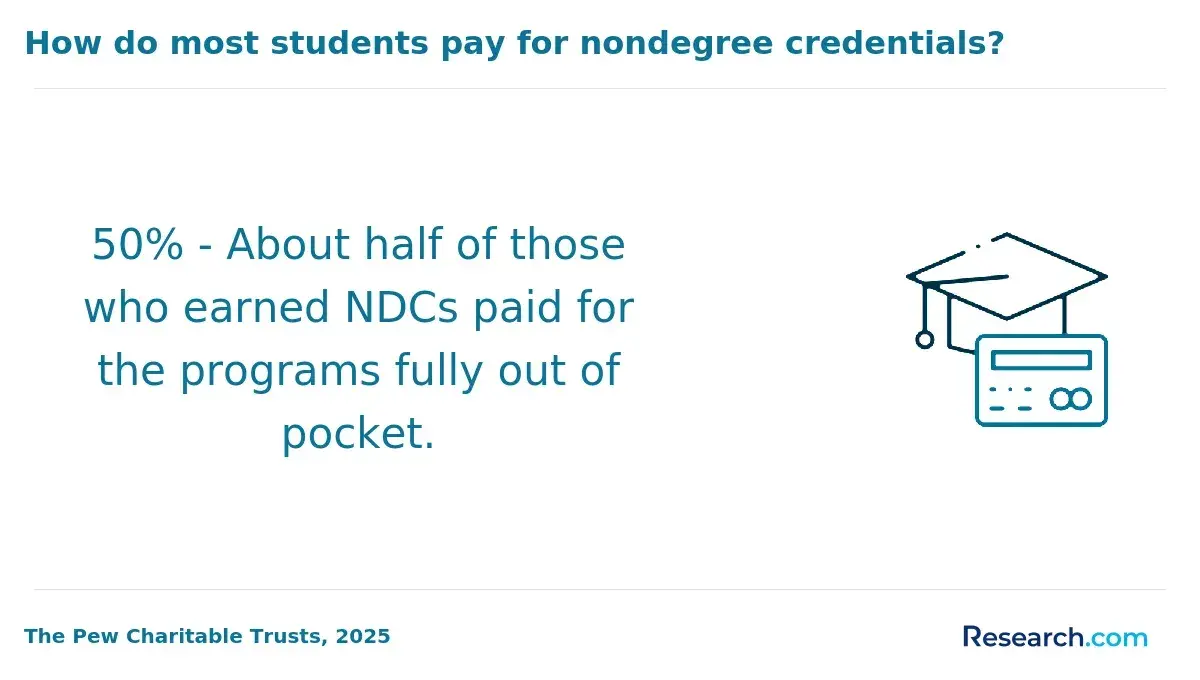
Doctoral cost varies widely because programs charge by credit, term, dissertation phase, or enrollment status. Public universities may offer lower tuition for in-state students, while private online universities may offer predictable online pricing but higher total costs depending on credit requirements and dissertation length.
Recent national graduate tuition data helps set a baseline, although actual doctoral program costs can be higher or lower depending on credits, fees, and time to completion:
- Public institutions: NCES data published in 2024 reported average graduate tuition and fees of $12,596 for 2022-23.
- Private nonprofit institutions: NCES data published in 2024 reported average graduate tuition and fees of $29,931 for 2022-23.
Use those figures only as a benchmark. A doctoral student's real cost depends on program length, tuition structure, transfer credit policy, residency travel, books, technology fees, dissertation continuation fees, and whether the student needs extra terms to finish research.
Funding options are often different for working government professionals than for traditional full-time doctoral students. Consider these sources before relying on loans:
- Employer tuition reimbursement from a fire department, municipality, county, state agency, federal agency, military branch, or public university system.
- Professional development funds tied to command training, emergency management, homeland security, or executive education.
- Federal financial aid for eligible students attending accredited institutions.
- Veterans education benefits for eligible military-connected students.
- Scholarships from public safety, fire service, emergency management, or local government associations.
- Graduate assistantships or teaching opportunities, which are more common in research universities than in fully online professional programs.
- Agency-supported research partnerships, if the dissertation directly supports a public-sector planning or evaluation need.
ROI should be judged conservatively. A doctorate may improve credibility for executive leadership, consulting, teaching, policy, or research roles, but it should not be treated as a guaranteed promotion. Before enrolling, compare the total cost with realistic advancement pathways in your agency, civil service rules, pay bands, pension timing, and whether a doctorate is preferred, required, or simply valued.
An online Fire Administration doctorate is usually most valuable for experienced professionals moving toward senior leadership, policy, research, education, or consulting.
It is not typically necessary for becoming a firefighter or first-line supervisor, but it can support advanced roles where evidence-based decision-making, interagency coordination, budgeting, and public accountability matter.
The table below summarizes public-sector career paths where doctoral-level fire administration, emergency management, or public safety expertise may be relevant:
| Career path | Typical public-sector setting | How a doctorate may help | Important limitation |
| Fire chief or executive fire administrator | Municipal, county, tribal, airport, military, or special district fire agencies | Supports strategic planning, labor relations, budgeting, prevention policy, accreditation, and evidence-based deployment decisions | Promotion still depends heavily on experience, certifications, civil service rules, and local governance |
| Emergency management director | Local government, state agencies, universities, hospitals, utilities, or regional authorities | Strengthens disaster policy, planning, continuity, mitigation, recovery, and interagency coordination | Operational credibility and incident experience remain important |
| Homeland security or preparedness leader | State fusion centers, emergency operations, transportation agencies, public health, or federal partners | Builds policy, risk analysis, infrastructure protection, and cross-sector coordination skills | Security clearances or specialized credentials may be required for some roles |
| Public safety policy analyst or program evaluator | Legislatures, executive agencies, grant offices, inspector general teams, or research organizations | Supports research design, data interpretation, program evaluation, and policy recommendations | Quantitative and writing skills may matter more than rank history |
| College faculty or fire service educator | Community colleges, universities, training academies, and professional institutes | Doctoral credentials can support teaching, curriculum design, research, and academic leadership | Tenure-track roles may prefer a PhD and peer-reviewed research |
| Public safety consultant | Government contractors, nonprofit institutes, municipal consulting firms, or independent practice | Can add credibility in strategic planning, accreditation, risk assessment, and organizational change | Client relationships, practical results, and subject-matter reputation are essential |
Salary potential varies by agency size, region, union structure, rank, pension rules, and whether the role is sworn, civilian, appointed, or contract-based. BLS data updated in 2024 reported a median annual wage of $83,960 for emergency management directors, which gives prospective students a useful reference point but not a doctoral earnings prediction.
Some fire administration careers intersect with investigation, arson analysis, evidence management, and court testimony. If that side of the field interests you, reviewing related forensic career paths can help clarify whether your next credential should focus on administration, investigation, science, or law enforcement.
A doctorate may be worth it if you already have substantial experience and want to compete for executive, academic, policy, or consulting roles. It may not be worth it if you are early in your fire service career, need a required certification more urgently, or are seeking a faster credential for promotion within a rank-based system.
Which Online Fire Administration Doctorate Programs Offer the Best Public Sector Career Support and Professional Networks?
The strongest public-sector career support usually comes from programs that connect students with faculty, alumni, research communities, and professional organizations already active in fire, emergency management, homeland security, and public administration.
Career services matter, but doctoral networking is often built through research, conferences, agency partnerships, and dissertation advising.
When evaluating career support, look beyond generic resume help. For experienced public-sector professionals, the most useful support is specialized, relationship-based, and connected to real agencies or professional associations:
- Faculty with current or former experience in fire service, emergency management, public administration, homeland security, military, municipal government, or applied public safety research.
- Dissertation chairs who understand agency data, institutional review boards, public records issues, and operational constraints.
- Alumni working in fire departments, emergency management agencies, public universities, consulting firms, federal agencies, or state and local government.
- Opportunities to present research at emergency management, fire service, public administration, or homeland security conferences.
- Support for publishing applied research, policy briefs, case studies, or program evaluations.
- Connections to professional groups such as fire chiefs associations, emergency management associations, public administration networks, and public safety training institutes.
- Career advising that recognizes civil service systems, command structures, public pensions, union environments, and government hiring rules.
Ask each program direct questions: Where do graduates work? Can students collaborate with public agencies on research? Are dissertation topics tied to real government problems? Do faculty attend or publish in public safety venues? Are online students included in networking events, research groups, and alumni communities?
The best programs for public sector careers do not treat online students as isolated learners. They create a professional ecosystem where doctoral work can become a policy paper, conference presentation, agency improvement plan, teaching portfolio, or consulting specialty.
Other Things You Should Know About Fire Administration
No. Fire science usually focuses more on fire behavior, prevention, investigation, suppression, and technical operations, often at the associate, bachelor's, or master's level. A Fire Administration doctorate is more likely to focus on leadership, policy, emergency management, research, budgeting, and public-sector systems.
Yes, it can help, especially for college-level teaching, curriculum leadership, or research roles. However, teaching requirements vary by institution, and some academic roles may prefer a PhD, published research, or experience with online instruction.
Many applicants benefit from having professional credentials, command training, emergency management courses, or executive fire officer education before doctoral study. Certifications are not always required, but they can strengthen your practical foundation and help you choose a more focused research topic.
Yes. Military, emergency operations, disaster response, logistics, safety, homeland security, and public-sector leadership experience can be highly relevant. The key is showing how that experience prepares you for doctoral research and how the degree supports a clear public service goal.
- 4 Careers You Can Pursue with a Doctoral Degree in Public Administration https://smceducation.com/blog/careers-phd-public-administration/
- Career Pathways with a Public Safety Degree | Neumann University https://learn.neumann.edu/neuperspectives/careers-with-public-safety-degree
- How to Become a Fire Protection Engineer https://ehscareers.com/employer-blog/become-fire-protection-engineer/
- Search icon https://waldorf.edu/online/academics/online-resources/pillars-articles/careers-in-public-safety-fire-homeland-security-emergency-management/
- Federal occupations by college major https://help.usajobs.gov/working-in-government/unique-hiring-paths/students/federal-occupations-by-college-major
- Fire Science Degree | Fire Science Schools & Colleges https://www.firescience.org/fire-science-degrees-and-programs/
- What Does a Public Administrator Do? https://www.allbusinessschools.com/public-administration/career-paths/
- 2026 Most Affordable Online Fire Science Degrees https://www.onlineu.com/most-affordable-colleges/fire-science-degrees
- Professional Status: The Future of Fire Service Training and Education http://coloradofirecamp.com/usfs_doctrine/professional-status-part-3.htm