2027 Best Online Data Analytics Doctorate Programs for Career Advancement Beyond a Master's Degree

Co-Founder and Chief Data Scientist
Choosing whether to move from a master's degree to an online data analytics doctorate is a career investment decision, not just an academic one. The U.S. Bureau of Labor Statistics reports a May 2024 median pay of $112,590 for data scientists, and senior analytics roles increasingly demand leadership, research, AI, and governance skills.
This guide is for working professionals who want to compare doctoral pathways, understand realistic career value, and decide whether a doctorate offers better advancement than certifications, experience, or another master's-level credential.
Key Things You Should Know
- An online data analytics doctorate is most valuable when it supports a defined goal such as analytics leadership, applied research, AI strategy, faculty work, or executive-level data governance, not when it is pursued only for a title.
- BLS data shows strong U.S. demand in adjacent doctoral-relevant roles, including $112,590 median pay for data scientists and $140,910 for computer and information research scientists in May 2024, but salaries vary by industry, region, employer, and experience.
- Most working professionals should compare total tuition, time to completion, dissertation or capstone requirements, employer tuition support, and opportunity cost before choosing a PhD, DBA, DPS, or applied doctorate.
Which Online Data Analytics Doctorate Programs Best Support Career Advancement Beyond a Master's Degree?
The online data analytics doctorate programs that best support advancement beyond a master's degree are those that connect doctoral-level analytics work to a specific career outcome. For most professionals, the key question is not "Which program sounds most prestigious?" but "Which doctoral format helps me move into the next level of responsibility?"
A data analytics doctorate is an advanced degree focused on using statistical modeling, machine learning, data systems, research methods, and organizational decision-making to solve complex problems.
It typically builds on a quantitative or technical graduate background, though applicants may come from business analytics, computer science, engineering, healthcare informatics, public policy, or a data analytics master's degree.
The strongest program type depends on whether your goal is research, executive leadership, applied analytics strategy, or teaching. The table below summarizes common online doctorate options and how they usually align with career advancement goals:
| Doctorate type | Best fit | Typical academic focus | Career advancement value | Possible limitation |
| PhD in Data Science, Analytics, Computer Science, or Information Systems | Professionals targeting research-intensive roles, faculty positions, advanced AI work, or R&D leadership | Original research, theory, quantitative methods, machine learning, computing systems | Strongest fit for research scientist, tenure-track faculty, advanced algorithmic roles, and research leadership | Often longer and more research-heavy than needed for purely managerial advancement |
| DBA with analytics, business intelligence, or data strategy concentration | Managers, consultants, directors, and executives using analytics to improve business decisions | Applied research, business strategy, organizational performance, analytics leadership | Strong fit for analytics director, chief data officer track, consulting, and enterprise decision leadership | May be less suitable for academic research careers than a PhD |
| Doctor of Professional Studies or applied doctorate in analytics | Working professionals who want doctoral-level applied problem-solving without a traditional academic research path | Practice-based research, analytics implementation, industry projects, data governance | Useful for senior practitioner, principal analyst, analytics strategist, and transformation roles | Employer recognition can vary by institution and field |
| Doctorate in Information Systems or Technology Management | Professionals managing analytics platforms, data infrastructure, digital transformation, or enterprise systems | Information systems, technology strategy, cybersecurity, data architecture, governance | Strong fit for IT analytics leadership, data systems strategy, and cross-functional executive roles | May not provide deep statistical or machine learning specialization unless the curriculum is carefully chosen |
A practical way to compare programs is to start with the role you want after graduation and work backward. A PhD usually makes the most sense if the target role rewards original research, advanced methods, or academic credibility.
A DBA or professional doctorate may be the better fit if you want to lead teams, shape analytics strategy, or solve organization-level data problems while continuing to work full time.
Before enrolling, ask each school for evidence that the program fits your goals. The most useful questions are specific and career-based, not generic:
- What roles do graduates move into after completing the doctorate, and how many were already employed in analytics leadership before enrolling?
- Does the curriculum include doctoral-level machine learning, causal inference, data governance, AI ethics, cloud analytics, or industry-specific analytics?
- Is the final requirement a dissertation, applied dissertation, capstone, portfolio, or publishable research project?
- Can master's-level coursework reduce required credits, or must all doctoral credits be completed at the institution?
- Are faculty actively involved in analytics research, industry consulting, government data work, or enterprise AI projects?
- Does the program offer doctoral mentoring, research labs, executive networking, conference support, or employer-facing projects?
The main red flag is a program that markets "leadership" but provides little evidence of advanced analytics depth, faculty expertise, or graduate outcomes. A doctorate should extend your master's-level knowledge; it should not repeat it at a higher tuition price.
Which Career Paths Become More Accessible With an Online Data Analytics Doctorate?
An online data analytics doctorate can make some career paths more accessible, but it is rarely the only qualification employers consider. Experience, portfolio evidence, domain expertise, leadership record, and technical skill still matter.
The doctorate becomes most useful when it signals the ability to design rigorous studies, lead complex analytics initiatives, evaluate AI systems, and make high-stakes decisions from uncertain data.
The table below compares career paths where a doctorate may be required, preferred, or simply useful. This distinction matters because the ROI changes significantly depending on whether the degree is a gatekeeper credential or an enhancer:
| Career path | Doctorate value | Common responsibilities | When it may be worth it |
| Computer and information research scientist | Often preferred and sometimes expected | Develop new computing methods, design algorithms, advance AI or data systems, publish technical findings | Worth considering if you want R&D, advanced machine learning, or research laboratory roles |
| Postsecondary analytics, data science, or information systems faculty | Often required for full-time faculty and tenure-track roles | Teach, publish research, advise students, design curriculum, serve on academic committees | Worth considering if teaching and research are central career goals |
| Chief data officer or vice president of analytics | Optional but potentially differentiating | Set data strategy, manage governance, lead analytics teams, align data programs with business outcomes | Worth considering if you already have leadership experience and need stronger research or strategic authority |
| Principal data scientist or lead machine learning scientist | Often preferred in research-heavy organizations | Design advanced models, mentor teams, evaluate methods, translate models into production impact | Worth considering if your field rewards deep methodology beyond applied master's-level work |
| Healthcare, finance, or public-sector analytics research leader | Useful and sometimes preferred | Oversee regulated data projects, evaluate risk, conduct applied research, manage ethical and compliance issues | Worth considering when domain regulation and evidence quality are central to advancement |
| Analytics consultant or founder | Optional | Advise organizations, build analytics services, evaluate data maturity, design AI adoption roadmaps | Worth considering if doctoral credibility supports client trust or specialized consulting fees |
For many professionals, the doctorate is most useful after they already have several years of analytics, data science, engineering, business intelligence, or domain leadership experience. It is less likely to create immediate value for someone who lacks a portfolio, has not managed complex data work, or is still trying to enter the field.
Day-to-day responsibilities in doctoral-level analytics roles often include work that goes beyond dashboarding or routine modeling. Professionals at this level may define research questions, select modeling strategies, assess bias, lead cross-functional teams, explain uncertainty to executives, and decide whether a model is reliable enough for use in real operations.
Staying at the master's level can be the better choice if your target roles emphasize implementation speed, software engineering, product analytics, or business reporting more than research or executive leadership. In those cases, cloud certifications, AI engineering experience, management training, or a stronger project portfolio may deliver faster advancement at a lower cost.
How Does an Online Data Analytics Doctorate Increase Earning Potential After a Master's Degree?
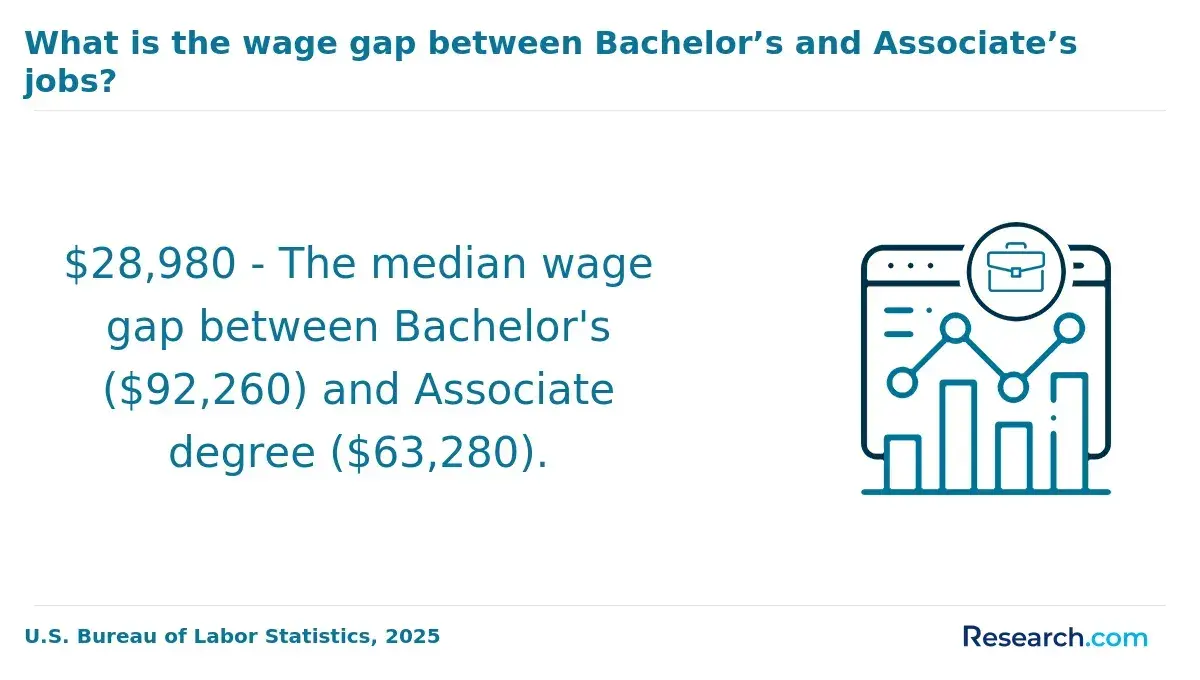
An online data analytics doctorate can increase earning potential when it helps a professional qualify for roles with broader scope, higher accountability, or stronger technical specialization. The degree itself does not raise pay automatically. Its value comes from how it changes the work you can credibly lead.
Recent U.S. labor data gives a useful salary baseline, though it should not be read as a promise for doctoral graduates. The BLS reported a May 2024 median annual wage of $112,590 for data scientists. That figure includes professionals with different education levels, industries, and experience, so doctorate holders should use it as a market reference rather than a guaranteed outcome.
The table below shows how doctoral study may affect advancement from master's-level roles into higher-responsibility pathways. It focuses on the career mechanism behind potential earning growth, which is often more important than the credential alone:
| Current master's-level position | Possible doctoral-level progression | How the doctorate may support higher earnings | When earnings impact may be limited |
| Senior data analyst | Analytics manager, principal analyst, applied research lead | Adds advanced methods, research design, and leadership credibility | If the employer primarily rewards software tools or years of service |
| Data scientist | Principal data scientist, machine learning research lead, AI strategy lead | Supports deeper modeling, experimentation, and technical authority | If promotions depend more on production engineering than research depth |
| Business intelligence manager | Director of analytics, data strategy leader, decision intelligence lead | Connects analytics to organizational performance and executive decision-making | If the organization has a small data function with few senior roles |
| Information systems professional | Data governance director, analytics platform leader, digital transformation executive | Builds credibility in enterprise data architecture and governance | If the role requires vendor certifications more than doctoral study |
| Graduate instructor or adjunct faculty member | Full-time faculty, program director, research faculty | May meet institutional expectations for doctoral credentials | If the institution has limited full-time openings or prioritizes publication history |
Compensation effects also depend on industry. Finance, technology, consulting, healthcare, insurance, and government contracting may reward advanced analytics differently. Geographic labor markets matter as well, especially where senior data leadership roles cluster around major technology, research, healthcare, or defense hubs.
A common mistake is assuming that a doctorate will immediately move someone from a technical contributor role into executive compensation. Employers usually look for a combination of doctoral-level expertise, business impact, communication skill, and leadership history.
To improve earning potential, use the doctorate to produce evidence employers can evaluate: publications, applied research, patents, internal analytics frameworks, measurable process improvements, or high-value capstone projects.
An online data analytics doctorate can help professionals qualify for leadership roles by strengthening the skills that separate senior decision-makers from individual contributors.
At the master's level, many professionals learn how to analyze data. At the doctoral level, the emphasis often shifts to designing rigorous inquiry, defending decisions, leading uncertainty, and influencing systems.
Leadership roles in analytics usually require more than technical ability. Employers often expect senior candidates to connect data work to revenue, risk, customer experience, operations, compliance, ethics, and long-term strategy. Doctoral programs can support that transition when they include applied research, executive communication, organizational leadership, and data governance.
The leadership value of the doctorate is strongest when it helps you demonstrate these capabilities in real workplace settings:
- Research leadership: Framing complex business or scientific problems as testable questions and selecting appropriate methods
- Strategic decision-making: Translating statistical uncertainty into recommendations executives can use
- Data governance: Setting standards for quality, access, privacy, model monitoring, and ethical use
- Team leadership: Mentoring analysts, data scientists, engineers, and domain experts across functions
- Change management: Guiding organizations from ad hoc reporting toward scalable analytics and AI adoption
- Evidence communication: Explaining limitations, risks, assumptions, and trade-offs to nontechnical stakeholders
The BLS reported a May 2024 median annual wage of $169,510 for computer and information systems managers, a role family that includes many senior technology and data leaders.
This does not mean a doctorate is required for those roles, but it shows why professionals weigh doctoral study against leadership advancement: the financial upside is tied to moving into management scope, not simply earning another credential.
Professionals should also be realistic about timing. A doctorate may help you become more competitive for director-level or executive roles, but it rarely replaces management experience.
If you have not led teams, managed budgets, influenced stakeholders, or delivered enterprise-scale analytics outcomes, consider seeking those responsibilities while enrolled rather than waiting until after graduation.
The strongest data analytics doctorate specialization is the one that matches both market demand and your existing professional advantage.
A healthcare analytics leader, for example, may gain more from doctoral work in AI governance and causal inference than from a generic data science concentration. A business intelligence director may benefit more from decision science and analytics strategy than from a highly theoretical machine learning track.
AI has become especially important because employers are trying to use predictive models, generative AI, automation, and decision systems responsibly. Professionals comparing analytics specializations may also want to understand the undergraduate and graduate pathways connected to an artificial intelligence major, especially if they are shifting from traditional analytics into AI leadership.
The table below summarizes specializations that often provide strong advancement potential when paired with relevant work experience:
| Specialization | Best for | Career advancement potential | What to verify in the curriculum |
| Artificial intelligence and machine learning | Data scientists, AI product professionals, research-oriented analysts | Supports principal data scientist, AI strategy, machine learning lead, and research roles | Advanced modeling, deep learning, model evaluation, responsible AI, deployment awareness |
| Business analytics and decision science | Managers, consultants, BI leaders, operations professionals | Supports analytics director, strategy consultant, decision intelligence, and executive analytics roles | Causal inference, optimization, forecasting, experimentation, executive decision-making |
| Healthcare analytics and informatics | Healthcare analysts, clinical informatics professionals, public health data leaders | Supports healthcare analytics leadership, outcomes research, quality improvement, and informatics roles | Healthcare data standards, privacy, clinical workflows, population health, evaluation methods |
| Cybersecurity analytics and risk analytics | Security analysts, risk managers, fraud analytics professionals | Supports cyber analytics leadership, fraud detection, threat intelligence, and risk modeling roles | Anomaly detection, security data systems, risk modeling, compliance, incident analytics |
| Data governance and ethics | Senior analysts, compliance professionals, data managers, public-sector leaders | Supports chief data officer track, governance leadership, AI policy, and responsible data roles | Privacy, bias, accountability, governance frameworks, auditability, regulatory context |
| Operations research and optimization | Supply chain, logistics, manufacturing, defense, and operations professionals | Supports advanced optimization, decision modeling, operations leadership, and systems analysis roles | Mathematical programming, simulation, stochastic modeling, optimization software, applied projects |
The U.S. labor market supports strong demand for several analytics-adjacent specializations. For example, BLS projections released for the 2024-2034 period show much faster-than-average growth for operations research analysts.
For readers, the takeaway is that optimization, modeling, and decision science remain valuable beyond the technology sector, especially in logistics, healthcare, finance, manufacturing, and government.
Avoid choosing a specialization only because it sounds current. A specialization has stronger ROI when it extends your existing domain credibility.
If you already understand healthcare operations, financial risk, supply chains, or public policy, a doctorate can help you become the person who leads analytics in that domain rather than someone starting over in a crowded technical market.
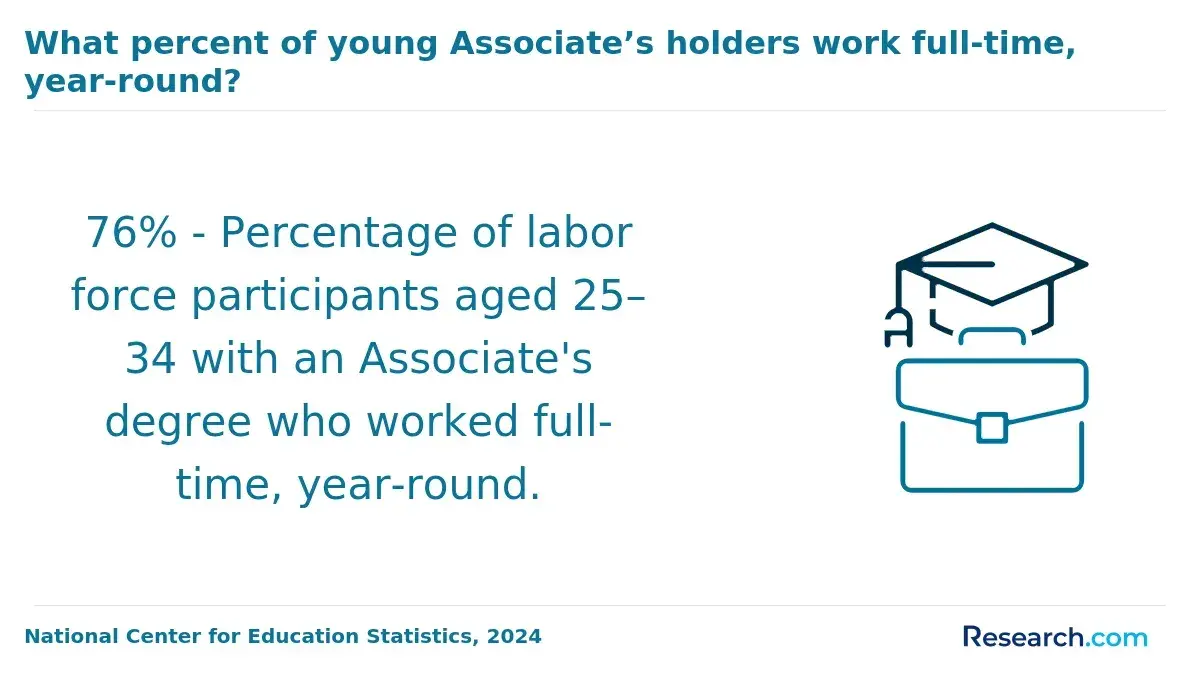
Employers generally value an online data analytics doctorate when it comes from an accredited institution, aligns with the role, and is supported by evidence of applied skill. The online format itself is usually less important than program quality, institutional recognition, curriculum rigor, faculty expertise, and what the graduate can demonstrate.
Employer expectations are also changing as AI systems become more embedded in analytics work. Some professionals comparing analytics doctoral options also evaluate an online PhD in artificial intelligence USA pathway if their target roles are more focused on AI research, algorithm development, or responsible AI systems than broad analytics leadership.
The table below shows how employers may interpret an online doctorate in different hiring situations. This can help you decide whether the credential is likely to strengthen your candidacy or whether another route may be more efficient:
| Employer context | How the doctorate may be viewed | What strengthens employer confidence | What may weaken value |
| Research-intensive technology or AI organization | Potential signal of advanced research capability | Publications, dissertation quality, open-source work, advanced methodology, faculty reputation | Program lacks technical depth or research expectations |
| Enterprise analytics department | Potential signal of strategic and analytical leadership | Applied projects tied to business impact, governance knowledge, leadership experience | Degree is disconnected from measurable workplace outcomes |
| Healthcare, finance, insurance, or public sector | Potential signal of rigor, ethics, and risk-aware data use | Domain specialization, compliance knowledge, evidence-based decision-making | Program ignores regulatory or domain-specific data issues |
| Higher education | Often important for faculty eligibility | Regional accreditation, research agenda, teaching experience, publications | Doctorate does not meet institutional expectations for faculty roles |
| Consulting | Potential credibility enhancer with clients | Clear niche, case studies, executive communication, industry network | Credential is not supported by business development or advisory experience |
Accreditation is one of the first filters to check. In the U.S., institutional accreditation is especially important for federal financial aid eligibility, transferability, employer tuition reimbursement, and faculty hiring.
Programmatic accreditation may matter in related fields such as business, computing, healthcare, or public administration, but requirements vary by school, employer, and occupation.
The biggest mistake is assuming "online" means either automatically less credible or automatically equivalent to every campus program. Employers usually evaluate the total package: institution, curriculum, research expectations, faculty, professional experience, portfolio, communication skill, and fit for the job.
Advancing from a master's degree to an online data analytics doctorate commonly takes several years, especially for working professionals. The exact timeline depends on transfer credit, enrollment intensity, dissertation or capstone structure, research progress, and how closely your master's preparation matches the doctoral curriculum.
Most professionals should evaluate time in terms of career momentum, not only graduation date. A part-time doctorate may take longer, but it allows you to keep earning income, apply research at work, and build leadership evidence while studying.
An accelerated option may reduce calendar time but can create unsustainable workload if you are also managing a demanding analytics role. The table below provides a practical comparison of timeline factors for master's-prepared applicants:
| Timeline factor | Typical impact | What to ask before enrolling |
| Transfer or waived credits | May reduce coursework, but policies vary widely | How many master's credits can apply, and which courses must still be completed? |
| Full-time versus part-time enrollment | Full-time may shorten the timeline; part-time may be more realistic for working professionals | What is the expected weekly workload for each enrollment option? |
| Dissertation requirement | Can extend time if topic approval, data access, or committee feedback is delayed | What is the median time to dissertation completion for online students? |
| Applied capstone or professional project | May align better with workplace advancement if designed around real organizational problems | Can the project use employer-approved data or a workplace problem? |
| Residency or synchronous sessions | May affect scheduling, travel, and work flexibility | Are residencies required, virtual, optional, or tied to research milestones? |
| Research readiness | Students with strong statistics, programming, and methods preparation may move faster | Are bridge courses required for students from nontechnical master's programs? |
A realistic planning process should include both academic and professional milestones. Before applying, map the doctorate against your promotion cycle, employer tuition assistance calendar, family obligations, and likely research timeline:
- Identify the role or promotion level you want within the next three to seven years.
- List the skills, credentials, and leadership evidence currently missing from your profile.
- Compare whether a doctorate, certification, portfolio project, or internal leadership move best closes those gaps.
- Ask schools for completion data specific to online doctoral students, not only program marketing timelines.
- Confirm whether your employer will support tuition, schedule flexibility, research access, or a capstone project.
Underestimating workload is one of the most common problems. Doctoral study often requires sustained reading, writing, research design, statistics, coding, and committee communication. If your current job regularly exceeds standard full-time hours, a slower part-time path may produce better results than an aggressive schedule that leads to burnout.
The ROI of an online data analytics doctorate depends on the relationship between cost, time, career goals, and opportunity. A doctorate can be worth it when it helps unlock roles that are otherwise difficult to access, such as faculty appointments, research leadership, principal-level data science, or executive analytics strategy.
It may not be worth it if your desired roles already accept master's-level candidates and reward experience more than doctoral credentials.
Cost should include more than tuition. Professionals should account for fees, books, software, residencies, conference travel, reduced work hours, delayed promotion opportunities, and student loan interest. Federal student aid policy also matters because graduate borrowers can accumulate large balances if they rely heavily on loans for a long program.
The table below outlines the main ROI variables to compare before committing to a doctorate. Use it to structure conversations with admissions offices, employers, mentors, and financial aid staff:
| ROI variable | Why it matters | Stronger ROI signal | Weaker ROI signal |
| Total net cost | The final cost after aid, employer support, and transfer credits determines financial risk | Employer tuition assistance, scholarships, waived credits, predictable fees | High borrowing with unclear career payoff |
| Career requirement | ROI improves when the doctorate is required or strongly preferred for the target role | Faculty, research scientist, principal scientist, or executive analytics roles list doctorate preference | Target jobs consistently require only a master's degree plus experience |
| Opportunity cost | Time spent studying may reduce consulting, overtime, promotion preparation, or family capacity | Program integrates with current job and supports visible workplace projects | Program requires major career slowdown without clear advancement pathway |
| Employer recognition | Some employers have formal pay bands or promotion criteria tied to doctoral credentials | Employer confirms the doctorate can support promotion, title change, or leadership eligibility | Employer does not reward additional degrees in the target career ladder |
| Research or capstone relevance | A strong doctoral project can become career evidence | Project solves a real industry, organizational, or policy problem | Project topic is disconnected from career goals |
| Alternative pathways | Certifications, management experience, or portfolio work may produce faster gains | Doctorate fills a gap alternatives cannot fill | Lower-cost credentials would meet the same employer expectations |
A useful way to think about ROI is to separate "credential ROI" from "capability ROI." Credential ROI comes from meeting a formal or informal requirement. Capability ROI comes from learning advanced methods, improving judgment, building authority, and producing work that changes your market value. The best doctoral investments usually provide both.
Do not rely only on average salary figures when calculating ROI. Salary data often combines workers across education levels and experience ranges, and it may not reflect your location or industry. Instead, compare job postings for your target roles, speak with hiring managers, review alumni outcomes, and ask whether your employer has compensation bands for doctoral-level positions.
The professionals who benefit most from an online data analytics doctorate usually already have a strong master's-level foundation and a clear reason to move higher. They are not simply trying to enter analytics; they are trying to lead, research, teach, govern, or specialize at a level where doctoral preparation can matter.
The degree tends to offer the strongest value for these groups when the program is carefully matched to their career path:
- Experienced data scientists who want to move into principal, research, or AI leadership roles requiring deeper methodological credibility.
- Analytics managers and directors who need doctoral-level expertise to lead enterprise data strategy, governance, or decision science.
- Business, healthcare, finance, logistics, or public-sector professionals who want to become analytics leaders within a specialized domain.
- Adjunct instructors or academic professionals who need a doctorate for full-time faculty, curriculum leadership, or research roles.
- Consultants who can use doctoral research to build a specialized advisory practice in AI governance, analytics strategy, risk modeling, or evaluation.
- Technology leaders who oversee analytics platforms, data architecture, digital transformation, or responsible AI implementation.
Some professionals should be cautious. If you are early in your analytics career, lack programming or statistics depth, or do not yet know which senior role you want, a doctorate may be premature. A stronger portfolio, targeted certification, technical bootcamp, management experience, or lateral move into a better analytics team may be a smarter next step.
The doctorate may also be a poor fit if you mainly want a salary increase but do not want research, writing, long-term independent study, or leadership responsibility. Doctoral work requires persistence and ambiguity tolerance. It is not simply more coursework after a master's degree.
A good rule of thumb is this: pursue the doctorate when it helps you compete for a role you can clearly name, with requirements you have verified, in a labor market you understand. If you cannot describe the target role, the employer expectation, and the evidence the doctorate will help you build, wait until your plan is sharper.
How Should Professionals Choose an Online Data Analytics Doctorate for Career Advancement?
Professionals should choose an online data analytics doctorate by starting with career fit, then evaluating academic quality, cost, flexibility, and outcomes. Rankings can be useful as a starting point, but they should not replace a disciplined comparison of how each program supports your specific advancement goal.
If your goal is to become a data scientist before pursuing doctoral-level work, it may be useful to compare foundational pathways such as a data scientist degree before deciding whether a doctorate is the next logical step. A doctorate is usually most efficient after you already have the technical base and professional record needed for advanced roles.
Use the following process to compare programs in a way that connects directly to career advancement:
- Define your target role first, such as principal data scientist, analytics director, chief data officer, research scientist, professor, or healthcare analytics leader.
- Review job postings and promotion criteria to determine whether the doctorate is required, preferred, or optional.
- Choose the degree type that fits the goal: PhD for research and academic pathways, DBA for business analytics leadership, or applied doctorate for practice-focused advancement.
- Confirm institutional accreditation and ask whether the program meets employer, faculty hiring, or reimbursement requirements.
- Compare curriculum depth in statistics, machine learning, research methods, data governance, ethics, cloud analytics, and domain specialization.
- Ask how the dissertation, applied dissertation, or capstone can produce evidence relevant to your target career.
- Calculate total net cost, including fees, residencies, software, travel, loan interest, and any reduced work hours.
- Request outcomes information for graduates with backgrounds similar to yours, especially working professionals who entered with a master's degree.
- Evaluate support systems, including faculty mentoring, writing support, research advising, career services, alumni access, and employer-connected projects.
- Compare the doctorate with alternatives such as certifications, executive education, management experience, technical specialization, or a role change.
Several red flags should slow your decision. Be cautious if a program cannot clearly explain dissertation expectations, refuses to discuss completion timelines, lacks faculty with analytics expertise, provides vague career claims, or advertises unrealistic outcomes.
Also be careful with programs that duplicate your master's curriculum without adding doctoral-level research, leadership, or specialization.
The best choice is the program that helps you become more credible for the work you actually want to do. For some professionals, that means a rigorous PhD with publication expectations.
For others, it means an applied doctorate connected to workplace transformation. For many, the smartest move may be to wait, gain leadership experience, and return to doctoral study when the career payoff is clearer.
Other Things You Should Know About Data Analytics
Yes, many online doctoral programs are designed for working professionals, but full-time work can make progress slower. Ask each school about weekly workload, synchronous meeting times, research milestones, and whether students commonly complete the program while employed full time.
Not always. Some programs accept applicants with master's degrees in analytics, statistics, business, engineering, information systems, healthcare informatics, or related fields. However, you may need prerequisite coursework in programming, statistics, databases, or research methods.
No. Some programs require a traditional dissertation, while others use an applied dissertation, doctoral capstone, portfolio, or practice-based research project. The best option depends on whether your goal is academic research, industry leadership, consulting, or applied problem-solving.
Policies vary by institution, but many universities do not identify the delivery format on the diploma. What matters most is accreditation, program rigor, institutional reputation, faculty quality, and whether the curriculum and final project support your career goals.
- How long should a PhD take today - Swiss School of Business Research https://ssbr-edu.ch/how-long-should-a-phd-take-today/
- Exploring PhD Completion Rates: How Many Finish on Time? https://wallyboston.com/phd-completion-rates/
- PhD in Technology - Data Analytics Specialization https://walshcollege.edu/programs/phd-technology-data-analytics/
- Online Doctorate Degree in Comp Sci - Big Data Analytics https://www.coloradotech.edu/degrees/doctorates/computer-science/big-data-analytics
- Best Master’s in Data Analytics Online: 2025 https://www.onlinemastersdegrees.org/best-programs/data-analytics/
- Explore Cutting-Edge Online Data Science PhD Programs https://www.phds.me/online-programs/data-science/
- All PhD in Data Analytics Programs - AnalyticsDegrees.org https://www.analyticsdegrees.org/data-analytics/phd/
- PhD Analytics vs Data Science: Career & Scope Guide https://shooliniuniversity.com/blog/phd-data-analytics-vs-phd-data-science-differences-careers-how-to-choose/
- How Long Does It Take to Get a PhD After a Master's Degree? https://streamlinedai.app/blog/how-long-phd-after-masters
- Data Analysis PhD Program: A Practitioner's Guide https://www.plotstudio.ai/articles/data-analysis-phd-program