2027 Best Online Cybersecurity Doctorate Programs for Mid-Career Professionals

Co-Founder and Chief Data Scientist
Mid-career cybersecurity professionals often hit a decision point: deepen technical authority, move into executive security leadership, or prepare for research and teaching. The U. S. Bureau of Labor Statistics projects information security analyst employment to grow 33% from 2023 to 2033, far faster than average, which makes advanced expertise more valuable but not automatically necessary.
This guide explains how online cybersecurity doctorates work, who benefits most, what programs to compare, and how to judge cost, time, admissions, and career outcomes before enrolling.
Key Things to Know About Online Cybersecurity Doctorate Programs for Mid-Career Professionals
- The strongest online cybersecurity doctorate options for working professionals are usually applied PhD, DSc, DBA, or Doctor of Technology programs with flexible pacing, dissertation support, and faculty expertise in cyber defense, governance, AI security, or digital forensics.
- BLS data published in 2024 shows information security analyst roles had a median pay of $120,360 and projected 33% growth from 2023 to 2033, but a doctorate is most useful for leadership, research, consulting, policy, and academic goals rather than entry-level security work.
- Professionals should expect roughly 3 to 7 years of study, 54 to 100 quarter or semester credits depending on the program model, and total tuition that can range from about $30,000 to more than $80,000 before employer support, scholarships, or military benefits.
Is earning an online Cybersecurity doctorate worth it for mid-career professionals?
An online cybersecurity doctorate can be worth it when the degree solves a specific career problem: qualifying for senior cyber strategy roles, building research credibility, teaching at the college level, leading security innovation, or moving from technical execution into enterprise risk and policy leadership. It is less likely to be worth the cost if the main goal is simply to enter cybersecurity, change jobs quickly, or gain hands-on tools training that a graduate certificate or certification could provide faster.
For mid-career professionals, the return is often strategic rather than immediate. The BLS reported a 2023 median salary of $145,080 for computer and information research scientists, with projected employment growth of 26% from 2023 to 2033. That category is not limited to cybersecurity doctorate holders, but it shows why research-heavy security, AI assurance, cryptography, and advanced systems roles can reward doctoral-level preparation.
The best way to judge value is to compare the doctorate against your target outcome, not against the word "doctorate" alone. The table below summarizes when the degree tends to make sense and when another path may be more practical.
| Professional goal | Doctorate fit | Why it may or may not make sense |
| Chief information security officer or security executive | Moderate to strong fit | A doctorate can strengthen credibility in governance, risk, policy, and enterprise strategy, but executive experience still matters more than the credential alone. |
| Cybersecurity researcher or applied security scientist | Strong fit | Research design, publication, advanced threat modeling, and dissertation work align closely with research-focused roles. |
| College teaching or tenure-track academic work | Strong fit | Many full-time faculty roles prefer or require a doctorate, though hiring standards vary by institution and research expectations. |
| Hands-on penetration testing or security operations advancement | Limited fit | Certifications, lab experience, and specialized training often provide faster skill gains than a doctorate. |
| Career change into cybersecurity | Usually weak fit | A master's degree, certificate, bootcamp, or cybersecurity degree online is usually a more appropriate first step. |
The practical test is simple: if your next career move requires original research, high-level security leadership, policy influence, or academic credibility, a doctorate may be worthwhile. If you need immediate technical upskilling, the opportunity cost may be too high.
Which online Cybersecurity doctorate programs are the best for mid-career professionals?
The best online cybersecurity doctorate for a mid-career professional is not always the most famous school; it is the program that fits your schedule, research interests, budget, and career goal. For working adults, strong programs usually combine asynchronous coursework, faculty mentoring, doctoral writing support, and a dissertation or applied research project that can connect to real workplace problems.
The programs below are commonly considered by U.S. professionals seeking online or mostly online doctoral study in cybersecurity, cyber defense, information assurance, or closely related computing fields. Always verify current tuition, residency rules, and dissertation requirements directly with the university before applying.
| University | Doctoral program | Format for working professionals | Best fit | Important note |
| Dakota State University | PhD in Cyber Defense | Online-friendly doctoral coursework with research expectations | Professionals seeking a research-oriented cyber defense doctorate at a public university | Strong fit for applicants who want deeper technical and research preparation rather than a management-only doctorate. |
| Capitol Technology University | Doctor of Science in Cybersecurity | Online doctoral structure designed for working professionals | Security leaders, consultants, and practitioners pursuing applied doctoral research | Useful for professionals who want to build a dissertation around industry security challenges. |
| University of the Cumberlands | PhD in Information Technology with cybersecurity-focused study options | Online coursework with doctoral research components | IT and cybersecurity professionals seeking a flexible, lower-cost private nonprofit option | Applicants should confirm the current residency and research sequence requirements. |
| Colorado Technical University | Doctor of Computer Science in Cybersecurity and Information Assurance | Online program model with doctoral symposium or research milestones | Professionals who want a computer science doctorate with security and assurance emphasis | Quarter-credit structures can look larger than semester-credit programs, so compare total cost carefully. |
| University of Fairfax | Doctorate in Information Assurance | Online-oriented program focused on information assurance leadership and research | Experienced security, compliance, and information assurance professionals | Best for students whose interests lean toward risk, assurance, governance, and security management. |
| National University | PhD in Cybersecurity or closely related doctoral computing pathway | Online doctoral delivery built for adult learners | Professionals seeking individualized doctoral study and flexible pacing | Applicants should review faculty match, dissertation support, and total tuition before committing. |
| Nova Southeastern University | PhD in Cybersecurity Management or related computing doctorate | Online or blended doctoral study depending on current program structure | Professionals interested in cybersecurity management, policy, and academic preparation | Confirm whether any campus, residency, or synchronous requirements apply. |
Online and hybrid formats are not interchangeable for working professionals. The comparison below can help you decide whether you need maximum schedule flexibility or whether occasional campus interaction is worth the travel.
| Format | Best for | Trade-off |
| Fully online asynchronous | Professionals with demanding work schedules, travel obligations, or rotating shifts | Requires strong self-management and proactive communication with faculty. |
| Online with synchronous sessions | Students who want live discussion and structured weekly accountability | Class meeting times may conflict with work or incident-response duties. |
| Hybrid or low-residency | Students who value in-person networking, research intensives, or faculty workshops | Travel costs and time away from work can increase the real cost of attendance. |
| Cohort-based online | Professionals who want peer support and a predictable sequence | Less flexible if you need to pause, accelerate, or reduce your course load. |
For most mid-career professionals, the "best" program is the one where your dissertation topic, faculty expertise, and weekly availability align. A highly ranked program can still be a poor choice if its research expectations or residency schedule do not fit your life.
What specializations are available in Cybersecurity doctorate programs?
Cybersecurity doctorate specializations vary because some programs are housed in computer science departments, while others sit in information technology, information assurance, business, or technology leadership schools. The right specialization should match the problems you want to solve after graduation.
The table below shows common specialization areas and the professional goals they support. Use it to narrow your search before comparing tuition or admissions requirements.
| Specialization area | What it focuses on | Good fit for |
| Cyber defense and threat intelligence | Adversary behavior, defensive architecture, malware trends, and security operations strategy | SOC leaders, incident response managers, and cyber defense researchers |
| Information assurance and governance | Risk management, compliance, security controls, auditability, and enterprise assurance | GRC leaders, security auditors, federal contractors, and compliance executives |
| Digital forensics | Evidence handling, forensic investigation methods, incident reconstruction, and legal defensibility | Forensics specialists, law enforcement partners, and incident investigators |
| Cryptography and secure systems | Secure protocols, system design, privacy-preserving technologies, and mathematical security foundations | Professionals with strong technical or computer science backgrounds |
| AI security and cyber analytics | Machine learning risks, adversarial AI, automated detection, and data-driven security research | Security architects, researchers, and professionals connecting cyber with AI governance |
| Cybersecurity leadership and policy | Security strategy, regulation, organizational resilience, ethics, and national or enterprise cyber policy | CISOs, directors, consultants, and public-sector leaders |
AI is increasingly shaping doctoral research in cybersecurity because attackers and defenders both use automation, large-scale analytics, and machine learning. If your long-term goal involves AI-enabled security systems, model risk, or cyber analytics, it may also be useful to understand adjacent pathways such as an artificial intelligence major before choosing a dissertation focus.
A common mistake is choosing a specialization because it sounds marketable rather than because it matches faculty expertise. Before applying, review recent faculty publications, dissertation titles, lab areas, and whether the program supports applied research using workplace data, simulated datasets, or restricted security environments.
What admission requirements should professionals prepare for Cybersecurity doctorate programs?
Admissions requirements for online cybersecurity doctorate programs are usually designed for experienced professionals, but selectivity varies widely. Most schools look for evidence that you can handle doctoral research, write clearly, and connect your professional background to a viable cybersecurity problem.
Applicants should prepare the following materials early because they often take longer than expected while working full-time:
- Graduate degree transcripts, usually from a master's program in cybersecurity, computer science, information technology, information systems, engineering, or a related field.
- Professional resume showing relevant cyber, IT, risk, military, intelligence, consulting, leadership, or research experience.
- Statement of purpose explaining why the doctorate is necessary for your goals and what research problem you may want to study.
- Academic or professional writing sample, especially if the program emphasizes dissertation readiness.
- Letters of recommendation from supervisors, faculty, senior technical leaders, or research mentors who can evaluate your readiness for doctoral work.
- Evidence of prerequisite knowledge in networking, operating systems, programming, statistics, cyber defense, risk management, or research methods, depending on the program.
- Optional or required interview with faculty or admissions staff to discuss fit, expectations, and research direction.
Mid-career applicants often have strong experience but underestimate the academic side of the application. A polished statement of purpose should not simply say that cybersecurity is important; it should identify a specific problem, explain why it matters, and show that the school has faculty who can supervise that work.
Common admissions mistakes are avoidable if you start with fit rather than prestige. The table below highlights problems that can weaken an otherwise strong application.
| Common mistake | Why it hurts | Better approach |
| Submitting a generic leadership essay | Doctoral committees need to see research readiness, not just ambition. | Describe a focused cyber problem and how doctoral study would help you investigate it. |
| Ignoring prerequisite gaps | Some programs expect technical, quantitative, or research-methods preparation. | Ask whether bridge courses, certifications, or prior graduate coursework can address gaps. |
| Choosing recommenders by title only | A senior executive may not know your analytical or writing ability. | Select recommenders who can speak specifically about your problem-solving, discipline, and leadership. |
| Applying without a faculty match | A program may be reputable but weak in your intended research area. | Review faculty profiles and ask admissions how dissertation supervision is assigned. |
Professionals with strong work histories but weaker academic records should not assume they are disqualified. A clear research direction, recent graduate coursework, strong writing sample, and relevant leadership experience can help demonstrate readiness.
How much does an online Cybersecurity doctorate program cost?
The cost of an online cybersecurity doctorate depends on credit requirements, tuition model, fees, residency travel, dissertation continuation charges, and how long you remain enrolled. Public universities may be less expensive for some students, but private nonprofit and private for-profit programs can sometimes offer flexible structures that reduce indirect costs for working adults.
Published tuition examples for online cybersecurity and information assurance doctorates commonly fall into the following broad ranges before aid, based on recent university tuition pages and catalog structures:
- Lower-cost online doctoral options: about $30,000 to $45,000 in tuition before fees.
- Mid-range online doctoral options: about $45,000 to $65,000 in tuition before fees.
- Higher-cost or longer doctoral options: about $65,000 to more than $80,000 in tuition before fees, especially when credit requirements are high or per-credit tuition is higher.
The table below explains the main cost drivers. This matters because two programs with similar per-credit tuition can have very different total prices.
| Cost factor | How it affects total cost | What to verify |
| Credit requirement | A 54-credit program and a 100-quarter-credit program cannot be compared by sticker tuition alone. | Ask for the total program cost using your expected transfer credits and pacing. |
| Semester credits versus quarter credits | Quarter-credit programs often list more credits, which can make comparisons confusing. | Compare total tuition, not only credit count. |
| Dissertation continuation fees | Students who take longer may pay additional enrollment or continuation charges. | Ask what happens financially after coursework is complete. |
| Residency or symposium travel | Hybrid requirements can add airfare, lodging, meals, and missed work time. | Confirm whether any campus visits are mandatory. |
| Technology and course fees | Online programs may charge per-term or per-course fees beyond tuition. | Request a written estimate of tuition and required fees. |
| Employer tuition assistance | Employer support can materially reduce out-of-pocket cost, but policies often have annual caps. | Check reimbursement limits, grade requirements, service commitments, and tax treatment. |
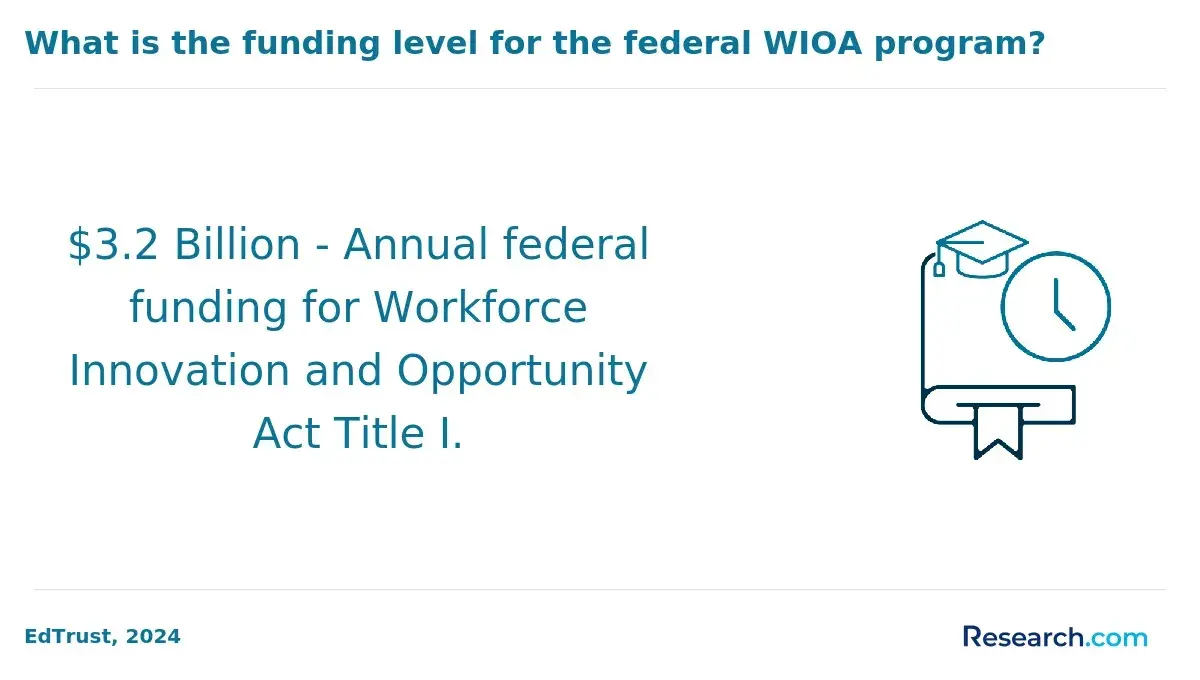
Federal financial aid may be available if the institution and program are eligible, but doctoral students should be careful with borrowing. The right question is not "Can I finance this?" but "Will this degree support a career move significant enough to justify the debt, time, and opportunity cost?"
To reduce cost, professionals should first ask their employer about tuition reimbursement, professional development budgets, veteran or military education benefits, union education benefits, and whether dissertation research can align with an organizational priority. Employer support is especially valuable when the doctorate supports internal succession planning, security maturity, or compliance goals.
What is the typical timeline for online Cybersecurity doctorate programs?
Most online cybersecurity doctorate programs take about 3 to 7 years, depending on transfer credit, program design, enrollment intensity, dissertation progress, and whether the student pauses for work or family demands. Coursework is usually predictable; the dissertation or applied research phase is where timelines expand.
The table below summarizes common completion patterns for working professionals. Use it to set expectations before deciding whether full-time or part-time study is realistic.
| Study pace | Typical timeline | Best for | Main risk |
| Full-time or accelerated | About 3 to 4 years | Professionals with employer flexibility, reduced workloads, or strong prior research preparation | Burnout if work demands remain high. |
| Steady part-time | About 4 to 6 years | Most mid-career professionals balancing full-time employment and family obligations | Progress can slow during dissertation design and data collection. |
| Extended part-time | About 6 to 7 years or longer where allowed | Senior leaders, consultants, military personnel, or parents with unpredictable schedules | Program time limits, added fees, and loss of momentum. |
A typical doctoral sequence begins with advanced coursework, moves into research methods and specialization seminars, then shifts to qualifying exams or portfolio milestones, proposal approval, data collection, dissertation writing, and defense. Some applied doctorates replace a traditional dissertation with a doctoral project, but the work still requires original analysis and sustained faculty review.
Professionals should be cautious with "accelerated" language. Faster completion usually requires more weekly time, fewer interruptions, a focused research topic, and early alignment with a dissertation chair. If your job includes incident response, travel, leadership escalation, or on-call rotations, a part-time path may produce better results even if it takes longer.
What skills can professionals learn from online Cybersecurity doctorate programs?
An online cybersecurity doctorate should build capabilities beyond what professionals typically gain from certifications or short courses. The most valuable skills are strategic, research-based, and leadership-oriented rather than limited to tool usage.
Cybersecurity doctoral students commonly develop the following skill areas through coursework, seminars, research, and dissertation work:
- Advanced research design, including how to define a security problem, evaluate evidence, and produce defensible conclusions.
- Enterprise cyber risk analysis, including how technical vulnerabilities connect to governance, finance, operations, and legal exposure.
- Threat modeling and security architecture for complex systems, cloud environments, critical infrastructure, or emerging technologies.
- Quantitative and qualitative analysis, including surveys, experiments, case studies, simulations, or technical evaluation methods.
- Cyber policy and ethics, especially for professionals working with regulated data, public-sector systems, or AI-enabled security tools.
- Executive communication, including how to translate cyber risk into board-level decisions and organizational strategy.
- Scholarly writing and publication, which matter for teaching, consulting credibility, and research leadership.
AI is one of the most important skill-shaping trends in advanced cybersecurity education. Professionals evaluating AI-heavy cyber research may want to compare cybersecurity doctorates with an online PhD in artificial intelligence USA if their main interest is machine learning, autonomous systems, or AI safety rather than enterprise security.
The practical value of these skills depends on how you use them at work. A dissertation on ransomware readiness, zero-trust adoption, secure software supply chains, or insider threat governance can become a portfolio of expertise that supports consulting, promotion, publication, or organizational change.
What career opportunities open up for online Cybersecurity doctorate degree holders?
A cybersecurity doctorate can open doors in research, higher education, consulting, executive leadership, and specialized security strategy. It does not replace experience, certifications, or leadership results, but it can help distinguish professionals who want to influence how organizations, governments, or industries approach cyber risk.
The BLS employment outlook helps explain the broader market context: information security analyst roles are projected to grow 33% from 2023 to 2033. Doctorate holders are not limited to that occupation, but strong demand for cyber expertise supports opportunities for professionals who combine experience with advanced research or leadership preparation.
The table below connects common career directions with how a doctorate may help. It also shows where the degree may be less important than experience or certifications.
| Career direction | How the doctorate can help | What still matters |
| CISO or senior security executive | Builds credibility in cyber governance, strategy, resilience, and enterprise risk. | Leadership record, business judgment, communication, and crisis management. |
| Cybersecurity professor or lecturer | May satisfy doctoral expectations for full-time faculty roles and supports scholarly work. | Teaching ability, publications, research agenda, and institutional hiring standards. |
| Security researcher | Provides training in research methods, publication, and original inquiry. | Technical depth, research portfolio, grants, patents, or peer-reviewed work. |
| Cyber policy or national security advisor | Supports analysis of regulation, critical infrastructure, governance, and cyber conflict issues. | Public-sector experience, clearance requirements where applicable, and policy expertise. |
| Principal consultant or expert witness | Strengthens authority when advising clients or explaining complex cyber issues. | Industry reputation, litigation experience, certifications, and demonstrable results. |
| Security architect or principal engineer | Can deepen systems thinking and advanced security design knowledge. | Hands-on architecture experience, cloud skills, secure engineering, and certifications. |
Salary outcomes vary by role, region, employer, clearance level, leadership scope, and technical specialization. A doctorate may improve access to certain opportunities, but no degree guarantees a promotion or salary increase. The safest ROI calculation uses your realistic target role, current compensation, employer support, and the total cost of attendance.
How can Cybersecurity doctorate students balance their time between studies and work?
Balancing doctoral study with cybersecurity work is difficult because many security roles are reactive: incidents, audits, executive requests, and vulnerability deadlines rarely follow an academic calendar. Successful students usually build a repeatable system before the first term begins.
The steps below help working professionals protect progress without assuming every week will be predictable:
- Choose a sustainable course load first, then accelerate only after you understand the reading, writing, and research expectations.
- Block recurring doctoral work time on your calendar and treat it like a leadership meeting, not optional personal time.
- Use your workplace experience to shape research questions, but confirm early whether proprietary or sensitive data can be used.
- Tell your manager what the program requires, especially during proposal development, data collection, residencies, or dissertation defense.
- Create a dissertation idea file from problems you encounter at work, such as control failures, cloud risk, incident response gaps, or policy adoption barriers.
- Plan lighter academic terms around known work peaks, audits, product launches, military duty, or major family obligations.
- Use faculty office hours and writing support early instead of waiting until the dissertation phase becomes overwhelming.
The biggest time-management mistake is treating a doctorate like a longer master's program. Doctoral work requires ambiguous problem-solving, independent research, and revision cycles that can be hard to predict. A realistic weekly plan should include reading, writing, meetings, research documentation, and recovery time.
Professionals should also set boundaries around perfectionism. The goal is not to solve every cybersecurity problem; it is to produce a focused, approved, defensible study that contributes useful knowledge to a specific area.
What should professionals evaluate when choosing an online Cybersecurity doctorate program?
Choosing an online cybersecurity doctorate requires more than comparing rankings or tuition. The best decision comes from matching program structure to your career goal, research interests, support needs, and real weekly availability.
Use the following questions when speaking with admissions advisors, program directors, or faculty:
- Is the program institutionally accredited by an agency recognized by the U.S. Department of Education or the Council for Higher Education Accreditation?
- Does the program have NSA Center of Academic Excellence designation, ABET accreditation for related computing programs, or other signals relevant to my goals?
- Which faculty members supervise research in my intended area, and are they currently accepting doctoral students?
- Is the dissertation traditional, applied, portfolio-based, or project-based, and what are the approval milestones?
- How many synchronous meetings, residencies, symposiums, or campus visits are required?
- What writing, statistics, research design, library, and dissertation-chair support is available to online students?
- How are transfer credits evaluated, and how do they affect both timeline and tuition?
- What happens if work or family obligations force me to stop out for a term?
- What are the total tuition, fees, continuation charges, and estimated travel costs through completion?
- What career outcomes do graduates pursue, and can the school describe outcomes without implying guarantees?
Accreditation deserves special attention. Institutional accreditation is the baseline signal that a university meets recognized quality standards, while NSA CAE designation can signal cyber education alignment but is not the same thing as accreditation. Programmatic accreditation is less common at the doctoral cybersecurity level, so do not reject a program solely because it lacks a cybersecurity-specific accreditor; evaluate the full quality picture.
Mid-career professionals who are not ready for doctoral study may benefit from a shorter cyber security course, graduate certificate, or targeted certification first. That path can test your interest, refresh technical skills, and reduce the risk of enrolling in a doctorate before your goals are clear.
Watch for red flags before committing. A program should be able to explain supervision, research expectations, total cost, student support, and online participation clearly. If answers are vague, rushed, or focused only on enrollment, continue comparing options.
Other Things You Should Know About Cybersecurity
Sometimes. Many programs accept applicants with master's degrees in information technology, cybersecurity, information systems, engineering, or related fields. If your background is more managerial, the school may require prerequisite technical coursework or evidence of relevant experience.
They are usually not mandatory, but they can strengthen an application by showing professional competence. Certifications are most helpful when they support your research interests or demonstrate experience in security leadership, risk, cloud security, auditing, or incident response.
Possibly, but you need permission from the employer and approval from the university's research review process. Sensitive, classified, proprietary, or personally identifiable data may require anonymization, substitution with public datasets, or a redesigned methodology.
Policies vary by university, but many schools do not list delivery mode on the diploma. Before enrolling, ask the registrar or admissions office how the degree title, transcript, and diploma will appear.
References
- Master's in cybersecurity degree essentials https://cybersecurityguide.org/programs/masters-in-cybersecurity/
- online DBA in Cybersecurity UK | imetworldwide - 2026 https://imetworldwide.com/online-doctorate-dba-in-cybersecurity-uk/
- Top 15 Best Online PhD Cybersecurity Programs (2025) - Programs.com https://programs.com/programs/online-phd-programs/
- STEM for Development: Advancing Global Industry Research Collaboration https://www.cenet.org/impact/advancing-global-industry-research-collaboration
- Online Computer Science PhD in Cybersecurity | FCU https://www.floridacoastaluniversity.com/online-computer-science-phd-cybersecurity/
- Mid-Career Industry Fellowships https://www.arc.gov.au/mid-career-industry-fellowships
- Doctoral Degrees in Cybersecurity | ComputerScience.org https://www.computerscience.org/degrees/doctorate/cybersecurity/
- 7 Online Schools with Strong Cybersecurity & Tech Degrees https://www.euroeducation.net/articles/7-online-schools-with-strong-cybersecurity-and-tech-degrees.htm
- How Do University-Industry Partnerships Drive Innovation in STEM training? - AWIS https://awis.org/resource/how-do-university-industry-partnerships-drive-innovation-in-stem-training/
- Explore Online Doctorates in Cybersecurity | CyberDegrees.org https://www.cyberdegrees.org/listings/doctorate-degrees-online/