2027 Best Online Community Health Doctorate Programs for Nonprofit, Policy, and Community Leadership Careers

Co-Founder and Chief Data Scientist
Choosing an online community health doctorate is a leadership investment, not just an academic decision. Nonprofit and public-sector health organizations need leaders who can manage programs, evaluate outcomes, influence policy, and work across communities. BLS data published in 2024 placed nonprofit employment at about 12.8 million workers, underscoring the scale of mission-driven career pathways. This guide is for professionals comparing online doctorates for nonprofit, policy, or community leadership roles. You will learn how to judge program quality, specialization fit, cost, accreditation, format, and career alignment before enrolling.
Key Things You Should Know
- The strongest online community health doctorates for leadership careers usually combine public health or community health coursework with policy analysis, program evaluation, organizational leadership, applied research, and community-engaged practice.
- For many nonprofit and public health leadership roles, an applied doctorate such as a DrPH may fit better than a research-heavy PhD, while a PhD is stronger preparation for faculty, research director, or policy research careers.
- Cost and ROI vary widely, so compare total tuition, fees, residency travel, employer tuition support, dissertation or capstone time, and salary context; BLS May 2024 data listed $117,960 as the median annual wage for medical and health services managers.
Which Online Community Health Doctorate Programs Are Best for Nonprofit, Policy, and Community Leadership?
The best online community health doctorate program is the one that matches your target leadership setting. A nonprofit executive, a health policy analyst, a community coalition director, and a public health researcher may all study community health, but they need different doctoral experiences.
For this career cluster, "community health doctorate" can include several degree types: Doctor of Public Health, PhD in Community Health or Health Education, Doctor of Health Administration, EdD in Health Education, or interdisciplinary health leadership doctorates. The table below summarizes which format tends to fit each leadership goal.
| Doctorate type | Best fit | Typical leadership value | Watch-outs |
| DrPH with community health, public health leadership, or policy emphasis | Experienced public health, nonprofit, and government professionals | Strong fit for executive leadership, program strategy, health equity, policy implementation, and applied evaluation | May require residencies, practicum hours, or an applied doctoral project tied to a real organization |
| PhD in Community Health, Health Education, or Public Health | Future researchers, faculty, policy scholars, or evaluation scientists | Strong fit for research design, grant-funded studies, data analysis, and scholarly publication | May be less focused on executive management or direct organizational leadership |
| Doctor of Health Administration or health leadership doctorate | Healthcare, public agency, and nonprofit operations leaders | Strong fit for strategy, finance, systems leadership, quality improvement, and organizational change | May offer less community-engaged public health content unless electives are chosen carefully |
| EdD in Health Education or health promotion leadership | Training, outreach, curriculum, and community education leaders | Strong fit for workforce development, health communication, prevention education, and instructional leadership | May not be ideal for policy research or epidemiology-heavy roles |
The best programs for nonprofit, policy, and community leadership usually have several features in common. Use these criteria to create your shortlist before looking at rankings or brand reputation.
- Relevant accreditation, preferably institutional accreditation for every program and CEPH accreditation when the degree is positioned as public health or DrPH training.
- Leadership-focused coursework in community assessment, policy, finance, program evaluation, strategic planning, organizational change, health equity, and data-informed decision-making.
- Applied learning that lets you build a portfolio through a dissertation, doctoral project, practicum, consulting project, policy brief, or community partnership.
- Faculty with current work in public health agencies, nonprofit systems, health equity initiatives, policy research, community-based participatory research, or program evaluation.
- Transparent cost, time-to-completion, residency expectations, transfer policy, and doctoral project requirements.
A common mistake is choosing the most prestigious or cheapest program before defining the role you want after graduation. A better approach is to identify three to five target job titles, then verify that the curriculum, faculty, and applied project model would help you build credible evidence for those roles.
Which Community Health Doctorate Specializations Best Align With Nonprofit, Policy, and Community Leadership?
Specialization choice matters because community health leadership is broad. A concentration that is excellent for grant-funded health promotion may be weak preparation for policy advocacy, nonprofit finance, or public agency administration.
The table below shows how common specializations align with nonprofit, policy, and community leadership goals. Use it to avoid selecting a concentration based only on interest rather than career utility.
| Specialization | Best leadership pathway | Skills it should develop | Good fit if you want to... |
| Community health promotion | Nonprofit program leadership, prevention initiatives, outreach management | Needs assessment, intervention design, health communication, evaluation | Lead community programs, manage prevention grants, or direct outreach teams |
| Health policy and advocacy | Policy analysis, legislative advocacy, public agency strategy | Policy writing, regulatory analysis, stakeholder mapping, systems thinking | Influence policy, prepare briefs, or work with coalitions and government partners |
| Health equity and social determinants of health | Community leadership, equity initiatives, cross-sector coalitions | Equity assessment, community engagement, structural analysis, partnership development | Lead initiatives addressing disparities, access, housing, food systems, or environmental conditions |
| Program evaluation and implementation science | Evaluation director, grant compliance, evidence-based program leadership | Logic models, outcomes measurement, mixed methods, implementation planning | Measure impact, improve programs, or compete for evaluation-focused leadership roles |
| Global or population health | Population-level strategy, NGO leadership, public health systems work | Surveillance, systems analysis, population health planning, partnership management | Work on broad population health initiatives, often with public agencies or large nonprofits |
| Community nutrition or food systems | Nutrition policy, food access nonprofits, community wellness leadership | Program design, nutrition education, food security strategy, community assessment | Lead food access, nutrition education, or chronic disease prevention programs |
If your long-term goal is nutrition-related community leadership, compare whether a doctorate is necessary now or whether a master's-level step would be more strategic first. For earlier-stage professionals, a cheapest online master's in nutrition search can help identify lower-cost preparation before committing to doctoral tuition.
To choose a specialization wisely, map it to the work products you want to produce during the program. These outputs often matter more to employers than the concentration title alone.
- For nonprofit executive roles, look for budgets, strategic plans, grant proposals, board-facing reports, and program evaluation deliverables.
- For policy roles, look for policy briefs, legislative analyses, regulatory reviews, advocacy plans, and population-level impact assessments.
- For community leadership roles, look for community needs assessments, coalition plans, participatory research projects, and health equity action plans.
- For research or academic roles, look for dissertation methodology depth, publication support, quantitative or qualitative methods training, and faculty research mentorship.
What Curriculum Should a Community Health Doctorate Offer for Mission-Driven Leadership?
A leadership-focused community health doctorate should teach you how to turn evidence into strategy. If the curriculum is mostly theory without applied decision-making, it may not build the portfolio you need for nonprofit, policy, or community-facing roles.
Strong programs usually include a blend of leadership, research, policy, and applied community health courses. The table below identifies curriculum areas that are especially important for mission-driven leadership.
| Curriculum area | Why it matters for leadership | Evidence of a strong course sequence |
| Community assessment and engagement | Leaders must understand community priorities before designing programs | Courses include participatory methods, needs assessment, coalition building, and ethical engagement |
| Health policy and systems | Nonprofit and community leaders often work inside regulatory, funding, and public agency systems | Courses require policy analysis, advocacy planning, and systems-level problem solving |
| Program planning and evaluation | Grant-funded and public-sector organizations need measurable outcomes | Students create logic models, evaluation plans, dashboards, and impact reports |
| Leadership, finance, and governance | Doctoral graduates may manage budgets, teams, boards, and partnerships | Courses cover strategic planning, organizational change, fiscal management, ethics, and governance |
| Research methods and data analysis | Leaders must interpret evidence and defend decisions with data | Sequence includes quantitative, qualitative, mixed-methods, and implementation research |
| Health informatics and data systems | Community health programs increasingly rely on dashboards, electronic records, and population health data | Courses address data governance, privacy, reporting, analytics, and decision support |
Data literacy is becoming more important as nonprofits and public agencies adopt dashboards, AI-assisted reporting, and outcomes-based funding models. If this is a gap in your background, reviewing a health information management degree online can also help you understand the data and compliance skills that increasingly overlap with community health leadership.
Before enrolling, ask the program to show how coursework connects to a doctoral project, dissertation, or leadership portfolio. A strong sequence should help you move from community problem definition to evidence review, intervention design, implementation, evaluation, and executive-level communication.
- Review the required course list and separate leadership courses from general public health courses.
- Check whether policy, finance, and evaluation are required or merely optional electives.
- Ask for sample doctoral project titles from recent students in nonprofit, policy, or community settings.
- Confirm whether you can complete applied assignments using your current workplace or a community partner.
- Look for explicit instruction in ethical leadership, health equity, and community accountability.
The applied-versus-research decision is one of the biggest choices in this field. Both paths can support leadership careers, but they build different forms of credibility.
The table below compares applied and research-focused doctorates for professionals targeting nonprofit, policy, and community leadership. Use it to decide whether you need executive problem-solving preparation, research training, or both.
| Factor | Applied doctorate | Research-focused doctorate |
| Common degrees | DrPH, DHA, EdD, applied health leadership doctorate | PhD in Community Health, Public Health, Health Education, or related field |
| Primary purpose | Apply evidence to solve organizational or community problems | Generate new knowledge through original research |
| Best fit | Nonprofit executives, public health managers, program directors, policy implementation leaders | Faculty candidates, research directors, policy researchers, evaluation scientists |
| Final project | Applied doctoral project, practice-based dissertation, capstone, or portfolio | Traditional dissertation with deeper research design and scholarly contribution |
| Typical strength | Leadership application, systems change, executive communication | Methodological depth, publication potential, theory building |
| Potential limitation | May not be ideal for tenure-track research roles | May not include as much practice-based leadership training |
Choose an applied doctorate if your next step is leading programs, managing cross-sector partnerships, directing a nonprofit department, building health equity initiatives, or translating evidence into practice. Choose a research-focused doctorate if your goal is to design studies, publish, teach, lead a research center, or become a senior evaluation expert.
Some programs blur the line by offering a practice-focused degree with rigorous methods training or a PhD with applied community-based research. When comparing those hybrid options, look closely at the dissertation or capstone model, because that final requirement usually reveals what the program values most.
Decision rule: If your ideal job description emphasizes "lead," "direct," "implement," "manage," or "evaluate programs," an applied doctorate may be the better fit. If it emphasizes "conduct research," "publish," "teach," or "secure research funding," a PhD is usually stronger.
Accreditation is a nonnegotiable quality check. At minimum, the institution should hold recognized institutional accreditation. For public health doctorates, especially DrPH programs, Council on Education for Public Health accreditation is often an important signal because it indicates the school or program has been reviewed against public health education standards.
Accreditation affects more than reputation. It can influence federal financial aid eligibility, employer tuition reimbursement, transferability, academic hiring, and whether a credential is respected by public agencies or universities.
When reviewing accreditation, do not stop at a badge on the website. Confirm the details directly and understand what is accredited.
- Verify institutional accreditation through the school's accreditation page and recognized accreditation databases.
- For DrPH or public health degrees, check whether the school or program is CEPH-accredited and whether the specific doctoral program is included.
- Ask whether online students graduate under the same accredited program as campus students.
- Confirm that the program's state authorization permits enrollment from your state.
- If you plan to teach, ask whether graduates have been hired into faculty, research, or academic administrative roles.
A common red flag is a program that markets "public health leadership" but lacks transparent accreditation information, offers vague curriculum descriptions, or cannot explain how online students receive the same academic oversight as campus students. Another red flag is pressure to enroll quickly before you have reviewed accreditation, cost, and doctoral project requirements.
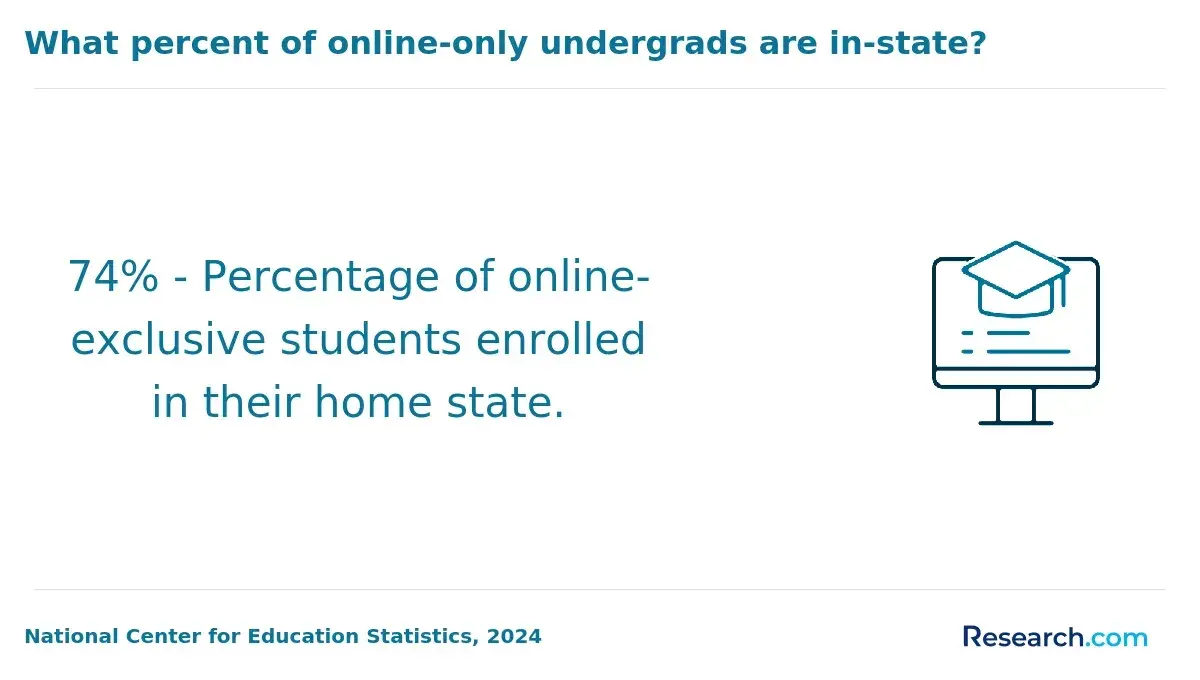
Online community health doctorates vary from fully online asynchronous programs to hybrid models with required residencies, synchronous seminars, practicum experiences, or in-person defense requirements. The right format depends on your schedule, learning style, travel budget, and need for networking.
The table below compares common online formats and what they mean for working professionals. This is especially important for students balancing doctoral study with nonprofit, government, or community-facing jobs.
| Format feature | What it looks like | Best for | Potential trade-off |
| Asynchronous online courses | Weekly modules, recorded lectures, discussion boards, flexible assignment windows | Professionals with irregular schedules or travel-heavy jobs | Requires strong self-management and may offer less real-time discussion |
| Synchronous online seminars | Live evening or weekend meetings by video | Students who want faculty interaction and peer debate | Less flexible across time zones and work schedules |
| Short residencies | Campus or retreat-style sessions lasting several days | Students who want networking, intensive advising, and cohort connection | Adds travel, lodging, and time-off costs |
| Practice-based experiences | Practicum, consulting project, fieldwork, or community partnership | Applied leaders who want portfolio evidence | May require site approval, local partner access, or supervisor support |
| Online dissertation or project defense | Virtual proposal and final defense meetings | Students who need minimal travel | May reduce in-person networking opportunities |
Residencies are not automatically good or bad. They can be valuable if they provide executive coaching, methods workshops, networking, or project development. They are less useful if they are expensive but poorly connected to the curriculum.
Before enrolling, clarify the full delivery model, not just whether the program is "online." Ask these questions early so you can compare real workload and total cost.
- Are courses asynchronous, synchronous, or mixed?
- How many campus visits, residencies, intensives, or in-person defenses are required?
- Can practicum or applied project work be completed in my current organization?
- How are online students matched with faculty advisors and dissertation committees?
- What technology, proctoring, or data analysis software costs should I expect?
- What happens if my job changes before my doctoral project is complete?
Admissions requirements vary by school and doctorate type, but online community health doctorates are usually designed for applicants who already have graduate-level preparation and professional experience. Many DrPH programs, for example, prefer or require a public health or related master's degree plus relevant practice experience.
The table below summarizes common admissions expectations and why they matter. Always verify requirements with each school because doctorate admissions are more program-specific than undergraduate or master's admissions.
| Requirement | What programs may ask for | Why it matters |
| Master's degree | MPH, MHA, MS in health education, social work, nursing, nutrition, public policy, or related field | Shows readiness for doctoral-level community health, research, and leadership coursework |
| Professional experience | Public health, nonprofit, healthcare, policy, education, government, or community leadership background | Applied doctorates often rely on real-world problems and leadership context |
| Statement of purpose | Career goals, research or practice interests, and fit with faculty or program mission | Helps the committee judge whether the program can support your goals |
| Writing sample | Academic paper, policy memo, evaluation report, grant narrative, or professional writing sample | Shows analytical writing ability needed for doctoral work |
| Recommendations | Academic, professional, or supervisory references | Provides evidence of leadership potential and readiness for independent work |
| Interview | Virtual interview with faculty or admissions committee | Allows discussion of fit, expectations, and project ideas |
If you do not yet have an MPH or equivalent public health foundation, you may need a bridge step before a doctorate. Applicants building that foundation can compare easiest MPH online programs to get into to understand access-oriented public health pathways before pursuing doctoral admissions.
A strong application usually connects your background, leadership goals, and proposed area of doctoral inquiry. Avoid vague statements such as wanting to "help communities" without naming the populations, systems, policies, or program problems you hope to address.
- Identify the leadership problem you want to solve, such as food access, chronic disease prevention, maternal health inequity, rural health access, behavioral health integration, or public health workforce development.
- Match that problem to faculty expertise, course offerings, and potential doctoral project structures.
- Prepare a writing sample that demonstrates analysis, evidence use, and clear recommendations.
- Ask recommenders to address your leadership, ethical judgment, community engagement, and ability to complete long-term independent work.
- Use the interview to ask about advising quality, project feasibility, time-to-completion, and student support.
Online doctorate costs depend on tuition model, credit requirements, fees, residency travel, books, technology, software, and the time it takes to complete the dissertation or applied project. The lowest advertised per-credit tuition is not always the lowest total cost.
For public context, College Board's 2024 higher education pricing data reported average published graduate tuition and fees of $12,596 at public four-year institutions and $30,434 at private nonprofit four-year institutions for full-time students. Doctoral program prices can differ substantially from these averages, but the figures show why public versus private pricing can matter when comparing options.
When schools publish specific tuition or fee figures, compare them in an unordered list rather than relying on a single headline number.
- Per-credit tuition multiplied by the required number of credits
- Mandatory university, technology, online learning, graduation, or dissertation fees
- Residency travel, lodging, meals, parking, and unpaid time away from work
- Books, statistical software, transcription tools, survey platforms, or data analysis programs
- Continuation, dissertation extension, or doctoral project registration fees if completion takes longer than planned
Funding can come from several sources, but doctorate students should be cautious about debt. Nonprofit and public-sector roles can be meaningful and stable, yet compensation may not rise enough to justify unlimited borrowing.
- Employer tuition assistance or professional development funds
- Graduate assistantships, research assistantships, or teaching assistantships, when available to online students
- Scholarships from the university, public health associations, foundations, or community health organizations
- Federal student loans for eligible accredited programs
- Public Service Loan Forgiveness eligibility for qualifying employment and loans, subject to federal rules
- Veterans benefits, workforce development funding, or state-specific public health training support
If community nutrition is your intended pathway but a doctorate is not yet required for your target role, an accelerated nutrition degree online may be a more efficient credential-building step before doctoral study. This is especially relevant if you need prerequisite knowledge, a faster career pivot, or a lower-cost way to test your interest in community nutrition leadership.
To estimate ROI, build a realistic three-column budget: total program cost, income impact you can reasonably expect, and nonfinancial value such as promotion eligibility, credibility, network access, and mission fit. Avoid assuming the doctorate will automatically lead to an executive title or salary increase.
Faculty and networks can determine whether an online doctorate feels like a credential-only program or a serious leadership development experience. For nonprofit, policy, and community leadership careers, the strongest connections often come from applied projects, faculty mentorship, alumni networks, and partnerships with agencies or community organizations.
Look for faculty whose work matches your intended leadership setting. A program with excellent epidemiology researchers may be strong academically but still not ideal if your goal is nonprofit governance, advocacy strategy, or community coalition leadership.
The table below highlights connection indicators that are more useful than general reputation. Use it when speaking with admissions staff, faculty, or current students.
| Connection indicator | Why it matters | What to ask |
| Faculty practice background | Practitioner faculty can help translate research into organizational decisions | Which faculty have led public health agencies, nonprofits, community initiatives, or policy projects? |
| Faculty research alignment | Research-active faculty can support dissertations, publications, and evaluation methods | Who is currently studying my topic area, population, or policy issue? |
| Community partnerships | Partnerships create project sites and applied learning opportunities | Can online students work with existing partners, or must they secure their own sites? |
| Alumni roles | Alumni outcomes show whether the program has a track record in your sector | Where do graduates work in nonprofit, policy, public health, or community leadership? |
| Professional development | Doctoral students need more than courses to move into leadership | Does the program offer coaching, conference support, grant-writing support, or executive mentoring? |
Because online students may have fewer informal hallway conversations than campus students, intentional networking matters. Strong programs create structured opportunities for cohort interaction, faculty feedback, alumni panels, doctoral writing groups, and professional association engagement.
Red flags include no named doctoral advisors, little faculty information beyond short biographies, no recent student project examples, and no clear explanation of how online students build professional relationships. If a program cannot describe its mentoring model, ask to speak with a current student or recent graduate before applying.
How Should You Evaluate Career Outcomes and ROI When Choosing an Online Community Health Doctorate?
ROI for an online community health doctorate should be measured in career fit, advancement potential, cost control, and the quality of the leadership portfolio you build. Salary matters, but nonprofit, public health, and policy careers often include mission value, job stability, influence, and public impact that are not captured by pay alone.
BLS May 2024 data listed the median annual wage for social and community service managers at $78,240. That figure is useful because many community health leadership roles sit closer to social service, nonprofit, and public-sector management than to hospital executive compensation; use it as a reality check when borrowing for a doctorate.
The table below shows how to compare outcomes across likely career directions. It is not a salary promise; it is a way to connect program choice with the evidence employers may value.
| Career direction | Program evidence to look for | ROI question to ask |
| Nonprofit executive or program director | Leadership coursework, finance, grant strategy, board communication, applied evaluation projects | Will this program help me manage larger budgets, teams, grants, or strategic initiatives? |
| Policy analyst or advocacy leader | Policy analysis, legislative writing, health systems, economics, stakeholder strategy | Will I graduate with policy briefs, advocacy plans, or research products relevant to my issue area? |
| Community coalition or health equity leader | Community-based participatory methods, equity frameworks, coalition-building, applied fieldwork | Will I build practical evidence of community engagement and systems-change leadership? |
| Evaluation or implementation leader | Advanced methods, program evaluation, implementation science, data visualization | Will I be able to design, measure, and communicate program impact credibly? |
| Faculty or research role | Dissertation depth, publication support, research mentorship, teaching opportunities | Will the degree support scholarly output and academic hiring expectations? |
Use a structured decision process before committing. This helps you avoid overvaluing rankings, underestimating time demands, or choosing a specialization that does not match your target role.
- Write down your target roles and the organizations where you want to work after graduation.
- Identify the degree type most aligned with those roles: DrPH, PhD, DHA, EdD, or another health leadership doctorate.
- Compare accreditation, curriculum, faculty fit, format, total cost, and final project model.
- Ask each program for recent dissertation or capstone examples related to nonprofit, policy, or community leadership.
- Calculate total cost under best-case and delayed-completion scenarios.
- Speak with current students or alumni about advising quality, workload, and career support.
- Choose the program that gives you the strongest combination of affordability, relevance, mentoring, and career evidence.
The most expensive mistake is enrolling before understanding the final doctoral requirement. A dissertation or applied project can shape your professional identity, timeline, and stress level. Make sure the project model fits your work life, leadership goals, and preferred way of contributing to community health.
Other Things You Should Know About Community Health
Yes, many online community health doctorates are designed for working professionals. However, full-time work plus doctoral study requires careful planning, especially during methods courses, practicum work, dissertation research, or an applied doctoral project.
Not always. Some programs accept applicants from healthcare, social work, education, nutrition, public policy, nonprofit management, nursing, or related fields. If you lack core public health preparation, a program may require prerequisite coursework or prefer that you complete an MPH or similar graduate degree first.
It can be worth it if the degree helps you qualify for senior leadership, evaluation, policy, grant strategy, or executive roles that require advanced expertise. It may not be worth the cost if your target role values experience, a master's degree, or certifications more than a doctorate.
Public health is the broader field focused on population health systems, policy, epidemiology, prevention, and health promotion. Community health usually emphasizes local populations, community engagement, health behavior, equity, and program implementation. Many doctoral programs overlap, so compare the curriculum rather than relying only on the degree title.
- 2027-2028 Doctor of Public Health Scholarships Open - Africa Health Collaborative https://africahealthcollaborative.org/2026/08/20/2027-2028-doctor-of-public-health-scholarships-open/
- Online Doctor of Public Health (DrPH): Best Student Options https://www.phds.me/online-programs/public-health-doctorate-drph/
- 2025 Most Affordable Online MPH Programs https://www.onlineu.com/most-affordable-colleges/public-health-masters-degrees
- Community Leadership & Advocacy https://gphcb.org/community-leadership-advocacy/
- Top 25 Online MPH Community Health Degree Programs - MPH Online https://www.mphonline.org/best-online-mph-community-health/
- MPH in Public Health Leadership https://www.unthealth.edu/tcom/public-health/mph-in-public-health-leadership.html
- Health and Human Services: Campus & Online Degrees and Careers https://www.publichealthonline.org/human-services/online-degree-programs/