2027 Best Master's Degrees With Credit for Work Experience

Co-Founder and Chief Data Scientist
Your work may have taught you graduate-level skills, but that does not mean a university will award graduate credit for them. That distinction matters if you are choosing a master's degree around an established career. The U.S. Bureau of Labor Statistics projects 34% employment growth for data scientists from 2024 to 2034, one reason experienced professionals may consider further study, but demand alone does not make every program worth its cost. This guide compares degree fields, explains which prior-learning pathways are credible, and shows you what to confirm before applying.
Key Things You Should Know
- Work experience alone rarely becomes master's credit. Look for a published graduate-level prior learning assessment policy, or ask whether relevant graduate coursework or a graduate certificate can count toward the degree.
- Compare the credits that satisfy degree requirements, not just the credits a school will accept; residency rules, core courses, and capstones can limit your savings.
- Career fit matters as much as credit. A shorter route is a poor bargain if it does not meet your intended employer's expectations or your state's licensing requirements.
Top 10 Best Master's Degrees With Credit for Work Experience - Top 10 Degrees
Business / MBA Programs
An MBA or MS in management can suit experienced professionals seeking broader business responsibilities. Your leadership experience may strengthen admission and help you progress through competency-based coursework, but neither automatically awards credit. Ask whether a graduate certificate, previous graduate courses, or an expressly approved graduate portfolio can replace specific requirements. Compare the remaining finance, strategy, and capstone work; an executive MBA may value substantial experience yet still require its full curriculum. If you need a narrow skill rather than a broad management degree, a certificate may be more economical.
Healthcare Administration & Management Programs
A Master of Healthcare Administration (MHA) or related MS may fit clinicians and healthcare operations professionals moving toward administrative work. Experience can support admission or a competency-based learning path, but clinical service is not automatically graduate credit. Check whether prior graduate study covers approved finance, policy, or quality-management courses and whether an internship or capstone remains mandatory. Choose the curriculum for your intended setting; an MHA prepares for administration, not clinical licensure. Management jobs typically also require relevant experience.
Information Technology Programs
An MS in information technology may suit experienced systems, cloud, or IT operations professionals seeking technical leadership or specialization. Certifications and workplace projects can demonstrate preparation, but only a documented graduate credit policy establishes whether they reduce degree requirements. Ask whether prior graduate courses apply to the concentration, not merely as free electives. Check for required laboratories and a final project. Professionals pursuing one technology skill should compare a certificate or employer-funded training before committing to a full degree.
Computer Science Programs
An MS in computer science may emphasize advanced computing practice, research, or both. Professional programming experience can strengthen an application, but it may not replace algorithms, mathematics, or other prerequisites - and prerequisite courses may not count toward the master's. Relevant graduate computing courses are more plausible credit candidates than undergraduate coursework or job history alone. Compare thesis and project options, concentration requirements, and how many credits must be earned at the new institution. Career changers should request a written prerequisite review before estimating completion time.
Cybersecurity Programs
An MS in cybersecurity can help practitioners develop security architecture, risk, policy, or research expertise. Industry certifications and incident-response experience may support admission or competency-based progress; do not assume they waive graduate courses. Ask whether graduate-level professional education has an approved credit equivalency and whether the program still requires technical labs or a capstone. Match the curriculum to your target role: a management-focused program may not provide the depth sought for engineering work. Employers may also require certifications or substantial hands-on experience.
Data Science / Analytics Programs
An MS in data science or analytics may fit professionals who already use statistics, programming, or business intelligence. Prior work can help you choose an appropriate level of study, but graduate credit depends on formal evaluation. Confirm whether previous graduate statistics or computing courses satisfy core requirements and whether a portfolio, practicum, or capstone remains. Programs vary in mathematical depth: a business analytics degree may better suit decision-making roles, while a technical data science program may demand stronger quantitative preparation. Compare curricula before pursuing the shortest path.
Education / Educational Leadership Programs
A Master of Education (MEd) or educational leadership degree may serve experienced teachers or administrators. Teaching experience can be an admission requirement, but years in a classroom do not automatically replace graduate courses. A previously earned graduate certificate may be more useful for credit if its courses fit the degree. Check state-specific principal or teacher credential rules, supervised fieldwork, and whether the program prepares candidates for the credential you want. An online format does not necessarily remove local school-based requirements.
Counseling / Psychology Programs
A counseling MA or MS can prepare students for a particular counseling license when its curriculum and supervised training meet state rules. Prior professional experience generally cannot substitute for required practica, internships, examinations, or supervised post-degree practice. Psychology master's degrees have different purposes and do not necessarily lead to counselor or psychologist licensure. Treat any offer to waive clinical requirements based solely on work history as a red flag. Confirm the exact license, required program accreditation where applicable, and state eligibility before pursuing transfer or prior-learning credit.
Nursing Programs
A Master of Science in Nursing (MSN) may support nursing leadership, education, or advanced practice, depending on the track. RN experience may be required for admission, but it does not automatically satisfy graduate clinical hours. Previous graduate nursing courses might transfer after a course-by-course review; specialty and clinical requirements may remain. Entry eligibility varies for applicants without a nursing bachelor's degree. For advanced practice, verify the program's accreditation, clinical placements, certification eligibility, and state licensure requirements before treating any advertised acceleration as realistic.
Engineering Management Programs
An MS in engineering management combines technical project work with management, operations, or systems study. It can fit engineers moving into coordination or leadership, though a degree alone does not confer a management position. Technical experience may support admission or faster mastery without earning credit. Ask whether prior graduate engineering or management courses fulfill required subjects and whether a project or capstone must be completed in residence. If your goal is professional engineering licensure, check state requirements separately; engineering management is not a substitute for them.
What Are Master's Degrees That Accept Credit for Work Experience?
A master's degree that accepts credit for work experience is a graduate program with a documented way to evaluate professional learning against its graduate-level academic requirements. The relevant mechanism may be a portfolio, an assessment, an approved professional education equivalency, or a competency-based curriculum. These are not interchangeable: competency-based study can let you demonstrate mastery and move ahead without awarding credit for prior employment.
Previous graduate coursework and stackable graduate certificates are different again: they involve academic credit already earned. A school may accept that credit yet apply it only to electives, or not to your intended degree. Undergraduate credits ordinarily do not become master's credits, and standard master's admission requires a completed bachelor's degree. Because graduate-level experiential credit is not a universal policy, the strongest option is the one that confirms your individual credit award and remaining requirements in writing.
Which Master's Degrees Offer the Most Credit for Prior Learning?
There is no reliable field-wide winner for the most work-experience credit. Maximum awards depend on an institution's graduate policy and the specific curriculum, not whether the degree is called an MBA, MS, or MEd. Professional programs may offer relevant ways to demonstrate learning, while a completed graduate certificate may provide a clearer route where the school explicitly allows it to stack into a master's.
The comparison below separates routes that are often marketed together. It shows what each route actually establishes - and what still needs verification.
| Starting point | Potential advantage | Key limitation |
| Professional experience or certifications | May qualify for graduate prior learning assessment where expressly permitted | Evidence of expertise is not itself an award of academic credit |
| Previous graduate courses | May transfer into equivalent core, concentration, or elective requirements | Grade, age, equivalency, and residency rules can restrict use |
| Stackable graduate certificate | Courses may already be designated for a related master's | Stacking may require admission to a specific program |
| Competency-based graduate study | Existing knowledge may help a student progress through assessments | Faster progress is not necessarily transfer or experience credit |
Ask each program for its graduate credit maximum, minimum credits in residence, and a degree audit showing where your approved credits would land. Be cautious with timelines advertised for a 6 month masters degree online: determine which prior credentials, course load, and remaining requirements that timeline assumes.
How Does Prior Learning Assessment Work for Master's Programs?
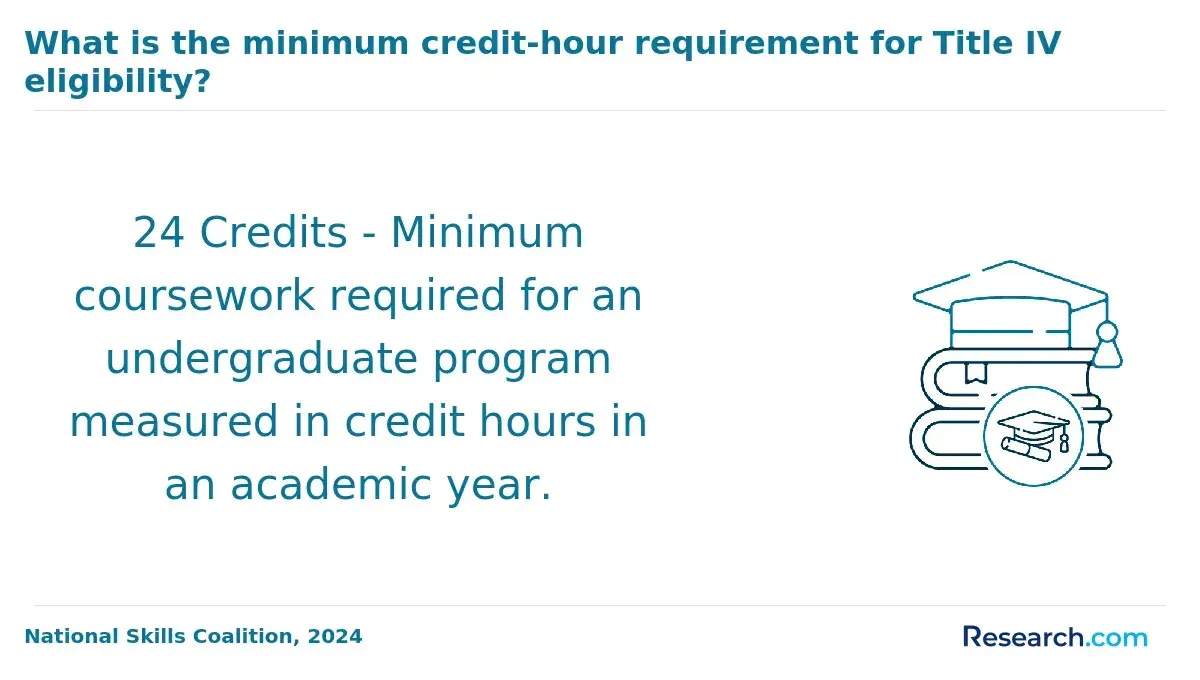
Prior learning assessment (PLA) evaluates what you can demonstrate you learned, rather than awarding credit for time employed. At the graduate level, first establish that the specific program permits it, an institution's undergraduate PLA policy is not enough. Where graduate PLA exists, faculty or authorized evaluators may compare documented learning with graduate course outcomes and apply any approved award within the degree's limits.
Use this sequence to avoid paying for an evaluation that cannot help you finish:
- Request the graduate catalog policy and identify eligible courses, assessment methods, fees, credit limits, and residency requirements.
- Collect evidence tied to course outcomes, such as substantial projects, professional education records, or evaluated portfolios - not a résumé alone.
- Ask for a preliminary review of your prior graduate transcripts and any proposed experiential-credit route before enrolling, if the school offers one.
- Obtain a written degree audit showing accepted credits, required courses, capstone or clinical work, and the credits you must complete at that school.
A favorable admission decision does not settle the separate credit decision. Likewise, an approved credit award may have little financial value if it does not replace a course you otherwise needed.
Which Accredited Schools Accept Work Experience for Graduate Credit?
No school-wide label establishes that every master's program at an accredited institution accepts employment as graduate credit. The relevant evidence is an official graduate-level, program-applicable policy and an individual evaluation. Without both, naming a school as a work-experience-credit option risks confusing undergraduate PLA, graduate transfer credit, and competency-based study.
Start with institutions offering your intended degree and verify their institutional accreditation through the U.S. Department of Education's accreditation database or the Council for Higher Education Accreditation directory. Then request the graduate catalog's experiential-credit rules.
If an advisor mentions a portfolio or certification award, ask which graduate course it replaces, who approves it, whether there is a fee, and whether your program accepts it. A school that accepts graduate transfer courses but publishes no applicable experiential-credit route should be described as a transfer option, not a verified work-experience-credit option.
Can You Earn a Master's Degree Online With Work Experience Credit?
Yes, you can study toward a master's online while seeking eligible credit for prior learning - but online delivery does not create that credit. The graduate program must independently approve the credit mechanism. An asynchronous competency-based program might let an experienced student advance efficiently while still requiring every assessment; a conventional online program might accept eligible graduate courses without accepting a work portfolio.
Confirm whether courses have scheduled meetings and whether the degree requires campus visits, laboratories, residencies, proctored activities, or local clinical placements. These requirements can alter both cost and feasibility for working adults. If you are comparing online colleges with open enrollment and no application fee, do not apply those institution-wide or undergraduate descriptions to master's admission: graduate programs can have separate applications, fees, and selection standards.
What Are the Admission Requirements for These Master's Programs?
Most master's applicants need a completed bachelor's degree and must meet the graduate school's and program's requirements. Depending on the field, those may include prerequisite courses, a minimum GPA, a résumé, recommendations, a statement, an interview, a portfolio, or a professional license. GRE or GMAT policies vary. An MBA may value management experience; an MSN track may require RN licensure; counseling programs may review preparation for supervised practice.
Eligibility for admission is separate from eligibility for graduate credit. Submit prior graduate transcripts for a course-by-course review and ask whether a certificate or professional education can be assessed under a published policy. If you have not completed a bachelor's degree, an accelerated undergraduate option - including a fastest associates degree online comparison, may be a starting point, but an associate degree alone ordinarily does not qualify you for standard master's admission.
How Much Time and Money Can Work Experience Credit Save?
Approved credit can save money only when it replaces required, billable coursework. Estimate savings using the school's tuition and mandatory fees for the courses actually removed, then subtract assessment, portfolio, transcript, or other applicable charges. For time, check when remaining courses run: removing an elective may not move your graduation date if a capstone is offered only after a prescribed sequence.
Compare total completion cost, not tuition per credit alone. Include program fees, technology charges, books, travel for residencies, and any reduction in working hours for clinical or internship requirements. Ask financial aid staff how your enrollment level and remaining credits affect aid eligibility; employer tuition assistance may also change your out-of-pocket cost. When a degree is not required for your goal, compare the investment with best online certificate programs or a graduate certificate before paying for a full master's.
What Careers and Salaries Follow These Master's Degrees?
These degrees can support different career directions: an MHA may align with healthcare administration, an MS in cybersecurity with security work, and an MEd with education leadership. None makes a promotion or job offer automatic. The Bureau of Labor Statistics reports a 2024 median annual wage of $124,910 for information security analysts. That is an occupational wage, not the expected earnings of cybersecurity master's graduates; many analyst roles also depend on relevant technical experience.
Judge the degree's incremental value against your existing qualifications. Review job postings for the roles you want: is a master's required, preferred, or absent? For leadership jobs, account for experience requirements. For counseling, nursing, and school leadership, check licensing or credential rules before projecting a career change. A degree with little transferable credit can still be worthwhile if it supplies required preparation; a generous credit offer may be less valuable if the curriculum misses your target role.
How Can You Verify Program Accreditation and Licensing Requirements?
Institutional accreditation and professional eligibility answer different questions. Verify the school's current institutional accreditation through a recognized accreditor and an authoritative accreditation directory. Then check whether your intended nursing, counseling, education, or other regulated pathway needs particular programmatic accreditation or approval. An accredited university can offer a degree that does not meet every state's licensing rules.
For a licensed occupation, consult the board in the state where you intend to practice and compare its educational, clinical, examination, and supervised-experience requirements with the program's written disclosures. Request clarification about online placements and any proposed waiver of required coursework or hours. Red flags include a credit promise made before evaluation, an advisor relying only on an undergraduate PLA policy, and a claim that graduation itself guarantees licensure. Keep the board's guidance, catalog policy, and your degree audit together before making an enrollment deposit.
Other Things You Should Know About
Usually not by itself. Where graduate-level prior learning assessment is available, the school evaluates documented learning against specific academic requirements.
Only if the institution publishes or confirms an applicable graduate-level evaluation route and approves the award for your degree. Certifications may instead help with admission or course preparation.
They can if they satisfy requirements you otherwise must complete. Residency rules, course sequencing, and remaining capstone or clinical work may limit time savings.
Do not assume so. Required clinical and supervised training must meet program and applicable licensing or certification rules; obtain written confirmation before enrolling.
References
- Accreditation in the U.S. | ed.gov http://www.ed.gov/laws-and-policy/higher-education-laws-and-policy/college-accreditation/accreditation-in-the-us
- Credit for Prior Learning - Ohio Department of Higher Education https://highered.ohio.gov/initiatives/access-acceleration/credit-for-prior-learning
- Academic Credit and Placement | 2026-2027 University Bulletin https://bulletin.loyno.edu/regulations/academic-credit-and-placement
- University of Phoenix Traditional MBA Program offers opportunity for Credit for Prior Learning https://www.phoenix.edu/press-release/mba-program-offers-opportunity-for-credit-for-prior-learning-2024.html
- What You Need to Know About Competency Assessments | Walden University https://www.waldenu.edu/why-walden/flexibility/resource/what-you-need-to-know-about-competency-assessments
- Credit Through a Prior Learning Assessment (PLA) Portfolio | White Mountains Community College https://catalog.wmcc.edu/credit-through-a-prior-learning-assessment-pla-portfolio
- Why Is Accreditation Important? | ACE Blog https://ace.edu/blog/why-is-accreditation-important/
- Prior Learning Assessment Portfolio | Point Park University https://www.pointpark.edu/about/admindepts/registrarsoffice/priorlearningassessment/pla-portfolio
- Are Online Graduate Degree Programs Right for You? | Columbia University https://www.tc.columbia.edu/academics/online-and-hybrid-graduate-programs/are-online-graduate-degree-programs-right-for-you/
- Credit For Prior Learning | Official Catalog | Charter Oak State College https://www.charteroak.edu/catalog/current/sources_credit/credit_for_prior_learning.php