2027 Best Doctorate Degrees With High Acceptance Rates

Co-Founder and Chief Data Scientist
Looking for a doctorate with a realistic chance of admission? The difficult part is that universities rarely publish comparable acceptance rates for individual doctoral programs. The National Science Foundation's Survey of Earned Doctorates recorded 57,862 U.S. research doctorate recipients in 2023, but that completion figure cannot tell an applicant which program is easier to enter. This guide compares 10 doctoral fields, explains where admissions may be more accessible, and shows you how to get the program-level evidence needed to choose a credible path.
Key Things You Should Know
- There is no verified national ranking of acceptance rates across these 10 doctoral fields; ask programs for recent, program-specific applications and offers before calling one "high acceptance."
- Start with eligibility: practice-focused doctorates may favor experienced professionals, while research PhDs may depend heavily on faculty fit and available supervision.
- Compare the whole commitment: accreditation, funding, clinical or research requirements, total cost, and career fit matter more than an admissions percentage alone.
Top 10 Best Doctorate Degrees With High Acceptance Rates - Top Doctorate Degrees
Business / DBA Programs
A Doctor of Business Administration (DBA) is generally designed for experienced professionals applying research to organizational problems. A relevant master's degree or substantial management experience may be expected, depending on the program. Cohort-based and part-time formats can make the application process more predictable than a research PhD's adviser-dependent intake, but they do not establish a high acceptance rate. Ask for DBA-specific offers and completed applications, plus the full price of required residencies. Choose a DBA for applied leadership or consulting goals; an MBA may be sufficient if you do not need doctoral research training.
Education / EdD Programs
A Doctor of Education (EdD) usually emphasizes applied inquiry into educational practice, while an education PhD typically emphasizes original research. Many EdD programs target educators or other experienced professionals and require graduate preparation. That defined audience can help qualified applicants identify a good fit, but selectivity still varies by institution and cohort. Compare admission figures for the exact EdD concentration, not the education school overall. Check whether the culminating work is a dissertation or applied project and whether the degree supports your intended role; a doctorate is not necessary for every education job.
Educational Leadership Programs
Educational leadership doctorates may award an EdD or PhD and can serve different goals. Practice-oriented EdDs often examine organizational change; research PhDs may require a stronger match with faculty interests. Some applicants also need teaching or administrative experience. Do not assume that admission to an educational leadership doctorate qualifies you for a principal or superintendent role: state certification rules are separate. Request concentration-specific admissions figures and ask whether internships, district partnerships, or campus meetings are required. For an immediate promotion goal, compare the doctorate with a state-approved leadership credential first.
Psychology Programs
Psychology doctorates include research-oriented PhDs and practice-focused Doctor of Psychology (PsyD) programs. Their admissions pools, funding, clinical placements, and career outcomes can differ substantially, so a field-wide "acceptance rate" is misleading. A PsyD is not automatically easier to enter than a PhD. Applicants seeking clinical practice should verify the program's APA accreditation status, internship outcomes, and state licensing eligibility before considering selectivity. Ask for the exact program's recent offers and applications; also ask how clinical training capacity limits enrollment.
Nursing / DNP Programs
A Doctor of Nursing Practice (DNP) focuses on advanced nursing practice or systems improvement, unlike a nursing PhD's research emphasis. Entry pathways may begin after a bachelor's or master's degree in nursing, with different curricula and admissions pools. Applicants commonly need an active nursing license, and specialty prerequisites may apply. A school's general graduate acceptance rate says little about admission to a particular DNP track, especially one limited by clinical placements. Compare track-specific admission figures, placement support, required clinical hours, and whether the program meets your state's requirements.
Public Health Programs
A Doctor of Public Health (DrPH) generally prepares experienced professionals for applied public health leadership; a public health PhD emphasizes research. DrPH admissions may consider public health experience and a relevant graduate degree, while PhD selection may hinge on research fit and funding. Neither credential has a dependable field-wide acceptance rate. Request figures for the specific program and entry year, and confirm whether experience requirements make you eligible. If your goal is a role already open to MPH graduates, weigh the doctorate's additional cost and time against experience gained at work.
Computer Science Programs
Computer science PhDs center on original research. A bachelor's degree may be sufficient for entry, but preparation, research experience, adviser fit, and funded openings can make admission highly selective. Some universities also offer applied computing doctorates with different expectations; do not combine their admissions statistics. Ask each PhD program whether prospective students must identify an adviser and whether published acceptance figures include all research areas. If you primarily want a software or AI industry role rather than to conduct research, compare a master's degree and relevant work experience before committing.
Cybersecurity Programs
Cybersecurity doctorates may be research PhDs or applied professional degrees. A research-focused applicant should examine faculty expertise and available supervision; a working professional should examine experience prerequisites and project requirements. Neither a broad cybersecurity label nor a university's overall admission rate establishes accessibility. Ask for figures for the specific doctoral credential, not a related master's program. Cybersecurity hiring often values demonstrable experience and role-specific skills, so compare the doctorate with professional experience or certification unless your goal specifically calls for doctoral-level research or applied leadership work.
Social Work / Human Services Programs
A Doctor of Social Work (DSW) commonly serves experienced practitioners pursuing advanced practice, teaching, or leadership; a social work PhD emphasizes research. A human services doctorate may have a different professional audience and curriculum. Applicants should check whether a master's degree, professional experience, or social work license is required. Do not infer the doctoral acceptance rate from a university's master of social work admissions. Compare program-level figures and the culminating project. A DSW does not replace the supervised practice, examination, or state approval needed for clinical social work licensure.
Public Administration / Public Policy Programs
A Doctor of Public Administration (DPA) typically emphasizes applied public-sector leadership, while a public policy or public administration PhD generally emphasizes research. Professional experience may strengthen a DPA application; research preparation and faculty fit can carry more weight for a PhD. Their admissions rates should never be treated as interchangeable. Request applications-and-offers figures for the exact degree and concentration, then compare funding and required in-person work. If you seek advancement in an existing agency role, an MPA plus experience may offer a more direct path than doctoral study.
What Are Doctorate Degrees With High Acceptance Rates?
Doctorate degrees with high acceptance rates would be doctoral programs that admit a relatively large share of qualified applicants in a specified admissions cycle. The rate is offers of admission divided by completed applications, not the share of admitted students who enroll. A degree field itself does not have one acceptance rate: a DBA at one university and a DBA at another may have entirely different pools and capacity.
"Best" therefore means the strongest verified, suitable option for your goals - not the highest rate in isolation. Research PhDs and professional doctorates should also be evaluated separately. Limited faculty supervision can constrain PhD intake, while a professional cohort may be constrained by placements, staffing, or its intended applicant profile.
No authoritative, comparable dataset identifies which of these doctoral fields has the highest acceptance rate. Federal institutional admissions figures should not be substituted for doctoral-program figures. Without a consistent year, applicant definition, and credential, a numerical ranking would give false precision.
The comparison below identifies where to investigate, rather than assigning unsupported rates. It helps you match your background to each program's principal admissions constraint.
| Doctoral path | Potential fit for an eligible applicant | Admissions constraint to check |
| DBA, EdD, DPA, or DrPH | Established professional pursuing applied work | Required experience, cohort size, and degree-specific offers |
| DNP or DSW | Qualified practitioner pursuing advanced preparation | Licensure, prior degree, specialty, and placement capacity |
| PsyD | Applicant pursuing psychology practice training | Clinical training capacity and program-level selectivity |
| Research PhD | Applicant with relevant research interests and preparation | Faculty fit, supervision, and funded openings |
If you already meet a professional doctorate's entry requirements, it may be a more suitable application than an unrelated research PhD. That is a fit assessment, not evidence that professional doctorates universally admit more applicants.
Begin with the institution's accreditation and the doctoral program's own admissions information. Then seek data directly from the program: many schools publish requirements but not program-specific acceptance rates. A missing rate is not evidence of either easy or difficult admission.
Use these steps to make each program's answer comparable before you apply:
- Confirm the institution's recognized accreditation and any profession-specific accreditation or state approval needed for your goal.
- Ask how many completed applications the exact doctoral program received and how many offers it made in the most recent cycle.
- Ask whether figures combine concentrations, entry pathways, domestic and international applicants, or multiple campuses.
- Compare prerequisites and your own qualifications, then request the same figures from at least one alternative program.
A red flag is a school advertising its university-wide or undergraduate admission rate as proof that its doctorate is accessible. If the program cannot provide comparable figures, evaluate documented eligibility, available places, funding, and outcomes instead of inventing a percentage.
At minimum, doctoral applicants normally need a completed bachelor's degree. Some research PhDs admit students directly after it; many professional doctorates require or prefer a relevant master's degree, work experience, or an existing professional license. These are eligibility rules, not acceptance-rate evidence.
Expect transcripts, recommendations, a statement of purpose, and possibly an interview or writing sample. Programs may also specify prerequisite courses, a minimum GPA, the GRE or GMAT, a portfolio, a research proposal, or contact with prospective faculty advisers. Check both graduate-school and program-specific rules; a test waiver or missing published GPA minimum does not mean automatic admission.
If a master's degree is required, 1 year master's programs online may be worth exploring as preparation. First ask the doctoral program whether a proposed master's credential meets its subject and accreditation requirements; earning it does not automatically shorten the doctorate.
Choose the format that supports completion, not merely application. Online study may reduce travel for coursework, but scheduled seminars, adviser meetings, residencies, examinations, clinical placements, or defenses can still be required. Campus study can offer closer access to laboratories and research groups; hybrid programs combine obligations from both formats.
Ask for a sample course schedule and written details of every required in-person activity. Confirm whether part-time enrollment is officially permitted, how often required courses run, and where experiential work can be completed. Applicants returning to study later in life may also find online degrees for seniors useful for broader format considerations, though doctoral attendance requirements must be checked program by program.
Doctoral cost and duration vary too much for a meaningful single price or completion promise. Compare the entire pathway from your entry point: a post-master's practitioner may have different requirements from a bachelor's-entry PhD student. Coursework can finish before research approval, data collection, clinical hours, or a defense, so credits alone do not predict graduation.
The following cost categories show why published tuition can understate or overstate what a student will actually pay. Request a written estimate covering the expected time to completion.
| Cost factor | What to verify |
| Tuition and required fees | Remaining program credits, billing structure, and continuing-enrollment charges |
| In-person requirements | Residency, travel, and clinical or research-related expenses |
| Institutional funding | Assistantships, fellowships, tuition remission, stipend conditions, and funded years |
| Other support | Employer assistance, scholarships, and applicable federal aid eligibility |
A funded PhD with high published tuition can cost a student less than a lower-tuition, primarily self-funded professional doctorate. Conversely, never assume every PhD is funded. Ask whether previous graduate courses actually satisfy doctoral requirements; institutional acceptance of transfer credit alone is insufficient.
Most doctorates pair advanced coursework with a substantial culminating requirement. A research PhD commonly includes methods training, qualifying or comprehensive examinations, candidacy, original research, a dissertation, and an oral defense. Practice-oriented degrees may instead - or also - require clinical work, a workplace-based study, a doctoral project, or a dissertation. Terminology and requirements vary by program.
Read the curriculum and doctoral handbook before applying. Determine when an adviser is assigned, how a project is approved, what happens if supervision changes, and whether the program reports typical completion time. An applied project is not necessarily less demanding than a dissertation, and "online coursework" does not mean research or practice requirements can be completed remotely.
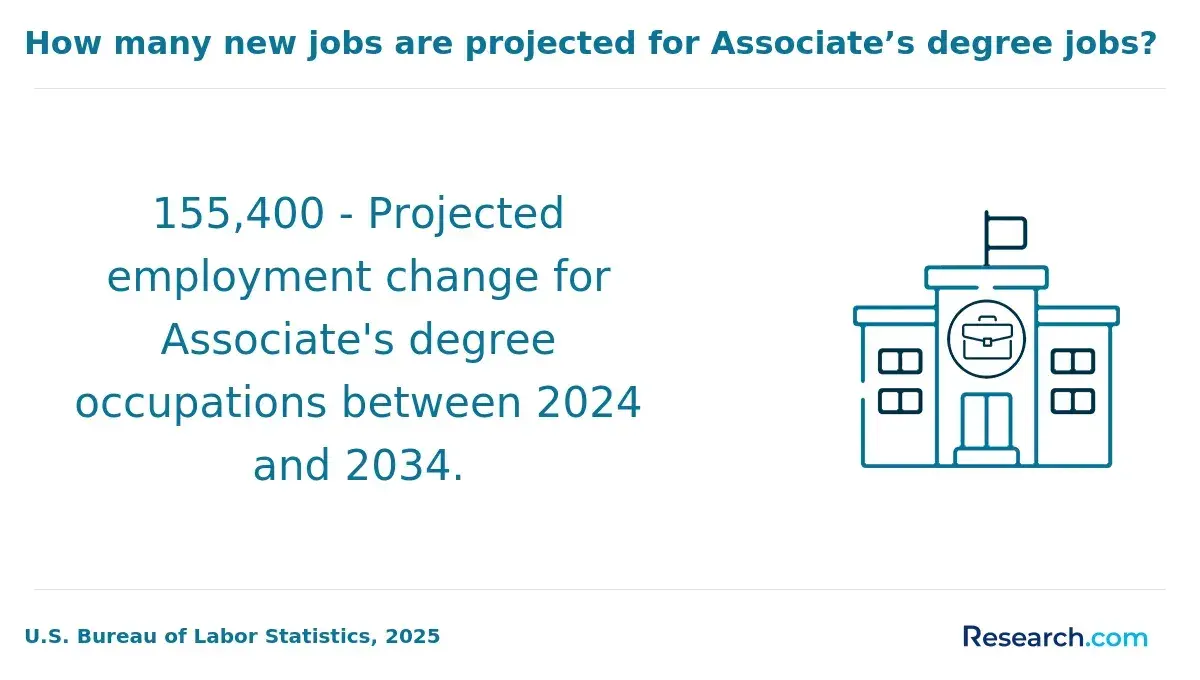
A doctorate can prepare someone for research, advanced practice, teaching, or organizational leadership, but it does not guarantee a position or raise. For context, the U.S. Bureau of Labor Statistics reports a 2024 median annual wage of $117,960 for medical and health services managers. That is an occupational median - not a DNP, DrPH, or other doctoral graduate salary - and these management jobs also depend on relevant experience.
Career fit is more useful than a broad list of highest paying careers. Ask employers whether your target role requires, rewards, or merely accepts a doctorate. A research career may depend on publications and methods expertise; a leadership role may depend more on experience. Compare expected program costs and time away from work with the realistic alternative of a master's degree, certification, or continued employment.
Which Licenses and Certifications Do Doctorate Graduates Need?
Licensure depends on the occupation and state, not simply the doctoral title. Psychology practice may require an appropriately accredited program, supervised experience, examinations, and state approval. Nursing roles require applicable RN and, where relevant, advanced-practice authorization. Education leadership credentials and clinical social work licenses have separate state rules. A DBA, DPA, or computer science PhD does not ordinarily create a professional license.
Before enrolling, use the state board's current requirements to check program eligibility, placements, examinations, and any required supervision. For roles that do not require a doctorate, compare employer-recognized certifications for jobs with doctoral study. Certification can be a shorter route to a specific skill, but it cannot substitute for a legally required professional license.
Other Things You Should Know About
There is no defensible universal answer. The most accessible credible program for you is one whose prerequisites you meet and whose recent program-specific admissions figures, capacity, and requirements you can verify.
Not necessarily. Delivery format does not establish selectivity; request figures for the exact online pathway and check its residencies or placements.
Some PhDs and bachelor's-entry professional pathways allow it. Other programs require a relevant master's degree, so check the credential and concentration before applying.
Not by itself. Evaluate accreditation, academic and practice requirements, funding, total cost, and career fit. Be cautious if a school substitutes unrelated university-wide admissions figures for doctoral-program evidence.
- Survey of Earned Doctorates (SED) 2024 - NCSES - NSF https://ncses.nsf.gov/surveys/earned-doctorates/2024
- Time to Degree, Funding, and Completion Rates - Research-Doctorate Programs in the Biomedical Sciences - NCBI Bookshelf https://www.ncbi.nlm.nih.gov/sites/books/NBK82480/
- All Departments: PhD Admissions and Enrollment Statistics | The Graduate School https://gradschool.duke.edu/about/statistics/all-departments-phd-admissions-and-enrollment-statistics/
- UC doctoral program statistics https://www.universityofcalifornia.edu/about-uc/information-center/uc-doctoral-program-statistics
- Doctoral Program Statistics - Graduate School https://gradschool.cornell.edu/about/program-metrics-assessments-and-outcomes/doctoral-program-statistics/