2027 Best Career Pivot Options for People With a Healthcare Administration Degree

Co-Founder and Chief Data Scientist
A healthcare administration degree can lead to more than hospital management or medical office roles. It can also support pivots into health IT, insurance, consulting, compliance, public health, senior services, startups, and other fields that need people who understand healthcare operations, regulation, data, finance, and patient-centered service.
This matters because healthcare work is changing quickly. With 27% of healthcare roles evolving to demand digital and operational skills beyond clinical expertise, graduates who can translate their training into business, technology, compliance, and analytics language have more options than those who market themselves only as “healthcare administrators.”
This guide explains practical career pivot options for healthcare administration degree holders, the industries most likely to value the credential, the transferable skills employers look for, accessible entry-level roles, higher-paying paths, useful certificates and certifications, freelance strategies, and networking tactics that can help you move with less guesswork.
Key Things to Know About the Best Career Pivot Options for People With a Healthcare Administration Degree
- Leveraging core competencies, such as regulatory knowledge and healthcare operations management, facilitates pivoting into health informatics and compliance roles with minimal retraining.
- Entry-level positions in high-growth sectors like telehealth and population health offer practical gateways supported by certifications in data analytics and project management.
- Strategic networking combined with resume reframing increases long-term career outcomes, including leadership roles beyond traditional healthcare settings.
What Career Pivot Options Are Available to People With a Healthcare Administration Degree?
People with a healthcare administration degree can pivot into roles that still use their knowledge of healthcare systems but may sit outside traditional hospital or clinic administration. The strongest pivots usually connect one of four areas: operations, compliance, data, or patient-facing service design.
Career pivoting is common in the modern labor market. Data from the Bureau of Labor Statistics (BLS) shows that most professionals change jobs and often industries multiple times throughout their working lives. For healthcare administration graduates, this can be an advantage because the degree is broad rather than narrowly technical. National Association of Colleges and Employers (NACE) research and LinkedIn Workforce Insights also point to the value of versatile competencies that can be applied across employers and sectors.
- Health informatics and data management: Healthcare organizations, payers, vendors, and digital health companies need people who can work with electronic health records, patient data, reporting processes, and workflow improvement. This is a strong pivot for graduates who like systems, metrics, and technology adoption.
- Healthcare consulting: Consulting roles use healthcare operations, policy, finance, and compliance knowledge to help organizations improve performance. This path often rewards strong communication, Excel or analytics skills, and the ability to explain complex problems clearly.
- Insurance and risk management: Health insurance companies and managed care organizations value candidates who understand care delivery, reimbursement, claims processes, utilization management, and regulatory requirements.
- Public health and policy: Graduates interested in population-level impact can move into government agencies, nonprofits, advocacy groups, and policy organizations. These roles often involve program coordination, community health initiatives, compliance, and stakeholder communication.
- Healthcare entrepreneurship and startups: Digital health, telehealth, patient navigation, and care coordination startups need operations-minded professionals who understand how healthcare actually works. These jobs can be fast-moving and less structured, but they can build broad experience quickly.
The key is to choose a pivot that builds on your strongest existing asset. If you are detail-oriented, compliance or risk may fit. If you are comfortable with systems and spreadsheets, health informatics or analytics may be better. If you enjoy problem-solving with clients, consulting or vendor-side roles may be a stronger match.
Students still comparing academic pathways should evaluate cost, accreditation, curriculum, and career services before choosing a healthcare administration degree, especially if career flexibility is one of their main goals.
For those considering a practical credential to widen their pivot options, the 4 week online course for medical coding and billing cost may also serve as a complementary step to bolster relevant expertise and enhance employability.
Which Industries Outside the Traditional Healthcare Administration Field Hire Healthcare Administration Degree Holders?
Healthcare administration graduates are most competitive outside traditional administration when they target industries that still intersect with healthcare delivery, payment, regulation, technology, or patient services. The farther the industry is from healthcare, the more the candidate must translate the degree into business-relevant skills.
- Health insurance and managed care: This is one of the most natural pivots because insurers need people who understand healthcare systems, policy compliance, claims, provider networks, member services, and reimbursement. Common roles include claims manager, risk analyst, and network coordinator.
- Pharmaceutical and biotechnology companies: These employers hire for regulatory affairs, compliance, clinical trial coordination, quality assurance, and project support. Some roles prefer scientific training, but healthcare administration graduates can be competitive when the position centers on process, documentation, regulation, or operations.
- Health information technology (Health IT): Health IT employers need implementation specialists, systems analysts, customer success staff, project coordinators, and data managers. Recognition of the degree is moderate; candidates often improve their odds by adding technical skills, software knowledge, or certifications.
- Public health and government agencies: Agencies hire graduates for program evaluation, policy analysis, grant support, health services administration, and community health coordination. The credential is usually relevant because it combines health system knowledge with administrative training.
- Consulting firms: Healthcare strategy, operations, compliance, and digital transformation consulting firms value candidates who can analyze problems and communicate recommendations. The degree is respected when paired with internships, project experience, analytics skills, or client-facing experience.
- Educational institutions: Colleges and universities may hire healthcare administration graduates as academic program coordinators, health professions advisors, clinical placement coordinators, or student support staff. Experience in higher education administration can improve competitiveness.
- Nonprofit organizations: Health advocacy nonprofits, community service organizations, and foundations value program management, outreach, budgeting, fundraising support, and compliance skills. These roles may offer strong mission alignment, though compensation structures can differ from corporate healthcare employers.
A practical rule: changing industries while keeping a familiar function is usually easier than changing both at once. For example, moving from hospital operations to health IT project coordination may require some technical learning, but it still uses workflow, stakeholder, and compliance knowledge. Moving directly into a clinical role, by contrast, may require specialized licensure or a separate training pathway.
Before applying broadly, conduct informational interviews with people in your target industry. Ask which degree backgrounds are common, which tools appear in job descriptions, which certifications matter, and how candidates from healthcare administration should describe their experience.
Individuals also benefit from considering educational options frequently linked to healthcare administration, such as knowing what nursing school doesn't require TEAS, which can complement or enhance their career mobility.
What Transferable Skills Does a Healthcare Administration Degree Provide for Career Changers?
A healthcare administration degree gives career changers a mix of operational, regulatory, analytical, communication, and leadership skills. These skills are valuable because many employers need people who can coordinate work, manage risk, interpret data, improve processes, and communicate across departments.
- Leadership and team management: Healthcare administration programs often involve team projects, organizational behavior, and management coursework. These skills transfer to corporate operations, nonprofit management, customer success, and project-based roles.
- Data analysis and decision making: Graduates may work with healthcare datasets, performance indicators, budgets, utilization patterns, or quality measures. This experience can support pivots into business intelligence, market research, reporting, and policy analysis.
- Communication and interpersonal skills: Healthcare environments require clear communication with patients, clinicians, administrators, vendors, and regulators. That skill translates well to client management, human resources, sales support, training, and stakeholder coordination.
- Financial management and budgeting: Budget planning, cost control, revenue cycle concepts, and resource allocation can support roles in procurement, grant administration, finance operations, and program management.
- Regulatory compliance and risk management: Knowledge of healthcare laws, ethics, privacy, and quality standards can transfer to corporate compliance, quality assurance, occupational safety, and regulated-industry operations.
- Project planning and organization: Coordinating schedules, deliverables, staff, vendors, and documentation is valuable in IT implementation, marketing operations, construction administration, event management, and consulting support.
- Problem-solving and critical thinking: Healthcare administration training often focuses on identifying inefficiencies and improving systems. This supports consulting, education administration, public policy, operations analysis, and process improvement roles.
The main mistake career changers make is assuming employers will automatically understand the value of the degree. They often will not. You need to map your coursework, internships, capstone projects, volunteer work, and employment history to the language of the job posting.
How to translate your skills for a new field
- Replace healthcare-only terms with broader business terms when appropriate. For example, “patient scheduling workflow” can become “high-volume scheduling and process coordination.”
- Connect each skill to an employer need, such as reducing errors, improving reporting, coordinating teams, supporting compliance, or improving service quality.
- Use measurable outcomes when you have them, but do not invent metrics. If you do not have numbers, describe scope, tools, stakeholders, or deliverables.
- Build a small portfolio of class projects, dashboards, policy memos, process maps, or presentations if the target role values work samples.
One professional who completed a healthcare administration degree reflected on the shift: “At first, I struggled to explain how my background applied outside healthcare-it wasn't obvious to hiring managers. I spent hours reviewing my projects and experiences, breaking down each skill and considering its broader applications.”
“This exercise helped me develop tailored narratives for interviews and resumes. It was daunting initially, but ultimately rewarding to see employers recognize the value I brought. That clarity boosted my confidence and opened doors I hadn't anticipated.”
How Do Employers in Adjacent Fields Evaluate a Healthcare Administration Degree During Hiring?
Employers in adjacent fields usually evaluate a healthcare administration degree through the lens of relevance. They ask a practical question: does this candidate’s education and experience solve the problems in this role? If the connection is obvious, the degree can help. If it is not, the candidate must translate it clearly.
- Credential translation: Employers outside healthcare may not immediately understand what a healthcare administration program covers. Candidates should explain the degree in terms of transferable capabilities: project management, compliance, budgeting, reporting, operations, stakeholder communication, and process improvement. A portfolio or project list can make the connection more concrete.
- Degree factors: Survey data from SHRM, NACE, and LinkedIn shows that employer emphasis on degree type, institution prestige, GPA, and degree relevance varies by sector and company size. Larger organizations and competitive industries tend to weigh institution reputation and GPA more heavily, while small- and mid-sized employers may focus more on practical experience and demonstrated skills.
- Implicit bias: Some hiring managers may unconsciously favor business, finance, technology, or public policy degrees for roles that healthcare administration graduates could perform well. Candidates can reduce this risk by targeting employers open to cross-disciplinary backgrounds and by leading with role-specific skills rather than the degree title alone.
- Employer targeting: Early pivots are easier when candidates apply to organizations with a history of hiring people from healthcare, public health, insurance, operations, or compliance backgrounds. LinkedIn alumni searches, employee profiles, and job descriptions can reveal whether an employer values cross-functional experience.
- Resume and cover letter strategy: A generic healthcare administration resume rarely works for a pivot. Each application should reflect the job description. If the role asks for project coordination, the resume should highlight timelines, stakeholders, documentation, follow-up, and outcomes. If the role asks for compliance, it should emphasize policy, audit readiness, documentation, and risk reduction.
Graduates may also explore accelerated programs for career changers to supplement foundational knowledge.
What Entry-Level Pivot Roles Are Most Accessible to Healthcare Administration Degree Graduates?
The most accessible entry-level pivot roles are those that use healthcare administration skills without requiring clinical licensure, advanced technical training, or years of specialized industry experience. These jobs can serve as bridge roles, helping graduates build proof of performance in a new field.
| Entry-level role | Why it fits healthcare administration graduates | Best next-step direction |
| Operations Coordinator | Uses scheduling, workflow coordination, resource tracking, process improvement, and compliance awareness. | Operations manager, program manager, practice manager, implementation coordinator. |
| Communications Specialist | Uses stakeholder communication, health policy knowledge, writing, campaign coordination, and regulated messaging awareness. | Healthcare communications, public affairs, patient engagement, nonprofit outreach. |
| Data Analyst | Uses reporting, health informatics exposure, operational data interpretation, and decision-support skills. | Business intelligence, quality analytics, population health analytics, revenue operations. |
| Policy Assistant | Uses health law, ethics, policy analysis, regulatory research, and documentation skills. | Policy analyst, compliance specialist, public health program analyst. |
| Sales Support Representative | Uses healthcare market knowledge, client coordination, proposal support, and service communication. | Healthcare sales, account management, customer success, vendor relations. |
| Product Coordinator | Uses healthcare workflow knowledge, project tracking, user feedback, and cross-functional coordination. | Product operations, implementation management, health tech product management. |
Progression from these entry points to mid-level roles often occurs within two to four years, accelerated by prior healthcare administration training and relevant internships. The fastest growth usually comes when graduates choose a role that builds a visible skill set, such as analytics, compliance, implementation, or client management.
Do not choose a pivot role only because it is easy to enter. Evaluate whether it gives you experience that compounds. A sales support role can be valuable if you want account management or health tech sales. A policy assistant role may be better if you want public health, compliance, or government work. A data analyst role may be worth extra preparation if your long-term goal is health informatics or business intelligence.
One professional who built her career after earning a healthcare administration degree shared that switching fields initially felt daunting, especially facing uncertainty about whether her background would be valued. She described applying for various positions and learning to translate her academic and internship experiences into sector-relevant skills on her resume.
Over time, she noticed that employers increasingly recognized the breadth of her training and practical insights, which accelerated her shift into roles with greater responsibility. Reflecting on her journey, she emphasized the importance of patience and targeted applications aligned with one's strengths, noting, “It wasn't about starting from scratch but leveraging what I'd learned to open new doors.”
What Are the Highest-Paying Career Pivot Options for People With a Healthcare Administration Degree?
The highest-paying pivots for healthcare administration degree holders are usually found in sectors with stronger margins, performance-based compensation, technical skill premiums, or equity potential. These include financial services, management consulting, enterprise technology, Health IT, and high-growth startups.
- Financial services: Healthcare-focused investment analysis, fintech consulting, risk analysis, and payer-related finance roles can offer stronger compensation than many traditional administration roles. Candidates usually need strong quantitative skills, financial modeling exposure, and in some cases credentials such as CFA or CPA for competitive advantage.
- Management consulting: Healthcare strategy, operations improvement, compliance, and digital transformation consulting can pay well and provide rapid learning. The trade-off is often demanding workloads, travel expectations, and high performance pressure. An MBA or certifications may strengthen candidacy, depending on the firm and role.
- Enterprise technology and Health IT: Product management, implementation, data analytics, customer success, and software sales can offer compensation beyond traditional healthcare roles. These pivots often require comfort with technology platforms, data, client communication, and cross-functional work.
- High-growth startups: Startups may offer lower base pay than established employers, but equity can create long-term upside. This route is best for people with higher risk tolerance, strong networking skills, and the ability to work in ambiguous environments.
Base salary is only one part of the compensation picture. Compare bonuses, commissions, equity, health benefits, retirement contributions, tuition support, remote work flexibility, and promotion timelines. A role with a slightly lower starting salary may be better if it builds scarce skills or offers faster advancement.
High-paying pivots also tend to require more preparation. Before investing in a certificate, certification, bootcamp, or graduate degree, review job postings and speak with people already in the target role. Confirm which skills employers actually request and which credentials are only “nice to have.”
Which High-Growth Sectors Are Actively Recruiting Professionals With a Healthcare Administration Background?
High-growth sectors recruit healthcare administration graduates when they need people who can connect healthcare knowledge with operations, technology, compliance, finance, and service delivery. The best opportunities are often in sectors adapting to new care models, aging populations, digital tools, and changing reimbursement structures.
- Technology-driven health services: Telehealth, digital patient management, health informatics, and remote care platforms need professionals who understand healthcare workflows and can coordinate technology implementation. Graduates may enter through project coordination, implementation support, vendor relations, customer success, or data management.
- Pharmaceutical and biotechnology: These industries need operational support for clinical trials, regulatory affairs, quality assurance, documentation, and supply chain coordination. Healthcare administration training can be useful where the job centers on compliance, process, stakeholder coordination, or healthcare system knowledge.
- Health insurance and managed care: Value-based care models create demand for policy analysts, care coordinators, program evaluators, network operations staff, and quality improvement support. Graduates who understand reimbursement, care quality, and provider-payer relationships can be strong candidates.
- Senior and assisted living services: Population aging increases demand for administrators who understand staffing, compliance, patient satisfaction, quality assurance, and operational efficiency. This sector can support pivots into facility operations, compliance monitoring, care coordination, and leadership roles.
- Public health and policy organizations: Community health programs, emergency preparedness, health equity initiatives, and nonprofit health services need people who can manage programs, coordinate stakeholders, track outcomes, and interpret healthcare policy.
To choose among these sectors, compare three factors: how much additional training you need, how well your current experience matches the role, and whether the sector’s work environment fits your preferences. Health IT may offer strong growth but require technical upskilling. Senior services may offer leadership pathways but can involve complex staffing and compliance pressures. Public health may align with mission-driven goals but can have different compensation and funding structures.
How Does Earning a Graduate Certificate Help Healthcare Administration Degree Holders Pivot Successfully?
A graduate certificate can help healthcare administration degree holders pivot by adding a focused skill set without requiring the time and cost of a full graduate degree. This can be useful when the target role requires clearer evidence of specialization, such as analytics, project management, public health, finance, or nonprofit leadership.
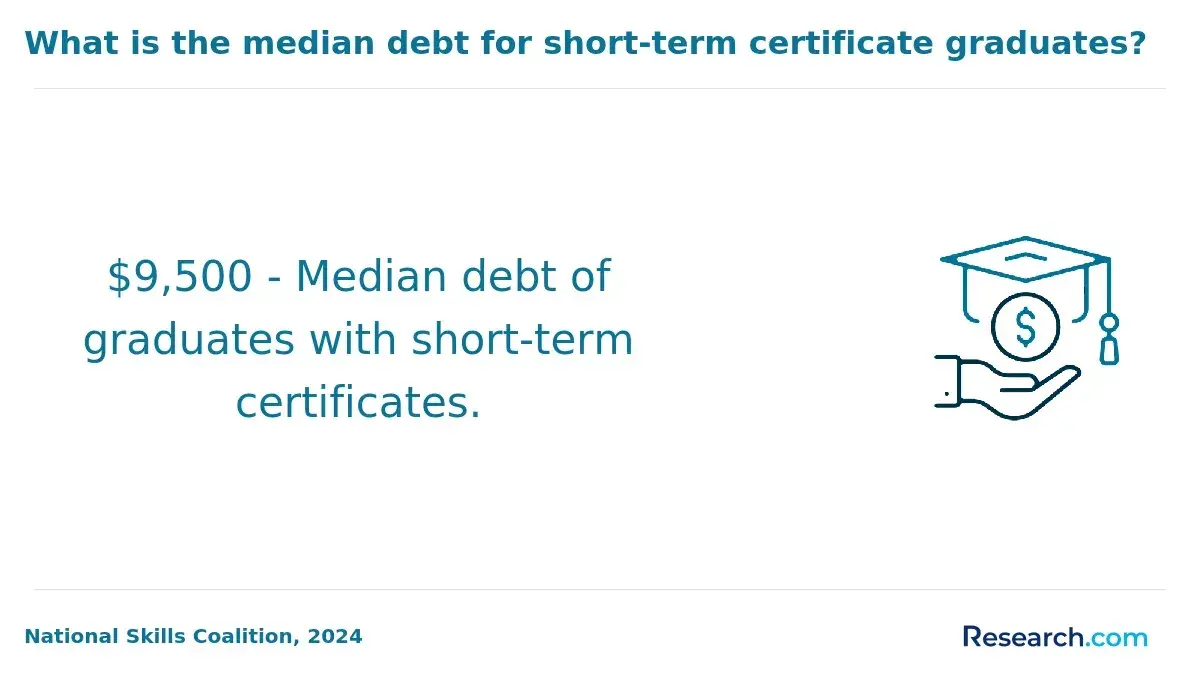
Graduate certificates typically require six months to a year of study, significantly less time than master's degrees, which often demand 30+ credit hours. According to the National Center for Education Statistics (NCES), certificates usually involve 12 to 18 credits, making them more affordable and practical for professionals seeking quick upskilling without committing to a full degree.
- Career signal value: Research from the American Council on Education shows that graduate certificates, while less prestigious than full degrees, still indicate applicable expertise and dedication to continuous learning. Their value depends on accreditation, employer recognition, curriculum quality, and alumni outcomes.
- Common specializations: Healthcare administration graduates often pursue certificates in data analytics, project management, public health, financial analysis, and nonprofit management. Data analytics improves decision-making and is associated with an average 8-12% salary increase in healthcare roles. Project management certificates can also appeal to employers hiring for process improvement, implementation, and operations roles.
- Credential inflation: Not every certificate improves employability. Some are expensive but weakly recognized. Before enrolling, compare program cost, accreditation, employer partnerships, alumni outcomes, faculty expertise, and whether the curriculum matches current job descriptions.
Recent data indicate over 40% of mid-career professionals leverage graduate certificates to facilitate career shifts, emphasizing their growing role in workforce adaptability and lifelong learning.
A certificate is most useful when it closes a specific gap. If job postings repeatedly ask for SQL, dashboards, or analytics tools, a data analytics certificate may help. If postings emphasize timelines, budgets, and stakeholders, project management may be more relevant. If you want government or nonprofit health roles, public health or policy training may be a better fit.
For those considering specialized paths, an online nutrition degree exemplifies how certificates and degrees can complement evolving career interests within healthcare sectors.
What Role Do Professional Certifications Play in Validating a Healthcare Administration Career Pivot?
Professional certifications can validate a healthcare administration career pivot by showing employers that you meet a recognized competency standard for a specific function. A degree signals broad academic preparation; a certification signals applied skill in areas such as project management, analytics, human resources, CRM administration, quality, or compliance.
Certifications are most valuable when they match the job you want. They are less useful when they are unrelated, outdated, or pursued only to add letters after your name. Before investing, review job postings, search LinkedIn profiles of people in your target role, and ask hiring managers or professionals which credentials they actually respect.
Key career-relevant certifications include:
- Project Management Professional (PMP): Requires 3-5 years of project management experience and 35 hours of formal training before passing a rigorous exam costing about $555. It is valued in project and operations management, including healthcare and corporate environments.
- Certified Analytics Professional (CAP): Demands a bachelor's degree plus three years of analytics experience; involves a 3-hour exam fee around $495. It can support data analyst and business intelligence roles.
- SHRM Certified Professional (SHRM-CP): Entry-level HR certification needing 1-2 years of experience or education, with an exam fee near $300-$400. It can help candidates pivot toward HR specialist roles in healthcare and beyond.
- Salesforce Administrator: No formal prerequisites; typical preparation lasts 2-3 months; exam costs roughly $200. It demonstrates CRM competency across industries and can support customer success, operations, and sales support roles.
- Certified Professional in Healthcare Quality (CPHQ): Requires two years of healthcare experience; a 3-hour exam priced at about $395. It is especially relevant for quality assurance, performance improvement, and compliance roles in healthcare settings.
Sequence certifications strategically. Start with the credential most closely tied to your target job, not the one that sounds most impressive. If you are actively studying for a relevant exam, you can list it as “in progress” or include an “expected completion” date, provided that is accurate.
Healthcare administration graduates exploring alternative career pathways can also consider further education, such as online PharmD programs, which expands credentials and versatility in related health and wellness fields.
How Can Healthcare Administration Degree Holders Leverage Freelance or Contract Work to Break Into a New Field?
Freelance and contract work can help healthcare administration degree holders build evidence of skill before they land a full-time role in a new field. The U.S. gig economy surged past 60 million freelancers in 2023, and short-term work can be a practical way to gain experience, portfolio samples, references, and industry contacts.
This strategy is especially useful when employers say you are “close” but want more direct experience. A well-chosen contract project can close that gap faster than sending dozens of applications with the same resume.
- Content development: Writing healthcare articles, educational materials, policy summaries, training guides, or patient-facing content can demonstrate communication skills and healthcare subject knowledge.
- Research and data analysis: Market research, literature summaries, survey review, spreadsheet cleanup, or basic operational reporting can build analytical credibility.
- Virtual assistance: Scheduling, inbox management, documentation, meeting coordination, and project tracking can support pivots into operations, administration, and client service.
- Communications consulting: Messaging support for healthcare organizations, nonprofits, startups, or advocacy groups can showcase stakeholder communication and strategic thinking.
- Project coordination: Managing timelines, follow-ups, deliverables, and stakeholder updates mirrors core healthcare administration work and can transfer across industries.
To use freelance work effectively, define a narrow service. “Healthcare operations support for small clinics” is clearer than “administrative consulting.” “Policy brief writing for health nonprofits” is clearer than “writing services.” Specific positioning helps clients understand why your background matters.
Turn every project into proof. Track the scope, deliverables, tools used, client type, and outcome. If the client permits it, request a testimonial or create a de-identified work sample. These details can strengthen your resume, LinkedIn profile, and interview stories.
Freelance-first pivots require caution. Income can be uneven, benefits may be unavailable, and some sectors, including government health agencies, may restrict freelance roles. This route works best for people with enough financial runway, clear target skills, and a plan to convert contract experience into full-time opportunities.
What Networking Strategies Are Most Effective for Healthcare Administration Graduates Pursuing a Career Change?
The most effective networking strategy for healthcare administration graduates is targeted, consistent relationship-building in the field they want to enter. This matters because career changers often lack direct contacts in the new industry, and many opportunities are discovered through conversations before they appear in formal applications.
Research from the Harvard Business Review and MIT Sloan Management Review underlines the advantage of “weak ties,” or acquaintances, who provide access to many hidden job opportunities. In fact, referral hiring accounts for over 40% of placements across sectors, reinforcing the importance of strategic networking for career pivots.
- Alumni network activation: Search for graduates of your program who now work in Health IT, consulting, insurance, public health, compliance, or your target field. Alumni can often explain how they translated the degree and which employers were receptive.
- Professional association entry: Join associations connected to your target role, not only healthcare administration groups. Attend webinars, local events, and committee meetings where practitioners discuss current problems.
- Informational interview campaigns: Request short conversations with specific questions. A simple message can work: “I'm transitioning from healthcare administration to [Target Field] and would appreciate your perspective on the skills and entry points employers value most.”
- LinkedIn strategic connection-building: Personalize every request. Mention a shared school, role, article, event, or career path. Avoid asking for a job in the first message.
- Community of practice engagement: Participate in niche online groups, Slack communities, webinars, or forums related to your target field. Helpful comments and thoughtful questions can build credibility over time.
Networking works best when it is organized. Set a weekly goal, such as contacting five people, scheduling one informational interview, and following up with two previous contacts. Keep notes on what you learn: common job titles, required tools, respected credentials, hiring timelines, and resume language.
If networking feels uncomfortable, frame it as research rather than self-promotion. You are not asking strangers to solve your career change. You are gathering information, testing assumptions, and building relationships with people who understand the field better than you do.
What Graduates Say About the Best Career Pivot Options for People With a Healthcare Administration Degree
- : "Graduating with a healthcare administration degree truly opened my eyes to the value of transferable competencies like data analysis and communication-skills I've successfully leveraged to pivot into health informatics. For anyone starting out, exploring accessible entry-level pivot roles such as administrative coordinator or patient liaison can provide critical hands-on experience. Additionally, I found that obtaining industry-recognized credentials not only boosted my confidence but also expanded my career options in this high-growth sector. — Denise"
- : "Looking back, one of the most valuable approaches I took after earning my healthcare administration degree was focusing on strategic networking-connecting with professionals at conferences and through online forums dramatically widened my opportunities. I also realized how crucial resume reframing is when shifting careers; highlighting project management and compliance experience helped me stand out in healthcare consulting roles. Long-term career outcomes have far exceeded my initial expectations by blending these strategies with continuous learning in emerging health technologies. — Eru"
- : "My journey with a healthcare administration degree has been both thoughtful and rewarding. I recommend emphasizing high-growth sectors like health IT and population health management when considering career pivots-these areas are ripe with opportunity. Credential strategies, such as pursuing certifications in healthcare quality or project management, have been instrumental in my career progress. The reflective process of identifying my transferable skills allowed me to transition seamlessly into leadership roles within hospital operations. — Kallie"
Other Things You Should Know About Healthcare Administration Degrees
Healthcare administration graduates should emphasize transferable skills such as project management, data analysis, and regulatory compliance when reframing their resumes. Highlighting accomplishments in improving operational efficiency or patient services-rather than only clinical or administrative duties-can attract employers outside traditional healthcare settings. Tailoring the resume to match keywords from the targeted industry or role also improves chances of passing applicant tracking systems.
A successful career pivot often takes several months to over a year, depending on the target industry and role. Graduates can accelerate the process by gaining additional certifications or relevant experience while networking strategically. Patience is important because building credibility in a new field usually involves entry-level roles or lateral moves before advancing.
Graduate programs-such as a Master's in Health Informatics or an MBA with a healthcare focus-offer specialized knowledge that facilitates a career change for healthcare administration holders. These credentials signal to employers a commitment to the new field and improve competitiveness. Additionally, graduate school often provides internships or practicum experiences that bridge academic theory with industry practice.
In 2027, healthcare administration degree holders can pivot to roles like health informatics specialists, healthcare consultants, or project managers. These positions leverage their existing skills while aligning with industry trends, offering growth opportunities in technology integration and strategic management as healthcare evolves.
References
- Entry-Level Careers for Graduates in Healthcare Leadership https://www.mhaonline.com/blog/entry-level-careers-in-healthcare-management
- The Path to Healthcare Administration: Follow These Steps to Score Your Dream Job https://www.park.edu/blog/the-path-to-healthcare-administration-follow-these-steps-to-score-your-dream-job/
- Is a Healthcare Administration Degree Worth It? Jobs & Career Outlook https://www.cw.edu/news/is-a-healthcare-administration-degree-worth-it-jobs-growth-outlook/
- The Many Career Options for Those in Healthcare Administration https://www.tuw.edu/health/healthcare-administration-career-options/
- 11 Highest Paying Healthcare Administration Jobs https://potomac.edu/highest-paying-healthcare-administration-jobs/
- 7 Reasons Why Earning a Graduate Certificate is Worth the Investment https://www.sacredheart.edu/news-room/news-listing/7-reasons-why-earning-a-graduate-certificate-is-worth-the-investment/