2027 Best Associate Degrees With Employer Tuition Assistance

Co-Founder and Chief Data Scientist
Your employer may help pay for an associate degree - but the best major depends on what its benefit actually covers and where you want the degree to lead. College Board reported average published tuition and fees of $4,050 for in-district students at public two-year colleges in 2024-25. That makes an employer benefit potentially substantial, but fees, books, eligibility rules, and approved-program lists can change the calculation.
This guide compares practical degree fields for working adults and shows how to check career requirements and out-of-pocket costs before enrolling.
Key Things You Should Know
- Business and information technology offer broad choices for workers seeking advancement; nursing and allied health can offer clearer occupational pathways but often require selective admission and in-person training.
- Under a qualifying educational assistance program, employers can generally provide up to $5,250 per calendar year in tax-free educational benefits; your employer may offer less or restrict eligible programs.
- Choose the degree and school together: confirm your exact program is covered, calculate all remaining costs, and check accreditation, transfer rules, and any licensing requirements.
Top 10 Best Associate Degrees With Employer Tuition Assistance
Business Programs
An associate degree in business administration, accounting, or supply chain operations suits workers seeking broader responsibilities in retail, logistics, or office settings. An AA or AS may prioritize transfer to a bachelor's program; an AAS may emphasize applied courses.
Compare accounting, spreadsheet, and operations requirements with jobs at your employer rather than assuming a degree leads directly to management. Business is a strong choice when your tuition benefit covers the program and you want skills that apply across departments, but ask whether promotion also requires experience or a bachelor's degree.
Healthcare Programs
Allied-health associate programs, such as radiography, respiratory therapy, and dental hygiene, can provide more defined career preparation than a general health-science degree. They are a good fit when the employer benefit covers the specific program and you can attend required labs and clinical placements.
Admission may be competitive, and programmatic accreditation or state approval can matter for certification or licensure. A general health-science AS may be better for transfer, but it does not by itself qualify someone for a licensed clinical role.
Information Technology Programs
Information technology, cybersecurity, and network administration degrees can suit employees seeking technical support or systems roles. Applied programs may combine hands-on labs with preparation for industry certifications; transfer-oriented AS programs may offer a stronger route to a bachelor's degree.
Check whether your employer covers certification exams as well as tuition. An IT degree is less compelling if its software and lab resources are outdated or if the target job requires experience the curriculum does not help you build.
Nursing / Pre-Nursing Programs
An approved associate degree in nursing can prepare eligible graduates to pursue registered nurse licensure after passing the required examination and meeting state rules. Pre-nursing is different: it generally covers prerequisites and does not itself qualify someone for RN licensure.
Nursing can be attractive when a healthcare employer supports it, but science prerequisites, selective admission, clinical schedules, and potential limits on working hours make benefit eligibility only one part of the decision. Verify whether the benefit covers the nursing program - not merely prerequisite courses.
Criminal Justice Programs
A criminal justice AA or AS may serve students planning to transfer; an applied program may focus more on public-safety procedures. It can be useful for employees whose agency recognizes college credit for hiring or advancement. However, police and corrections requirements vary by jurisdiction and can include academy training, background checks, physical standards, and additional education. Ask the intended employer how it evaluates the degree before spending a tuition benefit on it.
Psychology / Counseling Programs
A psychology associate degree is usually a transfer foundation, not a qualification to practice as a counselor or psychologist. It may suit workers planning further study or seeking introductory knowledge relevant to human-services support roles. Compare the receiving bachelor's program's course requirements before choosing an AA or AS.
If your goal is clinical practice, budget for substantial education beyond the associate degree and check your state's licensing pathway; employer coverage for the first degree does not imply coverage for later ones.
What Are the Best Associate Degrees Covered by Employer Tuition Assistance?
The best employer-supported associate degree is the one that fits both an approved benefit and a realistic next step. Business and IT are versatile choices for advancement or career exploration. Nursing and accredited allied-health programs offer more occupation-specific preparation but impose tighter admission and scheduling constraints. Criminal justice is most persuasive when a target agency values the credential; psychology is strongest as a planned transfer pathway.
The comparison below shows what distinguishes these fields. It is not a list of degrees automatically covered by employers: approval depends on your company's plan and school partnerships.
| Degree field | Strongest fit | Main trade-off to check |
| Business | Cross-department skills or bachelor's transfer | A management role may require experience or further education |
| Information technology | Technical support skills and related credentials | Labs, certification costs, and experience requirements |
| Nursing or allied health | A defined clinical career pathway | Selective entry, in-person training, and licensure rules |
| Criminal justice | A public-safety pathway with employer-recognized credit | Agency-specific hiring and academy requirements |
| Psychology | Transfer toward further education | An associate degree does not qualify someone for clinical practice |
Most associate programs require roughly 60 semester credits, though clinical programs and prerequisite sequences may require more time. AA and AS degrees often support transfer, while AAS degrees often emphasize workforce preparation; check the actual curriculum and transfer agreement rather than relying on the abbreviation.
Which Employers Offer Tuition Assistance for Associate Degree Programs?
Employers including Walmart, Amazon, Target, and McDonald's advertise education benefits that can support eligible college study. Their arrangements differ: some offer selected, fully funded programs through education partners, while others provide tuition assistance subject to eligibility and payment limits. None should be treated as a blanket promise to fund every associate degree.
Check your employer's current benefits portal for the approved school, exact major, employment and tenure requirements, annual cap, application deadline, and payment method. A direct-pay arrangement may reduce the need to pay upfront; reimbursement may leave you responsible for tuition until a course is completed. If your preferred college is not approved, compare the value of an approved alternative with the cost of studying elsewhere.
How Much Can Employer Tuition Assistance Pay Toward an Associate Degree?
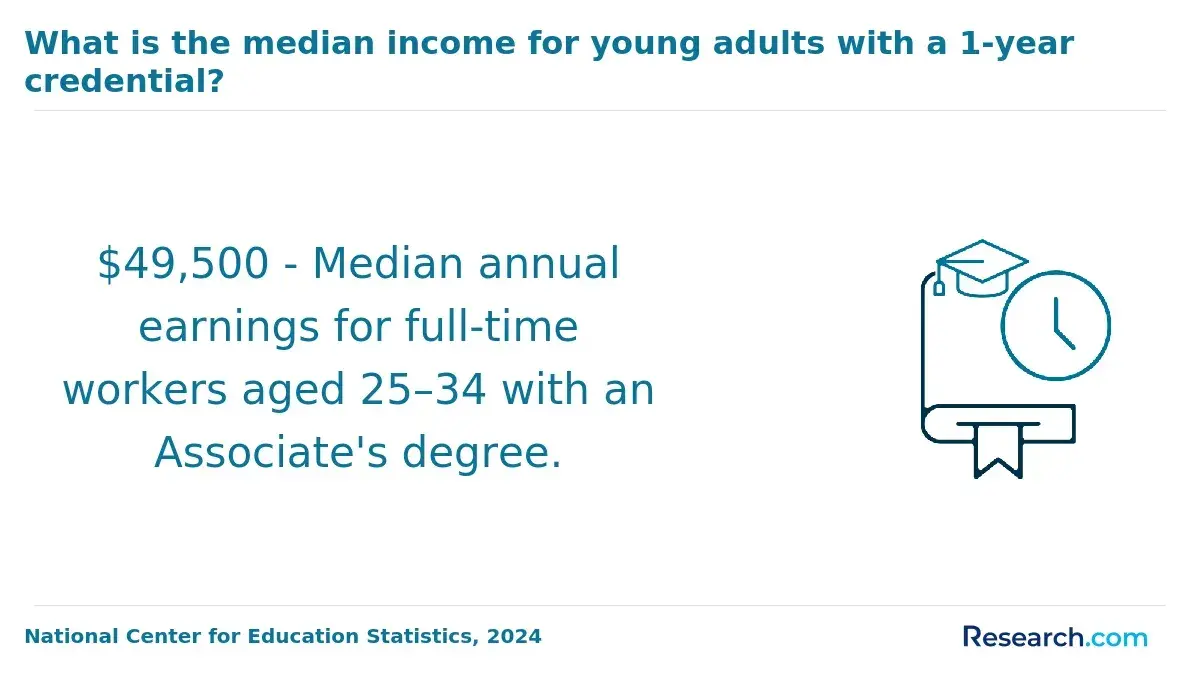
Employer tuition assistance can cover anything from part of one course to the eligible cost of an approved degree, depending on the plan. A qualifying employer educational assistance program can generally provide up to $5,250 per calendar year tax-free under federal rules. That is a tax-treatment threshold, not a required employer contribution or a guarantee that every educational expense is covered.
Compare the benefit with the school's total charges: tuition, mandatory fees, books, equipment, exams, and travel to labs or clinical sites. Ask how grants and scholarships interact with the employer benefit and whether unused annual funding carries over - it often does not.
Federal student aid may be available at an eligible institution, but the school's aid office must determine your eligibility and coordinate awards. A low per-credit price is not necessarily the lowest out-of-pocket path if approval rules leave major costs uncovered.
Which Associate Degrees Lead to the Highest-Paying Careers?
Among the fields discussed here, licensed healthcare occupations can offer strong pay, but salary figures describe workers in an occupation - not the earnings of everyone with an associate degree. The U.S. Bureau of Labor Statistics reported a 2024 median annual wage of $93,600 for registered nurses. That figure includes RNs with different educational backgrounds and levels of experience; an approved nursing degree, examination, and state licensure are necessary steps, not a salary guarantee.
For business, IT, and criminal justice, job titles and entry requirements vary too much to assign one credible salary to the major. Compare specific local openings with the program's coursework and your existing experience. If your intended role commonly calls for a bachelor's degree, ask whether associate credits will apply to one; a bachelor degree online in 2 years pathway may be worth examining later, but its timeline depends on accepted credits and course availability.
Are Online Associate Degrees Eligible for Employer Tuition Assistance?
Yes, online associate degrees may qualify for employer tuition assistance when the employer approves both the school and program. Online delivery alone does not establish eligibility. Confirm whether your benefit requires enrollment through a particular education partner, and whether the college can bill the employer directly.
Also distinguish online coursework from an entirely remote degree. Nursing and many allied-health programs require in-person clinical work; IT programs may require scheduled labs or proctored assessments. Even fully online courses can have live meetings and fixed deadlines. When comparing the best online degrees, prioritize an accredited program's actual schedule, required visits, student support, and benefit approval over an "online" label.
What Accreditation Should an Employer-Paid Associate Degree Have?
Start by verifying that the college holds institutional accreditation recognized by the U.S. Department of Education. Then check whether the specific program needs specialized accreditation or state approval for your intended occupation. Nursing and some allied-health pathways warrant particular scrutiny because eligibility for licensure examinations or professional credentials may depend on program details and state rules.
Accreditation does not ensure every credit will transfer. If you plan to continue to a bachelor's degree, request a written degree map or articulation agreement showing which courses satisfy the destination program's requirements. An employer's approval of a school is not a substitute for either an accreditation check or a transfer evaluation.
What Are the Admission Requirements for Employer-Supported Programs?
Colleges commonly ask associate applicants for a high school diploma or equivalent and prior college transcripts, if applicable. The requirements for entry into a particular major may be stricter: nursing and allied-health programs can require science prerequisites, minimum grades, an entrance assessment, background screening, or other clinical-placement conditions. Admission to the college does not mean admission to a selective program.
Employer eligibility is a separate hurdle. Before applying, confirm when you become eligible, whether part-time employees qualify, what grades you must maintain, and whether you must remain employed for a period after receiving assistance. Ask the college to evaluate prior credits early; accepted credit can reduce required courses, but the school may still impose residency and major-course requirements.
Which Certifications and Licenses Follow Associate Degree Programs?
A degree and a professional credential serve different purposes. An approved nursing graduate must meet state requirements and pass the NCLEX-RN to become licensed as an RN. Allied-health graduates may need a profession-specific exam and state license or certification. IT certifications can help demonstrate particular technical skills, but their value depends on the job and employer. Public-safety roles may require academy training that a criminal justice degree does not replace.
Ask whether exam fees, preparatory materials, and required renewals are covered by your benefit. Psychology and counseling require especially careful long-term planning: independent clinical practice generally requires graduate education and licensure, well beyond an associate degree. An online doctorate is therefore a separate future decision, not an outcome or automatic continuation of an employer-paid associate program.
How Do You Choose the Right Associate Degree and Tuition Benefit?
Begin with the job or next degree you want, then work backward to the credential. This prevents a common mistake: choosing a fully funded program that does not meet the entry requirements for your actual goal.
- Get your employer's current benefit policy and identify approved majors, schools, annual limits, payment timing, and employment conditions.
- Ask each college for a degree plan showing remaining credits, course rotation, prerequisites, and any required labs, clinical placements, or campus visits.
- Request a personalized estimate of tuition, mandatory fees, supplies, exams, and likely out-of-pocket costs after applicable aid and employer funding.
- Verify institutional and relevant program accreditation, licensing eligibility, and - if you may continue studying - how credits apply to a named bachelor's program.
- Compare schedules against your work commitments and choose a realistic enrollment pace rather than assuming every associate degree takes exactly two years.
If transfer is the goal, compare the planned destination before committing to an AAS or a narrowly specialized major. Lists of easy bachelor degrees cannot tell you whether your particular associate courses will satisfy major requirements; a written credit evaluation can. The right benefit is the one you can use to finish a credential that advances your goal without unexpected costs or scheduling conflicts.
Other Things You Should Know About
Not necessarily. Some employers restrict funding to partner schools or approved programs. Check the benefit policy before enrolling or paying a deposit.
It depends on the plan. Request a list of covered expenses and compare it with the college's required charges and supplies.
Often, but employer eligibility and college program rules vary. Check minimum enrollment requirements and whether required courses are offered when you can attend.
Future assistance may end, and some plans have repayment conditions. Review the written policy for resignation, termination, and courses already in progress.
References
- Understanding College Costs | Federal Student Aid https://studentaid.gov/resources/prepare-for-college/students/choosing-schools/consider-costs
- Cost of Attendance (Budget) | 2025-2026 Federal Student Aid Handbook https://fsapartners.ed.gov/knowledge-center/fsa-handbook/2025-2026/vol3/ch2-cost-attendance-budget
- Handy Reference Guide to the Fair Labor Standards Act | dol.gov https://www.dol.gov/agencies/whd/compliance-assistance/handy-reference-guide-flsa
- Qualified Ed expenses | Internal Revenue Service https://www.irs.gov/credits-deductions/individuals/qualified-ed-expenses
- Online Associate Degree Programs: How to Choose the Right Fit | Adelphi University https://onlineprograms.adelphi.edu/resources/article/online-associate-degree-guide/
- Employer Tuition Reimbursement: What Working Adults Need to Know | Winston-Salem State University https://ramsonline.wssu.edu/blog/employer-education-benefits/
- Strategic guide to tuition reimbursement - Purdue Business https://business.purdue.edu/graduate-programs/blog/posts/find-and-navigate-tuition-assistance.php
- 11 Companies That Will Pay for Your College Education | investopedia.com https://www.investopedia.com/companies-pay-college-6829220
- 50+ Companies That Will Pay for Your College Degree in 2026 | interviewpal.com https://www.interviewpal.com/blog/50-companies-that-will-pay-for-your-college-degree-in-2026
- Your Education, Paid by Walmart | guildeducation.com https://www.guildeducation.com/walmart