2027 Best Accredited Online Gifted Education Degree Programs: Compare Tuition, Admissions, and Career Outcomes

Co-Founder and Chief Data Scientist
Choosing an online gifted education degree is a practical career decision for teachers who want stronger skills in differentiation, advanced curriculum design, and talent development. The Bureau of Labor Statistics' 2024 Occupational Outlook Handbook projects limited growth for many K-12 teaching roles through 2033, which makes specialized credentials more important for educators seeking leadership or endorsement opportunities.
This guide helps licensed teachers, career changers, and graduate applicants compare accredited programs by cost, admissions, format, support, and likely career value.
Key Things You Should Know
- Best overall value usually comes from accredited public online programs that combine 30-36 graduate credits, endorsement alignment, transparent per-credit tuition, and flexible pacing for working teachers.
- Based on 2024 BLS wage data, related roles vary widely: instructional coordinators had a median wage of $74,620, while elementary teachers had a median wage of $63,680, so ROI depends on whether the credential leads to leadership duties, district stipends, or advancement.
- Students should verify institutional accreditation, state endorsement alignment, field-experience rules, and total program cost before applying because gifted education licensure requirements vary by state.
Which Accredited Online Gifted Education Degree Programs Offer the Best Overall Value?
The best accredited online gifted education degree program is not always the cheapest one. Overall value depends on whether the program fits your state's endorsement rules, your current teaching license, your schedule, and your career goal, whether that is classroom specialization, gifted coordinator work, curriculum leadership, or doctoral preparation.
For most working teachers, the strongest value profile is an accredited online master's or endorsement-aligned graduate program with transparent tuition, no unnecessary campus residency, strong advising, and coursework that applies directly to gifted learner identification, curriculum design, equity, creativity, and advanced instructional strategies.
The table below compares common value profiles rather than ranking schools by a single metric. This is useful because a low-cost program can be a poor fit if it does not match your state credential requirements, while a higher-cost program may be worth considering if it offers stronger field support or a better-aligned concentration.
| Program value profile | Best fit | What to verify before applying | Potential trade-off |
| Low-tuition public online graduate program | Licensed teachers seeking the lowest practical path to a gifted education credential | State endorsement alignment, per-credit tuition, online fees, and field placement rules | May have fewer cohort features or less individualized advising |
| Endorsement-focused certificate or add-on | Teachers who already hold a master's degree or need a narrower credential | Whether credits can later stack into a master's degree | May not carry the same salary-lane value as a full graduate degree |
| Master's degree with gifted education concentration | Teachers seeking both advanced pedagogy and long-term leadership flexibility | Curriculum depth, practicum expectations, and whether the degree title supports district advancement | Usually costs more than an endorsement-only path |
| Private nonprofit online program with national reach | Students who want broader course availability, accelerated starts, or extensive online infrastructure | Programmatic education accreditation, licensure disclosures, and total tuition after scholarships | Sticker price can be higher before institutional aid |
| Research-oriented university program | Educators considering doctoral study, gifted program evaluation, or district-level leadership | Faculty expertise, thesis or capstone options, and access to research methods courses | May be less streamlined for teachers who only need an endorsement |
A practical way to define "best" is to start with your end goal. If you only need an endorsement, a graduate certificate may be the better investment. If you want advancement into curriculum leadership, instructional coaching, or gifted program coordination, a full master's degree may provide broader value.
Students comparing education-related credentials should also be aware that affordability varies by field. For example, a guide to the cheapest ABA certification online can be useful for understanding how certification-focused programs differ from full graduate degrees in cost structure and career use.
What Accreditation Should Students Look for in an Online Gifted Education Degree Program?
Accreditation is the first quality filter for any online gifted education degree. At minimum, the college or university should hold institutional accreditation from an agency recognized by the U.S. Department of Education or the Council for Higher Education Accreditation. This affects federal financial aid eligibility, transferability, employer recognition, and, in many cases, whether coursework can be used for licensure or endorsement.
Programmatic accreditation is also worth checking, especially for teacher preparation programs. Education programs may hold accreditation from organizations such as CAEP, but requirements vary by institution and state. A program can be institutionally accredited without being the right match for your state's gifted endorsement rules, so students should verify both layers.
The table below explains the main accreditation and approval signals students should review before enrolling. Use it as a screening tool before spending time on applications or sending transcripts.
| Quality signal | Why it matters | How to use it in your decision |
| Institutional accreditation | Confirms that the school meets broad academic and financial standards | Treat this as non-negotiable for degree programs |
| Programmatic education accreditation | Shows that the educator preparation unit has met field-specific review standards | Helpful when comparing programs, especially if you may move states |
| State approval or endorsement alignment | Determines whether coursework may satisfy gifted education endorsement requirements | Verify with both the school and your state education agency |
| Licensure disclosure | Explains whether the program is designed to meet requirements outside the school's home state | Essential for online students who live in another state |
| Field experience approval | Some states require supervised practice, portfolio work, or local school-based assignments | Ask whether you can complete fieldwork in your own district |
A common mistake is assuming that "accredited" means "automatically approved for my state." It does not. Gifted education endorsements are state-regulated, and some states treat gifted education as a separate endorsement while others fold it into special education, advanced academics, or local district roles.
This same distinction matters in other education and therapy-adjacent fields. Students looking at ASHA-accredited SLP programs, for instance, also need to separate institutional accreditation from the specialized standards required for professional practice.
How Do Tuition Costs Compare Across Accredited Online Gifted Education Degree Programs?
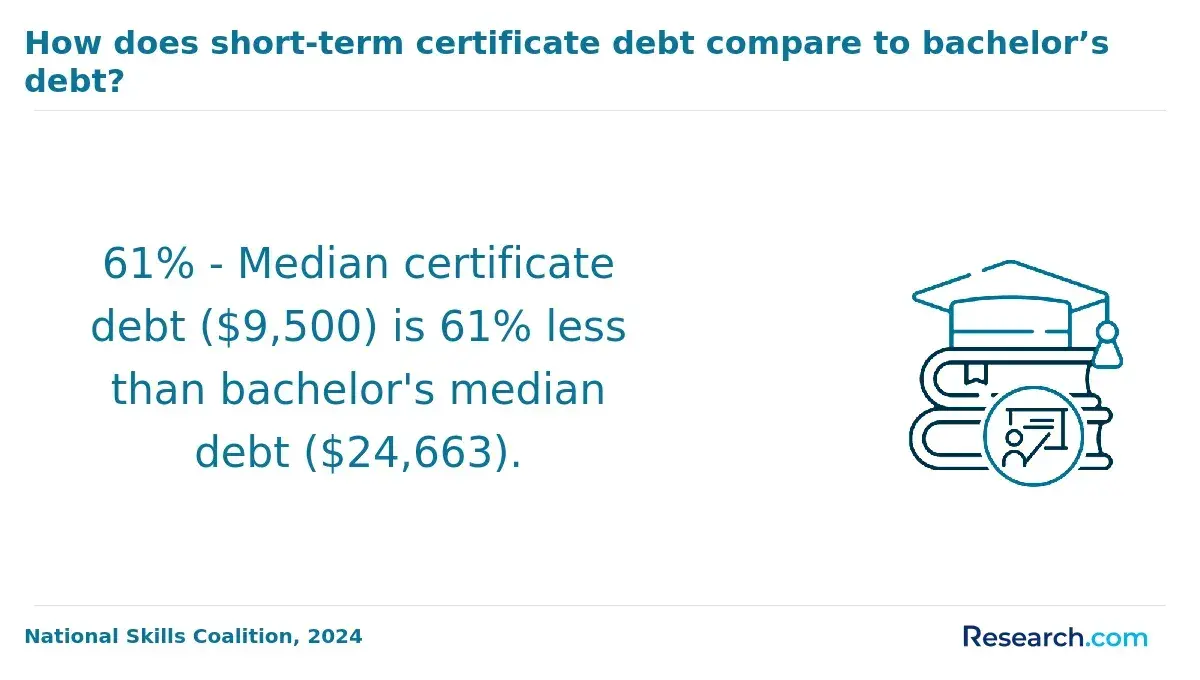
Tuition for online gifted education programs is usually charged per credit, and most master's programs require about 30-36 graduate credits. Certificate or endorsement-only options may require fewer credits, which can make them significantly less expensive if you already have the degree level you need.
The most important cost comparison is not the advertised per-credit rate. Students should compare total tuition, mandatory online fees, technology fees, books or materials, background check costs, field placement expenses, and whether tuition differs for in-state and out-of-state online learners.
The cost ranges below reflect how students should think about common online gifted education pathways. Exact prices change by institution and academic year, so always confirm the current tuition page and ask whether the rate applies to your residency status.
- Endorsement or graduate certificate: often the lowest total-cost option because it may require fewer credits than a master's degree.
- Public online master's program: often the strongest affordability-to-credential balance, especially when online students receive a flat tuition rate.
- Private nonprofit online master's program: may have a higher sticker price but can become more competitive after educator discounts, military benefits, or institutional scholarships.
- Research-intensive or highly specialized graduate program: may cost more but can be worthwhile for students targeting leadership, program evaluation, or doctoral study.
The table below shows how credit load affects total tuition before fees. This helps you compare programs even when schools publish different per-credit rates.
| Per-credit tuition | 30-credit program | 36-credit program | What it means for students |
| $350 | $10,500 | $12,600 | Typically a strong affordability target for public online options |
| $500 | $15,000 | $18,000 | A midrange price point where advising, endorsement alignment, and flexibility matter more |
| $700 | $21,000 | $25,200 | Worth closer ROI review unless the program offers a clear career or licensure advantage |
| $900 | $27,000 | $32,400 | Best suited for students who can justify the premium through aid, employer support, or specific program benefits |
One useful rule is to calculate the cost of an extra course. In a 3-credit course, the difference between $500 and $700 per credit is $600 for that course alone. Across a 30-credit program, that same difference becomes $6,000 before fees.
How Competitive Is Admission to Accredited Online Gifted Education Degree Programs?
Admissions competitiveness varies by program type. Endorsement and certificate programs often focus on whether you hold a valid teaching license and bachelor's degree, while master's programs may also review GPA, professional experience, recommendation letters, writing samples, and fit with the program's goals.
Gifted education programs are usually less admissions-selective than research-heavy doctoral programs, but they are not automatically "easy." Programs tied to educator licensure may screen for classroom experience because coursework often assumes that students can apply gifted education strategies in real school settings.
The table below summarizes typical admissions expectations. Use it to identify whether you are ready to apply now or whether you need to gather documents, raise your GPA profile, or confirm licensure status first.
| Applicant profile | Common admissions requirement | Decision factor | Best next step |
| Licensed teacher seeking endorsement | Bachelor's degree, active teaching license, transcripts | Whether the program aligns with the teacher's state endorsement pathway | Ask the program for a written licensure disclosure for your state |
| Teacher seeking a master's degree | Bachelor's degree, minimum GPA, recommendations, statement of purpose | Academic readiness and professional fit | Prepare a statement that connects gifted education to your classroom practice |
| Career changer | Bachelor's degree and possible prerequisite education coursework | Whether the program leads to licensure or only advanced study | Confirm whether a separate initial teacher licensure program is needed |
| Out-of-state online student | Standard graduate documents plus state-specific review | Whether fieldwork and endorsement requirements can be completed remotely | Contact both the school and your state education agency |
Applicants should not assume that flexible admissions indicate weak academic quality. Many online education programs are designed for working professionals and reduce barriers by offering rolling admission, multiple start dates, or no GRE requirement while still requiring graduate-level performance.
If admissions flexibility is your biggest concern, compare how different professional programs define access. A resource on the easiest online MSW program can help illustrate how "easier to enter" does not necessarily mean less rigorous once coursework begins.
Which Learning Formats Offer the Greatest Flexibility in Online Gifted Education Degree Programs?
The most flexible online gifted education programs are usually asynchronous, part-time-friendly, and designed around the school-year calendar. This matters because many students are full-time teachers who need to complete readings, discussion boards, projects, and field assignments outside contract hours.
However, flexibility should not be confused with lack of structure. Gifted education coursework often includes collaborative projects, lesson design, case analysis, assessment interpretation, or field-based assignments with advanced learners. A program that is too loosely organized can be harder for working adults than a structured cohort with predictable deadlines.
The table below compares common online formats and the students they serve best. Review the format before applying, not after enrollment, because schedule mismatch is one of the most avoidable reasons students struggle.
| Online format | Flexibility level | Best for | Possible drawback |
| Asynchronous online | High | Teachers who need to study evenings, weekends, or around school breaks | Requires strong self-management |
| Synchronous online | Moderate | Students who value live discussion and faculty interaction | Scheduled class times may conflict with family or work duties |
| Cohort-based online | Moderate to high | Students who want peer support and predictable sequencing | May offer fewer choices for course order |
| Self-paced or accelerated online | High for experienced students | Students who can move quickly through familiar content | Can become overwhelming during teaching-heavy months |
| Hybrid online | Moderate | Students near campus or those who want occasional face-to-face learning | Travel may reduce convenience |
Before choosing the fastest path, ask whether the program's pace fits your teaching cycle. Summer-heavy schedules can be ideal for classroom teachers, while compressed 7- or 8-week terms may be challenging during testing season, parent conferences, or district reporting periods.
Acceleration works differently by discipline. An accelerated paralegal program online may focus mostly on compact legal coursework, while gifted education programs may require school-based application, reflection, or evidence from classroom practice.
What Student Support Services Improve Success in Online Gifted Education Degree Programs?
Student support can affect whether an online gifted education program feels manageable, especially for teachers balancing graduate work with classroom responsibilities. The best programs offer more than a learning platform; they provide advising, licensure guidance, faculty access, library support, and help with field-based assignments.
Support is especially important for out-of-state students because gifted education requirements differ across state lines. A strong advisor should be able to explain what the program is designed to meet, what it is not designed to meet, and what documentation you may need for your state education agency.
Look for support services that directly reduce academic, administrative, and professional risk. These are the services most likely to improve your experience and help you finish on time.
- Licensure or endorsement advising that explains state-specific limitations in writing.
- Faculty with experience in gifted education, talent development, differentiation, twice-exceptional learners, and culturally responsive identification practices.
- Field placement support that allows working teachers to complete assignments in their current school when appropriate.
- Online library access with education databases, research support, and help finding peer-reviewed literature.
- Writing and graduate research support for students returning to school after several years in the classroom.
- Clear degree planning that shows when each course is offered and whether missing a course delays graduation.
A red flag is a program that cannot explain how online students complete field-based assignments. Another is vague licensure language such as "may meet requirements" without state-specific documentation. When in doubt, ask for written confirmation before enrolling.
Which Financial Aid Options Are Available for Accredited Online Gifted Education Degree Students?
Financial aid for online gifted education students depends on the credential type, enrollment status, institution, and whether the program is degree-seeking. Master's degree students at accredited institutions may qualify for federal graduate loans if they meet eligibility rules, while certificate-only students should confirm whether their program is aid-eligible before assuming federal aid applies.
The U.S. Department of Education launched the redesigned FAFSA for the 2024-25 award year, and processing changes affected how many students experienced financial aid timelines. For online graduate applicants, the practical lesson is to apply early, compare award letters carefully, and avoid committing to a program before understanding the net cost.
The table below outlines common funding options and how they typically apply to gifted education programs. Use it to compare real affordability rather than relying on tuition alone.
| Funding option | Who may benefit | What to check | Common limitation |
| Federal graduate loans | Degree-seeking graduate students at eligible accredited institutions | FAFSA status, enrollment intensity, and annual borrowing limits | Loans must be repaid with interest |
| TEACH Grant | Students preparing for high-need teaching roles who meet program rules | Whether gifted education coursework qualifies at your institution | Service obligation rules are strict |
| District tuition reimbursement | Current teachers whose districts support advanced credentials | Pre-approval deadlines, grade requirements, and reimbursement caps | May require continued employment with the district |
| State grants or teacher scholarships | Educators in states with targeted teacher development funds | State eligibility, shortage-area rules, and approved-provider lists | Funding may be limited or competitive |
| Institutional scholarships | Students at private or public universities with educator awards | Separate scholarship applications and renewal rules | May not cover fees or summer coursework |
To compare financial aid offers, calculate net cost after grants, scholarships, employer reimbursement, and required fees. Then compare monthly loan repayment estimates against the likely career benefit, such as salary-lane movement, endorsement stipends, or access to specialist roles.
Students exploring helping-profession degrees should remember that aid rules vary widely by credential and career path. Comparing education options with broader career resources, such as guides to highest-paying careers, can help keep ROI expectations realistic.
Which Career Outcomes Are Associated With Accredited Online Gifted Education Degree Programs?
An accredited online gifted education degree can support several career outcomes, but it should not be viewed as a guaranteed promotion. The credential is most valuable when it matches a district need, state endorsement structure, or leadership pathway.
Common outcomes include becoming a gifted education teacher, advanced academics specialist, enrichment coordinator, curriculum designer, instructional coach, or district gifted program coordinator. Some graduates also use the degree as preparation for doctoral study in curriculum, educational psychology, special education, or talent development.
The table below connects career paths to how a gifted education degree may help. It also shows why students should compare role requirements before choosing a program.
| Career path | How gifted education training helps | Credential considerations | Salary context |
| Gifted education teacher | Builds skill in advanced curriculum, differentiation, identification, and social-emotional support for gifted learners | Often requires a teaching license and may require a state gifted endorsement | Salary is commonly tied to district teacher salary schedules |
| Advanced academics or enrichment specialist | Supports pull-out programs, enrichment design, talent development, and academic competitions | Requirements vary by district and may depend on grade level or subject area | May include stipends or specialist pay depending on district policy |
| Instructional coordinator | Applies curriculum design, assessment, and professional development skills | Many roles prefer teaching experience and a master's degree | BLS 2024 wage data listed a median wage of $74,620 for instructional coordinators |
| District gifted program coordinator | Uses program evaluation, identification systems, equity review, and teacher training | Leadership experience and state or district requirements may apply | Compensation depends heavily on district size and administrative classification |
| Doctoral or research pathway | Provides background in gifted education theory, research, and advanced learner development | Research methods coursework may strengthen doctoral applications | Outcomes depend on later degree completion and employer sector |
The best career case for this degree is strongest for educators who already hold a teaching license and want to specialize. It may be less efficient for students who do not want to teach or who are seeking a high-paying career outside education, because gifted education roles are generally tied to public school salary structures and district budgets.
How Do Online and Campus-Based Gifted Education Degree Programs Compare?
Online and campus-based gifted education programs often cover similar academic content, but they differ in schedule, networking, fieldwork logistics, and access to faculty. For working teachers, online programs usually offer a better fit because they reduce commuting and make it easier to continue teaching while studying.
Campus-based programs may be valuable for students who want local school partnerships, in-person mentorship, or a research assistantship. However, many gifted education students are already embedded in schools, so an online program that lets them apply assignments in their own classroom can be more practical.
The table below compares the main decision factors. Use it to decide whether convenience, local networking, or campus access matters most for your goals.
| Decision factor | Online program | Campus-based program | Best choice when |
| Schedule | Often asynchronous or evening-friendly | Requires travel and fixed class times | Online is better for full-time teachers |
| Fieldwork | May be completed in the student's local school if approved | May use local partner districts near campus | Online is better if your current school can support assignments |
| Networking | Broader geographic peer group | Stronger local face-to-face network | Campus is better if you want local district connections |
| Faculty access | Virtual office hours, discussion boards, email, and video meetings | In-person meetings and campus events | Either can work if faculty are responsive |
| Cost | May reduce commuting, parking, and relocation costs | May offer assistantships or campus resources | Compare net cost, not delivery mode alone |
The main mistake is assuming online means easier. A well-designed online gifted education program can be academically demanding because it asks students to connect theory, assessment, curriculum, and classroom application. The better question is whether the delivery format helps you perform consistently.
How Should Students Choose the Best Accredited Online Gifted Education Degree Program?
Students should choose an accredited online gifted education degree by working backward from their career goal, state requirements, and budget. A program that is excellent for a licensed teacher seeking an endorsement may be the wrong choice for a career changer who still needs initial teacher licensure.
Use a structured process before applying. This reduces the risk of choosing a program based only on rankings, tuition, or marketing language.
- Confirm your goal: endorsement, master's degree, salary advancement, curriculum leadership, or doctoral preparation.
- Check institutional accreditation through recognized accreditation databases and confirm the school is eligible for federal aid if you plan to use it.
- Verify state endorsement alignment with your state education agency, especially if the university is located in another state.
- Calculate total cost using credits, per-credit tuition, fees, books, fieldwork costs, and expected aid.
- Compare curriculum depth in gifted identification, twice-exceptionality, equity, creativity, curriculum compacting, assessment, and program evaluation.
- Ask whether field-based assignments can be completed in your current school or district.
- Review course rotation so you know whether missing one class could delay graduation.
- Compare faculty access, advising, library support, and licensure guidance before committing.
- Ask your district whether the credential affects salary lanes, stipends, or internal eligibility for specialist roles.
- Choose the program that offers the strongest fit across accreditation, cost, flexibility, and career use, not the one that wins on only one factor.
The best program for working adults is usually the one that offers predictable online scheduling, state-relevant advising, and a realistic completion pace. Transfer students should ask whether prior graduate credits can apply, while first-time graduate students should prioritize advising and writing support.
Other Things You Should Know About Gifted Education
No. Gifted education focuses on advanced learning needs, talent development, enrichment, acceleration, and differentiated curriculum for high-ability learners. Some students are twice-exceptional, meaning they are gifted and also have a disability, so teachers may need knowledge from both areas.
Sometimes, but the program may not qualify you for classroom teaching by itself. If your goal is to become a licensed teacher, confirm whether you need a separate initial licensure program before or alongside gifted education coursework.
Many online master's programs take about one to two years depending on credit load, term structure, and whether the student studies part time. Certificate or endorsement programs may be shorter because they usually require fewer credits.
Some do, but many online professional programs use a capstone, portfolio, practicum, or applied project instead. Students considering doctoral study may benefit from choosing a program with stronger research-methods or thesis options.
References
- Cost of an Online Degree: Calculate the Cost of Your Higher Education https://www.edumed.org/articles/cost-of-an-online-degree/
- Cost of Online College vs. In-Person | Touro University Worldwide https://www.tuw.edu/school-news/cost-of-online-college-vs-in-person/
- Programmatic Accrediting Organizations https://www.chea.org/programmatic-accrediting-organizations
- How to Get Gifted Education Certification - BriteMinds Learning Center https://briteminds.com/how-to-get-gifted-education-certification/
- Is a Gifted Education Master's Worth It? ROI & Careers https://blog.elmbridge.edu/gifted-education-masters-worth-it/
- How does a college degree improve graduates’ employment and earnings potential? - APLU https://www.aplu.org/our-work/4-policy-and-advocacy/publicuvalues/employment-earnings/
- Top 20 Gifted And Talented (G&T) Education Master’s Online https://www.topeducationdegrees.org/rankings/online-masters-gifted-talented/
- Frequently Asked Questions about Gifted Education https://www.nagc.org/frequently-asked-questions-about-gifted-education
- Gifted Education Online Certificate | Shenandoah University https://online.su.edu/degrees/teaching-education/gifted-education-certificate/