2027 Bedside RN to Hospital Case Manager: Transferable Skills, Experience Gaps, and Education Options
Audited and Verified:
Our Editorial and Data Verification Process
Research.com uses government datasets, official education statistics and primary institutional information to support its career and degree guides. Our review process checks factual accuracy, occupational definitions, source dates and the requirements associated with the credentials discussed.
How This Article Was Fact-Checked
Our editorial team verifies salary estimates, employment projections, education requirements and program information against original data providers and official organizations. Salary figures are checked against the relevant occupational definitions and reporting periods. Information about licensure, accreditation and required in-person training is reviewed separately.
Fact-checked and verified on:

Co-Founder and Chief Data Scientist
Moving from bedside nursing to hospital case management changes the work more than it changes your professional identity. You still use clinical judgment, but your focus shifts toward coordinating services, resolving discharge barriers, and helping patients move safely between care settings.
For an experienced RN, the decision is often whether existing experience is enough to apply now or whether a BSN, targeted training, or a credential would improve your prospects. This guide maps the transferable skills, likely gaps, and education options so you can choose a practical next step.
Key Things You Should Know
- An active RN license and relevant clinical experience may qualify you for hospital case management; a BSN is an employer preference or requirement for some positions, not a universal license requirement.
- The biggest transition gaps are often utilization review, payer rules, discharge resources, and documentation - not bedside assessment or patient communication.
- The U.S. Bureau of Labor Statistics does not publish a separate wage or growth series for hospital nurse case managers, so evaluate local offers rather than treating an RN-wide median as the role's salary.
What does a hospital case manager do, and how does bedside nursing experience transfer?
A hospital nurse case manager coordinates care across the admission and discharge process. Depending on the hospital, the job may include assessing post-discharge needs, arranging services with social work and community partners, communicating with payers, and documenting why a level of care or service is needed. Some hospitals separate discharge planning from utilization review; others combine them. Ask which functions belong to the position before judging whether it fits.
Bedside RNs already recognize changes in condition, explain plans to patients and families, and bring concerns to interdisciplinary rounds. Case management applies those abilities across a broader timeline: What must happen before discharge, who will provide the next service, and what barrier could interrupt the plan? It is not advanced practice nursing. For example, online FNP school responsibilities for preceptors concern supervised preparation for a different role, not a prerequisite for RN case management.
What education and RN licensure do hospital case managers need?
RN-designated hospital case manager jobs generally require an active RN license. Employers set their own degree and experience requirements: some accept an associate degree or nursing diploma with substantial clinical experience, while others require or prefer a BSN. Clinical experience in settings with complex admissions and discharges can be especially relevant. The job posting - not the title alone - is the best guide to a particular opening.
An RN-to-BSN program advances an already-licensed nurse's education; it does not award a new RN license. An MSN may support later leadership or specialized work, but it is rarely the most direct first step into an entry-level case management opening. For an associate-degree RN considering graduate study, ADN-to-MSN education pathways are worth comparing only after checking whether the target employer actually values the resulting degree for this role.
How can bedside RNs transition into hospital case management?
Start with your hospital's actual workflow rather than enrolling in a program immediately. An internal move may let a hiring manager assess how you collaborate with the physicians, therapists, social workers, and discharge planners already involved in your patients' care.
The following sequence helps you test your fit and document readiness without assuming that bedside seniority alone proves case management competence:
- Compare several local postings for degree, specialty experience, utilization review, and certification expectations.
- Request an approved shadowing opportunity or discuss case management responsibilities with the department manager.
- Seek permitted experience in interdisciplinary rounds, discharge teaching, transitions-of-care initiatives, or appropriate quality work.
- Revise your résumé with specific, truthful examples of coordinating complex care; omit patient identifiers and confidential employer data.
- Ask about orientation, caseloads, escalation support, and whether the position includes utilization review before accepting an offer.
Orientation matters even for an experienced RN: learning payer communication and the hospital's documentation standards takes supervised practice. If a job search reveals that the obstacle is a degree requirement, investigate completion routes then - not another initial-licensure application. An advanced-practice route such as short-format family NP certificates for graduate nurses serves a different career goal and does not replace case management onboarding.
The strongest transferable skills are those that help a team anticipate needs and act on them. Assessment helps an RN recognize functional limitations or a change that could affect discharge. Patient education helps identify whether a person understands medications, follow-up, and warning signs. Documentation and handoffs help the next clinician or service provider see what remains unresolved.
Communication is especially valuable when a plan depends on several people: a bedside RN who has clarified a family's concerns, escalated a safety issue, and coordinated with therapy has experience relevant to transitions of care. In an interview, describe the situation, your actions within RN scope, and what you personally observed - not an unverified outcome. These capabilities differ from preparation for a new advanced-practice role; affordable online nurse practitioner programs should enter the decision only if your goal is NP practice rather than hospital case management.
Bedside familiarity with discharge does not necessarily include responsibility for the full transition plan. Ask the hiring team which systems it will teach and which it expects you to know on day one. The most consequential gaps often involve the following:
- Utilization review: applying the employer's processes for reviewing level of care and communicating with payers, if the role includes this function.
- Post-acute options: understanding available services, referral processes, capacity constraints, and patient choice without promising a placement.
- Coverage and authorization: recognizing when benefits, medical-necessity documentation, or authorization could delay a service, while referring determinations to the responsible payer or specialist.
- Caseload management: prioritizing several patients with different discharge barriers and documenting decisions across the care team.
A complex patient population can make your clinical background valuable, but expertise in one specialty does not automatically fill these operational gaps. Likewise, if your long-term interest is psychiatric advanced practice, lower-cost mental health advanced practice study addresses different competencies and authorization than a hospital case manager position.
Choose the least extensive preparation that addresses a documented hiring gap. If you already meet degree requirements, employer training and supervised experience may be more direct than another degree. If a BSN is required for the jobs you want, a postlicensure RN-to-BSN addresses that barrier; compare total cost, schedule, transfer-credit evaluation, and any in-person or practice-experience requirements before enrolling.
A short case management course or educational certificate can introduce terminology and workflows, but its completion award is not professional certification or proof of job readiness. A graduate program is more defensible when it supports a specific later goal, not merely because it sounds more specialized. This comparison puts each option against the obstacle it can solve:
| Option | Best fit | Important limitation |
| Employer orientation or targeted training | RN who meets posted qualifications but lacks local workflow experience | Availability and training depth vary by employer |
| RN-to-BSN | Licensed RN blocked by a BSN requirement or seeking broader degree completion | Does not itself confer case management experience or certification |
| Case management course or certificate | RN seeking focused exposure to coordination concepts | Employer recognition and practical experience vary |
| MSN or other graduate study | RN with a verified longer-term graduate-level goal | Usually a larger commitment than an initial case management transition requires |
For a BSN requirement, compare BSN completion pathways with alternative practice experiences against your work schedule, but confirm the exact experiential and attendance rules with each school. "No clinicals" should not be interpreted as "no required applied work."
Online delivery alone says little about a program's standing or usefulness. For an RN-to-BSN, verify the institution's accreditation, the nursing program's applicable accreditation status, authorization to enroll students in your state, and the degree actually awarded. Then request written details about transfer credits, required practice experiences, live sessions, and total charges. A reputable program should explain who evaluates your work and whether any local site or on-campus attendance is required.
For a case management course, identify who awards the completion document, what the curriculum covers, and whether it prepares you for an employer's stated duties or a particular certifier's eligibility rules. Do not assume that "online" means self-paced or that a course makes you eligible for an exam. The same scrutiny applies when comparing other online nursing paths, including master's nursing education on a BSN graduate's budget: confirm the exact credential and requirements rather than relying on the delivery label.
Useful learning connects clinical decisions with the services and constraints encountered after an acute-care stay. Look for care coordination, population health, social determinants of health, health policy, ethics, quality improvement, health information systems, and communication across settings. Focused training may add discharge planning, utilization management, payer terminology, and post-acute resource navigation.
Course titles are less important than what you can practice and receive feedback on. Ask whether assignments use realistic, de-identified cases; whether faculty or workplace mentors assess documentation and coordination decisions; and how the learning fits the employer's orientation. A program designed to accelerate another specialty, such as planning a faster MSN-PMHNP pathway, is not a substitute for case management-specific preparation simply because it includes graduate nursing coursework.
Common credentials include the ACM-RN from the American Case Management Association and the CCM from the Commission for Case Manager Certification. They have different eligibility routes and definitions of qualifying experience. Check each organization's current candidate handbook for license, education, experience, examination, and renewal rules before paying for preparation or assuming bedside hours qualify.
Certification can be useful when local employers prefer it or when you have accumulated qualifying case management experience. It does not replace an RN license, onboarding, or an employer's competency assessment. A school-issued certificate is also not the same credential. Even accelerated DNP program comparisons concern a different academic decision: a doctoral degree does not automatically award case management certification.
What salary and job outlook can hospital nurse case managers expect?
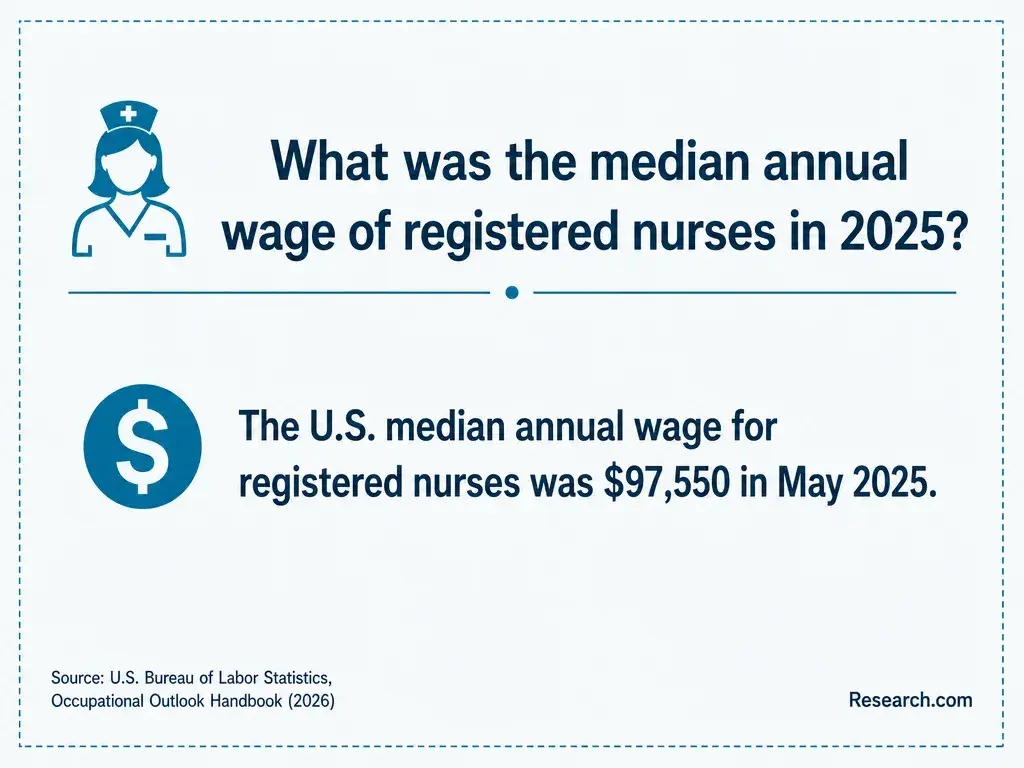
The U.S. Bureau of Labor Statistics reports registered-nurse wages and employment projections, but it does not isolate hospital nurse case managers as a separate occupation. Its May 2024 median annual wage for registered nurses was $93,600, and it projected 5% RN employment growth from 2024 to 2034. Those figures describe RNs across roles and settings; neither is a case manager salary, a local offer, or a specialty-specific growth forecast. Check newer BLS releases when comparing current market conditions.
For your decision, compare actual local offers with your bedside compensation, including shift differentials, overtime, bonuses, benefits, and schedule. A weekday role may change earnings even if base pay is similar; caseload size, weekend coverage, staffing, and orientation also affect its value. Pursue more education for an identifiable requirement or longer-term goal, not an assumed pay increase. The same caution applies to ADN-to-MSN education pathways: a graduate credential alone does not establish what a hospital will pay its case managers.
Already-licensed nurses do not need to start over in a prelicensure program. Advice about planning applications to accessible nursing schools addresses a different admissions decision; your first checks should be your license status, the employer's minimum qualifications, and any BSN completion requirement.
Other Things You Should Know About Nursing
They may meet with patients and families, assess needs, and use clinical judgment, but the role generally centers on coordination rather than a bedside assignment. Confirm the duties in the specific posting.
Some employers offer hybrid or remote work, particularly for selected review functions. Discharge planning often requires close coordination with on-site teams, so ask which tasks and days require hospital presence.
Ask about typical caseloads, coverage during absences, weekend expectations, administrative support, escalation procedures, and how the department measures performance. Discuss these with prospective colleagues as well as the hiring manager.
That can be a normal division of responsibilities. Find out how RNs and social workers share assessments, referrals, payer communication, and follow-up so you understand the role you would actually hold.
- Implementation of nursing case management to improve community access to care: A scoping review - PMC https://pmc.ncbi.nlm.nih.gov/articles/PMC10353612/
- eCFR:: 42 CFR 482.43 -- Condition of participation: Discharge planning. https://www.ecfr.gov/current/title-42/chapter-IV/subchapter-G/part-482/subpart-C/section-482.43
- Case Management - StatPearls - NCBI Bookshelf https://www.ncbi.nlm.nih.gov/books/NBK562214/
- CMS' Discharge Planning Rule Supports Interoperability and Patient Preferences https://www.cms.gov/newsroom/fact-sheets/cms-discharge-planning-rule-supports-interoperability-and-patient-preferences
- How to Become a Nurse Case Manager | Goodwin University https://www.goodwin.edu/enews/how-to-become-nurse-case-manager/
- Nurse Case Manager: About the Job | allnursingschools.com https://www.allnursingschools.com/specialties/nurse-case-manager/
- Nursing Case Management Certification (CMGT-BC™) | ANA https://www.nursingworld.org/our-certifications/nursing-case-management/
- ACMA: ACM Certification https://www.acmaweb.org/acm/