2027 Bedside RN to Clinical Documentation Improvement Nurse: Transferable Skills, Experience Gaps, and Education Options
Audited and Verified:
Our Editorial and Data Verification Process
Research.com uses government datasets, official education statistics and primary institutional information to support its career and degree guides. Our review process checks factual accuracy, occupational definitions, source dates and the requirements associated with the credentials discussed.
How This Article Was Fact-Checked
Our editorial team verifies salary estimates, employment projections, education requirements and program information against original data providers and official organizations. Salary figures are checked against the relevant occupational definitions and reporting periods. Information about licensure, accreditation and required in-person training is reviewed separately.
Fact-checked and verified on:

Co-Founder and Chief Data Scientist
Bedside nurses already recognize when a patient's documented diagnoses do not fully reflect the clinical picture. Turning that insight into a clinical documentation improvement (CDI) career, however, requires more than strong charting skills. CDI specialists review records, communicate with providers, and work within coding and compliance rules - usually without providing direct care.
This guide helps experienced RNs identify their transferable strengths, close the most important knowledge gaps, compare training options, and judge whether a CDI job is a better investment than another nursing degree.
Key Things You Should Know
- Bedside assessment, clinical reasoning, and provider communication transfer well to CDI, coding rules and compliant query writing generally require new training.
- An RN license and relevant clinical experience can qualify you to pursue RN-designated CDI roles, but employers set their own degree, experience, and certification preferences.
- CDI has no separate Bureau of Labor Statistics occupation or national median wage, compare actual CDI offers rather than treating the RN-wide median as CDI pay.
What does a clinical documentation improvement nurse do after working as a bedside RN?
A CDI nurse reviews the health record to see whether provider documentation clearly and accurately represents the patient's conditions and care. In an inpatient role, that may mean examining admission notes, progress notes, test results, and discharge documentation; identifying a clinically supported ambiguity; and sending a compliant clarification query to the responsible provider. The provider - not the CDI nurse - establishes or clarifies the diagnosis.
CDI work also involves collaboration with coding, quality, and medical staff. Depending on the employer, specialists may review records while patients are hospitalized, after discharge, or in outpatient settings. Accurate documentation supports appropriate coding and reporting, but CDI is not a mandate to increase reimbursement or insert diagnoses unsupported by the record.
The daily trade-off is substantial: less lifting, medication administration, and shift-based direct care, but more screen time, detailed record review, written communication, and measured productivity, which can appeal to nurses exploring faster online DNP routes alongside non-bedside career moves. Ask whether a position involves concurrent or retrospective reviews, what records you will handle, and how query quality, not just volume, is evaluated.
What qualifications do registered nurses need to become clinical documentation improvement nurses?
There is no single national entry requirement for CDI nurses. RN-designated postings commonly seek an active RN license, substantial relevant clinical experience, and strong knowledge of inpatient documentation. Employers may prefer a BSN, experience in a particular service line, prior utilization review or coding exposure, or an existing CDI credential. A bedside RN should check each posting rather than assume that either an ADN or BSN automatically qualifies them - or rules them out.
The best experience is experience you can explain. For example, a nurse who has cared for patients with complex respiratory or cardiac conditions can describe how they reconciled conflicting notes, recognized changes in condition, and communicated with providers. That evidence is more persuasive than years at the bedside alone. Entry-level CDI postings may provide structured training; others expect independent review experience from the start.
CDI is a role transition, not a new advanced practice license. An MSN, DNP, or NP track is not ordinarily necessary to enter it, even for nurses exploring associate-to-master's nursing pathways to expand their long-term credentials. Before considering another degree, compare its cost and time away from work with the qualifications in CDI openings you would actually apply for.
How can bedside nursing experience transfer to a CDI nursing career?
Bedside nurses bring a practical understanding of how diagnoses, treatments, and patient responses unfold across a hospitalization. That context helps them notice when a record describes a condition clinically but leaves its diagnostic meaning unclear. It also helps them communicate respectfully with clinicians who must answer clarification queries while managing patient care.
These connections show how to present bedside experience in a CDI application. They are examples of transferable work, not claims that bedside practice alone establishes CDI competence.
| Bedside experience | Value in CDI | Evidence to describe in an interview |
| Assessing changes in patient condition | Recognizing when the documented clinical picture warrants closer review | How you identified and escalated a change without assuming a diagnosis |
| Reconciling orders, notes, and handoffs | Finding documentation that is incomplete or inconsistent | How you clarified a discrepancy through the appropriate clinician |
| Communicating across disciplines | Writing clear, professional queries and discussing documentation concerns | How you raised a sensitive question without directing the answer |
| Documenting within an EHR | Navigating records efficiently and understanding workflow constraints | Which record types you use and how you protect patient information |
A useful preparation exercise is to translate two or three real responsibilities into these CDI-relevant terms on your résumé, even if you are simultaneously exploring 12-month FNP study pathways to broaden your long-term clinical scope. Describe your process and judgment without including patient-identifying details or claiming coding responsibilities you have not performed.
The biggest gap is usually not clinical knowledge; it is learning how clinical evidence relates to provider documentation, coding conventions, and compliant clarification. A bedside note can accurately describe a finding without establishing a reportable diagnosis. Likewise, a CDI specialist cannot treat a lab result or treatment choice as permission to assign one.
Prioritize the following gaps when assessing your readiness, because they affect both hiring and the quality of your eventual reviews:
- Documentation and coding: Learn the purpose of ICD-10-CM diagnosis coding, relevant inpatient guidelines, and how provider documentation supports code assignment. Coding teams retain their own responsibilities.
- Query practice: Learn when clarification is appropriate and how to write a nonleading query that includes relevant clinical indicators and reasonable response options.
- Record-level review: Practice reading the entire hospitalization rather than a single shift's notes, including how diagnoses change between admission and discharge.
- Data and feedback: Understand how an employer tracks review outcomes and uses audits to identify quality concerns, without equating more queries with better work.
A nurse coming from a highly specialized unit may also need broader exposure to conditions commonly reviewed across the hospital, much like how clinicians comparing career paths often consult an online mental health NP affordability guide before committing to specialized training. Conversely, a broad medical-surgical background may help with variety but does not substitute for formal instruction in coding and compliance.
For most experienced RNs, the shortest sensible route is targeted CDI education paired with supervised employer onboarding - not another nursing degree. Suitable options include employer training, professional continuing education, coding-focused coursework, and CDI certificate programs. A certificate documents completed instruction; it does not confer professional certification or guarantee that an employer will consider you job-ready.
Choose the pathway that addresses the gap shown by the jobs you want. If postings welcome clinically experienced RNs and offer training, apply while studying CDI fundamentals. If they require prior independent CDI work, look for an internal transfer, shadowing opportunity, or adjacent documentation-quality assignment. If several employers require a bachelor's degree, investigate that specific barrier before committing to a graduate program.
A graduate nursing degree may make sense for a separate leadership or advanced-practice goal, but it is an expensive workaround for a CDI skills gap. For example, comparing online BSN-to-MSN program costs is relevant if graduate advancement is also your goal; it is not a substitute for checking whether CDI employers want graduate preparation at all.
A useful CDI course connects clinical concepts to documentation rules and gives the learner practice reviewing records and composing queries. Typical subjects include ICD-10-CM terminology, the distinction between a clinical indicator and a provider-established diagnosis, inpatient documentation workflows, query compliance, privacy, and collaboration with coding staff. Some courses also introduce quality reporting and reimbursement concepts, which should be taught as consequences of accurate documentation - not targets that determine a diagnosis.
Look closely at the teaching method. A course consisting entirely of recorded lectures may build vocabulary, but case-based feedback can reveal whether you can recognize an ambiguity and formulate a neutral query. Ask who reviews practice work, whether examples reflect the setting you want to enter, and whether the curriculum is updated when applicable guidance changes.
Do not confuse a CDI course with a nursing program that prepares students for initial licensure, or with a coding credential. Its value lies in relevant skills and practice, not in a promise of a new nursing scope of practice, unlike affordable graduate pathways to NP preparation designed to qualify nurses for advanced clinical roles.
Online study is often easier to combine with RN employment, particularly when lessons and case exercises are asynchronous. It is not automatically flexible: live classes, timed assignments, group work, and fixed course-end dates can still conflict with shifts or caregiving. Campus instruction may offer immediate discussion and structured practice, but commuting and scheduled attendance increase the time commitment.
Compare formats using the learning activity you need most. If coding terminology is new, self-paced modules may help you revisit difficult material. If you already understand the terminology but struggle to write compliant queries, prioritize instructor feedback and case discussion, whether delivered online or on campus.
Before paying, request a sample weekly schedule, the expected hours of study, the format of case feedback, any required live sessions, and the refund policy, just as you would when reviewing a guide to RN-to-BSN programs with no clinicals to judge real workload expectations. Those details matter more to a working nurse than the delivery label alone.
Requirements vary because "CDI education" can mean an employer's orientation, an open-enrollment continuing education course, or a more selective certificate. A course may have no formal admission requirements, while another may ask for an RN license or clinical experience. Program length likewise depends on scheduled instruction, independent study, and whether supervised workplace practice is included. Verify the actual course calendar rather than relying on the word "accelerated."
There is no meaningful single tuition figure for all CDI training. Compare the full cost of each option, including enrollment and materials, time away from paid shifts, any exam-preparation resources, and whether your employer will reimburse the expense. If the goal is an internal CDI transfer, ask whether paid onboarding is available before purchasing a separate certificate.
Request the syllabus, total charges, cancellation terms, instructor qualifications, and a description of evaluated case work, much like weighing program structure when comparing short-format PMHNP master's options. These details let you judge whether a lower-priced course teaches the skills a prospective employer expects - or merely provides a completion document.
For a job specifically designated for an RN, maintain the RN license required by the employer and the jurisdiction. CDI itself is not a separate state nursing license. A CDI position that accepts other clinical or coding backgrounds may have different entry criteria, so read the actual job description.
Professional CDI credentials are distinct from licensure and from school-issued certificates. Two credentials employers may recognize are the Certified Clinical Documentation Specialist (CCDS) from the Association of Clinical Documentation Integrity Specialists and the Certified Documentation Integrity Practitioner (CDIP) from AHIMA. Their eligibility routes, experience requirements, examination policies, and renewal rules are set by the respective awarding organizations and can change. Check the current official handbook before paying for preparation or applying.
For an RN new to CDI, certification is often a later milestone rather than the first step, much like reviewing PMHNP certificate admissions and timelines before committing to advanced specialty credentials. If a posting lists a credential as preferred, ask whether the employer allows time to earn it after hire. Neither certification replaces compliant practice, employer orientation, or an RN license where the role requires one.
What salaries, job roles, and employment outlook can CDI nurses expect?
CDI nurses may be hired as CDI specialists, clinical documentation specialists, reviewers, educators, auditors, or team leads. Titles alone do not establish the work: one position may focus on inpatient concurrent reviews, while another emphasizes outpatient records, education, or quality audits. Advancement may depend on review expertise, mentoring ability, and demonstrated compliance - not simply time away from the bedside.
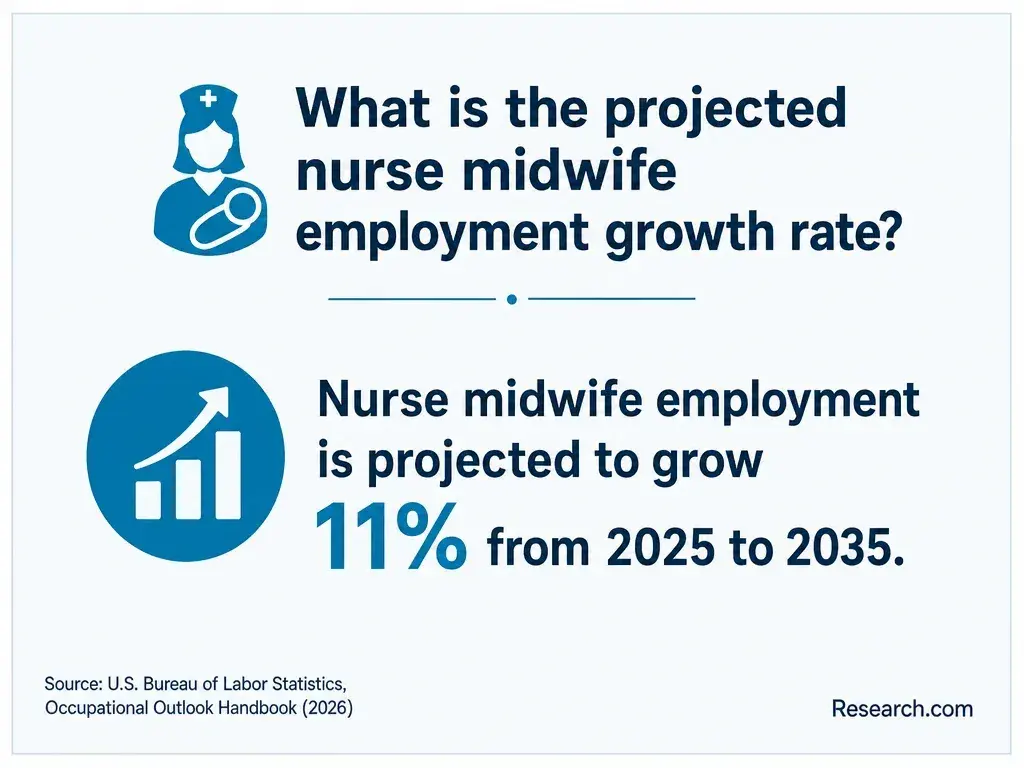
The U.S. Bureau of Labor Statistics does not publish a separate median wage or employment projection for CDI nurses. Its registered-nurse figures cover a much broader occupation and should not be presented as CDI-specific pay or growth. To assess an offer, compare its stated base pay, hours, benefits, remote-work conditions, and advancement opportunities with your current total compensation. A weekday schedule may appeal to a nurse leaving rotating shifts, but losing shift differentials or overtime can change the financial result.
Ask prospective employers about training length, review expectations, audit feedback, access to physician and coding partners, and whether remote work begins immediately or only after demonstrated competence, even if you are weighing doctoral nursing application requirements compared alongside your next career move. A supportive onboarding structure can be more valuable to a first-time CDI nurse than an appealing job title.
Other Things You Should Know About Nursing
Possibly, but an advertised remote role may restrict where employees can live or access records. Confirm the employer's location, privacy, and RN-license requirements for the specific position before accepting an offer.
It depends on what you value about bedside work. CDI preserves clinical problem-solving and clinician collaboration but generally offers little direct patient contact. Shadowing a CDI specialist can test that trade-off.
Do not copy patient records or employer-confidential material into a personal portfolio. Use approved, de-identified training cases or describe your reasoning and communication skills without protected information.
Respect the provider's clinical judgment and follow the organization's query and escalation policies. A query seeks clarification; it does not require the provider to adopt a suggested diagnosis.
- Validating Competence: A New Credential for Clinical... - PMC https://pmc.ncbi.nlm.nih.gov/articles/PMC3692327/
- ICD-10 Implementation Guide for Large Practices | cms.gov https://www.cms.gov/files/document/icd10largepractices508pdf
- Clinical documentation improvement: a comprehensive guide | Waystar https://www.waystar.com/blog-clinical-documentation-improvement-a-comprehensive-guide/
- What Is Clinical Documentation Improvement (CDI)? | AAPC https://www.aapc.com/resources/what-is-clinical-documentation
- Clinical Documentation Improvement (CDI): A Practical Guide | documedai.com https://documedai.com/post/clinical-documentation-improvement
- Measuring Effectiveness of Your CDI Program | American Institute of Healthcare Compliance https://aihc-assn.org/measuring-effectiveness-of-your-cdi-program/
- CDI position requirements | ACDIS Forums https://forums.acdis.org/discussion/2538/cdi-position-requirements
- The rewarding role of clinical documentation specialist | American Nurse https://www.myamericannurse.com/rewarding-role-clinical-documentation-specialist/
- Clinical Documentation Integrity Specialists - Purpose and Process | Health Information Associates https://hiacode.com/blog/clinical-documentation-integrity-specialists-purpose-process
- ACDIS CDI Apprenticeship https://acdis.org/acdis-cdi-apprenticeship