
2027 Are Online Nursing Leadership Doctorate Degrees Respected by Employers? Hiring Trends and Career Outcomes

Co-Founder and Chief Data Scientist
Many nurses considering a doctorate are not asking whether online learning is convenient; they are asking whether employers will take the credential seriously. The answer matters as leadership demand rises: the Bureau of Labor Statistics projects medical and health services manager employment to grow 29% from 2023 to 2033.
This guide is for nurses comparing DNP, PhD, and leadership-focused doctoral options. You will learn when an online doctorate is respected, which careers reward it, what affects ROI, and how to evaluate programs before committing time and money.
Key Things You Should Know
- Online nursing leadership doctorates are generally respected when they come from institutionally accredited universities, align with the employer's role requirements, and are supported by relevant leadership experience, not merely because they are online.
- The strongest ROI usually appears in executive nursing, health systems leadership, academia, consulting, and advanced practice-adjacent roles; BLS data shows medical and health services managers had a 2024 median wage of $117,960.
- Cost, accreditation, practicum quality, employer tuition support, and time-to-completion can matter more than delivery format; borrowing the federal graduate unsubsidized annual maximum of $20,500 can materially change the payoff calculation.
What Is the True ROI of an Online Nursing Leadership Doctorate?
An online nursing leadership doctorate is usually a Doctor of Nursing Practice with an executive, systems leadership, health policy, informatics, education, or organizational leadership concentration. Some nurses pursue a PhD in Nursing for research-intensive or tenure-track roles, while others consider an EdD or DHA if their goals are education administration or health administration.
ROI is not just the salary difference after graduation; it is the combined value of promotion potential, job mobility, professional credibility, leadership scope, and the cost of getting there.
Employers tend to respect online doctorates when the degree signals credible doctoral preparation. In hiring, the most important questions are usually whether the university is institutionally accredited, whether the nursing program has appropriate professional accreditation when relevant, whether the curriculum matches the role, and whether the applicant can demonstrate measurable leadership outcomes.
For senior nursing roles, the doctorate works best as an amplifier of experience, not as a substitute for it.
The table below summarizes the main factors that shape employer recognition. Use it to separate legitimate indicators of value from marketing claims that may not translate into hiring advantage:
| Factor employers may evaluate | Why it affects respect for the degree | How it influences ROI |
| Institutional accreditation | It confirms that the university meets recognized academic quality standards. | A non-accredited or poorly recognized school can limit hiring, transfer, licensure, and reimbursement options. |
| Nursing or professional accreditation | For nursing doctorates, employers may look for CCNE or ACEN accreditation when the program is practice-focused. | Accreditation can affect eligibility for certain employers, faculty roles, and continued education pathways. |
| Degree type | A DNP is usually practice and systems-focused, while a PhD is research-focused. | The wrong doctorate type can reduce payoff if it does not match the target career. |
| Leadership experience | Employers hiring for executive roles often expect a record of managing teams, budgets, quality programs, or clinical operations. | Experience can determine whether the doctorate leads to advancement or becomes an expensive credential with limited leverage. |
| Capstone, dissertation, or project relevance | Applied projects tied to quality improvement, workforce planning, safety, or operations can demonstrate job-ready impact. | Relevant work products can strengthen interviews, promotion cases, and consulting credibility. |
True ROI is strongest when the doctorate directly supports a target role that commonly values doctoral-level leadership, such as chief nursing officer, director of clinical transformation, nursing faculty leader, health policy strategist, or executive consultant. It is weaker when the nurse's goal can be reached with an MSN, certification, internal leadership development, or specialized nondegree training.
How Much Does an Online Nursing Leadership Doctorate Increase Earning Potential?
An online nursing leadership doctorate can increase earning potential, but it does not do so automatically. Salary gains usually depend on moving into a higher-paying role, qualifying for executive responsibility, teaching at the graduate level, leading system-wide initiatives, or entering consulting. Employers generally pay for scope of responsibility and measurable value, not for the credential alone.
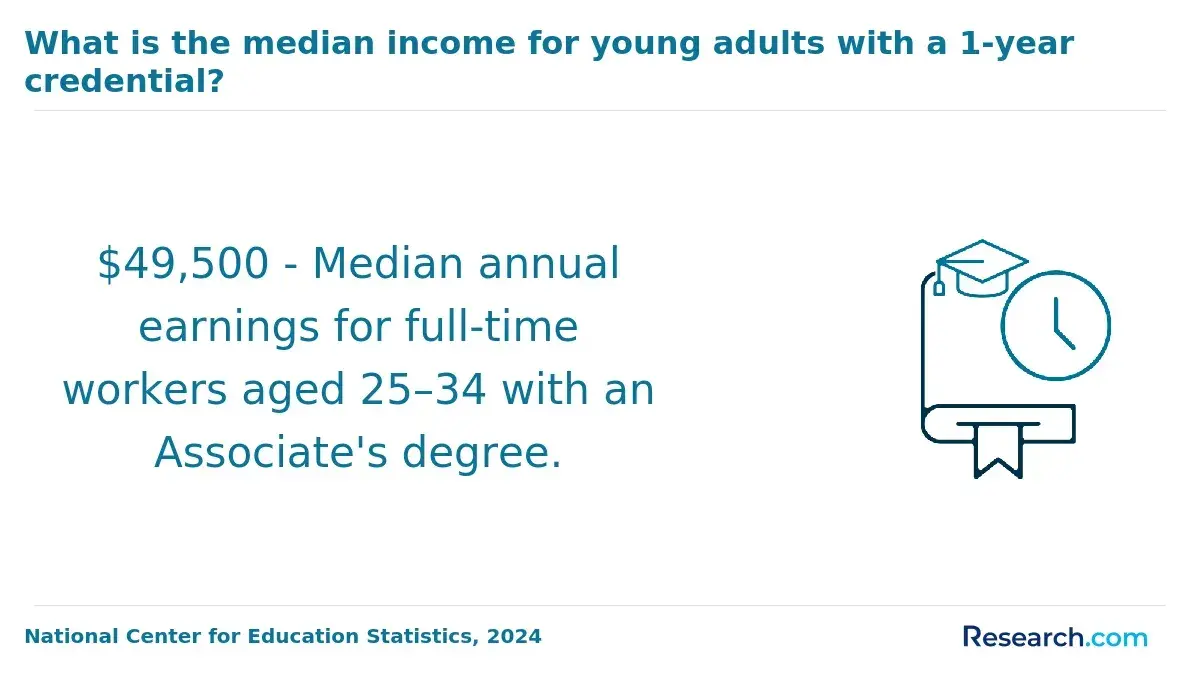
BLS reported a 2024 median annual wage of $117,960 for medical and health services managers. This figure is useful because many nursing leadership doctorate holders target management or executive pathways, but it should not be treated as a doctoral salary benchmark; wages vary by facility size, region, employer type, and leadership level.
The table below compares selected career areas where the doctorate may influence earnings. It focuses on the relationship between the degree and the role rather than implying that the degree alone produces the wage:
| Career area | How the doctorate may affect earning potential | Employer value signal |
| Nurse executive or chief nursing officer pathway | May support movement into director, vice president, or C-suite roles where compensation is tied to enterprise responsibility. | Systems leadership, quality outcomes, workforce strategy, budgeting, and regulatory readiness. |
| Healthcare administration | Can help nurses compete for management roles in hospitals, health systems, payers, and population health organizations. | Ability to lead interdisciplinary teams and translate clinical knowledge into operational decisions. |
| Nursing education leadership | May support faculty advancement, program director roles, or academic administration, especially when a terminal degree is preferred. | Curriculum design, accreditation readiness, scholarly work, and graduate-level teaching ability. |
| Clinical transformation or quality leadership | Can improve competitiveness for roles overseeing safety, outcomes, informatics, or evidence-based practice programs. | Ability to evaluate data, lead change, and implement measurable improvement projects. |
| Consulting or advisory work | May increase credibility with clients when paired with executive or specialized nursing expertise. | Recognized expertise, published work, project results, and practical implementation experience. |
For nurses comparing doctorate ROI with advanced practice routes, salary context matters. For example, those considering behavioral health leadership or advanced practice may also review psychiatric nurse practitioner salary data by state to compare clinical earning potential with administrative or academic pathways.
Which Careers Provide the Best Financial Return With an Online Nursing Leadership Doctorate?
The best financial return usually comes from roles where doctoral education aligns with decision-making authority, institutional priorities, and salary structure. A nurse who earns a doctorate but stays in the same position with the same pay scale may see limited short-term ROI.
A nurse who uses the degree to move into enterprise leadership, faculty administration, consulting, or specialty transformation work may see stronger long-term value.
These career paths often provide the clearest financial case for an online nursing leadership doctorate because they reward advanced leadership, evidence-based decision-making, and organizational influence:
- Chief nursing officer or senior nurse executive: The doctorate can strengthen credibility for roles overseeing nursing strategy, staffing, safety, quality, and patient care delivery across large organizations.
- Director of nursing practice, quality, or clinical transformation: A DNP or leadership doctorate can be especially useful when the role requires applying evidence to improve outcomes across departments or systems.
- Nursing faculty leader or academic program director: Doctoral preparation is often preferred or required for senior academic roles, especially in graduate nursing education.
- Health policy, population health, or informatics leadership: The degree can help nurses demonstrate readiness to work across clinical, operational, and data-driven environments.
- Healthcare consulting: A doctorate may improve market credibility when combined with a track record in operations, quality improvement, leadership development, or workforce strategy.
The financial return is usually lower when the target job does not value doctoral preparation, when the employer has rigid pay bands, or when the nurse chooses a high-cost program without a clear advancement plan.
Before enrolling, compare job postings for your target roles and note whether they say "doctorate required," "doctorate preferred," or simply "master's required." That wording is one of the clearest signals of whether the degree is likely to pay off.
How Does an Online Nursing Leadership Doctorate Affect Career Advancement?
An online nursing leadership doctorate can affect career advancement by making a nurse more competitive for roles that require strategic thinking, systems change, policy awareness, and evidence-based leadership. It can also help experienced nurses reposition themselves from unit-level or department-level management into organization-wide leadership.
Employers increasingly expect nurse leaders to understand data, technology, workforce planning, finance, compliance, and patient safety.
AI-enabled documentation tools, predictive analytics, virtual care, and quality dashboards are changing how nursing leaders make decisions. A strong doctoral program should help nurses interpret evidence, lead change, and evaluate outcomes rather than merely complete academic coursework.
Career advancement often depends on how the nurse uses the doctorate during and after the program. The following steps can help convert the credential into a stronger promotion case:
- Choose a doctoral project or dissertation topic tied to a real employer problem, such as retention, patient throughput, safety, informatics adoption, or care coordination.
- Document measurable outcomes from leadership work, including cost avoidance, quality improvement, staff development, or patient experience gains.
- Build relationships with executives, faculty, preceptors, and professional association leaders who understand your target career path.
- Update your résumé and LinkedIn profile to emphasize leadership results, not only the degree title.
- Ask your current employer whether the doctorate affects promotion eligibility, pay grade, tuition reimbursement, or succession planning.
The doctorate is most powerful when it creates a visible portfolio of leadership work. Employers may respect the online format, but they still need evidence that the graduate can lead people, manage complexity, and improve outcomes.
How Does the Cost of an Online Nursing Leadership Doctorate Affect Its Overall Value?
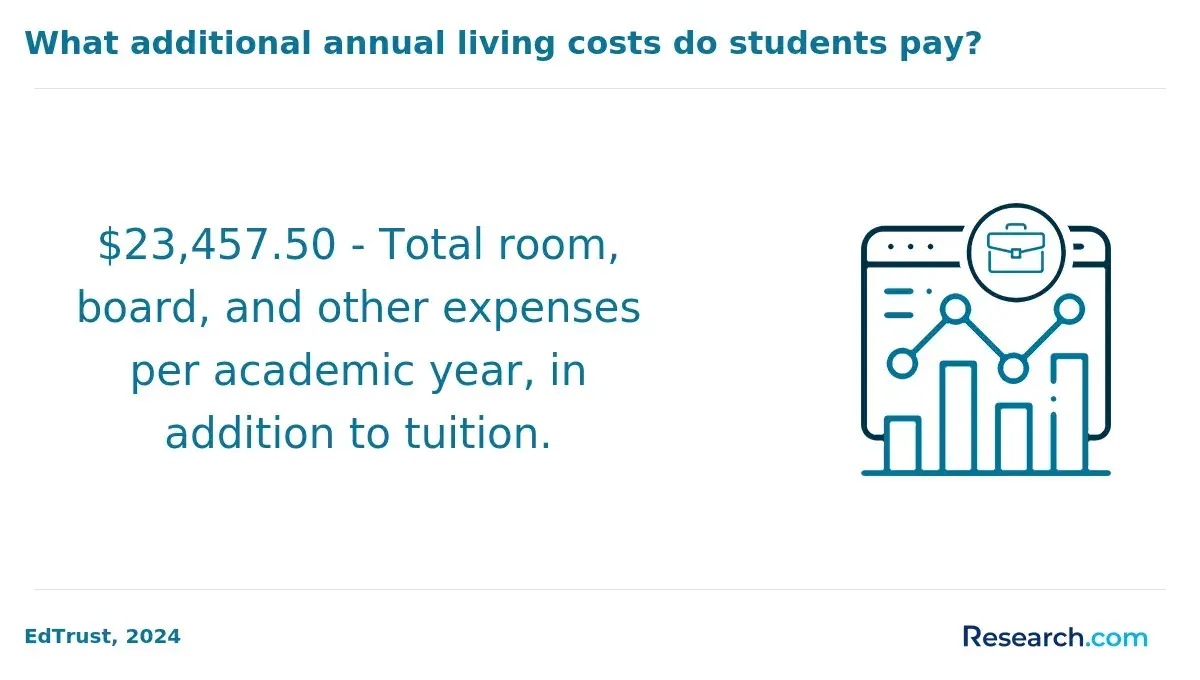
Cost can determine whether an otherwise respected online nursing leadership doctorate is a smart investment. Online programs may reduce relocation and commuting expenses, but tuition, fees, clinical or practicum travel, technology fees, books, and lost time still matter. Some programs charge per credit, others charge per term, and total costs vary widely by university and credit requirement.
Federal Student Aid allows eligible graduate students to borrow up to $20,500 per year in Direct Unsubsidized Loans before considering PLUS loans. That borrowing limit is important because a nurse who finances most of the doctorate may need a larger salary increase or faster promotion to make the degree financially worthwhile.
For cost-sensitive nurses, comparing cheapest online nursing PhD programs can be useful, especially when research or academic leadership is the goal. However, the lowest tuition is not automatically the best value if the program lacks the right accreditation, mentoring, practicum support, or employer recognition in your target field.
When evaluating cost, focus on total net price and opportunity cost rather than headline tuition. A moderately priced program with strong employer partnerships, relevant faculty, and flexible scheduling can have better ROI than a cheaper program that delays completion or offers weak professional support.
Use this cost review sequence before applying so you compare programs on real affordability rather than marketing language.
- Calculate total tuition by multiplying required credits by the per-credit rate, then add mandatory fees and expected travel costs.
- Ask whether tuition is locked for the program length or may increase while you are enrolled.
- Confirm whether employer tuition assistance, scholarships, military benefits, or assistantships can reduce your out-of-pocket cost.
- Estimate the income impact of reduced work hours, missed overtime, or delayed promotion while enrolled.
- Compare the expected cost with realistic target roles, not the highest possible executive salary.
How Does the Time Commitment of an Online Nursing Leadership Doctorate Affect Its ROI?
Time commitment affects ROI because a doctorate can take several years while the student continues working, managing family responsibilities, and completing applied projects.
Many online nursing leadership doctorates are designed for working nurses, but flexible does not mean easy. Courses often require weekly writing, discussion, research appraisal, group work, practicum hours, and a final DNP project or dissertation.
The ROI question is not only "How long is the program?" It is "How long until the degree produces career value?" A shorter program may help a nurse become eligible for promotion sooner, while a slower part-time path may reduce burnout and preserve income. The best timeline depends on career urgency, employer support, and personal bandwidth.
The table below compares common timeline patterns and how they can affect the value of the degree:
| Enrollment pattern | Typical fit | ROI implication |
| Accelerated full-time | Nurses with strong support, flexible employment, or urgent promotion goals. | Can shorten time to credential but may increase stress and reduce work income. |
| Part-time online | Working nurse managers, educators, or advanced practice nurses balancing employment and family responsibilities. | May preserve income while extending the time before career payoff appears. |
| Cohort-based executive format | Experienced leaders who value structured peer networking and scheduled intensives. | Can strengthen professional network but may be less flexible than asynchronous formats. |
| Research-intensive doctoral pathway | Nurses targeting scholarship, tenure-track faculty roles, or policy research. | May offer strong academic value but often requires a longer commitment than practice-focused leadership programs. |
A common mistake is choosing the fastest option without asking whether the format supports high-quality mentoring, project completion, and networking. If a student rushes through a program without producing relevant leadership work, the degree may have less employer impact even if it is accredited.
Does an Online Nursing Leadership Doctorate Have the Same Career Value as a Campus-Based Degree?
An online nursing leadership doctorate can have the same career value as a campus-based degree when the university is credible, the program is accredited and rigorous, and the graduate can show relevant leadership outcomes.
Many employers do not focus on whether courses were online, especially when the institution does not label the transcript by delivery mode. They focus on whether the degree is legitimate and relevant.
That said, online and campus formats can differ in networking, mentorship, clinical partnerships, research opportunities, and access to local employers. These differences can affect outcomes even when the academic credential is equivalent.
A campus-based program may offer stronger in-person networking in a regional health system, while an online program may be better for nurses who need to remain employed and apply coursework directly in their current workplace.
The table below highlights where delivery format matters and where it usually matters less:
| Comparison point | Online doctorate | Campus-based doctorate |
| Employer recognition | Strong when accreditation, institution reputation, and role alignment are clear. | Strong when the institution and program are recognized by target employers. |
| Networking | May rely more on virtual cohorts, professional associations, practicums, and intentional outreach. | May offer more face-to-face access to faculty, alumni, and nearby health systems. |
| Flexibility | Usually better for working nurses who cannot relocate or leave full-time employment. | May require set class times, commuting, relocation, or reduced work availability. |
| Applied learning | Often completed in the student's local workplace or approved practicum site. | May be tied to the university's local clinical and research partners. |
| Career value | Can be equal when the student builds a strong leadership portfolio. | Can be stronger for students who benefit from local institutional pipelines. |
The most practical question is not whether online is inferior. It is whether a specific online program gives you access to the faculty, projects, placements, alumni, and employer connections needed for your target role.
How Does an Online Nursing Leadership Doctorate Compare With Other Career Advancement Options?
An online nursing leadership doctorate is only one way to advance. Depending on the role, a master's degree, post-master's certificate, advanced practice pathway, executive certificate, MBA, MHA, informatics credential, or professional certification may offer faster or less expensive career value.
The best option depends on whether the employer requires clinical authority, executive leadership preparation, research training, or specialized operational skills.
For nurses who want clinical autonomy rather than executive leadership, online nurse practitioner programs may be a more direct path. In contrast, a nursing leadership doctorate is usually better suited to nurses who want to influence systems, policy, education, quality, or executive decision-making.
The table below compares common advancement options. It is meant to help clarify fit, not to rank one credential as universally better than another:
| Option | Best fit | When it may be better than a doctorate |
| MSN in leadership, administration, or education | Nurses seeking manager, educator, or director-level eligibility. | When target jobs list a master's as the required credential and do not prefer a doctorate. |
| DNP in nursing leadership | Experienced nurses pursuing executive, systems, quality, or practice leadership. | Less likely to be necessary if the nurse is early-career with limited management experience. |
| PhD in Nursing | Nurses pursuing research, scholarship, tenure-track academia, or policy research. | Better than a DNP when the target role requires original research training. |
| MBA or MHA | Nurses moving into business operations, finance, strategy, or broad healthcare administration. | May be more valuable when the employer prioritizes business management over nursing scholarship. |
| Professional certification | Nurse leaders needing targeted validation in executive nursing, quality, informatics, or education. | Can be more cost-effective when the nurse already meets degree requirements for advancement. |
A common red flag is assuming that "more education" is always the best career move. If your target employer values operational experience, budget management, or certification more than doctoral education, a doctorate may be a long and expensive route to a goal that another credential could support more efficiently.
Which Professionals Benefit Most From an Online Nursing Leadership Doctorate?
The professionals who benefit most are usually experienced nurses who already have a clear leadership direction. The doctorate tends to create the most value for nurses who can apply coursework immediately to workplace problems and who are positioned for promotion, executive succession, academic leadership, consulting, or system-wide practice improvement.
Early-career nurses may not benefit as quickly if they lack management experience or have not yet decided between clinical practice, education, research, and administration.
Nurses mainly seeking the quickest route into advanced practice may want to compare options carefully, including whether an easiest NP program search is really measuring flexibility, admissions accessibility, academic support, or long-term employer recognition.
The following profiles often see the strongest fit with an online nursing leadership doctorate:
- Experienced nurse managers and directors: They can use the degree to strengthen executive readiness, succession planning, and systems-level leadership credibility.
- MSN-prepared nurse educators: They may need doctoral preparation for faculty advancement, graduate teaching, accreditation leadership, or academic administration.
- Advanced practice nurses moving into leadership: They may use the doctorate to transition from individual patient care to program development, quality, policy, or service-line leadership.
- Quality, informatics, and population health leaders: They can benefit when the program includes evidence appraisal, analytics, implementation science, and change management.
- Nurses with employer support: Tuition reimbursement, flexible scheduling, practicum access, and internal promotion pathways can significantly improve ROI.
Nurses who should be cautious include those with unclear goals, heavy debt concerns, limited interest in leadership work, or target employers that do not reward doctoral preparation. In those cases, delaying the doctorate while building leadership experience may produce a better long-term outcome.
How Can Students Decide Whether an Online Nursing Leadership Doctorate Is Worth It?
Students can decide whether an online nursing leadership doctorate is worth it by matching the degree to a specific career outcome, then testing whether employers in that pathway actually value the credential. The decision should be based on evidence: accreditation, job postings, alumni outcomes, total cost, practicum quality, faculty expertise, and employer feedback.
Use this practical decision process before enrolling. It can help you avoid choosing a program based only on convenience, prestige, or rankings:
- Define your target role in plain language, such as chief nursing officer, nursing faculty leader, quality director, informatics executive, or consultant.
- Review at least 10 current job postings for that role and record whether each requires a master's, prefers a doctorate, requires a DNP or PhD specifically, or emphasizes experience over education.
- Verify institutional accreditation through recognized accreditation databases, then confirm nursing program accreditation with CCNE or ACEN when relevant to your pathway.
- Ask the school for completion rates, time-to-degree, doctoral project examples, alumni roles, employer partnerships, and practicum placement support.
- Estimate total net cost after scholarships, tuition assistance, and employer reimbursement, then compare it with realistic advancement opportunities.
- Speak with hiring managers, nurse executives, faculty leaders, or alumni in your target field to ask how they view the program and degree type.
- Assess whether you can complete the program without sacrificing the work experience, leadership visibility, or financial stability needed for advancement.
Several mistakes can weaken employer recognition and ROI. The most common are choosing a program without verifying accreditation, assuming online delivery is the main issue, overlooking whether the doctorate type fits the career goal, relying only on testimonials, ignoring licensure or state requirements, and expecting an automatic raise after graduation.
A stronger approach is to treat the doctorate as part of a broader career strategy that includes leadership experience, professional networking, measurable outcomes, and targeted job-market research.
The bottom line is that online nursing leadership doctorates can be respected by employers, but respect is conditional. The degree is most valuable when it is accredited, aligned with the intended role, affordable enough to justify the investment, and supported by a professional record that proves the nurse can lead at a higher level.
Other Things You Should Know About Nursing Leadership
Yes, graduates of accredited doctoral programs may generally use the academic title "Doctor," but clinical settings may have employer policies or state rules about how the title must be presented to avoid confusing patients about physician status.
No. A DNP project usually applies evidence to solve a practice or systems problem, while a PhD dissertation is designed to produce original research. Employers may value either, depending on whether the role is practice-focused or research-focused.
Some do. Many programs are mostly online but may require short residencies, intensives, orientations, project presentations, or practicum-related travel. Students should confirm these requirements before enrolling.
Some programs offer BSN-to-DNP leadership pathways, while others require an MSN. Admissions requirements vary by school and may include an active RN license, graduate GPA minimums, professional experience, recommendations, and a statement of goals.
References
- Best Online DNP Programs https://bsntodnpprogramsonline.com/resources/best-online-dnp-programs
- 2025 Best Online DNP Nursing Education Programs https://www.nurseeducator.com/degrees/dnp/
- The Impact of Doctor of Nursing Practice Education on Career Advancement and Professional Satisfaction: A Scoping Review https://oamonitor.ireland.openaire.eu/national/search/publication
- Top Nursing Leadership Roles: Requirements, Salaries, and Career Paths | GHR Healthcare https://www.ghrhealthcare.com/blog/leadership-paths-for-nurses
- Five ways a doctoral degree in nursing can transform your career https://onlinedegrees.bradley.edu/blog/five-ways-a-doctoral-degree-in-nursing-can-transform-your-career
- The DNP in nursing leadership: Is it worth the move? | Sermo https://www.sermo.com/resources/dnp-in-nursing-leadership/
- Should You Get a DNP in Nursing Leadership? A Guide | West Coast University https://westcoastuniversity.edu/blog/should-you-get-a-dnp-in-nursing-leadership-a-guide
- Future Trends in Healthcare for DNPs | Maryville Nursing https://nursing.maryville.edu/blog/future-trends-in-healthcare-for-dnps
- Transformative Leadership: Systems DNP https://www.rushu.rush.edu/college-nursing/programs-admissions/transformative-leadership-systems
- AACN Fact Sheet - DNP https://www.aacnnursing.org/news-data/fact-sheets/dnp-fact-sheet


