American Sentinel College of Nursing & Health Sciences at Post University Online MBA Concentrations: Courses and Career Paths

Co-Founder and Chief Data Scientist
If you work in healthcare and want broader management responsibility, the program's name raises an important question: Are you choosing a healthcare-focused MBA through American Sentinel College of Nursing & Health Sciences, a concentration in Post University's online MBA, or both? That distinction affects the courses on your transcript and the jobs for which the degree is most useful. This guide separates what to verify in the current catalog from what an MBA can realistically do for your career, so you can compare the curriculum, cost, and professional payoff before enrolling.
Key Things You Should Know
- Do not assume that a healthcare-focused course or college affiliation establishes a formally designated MBA concentration; obtain the current catalog's exact degree and concentration names.
- Compare the required healthcare courses with the general MBA core before choosing a track: management training does not replace clinical licensure or healthcare experience.
- Request a written program-specific tuition estimate and course plan. Broad management-occupation pay figures describe workers across many roles, not the earnings of this MBA's graduates.
What Is the American Sentinel College Online MBA in Healthcare?
American Sentinel College of Nursing & Health Sciences is part of Post University. For a prospective student, however, the college's identity and the official name of an MBA degree are separate facts. A healthcare emphasis may be a named concentration, a set of electives, or simply relevant coursework within a general MBA. Those options can differ in required classes and in how the credential appears on an academic record.
An MBA ordinarily teaches organization-wide decision-making through subjects such as finance, operations, strategy, and leadership. Healthcare-focused study applies some of those tools to providers, payers, patients, regulation, and quality. Before applying, ask Post University for the current catalog entry identifying the degree-awarding unit, the exact online program title, and any concentration that will appear on the transcript. Do not rely on an informal description such as "MBA in healthcare" to settle those points.
For a nurse weighing management education alongside advanced nursing study, the distinction matters. An MBA develops business leadership; a combined nursing and business pathway serves a different educational purpose. Compare the credentials and required coursework, not just the price, when considering online business school cost comparison degree programs.
What Concentrations Are Available in Post University's Online MBA?
A current, complete list of formally available online MBA concentrations cannot be established here. In particular, the name American Sentinel College of Nursing & Health Sciences does not, by itself, confirm that "Healthcare Management" or any other healthcare label is an official Post University online MBA concentration. Presenting unconfirmed tracks as enrollment options would make a consequential comparison misleading.
Use the current graduate catalog and a written response from admissions to distinguish the available options. The comparison below shows what each designation would mean for your decision; it does not assert that every option is offered.
| Designation to check | Evidence to request | Why it matters |
| Named MBA concentration | Catalog requirements and confirmation of how the concentration appears on the transcript | Establishes a formal, structured area of study. |
| Healthcare electives within a general MBA | Online course availability, elective rules, and sample course sequence | May offer useful exposure without a formally designated concentration. |
| Separate healthcare graduate degree or certificate | Credential title, required credits, and degree-awarding unit | May provide deeper subject study but is not an MBA concentration. |
Once you have the verified list, judge each concentration by its required courses rather than its label. A finance-oriented option could suit someone moving into budgeting, while operations or leadership study may better fit a clinical supervisor seeking broader responsibility. Neither choice substitutes for the experience employers expect in those functions.
Is the American Sentinel College Online MBA Accredited?
Post University's institutional accreditation and any specialized accreditation of its business programs are different questions. Institutional accreditation concerns the university as a whole; specialized business accreditation, if applicable to a particular MBA, concerns a defined set of business programs. Accreditation of a nursing or health sciences program should not be presented as accreditation of an MBA.
Before enrolling, check Post University's current institutional status with its recognized accreditor and confirm that the specific online MBA is within the university's approved offerings. If specialized business accreditation matters to an employer or to you, request the accreditor's name and confirmation that this MBA is covered. Ask the same question about the credential's official title: accreditation cannot resolve ambiguity about whether a healthcare concentration exists.
A course list must come from the current catalog for the precise MBA and concentration you intend to enter. Without that verified list, it would be inaccurate to name specific Post University healthcare courses as requirements. The useful starting distinction is between the MBA core, which builds general management skills, and healthcare-specific requirements, which determine the depth of the focus.
Examine the published plan for accounting and managerial finance, operations, organizational leadership, strategy, and any applied project or capstone. Then identify which courses actually address healthcare issues such as reimbursement, service delivery, quality, or regulatory decision-making. Check whether they are required, electives offered on a predictable schedule, or courses housed in another degree.
Course sequencing can affect both specialization depth and completion time: an infrequently offered elective may delay graduation even when the core is available. Compare the written schedule with short-duration MBA pathways only after confirming which healthcare courses you would be able to take. A faster general MBA is not necessarily an equivalent substitute for a verified healthcare concentration.
Confirm requirements for the specific online MBA, rather than applying admission rules from another Post University graduate program. A bachelor's degree and academic records are common starting points for MBA applications, but a minimum GPA, work-experience threshold, GMAT or GRE policy, recommendations, and prerequisites should be treated as program-specific until confirmed.
A nonbusiness bachelor's degree should not be assumed to disqualify you. It does make preparation worth assessing: a clinician comfortable with quality metrics may still need an introduction to financial statements, while someone with accounting experience may need more familiarity with healthcare operations. Ask whether foundational courses are required, recommended, or available without adding to the degree.
If you have prior graduate business coursework, seek a written evaluation before budgeting for the program. Credit limits, course equivalencies, and residency rules can change the value of online MBA programs accepting transfer credits; acceptance elsewhere does not establish Post University's policy.
A reliable completion estimate requires the current total credits, term calendar, course rotation, and your intended course load. A reliable price requires the applicable tuition rate and mandatory fees. Without those program-specific figures, neither a fixed completion time nor a total Post University MBA price should be assumed.
Request an itemized, written estimate covering tuition for all required credits, mandatory fees, books or software, and any charges tied to enrollment or graduation. Ask whether changing your pace affects tuition or fees and whether employer assistance applies to the entire degree. A tuition-only calculation is not the same as the full amount you may pay, particularly if borrowing adds interest.
To compare affordability, match total required credits and fees across programs, not just advertised per-credit rates. An online business school cost comparison MBA NC can provide a separate geographic benchmark, but North Carolina prices should not be mistaken for Post University's charges or for a like-for-like healthcare concentration comparison.
First verify that the campus option you are considering is the same MBA credential with the same concentration choices. Shared university branding does not establish identical electives, schedules, experiential activities, or access to campus recruiting. Obtain separate degree plans and tuition estimates for each delivery format.
The online format may reduce commuting, but it should not be presumed fully asynchronous or free of scheduled teamwork. Ask about live sessions, group projects, examinations, campus visits, and the frequency of healthcare electives. For the campus format, compare travel and time away from work with any in-person access to faculty, peers, or employers that you would actually use.
Experienced leaders may also consider executive MBA tuition and formats. An executive MBA is a different format aimed at a different career stage; it is not automatically a campus version of Post University's online MBA.
The most plausible path depends on the work you already do. A nurse manager, clinic coordinator, or healthcare analyst can use MBA study to strengthen budgeting, staffing, operational, and strategic decisions in an existing field. That is a more direct transition than entering healthcare leadership with no healthcare experience.
Potential directions include practice or clinic operations, service-line administration, healthcare project management, and business roles with payers or health-services organizations. Titles vary widely: a role overseeing an organization usually requires substantial supervisory and industry experience, not simply an MBA. For a career change, examine job postings for the exact responsibilities you want and identify the missing experience alongside the courses you hope to take.
If your goal is primarily clinical advancement, an appropriate clinical graduate credential may be more direct. If you need one business skill - such as budget management - employer training or a targeted course may cost less than an entire MBA. The degree makes the strongest case when you expect to apply several management competencies and have a realistic route to greater responsibility.
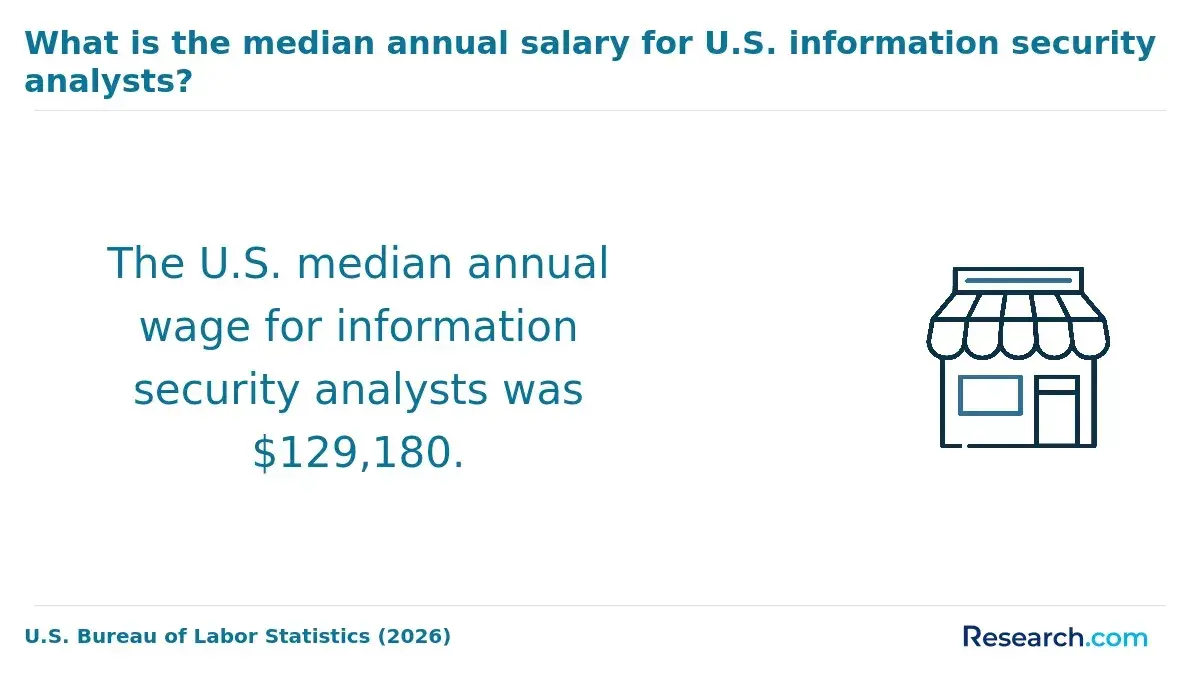
There is no defensible single salary figure for graduates of this specific MBA without program-level outcomes. As broad context, the US Bureau of Labor Statistics reports a $126,520 median annual wage for management occupations in May 2025. That figure covers management workers across industries and education levels; it is neither a healthcare-management starting salary nor an estimate of what earning this MBA would add to your pay.
For a useful personal estimate, compare compensation for the jobs you could realistically pursue before and after the degree in your location. Factor in your clinical or administrative experience, employer pay structure, likely promotion timeline, and total education cost. A prospective promotion backed by a defined role and salary band is stronger financial evidence than a broad occupational median.
What Certifications or Licenses Do Healthcare MBA Graduates Need?
An MBA is a management degree, not a clinical license. Graduates continuing to practice nursing or another regulated profession must maintain the license required for that work; MBA enrollment or graduation does not create clinical eligibility. Some healthcare administration jobs have no universal professional license, while particular positions, such as certain long-term-care administrator roles, can have state-specific requirements.
Optional credentials in areas such as project management, quality, or healthcare administration may support a defined career goal, but they are separate from an MBA concentration and can require relevant experience or examinations. Check the licensing board for any regulated role and read current job postings before paying for an additional credential. Choose it because target employers value it, not because every healthcare MBA graduate supposedly needs one.
Other Things You Should Know About MBA
Potentially. Ask your employer which management openings exist, what experience they require, and whether the MBA qualifies for tuition assistance. That gives you a clearer advancement plan than assuming the degree triggers a promotion.
Not necessarily. Ask about cohort interaction, faculty access, alumni events, and employer engagement in the specific online program. The value depends on opportunities you can participate in, not the delivery label alone.
Choose based on the work you want. An MBA generally emphasizes business management across functions; an MHA generally concentrates more directly on healthcare administration. Compare actual courses and target-job requirements because program designs differ.
Get the current catalog entry, a course-by-course degree plan, written confirmation of any concentration and its transcript designation, an itemized cost estimate, and the expected schedule for required courses. Those documents let you assess the offer against your career goal and budget.
- Types of Financial Aid: Grants, Work-Study, and Loans | studentaid.gov https://studentaid.gov/understand-aid/types
- Semester Course Load and Student Performance - PMC - NIH https://pmc.ncbi.nlm.nih.gov/articles/PMC7568764/
- DAPIP | Homepage - Office of Postsecondary Education (OPE) https://ope.ed.gov/dapip/
- About GI Bill Benefits | Veterans Affairs https://www.va.gov/education/about-gi-bill-benefits/
- An Overview of Accreditation of Higher Education in the United States | Congress.gov | Library of Congress https://www.congress.gov/crs-product/R43826
- Employer-offered educational assistance programs can help pay for college | Internal Revenue Service https://www.irs.gov/newsroom/employer-offered-educational-assistance-programs-can-help-pay-for-college
- Choosing the Right Online MBA Program | Gies College of Business https://giesbusiness.illinois.edu/news/2025/10/03/choosing-the-right-online-mba-program--a-comprehensive-guide-to-asynchronous--synchronous--and-hybrid-programs
- Program Structure | Master of Business Administration | University of Nebraska Omaha https://www.unomaha.edu/college-of-business-administration/mba/program/index.php
- Curriculum - MTSU Online M.B.A. - Flex MBA https://mba.mtsu.edu/curriculum/
- Online vs. In-Person MBA: Benefits and Differences | Freeman News https://freemannews.tulane.edu/2025/11/04/online-vs-in-person-mba-benefits-and-differences