2027 ADN Graduate Job Offers: Comparing Orientation, Workload, and Support
Audited and Verified:
Our Editorial and Data Verification Process
Research.com uses government datasets, official education statistics and primary institutional information to support its career and degree guides. Our review process checks factual accuracy, occupational definitions, source dates and the requirements associated with the credentials discussed.
How This Article Was Fact-Checked
Our editorial team verifies salary estimates, employment projections, education requirements and program information against original data providers and official organizations. Salary figures are checked against the relevant occupational definitions and reporting periods. Information about licensure, accreditation and required in-person training is reviewed separately.
Fact-checked and verified on:

Co-Founder and Chief Data Scientist
Two RN offers can promise the same pay while giving a newly licensed associate degree in nursing (ADN) graduate very different starts. One may provide a dedicated preceptor and a gradual patient assignment; another may expect a full assignment soon after brief training. If you are weighing offers or preparing to apply, this guide shows how to compare orientation, workload, and support - alongside licensure, pay, and longer-term options - so you can choose a role where you can learn and practice safely.
Key Things You Should Know
- Compare the planned progression to an independent assignment, not orientation length alone: ask who supervises you, how competencies are assessed, and whether training can be extended.
- Get the expected patient assignment, shift length, weekend rotation, and preceptor coverage in writing; a 12-hour shift or a posted staffing ratio does not reveal how much help a new RN will actually have.
- An ADN can prepare you to seek RN licensure, but graduation is not a license. Compare offers only after checking the employer's licensure deadline, degree policy, and conditions for remaining employed.
What Is an ADN Graduate Job Offer Typically Like?
An ADN graduate offer is usually for a new-graduate RN position, contingent on obtaining an active RN license by the employer's deadline. It should identify the unit, base pay, shift and differential rules, benefits, start date, and conditions of employment. It may also describe a unit orientation, a longer nurse residency, or both. A residency is a structured transition-to-practice program; it does not necessarily mean a preceptor will work alongside you for its entire duration.
Read the terms separately: the hiring bonus may have a repayment condition, the advertised schedule may change after orientation, and the job may carry an RN-to-BSN completion requirement. Ask for the actual offer letter and the unit's onboarding plan rather than relying on a recruiter's description. If you are not yet eligible for RN licensure, practical nursing entry pathways with flexible coursework lead to a different license and job category, not a substitute for an RN offer.
How Long Is Orientation for Newly Licensed ADN Graduates?
There is no universal ADN-specific orientation length. Employers set the schedule according to the unit, patient acuity, the nurse's demonstrated progress, and available preceptors. A general medical-surgical unit and an emergency department may therefore have different timelines, even within one hospital. Ask how many shifts include direct preceptor coverage, when the assignment grows, and what happens if a competency needs more practice.
Also distinguish the unit orientation end date from the end of a residency's classes or mentorship. Finishing scheduled orientation is not, by itself, proof of readiness for every patient assignment. A stronger offer includes documented skills assessments, regular feedback, and a defined way to request additional supervised shifts without being pressured to practice beyond demonstrated competence.
Newly licensed ADN graduates who want to build a strong foundation for their nursing careers should also consider their long-term educational options. Exploring nursing schools with attainable requirements can help aspiring nurses identify programs with realistic admission criteria, flexible learning formats, and academic support that fit their circumstances. Comparing these opportunities can make it easier to plan future educational goals while gaining the clinical experience and confidence needed to succeed in professional nursing practice.
What Workload Can New ADN Nurses Expect During Training?
During training, a new RN may begin with a shared or smaller patient assignment and take on more responsibility as the preceptor observes safe assessment, medication administration, documentation, prioritization, handoffs, and escalation. The pace is employer- and unit-specific; an ADN does not imply a different RN scope or an automatically lighter assignment than a newly licensed BSN graduate.
Compare effective workload, not just a stated patient-to-nurse ratio. Ask whether the preceptor has their own patients, whether assignments reflect acuity, who covers breaks, and whether a charge nurse routinely takes patients. Include admissions, discharges, interruptions, and EHR documentation in the discussion. A full assignment on a well-resourced unit may be more manageable than fewer patients with little backup; neither is automatically safe without knowing the clinical context.
New ADN nurses interested in advancing their education may also consider graduate-level pathways that build on their existing nursing preparation. Reviewing direct-entry MSN coursework and clinical requirements can help them understand the academic expectations, supervised practice hours, and potential time commitments involved in pursuing a master's degree in nursing.
Support can include an assigned preceptor, nurse educator, residency sessions, charge-nurse availability, pharmacist access, simulation, and scheduled check-ins. What matters is whether those resources are available on your actual shift and whether staff can intervene when patient needs exceed your current experience. Ask to meet a unit leader or recent new graduate if the employer permits it.
The following comparison separates a program's advertised features from the support you may receive at the bedside. Use it to examine each offer, including nights and weekends.
| Offer feature | Stronger evidence of support | Point to clarify |
| Preceptorship | Named preceptor or clear coverage plan for supervised shifts | Who covers when that person is absent? |
| Competency review | Observed skills, written feedback, and planned check-ins | Who decides when the assignment increases? |
| Escalation | Identified charge nurse and access to clinical resources on each shift | Can the charge nurse respond during a busy shift? |
| Training flexibility | Documented process for extra practice or orientation time | What happens if a competency is not yet met? |
Do not treat a residency label as a guarantee of these features. Confirm the unit-level plan and how the hospital handles gaps in staffing or preceptor availability.
For nurses considering an earlier entry into professional practice, understanding LPN-to-RN bridge duration and eligibility can also help clarify available educational pathways and admission expectations. Comparing these programs alongside hospital training and support options can make it easier to plan a smooth transition into registered nursing practice.
Once licensed, ADN-prepared nurses can apply for RN openings that accept an associate degree and new graduates. Potential settings include hospital medical-surgical units, rehabilitation, long-term care, outpatient clinics, and home health, although independent fieldwork or specialty units may require experience. Emergency, critical care, perioperative, and other specialty positions may offer new-graduate entry through dedicated onboarding; others hire only experienced RNs.
Screen postings for degree required, experience required, and new-graduate training offered rather than assuming every RN vacancy is entry level. An ADN graduate with a prior non-nursing bachelor's degree still needs the applicable RN license; shorter graduate-entry nursing programs are a separate prelicensure education option, not an employment requirement for an ADN-prepared RN.
Graduating from an ADN program does not authorize RN practice. Applicants must meet the requirements of the state board of nursing where they seek initial licensure, apply as directed, obtain examination authorization, pass the NCLEX-RN, and receive an active license before practicing as an RN. Boards may also require a background check and other documentation; an employer can impose additional hiring conditions.
Before accepting a start date, ask whether the position permits employment while licensure is pending, what duties are allowed in that period, and the deadline for showing an active license. Verify your status with the relevant board rather than treating an NCLEX pass result or a pending application as a license. A multistate license, where applicable, also has eligibility and practice-location rules; it is not blanket permission to take any RN job anywhere.
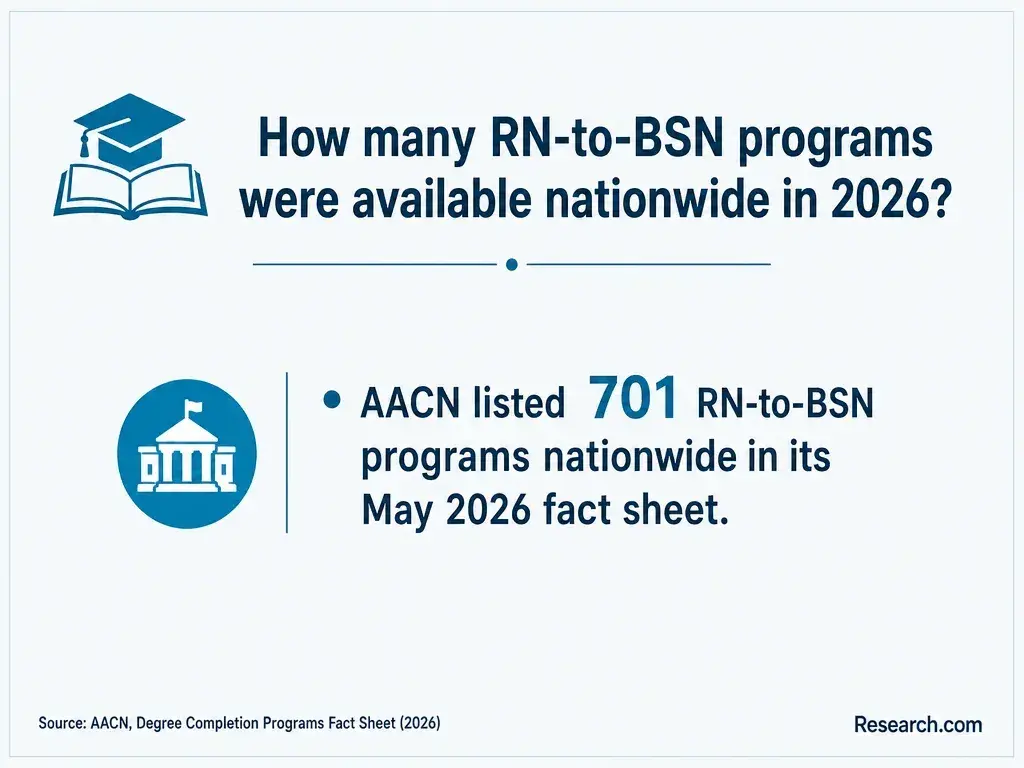
After obtaining RN licensure, ADN graduates may also consider continuing their education through a Bachelor of Science in Nursing completion program. Exploring nontraditional practice formats in RN-to-BSN programs can help newly licensed nurses find flexible ways to advance their education while gaining professional experience.
Both prelicensure ADN and BSN routes can lead to eligibility to seek initial RN licensure when the program and graduate meet the applicable board's requirements. Once licensed, nurses practice under the same RN license type, but employers can set different degree preferences or advancement policies. The decision for an ADN graduate comparing offers is whether a specific employer accepts the current degree and what it expects later.
This comparison focuses on employment consequences rather than assuming one degree predicts an individual nurse's bedside ability.
| Factor | ADN-prepared new RN | BSN-prepared new RN |
| RN license | Must obtain initial RN licensure | Must obtain initial RN licensure |
| Entry-level applications | Eligible where the posting accepts an ADN | Eligible where the posting accepts a BSN or either degree |
| Employer degree policy | May face a BSN preference or a completion deadline | Already meets a BSN requirement |
| Onboarding | Depends on unit and employer, not degree title alone | Depends on unit and employer, not degree title alone |
If an otherwise strong offer requires a future bachelor's degree, request the deadline, tuition-assistance terms, and scheduling expectations. When comparing completion options, check RN-to-BSN practice expectations at the specific school; do not assume online coursework eliminates every applied or in-person requirement.
There is no reliable national wage figure that isolates ADN-prepared RNs and predicts a new graduate's offer. The U.S. Bureau of Labor Statistics reports earnings for the registered nurse occupation, not separate ADN and BSN graduate salaries. That occupational median includes nurses with different degrees, specialties, locations, and years of experience, so it should not be presented as expected starting pay.
For an offer-to-offer comparison, calculate likely compensation from the written hourly base rate and expected paid hours, then examine night and weekend differentials, overtime rules, benefits, parking or commuting costs, and any bonus repayment clause. Compare the same schedule and location. A higher headline rate can be less attractive if it depends on shifts you will not regularly work or comes with substantially less supported training.
Nurses exploring different educational pathways may also benefit from understanding ABSN admission barriers, particularly if they are considering alternative routes to earning a nursing degree. Reviewing common prerequisites, academic expectations, and application challenges can help prospective students choose an educational path that aligns with their qualifications and career goals.
National RN employment projections describe the occupation as a whole; they do not forecast openings reserved for ADN graduates. They are useful background, but the local mix of health systems, degree requirements, specialty openings, and new-graduate cohorts determines which jobs you can realistically pursue. A projected opening is not a guarantee of a position - or of a well-supported first job.
For a practical view of demand, compare current postings in your commuting area and ask employers which units are recruiting new graduates, how often they start cohorts, and whether an ADN meets their hiring policy. A vacancy rate alone cannot tell you whether staffing, retention, or orientation on a particular unit will support a safe transition.
ADN-prepared nurses who want to expand their career opportunities can also explore graduate nursing routes for associate-degree nurses to understand available pathways for advancing their education and qualifying for specialized roles. Comparing these options can help nurses align their long-term professional goals with evolving employment opportunities in healthcare.
How Can Students Evaluate ADN Programs and Employer Offers?
If you are still choosing an ADN program, first confirm the exact program's state-board status and how its graduates establish NCLEX-RN eligibility in the state where you intend to apply. Review published completion and NCLEX results with their reporting periods, clinical placement arrangements, total costs, and career-services support. Entrance-test policies are a separate admissions issue; TEAS and HESI requirement comparisons can help you identify questions to confirm directly with each school.
For employer offers, request comparable answers before deciding. These steps turn a promising interview into a checkable orientation and workload plan:
- Ask for the unit's orientation schedule, preceptor coverage, competency milestones, and process for extending supervised training.
- Confirm the expected patient assignment during training and after orientation, typical shift pattern, weekend rotation, and resources available on that shift.
- Read the written pay, differential, benefits, bonus, licensure-deadline, and any RN-to-BSN terms; ask the recruiter to clarify discrepancies.
- Compare the answers against your learning needs and finances, then follow up with the nurse manager about anything the written offer leaves unresolved.
Choose the offer that gives you a credible path from supervised practice to the unit's expected assignment - not simply the longest residency or highest advertised rate. If the employer cannot explain that path, continuing your search may be the better decision.
Other Things You Should Know About Nursing
You can ask. Base rates may be fixed by a pay scale, but it is reasonable to clarify credit for prior relevant experience, start-date options, shift differentials, and written bonus terms before accepting.
If the employer offers a shadow opportunity, use it to observe communication, available help, and the pace of the shift. Protect patient privacy and remember that one shift may not represent every staffing condition.
Ask who coordinates your learning plan and documents progress across preceptors. If important skills are being missed or feedback conflicts, raise the concern early with the educator or manager.
Not automatically. Compare the after-tax value and repayment terms with the unit's training, staffing, and your ability to remain in the role. A bonus cannot replace safe onboarding.
- 29 CFR Part 778 Subpart C - Bonuses https://www.ecfr.gov/current/title-29/subtitle-B/chapter-V/subchapter-B/part-778/subpart-C/subject-group-ECFR29a4ab910b4eed8
- The effectiveness of nurse residency programs on new... - PMC https://pmc.ncbi.nlm.nih.gov/articles/PMC10907523/
- Registered Nurse Residency Programs | Veterans Affairs https://www.va.gov/northeast-ohio-health-care/work-with-us/internships-and-fellowships/nurse-residency-programs/
- Nursing and Patient Safety | PSNet https://psnet.ahrq.gov/primer/nursing-and-patient-safety
- Fact Sheet #56C: Bonuses under the Fair Labor Standards Act (FLSA) | U.S. Department of Labor https://www.dol.gov/agencies/whd/fact-sheets/56c-bonuses
- Employee Orientation: First 30 Days | osu.edu https://hr.osu.edu/new-employees/employees/orientation/
- Nursing Preceptor Information | Calhoun Community College https://calhoun.edu/nursing-preceptor-information/
- What Careers Can You Pursue With an ADN? | allnursingschools.com https://www.allnursingschools.com/adn/career-paths/
- New Hires and Orientation | prismahealth.org https://careers.prismahealth.org/new-hires/new-hires-orientation/
- The Shifts Before The "First Shift" | ACEP https://www.acep.org/ecps/newsroom/ecps-newsroom-articles/the-shifts-before-the-first-shift