2027 Admission Requirements for Online Health Services Administration Doctorate Programs: GPA, Prerequisites, Experience, and Eligibility

Co-Founder and Chief Data Scientist
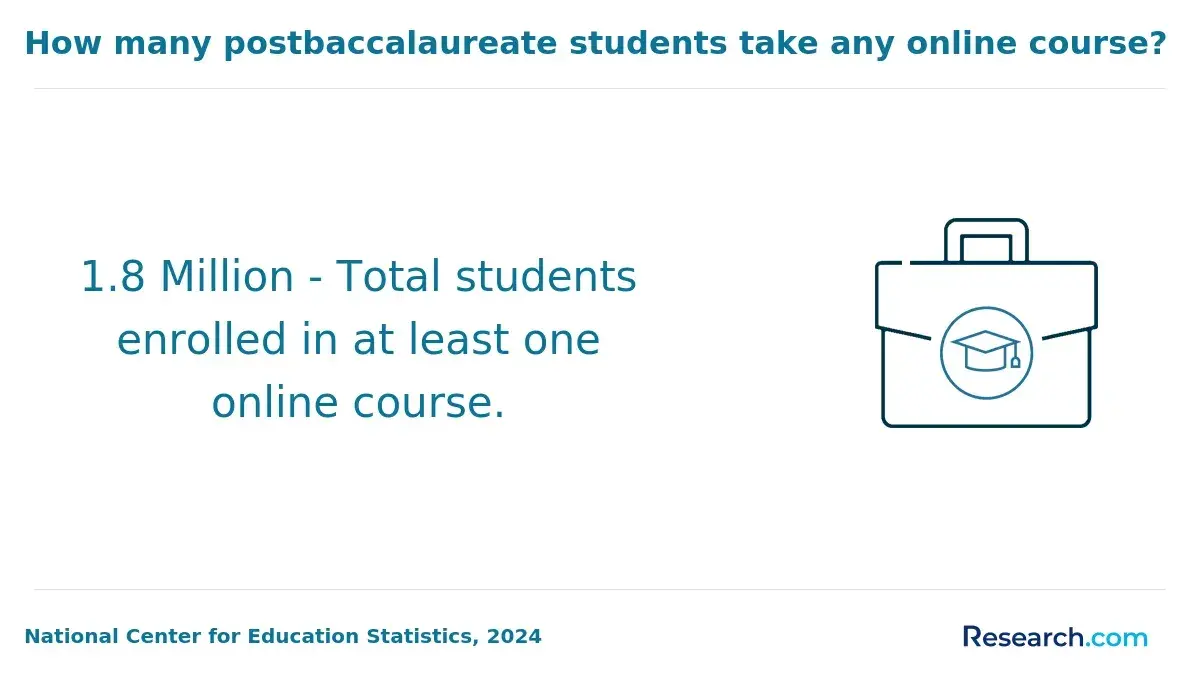
Determining whether you qualify for an online Health Services Administration doctorate usually comes down to GPA, prior degrees, prerequisites, experience, and doctoral fit. That matters because online graduate study is now a mainstream pathway: NCES data released in 2024 shows more than 1.7 million U.S. postbaccalaureate students take at least one distance education course.
This guide is for prospective doctoral applicants comparing DHA, DrPH, PhD, and related programs. You'll learn how requirements vary, how to identify gaps, and how to prepare a stronger application before you apply.
Key Things You Should Know
- Most online Health Services Administration doctorate programs require a regionally accredited bachelor's or master's degree, with many practice-focused doctorates preferring or requiring a master's in healthcare, business, public health, nursing, or a related field.
- A 3.0 GPA is the most common minimum threshold, but competitive applicants often show stronger recent graduate performance, especially if the program uses holistic review or has limited seats.
- Prerequisites usually center on healthcare systems, statistics, research methods, finance, leadership, and policy; practice-focused programs often expect several years of healthcare or administrative experience, while research-focused programs look more closely at research readiness.
What Are the Basic Admission Requirements for an Online Health Services Administration Doctorate Program?
Online Health Services Administration doctorate programs evaluate whether you are academically prepared for doctoral work and professionally ready to contribute to advanced healthcare leadership, policy, operations, or research. The exact requirements vary by doctorate type, but most programs ask for a prior accredited degree, minimum GPA, application documents, and evidence that your goals match the program's focus.
The degree title matters. A Doctor of Health Administration, often abbreviated DHA, is usually practice-focused and built for healthcare leaders. A PhD is usually research-focused and may require stronger evidence of scholarly potential. A DrPH may fit applicants interested in public health leadership, population health, or health policy. Some universities also offer DBA programs with healthcare administration concentrations.
The following table summarizes the requirements applicants most often need to verify before applying. Use it as a checklist, not as a substitute for each school's official admissions page.
| Requirement area | What programs commonly ask for | Why it matters |
| Prior degree | Bachelor's or master's degree from a regionally accredited institution | Confirms baseline academic eligibility and may determine whether bridge coursework is needed |
| GPA | Common minimum of 3.0, sometimes higher for graduate coursework | Signals readiness for doctoral-level reading, writing, research, and analysis |
| Prerequisites | Statistics, research methods, healthcare systems, finance, policy, leadership, or management | Reduces the risk of entering doctoral courses without essential foundations |
| Experience | Healthcare, administration, management, policy, clinical leadership, or research experience | Helps admissions committees judge whether the applicant can apply doctoral learning to real health systems |
| Application materials | Transcripts, resume, statement of purpose, recommendations, writing sample, and sometimes an interview | Provides evidence beyond GPA, especially for holistic admission review |
| Tests | GRE or GMAT often optional or waived; English-proficiency tests required for many international applicants | May be used to assess academic readiness when prior records are unclear |
Healthcare administration remains a strong career area, which partly explains why doctoral admissions committees value leadership readiness. The U.S. Bureau of Labor Statistics projected 29% employment growth for medical and health services managers through 2033, much faster than the average for all occupations. For applicants, this means programs may look for candidates who can connect doctoral study to real workforce needs such as care quality, operations, compliance, finance, and organizational change.
Before applying, confirm three basics: whether the program is designed for bachelor's-entry or master's-entry students, whether your GPA meets the published minimum, and whether your experience aligns with the doctorate type. Minimum eligibility can get your file reviewed, but it does not automatically make the application competitive.
Do You Need a Master's Degree to Apply for an Online Health Services Administration Doctorate?
You do not always need a master's degree, but many online Health Services Administration doctorate programs either require one or strongly prefer one. Master's-entry doctorates are common because doctoral coursework assumes that students already understand healthcare organizations, graduate-level writing, applied research, and leadership frameworks.
If you do not yet have a graduate degree, you may still have options. Some universities offer bachelor's-to-doctorate pathways, bridge courses, or doctoral programs that admit applicants with substantial healthcare leadership experience. However, these pathways may take longer and may include additional foundational coursework.
The table below compares common eligibility pathways so you can quickly identify which route fits your background.
| Applicant background | Typical admission possibility | Likely extra requirement |
| Master's in healthcare administration, health management, public health, nursing, business, or public administration | Strong fit for many DHA, DrPH, DBA, and some PhD programs | Program-specific research, statistics, or policy prerequisites |
| Bachelor's in healthcare administration or related field | Possible at bachelor's-entry programs | Bridge courses, longer program length, or higher undergraduate GPA expectation |
| Bachelor's in an unrelated field | Possible but more dependent on experience and prerequisite completion | Healthcare systems, statistics, finance, policy, or management coursework |
| Clinical graduate degree, such as MSN, DNP, PharmD, or MPH | Often competitive for practice-focused health administration doctorates | Evidence of administrative, policy, quality, or systems-level leadership |
Applicants who are not yet ready for a doctorate may strengthen eligibility through a master's in healthcare administration, especially if they need graduate-level exposure to healthcare finance, policy, organizational behavior, analytics, and strategic management.
A master's degree can also help if your undergraduate GPA is weak. Some programs place more weight on recent graduate performance than older undergraduate records, particularly when the applicant has completed rigorous coursework and earned strong grades.
What GPA Do You Need for an Online Health Services Administration Doctorate Program?
A 3.0 GPA is the most common published minimum for online Health Services Administration doctorate programs, especially when the applicant already has a master's degree. Some programs ask for a 3.25 or higher, while others review applicants below 3.0 through conditional admission, last-credits GPA, or holistic review.
GPA requirements may be stated in different ways. A school might calculate your cumulative undergraduate GPA, your graduate GPA, your GPA in the last 60 credits, or your GPA in relevant coursework. This is why two applicants with the same overall GPA can be viewed differently.
The table below explains how admissions committees may interpret GPA ranges. These are general patterns across U.S. programs, not guarantees of admission.
| GPA range | How it is commonly viewed | What applicants should check |
| 3.5 or higher | Usually academically strong, especially with relevant graduate coursework | Whether the program also expects leadership, research, or writing evidence |
| 3.25 to 3.49 | Often competitive for many practice-focused programs | Whether the program's minimum is 3.0 or 3.25 |
| 3.0 to 3.24 | Often meets minimum eligibility, but the rest of the application matters more | Whether your statement, resume, recommendations, and writing sample show doctoral readiness |
| Below 3.0 | May require conditional admission, extra documentation, or recent coursework | Whether the program allows exceptions and how GPA is calculated |
Do not assume that meeting the minimum GPA makes you competitive. Doctoral admissions committees often ask whether your grades show sustained readiness for independent research, advanced analysis, and long-form academic writing. A 3.0 with strong healthcare leadership and recent A-level graduate coursework may be more persuasive than a higher GPA with little connection to the field.
If your GPA is close to the cutoff, contact the admissions office before applying. Ask whether they evaluate the last 60 credits, graduate GPA, major GPA, or prerequisite GPA. This can prevent you from spending time and application fees on a program that cannot review your file.
Can You Get Into an Online Health Services Administration Doctorate Program With a GPA Below 3.0?
Yes, it is possible at some programs, but a GPA below 3.0 usually requires a stronger explanation and more evidence of current academic readiness. Programs that allow exceptions may use terms such as conditional admission, provisional admission, petition review, probationary status, or faculty review.
Applicants with a lower GPA should focus on proving that the old GPA does not reflect their current ability. The best evidence is recent, relevant, graded academic work combined with strong professional accomplishments.
If your GPA is below the stated minimum, these steps can help you decide whether applying is realistic and how to strengthen your file:
- Ask the admissions office whether the GPA minimum is firm or whether exceptions are reviewed.
- Confirm which GPA the program uses, such as cumulative undergraduate GPA, graduate GPA, last 60 credits, or prerequisite GPA.
- Complete one or two relevant graduate courses, such as statistics, research methods, healthcare finance, or health policy, and aim for strong grades.
- Use your statement of purpose to explain the academic issue briefly, then focus on evidence of improvement and doctoral readiness.
- Choose recommenders who can speak directly to your analytical ability, writing skill, leadership maturity, and capacity to finish a doctorate.
Conditional admission may come with requirements such as earning a minimum grade in the first doctoral courses, limiting course load, or meeting with an advisor. Read those terms carefully. Conditional admission can be a useful pathway, but it also means the program will monitor your early performance closely.
A common mistake is submitting a low-GPA application without context. Admissions committees do not need a long personal explanation, but they do need evidence that the risk has changed. Recent coursework, a strong writing sample, and a clear research or practice focus are usually more persuasive than simply stating that you are motivated.
What Prerequisite Courses Are Required for an Online Health Services Administration Doctorate Program?
Prerequisite courses vary widely because online Health Services Administration doctorates attract applicants from healthcare, business, public health, nursing, policy, and social science backgrounds. Most programs want evidence that you can handle healthcare-focused doctoral coursework without needing extensive remediation.
The table below shows common prerequisite areas and why they matter in doctoral study. Some schools require these before admission, while others allow students to complete bridge or leveling courses after admission.
| Prerequisite area | Common course examples | Why doctoral programs value it |
| Statistics and analytics | Applied statistics, biostatistics, quantitative methods, data analysis | Supports research evaluation, quality improvement, outcomes analysis, and evidence-based decision-making |
| Research methods | Qualitative methods, quantitative methods, program evaluation, evidence appraisal | Prepares students for dissertations, doctoral projects, or applied research |
| Healthcare systems | U.S. healthcare delivery, health systems organization, managed care | Ensures students understand the environment in which health administrators work |
| Healthcare finance | Healthcare accounting, reimbursement, budgeting, financial management | Supports leadership decisions involving cost, revenue, staffing, and service lines |
| Policy and ethics | Health policy, healthcare law, compliance, ethics | Builds readiness for governance, regulation, equity, and organizational accountability topics |
| Leadership and management | Organizational behavior, strategic management, human resources, operations | Connects doctoral study to executive decision-making and systems change |
If you are missing prerequisites, do not assume you are automatically ineligible. Many online programs let applicants complete approved graduate courses before admission, during the first term, or through a nondegree option. Applicants comparing shorter preparation routes may also look at accelerated healthcare programs if they need foundational healthcare administration coursework before doctoral study.
To avoid prerequisite problems, review course descriptions rather than course titles alone. For example, a general business finance course may not satisfy a healthcare finance expectation if the program specifically wants reimbursement, payer systems, or healthcare budgeting. Similarly, an undergraduate statistics course may be accepted by one program but considered too old or too basic by another.
Before applying, ask admissions advisors these specific questions:
- Which prerequisites must be completed before admission, and which can be completed after admission?
- Is there a time limit on statistics, research methods, or finance coursework?
- Will undergraduate coursework satisfy the requirement, or does the program require graduate-level coursework?
- Can professional certifications, continuing education, or employer training substitute for any prerequisite?
- Does the program provide a transcript evaluation before the application deadline?
Can You Apply for an Online Health Services Administration Doctorate With a Degree in Another Field?
Yes, many applicants enter online Health Services Administration doctorate programs from related and unrelated fields. What matters is whether you can show enough preparation in healthcare systems, administration, research, and leadership to succeed at the doctoral level.
Applicants from business, public administration, nursing, social work, psychology, public health, information systems, finance, or policy often have transferable preparation. Applicants from unrelated fields may need to build a clearer bridge between their prior education and health administration goals.
The table below shows how admissions committees may view different academic backgrounds.
| Prior field | Potential strength | Possible gap to address |
| Business or management | Finance, operations, strategy, organizational leadership | Healthcare delivery, regulation, ethics, and policy |
| Nursing or allied health | Clinical systems knowledge, quality improvement, patient care context | Finance, executive leadership, population-level strategy |
| Public health or public policy | Population health, policy analysis, program evaluation | Healthcare operations, revenue cycle, organizational management |
| Information systems or data analytics | Health informatics, analytics, technology implementation | Healthcare leadership, ethics, policy, and management foundations |
| Unrelated liberal arts or sciences | Writing, analysis, communication, research habits | Healthcare systems, administration, finance, and applied leadership |
If your background is far from healthcare, consider whether you need a bridge credential before doctoral study. A certificate, nondegree graduate coursework, or a cheapest online healthcare administration degree pathway can help some students build foundational knowledge before committing to a doctorate.
Your statement of purpose is especially important when applying from another field. It should explain why health services administration is the right doctoral direction, what healthcare problem you want to address, and how your prior background adds value rather than appearing unrelated.
Common red flags include applying with no healthcare exposure, using a generic leadership statement, or failing to explain why a doctorate is necessary for your goals. If you are changing fields, strengthen your application with relevant volunteer work, healthcare employment, board service, quality improvement projects, policy work, or graduate coursework.
How Much Professional or Research Experience Do Online Health Services Administration Doctorate Programs Require?
Experience expectations depend heavily on doctorate type. Practice-focused programs such as DHA or DBA healthcare administration programs often prefer applicants with healthcare leadership, management, clinical administration, consulting, compliance, quality, finance, or operations experience. Research-focused PhD programs may place more weight on research methods, academic writing, publications, presentations, or a clear scholarly agenda.
Many practice-focused programs publish expectations such as several years of professional experience, while others do not state a strict minimum but still evaluate experience closely. A useful rule is this: if the program includes executive leadership, applied doctoral projects, or practice-based research, your resume should show that you have access to real organizational problems and can apply doctoral learning in a healthcare setting.
The following table compares experience expectations by program type.
| Doctorate type | Experience usually valued | Best evidence in an application |
| DHA | Healthcare administration, operations, quality, compliance, clinical leadership, or executive management | Resume showing leadership scope, budget exposure, team responsibility, or systems improvement |
| DrPH | Public health practice, population health, policy, program leadership, community health, or government work | Projects involving health equity, program evaluation, policy implementation, or population outcomes |
| PhD in health administration or health services research | Research assistance, statistics, publications, academic writing, or methodological preparation | Writing sample, research statement, faculty fit, methods coursework, and scholarly references |
| DBA with healthcare concentration | Business leadership in healthcare, consulting, strategy, finance, or organizational change | Executive resume, applied problem statement, and evidence of managerial decision-making |
Professional experience does not always have to mean a senior executive title. Admissions committees may value project leadership, quality improvement work, care coordination, health IT implementation, payer operations, nonprofit health leadership, military health administration, or policy analysis if the experience connects to the doctorate's goals.
Research experience is more important when the program requires a dissertation rather than a capstone or applied doctoral project. If you have limited research experience, you can strengthen your application by completing research methods coursework, preparing a strong writing sample, or identifying a realistic research topic aligned with faculty expertise.
Avoid overstating experience. Admissions committees can usually tell when applicants list job duties without showing impact. Use your resume and statement to describe what you improved, measured, led, analyzed, or changed.
Are the GRE, GMAT, or English-Proficiency Tests Required for an Online Health Services Administration Doctorate?
The GRE and GMAT are less consistently required than they once were. Many online Health Services Administration doctorate programs are test-optional, test-flexible, or test-waiver friendly, especially for applicants who already hold a graduate degree or have substantial professional experience. However, some research-focused programs may still request or accept scores as part of a broader academic review.
English-proficiency tests are different. International applicants whose prior education was not completed in English may need TOEFL, IELTS, Duolingo English Test, or another approved exam, depending on the institution's graduate admissions policy.
The table below explains how different tests are usually handled in online doctorate admissions.
| Test type | Common requirement status | When it may matter most |
| GRE | Often optional or waived, but still accepted by some programs | Research-focused programs or applicants with uneven academic records |
| GMAT | More common in business-oriented doctoral programs than DHA programs | DBA healthcare administration tracks or applicants emphasizing management analytics |
| English-proficiency exam | Commonly required for international applicants unless waived | Applicants educated outside English-medium institutions |
| Program interview | Not a standardized test, but often used as an assessment | Programs evaluating fit, communication skills, goals, and doctoral persistence |
If tests are optional, submit scores only if they strengthen your profile. Strong scores can help offset an older GPA or demonstrate quantitative readiness, but weak scores may not help if the program does not require them.
For English-proficiency requirements, do not rely on assumptions. Some universities waive the requirement for applicants with a U.S. degree, a degree from an English-medium institution, or a certain number of completed credits in English. Others require official scores regardless of professional experience.
Applicants should also check score expiration rules. GRE, GMAT, and English-proficiency scores are often valid only for a limited period under institutional policy. Expired scores may delay an otherwise complete application.
What Application Documents Do Online Health Services Administration Doctorate Programs Require?
Application documents help admissions committees evaluate more than minimum eligibility. They show whether you can write at a doctoral level, understand the field, define a realistic goal, and complete a demanding online program while managing professional responsibilities.
Most programs require a core set of materials. Some also ask for an interview, writing sample, research statement, faculty alignment statement, or proof of licensure for applicants entering from clinical fields.
Before applying, prepare these documents carefully because they often determine whether a borderline applicant receives further review:
- Official transcripts from every college or university attended, including transfer credits and graduate coursework.
- Current resume or curriculum vitae showing healthcare, leadership, research, policy, quality improvement, compliance, finance, or management experience.
- Statement of purpose explaining your doctoral goals, fit with the program, and the healthcare problem you want to address.
- Letters of recommendation from supervisors, faculty, executives, researchers, or professional mentors who can assess doctoral readiness.
- Writing sample, such as a graduate paper, policy analysis, research proposal, publication, or professional report with sensitive information removed.
- Application form, fee, identity documentation, and any required supplemental questions.
- English-proficiency scores, credential evaluations, or translated transcripts when required for international applicants.
If your preparation is still at the master's-search stage, comparing online masters healthcare management options may help you build the graduate record, recommendations, and healthcare coursework that doctoral programs later review.
The statement of purpose is one of the most important documents. A strong statement connects your background, doctoral goals, and program fit. A weak statement simply says you want to advance your career without explaining why this doctorate, why now, and why this program.
Common document mistakes include submitting unofficial transcripts when official ones are required, using recommenders who barely know your work, ignoring page limits, failing to tailor the statement, and submitting a writing sample that does not show analysis. Build a document checklist at least a month before the deadline so recommenders and transcript offices have enough time.
What Do Admissions Committees Look for in Online Health Services Administration Doctorate Applicants?
Admissions committees look for evidence that you can succeed academically, contribute professionally, and complete a doctoral project or dissertation. They are not only checking whether you meet the minimum GPA or degree requirement. They are asking whether your background, goals, and preparation fit the program's expectations.
For online programs, committees also consider self-direction. Doctoral study requires sustained reading, writing, research, and project work with less day-to-day structure than many master's programs. Applicants who show clear goals, strong communication, and realistic time management tend to make a stronger impression.
Programs commonly evaluate the following factors together rather than in isolation:
- Academic readiness, including GPA, graduate coursework, writing ability, and performance in statistics or research courses.
- Professional relevance, including healthcare leadership, administration, policy, quality improvement, consulting, clinical systems, or research experience.
- Doctoral fit, including alignment between your goals and the program's DHA, DrPH, PhD, or DBA orientation.
- Research or project readiness, including a realistic topic, problem statement, or area of interest.
- Communication skills, shown through the statement of purpose, interview, writing sample, and recommendations.
- Persistence indicators, such as evidence that you understand the workload and have support for completing an online doctorate.
The following table highlights common red flags and stronger alternatives. Use it to review your application before submitting.
| Application red flag | Why it can hurt | Stronger alternative |
| Assuming the minimum GPA guarantees admission | Minimums usually only determine whether the file can be reviewed | Show strong fit through experience, writing, recommendations, and recent coursework |
| Applying without checking prerequisites | Missing statistics, research, or healthcare finance can delay or weaken admission | Request a transcript review and complete required courses early |
| Submitting a generic statement | It does not show why the program fits your goals | Name the healthcare problem, leadership goal, or research interest you plan to pursue |
| Choosing weak recommenders | Generic letters add little evidence of doctoral potential | Select people who can discuss your writing, analysis, leadership, and persistence |
| Ignoring accreditation or institutional fit | Accreditation can affect credit transfer, employer recognition, and financial aid eligibility | Verify regional accreditation and any program-level accreditation relevant to your goals |
Accreditation is especially important. At minimum, verify that the university is institutionally accredited by an accreditor recognized by the U.S. Department of Education or the Council for Higher Education Accreditation. Programmatic accreditation may also matter for certain healthcare administration, public health, or business pathways, although requirements vary by employer and career goal.
The best next step is to build a program comparison spreadsheet. Include GPA rules, degree requirements, prerequisites, experience expectations, test policy, application deadlines, dissertation or capstone format, tuition, accreditation, residency requirements, and faculty fit. This helps you identify programs where you are not only eligible, but realistically competitive.
Other Things You Should Know About Health Services Administration
Many online programs take about three to five years, depending on transfer credits, enrollment pace, dissertation or doctoral project requirements, and whether the student enters with a master's degree. Part-time students and those needing prerequisite or bridge courses may take longer.
Some programs accept a limited number of doctoral-level transfer credits, but policies vary. Schools usually require credits to be recent, relevant, earned with a strong grade, and completed at an accredited institution. Dissertation, capstone, or doctoral project credits are less likely to transfer.
Usually, no. Health services administration doctorates are generally leadership, research, policy, or management degrees, not clinical licensure programs. If your goal involves nursing home administration, public health credentials, or another regulated role, check state rules and employer requirements before enrolling.
Choose based on your goal. A DHA often fits healthcare executives and administrators, a DrPH fits public health leadership, a PhD fits research and academic careers, and a DBA with a healthcare focus fits business strategy or executive management. Admissions requirements differ because each degree prepares students for different outcomes.
References
- Doctor of Healthcare Administration (DHA) https://www.healthadministrationdegrees.com/programs/doctor-of-healthcare-administration/
- Health and Human Services: Campus & Online Degrees and Careers https://www.publichealthonline.org/human-services/online-degree-programs/
- 12 Personal Statement Examples + Analysis 2026/2027 | College Essay Guy https://www.collegeessayguy.com/blog/personal-statement-examples
- Best Online Doctor of Healthcare Administration Programs https://www.phds.me/online-programs/doctorate-healthcare-administration-dha/
- Tips for Applying to Doctoral Programs | AASL Knowledge Quest https://knowledgequest.aasl.org/tips-for-applying-to-doctoral-programs/
- Doctor of Philosophy in Healthcare Administration https://leadership.carolinau.edu/program/doctor-philosophy/healthcare-administration
- Doctor of Health Administration (DHA) | Doctor of Healthcare | University of Phoenix https://www.phoenix.edu/online-healthcare-degrees/health-administration-doctoral-degree.html
- Which Degree Should I Pursue https://www.ache.org/career-resource-center/special-groups/resources-for-students-and-early-careerists/which-degree-should-i-pursue
- Future Students https://www.aupha.org/resourcecenter/futurestudents
- Best Online Doctorate in Health Administration | DHA & PhD 2026 – PublicAdministrationPolicy.org https://publicadministrationpolicy.org/degree/doctorate-in-health-administration/