2027 Best Online Health Services Administration Doctorate Programs for Executive and Leadership Careers

Co-Founder and Chief Data Scientist
Choosing an online health services administration doctorate is a high-stakes decision for experienced healthcare managers who want executive, consulting, policy, or academic leadership roles. The timing matters: the U. S. Bureau of Labor Statistics projects 29% growth for medical and health services managers from 2023 to 2033, much faster than average. This guide helps working professionals compare credible online doctoral options, understand accreditation and format differences, estimate cost and time commitments, and decide whether a DHA, PhD, DrPH, or related leadership doctorate fits their career goals.
Key Things You Should Know
- The strongest online health services administration doctorate programs combine regional accreditation, executive-friendly scheduling, applied leadership research, transparent total cost, and faculty expertise in healthcare strategy, finance, quality, policy, and organizational change.
- Most working executives should expect 3 to 5 years of part-time doctoral study, with total tuition often ranging from about $43,000 to more than $90,000 before fees, books, and any required residency travel.
- A doctorate can strengthen candidacy for senior leadership, consulting, teaching, and policy roles, but it does not guarantee promotion; fit depends on the program's accreditation, dissertation or capstone model, networking value, and alignment with the reader's target career path.
What Are the Best Online Health Services Administration Doctorate Programs for Executive and Leadership Careers?
The best online health services administration doctorate is not simply the highest-ranked or most recognizable program. For executive and leadership careers, the better question is whether the program helps an experienced professional solve complex healthcare problems, lead organizations through change, interpret financial and quality data, and produce doctoral-level applied research that has workplace value.
Use the following comparison as a starting point rather than a final ranking. Program formats, residency rules, tuition, and dissertation requirements can change, so applicants should verify current details directly with each university before applying.
| Program | Doctorate type | Best fit | Online and executive-friendly features | Decision note |
| Medical University of South Carolina | Doctor of Health Administration | Experienced healthcare leaders seeking an academic medical center environment | Designed for working professionals, with online coursework and leadership-oriented doctoral study | Strong fit for executives who want healthcare-system leadership and policy depth; confirm any residency expectations. |
| University of Mississippi Medical Center | Doctor of Health Administration | Healthcare administrators seeking a practice-focused doctorate from an academic health center | Executive-style structure with online learning and doctoral research expectations | Good option for leaders who want a health-system context; check state residency pricing and campus requirements. |
| Central Michigan University | Doctor of Health Administration | Senior managers who want a structured cohort-style professional doctorate | Online coursework, applied research, and leadership-focused health administration curriculum | Best for students who value cohort progression and a traditional dissertation-style doctoral experience. |
| Franklin University | Doctor of Healthcare Administration | Working adults seeking a flexible, applied online doctorate | Fully online delivery, practitioner-focused curriculum, and doctoral research tied to organizational problems | Often considered by cost-conscious executives; compare faculty alignment and research support carefully. |
| A.T. Still University | Doctor of Health Administration | Healthcare professionals interested in whole-person, systems, and population-oriented leadership | Online format with healthcare administration and leadership coursework | Useful for leaders in clinical, community health, or mission-driven settings; verify dissertation or project format. |
| University of Alabama at Birmingham | Executive Doctor of Science in Healthcare Leadership | Senior healthcare leaders who want an executive cohort and leadership-intensive model | Executive-focused blended or distance-supported structure with leadership emphasis | May be better for established leaders than early-career applicants; review travel and synchronous participation needs. |
A strong shortlist should include at least three program types: one lower-cost flexible option, one health-sciences or academic medical center option, and one cohort-based executive option. Comparing different models prevents a common mistake: choosing the first program that looks convenient without testing whether it has the doctoral rigor, network, and leadership relevance needed for an executive career.
When evaluating programs, prioritize the features that affect completion and career value most directly:
- Institutional accreditation from a recognized regional or national accreditor.
- Curriculum depth in healthcare finance, quality, law, policy, analytics, strategy, ethics, and organizational leadership.
- Faculty experience in healthcare administration, public health, health systems, or executive leadership.
- Clear dissertation, doctoral project, or capstone milestones that fit a working professional's schedule.
- Transparent tuition, fees, technology charges, residency travel costs, and continuation fees.
- Evidence of support for online doctoral students, including research advising, library access, statistics help, and writing support.
Which Type of Health Services Administration Doctorate Is Best for Executive Leadership Careers?
The best doctorate type depends on whether the reader wants to lead organizations, conduct research, teach, consult, shape policy, or move into population health leadership. Health services administration is an interdisciplinary field that connects healthcare operations, finance, policy, quality improvement, workforce leadership, technology, and patient outcomes.
Many applicants compare doctoral options after completing a masters in healthcare administration, MBA, MPH, MSN, or related graduate degree. The table below summarizes how the major doctoral pathways differ for executive career planning.
| Degree type | Primary focus | Best for | Potential trade-off |
| DHA or Doctor of Healthcare Administration | Applied leadership, healthcare systems, operations, finance, quality, and organizational strategy | Hospital administrators, service-line leaders, directors, executives, consultants, and senior managers | Usually less research-intensive than a traditional PhD, which may matter for tenure-track academic goals. |
| PhD in Health Services, Health Policy, or Healthcare Administration | Original research, theory, methods, policy analysis, and scholarly publication | Future researchers, faculty members, policy analysts, and evidence-generation specialists | May be less directly designed for working executives who want applied leadership training. |
| DrPH | Public health leadership, population health, policy, epidemiology, and systems-level practice | Public health executives, health department leaders, nonprofit leaders, and population health strategists | May not cover hospital finance or healthcare operations as deeply as a DHA. |
| DBA with healthcare management concentration | Business strategy, organizational leadership, management research, and healthcare business applications | Executives in payer, consulting, healthcare technology, corporate, or multi-site healthcare organizations | May be less health-system specific than a DHA unless the concentration is robust. |
| EdD in Health Professions or Organizational Leadership | Education, workforce development, leadership, and organizational change | Academic administrators, clinical educators, training leaders, and workforce development executives | May not be the best fit for applicants focused on finance, operations, or health policy leadership. |
For most executives seeking senior healthcare administration roles, a DHA or healthcare leadership doctorate is the most direct fit because it is usually practice-focused. A PhD is stronger when the goal is research production or a faculty career, while a DrPH may be better for population health, public agencies, and policy leadership.
Applicants should avoid choosing a doctorate based only on the letters after the degree name. The curriculum, dissertation model, faculty expertise, and professional network usually matter more than the label.
What Accreditation Should an Online Health Services Administration Doctorate Program Have?
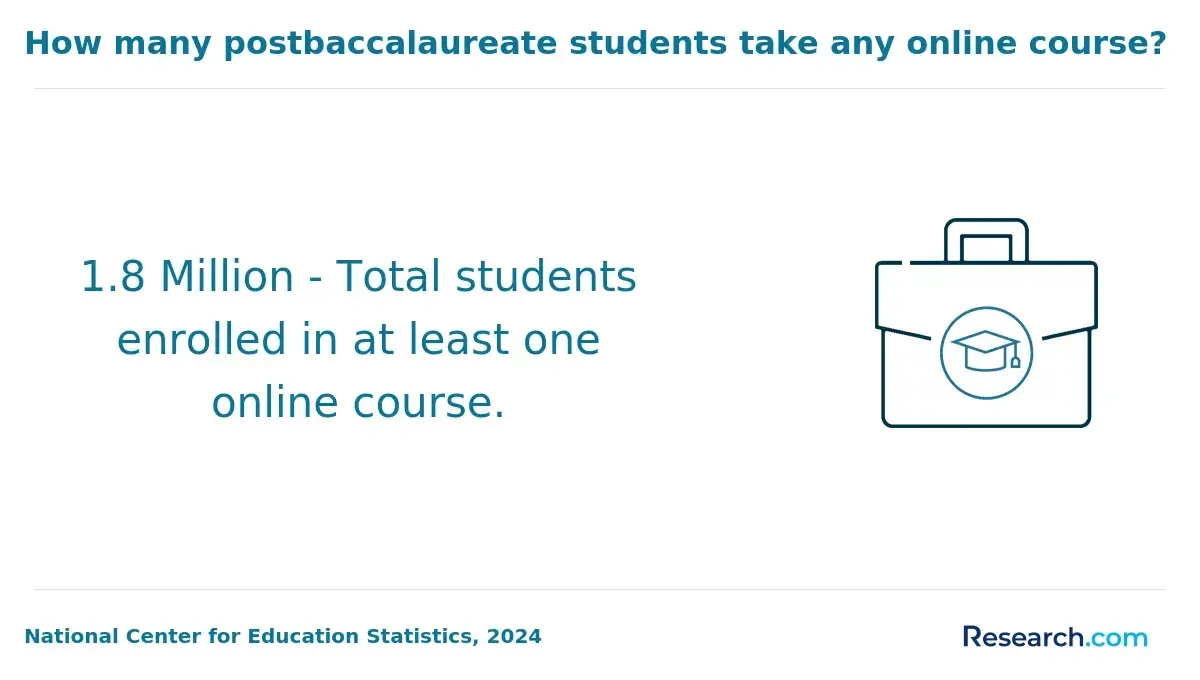
Accreditation is one of the most important quality checks for an online doctorate because it affects financial aid eligibility, employer recognition, credit transfer, academic credibility, and future teaching opportunities. At minimum, the institution should be accredited by a U.S. Department of Education-recognized accreditor.
Programmatic accreditation can also matter, but doctoral-level health administration accreditation is not always as standardized as undergraduate or master's-level pathways. For example, the Commission on Accreditation of Healthcare Management Education is widely recognized for graduate healthcare management programs, especially at the master's level, but applicants should verify whether a specific doctoral program has programmatic accreditation or whether only the institution is accredited.
Before applying, use this checklist to reduce accreditation risk and avoid programs that may not be respected by employers or academic institutions:
- Confirm the university appears in the U.S. Department of Education's accreditation database or the Council for Higher Education Accreditation database.
- Check whether the program itself has any healthcare administration, public health, business, or leadership-related programmatic accreditation.
- Ask whether graduates are eligible to teach, consult, or transfer doctoral credits at other accredited institutions.
- Review whether the school discloses student outcomes, doctoral completion support, and faculty qualifications.
- Be cautious of schools that emphasize speed, vague accreditation language, or unusually low admissions standards for a doctoral program.
A regionally accredited online doctorate can be credible, but accreditation alone does not prove that the program is the right fit. For executive careers, applicants should also assess whether the curriculum includes finance, analytics, regulatory strategy, quality improvement, innovation, and change leadership.
What Do Students Learn in an Online Health Services Administration Doctorate Program?
An online health services administration doctorate teaches experienced professionals how to analyze healthcare systems, make evidence-based leadership decisions, and design organizational improvements. The coursework typically assumes that students already understand healthcare operations and now need doctoral-level strategy, research, and executive decision-making skills.
The strongest programs connect leadership theory to practical problems such as staffing shortages, value-based care, digital transformation, health equity, quality measurement, payer pressure, and regulatory compliance. Since healthcare organizations are increasingly using artificial intelligence, predictive analytics, and automation, applicants should also look for coursework that addresses data governance, ethics, privacy, and technology adoption.
Common doctoral learning areas include the following:
- Healthcare strategy and competitive positioning.
- Executive leadership, governance, and organizational behavior.
- Healthcare finance, reimbursement, budgeting, and value-based payment.
- Quality improvement, patient safety, risk management, and performance measurement.
- Health law, ethics, compliance, and policy analysis.
- Population health, equity, and community-based systems improvement.
- Research design, statistics, evidence appraisal, and applied analytics.
- Dissertation, doctoral project, or capstone development.
Students should look closely at how research is taught. A good executive doctorate does not require every student to become a full-time academic researcher, but it should teach leaders how to evaluate evidence, challenge assumptions, measure outcomes, and defend recommendations using data.
Can You Complete an Online Health Services Administration Doctorate While Working Full Time?
Yes, many online health services administration doctorate programs are designed for full-time professionals, but "online" does not always mean fully flexible. Some programs require synchronous evening sessions, intensive residencies, cohort deadlines, or scheduled dissertation milestones that can conflict with executive travel, clinical operations, or board responsibilities.
Applicants comparing online doctorates often also consider shorter graduate options or accelerated healthcare programs if they need a faster credential rather than a multi-year doctoral commitment. A doctorate makes more sense when the goal requires doctoral-level research, credibility, teaching eligibility, consulting authority, or long-term executive positioning.
For working executives, format is often the difference between finishing and stopping out. Compare these delivery models before applying:
| Format | What it usually means | Best fit | Risk to check |
| Fully online asynchronous | Coursework can often be completed within weekly deadlines without live class attendance | Executives with unpredictable schedules, travel, or rotating responsibilities | May offer less live networking unless the program intentionally builds community. |
| Online with synchronous sessions | Students attend scheduled live online classes or seminars | Students who want structure, faculty access, and cohort interaction | Live sessions can be difficult for executives across time zones or with evening obligations. |
| Hybrid or low-residency | Most work is online, but students attend campus or intensive residencies | Leaders who value in-person networking and faculty engagement | Travel, lodging, missed work, and family obligations can raise total cost. |
| Cohort-based executive model | Students progress with the same group through a structured sequence | Senior leaders who want peer learning and accountability | Less flexibility if a student needs to pause or slow down. |
| Self-paced or highly flexible model | Students may move at a more individualized pace within institutional limits | Professionals balancing major work or caregiving obligations | Requires strong self-management and may offer less cohort identity. |
A practical test is to ask the program for a sample doctoral calendar, not just a course list. The calendar should show live meetings, assignment cycles, residency dates, dissertation benchmarks, comprehensive exams, and expected weekly workload.
What Are the Admission Requirements for an Online Health Services Administration Doctorate?
Admissions requirements vary by school, but executive-focused health services administration doctorates usually target applicants with a graduate degree and substantial professional experience. Some programs admit students with master's degrees in healthcare administration, business, public health, nursing, health informatics, public administration, or related fields.
Most schools review more than GPA because doctoral success depends on professional maturity, research readiness, writing ability, and fit with faculty expertise. Applicants should expect some combination of the following requirements:
- Accredited master's degree, often in a healthcare, business, public health, nursing, or leadership field.
- Minimum graduate GPA, commonly around 3.0, though competitive expectations vary.
- Professional resume showing healthcare, management, clinical leadership, consulting, policy, or administrative experience.
- Statement of purpose explaining career goals and a potential research or applied project interest.
- Letters of recommendation from supervisors, executives, faculty members, or professional colleagues.
- Writing sample, interview, or admissions essay to assess doctoral-level communication.
- Official transcripts from all prior institutions.
- English proficiency documentation for applicants whose prior education does not meet the school's language requirements.
Some programs do not require the GRE or GMAT, especially professional doctorates for experienced adults. That can be helpful for working executives, but applicants should not mistake test-optional admissions for low rigor. A credible doctorate should still evaluate writing, leadership experience, academic preparation, and research fit.
Strong applicants usually present a clear reason for pursuing the doctorate. A vague goal such as "I want to move up" is weaker than a focused goal such as leading systemwide quality transformation, becoming a healthcare strategy consultant, teaching graduate health administration, or preparing for a chief operating officer role.
How Long Does It Take to Earn an Online Health Services Administration Doctorate?
Most online health services administration doctorates take about 3 to 5 years for working professionals, depending on credit load, transfer policy, dissertation pace, and whether the program uses a cohort or individualized format. Full-time study may shorten the timeline, but many executive students cannot realistically maintain full-time doctoral enrollment while managing senior-level responsibilities.
The timeline below shows common phases. It is not a universal schedule, but it helps applicants understand where time is usually spent.
| Program phase | Typical time range | What happens | Common delay point |
| Core coursework | 1 to 2 years | Students complete leadership, finance, policy, quality, analytics, and research courses | Heavy work travel or taking fewer credits per term. |
| Advanced seminars or specialization | 6 months to 1 year | Students deepen focus in strategy, policy, population health, organizational change, or systems leadership | Course sequencing if classes are offered only once per year. |
| Comprehensive exam or candidacy review | Several weeks to several months | Students demonstrate readiness for doctoral research or applied project work | Retakes, writing gaps, or unclear research focus. |
| Dissertation, doctoral project, or capstone | 1 to 2 years | Students design, complete, and defend a doctoral-level study or applied improvement project | Slow proposal approval, data access problems, or inconsistent adviser communication. |
Students who want the fastest possible completion should be careful. A shorter timeline can reduce opportunity cost, but it may also mean a heavier course load, fewer electives, less time for networking, or a compressed research process. For many executives, a manageable pace is more valuable than speed.
Does an Online Health Services Administration Doctorate Require a Dissertation?
Many online health services administration doctorates require a dissertation, applied dissertation, doctoral project, or capstone. The exact model matters because it affects time to completion, research workload, employer relevance, and the type of professional portfolio students build.
A traditional dissertation is usually best for students who may want to teach, publish, conduct research, or pursue policy analysis. An applied dissertation or doctoral project may be better for executives who want to solve a real organizational problem, such as reducing readmissions, improving workforce retention, redesigning service-line operations, or evaluating a quality initiative.
Before enrolling, ask schools to explain the final doctoral requirement in plain language. These questions can prevent misunderstandings later:
- Is the final requirement a traditional dissertation, applied dissertation, doctoral project, or capstone?
- Can the project use data from the student's workplace, and what approvals are required?
- How early are students matched with dissertation or project advisers?
- What research methods support is available for online students?
- Are there extra dissertation continuation fees if the project takes longer than expected?
- Does the school publish doctoral completion expectations or average time-to-degree?
The dissertation stage is where many doctoral students struggle, not because they lack leadership ability, but because independent research requires structure, feedback, and persistence. A good program should provide milestone-based advising rather than leaving students to navigate the final project alone.
How Much Does an Online Health Services Administration Doctorate Cost, and Is It Worth the Investment?
Total cost depends on tuition per credit, required credits, fees, residency travel, books, technology charges, dissertation continuation fees, and lost time. Across established U.S. online DHA and healthcare leadership doctorates with published 2024-2025 tuition, total tuition commonly ranges from about $43,000 at lower-cost online private programs to more than $90,000 at higher-priced private or hybrid executive programs before travel and personal expenses.
Cost-conscious students sometimes compare doctorate options with the cheapest online healthcare administration degree pathways, especially if they still need foundational healthcare management training. However, a doctorate should be evaluated differently from a bachelor's or master's degree because the investment is tied to advanced leadership positioning, scholarly credibility, and long-term career strategy.
Applicants should build a total cost estimate rather than relying on advertised tuition. The most important cost categories include:
- Tuition per credit multiplied by the total number of required credits.
- University fees, technology fees, graduation fees, and library or student service fees.
- Residency travel, lodging, meals, parking, and time away from work.
- Books, software, statistical tools, transcription, editing, or research-related costs.
- Dissertation continuation credits if the final project extends beyond the standard timeline.
- Interest costs if using federal loans, private loans, or employer tuition reimbursement that is paid after course completion.
The degree may be worth the investment when it supports a defined goal: moving into senior administration, strengthening consulting credibility, qualifying for graduate teaching, leading systemwide transformation, or competing for roles where doctoral preparation is valued. It may not be worth it if the applicant mainly wants a quick salary increase, lacks time for research, or can meet the same goal with a certificate, fellowship, MBA, MPH, or master's-level specialization.
Use the following table to compare ROI factors realistically rather than assuming the doctorate automatically pays for itself.
| ROI factor | Why it matters | How to evaluate it |
| Current career level | Executives and senior managers may be better positioned to convert doctoral learning into leadership opportunities | Compare your current role with alumni roles and required experience for target positions. |
| Employer support | Tuition reimbursement, schedule flexibility, and research access can reduce risk | Ask whether your employer will support tuition, data access, or project implementation. |
| Program network | Executive peers and faculty can influence consulting, teaching, and leadership opportunities | Review cohort profile, alumni engagement, residencies, and faculty industry connections. |
| Dissertation relevance | A strong applied project can become a leadership portfolio asset | Choose a topic connected to measurable organizational or policy problems. |
| Total debt | Doctoral debt can reduce ROI if the credential does not change career options | Estimate monthly loan repayment before enrolling, not after graduation. |
What Executive Careers Can You Pursue With an Online Health Services Administration Doctorate?
An online health services administration doctorate can support several executive and leadership paths, especially for professionals who already have substantial healthcare experience. The degree is most valuable when it adds doctoral-level credibility to an existing record of management, clinical leadership, operations, policy, or consulting performance.
Salary outcomes vary widely by organization size, geography, sector, and prior experience. The BLS reported a median annual wage of $117,960 for medical and health services managers in May 2024, which provides a useful benchmark but not a guarantee. Senior executive roles in large systems may exceed that benchmark, while smaller organizations or academic roles may pay differently.
The table below connects common career paths with how a doctorate may help and what else employers usually expect.
| Career path | Typical responsibilities | How the doctorate may help | Additional factors employers value |
| Chief executive officer or chief operating officer | Set strategy, oversee performance, manage growth, align clinical and financial goals | Strengthens systems thinking, governance knowledge, and evidence-based decision-making | Prior executive results, board experience, financial leadership, and crisis management. |
| Vice president of operations or service-line executive | Lead departments, improve throughput, manage budgets, and coordinate clinical operations | Supports advanced work in quality, analytics, strategy, and organizational change | Operational wins, physician alignment, staffing strategy, and measurable outcomes. |
| Healthcare consultant | Advise organizations on strategy, quality, transformation, compliance, or performance improvement | Adds research credibility and a stronger evidence base for recommendations | Client results, niche expertise, communication skills, and business development ability. |
| Health policy or population health leader | Design initiatives, evaluate programs, influence policy, and coordinate community or system-level interventions | Builds research, evaluation, and systems leadership capacity | Policy experience, data literacy, public health knowledge, and stakeholder management. |
| Graduate faculty or academic administrator | Teach, mentor students, manage programs, conduct applied research, or lead academic units | May meet doctoral credential expectations for teaching and academic leadership | Teaching experience, publications, accreditation knowledge, and institutional requirements. |
Professionals who are earlier in their career may benefit more from an online masters healthcare management program before pursuing a doctorate. A doctoral program is usually a better fit after the applicant has enough leadership experience to connect coursework and research to real organizational challenges.
Common mistakes include assuming the doctorate alone will create a C-suite path, choosing a program without executive networking, overlooking residency costs, or selecting a dissertation topic that has little relevance to the applicant's career goals. A better approach is to start with the target role, identify the leadership gaps, and then choose the doctorate that closes those gaps most directly.
Other Things You Should Know About Health Services Administration
It can be respected if the university is properly accredited, the curriculum is rigorous, and the graduate already has relevant healthcare leadership experience. Employers usually care less about online delivery and more about institutional credibility, executive skills, outcomes, and fit for the role.
A DHA is usually better for applied executive leadership, operations, consulting, and healthcare administration practice. A PhD is usually better for research-heavy, policy analysis, or tenure-track academic goals.
Often, yes. Many programs are built for working adults, but students should verify weekly workload, live class times, residency dates, and dissertation expectations before enrolling.
The biggest red flag is unclear accreditation or vague program requirements. Applicants should also be cautious of programs that promise unusually fast completion, hide total costs, or provide little detail about dissertation advising and faculty expertise.
References
- Best Online Doctor of Healthcare Administration Programs https://www.phds.me/online-programs/doctorate-healthcare-administration-dha/
- Top 25 MPH and Health Administration Programs - MPH Online https://www.mphonline.org/best-mph-health-administration-degrees/
- What Are the Differences in Salary Level for Different Degrees in Healthcare Management? | MHA Salary https://www.healthcare-management-degree.net/faq/what-are-the-differences-in-salary-level-for-different-degrees-in-healthcare-management/
- Seven Structures of Successful Innovation in Doctoral ... https://digitalcommons.umassglobal.edu/cgi/viewcontent.cgi
- How to Become a Healthcare Administrator https://www.publichealthdegrees.org/careers/healthcare-administrator/
- Best Online Doctorates in Healthcare Administration 2026 https://www.onlineu.com/degrees/doctoral-healthcare-administration
- Top Doctor of Health Science Careers | University of Bridgeport https://www.bridgeport.edu/news/top-careers-with-doctor-of-health-science/
- Which Degree Should I Pursue https://www.ache.org/career-resource-center/special-groups/resources-for-students-and-early-careerists/which-degree-should-i-pursue
- What Jobs Can You Get With an Online Healthcare Administration Degree? https://www.collegetransitions.com/blog/what-jobs-can-you-get-with-an-online-healthcare-administration-degree/
- Leadership at Scale: Exploring Doctoral Paths in Health Administration https://www.scuhs.edu/drwhl-article/leadership-at-scale-exploring-doctoral-paths-in-health-administration/