2027 Best Online Health Services Administration Doctorate Programs for Consulting Careers

Co-Founder and Chief Data Scientist
Healthcare consultants deciding whether to earn a doctorate face a high-stakes trade-off: time, tuition, credibility, and career leverage. The field is expanding; the U. S. Bureau of Labor Statistics projects 29% growth for medical and health services managers from 2023 to 2033, much faster than average. This guide is for current consultants, healthcare leaders, and aspiring advisory professionals who want to compare online Health Services Administration doctorates, understand their value in consulting, and decide whether the credential fits their goals.
Key Things to Know About Health Services Administration Doctorate Programs for Consulting Careers
- A doctorate is usually optional for healthcare consulting, but it can strengthen credibility for executive advisory, policy, quality improvement, population health, and health system transformation work.
- BLS May 2024 data places the median annual wage for management analysts at $101,190, while medical and health services managers have a median of $117,960; doctorate-level value depends on how well the degree supports higher-level consulting opportunities, not on the credential alone.
- The strongest online programs for consulting professionals combine institutional accreditation, applied healthcare research, leadership strategy, data-driven decision-making, flexible scheduling, and a dissertation or capstone that can become a consulting portfolio asset.
How will a doctorate impact consulting careers in Health Services Administration?
A Health Services Administration doctorate can affect a consulting career in three main ways: it can deepen subject-matter expertise, signal executive-level credibility, and help consultants produce original or applied research that clients can trust. In consulting, the value of the credential is strongest when it connects directly to a niche such as healthcare operations, health policy, value-based care, compliance, quality improvement, digital health, or organizational change.
The doctorate is different from a master's degree because it is designed to move beyond management training into evidence-based problem solving. If you are still building foundational healthcare leadership knowledge, a masters in healthcare administration may be a more efficient first step before committing to doctoral study.
The table below summarizes how the credential may support different consulting paths. Use it to identify whether a doctorate would create practical leverage in the type of advisory work you want to do.
| Consulting goal | How a doctorate can help | When it may not be worth it |
| Executive healthcare strategy | Builds credibility when advising senior leaders on system performance, governance, and long-range planning. | If your clients primarily hire based on prior executive roles or firm brand rather than academic credentials. |
| Quality and performance improvement | Strengthens your ability to evaluate interventions, measure outcomes, and defend recommendations with evidence. | If you already hold strong Lean Six Sigma, quality, or analytics credentials and work in tactical implementation roles. |
| Healthcare policy and compliance | Supports advanced interpretation of health systems, regulatory environments, and organizational risk. | If your work is highly legal or compliance-specific and would be better served by a law, compliance, or certification pathway. |
| Independent consulting | Can differentiate your brand, support thought leadership, and give you a research-backed consulting framework. | If you lack client development experience, sales skills, or a defined consulting niche. |
| Academic or research-adjacent consulting | Can support adjunct teaching, white papers, applied research, and grant-funded advisory work. | If you do not want to publish, teach, conduct research, or produce formal evaluation work. |
Consultants should also be realistic about opportunity cost. The BLS reported a May 2024 median annual wage of $101,190 for management analysts, a broad category that includes many consultants. A doctorate may help you compete for more specialized engagements, but income gains typically come from expertise, reputation, client results, and business development rather than the degree by itself.
Is a Health Services Administration doctorate a requirement to pursue consulting careers in the field?
No, a Health Services Administration doctorate is generally not a formal requirement for healthcare consulting. Many consultants enter the field with a bachelor's degree, master's degree, MBA, MHA, MPH, clinical background, finance experience, analytics experience, or operational leadership history. BLS career guidance for management analysts identifies a bachelor's degree as the typical entry-level education, which means a doctorate is better understood as an advanced differentiator rather than a universal gatekeeper.
A doctorate becomes more relevant when clients expect high-level expertise, when your consulting work involves complex healthcare systems research, or when you want to advise executives on problems where evidence quality matters. If your near-term goal is management mobility rather than doctoral-level research or executive advisory work, an online masters healthcare management program may align better with your timeline.
Think of the doctorate as optional but strategic. It may make sense if you want to move into thought leadership, lead a boutique advisory practice, consult for health systems on complex transformation initiatives, teach part time, or pursue senior roles where doctoral preparation adds credibility. It may not make sense if you are early in your career, still exploring healthcare administration, or seeking a quick credential for an immediate promotion.
What are the best online Health Services Administration doctorate programs for consulting careers?
The best online Health Services Administration doctorate programs for consulting careers are not simply the most recognizable names. They are programs that let working professionals connect doctoral study to real healthcare problems, build a defensible consulting niche, and complete research or capstone work without pausing their careers.
The table below compares online or primarily online doctoral options that are commonly considered by healthcare administration and healthcare management professionals. Program formats, residencies, tuition, admissions rules, and curriculum details can change, so verify current requirements directly with each school before applying.
| Program | Credential type | Online format | Consulting-career fit | Best for |
| Medical University of South Carolina | Doctor of Health Administration | Online or executive-style format with possible cohort or residency expectations | Strong fit for healthcare executives and consultants focused on health system leadership, policy, and organizational performance. | Experienced healthcare leaders seeking a practice-oriented doctoral credential. |
| University of Alabama at Birmingham | Executive Doctor of Science in Healthcare Leadership | Executive format designed for working professionals | Useful for consultants who want a leadership-heavy doctorate tied to complex healthcare delivery systems. | Senior professionals advising health systems, hospitals, and provider organizations. |
| Franklin University | Doctor of Healthcare Administration | Online format designed for adult learners | Good fit for consultants who want applied healthcare leadership, organizational strategy, and practical doctoral research. | Working professionals needing flexibility and a practice-based doctoral structure. |
| Central Michigan University | Doctor of Health Administration | Online or hybrid components may apply depending on current catalog rules | Relevant for consultants interested in healthcare administration, leadership, and applied problem solving. | Professionals who want a healthcare-specific doctorate from a public university. |
| Liberty University | Doctor of Business Administration in Healthcare Management | Online format with business-oriented doctoral coursework | Useful for consultants whose work blends healthcare operations, business strategy, leadership, and organizational consulting. | Consultants who want a business doctorate with a healthcare concentration. |
| Capella University | Doctor of Health Administration | Online format with competency-based or structured options depending on program availability | May fit experienced professionals who need flexible pacing and an applied healthcare administration focus. | Self-directed working adults comfortable with online doctoral study. |
| Walden University | Doctor of Healthcare Administration | Online format for working professionals | Can support consulting goals tied to healthcare leadership, systems improvement, and applied research. | Professionals seeking broad access to an online healthcare administration doctorate. |
When comparing these options, look beyond the credential name. A DHA, DSc, DBA with a healthcare concentration, or related applied doctorate can all support consulting careers, but they emphasize different strengths. A DHA usually centers on healthcare administration practice, a DBA emphasizes business strategy and organizational performance, and a DSc or executive doctorate may appeal to senior leaders focused on applied leadership and systems change.
Shortlist programs by using a consulting-first process rather than a rankings-only process:
- Define the consulting niche you want to build, such as revenue cycle, population health, health system strategy, quality improvement, digital transformation, or policy implementation.
- Review each curriculum for courses that directly support that niche, especially analytics, finance, governance, leadership, health policy, and applied research methods.
- Ask whether the dissertation, doctoral project, or capstone can be based on a real client-style healthcare problem.
- Confirm the weekly workload, synchronous meeting requirements, residency expectations, and maximum time to completion.
- Compare total cost, employer tuition support, opportunity cost, and how quickly the program can produce usable consulting assets such as frameworks, case studies, or publishable work.
The strongest choice is usually the program that helps you become more credible in a defined market, not the one that simply looks most prestigious on paper.
Is work experience needed to enroll in a Health Services Administration doctorate program?
Most Health Services Administration doctorate programs are built for experienced professionals, and many expect applicants to have meaningful healthcare, leadership, management, clinical, policy, or consulting experience. Requirements vary, but doctoral admissions committees often look for evidence that you can connect advanced coursework to real organizational problems.
The table below shows common experience expectations by program type. It is not a substitute for checking admissions pages, but it can help you judge whether you are likely ready now or should strengthen your background first.
| Program type | Typical experience profile | Why it matters for consulting careers |
| DHA | Healthcare managers, administrators, clinicians in leadership roles, policy professionals, or experienced consultants. | Applied coursework is easier to use when you have direct exposure to healthcare operations and decision-making. |
| Executive DSc or executive healthcare leadership doctorate | Mid-career to senior healthcare professionals with leadership responsibility. | Peer learning and executive-level projects often assume substantial professional context. |
| DBA in Healthcare Management | Business, operations, finance, management, or healthcare professionals seeking strategic leadership roles. | Useful when your consulting work is business-driven rather than clinically or policy centered. |
| PhD in health services or related field | Applicants with strong academic, research, policy, or analytical preparation. | Better fit for research-intensive consulting, evaluation work, academia, or policy analysis. |
If you do not yet have enough experience, waiting can be the smarter move. Before enrolling, try to build evidence that you can operate in a consulting environment:
- Lead a healthcare process improvement, quality, finance, compliance, or analytics project at work.
- Document measurable results from healthcare operations or administrative decisions.
- Develop a focused consulting niche instead of applying with only a broad interest in healthcare leadership.
- Build relationships with mentors, executives, or consultants who can write strong recommendations.
- Take graduate-level coursework or certifications that strengthen weak areas such as statistics, finance, or healthcare policy.
A common mistake is enrolling before you have enough professional context to turn doctoral assignments into useful consulting assets. The degree is most valuable when your work experience gives you real problems to analyze and real audiences that care about the results.
Do online Health Services Administration doctorate programs require dissertations?
Online Health Services Administration doctorates may require a traditional dissertation, an applied dissertation, a doctoral project, or a capstone. The difference matters because consulting professionals usually need a final project that can translate into client-facing expertise, not only an academic exercise.
The table below compares common doctoral completion models. Use it to decide which format best fits your consulting goals and tolerance for research intensity.
| Completion model | What it usually involves | Best consulting use | Main trade-off |
| Traditional dissertation | Original research, formal methodology, literature review, committee review, and defense. | Strong for research-heavy consulting, policy evaluation, academic work, and evidence-based thought leadership. | Can take longer and may feel less directly tied to day-to-day consulting deliverables. |
| Applied dissertation | Research focused on a practical healthcare administration problem. | Useful for building a consulting framework around a real operational, leadership, or policy issue. | Still requires strong research design and sustained writing discipline. |
| Doctoral project | Practice-based analysis, intervention design, implementation plan, or evaluation project. | Good fit for consultants who want to solve a client-style problem and produce usable recommendations. | May be less ideal if your long-term goal is a research university faculty role. |
| Capstone | Culminating applied project that integrates program learning into a practical deliverable. | Best for consultants who want a portfolio-quality project tied to leadership, strategy, or improvement work. | Rigor and recognition vary by school, project design, and faculty expectations. |
If you plan to remain in consulting, ask admissions teams and faculty these questions before choosing a dissertation or non-dissertation pathway:
- Can the final project analyze a real healthcare organization, market, process, or policy problem?
- Who owns the final work product, and can you reference it in consulting proposals or thought leadership?
- How are committees assigned, and do faculty members have healthcare administration or consulting-relevant expertise?
- What percentage of students complete the final project within the advertised timeline?
- Are there required residencies, defenses, synchronous meetings, or research milestones that could conflict with client travel?
Do not choose the easiest-sounding option automatically. A rigorous applied project can become a valuable consulting asset, while a poorly aligned dissertation can become a long delay with limited market value.
How flexible are online Health Services Administration doctorate programs for consulting professionals?
Online Health Services Administration doctorates are often designed for working professionals, but flexibility varies widely. Some programs are mostly asynchronous, while others require scheduled seminars, cohort meetings, residencies, intensives, or fixed dissertation milestones.
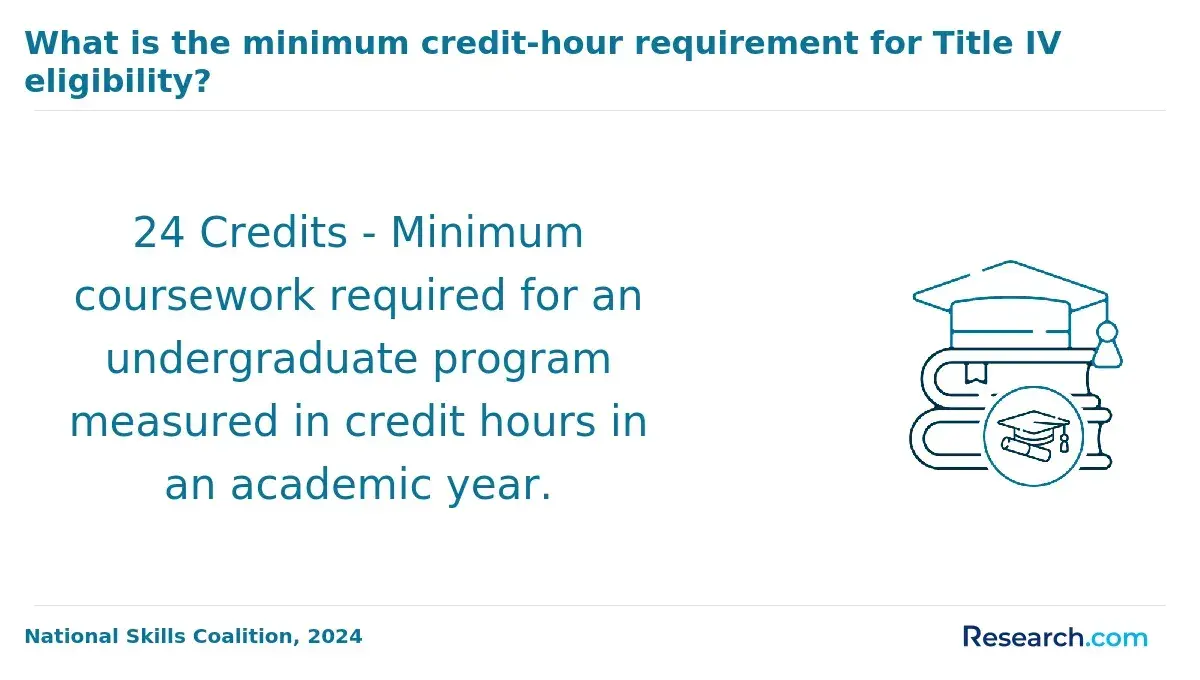
Online doctoral study is now a mainstream option rather than an unusual format. NCES Digest tables released in 2024 show that more than 5 million U.S. postsecondary students were enrolled exclusively in distance education in fall 2022. For consultants, that matters because online delivery can reduce relocation barriers, but it does not eliminate the need for disciplined weekly study time.
The table below highlights flexibility features that matter most for consulting professionals who may have client deadlines, travel demands, and unpredictable workloads.
| Flexibility feature | Why it matters | Best fit |
| Asynchronous coursework | Allows you to complete lectures and discussions around client work. | Consultants with variable schedules or travel-heavy roles. |
| Cohort model | Provides structure, peer relationships, and predictable progression. | Professionals who benefit from accountability and networking. |
| Self-paced or competency-based elements | May let experienced learners move faster through familiar material. | Highly disciplined students with strong writing and research skills. |
| Low-residency format | Combines online study with limited in-person networking or intensive sessions. | Consultants who can plan travel in advance and value face-to-face interaction. |
| Part-time enrollment | Reduces weekly workload and helps preserve consulting income. | Independent consultants, caregivers, and full-time executives. |
| Structured milestones | Keeps the dissertation or capstone from drifting indefinitely. | Students who want guardrails and predictable progress. |
Before enrolling, compare the program calendar against your actual consulting workload. A program that looks flexible may still require weekly live sessions, group projects, or residency travel during peak client periods. Ask for a sample term schedule, not just a general statement that the program is online.
What should you look for in Health Services Administration doctorate programs for consulting careers?
Program quality matters because a doctorate is a long, expensive, reputation-sensitive investment. The right program should help you become a stronger consultant; the wrong one can leave you with debt, weak differentiation, and a final project that does not support your market position.
The table below separates strong quality indicators from red flags. Use it as a screening tool before speaking with admissions representatives.
| Quality indicator | Red flag | Why it matters for consultants |
| Institutional accreditation from a recognized accreditor | Unclear accreditation status or vague credibility claims | Clients and employers may question credentials from poorly recognized institutions. |
| Healthcare-specific doctoral curriculum | Generic leadership curriculum with minimal healthcare depth | Consulting clients pay for specialized insight, not just a general management credential. |
| Applied research methods and analytics training | Limited quantitative, qualitative, or evaluation coursework | Consultants need to diagnose problems and defend recommendations with evidence. |
| Faculty with healthcare leadership, policy, research, or consulting expertise | Faculty profiles that do not align with healthcare administration practice | Faculty fit affects mentoring, project quality, and the relevance of your final work. |
| Transparent tuition, fees, residency costs, and completion expectations | Hard-to-find cost information or unclear time-to-degree policies | ROI depends on total cost, not just per-credit tuition. |
| Capstone or dissertation options tied to real healthcare problems | Final projects with little connection to practice or client needs | Your final project should strengthen your consulting portfolio. |
Cost should be part of your evaluation, but it should not be the only factor. If affordability is your primary constraint, reviewing a cheapest online healthcare administration degree pathway can help you understand lower-cost options before deciding whether doctoral tuition is justified.
When you speak with schools, ask practical questions that reveal whether the program fits a consulting career:
- How many students in the program are working professionals, executives, clinicians, administrators, or consultants?
- Can doctoral projects be designed around consulting problems such as market entry, process improvement, quality outcomes, or organizational change?
- What support is available for research design, statistics, writing, and dissertation or capstone completion?
- How often do students interact with faculty, and are meetings available outside standard business hours?
- What are the full costs, including technology fees, residencies, travel, books, dissertation continuation credits, and graduation fees?
- What happens if client travel or work obligations require a temporary slowdown?
Avoid choosing a program based only on speed, tuition, or name recognition. The best program is the one with credible accreditation, relevant curriculum, strong faculty fit, manageable workload, and a final project that helps you win the kind of consulting work you actually want.
What skills can consulting professionals gain from an online Health Services Administration doctorate?
An online Health Services Administration doctorate can help consultants build skills that are difficult to develop through work experience alone, especially when the program requires advanced research, systems analysis, and evidence-based decision-making. The strongest skill gains come from applying coursework to real healthcare problems rather than treating assignments as isolated academic tasks.
The table below maps common doctoral skill areas to consulting responsibilities. This can help you judge whether the curriculum will improve the way you advise clients.
| Doctoral skill area | How it applies in consulting | Example consulting deliverable |
| Applied research design | Helps you evaluate whether a proposed intervention is likely to work and how to measure results. | Program evaluation plan for a care coordination initiative. |
| Healthcare finance and economics | Supports analysis of cost structures, reimbursement pressures, service lines, and strategic investments. | Financial impact assessment for a new outpatient service model. |
| Quality improvement and patient safety | Strengthens recommendations around performance metrics, process redesign, and outcome improvement. | Quality dashboard and improvement roadmap. |
| Health policy and regulation | Improves your ability to advise organizations facing payment, compliance, access, or governance changes. | Policy implementation brief for a health system leadership team. |
| Organizational leadership | Helps you diagnose resistance, align stakeholders, and guide change management. | Executive change strategy for a merger integration project. |
| Data interpretation and evidence synthesis | Enables clearer recommendations when clients face incomplete or conflicting information. | Evidence-based recommendation memo for digital health adoption. |
| Ethics and population health | Supports decisions that balance financial performance, access, equity, and patient outcomes. | Population health strategy for a value-based care contract. |
AI is also changing what clients expect from healthcare consultants. As health systems adopt AI-enabled analytics, workflow automation, and decision-support tools, consultants need to understand not only the technology but also governance, implementation risk, data quality, bias, privacy, and change management. A strong doctoral program should help you evaluate new tools critically rather than simply repeat vendor claims.
The common mistake is assuming that doctoral coursework automatically creates consulting skill. It does not. The skill comes from repeatedly translating research, policy, finance, and leadership concepts into client-ready recommendations.
Can an online Health Services Administration doctorate credential increase your income potential as a consultant?
An online Health Services Administration doctorate can increase income potential for some consultants, but it should not be viewed as a guaranteed salary booster. The credential is most likely to matter when it helps you move into higher-value advisory work, differentiate your expertise, attract executive clients, publish or speak with authority, or qualify for senior leadership and academic-adjacent opportunities.
The table below provides salary context using broad U.S. labor market categories rather than promises about doctorate-holder earnings. Use these figures as benchmarks, not guarantees.
| Role category | Relevant May 2024 BLS wage measure | How to interpret it |
| Management analysts | Median annual wage of $101,190 | This broad category includes many consulting roles, but earnings vary by industry, firm type, client base, and experience. |
| Medical and health services managers | Median annual wage of $117,960 | This reflects healthcare leadership roles that often overlap with consulting expertise, especially for former executives. |
| Senior independent healthcare consultants | No single BLS median specific to doctorate holders | Income depends heavily on specialization, pricing model, network, reputation, and ability to win clients. |
The doctorate can improve ROI when it supports a clear business case. For example, it may help a consultant move from general project support into higher-level strategy, evaluation, or executive advisory work. It may also help a healthcare leader transition from employment into independent consulting with a stronger credibility signal.
Before enrolling, estimate ROI using realistic assumptions:
- Calculate total program cost, including tuition, fees, books, technology, travel, residencies, and extra dissertation or continuation credits.
- Estimate opportunity cost, including reduced client capacity, fewer billable hours, or delayed business development.
- Identify the specific consulting services the doctorate will help you sell at a higher level.
- Determine whether your target clients value doctoral credentials, applied research, executive experience, or certifications more.
- Set a timeline for converting the degree into marketable assets such as white papers, presentations, frameworks, workshops, or specialized advisory packages.
The safest financial approach is to treat the doctorate as one part of a broader consulting strategy. The degree can support higher income potential, but client outcomes, positioning, experience, and business development usually determine whether that potential becomes real.
Is an online Health Services Administration doctorate the right next step for your consulting career?
An online Health Services Administration doctorate may be the right next step if you already have substantial healthcare experience, know the consulting niche you want to build, and need doctoral-level research, credibility, or leadership preparation to reach your next goal. It may be the wrong step if you are using the degree to delay career decisions, compensate for limited experience, or chase a vague promise of higher income.
Use the self-assessment below to decide whether to apply now, wait, or choose a different credential first.
| Your situation | Best next move | Reason |
| You are a mid-career or senior healthcare professional with a defined consulting niche. | Consider applying to applied DHA, DSc, or healthcare DBA programs. | You are more likely to turn coursework and the final project into consulting assets. |
| You are early in your healthcare administration career. | Gain more experience before doctoral study. | Doctoral work is more useful when you can connect it to real leadership problems. |
| You want a faster credential for career mobility. | Consider master's, certificate, or specialized professional credentials first. | A doctorate is usually too long and intensive for short-term advancement goals. |
| You want to build an independent consulting practice. | Pair doctoral study with business development, networking, and service design. | The credential can support credibility, but it does not replace client acquisition. |
| You are interested in healthcare leadership but not ready for doctoral workload. | Explore shorter or accelerated pathways before committing. | Programs such as accelerated healthcare programs may help you build momentum first. |
If you decide to move forward, take a deliberate approach:
- Write a one-sentence consulting goal before researching programs.
- Choose three to five programs that match that goal, not just programs with convenient schedules.
- Compare accreditation, curriculum, faculty fit, dissertation or capstone structure, flexibility, and total cost.
- Ask admissions advisors for detailed workload expectations and sample doctoral project topics.
- Speak with current students or alumni, especially those working in consulting or healthcare leadership.
- Decide how the degree will produce marketable expertise before you enroll.
The best time to pursue the doctorate is when the degree supports a specific consulting strategy and you have enough professional experience to use the program well. If either piece is missing, waiting can be a smarter investment than rushing into a doctoral commitment.
Other Things You Should Know About Health Services Administration
In most professional settings, graduates of accredited doctoral programs may use the title "Dr.", but context matters. Avoid implying that you are a medical doctor unless you hold a clinical doctorate or medical license that permits that role.
Many applied online doctorates do not require the GRE or GMAT, but policies vary by school. Programs may instead weigh graduate GPA, professional experience, recommendations, writing samples, interviews, or a statement of purpose.
Yes, it may help you qualify for adjunct or practice-oriented teaching roles, especially in healthcare administration, management, or leadership programs. Full-time tenure-track roles often require a research-focused doctorate, publications, and academic hiring experience.
Usually no. The degree is generally not a clinical licensure pathway. If your consulting work involves nursing home administration, clinical practice, compliance, or regulated services, check state-specific licensing and credential rules separately.
References
- Top Doctor of Health Science Careers | University of Bridgeport https://www.bridgeport.edu/news/top-careers-with-doctor-of-health-science/
- Health Management Careers https://www.ache.org/Career-Resources/Start-Your-Career/Health-Management-Careers
- 2025 Most Affordable Healthcare Administration Degrees Online https://www.onlineu.com/most-affordable-colleges/healthcare-administration-degrees
- Best Online Doctor of Healthcare Administration Programs https://www.phds.me/online-programs/doctorate-healthcare-administration-dha/
- Doctorate of Health Administration (DHA) Online Degree https://www.trident.edu/doctoral-online/dha-health-administration-degree/
- Health Services Administration (BAAS) Competency-Based https://www.etamu.edu/programs/health-services-administration-baas/
- Future Students https://www.aupha.org/resourcecenter/futurestudents
- Doctoral Healthcare Degrees | University of Phoenix https://www.phoenix.edu/online-healthcare-degrees/doctoral.html
- 15 Best Online Bachelor's Degrees in Health Services 2019 - Healthcare Administration Degree Programs https://www.healthcare-administration-degree.net/best-online-bachelors-degrees-in-health-services/
- Master of Health Administration: Building Tomorrow's Healthcare Leaders https://www.unthealth.edu/tcom/public-health/master-of-health-administration.html