2027 Undergraduate Business School Rankings: Complete Student Guide

Co-Founder and Chief Data Scientist
Choosing an undergraduate business school is a high-stakes decision because the program you pick can shape internships, employer access, debt, and graduate school options. The U. S. Bureau of Labor Statistics reported a May 2024 median annual wage of $80,920 for business and financial occupations, well above the median for all occupations. This guide is for students, parents, transfer applicants, and adult learners who want to compare rankings wisely, understand accreditation and costs, and choose a business program that fits their career goals.
Key Things You Should Know
- Undergraduate business school rankings are useful starting points, but the best choice depends on accreditation, total cost, location or online format, internships, concentration options, transfer policies, and career outcomes.
- College Board's 2024 pricing data shows average published tuition and fees of $11,610 for in-state public four-year colleges and $43,350 for private nonprofit four-year colleges, so affordability should be compared alongside prestige.
- BLS May 2024 wage data places the median annual wage for business and financial occupations at $80,920, but salary outcomes vary by role, region, experience, internships, certifications, and school-employer networks.
What are the best undergraduate business school rankings?
The best undergraduate business school rankings are the ones that match your decision question. If you want brand recognition, national rankings may help. If you want value, graduation outcomes and net price matter more. If you want a specific major such as accounting, finance, supply chain, or entrepreneurship, program-level strength is more useful than a broad institutional rank.
Rankings should be treated as filters, not final answers. A school ranked lower overall may still be the better choice if it has AACSB accreditation, strong local employer pipelines, lower debt, generous transfer credit, or a concentration aligned with your target career.
The table below compares common ranking sources and how students should use them. It is meant to help you understand what each type of ranking is good for and where it can mislead you.
| Ranking or data source | Best use | Main limitation | Best-fit student |
| National undergraduate business rankings | Comparing reputation, selectivity, peer assessment, and broad program visibility | May reward prestige more than affordability or individual fit | Students targeting competitive internships, consulting, finance, or well-known employers |
| Business-specialty rankings | Comparing fields such as accounting, finance, marketing, analytics, or supply chain | Specialty rank may not reflect advising quality, class availability, or placement in your region | Students already committed to a specific business concentration |
| College Scorecard-style outcome data | Checking graduation rates, typical debt, and post-college earnings indicators | Data may reflect the entire institution rather than the business school alone | Cost-conscious students comparing value and debt risk |
| Student review and campus-fit rankings | Understanding student life, flexibility, support services, and campus experience | Reviews can be subjective and may not represent all students | Students deciding between similar schools after academic and cost checks |
A practical way to use rankings is to build a shortlist of 8 to 12 schools, then remove programs that fail your non-negotiables. Those non-negotiables might include accreditation, affordable net price, required concentration, internship access, online availability, or transfer acceptance.
When comparing ranked schools, avoid these common mistakes:
- Choosing the highest-ranked school without checking whether it offers your intended concentration.
- Comparing sticker prices instead of net price after grants, scholarships, employer aid, military benefits, or transfer credits.
- Assuming a national ranking automatically means stronger career placement in your local job market.
- Ignoring whether business students are admitted directly as freshmen or must apply later to the major.
How is an undergraduate business school ranking calculated?
An undergraduate business school ranking is usually calculated by combining several indicators into one score. Common factors include academic reputation, admissions selectivity, graduation and retention rates, student-faculty resources, employment outcomes, alumni earnings indicators, and sometimes faculty research or peer surveys.
The problem is that ranking formulas are not all built for the same student. A ranking that heavily weights selectivity may favor schools that are hard to enter, while a value-focused ranking may reward lower costs and stronger earnings relative to debt. Neither approach is wrong, but each answers a different question.
The table below summarizes ranking factors that appear frequently and explains how to interpret them before making a decision.
| Ranking factor | What it usually measures | How to use it | What to verify separately |
| Reputation | How peers, employers, or academic leaders view the school | Useful for brand-sensitive fields and graduate school signaling | Actual internship access and employer recruiting in your target field |
| Selectivity | Admissions competitiveness, test scores, class rank, or acceptance patterns | Helps estimate admissions difficulty | Whether business admission is direct, competitive after enrollment, or open to declared majors |
| Graduation and retention | Student persistence and completion | Can indicate advising quality, student support, and academic fit | Graduation outcomes for business majors specifically, if available |
| Career outcomes | Employment, earnings, internships, or employer engagement | Important for ROI comparisons | Role types, geographic placement, salary sample size, and whether data is self-reported |
| Cost and debt | Net price, aid, loan levels, or value metrics | Helps compare affordability beyond prestige | Your personal aid offer, transfer credits, housing costs, and time to degree |
To calculate your own practical ranking, assign weights to what matters most to you. For example, a student targeting Wall Street recruiting may weight employer access more heavily, while a working adult may weight online flexibility, tuition, and transfer credit more heavily.
Use this simple sequence to evaluate any ranked program:
- Confirm institutional accreditation and business-specific accreditation where relevant.
- Check whether your intended concentration is offered and available online or on campus in the format you need.
- Estimate your net cost after grants, scholarships, transfer credits, employer aid, or military education benefits.
- Review graduation, retention, internship, and career services data instead of relying only on rank.
- Ask admissions whether business students face secondary admission requirements after enrolling.
Which accreditation matters most for business schools?
The most important baseline accreditation is institutional accreditation from an agency recognized by the U.S. Department of Education or the Council for Higher Education Accreditation. Without recognized institutional accreditation, students may face problems transferring credits, qualifying for federal financial aid, entering graduate programs, or meeting employer requirements.
For business schools, specialized accreditation can add another layer of quality assurance. AACSB accreditation is often considered the most selective and widely recognized business accreditation, especially for research universities and highly competitive business schools. ACBSP and IACBE are also legitimate business-focused accreditors and are commonly found at teaching-oriented institutions, regional universities, and career-focused programs.
The table below explains the main accreditation types and why each matters. Use it to avoid one of the biggest mistakes students make: enrolling before confirming that a program's accreditation matches their transfer, aid, licensure, or graduate school plans.
| Accreditation type | What it applies to | Why it matters | When it is especially important |
| Institutional accreditation | The college or university as a whole | Supports federal aid eligibility, credit transfer, employer recognition, and graduate admission | Every student should verify this before applying |
| AACSB | Business schools and business programs | Often valued for academic rigor, faculty qualifications, research strength, and employer recognition | Students targeting competitive graduate business programs, accounting pathways, finance, consulting, or large employers |
| ACBSP | Business programs with emphasis on teaching and student learning | Signals business-specific quality review, often in applied or teaching-focused settings | Students seeking practical business education at regional or online-friendly institutions |
| IACBE | Business programs focused on outcomes and continuous improvement | Can indicate structured assessment and business-specific quality processes | Students comparing smaller, private, online, or career-oriented business programs |
Accreditation is not the same as ranking. A lower-ranked accredited program may be safer than an unaccredited or poorly recognized program with aggressive marketing. If your goal involves CPA eligibility, graduate school, federal employment, tuition reimbursement, or credit transfer, confirm accreditation before you compare tuition or rankings.
What business degree concentrations are available?
Undergraduate business schools usually offer a Bachelor of Science in Business Administration, Bachelor of Business Administration, Bachelor of Science in Accounting, Bachelor of Science in Finance, or similar degrees. The degree title matters less than the curriculum, accreditation, concentration, internships, and employer connections.
Concentrations let you tailor a general business degree toward a specific job market. Students who want a broad management foundation may choose business administration, while students who want more technical or regulated career paths may choose accounting, finance, analytics, or supply chain.
The table below compares common business concentrations and the types of students they tend to fit. It can help you avoid choosing a major because it sounds popular rather than because it matches your strengths and career goals.
| Concentration | Typical focus | Good fit for students who like | Common early career paths |
| Accounting | Financial reporting, auditing, taxation, controls, and compliance | Detail, rules, problem-solving, and structured analysis | Staff accountant, audit associate, tax associate, accounting analyst |
| Finance | Investments, corporate finance, financial modeling, risk, and capital markets | Numbers, markets, valuation, and decision analysis | Financial analyst, credit analyst, investment operations analyst |
| Marketing | Consumer behavior, brand strategy, digital marketing, research, and sales | Creativity, communication, analytics, and customer insight | Marketing coordinator, social media analyst, sales development representative |
| Management | Leadership, organizational behavior, operations, strategy, and people management | Teamwork, planning, communication, and problem-solving | Management trainee, operations coordinator, assistant manager |
| Business analytics | Data analysis, dashboards, statistics, databases, and decision tools | Technology, patterns, spreadsheets, and evidence-based decisions | Business analyst, data analyst, reporting analyst |
| Supply chain and operations | Logistics, procurement, production, process improvement, and distribution | Systems, efficiency, planning, and real-world operations | Logistics coordinator, supply chain analyst, procurement assistant |
| Entrepreneurship | New ventures, innovation, small business planning, funding, and market testing | Risk, creativity, independence, and building products or services | Startup associate, business development assistant, founder, small business manager |
Students sometimes ask whether business is the easiest degree to get. The better question is whether the program's workload matches your strengths: business can be manageable for students who are comfortable with presentations, quantitative reasoning, group projects, writing, and applied problem-solving, but accounting, analytics, and finance can be demanding.
If you are undecided, choose a school that lets you start with core business courses before declaring a concentration. That flexibility can prevent wasted credits if you discover that you prefer analytics over marketing, accounting over general management, or entrepreneurship over corporate roles.
How do online and campus business programs compare?
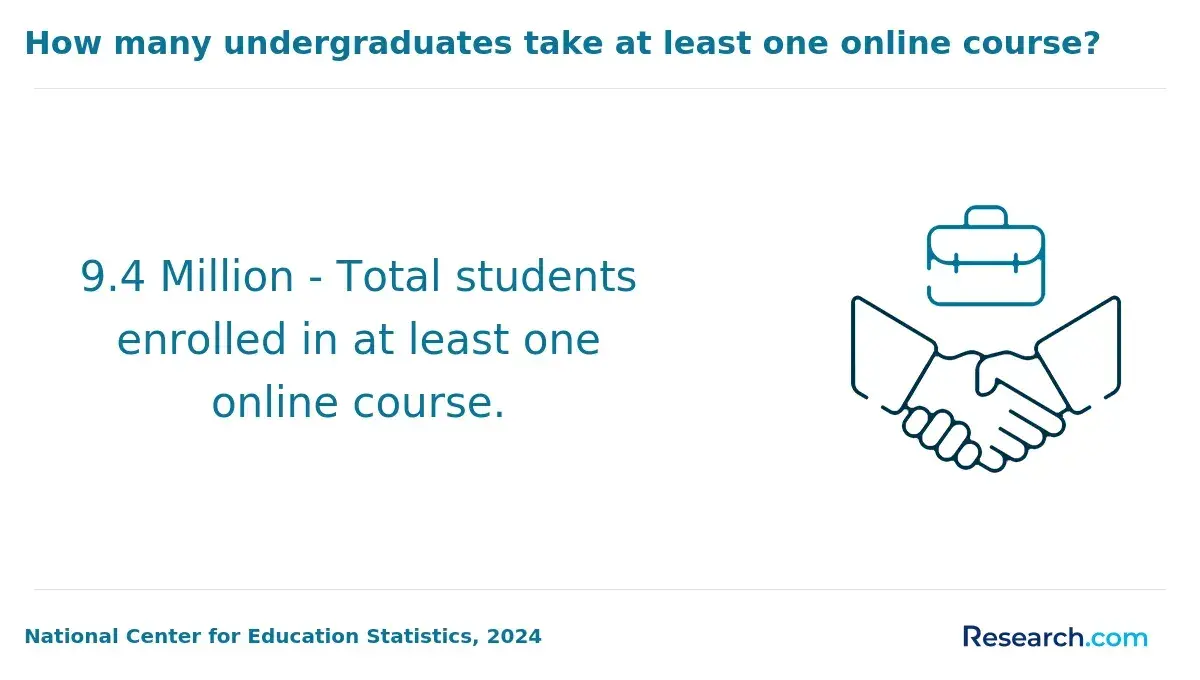
Online and campus business programs can both be strong choices when they are properly accredited and well supported. The right format depends on your schedule, learning style, need for campus recruiting, and ability to participate in internships, group work, and networking.
Online business programs are often best for working adults, transfer students, military learners, parents, and students who need location flexibility. Campus programs may be better for students who want residential life, in-person clubs, case competitions, career fairs, and direct access to recruiters.
The table below compares the main trade-offs. Use it to decide whether format differences affect your likely completion, cost, and career access.
| Factor | Online business program | Campus business program | Decision tip |
| Flexibility | Often asynchronous or evening-friendly | Usually follows set class times and campus schedules | Choose online if work or family obligations would make commuting risky |
| Networking | Can include virtual teams, alumni events, and online career services | Often stronger for in-person clubs, recruiters, and peer networks | Choose campus if your target employers recruit heavily in person |
| Cost | May reduce commuting and relocation costs, but fees vary | May include housing, transportation, and campus fees | Compare total cost, not only tuition per credit |
| Internships | Usually arranged locally or remotely | Often supported by regional employer relationships | Ask where recent business students interned, not just whether internships are available |
| Learning style | Requires self-direction, time management, and comfort with digital tools | Provides more face-to-face structure and spontaneous support | Choose the format you can finish consistently |
Service members, veterans, and military families should compare credit for military training, deployment flexibility, tuition assistance policies, and dedicated advising; a starting point is this guide to military friendly online colleges.
Before enrolling online, ask whether the diploma and transcript identify the modality, whether online students can use the same career services as campus students, and whether internships, capstones, or group projects can be completed remotely. A red flag is a program that advertises flexibility but provides limited advising, unclear course rotation, or weak career support for distance learners.
What courses are included in a business major?
A business major usually combines general education, business core courses, concentration courses, electives, and experiential learning. The goal is to build a foundation in how organizations make decisions, manage money, understand customers, operate efficiently, use data, and lead teams.
Most undergraduate business programs include a shared core before students specialize. These courses matter because they help you test different fields and build transferable skills that employers expect from entry-level business graduates.
Common business core courses include the following:
- Financial accounting and managerial accounting, which teach students how to interpret business performance and internal decision data.
- Microeconomics and macroeconomics, which explain markets, consumer behavior, inflation, employment, trade, and policy effects.
- Business statistics or analytics, which introduces data interpretation, probability, forecasting, and spreadsheet-based decision-making.
- Principles of management and organizational behavior, which cover teams, motivation, leadership, structure, and workplace communication.
- Marketing, which focuses on customers, segmentation, branding, pricing, promotion, and digital channels.
- Business law and ethics, which introduce contracts, liability, compliance, corporate responsibility, and ethical decision-making.
- Finance, which covers budgeting, capital decisions, valuation, risk, and financial planning.
- Operations or supply chain management, which explains process design, logistics, quality, procurement, and efficiency.
- Strategic management or capstone, which requires students to integrate accounting, finance, marketing, operations, and leadership in business cases.
Current business curricula are also changing because employers expect stronger technology skills. Many programs now include Excel modeling, data visualization, AI-assisted research, customer relationship management systems, enterprise software, or introductory coding for analytics. This does not mean every business major must become a programmer, but students should graduate able to use data tools responsibly and explain the business meaning behind the numbers.
When reviewing a curriculum, look for applied work. Case competitions, internships, simulations, consulting projects, portfolio assignments, and capstones can make a business degree more useful than lecture-only coursework.
What are the admission requirements for business schools?
Admission requirements for undergraduate business schools vary widely. Some universities admit students directly into the business school as freshmen, while others admit students to the university first and require a separate application after prerequisite courses. Transfer students may face additional GPA, course, or credit requirements.
Selective business schools often review more than grades. They may consider course rigor, essays, leadership, quantitative preparation, extracurriculars, work experience, recommendations, and demonstrated interest in business. Test-optional policies are common, but students should still check whether SAT or ACT scores affect scholarships, honors programs, or direct admission.
Most applicants should prepare the following items before applying:
- High school transcript or college transcript showing completion of required academic coursework.
- Minimum GPA evidence, especially for direct business admission or transfer admission.
- Math preparation, commonly including algebra, precalculus, calculus, statistics, or quantitative reasoning depending on the school.
- Application essay or personal statement explaining academic goals, leadership experience, career interest, or fit with the business program.
- Resume or activities list showing work, entrepreneurship, clubs, athletics, volunteering, family responsibilities, or leadership.
- Letters of recommendation if required by the university, honors college, scholarship program, or business school.
- Proof of English proficiency for applicants whose prior education requires it under school policy.
If your immediate goal is a lower-barrier credential before committing to a bachelor's program, it can be useful to compare what is the easiest associate degree to get and then check whether those credits transfer into a business bachelor's pathway.
A major admissions mistake is assuming that acceptance to the university means acceptance to the business major. Ask whether there is a secondary admission process, what GPA is needed in prerequisite courses, how many seats are available, and what happens if you are not admitted to the business school after enrollment.
How long does a business degree take, and what does it cost?
A traditional undergraduate business degree usually takes four years of full-time study, but the actual timeline depends on transfer credits, course availability, math placement, co-op terms, part-time enrollment, and whether the student changes concentrations. Accelerated programs may shorten the timeline, while working adults may need five or more years part time.
Cost varies by institution type, residency, aid, housing, fees, technology requirements, and lost work time. College Board's 2024 pricing data provides a useful benchmark for published tuition and fees before financial aid:
- Public four-year in-state average published tuition and fees: $11,610.
- Public four-year out-of-state average published tuition and fees: $30,780.
- Private nonprofit four-year average published tuition and fees: $43,350.
These figures are not your final price. Your real cost may be lower after grants, scholarships, employer tuition assistance, military education benefits, state aid, institutional aid, or transfer credits. It may also be higher if you include housing, transportation, books, health insurance, program fees, and interest on loans.
The table below shows common timeline options and the trade-offs behind each one. Use it to estimate not just how fast you can finish, but how likely you are to complete without unnecessary debt or schedule strain.
| Path | Typical timeline | Best fit | Main trade-off |
| Traditional full-time bachelor's | About four academic years | Recent high school graduates seeking campus life, internships, and structured progression | May require higher total living costs if residential |
| Transfer pathway | About two years after an associate degree, if credits apply cleanly | Students reducing cost through community college or returning with prior credits | Credits may not all apply to business prerequisites or upper-division requirements |
| Accelerated online bachelor's | Varies by transfer credit and course load | Motivated adults with prior credits and strong time management | Condensed courses can be demanding alongside work |
| Part-time business degree | Often longer than four years | Working adults, caregivers, and students who need income while studying | Longer timeline can increase exposure to tuition changes and life interruptions |
Older adults who want a shorter credential rather than a full business bachelor's may also compare options such as a one-year degree for seniors, especially if the goal is personal enrichment, small business skills, or a career pivot rather than traditional campus recruiting.
To reduce cost risk, request a written transfer evaluation, compare net price offers, ask how often required courses are offered, and avoid borrowing based on expected future salary alone. A business degree can be a strong investment, but only when the program, price, timeline, and career target align.
What careers can a business degree lead to?
A business degree can lead to roles in accounting, finance, marketing, sales, operations, supply chain, human resources, analytics, entrepreneurship, and general management. It is one of the more flexible undergraduate degrees because every industry needs people who can understand budgets, customers, data, processes, and teams.
Career outcomes depend heavily on concentration, internships, location, software skills, communication ability, and whether the student builds relevant experience before graduation. A finance student without internships may have a harder time entering competitive analyst roles, while a marketing student with a portfolio and analytics skills may be more competitive even from a less famous school.
The table below connects business concentrations to practical career directions. It is designed to help you choose a program based on likely job functions rather than broad labels.
| Career area | What professionals typically do | Helpful undergraduate preparation | Potential next step |
| Accounting | Prepare financial records, analyze transactions, support audits, and assist with tax or compliance work | Accounting concentration, strong GPA, internship, and knowledge of accounting software | CPA eligibility planning, master's in accounting, or audit and tax specialization |
| Finance | Evaluate budgets, investments, credit, risks, cash flow, or business performance | Finance concentration, Excel modeling, internships, and financial statement analysis | CFA preparation, corporate finance, banking, or financial planning pathways |
| Marketing | Research customers, manage campaigns, support sales, analyze performance, and shape brand strategy | Marketing concentration, writing samples, analytics tools, and campaign portfolio | Digital marketing, product marketing, sales leadership, or market research |
| Business analytics | Turn operational, customer, or financial data into reports and recommendations | Analytics coursework, statistics, databases, visualization tools, and business communication | Data analyst, business intelligence, operations analytics, or graduate analytics study |
| Operations and supply chain | Improve processes, coordinate logistics, manage inventory, and support procurement or distribution | Supply chain coursework, project management, spreadsheets, and process improvement exposure | Logistics, procurement, operations management, or supply chain certification |
| Human resources | Support recruiting, employee relations, benefits, training, and workplace policy | Management or HR coursework, communication skills, employment law basics, and internships | SHRM or HRCI certification after qualifying experience |
If you plan to pursue graduate study after work experience, compare program difficulty, flexibility, and career value carefully; this guide to the easiest masters can help you think through workload and fit, though "easy" should never be the only reason to choose a graduate credential.
Students who want the strongest outcomes should treat college as a four-year career-building process, not just a course checklist. Build a resume early, complete at least one internship if possible, join a business club, learn spreadsheet and presentation tools, and ask career services which employers regularly hire from the program.
What salaries and job outlooks do business graduates have?
Business graduates enter a broad labor market, so salary and outlook should be interpreted by occupation rather than by degree title alone. BLS reported a May 2024 median annual wage of $80,920 for business and financial occupations, but entry-level pay can be lower and outcomes vary by region, employer, internship history, and technical skills.
The table below uses BLS occupation-level data to show how selected business-related roles compare. These figures describe occupations, not guaranteed outcomes for graduates of any specific school.
| Occupation | May 2024 median annual wage | Projected employment growth, 2023 to 2033 | What the data means for students |
| Accountants and auditors | $81,680 | 6% | Accounting remains a structured path, especially for students who plan early for CPA-related credit requirements. |
| Financial analysts | $101,910 | 9% | Finance can offer strong wage potential, but competitive roles often require internships, modeling skills, and market knowledge. |
| Market research analysts | $76,950 | 8% | Marketing students can improve prospects by adding analytics, survey research, visualization, and digital campaign skills. |
| Management analysts | $101,190 | 11% | Consulting-oriented paths often reward problem-solving, presentation ability, internships, and industry knowledge. |
| Logisticians | $80,880 | 19% | Supply chain students may benefit from demand for logistics, procurement, planning, and operations expertise. |
| Human resources specialists | $72,910 | 8% | HR paths favor communication, employment law awareness, recruiting experience, and people analytics exposure. |
Job outlook also reflects technology change. AI and automation are increasingly handling routine reporting, basic bookkeeping support, customer segmentation, and spreadsheet tasks. That does not eliminate the need for business graduates, but it raises the value of judgment, ethics, data interpretation, communication, and the ability to turn automated outputs into sound business decisions.
To improve return on investment, focus on actions that increase employability while you are still enrolled:
- Complete internships, co-ops, consulting projects, or part-time business roles before graduation.
- Build technical fluency in Excel, data visualization, financial modeling, customer relationship management systems, or analytics tools relevant to your concentration.
- Use career services early, not only during the final semester.
- Ask each school for business-specific placement data, not only university-wide employment claims.
- Compare debt against realistic entry-level roles rather than the highest-paying jobs in the field.
The safest salary mindset is cautious optimism. A ranked and accredited business program can open doors, but the strongest outcomes usually come from combining the degree with experience, skills, networking, and a clear career direction.
Other Things You Should Know About
They are useful, but not complete. Rankings can show reputation, selectivity, and broad outcomes, but students should also compare accreditation, net cost, concentration strength, internships, transfer policies, and employer access.
No, but it can be valuable, especially for competitive business schools, accounting pathways, graduate study, and employers that recognize AACSB. At minimum, the college should have recognized institutional accreditation.
It can be, if the school is properly accredited and the program has strong advising, career services, and relevant coursework. Employers usually care more about the institution, skills, experience, and performance than whether courses were online.
There is no single best concentration for every student. Accounting, finance, analytics, supply chain, and marketing can all lead to strong opportunities when paired with internships, technical skills, and a clear career plan.
References
- 10 places a business degree can take you https://www.vu.edu.au/about-vu/news-events/vu-blog/10-places-a-business-degree-can-take-you
- MBA Requirements https://www.collegeessayguy.com/blog/mba-requirements
- The Importance of Business School Accreditation https://www.allbusinessschools.com/how-to-get-into-mba-program/accreditation/
- MBA resources | MBA admission requirement guide | edX https://www.edx.org/resources/how-to-meet-mba-admission-requirements-a-step-by-step-guide
- Poets&Quants’ Best Undergraduate Business Schools Of 2026 https://poetsandquantsforundergrads.com/news/best-undergraduate-business-schools-of-2026/
- MBA Rankings Methodology https://www.princetonreview.com/business-school-rankings/ranking-methodology
- Ten Types of Business Degree Specializations | AIU https://www.aiuniv.edu/degrees/business/articles/10-types-of-business-degree-specializations-you-can-pursue
- MBA Accreditation: Why Does it Matter? A Detailed Guide https://yocket.com/blog/mba-accreditation-a-detailed-guide
- Top 15 Highest Paying Business Degree Jobs in 2025 UK & Global Guide https://apexlearning.org.uk/highest-paying-business-degree-jobs-2025-2026/
- How Long to Earn a Business Degree? | DeVry University https://www.devry.edu/blog/how-long-does-it-take-to-earn-a-business-degree.html