
ActiveCampaign for Sales vs Zoho CRM – 2026 Comparison

Co-Founder and Chief Data Scientist
ActiveCampaign for Sales vs. Zoho CRM Comparison Table of Contents
- What is ActiveCampaign for Sales?
- Who is ActiveCampaign for Sales for?
- Key Benefits of ActiveCampaign for Sales
- What is Zoho CRM?
- Who is Zoho CRM for?
- Key Benefits of Zoho CRM
- Who are ActiveCampaign for Sales and Zoho CRM best for?
- ActiveCampaign for Sales vs. Zoho CRM Feature Comparison
- ActiveCampaign for Sales vs. Zoho CRM Pricing
- Comparing Integrations: Document Management and Workflow Tools
- ActiveCampaign for Sales Pros and Cons
- How do these CRMs integrate with meeting management tools?
- Zoho CRM Pros and Cons
- What types of support and resources are available for ActiveCampaign for Sales and Zoho CRM?
- Verdict – ActiveCampaign for Sales vs. Zoho CRM: Which software is better?
What is ActiveCampaign for Sales?
The primary users of ActiveCampaign for Sales are sales teams and professionals looking to optimize their customer interactions. The platform caters to businesses of various sizes, offering scalable solutions that adapt to the specific needs of each user. Its main features include contact and lead management, deal tracking, email automation, and sales automation workflows. These features empower sales teams to prioritize and engage leads effectively, automate routine tasks, and drive higher conversion rates.
The platform's analytics and reporting tools also provide valuable insights to refine sales strategies and improve overall performance. Overall, ActiveCampaign for Sales positions itself as a versatile tool that facilitates efficient sales processes and aligns marketing and sales efforts for a more cohesive and impactful approach.
Featured CRM Software Products

$9 to $150/user/month
Yes, up to 2 users
E-signature software, call transcription, conversation routing
Editor's Take
HubSpot CRM is a powerful customer relationship management platform designed to help businesses manage their sales, marketing, and customer service efforts in one centralized place. Its user-friendly interface allows teams to track leads, monitor customer interactions, and automate sales pipelines. With built-in tools for email marketing, contact management, and analytics, HubSpot CRM provides deep insights into customer behavior and sales performance. The platform also supports seamless collaboration between marketing and sales teams through real-time updates and integrations with tools like Gmail, Outlook, and Slack. Additionally, its automation features help reduce manual tasks, enabling teams to focus on building relationships and closing deals. HubSpot CRM is scalable, making it ideal for businesses of all sizes, from startups to large enterprises.
Expert Score
In evaluating SaaS software, a comprehensive and structured methodology ensures a fair and accurate comparison across key metrics. This approach focuses on the most critical aspects that affect user experience, functionality, and business value. The following metrics—general features, cost, customer service, integrations, and mobile support—are evaluated to provide a holistic view of each software solution’s strengths and weaknesses. These metrics are selected based on their direct impact on software usability, scalability, and long-term effectiveness for businesses.
1. General Features - scoring weight 40%
This metric evaluates the core functionalities and tools the software offers. It involves assessing the comprehensiveness of the features, their relevance to the target users, and the ease of use. This is important because robust and well-designed features determine the software's overall utility and efficiency in solving user problems.
2. Cost - scoring weight 15%
Cost analysis focuses on pricing models, value for money, and scalability. It's crucial to evaluate whether the software’s features justify its price, considering different plans for small and large organizations. This is vital for businesses to ensure they invest in cost-effective solutions that fit their budget.
3. Customer Service - scoring weight 15%
This evaluates the responsiveness, quality, and availability of customer support, including channels like chat, email, or phone. Good customer service is essential for troubleshooting and ensuring smooth software usage, which reduces downtime and frustration for users.
4. Integrations - scoring weight 15%
This examines how well the software integrates with third-party tools (e.g., CRM, payment systems, collaboration apps). Seamless integrations are key for creating a unified workflow and enhancing productivity by connecting multiple systems, which is crucial for operational efficiency.
5. Mobile Support - scoring weight 15%
Mobile support assesses the software’s functionality and performance on mobile devices, including apps and mobile web versions. With increasing remote work and on-the-go usage, strong mobile support is critical to ensure users can access and utilize the software effectively, regardless of location.

Custom
No
Sales automation, customer service, marketing
Editor's Take
NetSuite CRM is a comprehensive customer relationship management solution designed to support businesses in managing their entire customer lifecycle. It offers a full suite of tools for sales automation, customer service, marketing, and partner management, helping teams improve efficiency and build stronger customer relationships. With real-time visibility into customer interactions, NetSuite CRM enables businesses to track leads, manage opportunities, and forecast sales accurately. Its built-in analytics and reporting features provide deep insights into sales performance and customer behavior. NetSuite CRM integrates seamlessly with NetSuite’s enterprise resource planning (ERP) system, offering a unified platform for managing business operations. This scalability and flexibility make it ideal for growing businesses and enterprises seeking an all-in-one solution for customer relationship management.
Expert Score
In evaluating SaaS software, a comprehensive and structured methodology ensures a fair and accurate comparison across key metrics. This approach focuses on the most critical aspects that affect user experience, functionality, and business value. The following metrics—general features, cost, customer service, integrations, and mobile support—are evaluated to provide a holistic view of each software solution’s strengths and weaknesses. These metrics are selected based on their direct impact on software usability, scalability, and long-term effectiveness for businesses.
1. General Features - scoring weight 40%
This metric evaluates the core functionalities and tools the software offers. It involves assessing the comprehensiveness of the features, their relevance to the target users, and the ease of use. This is important because robust and well-designed features determine the software's overall utility and efficiency in solving user problems.
2. Cost - scoring weight 15%
Cost analysis focuses on pricing models, value for money, and scalability. It's crucial to evaluate whether the software’s features justify its price, considering different plans for small and large organizations. This is vital for businesses to ensure they invest in cost-effective solutions that fit their budget.
3. Customer Service - scoring weight 15%
This evaluates the responsiveness, quality, and availability of customer support, including channels like chat, email, or phone. Good customer service is essential for troubleshooting and ensuring smooth software usage, which reduces downtime and frustration for users.
4. Integrations - scoring weight 15%
This examines how well the software integrates with third-party tools (e.g., CRM, payment systems, collaboration apps). Seamless integrations are key for creating a unified workflow and enhancing productivity by connecting multiple systems, which is crucial for operational efficiency.
5. Mobile Support - scoring weight 15%
Mobile support assesses the software’s functionality and performance on mobile devices, including apps and mobile web versions. With increasing remote work and on-the-go usage, strong mobile support is critical to ensure users can access and utilize the software effectively, regardless of location.

$25 per user per month
14 days
marketing automation, sales automation, no code customization
Editor's Take
CRM Creatio is a comprehensive customer relationship management (CRM) solution designed to streamline and enhance business processes across sales, marketing, and customer service functions. Known for its low-code platform, Creatio allows businesses to customize and automate workflows without requiring extensive technical expertise. This adaptability makes it particularly appealing to organizations seeking to align the software with their specific needs.
The platform's marketing module provides tools for multi-channel campaign management, lead generation, and personalized customer engagement. Its sales module offers functionality for pipeline management, opportunity tracking, and analytics to help teams close deals more efficiently. Additionally, the customer service module supports case management, service level agreement (SLA) monitoring, and omnichannel communication, enabling businesses to provide exceptional customer support.
Creatio stands out with its intuitive interface, robust analytics, and AI-powered tools that provide actionable insights. The low-code development tools allow non-technical users to create applications and automate processes, reducing the dependency on IT teams. Integration capabilities with other software platforms and APIs enhance its utility, making it a versatile choice for businesses of all sizes.
Overall, CRM Creatio is a powerful solution that combines user-friendly design with advanced customization and automation features. Its adaptability and low-code foundation position it as a strong contender for organizations looking to optimize customer relationship management processes while maintaining flexibility for growth and innovation.
Expert Score
In evaluating SaaS software, a comprehensive and structured methodology ensures a fair and accurate comparison across key metrics. This approach focuses on the most critical aspects that affect user experience, functionality, and business value. The following metrics—general features, cost, customer service, integrations, and mobile support—are evaluated to provide a holistic view of each software solution’s strengths and weaknesses. These metrics are selected based on their direct impact on software usability, scalability, and long-term effectiveness for businesses.
1. General Features - scoring weight 40%
This metric evaluates the core functionalities and tools the software offers. It involves assessing the comprehensiveness of the features, their relevance to the target users, and the ease of use. This is important because robust and well-designed features determine the software's overall utility and efficiency in solving user problems.
2. Cost - scoring weight 15%
Cost analysis focuses on pricing models, value for money, and scalability. It's crucial to evaluate whether the software’s features justify its price, considering different plans for small and large organizations. This is vital for businesses to ensure they invest in cost-effective solutions that fit their budget.
3. Customer Service - scoring weight 15%
This evaluates the responsiveness, quality, and availability of customer support, including channels like chat, email, or phone. Good customer service is essential for troubleshooting and ensuring smooth software usage, which reduces downtime and frustration for users.
4. Integrations - scoring weight 15%
This examines how well the software integrates with third-party tools (e.g., CRM, payment systems, collaboration apps). Seamless integrations are key for creating a unified workflow and enhancing productivity by connecting multiple systems, which is crucial for operational efficiency.
5. Mobile Support - scoring weight 15%
Mobile support assesses the software’s functionality and performance on mobile devices, including apps and mobile web versions. With increasing remote work and on-the-go usage, strong mobile support is critical to ensure users can access and utilize the software effectively, regardless of location.

$8/per user/per month
Yes
customizable dashboards, automated follow-ups, advanced analytics
Editor's Take
monday.com Sales CRM is a customizable platform designed to streamline sales processes, enhance team collaboration, and improve pipeline visibility. Its intuitive interface enables users to manage leads, track deals, and automate repetitive tasks with ease. The CRM integrates seamlessly with popular tools like Gmail, Slack, and HubSpot, ensuring a centralized workflow. Features like customizable dashboards, automated follow-ups, and advanced analytics help sales teams stay organized and focused on closing deals. With scalability in mind, monday.com caters to businesses of all sizes, offering flexible pricing plans and robust customer support. It’s an excellent choice for teams seeking efficiency and adaptability.
Expert Score
In evaluating SaaS software, a comprehensive and structured methodology ensures a fair and accurate comparison across key metrics. This approach focuses on the most critical aspects that affect user experience, functionality, and business value. The following metrics—general features, cost, customer service, integrations, and mobile support—are evaluated to provide a holistic view of each software solution’s strengths and weaknesses. These metrics are selected based on their direct impact on software usability, scalability, and long-term effectiveness for businesses.
1. General Features - scoring weight 40%
This metric evaluates the core functionalities and tools the software offers. It involves assessing the comprehensiveness of the features, their relevance to the target users, and the ease of use. This is important because robust and well-designed features determine the software’s overall utility and efficiency in solving user problems.
2. Cost - scoring weight 15%
Cost analysis focuses on pricing models, value for money, and scalability. It’s crucial to evaluate whether the software’s features justify its price, considering different plans for small and large organizations. This is vital for businesses to ensure they invest in cost-effective solutions that fit their budget.
3. Customer Service - scoring weight 15%
This evaluates the responsiveness, quality, and availability of customer support, including channels like chat, email, or phone. Good customer service is essential for troubleshooting and ensuring smooth software usage, which reduces downtime and frustration for users.
4. Integrations - scoring weight 15%
This examines how well the software integrates with third-party tools (e.g., CRM, payment systems, collaboration apps). Seamless integrations are key for creating a unified workflow and enhancing productivity by connecting multiple systems, which is crucial for operational efficiency.
5. Mobile Support - scoring weight 15%
Mobile support assesses the software’s functionality and performance on mobile devices, including apps and mobile web versions. With increasing remote work and on-the-go usage, strong mobile support is critical to ensure users can access and utilize the software effectively, regardless of location.

$7 per user per month billed annually
15 days
lead generation, sales pipeline management, workflow automation
Editor's Take
Zoho CRM is a flexible and comprehensive customer relationship management platform designed to help businesses manage and grow their customer relationships effectively. With tools for lead generation, sales pipeline management, workflow automation, and analytics, Zoho CRM is suitable for businesses of all sizes across a variety of industries.
Zoho CRM enables teams to streamline sales processes by capturing leads from multiple channels, tracking interactions, and managing every stage of the sales cycle. The platform offers customizable dashboards and reports, providing insights into sales performance and customer behaviors to help make data-driven decisions. With powerful automation features, Zoho CRM allows businesses to set up workflows for routine tasks like follow-ups, lead scoring, and email notifications, reducing manual work and enhancing productivity. The platform integrates with popular tools, including the Zoho suite, Microsoft 365, and G Suite, enabling a seamless connection across teams.
For businesses aiming to improve customer engagement, close deals faster, and enhance team collaboration, Zoho CRM delivers a scalable, user-friendly solution to drive sales and customer satisfaction.
Expert Score
In evaluating SaaS software, a comprehensive and structured methodology ensures a fair and accurate comparison across key metrics. This approach focuses on the most critical aspects that affect user experience, functionality, and business value. The following metrics—general features, cost, customer service, integrations, and mobile support—are evaluated to provide a holistic view of each software solution’s strengths and weaknesses. These metrics are selected based on their direct impact on software usability, scalability, and long-term effectiveness for businesses.
1. General Features - scoring weight 40%
This metric evaluates the core functionalities and tools the software offers. It involves assessing the comprehensiveness of the features, their relevance to the target users, and the ease of use. This is important because robust and well-designed features determine the software's overall utility and efficiency in solving user problems.
2. Cost - scoring weight 15%
Cost analysis focuses on pricing models, value for money, and scalability. It's crucial to evaluate whether the software’s features justify its price, considering different plans for small and large organizations. This is vital for businesses to ensure they invest in cost-effective solutions that fit their budget.
3. Customer Service - scoring weight 15%
This evaluates the responsiveness, quality, and availability of customer support, including channels like chat, email, or phone. Good customer service is essential for troubleshooting and ensuring smooth software usage, which reduces downtime and frustration for users.
4. Integrations - scoring weight 15%
This examines how well the software integrates with third-party tools (e.g., CRM, payment systems, collaboration apps). Seamless integrations are key for creating a unified workflow and enhancing productivity by connecting multiple systems, which is crucial for operational efficiency.
5. Mobile Support - scoring weight 15%
Mobile support assesses the software’s functionality and performance on mobile devices, including apps and mobile web versions. With increasing remote work and on-the-go usage, strong mobile support is critical to ensure users can access and utilize the software effectively, regardless of location.

By quote
Yes
Lead Management, Contact Management, Workflow Automation
Editor's Take
Salesforce CRM is a leading customer relationship management platform known for its robust functionality, scalability, and extensive customization options, making it suitable for businesses of all sizes, from startups to large enterprises. Built to streamline sales, marketing, customer service, and analytics, Salesforce CRM empowers teams to manage customer interactions, optimize workflows, and drive growth from a single, cloud-based platform.
Salesforce CRM provides a complete view of customer data, enabling teams to track interactions, manage leads, and automate tasks throughout the sales pipeline. With powerful tools for reporting and analytics, Salesforce offers insights into sales performance, customer trends, and campaign effectiveness, allowing teams to make data-driven decisions. The platform’s automation capabilities reduce manual workloads with customizable workflows, automated follow-ups, and lead scoring, ensuring a smooth customer journey. Integrations with thousands of third-party applications, along with its own suite of services, make Salesforce a highly adaptable solution for businesses looking to connect their CRM with other tools.
For organizations focused on enhancing customer engagement, improving team efficiency, and scaling their operations, Salesforce CRM delivers a powerful and versatile solution tailored to support long-term business growth.
Expert Score
In evaluating SaaS software, a comprehensive and structured methodology ensures a fair and accurate comparison across key metrics. This approach focuses on the most critical aspects that affect user experience, functionality, and business value. The following metrics—general features, cost, customer service, integrations, and mobile support—are evaluated to provide a holistic view of each software solution’s strengths and weaknesses. These metrics are selected based on their direct impact on software usability, scalability, and long-term effectiveness for businesses.
1. General Features - scoring weight 40%
This metric evaluates the core functionalities and tools the software offers. It involves assessing the comprehensiveness of the features, their relevance to the target users, and the ease of use. This is important because robust and well-designed features determine the software's overall utility and efficiency in solving user problems.
2. Cost - scoring weight 15%
Cost analysis focuses on pricing models, value for money, and scalability. It's crucial to evaluate whether the software’s features justify its price, considering different plans for small and large organizations. This is vital for businesses to ensure they invest in cost-effective solutions that fit their budget.
3. Customer Service - scoring weight 15%
This evaluates the responsiveness, quality, and availability of customer support, including channels like chat, email, or phone. Good customer service is essential for troubleshooting and ensuring smooth software usage, which reduces downtime and frustration for users.
4. Integrations - scoring weight 15%
This examines how well the software integrates with third-party tools (e.g., CRM, payment systems, collaboration apps). Seamless integrations are key for creating a unified workflow and enhancing productivity by connecting multiple systems, which is crucial for operational efficiency.
5. Mobile Support - scoring weight 15%
Mobile support assesses the software’s functionality and performance on mobile devices, including apps and mobile web versions. With increasing remote work and on-the-go usage, strong mobile support is critical to ensure users can access and utilize the software effectively, regardless of location.
Who is ActiveCampaign for Sales for?
ActiveCampaign for Sales is scalable and customizable, which allows different industries and business types to utilize it. Some of the enterprises and business types that commonly leverage this CRM platform include:
- E-commerce Businesses: Online retailers use ActiveCampaign to manage leads, automate marketing campaigns, and enhance customer engagement throughout the sales journey.
- Professional Service Providers: Consultants, lawyers, and account managers utilize ActiveCampaign to streamline client interactions, automate communications, and manage sales pipelines.
- Technology Companies: Software as a Service (SaaS) companies and technology firms benefit from ActiveCampaign's integrated approach to sales and marketing, aiding in lead generation, customer retention, and upselling.
- Healthcare Companies: Healthcare providers and organizations use ActiveCampaign to maintain patient relationships, automate appointment reminders, and manage healthcare-related sales processes.
- Real Estate Firms: Real estate agencies leverage the platform for lead management, automated follow-ups, and maintaining client relationships throughout the property buying or selling process.
- Finance and Insurance Firms: Financial and insurance companies utilize ActiveCampaign to streamline customer interactions, automate communication processes, and manage sales pipelines effectively.
ActiveCampaign for Sales can help companies capture, organize, and manage leads efficiently. It is among the numerous sales software examples that automate marketing processes and provide insights into campaign performance, lead engagement, and overall sales effectiveness. These give the platform an edge over ActiveCampaign for Sales alternatives.
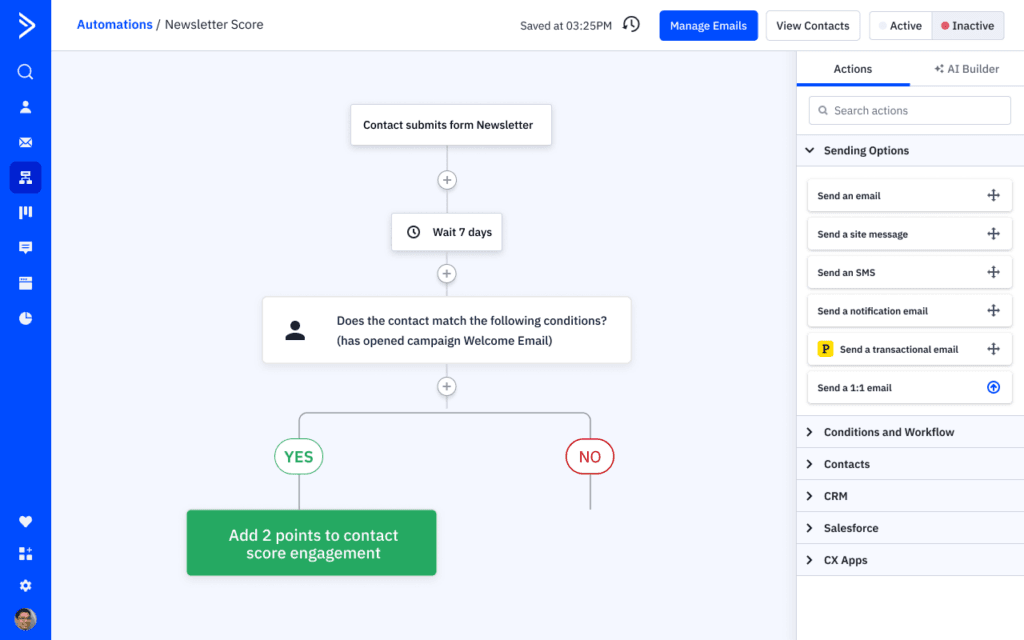
Key Benefits of ActiveCampaign for Sales
ActiveCampaign for Sales offers several key benefits that contribute to its effectiveness in enhancing sales processes and customer relationships:
- Integrated CRM and Marketing Automation: One of the primary benefits of ActiveCampaign for Sales is the seamless integration of CRM and marketing automation features. This integration allows businesses to manage leads, automate marketing campaigns, and track customer interactions in a unified platform so that teams can foster a more cohesive approach to sales and marketing efforts.
- Lead Prioritization and Segmentation: ActiveCampaign enables sales teams to prioritize leads based on various criteria and focus on the most promising opportunities in their pipeline. The platform also allows the segmentation of leads to enable targeted and personalized interactions for their different audience segments.
- Contact and Deal Management: The platform provides robust contact and deal management capabilities, allowing users to track interactions, update deal stages, and collaborate with team members. This centralized view of customer data facilitates a better understanding of each lead and deal in the pipeline.
- Predictive Analytics and Reporting: ActiveCampaign offers predictive analytics and reporting tools that give valuable insights into sales performance, lead engagement, and the effectiveness of marketing campaigns. Moreover, it allows businesses to make data-informed decisions about optimizing their sales strategies.
What is Zoho CRM?
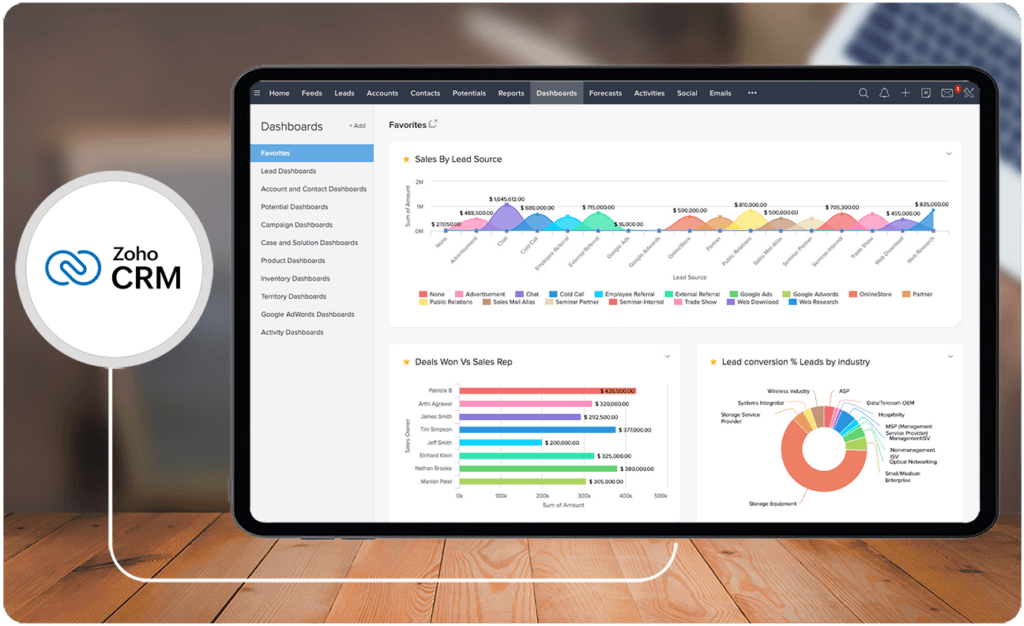
Zoho CRM is a CRM software solution that helps businesses efficiently manage their sales, marketing, and customer support processes in an integrated manner. It comes with a user-friendly interface, extensive customization capabilities, and a centralized hub for customer data. Thus, the platform provides a comprehensive view of interactions across various touchpoints.
Zoho CRM is known for its flexibility as it lets companies tailor the platform to their needs without requiring extensive technical expertise. Its primary users are sales teams, marketing professionals, and customer support representatives across diverse industries. Businesses of all sizes benefit from its scalability and range of features. The platform's main features include lead and contact management, deal tracking, automation of repetitive tasks, email marketing integration, and marketing analytics tools.
Zoho CRM's automation capabilities streamline workflows and enable users to concentrate on building and nurturing customer relationships. With features like real-time analytics and forecasting tools, businesses can make decisions, optimize their sales strategies, and enhance overall performance based on data.
Who is Zoho CRM for?
Zoho CRM is a versatile solution that caters to a broad spectrum of industries and business types. Here are some industries and business types that commonly use Zoho CRM:
- Retail Businesses: Zoho CRM is employed by retail businesses to manage customer relationships, streamline sales processes, and track inventory.
- Banks and Insurance Companies: These financial institutions use Zoho CRM to manage client relationships, streamline sales processes, and enhance customer satisfaction.
- Manufacturing Firms: Manufacturing companies use Zoho CRM to optimize their sales processes, manage leads, and coordinate customer interactions, ensuring efficient order management.
- Healthcare Companies: Healthcare organizations utilize Zoho CRM for patient relationship management, appointment scheduling, and tracking sales activities related to healthcare services.
- Academic Institutions: Educational institutions employ Zoho CRM for student enrollment, communication management, and alumni relationship tracking.
- Coaches and Consultants: Professional service providers like coaches and consultants leverage Zoho CRM to foster client communication, streamline client interactions, and manage projects.
While Zoho CRM is famous for its help desk software solutions, it can provide a centralized hub of customer data. This platform can provide a comprehensive view of client interactions, facilitating stronger relationships and personalized customer experiences. When evaluating Zoho CRM alternatives, you can use this as a comparison point.

Key Benefits of Zoho CRM
Zoho CRM offers a range of critical benefits that contribute to its effectiveness in managing customer relationships and streamlining sales processes:
- Comprehensive CRM Solution: Zoho CRM provides a centralized hub for managing customer information, interactions, and transactions. This extensive CRM functionality lets businesses maintain a 360-degree view of customer relationships.
- Lead Management and Scoring: The platform assists in capturing and organizing leads efficiently. With its lead scoring capabilities, Zoho CRM helps teams prioritize leads based on their likelihood to convert.
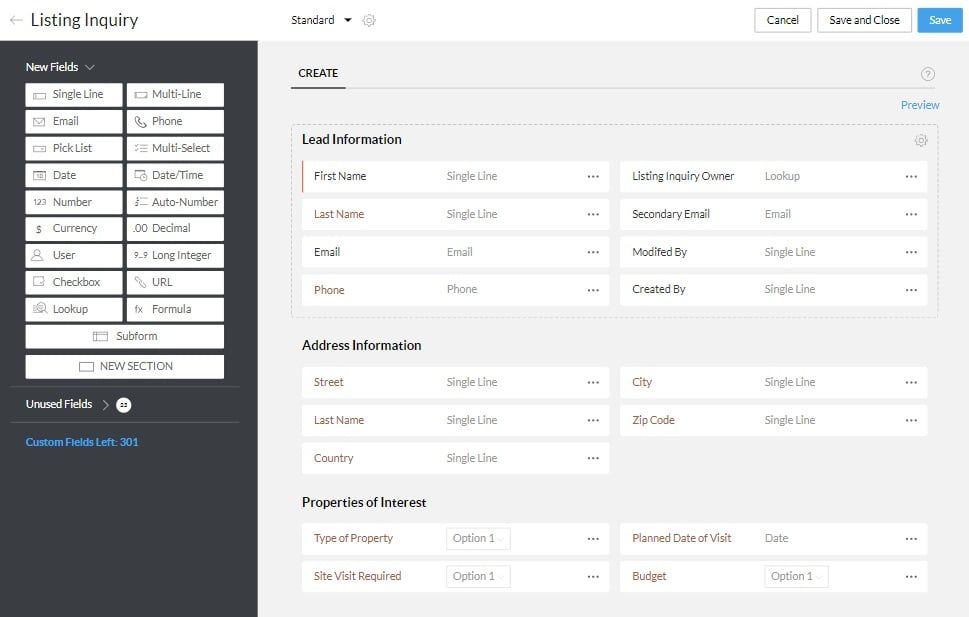
- Customization and Flexibility: Zoho CRM is highly customizable, and businesses can adapt the platform to their needs. Users can customize fields, modules, and workflows to align with their unique sales processes.
- Mobile Accessibility: Zoho CRM offers mobile apps that provide on-the-go access to customer data and sales information. This mobile accessibility enhances the flexibility of sales teams, allowing them to stay productive while away from the office.
Who is ActiveCampaign for Sales and Zoho CRM best for?
Comparing ActiveCampaign for Sales vs. Zoho CRM does not mean one is better than the other. Instead, our researchers identified what specific areas each of these top CRM solutions excels at.
Both tools provide:
- Comprehensive CRM Capabilities
- Sales Automation and Workflow Management
- Lead Management and Scoring
- Integration Capabilities with Other Business Applications
- Analytics and Reporting Tools
- Customization and Flexibility
- Mobile Accessibility for On-the-Go Productivity
- Collaboration and Communication Features
- Scalability for Businesses of Various Sizes
- Customer Support and Training Resources
Where ActiveCampaign for Sales Excels More:
- Integration of CRM with advanced marketing automation capabilities
- Seamless combination of sales and marketing efforts
- Predictive analytics for sales performance
Where Zoho CRM Excels More:
- Extensive customization options for tailoring to specific business processes
- Advanced project management features
- Advanced inventory and order management
ActiveCampaign for Sales vs. Zoho CRM Feature Comparison
During our ActiveCampaign for Sales vs. Zoho CRM comparison process, we observed that the former places more emphasis on integrating CRM with advanced marketing automation features. On the other hand, the latter provides a broader suite of business applications beyond CRM and extensive customization options. Below, we dive deep into the similarities and differences of these two programs to give you more insight into their functionalities.
Contact and Lead Management
ActiveCampaign for Sales and Zoho CRM excel in providing robust contact and lead management features. They offer centralized hubs for organizing and tracking interactions, ensuring sales teams have a comprehensive view of customer relationships.
However, the ActiveCampaign features focus more on streamlining the sales process through centralized contact management. Meanwhile, Zoho CRM is committed to maintaining a 360-degree view of customer relationships. Thus, it can provide a holistic understanding of each contact or lead.
Sales Automation
Both platforms offer powerful sales automation features that allow businesses to automate repetitive tasks and workflows. However, if we take a closer look at the features of ActiveCampaign for Sales vs. Zoho CRM, the latter clearly excels more in sales automation.
ActiveCampaign for Sales is more known for seamlessly integrating CRM with advanced marketing automation capabilities, which allows teams to have a more well-rounded approach to personalizing customer engagements. Zoho CRM, on the other hand, offers a broader suite of business applications and industry-specific solutions that are geared toward streamlining sales transactions. It comes with a Blueprint feature that lets you specify your business processes, stages, and the roles of all team members. As a result, the system can identify and automate routine sales actions. Moreover, it also gives teams the option to create different automation workflows for every step of the customer journey from lead generation and assignment to follow-ups.
Email Marketing Integration
Both ActiveCampaign for Sales and Zoho CRM shine in thewir seamless integration of email marketing tools into the platform. The two platforms offer advanced capabilities for targeted campaigns and personalized messaging to help teams enhance communication and engagement with leads.
However, between the two, ActiveCampaign was able to leverage email marketing within the broader sales and marketing strategy better. Aside from integration options, ActiveCampaign has built-in email marketing functionalities that will allow you to consolidate your campaigns within the platform.
Analytics and Reporting
Both ActiveCampaign for Sales and Zoho CRM offer robust analytics and reporting tools. The platforms aim to empower businesses with data-driven insights to optimize sales strategies and decision-making.
However, comparing ActiveCampaign for Sales vs. Zoho CRM shows that the former excels more in analytics and reporting. That is because ActiveCampaign provides predictive analytics for sales performance. In contrast, Zoho CRM focuses on comprehensive analytics for tracking key metrics.
Customization and Flexibility
Both platforms prioritize customization and flexibility. ActiveCampaign for Sales allows users to tailor the platform to specific business needs. The platform particularly emphasizes the integration of CRM with marketing automation.
Meanwhile, Zoho CRM is known for its highly customizable nature. That is because it can provide extensive options for adapting to unique sales processes and industry-specific requirements.
Mobile Accessibility
Both ActiveCampaign for Sales and Zoho CRM recognize the importance of mobile accessibility. They offer mobile apps to ensure on-the-go access to customer data and sales information.
When comparing ActiveCampaign for Sales vs. Zoho CRM, our research team found that the former is noted for its user-friendly interface and manageable learning curve. On the other hand, the latter's mobile accessibility contributes to the flexibility of sales teams, allowing productivity beyond the office.
ActiveCampaign for Sales vs. Zoho CRM Pricing
No ActiveCampaign for Sales vs. Zoho CRM comparison is complete without discussing pricing. The former has two pricing plans that start at $23 per month if billed monthly. Each plan comes with sales automation, lead scoring, account and deal management, and task management and reporting. ActiveCampaign also offers a customizable plan for scaling sales teams that need a flexible CRM solution.
On the other hand, Zoho CRM has four pricing plans that start at $20 per user per month if billed monthly. Every plan features sales force automation, process management, product customization options, and reports and analytics.
The great thing about these platforms is that both offer product bundles. This is helpful for businesses looking for a unified sales and marketing solution.
Comparing Integrations: Document Management and Workflow Tools
One crucial element to consider when evaluating CRM solutions like ActiveCampaign for Sales and Zoho CRM is how well they integrate with document management and workflow tools. Seamless integration with such tools ensures that teams can store, access, and manage documents efficiently, supporting collaboration and productivity.
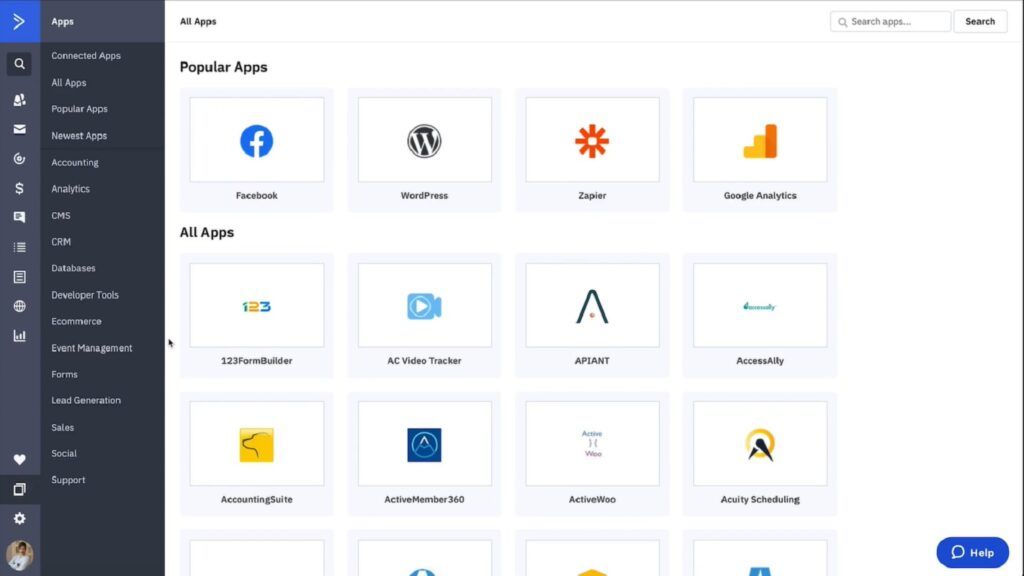
Zoho CRM provides a suite of integrations designed for streamlined document management, including its native Zoho WorkDrive tool. This feature allows users to centralize files and access them directly within the CRM interface. Meanwhile, ActiveCampaign for Sales integrates with third-party tools such as Google Drive and Dropbox but may require additional configurations to achieve the same level of seamless accessibility that Zoho offers.
When considering broader workflow and document management requirements, businesses may benefit from solutions specifically tailored for such needs. For organizations seeking a comprehensive evaluation of document tools, reviewing the industry's current options is essential. A helpful starting point could be this guide on the best document management software, which outlines top solutions for managing files and workflows across diverse business contexts.
For companies that rely on efficient document handling as part of their customer relationship management strategy, these integrations can make a substantial difference in keeping processes organized and teams aligned.
ActiveCampaign for Sales Pros and Cons
Pros of Using Active Campaign for Sales
- Integrated CRM and Marketing Automation: When making an ActiveCampaign for Sales vs. Zoho CRM comparison, we found that the former offers a seamless integration of CRM and marketing automation features. This integration allows businesses to cohesively align their sales and marketing efforts, streamlining processes and fostering more effective customer engagement.
- Predictive Analytics and Reporting: ActiveCampaign for Sales provides predictive analytics and robust reporting tools, offering valuable insights into sales performance. The predictive analytics feature helps businesses anticipate trends and make data-driven decisions, enabling more informed strategies for lead nurturing, customer retention, and overall sales success.
Cons of Using Active Campaign for Sales
- Learning Curve for Advanced Features: During our research team's ActiveCampaign for Sales vs. Zoho CRM comparison, we discovered that the former's learning curve may increase for users looking to fully leverage advanced marketing automation features. Users with limited experience in marketing automation may need time to familiarize themselves with the more sophisticated functionalities of ActiveCampaign.
- Pricing Complexity: Some users find the pricing structure of ActiveCampaign to be complex, especially as it offers various plans with different features. Understanding the pricing tiers and selecting the most suitable plan for specific business needs may require careful consideration and potentially involve a higher cost for more advanced features.
How do these CRMs integrate with meeting management tools?
Effective meeting management is a vital component of modern sales operations. Integrations with dedicated meeting management tools enable both ActiveCampaign for Sales and Zoho CRM to automatically sync calendar events, meeting notes, and follow-up tasks, ensuring that customer interactions remain organized and actionable. Leveraging these integrations minimizes manual data entry, streamlines pipeline management, and enhances overall sales efficiency.
Zoho CRM Pros and Cons
Pros of Using Zoho CRM
- Extensive Customization Options: Zoho CRM is highly praised for its extensive customization capabilities. Companies can tailor the platform to match their processes and requirements, ensuring a personalized CRM solution. This flexibility allows users to adapt the system to their unique workflows, industry-specific needs, and overall business goals.
- Comprehensive Suite of Business Applications: When comparing ActiveCampaign for Sales vs. Zoho CRM, the latter excels in seamless integration between departments and organizational functions. That is because the platform is part of Zoho's broader suite of business applications. Users can leverage additional Zoho applications for project management, finance, and more, creating a comprehensive ecosystem that enhances overall business efficiency.
Cons of Using Zoho CRM
- Learning Curve for Advanced Features: While the platform is relatively easy to implement, understanding and leveraging the extensive customization options and additional applications may require time and training. As such, Zoho CRM may be a bit difficult to learn for novice users.
- Mobile App Functionality: While Zoho CRM offers mobile accessibility, some users have noted room for improvement regarding its functionality. Certain features available on the desktop version might have limitations or differences in the mobile app, impacting the user experience for those who rely heavily on mobile access.
What types of support and resources are available for ActiveCampaign for Sales and Zoho CRM?
Both ActiveCampaign for Sales and Zoho CRM offer a range of support options and learning resources to help users get the most out of the platforms. Here’s a look at what each provides.
Support Options for ActiveCampaign for Sales
- Email and Chat Support: ActiveCampaign offers email and live chat support for all users, ensuring quick assistance with common questions.
- Phone Support: Available to users on higher-tier plans, providing a more direct way to get help.
- Help Center: A comprehensive resource with articles, guides, and FAQs covering the platform’s features and functionality.
- ActiveCampaign Academy: Offers video tutorials and courses that teach users how to use the platform effectively, including topics like automation, email marketing, and lead management.
Support Options for Zoho CRM
- Email, Chat, and Phone Support: Zoho CRM provides multiple support channels, with phone support available on paid plans for faster assistance.
- Zoho Help Center: Includes detailed articles, setup guides, and troubleshooting steps to help users navigate and customize their CRM.
- Zoho CRM Training and Webinars: Offers on-demand webinars, video tutorials, and live training sessions covering everything from CRM basics to advanced customization.
- Zoho Community: A space where users can connect, share tips, and get advice from other Zoho CRM users.
Choosing Based on Support Needs
- ActiveCampaign for Sales is great if you prefer a guided learning experience, with plenty of video tutorials and structured courses.
- Zoho CRM is ideal if you want more flexibility in support channels and access to a large user community for shared knowledge.
Verdict – ActiveCampaign for Sales vs. Zoho CRM: Which software is better?
The question now is, “Which is better between ActiveCampaign for Sales vs. Zoho CRM?" The choice between the two would depend on specific business needs, preferences, and the desired balance between sales and marketing functionalities.
ActiveCampaign for Sales stands out for its integrated approach, seamlessly combining CRM and marketing automation. This integration allows businesses to align their sales and marketing efforts cohesively. The platform excels in providing predictive analytics and robust reporting tools, empowering users with valuable insights into sales performance and trends.
Meanwhile, Zoho CRM's primary strengths lie in its extensive customization options and integration of a comprehensive suite of business applications. Its highly customizable nature allows companies to tailor the platform to specific processes and requirements. Moreover, being part of Zoho's broader suite of applications enables seamless collaboration across various business functions.
Key Insights
- Integrated CRM and Marketing Automation:
- ActiveCampaign for Sales excels in integrating CRM with advanced marketing automation features, streamlining sales and marketing efforts into a unified approach. This integration enhances lead management, email marketing, and customer engagement.
- Advanced Customization and Flexibility:
- Zoho CRM is renowned for its extensive customization options, allowing businesses to tailor the platform to their specific processes and industry requirements. This flexibility ensures that the CRM solution aligns closely with unique business workflows.
- Robust Analytics and Predictive Insights:
- ActiveCampaign for Sales offers predictive analytics and detailed reporting tools that provide valuable insights into sales performance, helping businesses make data-driven decisions. This feature is particularly beneficial for refining sales strategies and improving overall performance.
- Comprehensive Business Applications Suite:
- Zoho CRM is part of a broader suite of business applications, enabling seamless integration across different departments and functions. This comprehensive suite enhances overall business efficiency by connecting various operational aspects, such as project management and finance.
- Mobile Accessibility and Usability:
- Both ActiveCampaign for Sales and Zoho CRM offer mobile apps, ensuring on-the-go access to customer data and sales information. However, Zoho CRM's mobile app functionality may have room for improvement, while ActiveCampaign's user-friendly interface enhances mobile usability.
Other Things You Should Know About ActiveCampaign for Sales - Zoho CRM Comparison
Yes, ActiveCampaign for Sales can be used as a CRM. It allows businesses to manage customer relationships, track interactions, and automate sales processes, providing a comprehensive solution for sales teams.
ActiveCampaign is best for data-driven marketing teams that require advanced analytics and reporting capabilities. Its strong automation features, including website and event tracking, make it ideal for automating custom sales and marketing processes.
Yes, Zoho can integrate with ActiveCampaign. This integration allows users to connect their Zoho LandingPage with ActiveCampaign, ensuring seamless transfer of leads generated through the landing page to the ActiveCampaign account.
The number of emails you can send with Zoho CRM depends on the edition you use. In the Standard edition, users can send 250 mass emails per day per organization. In the Professional edition, this limit increases to 500 mass emails per day per organization.
ActiveCampaign for Sales offers integrated CRM and marketing automation, lead prioritization, contact and deal management, and predictive analytics. These features help businesses streamline sales processes, enhance customer engagement, and make data-driven decisions.
ActiveCampaign for Sales is used across various industries, including e-commerce, professional services, technology, healthcare, real estate, and finance. Its scalability and customization options make it suitable for diverse business needs.
Zoho CRM provides a centralized hub for managing customer interactions and transactions, lead management and scoring, extensive customization options, mobile accessibility, and a suite of integrated business applications. These features ensure a holistic view of customer relationships and streamlined business processes.
Zoho CRM offers more extensive sales automation features, including the Blueprint feature for automating routine sales actions. ActiveCampaign for Sales focuses on integrating CRM with marketing automation, which is beneficial for personalized customer engagements but may not offer the same level of sales-specific automation as Zoho CRM.
Yes, there can be a learning curve for users looking to fully leverage the advanced marketing automation features of ActiveCampaign for Sales. Users with limited experience in marketing automation may need time to familiarize themselves with its sophisticated functionalities.
Zoho CRM generally offers more cost-effective plans with a range of pricing options starting at $20 per user per month. ActiveCampaign for Sales pricing starts at $23 per month, with higher costs associated with more advanced features. The choice between the two will depend on specific business needs and budget considerations.


