2027 Writing Social Work Referral Letters: Relevant Information and Role Clarity
Audited and Verified:
Our Editorial and Data Verification Process
Research.com uses government datasets, official education statistics and primary institutional information to support its career and degree guides. Our review process checks factual accuracy, occupational definitions, source dates and the requirements associated with the credentials discussed.
How This Article Was Fact-Checked
Our editorial team verifies salary estimates, employment projections, education requirements and program information against original data providers and official organizations. Salary figures are checked against the relevant occupational definitions and reporting periods. Information about licensure, accreditation and required in-person training is reviewed separately.
Fact-checked and verified on:

Co-Founder and Chief Data Scientist
A referral letter can help someone reach needed services - or leave the receiving provider unsure what is being requested, what the client agreed to share, and who will follow up. This guide is for social work students, new practitioners, and human services staff preparing or reviewing referrals. It explains what belongs in a useful letter, how to state professional responsibilities without overstepping them, and how consent, documentation, and service setting change the approach. An adaptable example and follow-up guidance will help you prepare a referral that supports continuity of care rather than merely transferring information.
Key Things You Should Know
- A useful referral identifies the requested service, the relevant reason for it, the client's priorities, and the person responsible for the next contact; it does not substitute for the receiving provider's assessment.
- Confirm the applicable authority to disclose information before sending it, then share only what the recipient needs through an approved channel. Consent and disclosure rules depend on the setting and jurisdiction.
- Sending a letter is not a completed referral. Record what was sent and when, check whether the recipient accepted it, and agree with the client on appropriate follow-up.
What is a social work referral letter, and when is it used?
A social work referral letter is a written request connecting a person with another service or professional. It gives the recipient enough context to determine whether the service fits, arrange an intake or response, and coordinate with the referring worker when appropriate. It may be a formal letter, an approved electronic referral, or a required agency form; the receiving organization's process governs which format to use.
Referrals can connect people to housing assistance, benefits counseling, school supports, medical care, behavioral health services, legal aid, or community programs. A letter is especially useful when the receiving service needs a clear request or when several professionals must understand who is doing what.
For a simple resource suggestion, a full letter may be unnecessary; an approved directory entry or client-directed contact may be more useful.
A referral is not a transfer of professional responsibility by itself. Nor is it a clinical evaluation or a promise that the recipient will accept the client. Students learning these distinctions can compare social work degree formats and learning expectations, particularly how programs provide supervised opportunities to practice documentation and coordination.
What information should a social work referral letter include?
Start with the recipient's intake requirements and the client's agreed purpose. A strong letter is selective: it contains enough information to act on the request, not a copy of the case record. Before sending, check these elements against agency policy and the authority to disclose each item.
- Routing details: Date, intended organization or contact, referring worker's name, role, organization, and approved callback method.
- Client identification and contact preferences: Only the identifiers needed for matching and a safe way to make contact, if sharing them is authorized.
- Requested service: A specific intake, assessment, resource, consultation, or eligibility review - not simply "please assist."
- Relevant context: The client's stated goals, pertinent barriers or time constraints, and information the recipient needs to decide how to respond.
- Coordination plan: What the referring worker will continue to do, what response is requested, and any agreed follow-up timeframe.
Use the client's own priorities where possible. Separate observations from client reports and avoid unsupported diagnoses, labels, or claims about eligibility. For a behavioral health referral, state the service being sought and relevant functioning or access concerns within your role; leave diagnosis and treatment decisions to an appropriately qualified professional.
Workers preparing for such roles can explore MSW pathways for future clinical social workers, while remembering that an MSW alone does not authorize independent clinical practice.
How should a referral letter clarify each professional's role?
Name the referring worker's function, the recipient's requested function, and the handoff point. For example: "I am providing housing case management and will continue assisting with the benefits application. I am requesting an eligibility screening for your rental-assistance program. Please let me know whether your team accepts the referral and how the client should complete intake." That wording does not imply that assistance has been approved.
State roles with the same care in clinical or school settings. A case manager may coordinate access without diagnosing; a school social worker may make a referral without directing an outside clinician's treatment. If a student or provisionally licensed worker drafts the letter, identify their actual role and follow required review or sign-off procedures rather than implying independent authority.
Do not confuse field instruction, workplace supervision, and post-degree clinical-license supervision when identifying a supervisor or signer. They have different purposes and approval rules. Practitioners tracking the latter can consult guidance on understanding which social work hours may count; a referral letter does not establish that an activity qualifies for licensure credit.
Before disclosing information, confirm who may receive it, for what purpose, and under what authority. Explain the proposed referral to the client in accessible language, including what will be shared and whether the receiving service may contact them.
Honor the client's preferences and applicable requirements for consent or authorization; document the discussion and any required permission. A client can often receive contact information and approach a service directly when they do not want a worker-to-provider disclosure.
Share the minimum information appropriate to the purpose and use your organization's approved delivery method. Do not assume ordinary email is permitted or attach an entire assessment because it is available. Health information, school records, substance use treatment records, child welfare information, and other sensitive records may be governed by different federal and state rules.
HIPAA, FERPA, and other requirements apply according to the organization, record, and disclosure - not simply because the writer has a social work title. Check current law, agency policy, and a privacy officer or supervisor when uncertain.
Professional ethics support privacy and client self-determination, but an ethical preference is not a substitute for the governing disclosure rule. Agency leaders reviewing referral procedures should make authorization checks, secure transmission, and staff escalation paths explicit. Advanced leadership education, including affordable online Doctor of Social Work pathways, is optional; it is not needed to follow an agency's referral and privacy procedures.
Use the recipient's required form if one exists. Otherwise, keep the letter brief, addressed to a specific team or contact, and organized around the request. The adaptable example below intentionally contains placeholders rather than a fictional client record; include each detail only if it is needed and authorized.
Date: [Date] | To: [Approved recipient and service] | From: [Name, role, organization, approved contact method]
Re: Referral for [requested service]; [client identifier permitted by your process]
With the client's permission and in accordance with our disclosure procedures, I am requesting [specific service or intake]. The client has identified [relevant goal]. [Brief, necessary context and any agreed contact or accessibility preference.]
I will continue to [your responsibility]. Please advise [approved contact] whether your service can accept this referral and what the next step will be. [State any timeframe only if there is a verified reason for it.]
Signature or approved authentication: [Name and role; supervisor review if required]
Proofread identifiers, recipient details, tone, and attachments before transmission. This is a service referral, not an academic recommendation letter. Readers comparing graduate social work applications without academic references should follow each program's admissions instructions instead of adapting a client referral for that purpose.
Keep the core request clear, but adapt the context to the recipient's decision. A housing program may need the requested assistance, a relevant deadline, and how to reach the client safely; it does not necessarily need a detailed health history.
A healthcare team may need pertinent care-coordination information, while a school-based referral may require attention to parent or guardian involvement and education-record rules. The recipient's intake criteria and the client's wishes should determine the detail, not a reusable template alone.
Accessibility is part of a workable referral. Ask about preferred language, interpreter needs, communication method, transportation, and practical barriers without treating those needs as deficits.
For urgent needs, follow the applicable agency safety or escalation procedure; do not assume that sending a routine letter will produce an immediate response. If the receiving service has a waitlist or geographic restriction, explain that uncertainty to the client and consider other approved options.
Students evaluating placements can ask whether agencies let them practice referrals across relevant settings under appropriate supervision. MSW programs offering help finding practicum sites may be worth examining when access to a suitable placement - not just online coursework - will determine what coordination skills a student can develop.
If your goal is a licensed social work role, verify the exact degree and program's CSWE accreditation status for your intended enrollment and graduation pathway, then check the licensing board in the state where you intend to practice.
Ask the program how its curriculum and field education align with that state's educational requirements. Institutional accreditation, CSWE programmatic accreditation, state authorization to enroll or place students, and board approval of a license application answer different questions.
Compare online and campus options by field-placement support, required live sessions or campus visits, supervision arrangements, location restrictions, total cost, and access to practice-writing feedback. An online program may still require in-person field work. Checking MSW program authorization and professional eligibility can help frame questions for the school, but obtain the current answer for your state and intended cohort from the program and licensing board.
Graduation does not issue a license. Depending on the state and license category, an applicant may also need an application, examination, and post-degree supervised experience; independent clinical authority requires meeting that jurisdiction's rules. If your immediate goal is better referral writing in a current human services role, supervised practice and targeted agency training may be more direct than another degree.
What are the career paths, salaries, and job outlook for social workers?
Referral writing matters in child and family services, schools, healthcare, behavioral health, and community agencies, but the job duties and qualifications differ. Some service-coordination jobs accept related degrees; positions using a protected social work title or involving independent clinical practice may require a specific degree and state license.
Check the actual posting, supervision available, caseload, and referral network before treating a job title as a career pathway.
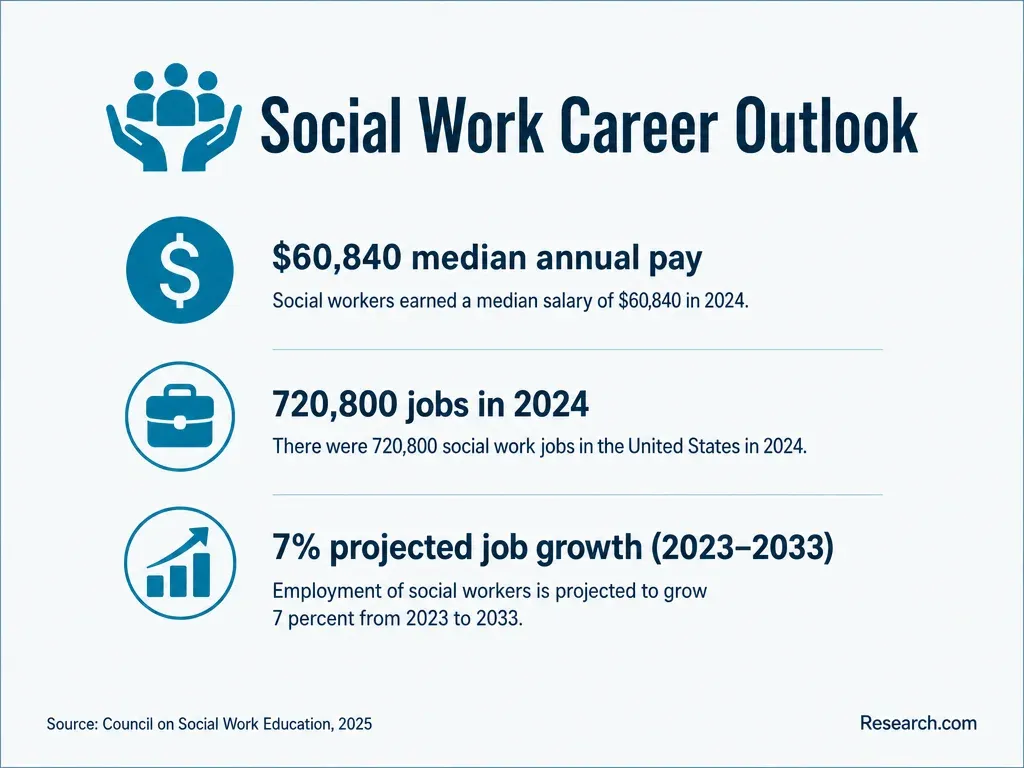
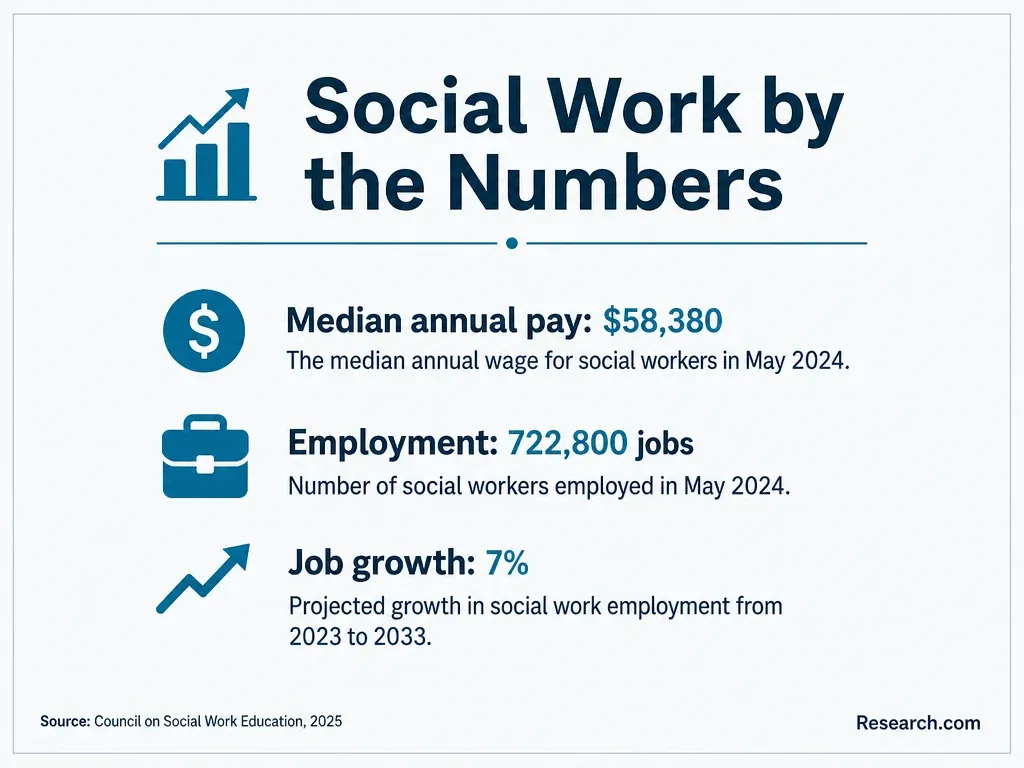
The following U.S. Bureau of Labor Statistics figures describe occupations, not starting salaries or returns from a particular degree. The May 2025 medians and 2025-2035 projections help compare broad labor markets; local employers and license requirements may differ.
| Occupation | Median annual pay, May 2025 | Projected employment growth, 2025-2035 |
| Child, family, and school social workers | $59,550 | 4% |
| Healthcare social workers | $67,880 | 8% |
| Mental health and substance abuse social workers | $60,280 | 10% |
Healthcare's higher occupation-wide median does not mean every healthcare referral role pays more, and faster projected growth does not guarantee an opening in a particular community. Use local postings and social work master's earnings across states as context while checking the credential, experience, and day-to-day coordination duties of roles that interest you.
Other Things You Should Know About Social Work
Yes, if the receiving service accepts it. A client's statement can explain their priorities in their own words. Ask how they want it shared and do not present it as a professional assessment.
Tell the client what the agency actually said, confirm whether another route is available, and document the response. A declined referral does not establish that the client has no service needs.
Follow the receiving organization's language-access process and the client's preferences. Use a qualified interpreter or translation service when required; do not assume a family member or an unreviewed automated translation is appropriate.
Only if agency policy permits the tool and the information entered. Do not put identifiable client information into an unapproved system. A worker must still verify accuracy, consent, role boundaries, and the final text.
- NASW Standards for Social Work Case Management | nycourts.gov https://www.nycourts.gov/reporter/webdocs/nasw_standards_socialwork_casemgt.htm
- Structured Printed Referral Letter (Form Letter) - PMC - NIH https://pmc.ncbi.nlm.nih.gov/articles/PMC3894031/
- ADA Requirements: Effective Communication https://www.ada.gov/resources/effective-communication/
- Overview of the Privacy Act: Disclosures to Third Parties | United States Department of Justice https://www.justice.gov/opcl/overview-privacy-act-1974-2020-edition/disclosures-third-parties
- Ethics & the Exam: 1.16 Referral for Services | socialworktestprep.com https://socialworktestprep.com/blog/2025/may/28/ethics-the-exam-1-16-referral-for-services/
- Code of Ethics of the National Association of Social Workers | naswma.org https://www.naswma.org/page/71/Code-of-Ethics-of-the-National-ssociation-of-Social-Workers.htm
- NSCSW | Guidelines for Social Work Documentation https://nscsw.org/practice/swguidelinesdocumentation/
- Informed Consent, Privacy, and Confidentiality | Preparing for the Masters ASWB Exam https://umsystem.pressbooks.pub/aswbprep/chapter/consent-confidentiality-privacy/
- Social Workers' Ethical Responsibilities to Clients https://www.socialworkers.org/About/Ethics/Code-of-Ethics/Code-of-Ethics-English/Social-Workers-Ethical-Responsibilities-to-Clients
- Practice Notes: To Report or Not to Report: When That Is the Question | ocswssw.org https://www.ocswssw.org/ocswssw-resources/practice-notes-to-report-or-not-to-report-when-that-is-the-question/