2027 Social Work PhD Dissertation Committees: Roles and Planning Questions
Audited and Verified:
Our Editorial and Data Verification Process
Research.com uses government datasets, official education statistics and primary institutional information to support its career and degree guides. Our review process checks factual accuracy, occupational definitions, source dates and the requirements associated with the credentials discussed.
How This Article Was Fact-Checked
Our editorial team verifies salary estimates, employment projections, education requirements and program information against original data providers and official organizations. Salary figures are checked against the relevant occupational definitions and reporting periods. Information about licensure, accreditation and required in-person training is reviewed separately.
Fact-checked and verified on:

Co-Founder and Chief Data Scientist
A dissertation committee can sharpen a social work study - or delay it if its members disagree about the question, methods, or access to participants. For PhD students preparing a proposal, the important decision is not simply whom to invite. It is how to assemble a group that can guide feasible, ethical research and meet the university's approval rules. This guide explains committee roles, selection and timing, questions to ask, and what to expect through the final defense, so you can plan before commitments become difficult to change.
Key Things You Should Know
- Your chair usually coordinates dissertation guidance; other members contribute subject, methods, practice, or interdisciplinary expertise. Your graduate school determines who is eligible and how many members are required.
- Recruit around a researchable question, available data, ethical safeguards, and members' capacity to respond - not reputation alone. Confirm the membership and approval process in writing.
- Plan for at least two distinct review points: proposal approval before the approved study proceeds and a final dissertation defense. Committee approval does not replace institutional review board or agency authorization.
What does a social work PhD dissertation committee do?
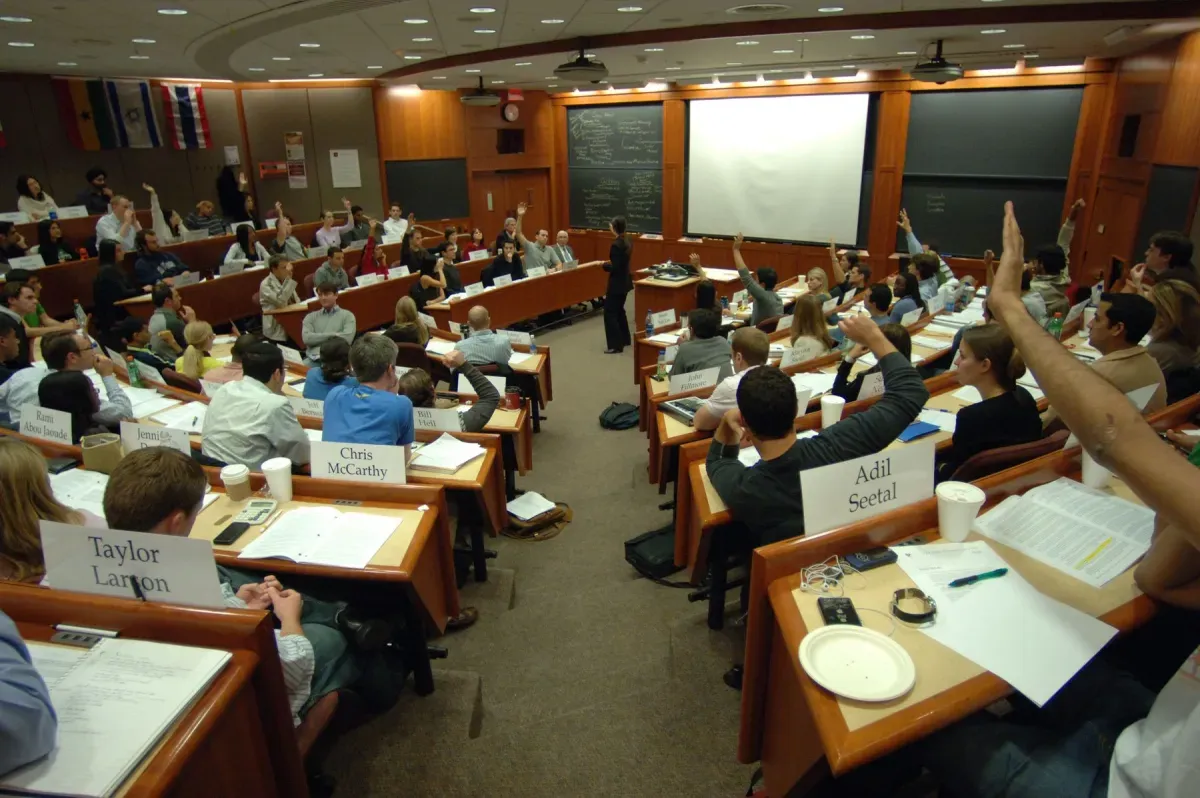
A social work PhD dissertation committee mentors and evaluates a student's original research. It helps turn a broad concern - such as access to behavioral health services - into a defensible question, appropriate design, ethical data plan, and scholarly contribution. Members read drafts, challenge assumptions, assess progress at formal milestones, and determine whether the work meets the program's dissertation standards.
The chair generally manages the intellectual and procedural work between meetings: agreeing on draft expectations, coordinating feedback, and advising when a proposal or dissertation is ready to circulate. Members are not interchangeable reviewers. One might identify weaknesses in sampling, while another spots a mismatch between an agency setting and the claims the study makes about practice.
A dissertation about exploring roles for master's-prepared social workers, for example, may need both workforce-research expertise and someone who understands how job duties differ across settings. The committee tests the study's claims; it does not guarantee publication, agency access, or a particular career outcome.
Who serves on a social work dissertation committee?
Most committees include a chair and additional faculty members, but titles, eligibility rules, and the number of seats vary by university. A program may require members from the social work faculty, a graduate-faculty appointment, an outside-department representative, or approval for a practitioner who does not hold a faculty position. Check whether an external expert can vote or serve only as an adviser.
These contributions can overlap; the point is to cover the study's most consequential gaps without assembling a group too large to coordinate.
| Potential member | Most useful contribution | Boundary to check |
| Chair | Ongoing mentoring, draft coordination, and milestone readiness | Eligibility to chair under graduate-school rules |
| Methods specialist | Design, sampling, measurement, analysis, and interpretation | Availability throughout the project |
| Social work or population specialist | Practice context, theory, policy, and relevance to communities | Fit with the precise question rather than the broad topic |
| External or interdisciplinary member | Perspective from another discipline, agency, or community partnership | Appointment, voting, and conflict-of-interest rules |
Research expertise matters more than assuming someone is qualified because they hold a social work credential. Likewise, social work bachelor's accreditation questions concern BSW program recognition, not who may sit on a PhD dissertation committee; the graduate school sets committee eligibility.
How do you choose a dissertation chair and committee members?
Start with a provisional question and a one-page description of the population, data source, proposed design, and likely access barriers. Ask a prospective chair how closely the project fits their expertise and whether they can mentor it through completion. A prominent scholar who is unavailable for months at a time may be a worse fit than a responsive scholar with closely related methods experience.
Choose other members to address risks the chair cannot cover. For agency-based research, that may include recruitment, data governance, or implementation knowledge.
If a proposed study concerns field-placement partnerships, familiarity with MSW practicum site coordination questions may help a member distinguish what schools control from what agency partners control. That expertise still does not confer permission to use agency records.
Before inviting anyone, ask the chair how the program handles invitations and whether the proposed mix meets membership rules. Check for conflicting methodological commitments, supervisory relationships, and competing expectations about publication or community dissemination. Complementary criticism is valuable; unresolved disagreement about the study's basic purpose is not.
Begin identifying a chair when you can describe a plausible research area and the methods you need to learn. Formally appoint the committee by your program's deadline - often before a proposal defense - and early enough for members to influence the design rather than react to a nearly finished proposal. Coursework, qualifying exams, funding terms, and appointment rules determine the actual sequence.
Work backward from the intended proposal date. Allow time for invitations, required approvals, a complete draft, each member's review period, and revisions. Add a separate buffer for agency negotiations or data-use agreements; neither a favorable committee meeting nor a tight funding timeline guarantees access to data.
Students coming from an MSW may be familiar with intensive course and placement schedules, including accelerated MSW coursework and field expectations. A PhD dissertation runs on different dependencies: faculty review, research permissions, recruitment, analysis, and defensible interpretation. Set the calendar around those dependencies, not a presumed course-completion date.
An invitation should establish more than interest in the topic. Use the same concise project summary with each person, then ask questions that reveal whether their contribution and availability match the work.
- Which part of this question or design could you advise on most effectively, and where would I need another expert?
- What are your expectations for draft length, review time, meetings, and communication between milestones?
- What concerns do you see about sampling, agency access, participant protection, or the scope of the claims?
- Are you eligible and available to serve through the expected defense period, including if the project takes longer?
- How should disagreements among members be raised and resolved before a defense?
Also ask the chair who can advise on funding and project expenses. Dissertation travel, transcription, participant-related costs, and continued enrollment may affect feasibility; they should not be confused with social work master's cost and salary context. Request your PhD program's actual funding terms and continuation fees before committing to an expensive design.
The committee should press for alignment: Does the question call for interviews, administrative data, a survey, an experiment, or a mixed-methods design? Can the proposed sample support the claims? Are measures appropriate for the population and setting? What will happen if recruitment or agency access falls short? Early answers prevent a project from becoming larger than its resources.
For studies involving clients, workers, or agency records, members should examine consent, confidentiality, power differences, secure handling of data, and community or agency interests. If a study measures clinical supervision, the researcher must define the variable carefully; understanding required experience in clinical social work illustrates why supervised work cannot be treated as a uniform category across jurisdictions.
The committee reviews the academic design. The institution's review process determines what ethics review is required, while an agency or data steward decides whether it will grant access under its own rules. Obtain the required determinations and permissions before the activities they cover; a proposal defense is not an institutional review board ruling, and presumed access is not an approval.
At a proposal defense, expect to justify the problem, contribution, conceptual framing, design, sample or data source, analysis plan, ethical safeguards, and feasibility. The committee may approve the proposal, require revisions, or follow another outcome defined by program policy. Record required changes and who must sign off before moving ahead.
At the final defense, expect to explain what you actually did, what the evidence supports, how you handled limitations and unexpected findings, and what the work contributes to social work knowledge. A study comparing students choosing between two MSW study pathways, for instance, must distinguish observed differences from claims that a pathway caused them unless its design supports causal inference.
Ask the chair which draft must reach members, by when, and what revisions may remain after a successful defense. The defense outcome and the university's final manuscript acceptance are separate milestones.
Online doctoral programs commonly use video meetings, shared drafts, and electronic approval workflows, but the university decides whether defenses may be remote, hybrid, or on campus. Confirm time-zone expectations, required live attendance, recording rules, identity verification, accessibility arrangements, and where signatures or forms must be submitted. Ask whether an external member may participate remotely.
Remote study changes logistics, not research permissions. A student studying online social work qualifications and career directions still needs a feasible sampling plan and any required ethics or site approvals. If the project depends on a local agency, verify who can authorize recruitment and data access before treating online enrollment as location-independent research.
For a defense, agree on a backup plan for connection failure and confirm how confidential or unpublished information may be shared on the chosen platform. Use the university's approved systems rather than assuming a familiar meeting tool meets its data rules.
How can you resolve committee conflicts or change members?
First identify the disagreement. A member may be challenging the evidence, requesting a different method, or objecting to a missed deadline; each calls for a different response. Ask the chair to summarize competing recommendations and the decision needed. Circulate a brief written revision plan so members can correct misunderstandings before they become defense-day surprises.
Substantive criticism deserves an evidence-based response. If members disagree about whether regional wage figures support a claim, for example, check the occupation, geography, reference year, and limits of the measure; planning an MSW career with regional salary context is different from estimating a causal return to an MSW in a dissertation.
If the problem is persistent nonresponse, a conflict of interest, a change in faculty availability, or a relationship that prevents fair evaluation, consult the doctoral director or graduate school's written process.
Keep records of drafts and decisions, seek help through the designated channel, and obtain formal approval before treating a replacement as a committee member. A membership change may require another review of the proposal or delay a scheduled defense.
Other Things You Should Know About Social Work
Usually, students do not pay appointed faculty members directly for committee service. Ask the program whether outside-member honoraria, travel, or other approved expenses are possible and who pays them.
No. Committee service alone does not establish authorship. Discuss substantial contributions, publication plans, and the university's authorship guidance before preparing a manuscript.
Yes. Contact the university's accessibility office and graduate program early to arrange accommodations under their procedures. Share only the information needed to organize the defense.
Not necessarily. Required revisions, final manuscript formatting, deposit deadlines, and degree audits may remain. Confirm each requirement with the graduate school.
- Ensuring ethical standards and procedures for research with human beings | who.int https://www.who.int/activities/ensuring-ethical-standards-and-procedures-for-research-with-human-beings
- Community-based Participatory Research (CBPR) - PMC - NIH https://pmc.ncbi.nlm.nih.gov/articles/PMC6054913/
- Doctoral Committees and Exams Process | umn.edu https://wrs.umn.edu/resources/handbook/doctoral
- PhD Handbook | School of Social Welfare | The University of Kansas https://socwel.ku.edu/current-students/program-handbooks/phd-handbook
- Supervisory Committee - UW School of Social Work https://socialwork.uw.edu/old-phd/phd-program-manual/supervisory-committee/
- What Are the Steps to the Dissertation Process? | Walden University https://www.waldenu.edu/online-doctoral-programs/resource/what-are-the-steps-to-the-dissertation-process
- Committee Composition | University of Hawaiʻi at Mānoa | Assessment and Curriculum Support Center https://manoa.hawaii.edu/graduate/committee-composition/index.php
- Forming Your Committee - The Graduate School https://graduateschool.charlotte.edu/current-students/thesis-and-dissertation/forming-your-committee/
- What Is the Role of a Dissertation Committee? | GCU Blog https://www.gcu.edu/blog/doctoral-journey/what-role-dissertation-committee
- Online Dissertation Milestones - University Graduate School https://gradschool.fiu.edu/online-dissertation-milestones/