2027 Post-MSW Supervision in Private Group Practices: Employment and Training Questions
Audited and Verified:
Our Editorial and Data Verification Process
Research.com uses government datasets, official education statistics and primary institutional information to support its career and degree guides. Our review process checks factual accuracy, occupational definitions, source dates and the requirements associated with the credentials discussed.
How This Article Was Fact-Checked
Our editorial team verifies salary estimates, employment projections, education requirements and program information against original data providers and official organizations. Salary figures are checked against the relevant occupational definitions and reporting periods. Information about licensure, accreditation and required in-person training is reviewed separately.
Fact-checked and verified on:

Co-Founder and Chief Data Scientist
A private group practice may offer an MSW graduate paid clinical work and a path toward independent licensure - but a job offer alone does not make the hours count. State rules govern the license, supervisor, clinical work, and records; the practice determines much of the pay, training, and day-to-day support. This guide helps new graduates compare offers, identify arrangements that need board confirmation, and get essential promises in writing before accepting a caseload.
Key Things You Should Know
- Group-practice work can count toward clinical licensure only if the graduate's authorization, supervisor, duties, supervision format, and documentation meet the applicable state board's rules.
- Post-MSW clinical experience commonly involves thousands of practice hours; MSW field-placement hours are a separate educational requirement, not a substitute.
- Compare an offer's effective pay after unpaid work and supervision costs - not just its advertised per-session rate - and clarify whether the practice treats you as an employee or contractor.
Can MSW graduates earn clinical supervision hours in private group practices?
Yes, in many states. A private group practice is not inherently disqualified as a setting for post-MSW supervised clinical experience. What matters is whether the particular work arrangement satisfies the licensing board's requirements for the graduate's license category, permitted activities, qualified supervision, and recordkeeping.
Clinical experience hours generally refer to eligible post-degree work, while supervision hours refer to required meetings or contact with an approved supervisor. Boards may set separate rules for each. An offer to provide "LCSW supervision" is not proof that every client session, administrative hour, or supervision meeting will qualify.
Confirm the rules of the state where you will practice before seeing clients. If the practice offers telehealth across state lines, check authorization in the client's jurisdiction as well; an online MSW program eligibility by intended state guide can inform education planning, but it does not establish permission to provide telehealth or count post-degree hours.
What degree and license do social workers need before starting supervised practice?
The usual educational starting point for the clinical social work pathway is an MSW that meets the target board's education requirements, commonly including applicable CSWE accreditation. A BSW, MSW field placement, or clinical concentration alone does not grant independent psychotherapy authority. A DSW, PhD, or certificate does not replace a qualifying MSW or a required license.
States use different pre-independent license titles and procedures. Depending on the jurisdiction, a graduate may need an associate, master's-level, or other initial license; an approved application or supervision plan; an examination; or some combination before beginning countable work.
Eligibility to apply, an approved application, and an active license are different statuses. Ask the board which status permits you to begin clinical duties and accrue hours, then verify any employer-required credentialing separately.
If you are still choosing an MSW route, fast-track social work master's study options may shorten the educational sequence for eligible students, but faster graduation does not automatically shorten the state's post-degree supervision requirement.
How many supervised hours are required for clinical social work licensure?
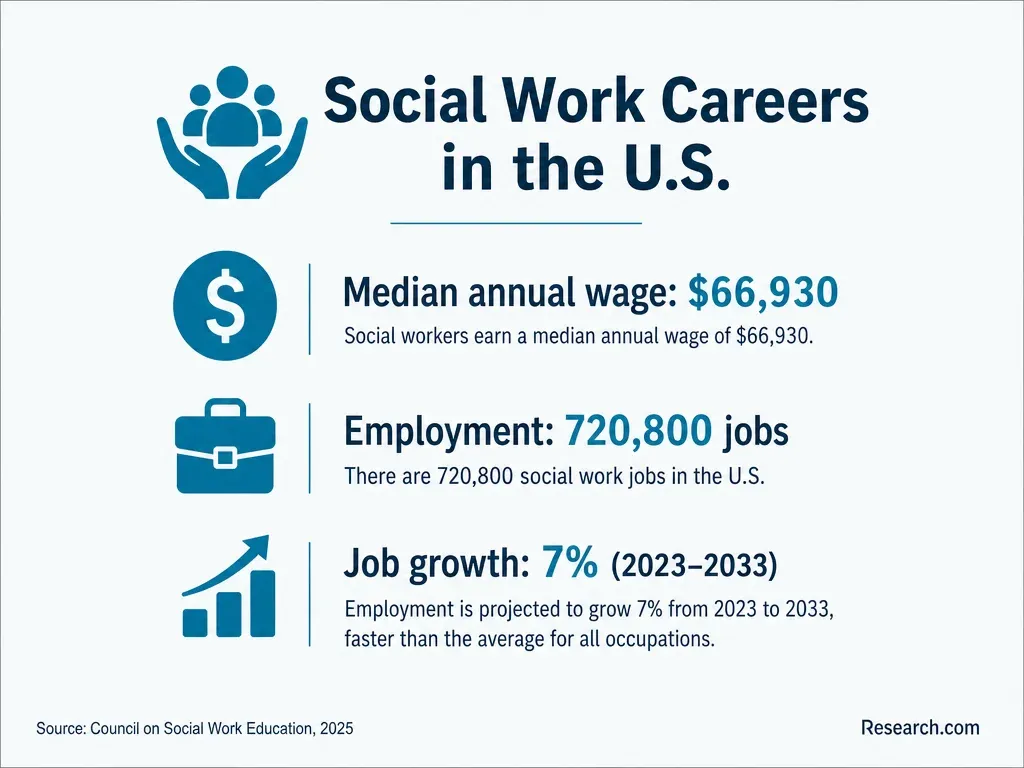
There is no single national total. State boards commonly require thousands of post-MSW experience hours accumulated over a minimum period, along with a separately defined amount and frequency of supervision. Some distinguish direct client contact from other clinical activities or impose limits on hours earned in a week or by telehealth. Exams and other application requirements may also apply.
Use your target board's current rules and forms to identify four separate figures: total eligible experience, required direct clinical work, required supervision contact, and minimum elapsed time. A practice's forecast of when you will be "done" is only an estimate; cancellations, leave, caseload changes, and excluded activities can alter it. Maintain a running log that matches the board's categories and obtain required signatures on schedule.
Additional education is not a shortcut around those requirements. If you are considering a doctorate while accruing hours, comparing social work doctorate completion timelines addresses a separate educational decision - not the clinical-license clock.
The board - not the practice's job title - determines who qualifies. Rules may specify the supervisor's license type, independent clinical status, years of experience, supervisor training, registration, and whether an outside supervisor is allowed. Some jurisdictions accept certain other licensed clinicians; others require a clinical social worker for some or all supervision. Confirm the rule before relying on a practice owner, clinical director, or contracted supervisor.
Ask the prospective supervisor for their license number, issuing state, relevant supervisory qualifications, and availability. Clarify who will sign board forms if they leave the practice, and whether supervision continues during vacations or a change in your caseload. Clinical consultation from colleagues can be valuable without necessarily counting as required supervision.
A doctorate may support someone's teaching or leadership goals, but it is not, by itself, a supervisory license. Someone comparing lower-tuition social work doctorates should treat that as a distinct career decision; for this job offer, verify the proposed supervisor's board-recognized qualifications.
Possibly, but do not assume either format counts without limits. Boards may distinguish live video from phone, email, or asynchronous messages; individual from group supervision; and in-person from remote contact. They may also restrict group size, require a minimum frequency, or require the supervisor to hold a license in a relevant jurisdiction.
Ask the practice for a sample weekly supervision schedule and a plan for cancellations and urgent consultations. A monthly group meeting may be professionally useful yet fail a board's frequency or individual-contact rule. Remote supervision also needs a private setting and approved technology for discussing protected client information.
Flexible coursework and flexible supervision are different promises. A guide to self-paced MSW program structures can help someone planning their degree, but post-MSW supervision still requires the live contact and clinical oversight specified by the board and employer.
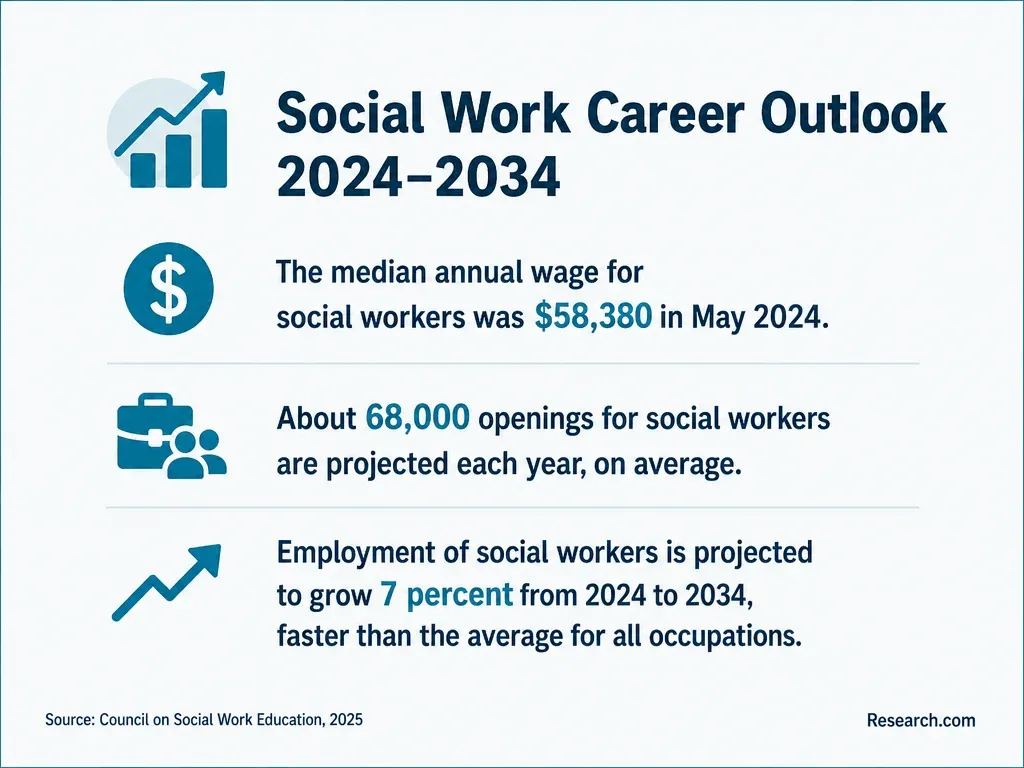
Pay varies by location, payer mix, caseload, experience, and compensation model. Practices may offer a salary, hourly wages, or pay tied to completed sessions or collected revenue. The last model can leave a new clinician with little income during referral ramp-up, cancellations, claim delays, and time spent on notes or meetings. Ask whether the practice pays for supervision, deducts its cost, requires you to hire someone independently, or provides it only while you maintain a minimum caseload.
For perspective, the U.S. Bureau of Labor Statistics reports a $60,280 median annual wage in May 2025 for mental health and substance abuse social workers. That occupation-wide figure includes workers with different credentials and employers; it is not a starting salary or a group-practice offer. Exploring regional pay patterns for MSW careers can provide additional context, but written offer terms are the better basis for this decision.
Compare offers using a realistic month: expected completed sessions multiplied by your actual pay per session, minus any supervision expense and other costs you must bear. Then ask which non-session hours are paid, when payment arrives, whether benefits are included, and what happens if referrals fall short. Do not compare a contractor's gross per-session amount directly with an employee's wage without accounting for taxes, benefits, and unpaid time.
Supervision should develop clinical judgment, not merely supply a signature. An early-career clinician needs orientation to permitted scope, assessment and documentation standards, informed consent, referrals, crisis escalation, mandated-reporting procedures, and the practice's approach to culturally responsive care. A manageable starting caseload and access to timely consultation matter when cases exceed current competence.
Ask how the practice reviews notes, observes or discusses clinical work, assigns cases, and responds when a supervisor is unavailable. Training in an intervention should include feedback and an opportunity to recognize when referral or additional expertise is needed. The graduate remains responsible for practicing within their authorization and competence; supervision is not blanket permission to take every case.
MSW field education and this post-degree training serve different purposes. If you are still in school, graduate social work placement coordination options concern university-approved placements - not a promise that subsequent employment at the same site will satisfy a licensing board.
Before accepting clients, establish whose credentials the practice uses for billing, which payers permit services by a pre-independent clinician, and what supervision or disclosure those payers require. Never assume a supervisor's license number can simply be used to bill for someone else's work. Payer contracts, state law, and the practice's compliance procedures control the arrangement; the practice should explain its process without asking you to misrepresent who provided a service.
Confirm who owns and maintains records, who reviews or signs notes, how corrections are made, and how clients are told about your status and supervision. Records and case discussions should follow applicable privacy law, informed-consent rules, and practice policy. Discuss only the information needed for supervision, using approved systems rather than personal messaging or unapproved AI tools.
Billing workflow also affects take-home pay: ask whether your compensation depends on a completed visit, a submitted claim, or money actually collected. When budgeting for the transition from school to practice, cost-focused online MSW program choices address education costs, while the employment agreement must explain this job's reimbursement and payment terms.
How can MSW graduates evaluate group practice supervision opportunities?
Compare offers as a licensure-and-employment package, not a session rate with supervision added as a perk. Request enough detail to check the arrangement against your board's rules and to estimate whether the work will be financially sustainable.
Before signing, work through these checks in order:
- Confirm your degree and present license status meet the board's conditions for starting countable experience; ask whether a supervision plan must be filed or approved first.
- Verify the proposed supervisor's qualifications, the permitted supervision format and frequency, covered duties, and the process for signed hour records.
- Get the expected caseload, referral ramp-up, paid and unpaid duties, compensation formula, benefits, supervision charges, and worker classification in writing.
- Ask for orientation, consultation and coverage plans, billing and privacy policies, and a procedure for cases outside your current competence.
- Compare the written terms with board guidance and resolve discrepancies before relying on projected hours or income.
A stronger offer is one that makes eligible experience documentable, offers dependable clinical support, and remains viable when caseload or reimbursement fluctuates.
If those conditions are absent, an agency job with clearer supervision and steadier pay may be the better first step - even if its advertised session rate is lower. If you have not yet completed an MSW, MSW programs with flexible admission criteria address an earlier decision; admissions flexibility does not establish the quality of a future supervision job.
Other Things You Should Know About Social Work
Not automatically. The receiving board decides whether prior experience, supervision, and documentation meet its requirements. Keep signed records and ask that board about its rules before relocating.
Qualifying hours do not necessarily disappear, but proving them can become difficult. Obtain any required supervisor verification and copies of your own permitted hour records before departure; do not take confidential client records.
Ask whether the practice's policy covers your license status, duties, and work outside scheduled hours. Separate individual coverage may be worthwhile or required by the practice; review exclusions and coverage limits before deciding.
No. The practice can support and document your experience, but the licensing board determines whether you meet its requirements and issues the license. Treat any projected completion date as conditional.
- Fact Sheet 13: Employment Relationship Under the Fair Labor Standards Act (FLSA) | U.S. Department of Labor https://www.dol.gov/agencies/whd/fact-sheets/13-flsa-employment-relationship
- Levels and Eligibility Requirements | North Carolina Social Work Certification and Licensure Board https://www.ncswboard.gov/levels-and-eligibility-requirements/
- South Carolina Board of Social Work Examiners | sc.gov https://llr.sc.gov/sw/faq.aspx
- Classifying Employees & Independent Contractors | texas.gov https://www.twc.texas.gov/programs/unemployment-tax/classifying-employees-independent-contractors
- Requirements for holders of an LMSW seeking an LCSW | Texas Behavioral Health Executive Council https://bhec.texas.gov/texas-state-board-of-social-worker-examiners/applying-for-a-social-work-license/how-to-become-an-lcsw/requirements-for-holders-of-an-lmsw-seeking-an-lcsw/
- ARC 8880C - Iowa Administrative Rules https://rules.iowa.gov/Notice/Details/8880C
- Supervision Rule Changes | Health & Human Services https://hhs.iowa.gov/media/2445/download
- CHAPTER Mhp 300 LICENSE AND REGISTRATION REQUIREMENTS, APPLICATIONS AND FEES | nh.gov https://gc.nh.gov/rules/state_agencies/mhp300.html
- Independent contractor (self-employed) or employee? | Internal Revenue Service https://www.irs.gov/businesses/small-businesses-self-employed/independent-contractor-self-employed-or-employee
- Independent Contractor Rules of Thumb - Office of Legal Affairs https://legal.charlotte.edu/legal-topics/contracts/unc-charlotte-contract-checklist/independent-contractor-rules-of-thumb/