2027 Clinical Social Worker vs Behavioral Health Care Manager: Scope and Training Questions
Audited and Verified:
Our Editorial and Data Verification Process
Research.com uses government datasets, official education statistics and primary institutional information to support its career and degree guides. Our review process checks factual accuracy, occupational definitions, source dates and the requirements associated with the credentials discussed.
How This Article Was Fact-Checked
Our editorial team verifies salary estimates, employment projections, education requirements and program information against original data providers and official organizations. Salary figures are checked against the relevant occupational definitions and reporting periods. Information about licensure, accreditation and required in-person training is reviewed separately.
Fact-checked and verified on:

Co-Founder and Chief Data Scientist
A behavioral health care manager may work alongside a clinical social worker, but the titles do not imply the same authority to assess, treat, or practice independently. That distinction matters when behavioral health teams are hiring across disciplines and applicants are deciding whether an MSW and clinical license are worth pursuing.
This comparison is for students, career changers, and early-career professionals. It explains what each role does, which qualifications employers and state boards may require, and how to compare training costs with the work you actually want to perform.
Key Things You Should Know
- Clinical social work is a licensed practice pathway: An MSW is generally the educational starting point, while independent clinical authority requires the applicable state's license and usually qualifying post-degree supervision.
- Behavioral health care manager is a job function, not one uniform license: Employers may hire social workers, nurses, counselors, or other qualified professionals, but a care-management title does not expand anyone's clinical scope.
- Compare pay data cautiously: The U.S. Bureau of Labor Statistics reports a $60,280 May 2025 median wage and 10% projected 2025-2035 growth for mental health and substance abuse social workers; it does not publish an equivalent category for behavioral health care managers.
What is the difference between a clinical social worker and a behavioral health care manager?
A clinical social worker provides mental health assessment and treatment within the scope of their state license. Depending on licensure level and setting, that may include diagnosis, psychotherapy, crisis assessment, and coordination with other providers. A behavioral health care manager organizes and follows up on behavioral health care. Duties often include patient outreach, screening, tracking symptoms and treatment response, connecting patients with services, and bringing concerns to a treating clinician.
The distinction is especially important in the Collaborative Care Model, or CoCM. A care manager commonly works with a primary care clinician and a psychiatric consultant; the care manager does not acquire the clinician's prescribing or independent treatment authority. Elsewhere, "behavioral health care manager" may describe a broader case-management or utilization-management job. Read the posting's duties rather than relying on its title.
This comparison shows which responsibilities should drive your career decision. Actual permissions depend on the worker's credential, state law, supervision, and employer policy.
| Decision point | Clinical social worker | Behavioral health care manager |
| Primary contribution | Clinical assessment and treatment within licensed scope | Coordination, follow-up, monitoring, and communication across a care team |
| Typical autonomy | Depends on license category; independent clinical practice requires appropriate authorization | Depends on underlying credential and team structure; the job title alone grants no clinical authority |
| Best fit if you want to | Build a career providing psychotherapy or other clinical social work services | Improve access, continuity, and follow-through across behavioral health services |
For a broader view of adjacent roles, see comparing jobs that use a social work master's degree.
What degrees are required for each career?
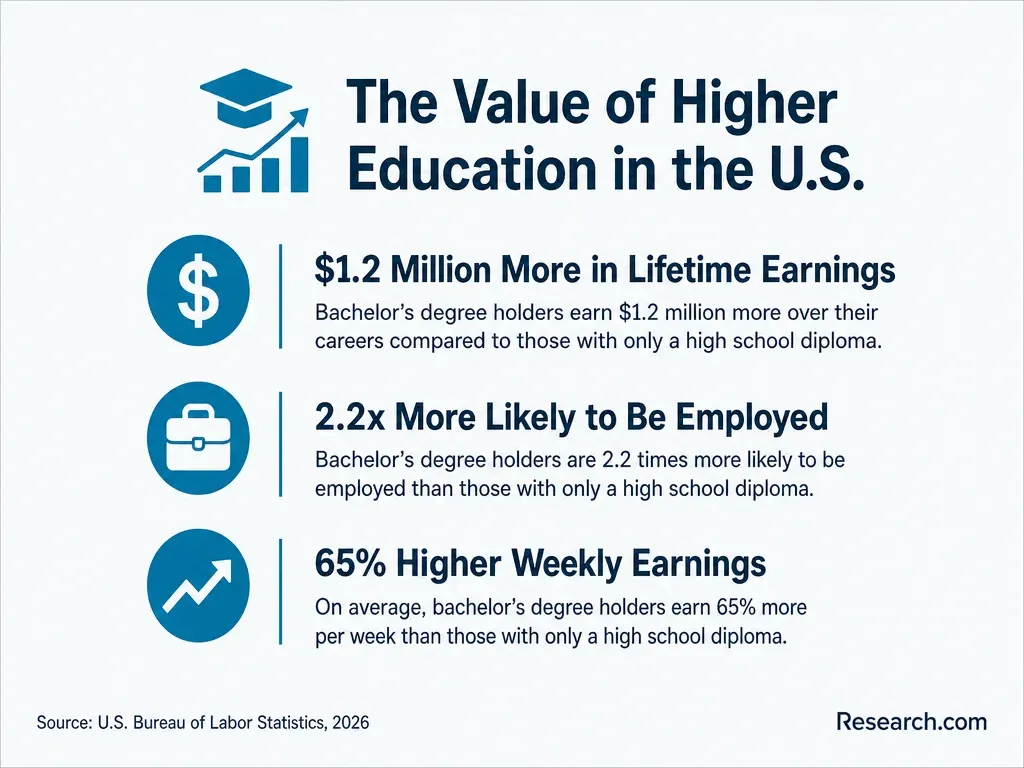
In the United States, the usual educational route to clinical social work is a qualifying MSW, followed by the state's licensing steps. A BSW prepares graduates for generalist social work positions but is not, by itself, the route to independent clinical social work. A clinical concentration can strengthen preparation; its name does not confer a license.
Behavioral health care manager requirements are set primarily by the employer, care model, and specific duties. Some positions seek an MSW or a nursing degree; others accept counseling, psychology, public health, or related preparation plus relevant experience. A role requiring licensed clinical decisions may demand a particular professional license even if its title says "care manager." A DSW or PhD is generally unnecessary for entry into either role.
If you already have a bachelor's degree outside social work, a traditional or foundation MSW may be an option. Advanced-standing MSW tracks generally require a qualifying BSW and additional program-specific conditions; experience in human services alone does not establish eligibility. Compare online MSW application accessibility against the degree and eventual license you need, rather than treating easier admission as proof of career fit.
How do licensing and certification requirements differ between the two roles?
Clinical social work is regulated by state licensing boards. License names, educational criteria, examinations where required, supervision rules, and permitted activities vary by state. An MSW graduate may qualify to apply for an initial license without yet qualifying to practice independently. Board-approved post-degree experience, documentation, and a separate clinical-license decision may stand between those stages.
There is no single nationwide "behavioral health care manager" license. An employer may require an active social work, nursing, or counseling license, or may hire an unlicensed worker for duties that do not require one. Optional care-management training or certification can demonstrate skills, but it does not substitute for a state license or authorize psychotherapy. Likewise, an independently licensed clinical social worker who takes a care-manager job retains only the privileges of their actual license, subject to the laws and policies governing that work.
Before accepting a role or enrolling, compare the job description with your state board's permitted activities and supervision rules. If an MSW is your route, use MSW programs and state licensure education requirements as a starting point, then confirm eligibility with the board for the state where you intend to practice.
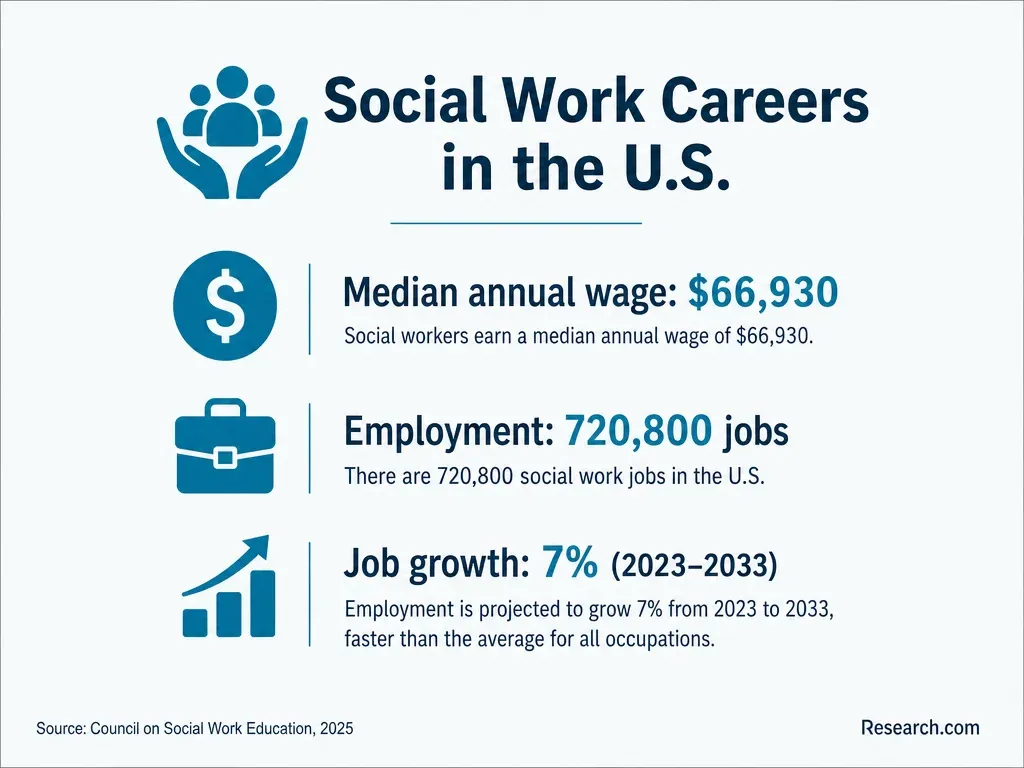
The Bureau of Labor Statistics (BLS) does not report a national wage or growth projection for the job title "behavioral health care manager." Its social work categories provide context for clinical social work, not a guaranteed salary for a licensed clinician. The figures below are U.S. median annual wages for May 2025 and projected employment changes from 2025 to 2035.
| BLS occupation | Median annual wage | Projected employment growth | How to use it |
| Mental health and substance abuse social workers | $60,280 | 10% | Relevant context for many behavioral health social work jobs, not a clinical-license salary |
| Healthcare social workers | $67,880 | 8% | Context for social work positions in healthcare settings, where duties vary |
| Social workers, all specialties | $61,780 | 6% | A broad benchmark that combines different specialties and qualifications |
A care manager might be classified under a social work, nursing, counseling, or other occupation - or hold a job that does not map neatly to one category. Compare actual postings in your area by required credential, compensation, schedule, caseload, and benefits. Do not assume the clinical path pays more in every setting, or that graduate tuition will be recovered through a particular salary.
Further study should have a defined purpose. For example, exploring affordable online DSW education may be relevant to an experienced social worker seeking practice leadership, but a doctorate is not the standard next step for either job and does not itself increase licensed scope.
A full-time bachelor's degree commonly takes about four years. A traditional MSW often takes about two additional full-time academic years; a qualifying advanced-standing route can be shorter. Clinical practice then requires whatever post-degree supervised experience and other steps the state specifies before independent licensure. Calendar time can lengthen when placements, paid work, caregiving, supervision availability, or part-time enrollment constrain the schedule.
A behavioral health care manager may be able to enter sooner with an existing qualifying degree and experience. That is not a promise of immediate entry: employers may require a license, prior patient-facing work, model-specific training, or substantial onboarding. For a career changer, the shortest sensible route depends on whether the target job involves coordination or independently delivered clinical treatment.
Compare total costs, not tuition alone. MSW costs can include fees, books, placement travel, screenings, reduced paid hours during field education, and later licensing expenses. Care-management training may be employer-funded, but an unrelated certificate can be a poor investment if local employers require a degree or license instead. A guide to affordable online MSW study can help narrow school options; request each program's complete cost and field-scheduling information before comparing offers.
Clinical social work preparation commonly combines human behavior, social policy, research, ethics, assessment, and intervention coursework with supervised MSW field education. Clinical learning may include interviewing, treatment planning, documentation, risk assessment, and appropriate referral. Observed competence in a placement matters more than a concentration label. Academic field hours are not automatically post-degree clinical-license supervision hours.
For care management, particularly in integrated primary care, useful preparation includes screening and measurement, communication with patients and interdisciplinary teams, resource navigation, follow-up workflows, documentation, privacy, and recognizing when to escalate a concern. An MSW placement in an integrated clinic can develop those skills, but so can relevant preparation in other disciplines when an employer accepts it. Ask whether a placement allows meaningful participation in team reviews and patient follow-up rather than assuming any behavioral health site teaches the same work.
If speed is a priority, condensed social work master's program schedules still need to accommodate approved field learning and skills practice. Confirm the weekly placement commitment before choosing an accelerated route.
An online MSW can teach the academic components of clinical social work, but it does not remove field placement, supervised skills work, or eventual state licensing requirements. Campus-based study may make in-person practice and local agency connections easier; online study may reduce commuting while requiring live sessions, local placements, or occasional visits. Neither format is inherently better preparation for care management or clinical practice.
Choose a format around the parts that cannot easily move: approved placement availability, qualified field instruction, live skills sessions, and your work schedule. If you are considering understanding online social work degree choices, ask who finds the placement, whether your location is served, and which activities require attendance at fixed times. Online coursework alone is not evidence that the full program fits an employed student's week.
Institutional accreditation concerns the college or university; Council on Social Work Education (CSWE) accreditation concerns a BSW or MSW program's social work education. For a prospective clinical social worker, the program's exact accreditation status and the state board's educational rules are consequential. Verify that the status applies to your program and enrollment cohort. Accreditation supports an educational pathway; it does not award a license or guarantee clinical competence.
A behavioral health care manager whose employer accepts a nursing, counseling, or other degree should check the accreditation and licensing rules for that profession rather than assuming CSWE applies to every candidate. Program quality also requires a closer look at field support, supervision, and skills assessment. When evaluating online MSW programs with a clinical focus, distinguish a school's advertised specialization from verified program accreditation and the board's criteria for clinical licensure.
Traditional MSW programs generally admit applicants with bachelor's degrees in a range of fields, subject to each school's academic and application standards. Advanced-standing tracks apply different eligibility rules tied to qualifying prior social work education. Schools may review transcripts, writing, service experience, references, and program-specific prerequisites; admission does not guarantee a particular placement or eventual license.
Applicants with healthcare, community-service, or counseling-adjacent experience should show what they can already do - such as engagement, coordination, and documentation - and where they still need foundational social work training. If an application requirement is a barrier, review online MSW programs without recommendation letters, then verify the current policy with admissions. Do not select a program on that criterion before checking its accreditation, field arrangements, and fit with your intended state of practice.
Where do these professionals work, and how can they advance?
Clinical social workers work in settings such as behavioral health clinics, hospitals, community agencies, and, where authorized, independent practice. Behavioral health care managers may work in primary care practices, health systems, community programs, or organizations coordinating services across providers. The same employer can hire both, with different responsibilities and reporting relationships.
Clinical social workers may advance through independent licensure, specialized practice, supervision, or clinical leadership. Care managers may develop expertise in integrated care, team operations, quality improvement, or program leadership. An MSW and clinical license can make it possible to move between some roles, but they are not prerequisites for every care-management position. A DSW may suit an experienced professional with a defined leadership or practice-improvement goal; fast-track Doctor of Social Work study options should be evaluated against that goal, not treated as a routine promotion requirement.
Before choosing either path, ask employers what a typical caseload looks like, who makes treatment decisions, how escalation works, how much time goes to documentation, and what supervision and safety support are available. Those answers reveal more about day-to-day fit than the title alone.
Other Things You Should Know About Social Work
Possibly, but the title and hours alone are not enough. Ask your state board whether the actual clinical duties, setting, supervisor, and documentation meet its requirements before relying on the experience.
Yes. A licensed clinical social worker may fill a care-manager position, but their assigned duties and employer policies still govern what they do in that job.
Sometimes. Team oversight, employment supervision, and board-qualifying clinical supervision are different arrangements. Check the employer's structure and, if licensure hours are involved, the board's supervisor rules.
Ask who conducts psychiatric consultation, who makes treatment decisions, how patient concerns are escalated, what training is provided, and which measures the team uses to track follow-up.
- Collaborative mental health care: A narrative review - PMC - NIH https://pmc.ncbi.nlm.nih.gov/articles/PMC9803502/
- NASW Standards for Social Work Case Management | nycourts.gov https://www.nycourts.gov/reporter/webdocs/nasw_standards_socialwork_casemgt.htm
- Behavioral Health Career Descriptions | samhsa.gov https://www.samhsa.gov/about/careers/behavioral-health-workforce/careers-by-state/descriptions
- Reimbursement Mechanisms and Challenges in Team-Based... - NCBI https://www.ncbi.nlm.nih.gov/books/NBK606628/
- Care Coordination | Agency for Healthcare Research and Quality https://www.ahrq.gov/ncepcr/care/coordination.html
- What Is a Clinical Social Worker? A Complete Guide | New Mexico Highlands University https://online.nmhu.edu/resources/article/what-is-a-clinical-social-worker/
- Education and supervised experience as part of licensure | Association of Social Work Boards https://www.aswb.org/education-and-supervised-experience-as-part-of-licensure/
- Social Work Licensure: State-by-State Requirements Guide | MSW Online https://mastersinsocialworkonline.org/licensure/