2027 Clinical Impressions in Social Work: What They Mean in Assessment and Documentation
Audited and Verified:
Our Editorial and Data Verification Process
Research.com uses government datasets, official education statistics and primary institutional information to support its career and degree guides. Our review process checks factual accuracy, occupational definitions, source dates and the requirements associated with the credentials discussed.
How This Article Was Fact-Checked
Our editorial team verifies salary estimates, employment projections, education requirements and program information against original data providers and official organizations. Salary figures are checked against the relevant occupational definitions and reporting periods. Information about licensure, accreditation and required in-person training is reviewed separately.
Fact-checked and verified on:

Co-Founder and Chief Data Scientist
A clinical impression turns assessment information into a concise, defensible account of what may be affecting a client and what needs attention next. For social work students and early-career practitioners, the challenge is to make that judgment useful without overstating certainty or working beyond their role.
This guide explains what an impression includes, how to write one, how it differs from a diagnosis, and how supervision, ethics, and documentation rules shape the final note. It also helps readers decide whether they need more practice, supervision, or formal clinical preparation.
Key Things You Should Know
- A clinical impression is a provisional, evidence-linked interpretation of assessment findings - not a label for everything a client reports and not necessarily a formal diagnosis.
- A useful impression separates reported information, observed findings, professional interpretation, and unanswered questions; it then identifies a proportionate next step.
- Writing or signing a diagnostic impression depends on state scope-of-practice rules, license status, supervision, and agency policy; an MSW alone does not confer independent clinical authority.
What is a clinical impression in social work?
A clinical impression is the practitioner's reasoned, usually provisional synthesis of an assessment. It connects what a client says, what the social worker observes, relevant history, strengths, risks, and environmental conditions to an initial understanding of the presenting concern. It should show why a particular follow-up, referral, or intervention is being considered.
The term does not imply that every social worker is providing psychotherapy or making a psychiatric diagnosis. In a hospital, an impression might connect a patient's discharge concerns with housing instability and available supports. In behavioral health, it may address symptoms, functioning, and possible explanations that need further evaluation. A BSW-level worker may contribute assessment observations within an authorized role, while diagnostic responsibilities may require a different license or supervision arrangement. Accredited bachelor's pathways into social work provide generalist preparation, not automatic authority for independent clinical practice.
How do social workers write a clinical impression?
Write the impression after gathering enough information to support a limited conclusion, not by turning the first concern mentioned into a diagnosis. The sequence below helps students and supervised practitioners make their reasoning visible to a supervisor or another authorized reader.
- Identify the assessment question: State the presenting concern and the decision the assessment needs to inform.
- Sort information by source: Distinguish client report, direct observation, records, screening results, and collateral information obtained with appropriate authority.
- Interpret cautiously: Explain how the findings relate to functioning, strengths, safety, and person-in-environment factors; name meaningful gaps or alternative explanations.
- Connect interpretation to action: Record the agreed next step, referral, further assessment, consultation, or plan to revisit the impression.
- Review scope and wording: Use the agency's format, seek required supervision, and remove unsupported labels or stigmatizing descriptions.
Prefer "client reports sleeping poorly since losing stable housing" to "client is noncompliant and depressed" when neither noncompliance nor a depressive disorder has been established. For students, coursework and simulations can build this distinction, but online social work study and professional preparation should also include feedback on observed skills and appropriately supervised field work.
What are examples of clinical impressions in social work?
These fictional, educational examples illustrate reasoning and limits, not actual client encounters or templates to paste into a record. An agency may require different fields, terminology, or supervisor review.
- Healthcare discharge planning: "Patient reports concern about obtaining medication and reaching follow-up appointments after discharge. Limited transportation and uncertainty about coverage may interfere with the discharge plan. Patient identifies a neighbor as a possible source of rides but has not confirmed availability. With patient agreement, verify benefits and transportation options with the care team before discharge." This impression links a practical barrier to a next step without inventing a psychiatric condition.
- Supervised behavioral health assessment: "Client reports persistent worry and difficulty concentrating following a recent job loss. Client describes reduced sleep but continues to attend scheduled appointments and identifies supportive family contact. Current information does not establish the cause of the symptoms; further assessment of duration, functioning, health factors, and safety is indicated. Discuss findings and follow-up plan with the clinical supervisor." The wording makes uncertainty explicit rather than presenting a diagnosis as settled.
If an instructor or admissions process requests a writing sample, use a fictional scenario or material the agency has expressly authorized for that purpose - never an identifiable client record. A social work master's application reference guide can help with application logistics, but the school's instructions control what it accepts.
An impression explains the practitioner's current interpretation; a diagnosis identifies a condition under an applicable diagnostic framework. An impression can describe symptoms, functional concerns, contextual factors, and uncertainty without assigning a disorder. A formal diagnosis generally requires sufficient evaluation and must be made by someone authorized to do so in that setting and jurisdiction.
A diagnostic statement can sometimes appear within a clinical impression, but the terms are not interchangeable. A screening score, client-reported diagnosis, or referral reason should not silently become the social worker's own confirmed diagnosis. Likewise, "rule out" or "consider further assessment for" signals a question, not a final determination. The applicable state board's scope rules, supervisor requirements, and agency procedures determine who may diagnose or sign particular records.
For a student planning a clinical career, social work master's entry routes explained clarifies how prior education affects the MSW sequence. Neither a traditional nor an advanced-standing route, by itself, grants independent diagnostic authority.
Include enough detail to explain the assessment decision, but not every sensitive fact collected. The exact record fields depend on the setting, purpose, applicable law, payer requirements, and agency policy.
A well-supported impression generally identifies the presenting concern and its effect on functioning; the sources and limits of information; relevant symptoms or observations; strengths and supports; environmental barriers; and the reasoning behind any proposed follow-up. Address safety concerns according to the setting's assessment and escalation procedures. Document significant uncertainty, including information still needed, rather than filling gaps with assumptions.
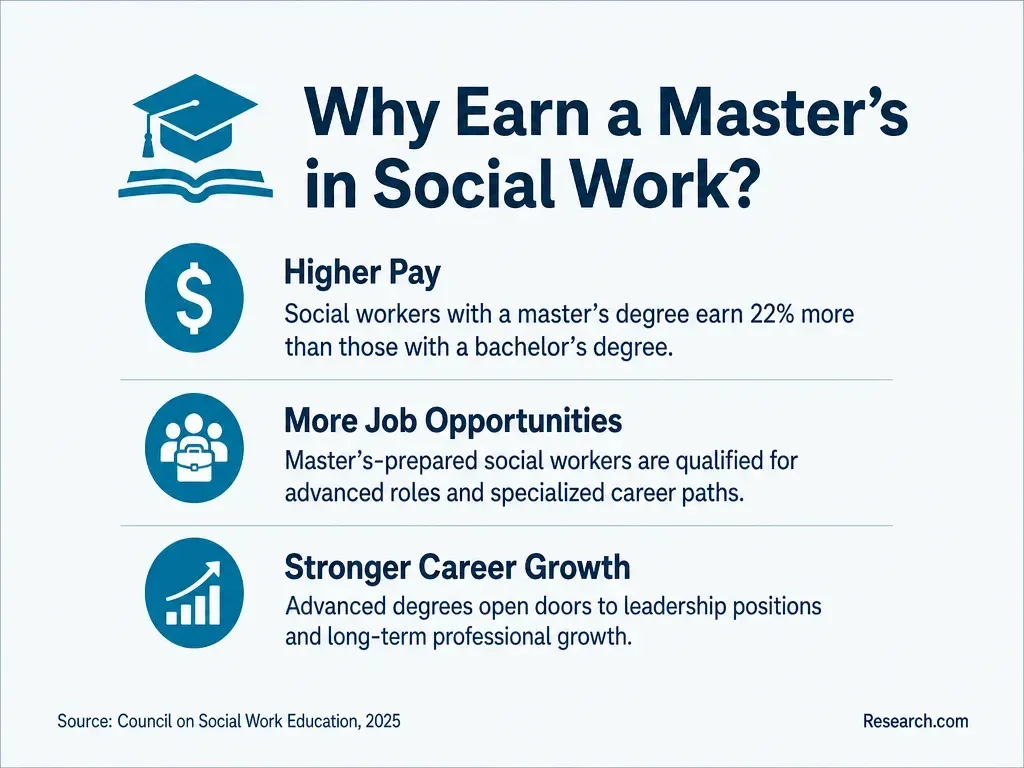
Keep fact and inference distinguishable. "Client reports missing two appointments because the bus route changed" identifies a source and circumstance. "Client lacks motivation" infers an internal cause that the information does not establish. If the target role requires an MSW, compare supervised assessment opportunities alongside tuition when reviewing online MSW programs organized by cost; a lower price alone says little about documentation training.
A clinical impression should lead to a testable next decision. It may identify what to assess further, which concern to address first, what the client wants to change, and which supports or referrals are feasible. In clinical treatment, it can help connect a collaboratively chosen goal to an appropriate intervention and a way to review progress. In case management, it may instead support service coordination or advocacy rather than psychotherapy.
The plan should change when new information changes the impression. For example, if an apparent appointment-attendance problem is better explained by transportation access, the response may shift from a behavior-focused goal to removing an access barrier. That is a person-in-environment judgment, not merely a change in wording.
Assessment skills also transfer across settings, but the permitted decisions differ. MSW career directions beyond a single job title can help readers distinguish clinical treatment from healthcare coordination, school services, and other roles before selecting training.
Clinical impressions should be accurate, timely, relevant to services, and respectful of client dignity. The NASW Code of Ethics offers professional guidance on matters such as competence, privacy, and records, but it does not replace governing law, licensing rules, or agency policy. Requirements for consent, record access, retention, mandatory reporting, and electronic sharing vary by jurisdiction and setting.
Use culturally responsive language and consider whether an apparent individual problem reflects inaccessible services, discrimination, or another structural barrier. Attribute sensitive information to its source, avoid unnecessary speculation, and document consultation when it materially informs a decision. Digital records can be read by multiple authorized team members, so write for continuity of care without assuming every detail belongs in every shared note.
A student's field instructor and a graduate's licensing supervisor may have different responsibilities. Where post-degree supervision is required, confirm which encounters, supervisors, and records the state board accepts; social work clinical hour requirements and completion planning is a separate issue from completing an MSW field placement.
What careers use clinical assessment skills, and what are their salary and outlook?
Assessment and documentation matter in behavioral health, hospitals, schools, child and family services, and care coordination, though job duties and licensing requirements differ. The table shows U.S. Bureau of Labor Statistics occupational medians for May 2025 and projected employment change for 2025-2035. These categories are not license types or salaries promised to a particular graduate.
| Social work occupation | Median annual pay, May 2025 | Projected employment change, 2025-2035 |
| Child, family, and school social workers | $59,550 | +4% |
| Healthcare social workers | $67,880 | +8% |
| Mental health and substance abuse social workers | $60,280 | +10% |
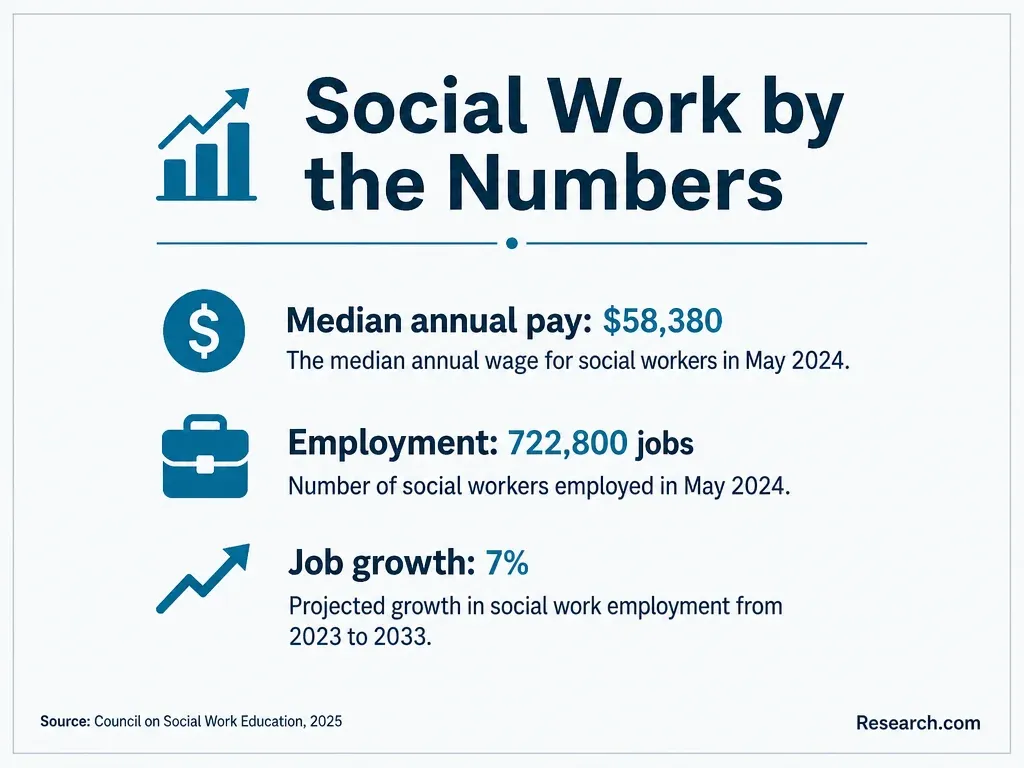
The figures show different occupation-wide pay and growth patterns, not the return on an MSW or clinical license. Compare local postings for the actual role, required credentials, supervision, caseload, documentation time, and pay structure. A state-level social work pay comparison guide can add geographic context, but a specific offer and its working conditions matter more than a national median.
Other Things You Should Know About Social Work
Not necessarily. The agency's record format and the purpose of the encounter determine where assessment reasoning belongs. Follow documentation policy rather than adding a diagnostic-sounding paragraph to every note.
Clients may have rights to access records and request an amendment, subject to applicable law and setting-specific rules. Follow the organization's record-request process; do not quietly overwrite the original entry.
No. A screening result supplies information for assessment but does not, on its own, explain context, establish a diagnosis, or determine a plan. Record what the tool measures and its relevant limitations.
Share only what applicable consent, privacy rules, and agency policy permit and what the referral requires. Check authorization and the recipient before transmitting sensitive assessment details.
- SOAP Notes - StatPearls - NCBI Bookshelf - NIH https://www.ncbi.nlm.nih.gov/books/NBK482263/
- Universal Electronic Records Management (ERM) Requirements | National Archives https://www.archives.gov/records-mgmt/policy/universalermrequirements
- The Clinical Global Impressions Scale - PMC https://pmc.ncbi.nlm.nih.gov/articles/PMC2880930/
- Diagnostic Assessment Components | mn.gov https://pathlore.dhs.mn.gov/courseware/adultmentalhealth/da/pages/0403.htm
- Risk and Protective Factors for Suicide | cdc.gov https://www.cdc.gov/suicide/risk-factors/
- Uncovering the Intricacies of the Clinical Intake Assessment | uchicago.edu https://www.journals.uchicago.edu/doi/full/10.1086/715439
- Tests, Measures and Instruments: Clinical Assessment | Library Guides at UC Berkeley https://guides.lib.berkeley.edu/c.php
- Clinical Assessments and the Mental Status Examination | Psychological Science: Understanding Human Behavior https://openbooks.library.baylor.edu/understandingpsychdisorders/chapter/clinical-assessments-and-the-mental-status-examination/
- NASW Practice Standards for Clinical Social Workers https://www.socialworkers.org/Practice/NASW-Practice-Standards-Guidelines/NASW-Practice-Standards-for-Clinical-Social-Workers
- NSCSW | Guidelines for Social Work Documentation https://nscsw.org/practice/swguidelinesdocumentation/