
Most Affordable Trade School & Training Programs - Leading Certification Courses in New Jersey for 2026

Co-Founder and Chief Data Scientist
Choosing a trade school in New Jersey is mainly a cost-and-outcome decision: Which program can prepare you for work quickly, what will it cost, and will the credential match the job you want? This 2026 guide focuses on affordable trade school options in New Jersey and explains how to compare programs by tuition, format, training quality, career fit, and financial aid.
The ranking referenced in this guide was developed by the Research.com team of data scientists to help students identify trade school programs worth closer review. A strong diploma, certificate, or apprenticeship pathway can lead to practical skills, industry credentials, and faster entry into fields such as construction, healthcare support, automotive technology, HVAC, electrical work, plumbing, welding, and IT.
Use this guide to understand what trade school in New Jersey typically involves, how long programs take, what students may pay, which financial aid options can reduce costs, and what career paths may be available after graduation.
Key benefits of finishing trade school programs trade school in New Jersey
Trade school can be a practical alternative to a traditional four-year route for students who want job-focused training, shorter completion timelines, and a clearer connection between coursework and employment. In New Jersey, the strongest benefits usually come from choosing a program that aligns with local employer demand and prepares students for required certifications, apprenticeships, or licensure.
- Career-focused earning potential: Trade school graduates in New Jersey can pursue fields with strong wage potential. Electricians can make $40,000-$100,000+, while plumbers and HVAC workers may start around $40,000-$55,000. Experienced professionals often earn over $70,000.
- Multiple skilled-trade pathways: Common career options include electricians, construction managers, plumbers, HVAC technicians, and automotive specialists. These fields offer different work settings, training requirements, and long-term advancement opportunities.
- Hands-on training: Many programs emphasize labs, workshops, simulations, and real equipment, which can help students build job-ready skills faster than lecture-only coursework.
- Flexible learning options: Earning a trade school diploma or certification online can help students balance school with work or family responsibilities. Online formats are especially useful for theory-based coursework, though hands-on fields may still require in-person labs or clinical practice.
- Lower time commitment than many degree paths: Some trade school programs take months rather than years, making them appealing to students who want to enter the workforce sooner.
- Most Affordable Trade School & Training Programs - Leading Certification Courses in New Jersey for 2026
- What can I expect from trade school programs trade schools in New Jersey?
- Where can I work after finishing trade school programs trade schools in New Jersey?
What can I expect from trade school programs trade schools in New Jersey?
Trade school programs in New Jersey are designed to move students from classroom instruction into applied skill development. Expect a practical curriculum, frequent skills assessments, and a strong emphasis on safety, tools, industry standards, and job preparation.
Costs vary by school and program. The average cost of a trade school program in New Jersey typically ranges from about $5,000 to $15,000, depending on the length, equipment needs, and complexity of the training. Programs in fields such as welding, plumbing, cybersecurity, automotive technology, and healthcare support may differ significantly in required supplies, lab access, testing fees, and certification costs.
Most students can expect a mix of the following:
- Classroom instruction covering trade theory, safety rules, codes, procedures, terminology, and workplace expectations.
- Hands-on practice in labs, workshops, simulation rooms, or training facilities with industry-relevant equipment.
- Credential preparation for certifications, apprenticeships, licensing exams, or employer-recognized competencies.
- Career support such as resume help, interview preparation, employer connections, and job placement guidance.
- Student support services that may include tutoring, advising, financial aid counseling, and help with scheduling or program planning.
Before enrolling, ask whether the program includes all required training hours, whether certification exam fees are included in tuition, and whether the school has current employer partnerships in your target field. A lower tuition price is helpful, but it should not come at the expense of required hands-on practice or recognized credentials.
Where can I work after finishing trade school programs trade schools in New Jersey?
After completing a trade school program in New Jersey, graduates may qualify for entry-level or apprenticeship-based roles in healthcare, construction, manufacturing, automotive technology, electrical work, HVAC, plumbing, welding, and IT. The best work setting depends on the trade, credential level, and whether the field requires supervised experience or state licensure.
Common employment settings include:
- Construction companies and contractors hiring workers in electrical, plumbing, carpentry, welding, HVAC, and building maintenance roles.
- Hospitals, clinics, dental offices, and medical practices hiring medical assistants, dental assistants, pharmacy technicians, and other healthcare support workers.
- Manufacturers and industrial employers seeking technicians for maintenance, machining, welding, electrical systems, and production support.
- Automotive dealerships and repair shops hiring automotive service technicians, diesel technicians, and diagnostics specialists.
- IT departments, managed service providers, and local businesses hiring workers with technical support, cybersecurity, or networking training.
- Public-sector agencies and utilities employing skilled workers in infrastructure, maintenance, transportation, and essential services.
Apprenticeships are another major pathway. The New Jersey Apprenticeship Network allows graduates to earn wages while gaining supervised, real-world experience. This route is especially common in fields where classroom training alone is not enough to qualify for higher-level positions.
Some graduates also work in education or training environments as workshop assistants or instructional support staff at vocational schools. These roles can be a good fit for experienced tradespeople who want to help train new workers.
Earnings after trade school in New Jersey depend on the occupation, location, credential, experience level, union or nonunion pathway, and whether the graduate completes an apprenticeship or advanced certification. The figures below show the salary ranges and examples commonly associated with trade school outcomes in the state.
| Career or location example | Reported earnings | What it means for students |
| Typical trade school graduate earnings in New Jersey | $68,000 to $80,000 annually | Actual pay varies by trade, region, employer, and experience. |
| Common starting point reported by graduates | $68,172 per year, or about $32.77 per hour | This can represent a strong early-career wage for students entering skilled fields. |
| Jersey City example | Approximately $73,516 annually, or $35.34 per hour | Higher-cost areas may offer higher wages, but living expenses may also be higher. |
| Skilled trade professionals such as electricians, HVAC technicians, and plumbers | Around $79,627 per year, with many making between $70,251 and $91,684 | Experience, specialization, overtime, and licensing can affect total pay. |
| Specialized certifications in roles such as industrial maintenance | Salaries exceeding $100,000 annually | Higher earnings often require advanced skills, experience, and employer demand. |
When comparing programs, do not rely only on advertised salary potential. Ask schools for job placement information, typical starting wages for recent graduates, employer partners, and whether graduates qualify for entry-level work immediately or must complete additional supervised hours.
- Applicants typically need a high school diploma, GED, or equivalent to enter trade schools in New Jersey, with minimum ages ranging from 16 to 18.
- Admissions usually require school transcripts and may include placement tests; SAT or ACT scores are rarely needed.
- Tuition costs generally range from $5,000 to $18,000 for complete programs lasting several months to two years.
- Many schools have the same tuition for in-state and out-of-state students, with financial aid like federal grants and scholarships available.
- Starting salaries for graduates in fields like electricians or nurses usually fall between $40,000 and $55,000 annually.
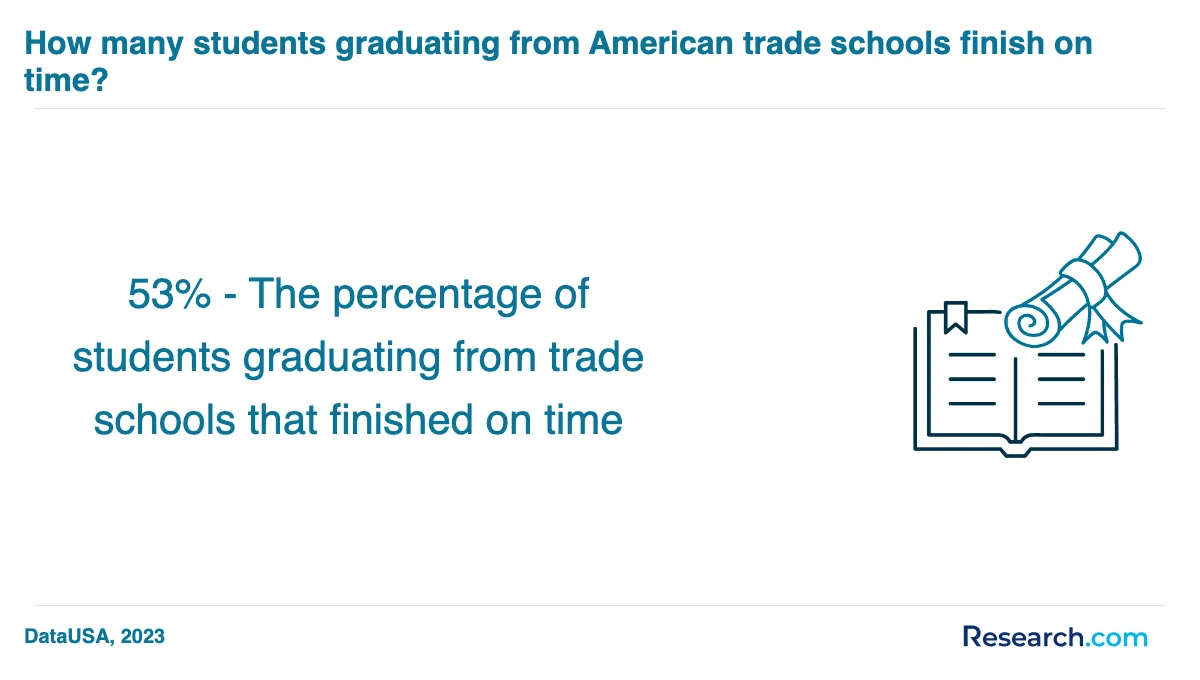
Trade school completion time in New Jersey depends on the occupation, schedule, credential level, and whether the program is full-time, part-time, accelerated, shared-time, or apprenticeship-based. Students who want to start working quickly may prefer short certificate programs, while those entering licensed or apprenticeship-based trades should expect a longer path.
| Program format | Typical timeline mentioned | Best fit |
| Full-time vocational or technical program | About 10 months | Students who can commit to a regular schedule and want a structured path into the workforce. |
| Accelerated technical training | As quickly as six months | Students who can handle an intensive pace and already know their target trade. |
| Shared-time high school vocational program | Two years | High school students completing academic requirements while exploring trade training. |
| Apprenticeship pathway | Several years | Students who want paid, supervised work experience combined with classroom instruction. |
Shorter programs can reduce time away from the workforce, but they may cover a narrower skill set. Longer programs can provide more practice, stronger employer connections, or a pathway toward licensure. Before choosing the fastest option, confirm that the program includes the training hours, lab work, and credentials required for the job you want.
The main difference between online and on-campus trade school programs is how students complete theory coursework, receive support, and practice hands-on skills. Online programs offer scheduling flexibility, while on-campus programs usually provide stronger access to labs, instructors, equipment, and peer learning.
| Format | Advantages | Trade-offs |
| Online trade school coursework | Students can study from home, manage lessons around work or family, and use remote supports such as 24/7 tutoring and virtual academic advising. | Some students may find it harder to stay engaged, build peer connections, or complete hands-on practice without in-person labs. |
| On-campus trade school programs | Students get direct access to instructors, workshops, labs, equipment, and real-time feedback. | Commuting, fixed class times, and campus schedules can make work-life balance more difficult. |
| Hybrid programs | Students may complete theory online while attending campus for labs, clinical work, or equipment-based training. | Students still need to plan for in-person requirements and transportation. |
For hands-on fields such as welding, automotive technology, HVAC, plumbing, dental assisting, and medical assisting, verify how the school delivers required practice hours. Online coursework can be useful, but students should be cautious about programs that do not provide enough supervised practical training for employer expectations or certification requirements.
The average cost of trade school in New Jersey varies by institution, program length, equipment needs, and whether students choose a private technical school, public vocational program, or community college option. Tuition and fees generally range between $15,000 and $29,000, with the statewide average around $21,473 for the 2024-2025 academic year.
| Cost example | Amount stated | How to interpret it |
| General New Jersey trade school tuition and fees | $15,000 to $29,000 | Private and equipment-heavy programs often fall toward the higher end. |
| Statewide average | Around $21,473 for the 2024-2025 academic year | Use this as a broad benchmark, not a guarantee of your final cost. |
| Lincoln Tech example | Upwards of $29,370 | Higher-priced programs should be compared against facilities, credential preparation, and job support. |
| Pennco Tech example | $23,316 | Students should confirm what fees, tools, and materials are included. |
| Fortis Institute example | Near $21,232 | This aligns closely with the typical New Jersey trade school tuition and fees stated above. |
| Brookdale Community College online HVAC technician program | $2,895 | Lower-cost online options may be useful, but students should consider the limits of hands-on experience. |
Tuition is only part of the budget. Living expenses can add $10,000 to $15,000 per year depending on housing, transportation, and personal circumstances. Books, supplies, tools, uniforms, testing fees, and commuting can push total costs between $26,000 to $38,000.
Financial aid can reduce the out-of-pocket cost. New Jersey students may explore scholarships such as the Governor's Industry Vocations Scholarship, which provides up to $2,000 to qualifying students. Some community colleges even offer tuition-free programs. Students comparing cheapest carpentry training programs online should weigh cost against required hands-on training, employer recognition, and credential outcomes.
Trade school students in New Jersey may qualify for federal, state, institutional, and scholarship-based aid. The best starting point is usually the FAFSA, because many grant, loan, and work-study programs use it to determine eligibility. Students should apply early and confirm that their chosen school and program are eligible for the aid they plan to use.
- Federal Student Aid: This includes grants, loans, and work-study opportunities. Early FAFSA filing can help students access available federal benefits before deadlines or funding limits become an issue.
- Tuition Aid Grant (TAG): This state-specific aid can cover large portions of tuition for eligible students who meet income requirements and submit the FAFSA by the September 15 deadline.
- Educational Opportunity Fund (EOF) Grant: This program provides up to $3,050 annually for qualifying students from disadvantaged backgrounds.
- NJ Alternative Financial Aid Application: New Jersey Dreamers may use this application as a pathway to state aid.
- NJ STARS: This program may provide additional support for eligible students, though requirements can change.
- Community College Opportunity Grant: This aid may help students attending eligible community college programs, but students should verify current eligibility rules.
- Scholarships and school-based aid: Trade schools may offer institutional scholarships, payment plans, or employer-sponsored support.
Before enrolling, ask the financial aid office for a full cost breakdown and a written estimate showing tuition, fees, tools, books, supplies, and expected aid. Avoid judging affordability only by monthly payment plans; the total program cost and loan amount matter more.
Most trade school programs in New Jersey require a high school diploma, GED, or equivalent. Schools may also request transcripts, placement testing, identification documents, and proof that the applicant meets age or residency requirements. SAT or ACT scores are rarely needed for typical trade school admission.
For adult learners, the admissions process is often straightforward, but some programs may require additional documentation if the field has licensing, clinical, safety, or certification rules. Dental assisting with radiography, for example, may involve extra documentation to satisfy licensing rules.
For younger students applying to career and technical education (CTE) high schools such as those in Monmouth County or Passaic County, requirements may include county residency and entry into 9th or 10th grade. Applicants may need to complete several steps:
- Submit an online application by the school’s stated deadline.
- Provide recent transcripts, test scores, and school records.
- Complete entrance exams in math and language arts.
- Participate in auditions or interviews if the program requires them.
- Provide identification documents, such as a birth certificate or state student ID.
- Submit essays or proof of prerequisite courses if requested.
Students should review admissions requirements before paying application or enrollment fees. For competitive programs, preparing transcripts, test records, essays, and identification documents early can prevent delays.

Typical trade school courses in New Jersey are practical, occupation-specific, and built around the skills employers expect from entry-level workers. Students usually study safety, tools, terminology, procedures, technical standards, and hands-on troubleshooting.
Common program areas include:
- Automotive technology and diesel mechanics: Courses often focus on engine diagnostics, repair procedures, electrical systems, shop safety, and ASE certification preparation.
- Welding technology: Students may practice multiple welding processes, safety procedures, blueprint reading, materials preparation, and advanced techniques using industry-standard equipment.
- Electrical training: Coursework may cover wiring, circuits, code compliance, safety, installation, testing, and troubleshooting.
- Plumbing training: Students may learn system installation, pipefitting, code requirements, tools, fixtures, and repair methods.
- HVAC training: Programs may teach heating, cooling, ventilation, refrigeration principles, diagnostics, and service procedures.
- Healthcare technician programs: Medical assistant, pharmacy technician, and dental assistant courses are commonly aligned with certification requirements and workplace procedures.
- Heavy equipment operation, transport refrigeration, and trucking: Training may use realistic simulations, equipment practice, and applied projects, especially at Lincoln Tech in South Plainfield.
Schools such as Universal Technical Institute in Bloomfield are known for practical coursework in areas including Diesel Technology and Welding Technology. When comparing courses, ask whether the curriculum uses current equipment, includes enough lab time, and prepares students for the specific credential required in the field.
Trade school specializations in New Jersey cover skilled trades, transportation, healthcare support, construction, mechanical systems, and technical services. The right specialization should match the student’s interests, physical work preferences, certification goals, and local employer demand.
- Automotive and diesel technology: Students can train in automotive repair, diesel engine service, and heavy equipment maintenance. Graduates from schools such as UTI Bloomfield and Lincoln Tech South Plainfield often complete programs in under a year and may pursue industry-recognized certifications like ASE.
- Welding: Students learn multiple processes, shop safety, materials handling, and work with industry-standard tools.
- HVAC: Programs combine theory with practical service, installation, and troubleshooting tasks.
- Plumbing, carpentry, and electrical systems: These specializations may connect to apprenticeships, licensing pathways, and long-term contractor or technician roles.
- Healthcare support: Schools such as Pennco Tech offer programs in medical assisting, billing and coding, and allied health for students seeking rapid workforce entry.
- Niche technical fields: New Jersey trade schools may also offer transport refrigeration and electronic systems technology, sometimes supported by collaborations with top employers.
Students should compare specializations by more than job title. Review the required tools, physical demands, certification exams, lab hours, and whether the school has employer relationships in that specific field. For broader context, exploring the top trade schools in america can help students compare program models beyond New Jersey.
The best trade school program in New Jersey is the one that prepares you for your target occupation at a cost you can manage, with training that employers and licensing bodies recognize. Start with the job you want, then work backward to identify the required credential, program length, hands-on hours, and financial aid options.
Use this checklist before enrolling:
- Confirm admission requirements: Most programs expect a high school diploma or GED. Some schools also use placement tests, transcripts, essays, interviews, or prerequisite coursework.
- Check accreditation and approvals: Make sure the school and program meet any requirements tied to financial aid, certification, apprenticeships, or licensure.
- Compare curriculum details: Look for hands-on training, current equipment, safety instruction, and preparation for industry credentials.
- Ask about certifications: A program should clearly state which certifications or exams it prepares students to take.
- Review program schedule: Rolling admissions and multiple start dates can help working adults, but students should still check attendance rules and lab requirements.
- Evaluate cost carefully: Compare tuition, fees, tools, books, supplies, exam costs, transportation, and living expenses.
- Request career outcome information: Ask about job placement support, employer partners, apprenticeship connections, and typical starting roles.
- Talk to current students or alumni: Their feedback can reveal whether the program delivers enough hands-on practice and career support.
Students interested in HVAC can also review certificate hvac courses online to understand how online coursework may complement in-person training. For hands-on trades, however, online study should not replace required lab, shop, or field experience.

Trade school graduates in New Jersey can pursue career paths in skilled trades, healthcare support, automotive service, construction, manufacturing, and technical services. Many of these roles value hands-on training, practical problem-solving, and the ability to work safely with tools, systems, patients, or equipment.
Common career paths include:
- Construction workers and contractors: Graduates may work on housing, commercial projects, maintenance, or infrastructure-related jobs.
- Welders: Welders may specialize in structural welding, pipe welding, industrial fabrication, or public infrastructure work.
- Automotive technicians: Graduates can work in repair shops or dealerships servicing gasoline and diesel vehicles.
- Electricians and electrical helpers: These roles may involve wiring, installation, maintenance, code compliance, and troubleshooting.
- HVAC technicians: Workers install, maintain, and repair heating, cooling, ventilation, and refrigeration systems.
- Plumbing workers: Graduates may enter apprenticeships or helper roles involving pipe systems, fixtures, installation, and repair.
- Healthcare assistants: Medical and dental aides help fill staffing needs in community clinics, hospitals, dental offices, and medical practices.
County vocational-technical schools and employer partnerships can strengthen career access. Programs connected with nearly 4,000 local employers may give students more exposure to workplace expectations and hiring opportunities.
Students still deciding between pathways can review trade vs vocational school options to understand how different training models fit different goals. The strongest choice is the one that matches your target occupation, required credential, schedule, and budget.
The job market for trade school graduates in New Jersey is supported by demand in health care, manufacturing, construction, mechanical systems, electrical work, HVAC, and other technical fields. Graduates with hands-on training and recognized credentials may be well positioned for employers that need workers who can contribute quickly.
Several factors shape the New Jersey skilled trades employment outlook:
- There are over 27,000 health care and social assistance job postings statewide, reflecting strong demand for specialized skills.
- Manufacturing jobs are growing steadily, with a notable addition of 700 new roles year-over-year.
- Employers report a shortage of skilled tradespeople in mechanical and electrical fields, making trade credentials valuable.
Students should interpret job market strength by occupation, not by “trade school” overall. HVAC, electrical, welding, healthcare support, automotive, and manufacturing roles can have different hiring cycles, credential requirements, and advancement paths. Location also matters; opportunities in Newark, Jersey City, and other employment centers may differ from those in smaller communities.
Before enrolling, compare the program’s employer connections, apprenticeship options, and placement support in your specific field. For a broader view of possible occupations, the trade careers list provides an overview of trade careers, including emerging fields such as green energy and technology-driven roles.
Most Affordable Trade School & Training Programs - Leading Certification Courses in New Jersey for 2026
# 1 position
Middlesex College - Business Administration and Management, General.
associateThe Business Administration and Management, General program at Middlesex College offers a hybrid format with some distance-education options. It prepares students to plan, organize, direct, and control business functions, covering management theory, human resources, accounting, logistics, marketing, and decision-making. The program’s annual in-state tuition is $4,524. Graduates earn a median salary of $33,090 one year after completion. It is accredited by the Middle States Commission on Higher Education.
# 2 position
Middlesex College - Computer and Information Sciences, General.
associateMiddlesex College offers a hybrid program in Computer and Information Sciences, General, providing a blend of in-person and distance education. The curriculum covers computing, computer science, and information science systems without focusing on specialized titles. The annual in-state tuition is $4,524. The program is accredited by the Middle States Commission on Higher Education, ensuring recognized academic standards for students pursuing this field.
# 3 position
Middlesex College - Information Technology.
associateMiddlesex College offers a hybrid Information Technology program focusing on designing technological information systems that support business and research data needs. The curriculum covers computer hardware and software, algorithms, databases, telecommunications, application testing, and human interface design. The program’s annual in-state tuition is $4,524. It is accredited by the Middle States Commission on Higher Education, ensuring a recognized standard of quality education.
# 4 position
Middlesex College - Legal Assistant/Paralegal.
associateThe Legal Assistant/Paralegal program at Middlesex College offers a hybrid format with some distance-education options. It prepares students to perform research, drafting, investigatory, record-keeping, and administrative tasks under attorney supervision. The curriculum includes legal research, document drafting, appraising, pleading, courthouse procedures, and legal specializations. Annual in-state tuition is $4,524. The program is accredited by the Middle States Commission on Higher Education.
# 5 position
Middlesex College - Accounting.
associateThe Accounting program at Middlesex College offers a hybrid format, combining in-person and distance education. It prepares students for professional accounting roles through comprehensive instruction in principles, theory, auditing, tax accounting, and business information systems. The curriculum also covers legal aspects, ethics, and applications in various organizational settings. Annual in-state tuition is $4,524. The program is accredited by the Middle States Commission on Higher Education.
# 6 position
Middlesex College - Marketing/Marketing Management, General.
associateThe Marketing/Marketing Management, General program at Middlesex College offers a hybrid format with some distance-education options. The program prepares students to manage consumer audience development and product distribution. Coursework covers buyer behavior, marketing research principles, demand analysis, pricing theory, strategic planning, advertising, sales management, and consumer relations. Annual in-state tuition is $4,524. The program is accredited by the Middle States Commission on Higher Education.
# 7 position
Middlesex College - Criminal Justice/Police Science.
associateThe Criminal Justice/Police Science program at Middlesex College offers a hybrid format with some distance-education options. It prepares students for duties such as patrol, investigations, traffic and crowd control, evidence management, and crime prevention. The program is accredited by the Middle States Commission on Higher Education. Annual in-state tuition is $4,524, and median earnings one year after completion are $32,712.
# 8 position
Camden County College - Dental Assisting/Assistant.
associateThe Dental Assisting/Assistant program at Camden County College offers a hybrid format with some distance-education options. It prepares students to assist dentists and hygienists by providing patient care, taking dental radiographs, and managing office administrative tasks. The curriculum covers medical record-keeping, equipment maintenance, radiography, chairside assisting, and supervised practice. Annual in-state tuition is $3,960, and median earnings one year after completion are $47,009. The program is accredited by the Middle States Commission on Higher Education.
# 9 position
Camden County College - Veterinary/Animal Health Technology/Technician and Veterinary Assistant.
associateCamden County College offers a program in Veterinary/Animal Health Technology/Technician and Veterinary Assistant that prepares students to assist veterinarians and animal health professionals in patient care and clinical procedures. The curriculum covers animal nursing, health and nutrition, clinical pathology, radiology, anesthesiology, surgical assisting, and office administration. The program is accredited by the Middle States Commission on Higher Education. Annual in-state tuition is $3,960.
# 10 position
Camden County College - Computer and Information Sciences, General.
associateCamden County College offers a hybrid program in Computer and Information Sciences, General, combining computing, computer science, and information science systems. The program is accredited by the Middle States Commission on Higher Education. Annual in-state tuition is $3,960. This program provides some distance-education options, making it flexible for students seeking a general computing education without specializing in specific fields within computer science or information science.
Frequently Asked Questions about trade school programs
Trade schools in New Jersey in 2026 often offer job placement services such as resume building workshops, interview preparation, and direct connections with local employers to assist graduates in securing employment in their chosen fields.
Employers in New Jersey highly value trade school graduates who possess strong technical skills specific to their industry. According to the New Jersey Department of Labor, skills such as electrical installation, HVAC maintenance, and welding are in high demand. In addition to technical expertise, employers prioritize problem-solving abilities and adaptability, as the evolving job market requires workers to learn new tools and methods quickly.
Communication and teamwork skills are also important. A 2023 survey by the National Association of Manufacturers found that 70% of employers in the region prefer graduates who can collaborate effectively. Furthermore, a solid work ethic and punctuality consistently rank among the top traits sought in applicants.
In 2026, students attending trade schools in New Jersey can pursue part-time jobs in retail, food service, or even related apprenticeships. Such positions enhance their practical skills, assist in managing educational expenses, and offer flexible schedules to accommodate school commitments.
To find internships relevant to your trade school program in New Jersey, connect with career services at your trade school, explore online job boards like Indeed or Handshake, and attend local career fairs. Networking with industry professionals and utilizing LinkedIn can also provide valuable internship opportunities tailored to your training.
In New Jersey, trade school students in 2026 can explore several financial aid options. These include Federal Pell Grants, New Jersey Tuition Aid Grants, and scholarships specific to technical and vocational education. Additionally, many schools offer work-study programs to help students offset tuition costs.
Trade school students in New Jersey often face challenges such as balancing education with part-time work, managing financial constraints despite affordable programs, and accessing hands-on training opportunities. Additionally, adapting to a fast-paced curriculum and staying updated with industry trends can also be challenging.
- Most Affordable Trade School & Training Programs - Leading Certification Courses in Maryland for 2026
- Most Affordable Trade School & Training Programs - Leading Certification Courses in Rhode Island for 2026
- Most Affordable Trade School & Training Programs - Leading Certification Courses in West Virginia for 2026
- Most Affordable Trade School & Training Programs - Leading Certification Courses in Vermont for 2026
- Most Affordable Trade School & Training Programs - Leading Certification Courses in South Carolina for 2026
- Most Affordable Trade School & Training Programs - Leading Certification Courses in Tennessee for 2026
- Most Affordable Trade School & Training Programs - Leading Certification Courses in Maine for 2026
- Most Affordable Trade School & Training Programs - Leading Certification Courses in Indiana for 2026
- Most Affordable Trade School & Training Programs - Leading Certification Courses in Georgia for 2026
- Most Affordable Trade School & Training Programs - Leading Certification Courses in Michigan for 2026
- Trade School in New Jersey | The Training Center https://www.thetrainingcenter.com/career-programs
- Career Training and Trade School in South Plainfield, NJ https://www.lincolntech.edu/campus/south-plainfield-nj
- Trade Schools, Career Training in NJ - National Career Institute https://www.nciedu.com/
- Trade & Technical School Bergen County NJ | Eastwick College https://eastwick.edu/hohokus-school-of-trades/
- Back to school: What to expect when you enter trade school - South Jersey Electrical Training https://sjelectricaltraining.com/2023/11/29/back-to-school-what-to-expect-when-you-enter-trade-school/
- New Jersey Tech Schools vs Traditional Colleges https://aci.edu/blog/new-jersey-tech-schools-v-traditional-colleges/
- Medical/Construction/Industrial Training Center - Why I Chose Trade School Over a Four-Year College: A Comprehensive Journey into the Advantages https://mcitcnj.com/why-i-chose-trade-school-over-a-four-year-college-a-comprehensive-journey-into-the-advantages/
- Why Trade School Might Be the Best Move in 2025 https://nj.nextenergypros.com/trade-school-best-move/
- Trade Schools, What Are The Benefits - InterCoast Colleges https://intercoast.edu/articles/benefits-of-trade-schools/
- Vocational education lights a bright career path for New Jersey’s youth - Jersey's Best https://www.jerseysbest.com/family/vocational-education-lights-a-bright-career-path-for-new-jerseys-youth/


