# 1 position


Audited and Verified:
Our Editorial and Data Verification Process
Research.com uses government datasets, official education statistics and primary institutional information to support its career and degree guides. Our review process checks factual accuracy, occupational definitions, source dates and the requirements associated with the credentials discussed.
How This Article Was Fact-Checked
Our editorial team verifies salary estimates, employment projections, education requirements and program information against original data providers and official organizations. Salary figures are checked against the relevant occupational definitions and reporting periods. Information about licensure, accreditation and required in-person training is reviewed separately.
Fact-checked and verified on:

Co-Founder and Chief Data Scientist

Reviewed by Karolina Broda
Fact-Checker and Data Verification
Choosing an affordable plumbing program in Presque Isle means looking beyond tuition: you need hands-on training, a workable route to Maine licensure, and a realistic plan for travel and living costs. The U.S. Bureau of Labor Statistics reports a May 2025 national median wage of $63,800 for plumbers, pipefitters, and steamfitters - an experienced-worker benchmark, not a starting-pay promise. This guide explains the costs, credentials, apprenticeships, and career prospects behind your choice. It also accompanies the Most Affordable Plumber Trade Schools in Presque Isle for 2027 ranking, created by the Research.com team of data scientists to help students identify programs worth considering.
Expect instruction in water-supply, drainage, venting, piping materials, plans, codes, and safe tool use, followed by practice assembling and testing systems. A classroom-only course is not equivalent to supervised installation work. In and around Presque Isle, ask how often students use a plumbing lab and whether the provider helps them find a local employer or registered apprenticeship.
The choice is less about a credential's name than about what it contributes to your next step. This comparison separates school-based preparation from paid work-based training.
| Pathway | What it provides | Best fit and key limitation |
| Certificate or diploma | Focused instruction and, where offered, shop practice | Fits someone seeking a shorter introduction; confirm whether supervised work must still be arranged separately. |
| Associate degree | Trade instruction plus a broader college curriculum, if a relevant program is offered | Fits someone who values a college credential; compare the additional time and cost with its practical benefits. |
| Registered apprenticeship or employer-sponsored route | Supervised jobsite learning, typically alongside related instruction; employment may be paid | Fits someone ready to work while training; entry depends on finding an employer or sponsor. |
Availability, curriculum, and admission terms change. If considering Northern Maine Community College, request its current plumbing-related offerings and confirm the campus, lab access, credential, and employer connections rather than assuming a particular program is running in 2027.
Potential workplaces include residential plumbing contractors, building-maintenance teams, and commercial or institutional construction and service employers. The U.S. Bureau of Labor Statistics describes installation, maintenance, and repair across these settings. Training can help you compete for an entry-level position, but the work you may perform independently depends on Maine's licensing rules and your supervision.
Presque Isle's location in Aroostook County makes the service area important. Ask prospective employers where jobsites are, whether travel time is paid, and whether you need reliable transportation across a wider area than the city itself. A placement that is practical on paper may be expensive if it requires a long daily drive.
The U.S. Bureau of Labor Statistics reports a $63,800 national median annual wage for the combined occupation of plumbers, pipefitters, and steamfitters in May 2025. Half of workers in that national group earned less and half earned more. It is not a Presque Isle wage, a plumber-only figure, or a likely first-year apprentice salary.
For a local decision, request the starting wage, scheduled raises, benefits, and expected hours from actual Aroostook County employers or apprenticeship sponsors. Compare offers on the same basis: a higher hourly rate may be less valuable if work is intermittent or travel and vehicle costs are substantial. Treat any school earnings claim without a stated occupation, location, and reference period cautiously.
A short preparatory credential and an apprenticeship answer different questions. School may introduce the trade and improve readiness for an entry-level job; supervised work and any required examination determine progress toward Maine license categories. Do not assume that finishing a certificate ends the training period or that every classroom hour substitutes for a work hour. Ask the Maine Plumbers' Examining Board and the provider which, if any, approved instruction counts toward the license you want.
Check the actual schedule as well as the advertised duration. Part-time attendance can preserve income but extend completion, while an accelerated timetable can make lab attendance and paid work harder to combine. If you are comparing a fast associates degree with shorter trade training, verify that the specific program includes plumbing practice and serves your licensing goal; speed alone is not the deciding factor.
Online coursework can cover terminology, plan reading, calculations, and code concepts. It cannot replace practicing joints, testing systems, using tools safely, or receiving supervision on a jobsite. A hybrid program may be useful if its required labs are reachable and its schedule fits your work; a fully remote course should be treated as supplementary unless the Maine Plumbers' Examining Board confirms its relevance to your intended license.
Before paying for remote instruction, obtain the lab location, attendance requirements, and plan for supervised experience in writing. General lists of most affordable online phd programs address a different educational decision: plumbing requires occupation-specific practical training, not simply an inexpensive online credential.
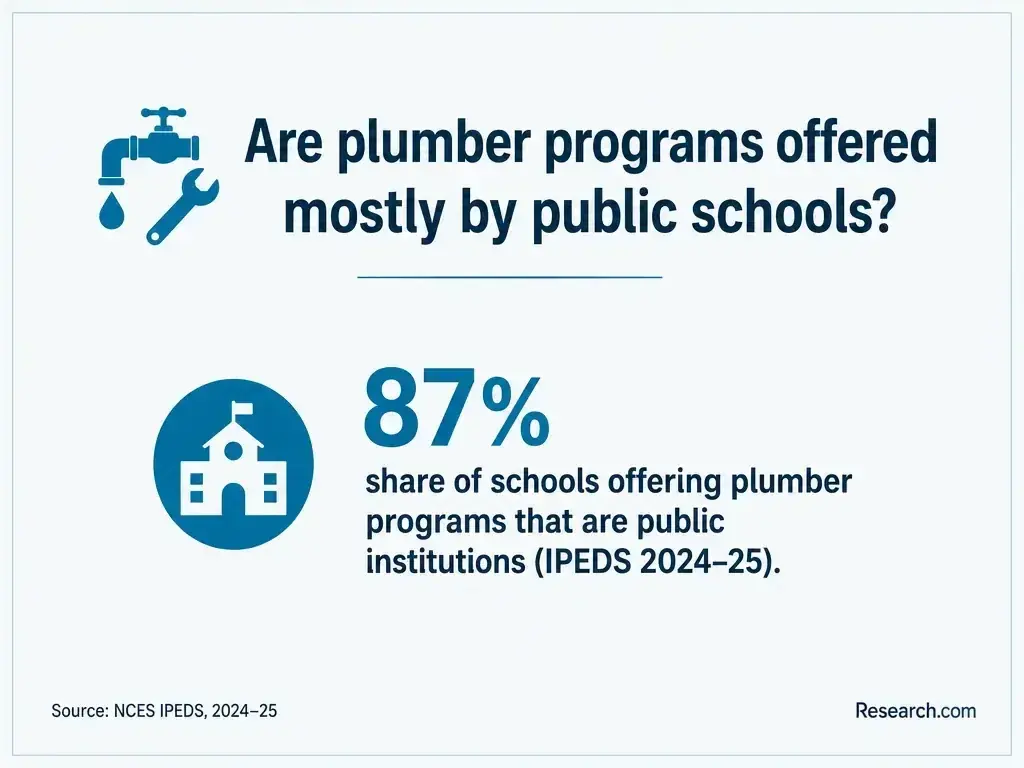
There is no reliable single Presque Isle average that captures school programs, apprenticeships, and employer training on comparable terms. Published tuition may omit mandatory fees, textbooks, tools, consumables, protective equipment, travel to labs or jobsites, and future examination or license-application charges. Ask each provider for an itemized, current estimate through completion, then add the income you would give up while attending.
Affordability can change substantially if an employer supplies tools or pays you during training. Conversely, a low-priced course may be poor value if it leaves you to arrange all practical experience yourself. Ask the provider whether its specific program qualifies for federal aid, Maine workforce assistance, scholarships, or employer reimbursement; eligibility is not automatic. Listings of low tuition colleges online that accept financial aid can explain a different cost model, but they do not establish aid eligibility or hands-on access for a plumbing program.
The award depends on the provider: it may be a certificate, diploma, or associate degree. A registered apprenticeship has its own documented training pathway. None of these should be confused with a Maine occupational license, which is issued under state rules rather than automatically upon graduation. Likewise, institutional accreditation concerns the school; industry training recognition concerns particular instruction; apprenticeship registration concerns the work-based program. Verify each separately where relevant.
Ask what appears on your completion record and whether documented instruction can support apprenticeship entry or license eligibility. Online certificate programs that pay well may help frame broader credential questions, but a plumbing certificate's value depends especially on its practical training and how employers and Maine regulators recognize it.
School and apprenticeship entry are separate processes. A provider may ask for prior education records, placement information, or evidence that you can participate safely in shop work; an employer or sponsor may also set hiring, transportation, or work-readiness conditions. Request the current requirements rather than assuming admission to school secures an apprenticeship position.
If you are changing careers later in life, ask whether prior construction experience can earn credit or advanced standing and what documentation is needed. Broad resources about degrees for seniors do not replace a provider's plumbing-specific entry rules or the physical and scheduling demands of field training. Discuss accommodations and work expectations with the provider and prospective employer before committing.
Useful training connects drawings and code concepts to actual installation: measuring and cutting pipe, joining materials, laying out drainage and venting, testing for leaks, troubleshooting fixtures, and following jobsite safety practices. The U.S. Bureau of Labor Statistics identifies these installation and repair skills as central to the occupation. Customer communication and clear work records also matter on service calls.
Ask to see the lab and a course outline. Specifically, find out which systems students build, how instructors assess hands-on competence, and what they learn only after placement with an employer. Two programs with similarly named certificates can leave students with very different amounts of tool time.
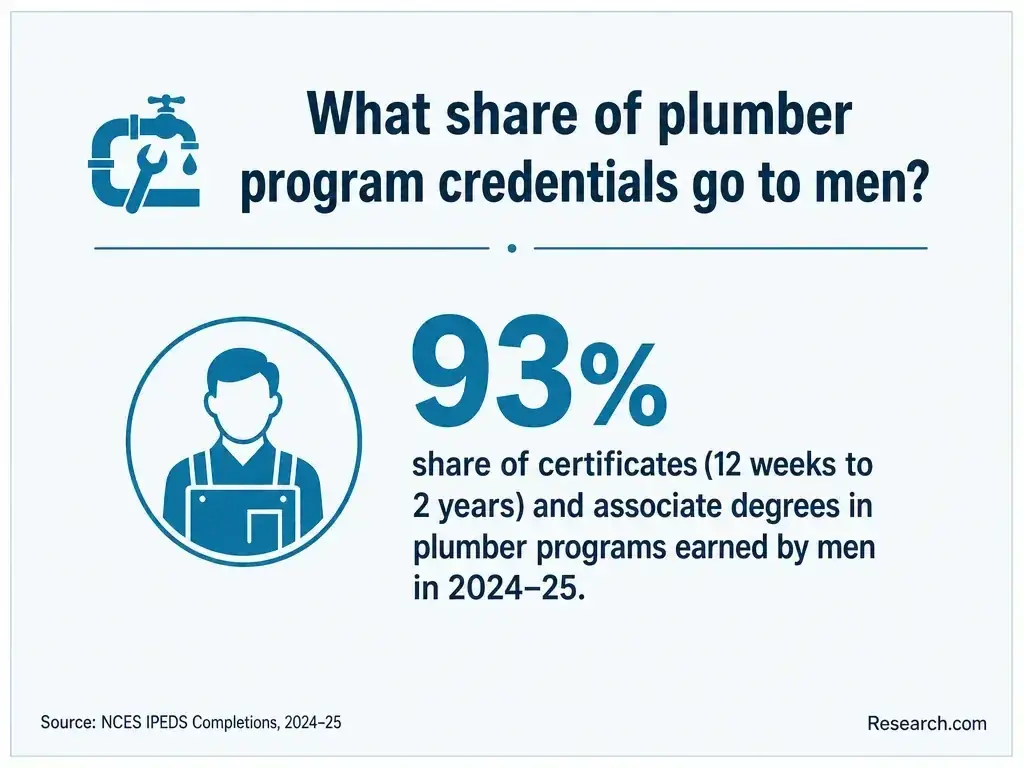
Maine plumbing licensure matters; a school completion certificate is not a license. The Maine Plumbers' Examining Board oversees the state's plumbing license categories and requirements. Before enrolling, ask the board which registration or license applies when you begin supervised work, what documented experience and examination are required for your intended next license, and whether your proposed course changes any eligibility requirement.
Keep records of supervised work from the start. Do not assume an institution's accreditation, an optional industry credential, or an online course independently authorizes plumbing work. If you expect to work outside Maine, check that jurisdiction's rules separately rather than relying on Maine eligibility.
Start with the job and license you want, then compare each program with a paid apprenticeship or direct employer entry. The cheapest school is not automatically the best investment: completion likelihood, lost income, debt, and the time until paid work all affect value. Use the ranking as a shortlist, not as evidence that an unlisted work-based option is unsuitable.
These checks expose the most consequential gaps before you pay a deposit:
Red flags include a promise of automatic licensure, an unexplained "online-only" route to hands-on competence, or a quoted price that excludes required equipment. Ask for written answers before choosing between speed and affordability.
An entry-level worker can build supervised experience toward a Maine license, then develop in residential service, commercial installation, maintenance, or related piping work as training and job opportunities permit. Later responsibilities may include leading jobs or operating a business, subject to the applicable Maine license and business requirements. The Maine Plumbers' Examining Board is the authority for license progression; a school award alone does not confer those permissions.
Choose training around the work you want to do first. Someone interested in service calls should look for troubleshooting and fixture practice, while a construction-focused applicant should ask about plan reading and larger-system installation. Employer demand and available supervision in Aroostook County may shape which path you can enter immediately.
The U.S. Bureau of Labor Statistics projects 6.8% growth nationally from 2025 to 2035 for plumbers, pipefitters, and steamfitters combined. This is a national projection, not a forecast of Presque Isle vacancies. It supports considering the occupation, but a prospective student still needs evidence that local employers are hiring and willing to supervise a new entrant.
Check current Aroostook County postings and speak with contractors or apprenticeship sponsors before selecting a schedule. Ask whether openings are primarily service or construction work and how far crews travel. Those answers are more useful for a local enrollment decision than assuming national growth will translate directly into nearby jobs.
Investing in training is a consequential decision. Research.com created this ranking to help readers compare reported program costs against other plumbing options in the same location, using multiple education and training sources and checking how each measure applies. Only programs with completions reported to IPEDS are eligible; a missing apprenticeship or training provider should not be interpreted as a poor-quality option.
For most affordable rankings, the score uses tuition, cost of attendance, median student debt, and federal loan default rate. An entropy-based method assigns more weight to measures that differ more across eligible programs. Accreditation, outcomes, and student support are not part of this affordability score. Research.com's separate best programs rankings assess student outcomes, earnings and return on investment, costs and debt, and quality and recognition. Their current weights are 20% for occupation-relevant programmatic accreditation or industry recognition, 10% for institutional accreditation, 10% for student support, and 60% across outcomes, earnings, and costs using the entropy-based method.
The following sources inform the ranking and its checks. Some cover institutions broadly, while others provide occupation-specific context; none should be read as proof that every listed organization accredits plumbing programs.
Use the ranking to narrow a cost comparison, then confirm current charges, practical training, and Maine licensing eligibility directly. More detail on Research.com's approach is available in its ranking methodology.
# 1 position
# 2 position
Not necessarily. Supervised employment and apprenticeship may provide a route into the trade. Confirm the current license-category requirements with the Maine Plumbers' Examining Board before deciding whether school adds useful preparation or qualifying instruction.
You may be able to study some theory online, but tool use, system assembly, testing, and supervised jobsite work require in-person participation. Verify any course's role in Maine license eligibility before enrolling.
It may reduce upfront school costs and provide wages while you train, but entry depends on an available sponsor and its terms. Compare take-home pay, required instruction, tools, travel, and time to the license you want.
No. A school certificate documents completion of that program. Maine licensing is a separate process involving the requirements of the Maine Plumbers' Examining Board.
Ask for the full cost, credential awarded, hands-on schedule, employer-placement arrangements, and a written explanation of how the training relates to Maine licensing. Confirm regulatory claims with the board.