# 1 position


Audited and Verified:
Our Editorial and Data Verification Process
Research.com uses government datasets, official education statistics and primary institutional information to support its career and degree guides. Our review process checks factual accuracy, occupational definitions, source dates and the requirements associated with the credentials discussed.
How This Article Was Fact-Checked
Our editorial team verifies salary estimates, employment projections, education requirements and program information against original data providers and official organizations. Salary figures are checked against the relevant occupational definitions and reporting periods. Information about licensure, accreditation and required in-person training is reviewed separately.
Fact-checked and verified on:

Co-Founder and Chief Data Scientist

Reviewed by Karolina Broda
Fact-Checker and Data Verification
Choosing plumbing training in Los Angeles means deciding whether to pay for a school program, pursue a paid apprenticeship, or seek an entry-level job. The stakes are real: the U.S. Bureau of Labor Statistics projects 6.8% growth for plumbers, pipefitters, and steamfitters from 2025 to 2035. The Research.com team of data scientists created the Best Plumber Trade Schools in Los Angeles for 2027 ranking to help students make an informed choice about programs worth considering. This guide explains costs, hands-on training, credentials, and California's rules so you can judge which route fits your goal.
Expect a mix of classroom instruction and physical practice: reading plans, measuring and joining pipe, selecting materials, diagnosing drainage problems, and working safely under plumbing-code requirements. A useful program lets you demonstrate those tasks in a shop, not merely describe them on an exam. Ask for the current syllabus and the number of scheduled lab hours before enrolling.
The main choice is school first or paid work alongside instruction. A certificate or diploma may help a newcomer qualify for helper or apprentice openings; an associate degree includes additional coursework and takes longer. A registered apprenticeship combines related classroom instruction with supervised, paid work over multiple years. Direct entry as a helper can also make sense if an employer provides structured training and a credible path to advancement. A short course is not interchangeable with an apprenticeship simply because both cover plumbing basics.
If you are exploring what 6 month certificate course can lead to a higher salary online, treat plumbing differently from a fully remote occupation: pipe assembly, testing, and troubleshooting require in-person practice. A brief course may be a useful first step, but ask what job it actually prepares you to perform.
Plumbing training can lead toward residential service and remodeling, commercial construction, building maintenance, or work on larger industrial systems. Those settings demand different strengths: service work emphasizes diagnosis and customer communication, while construction emphasizes plans, installation sequences, and coordination with other trades. The U.S. Bureau of Labor Statistics describes plumbers as working for contractors and, in some cases, as self-employed workers.
In Los Angeles, compare a provider's employer relationships with the work you want to do. A program geared toward residential fixture practice may be less direct preparation for large commercial piping projects. Ask where recent trainees completed work-based learning and whether placements are within a commute you can sustain. School completion alone does not secure a placement or authorize independent contracting.
The U.S. Bureau of Labor Statistics reports a May 2025 national median annual wage of $63,800 for the combined occupation of plumbers, pipefitters, and steamfitters. Half of workers in that occupation earned more and half earned less. It is not a plumber-only figure, a Los Angeles wage, or a forecast of what a new graduate will earn.
For a local pay decision, check the latest BLS Occupational Employment and Wage Statistics for the Los Angeles-Long Beach-Anaheim metropolitan area, then compare actual helper and apprentice offers. Ask whether an advertised rate assumes journey-level experience, union coverage, overtime, or benefits. A paid apprenticeship may produce income during training, while a school-first route may require you to support yourself before securing field work.
There is no single Los Angeles training length. A short introductory course may take months; a broader certificate or diploma generally requires more time, and an associate degree includes additional coursework. A registered plumbing apprenticeship normally extends over multiple years because classroom learning is paired with substantial supervised work. The actual schedule depends on the provider, attendance pattern, and apprenticeship sponsor.
Request the published clock or credit hours, lab hours, and expected calendar time for the exact program you are considering. Also ask whether prior coursework or documented experience can earn credit or advanced standing; a school's decision to award credit does not automatically mean an apprenticeship sponsor or licensing authority will accept it. Compare time to a paid position, not just time to a certificate.
Online delivery can work for introductory theory, calculations, blueprint reading, and some code instruction. It cannot replace practice assembling joints, using tools, testing systems, or working safely at a jobsite. Hybrid training can be useful for someone balancing work and study if its in-person labs are accessible and frequent enough to build competence.
Unlike some best online certificate programs that pay well, plumbing has essential physical tasks. Before paying for an online course, find out where its practical instruction occurs, who assesses it, and whether an apprenticeship sponsor or prospective employer recognizes the training. Do not assume an online completion certificate confers contractor-license eligibility.
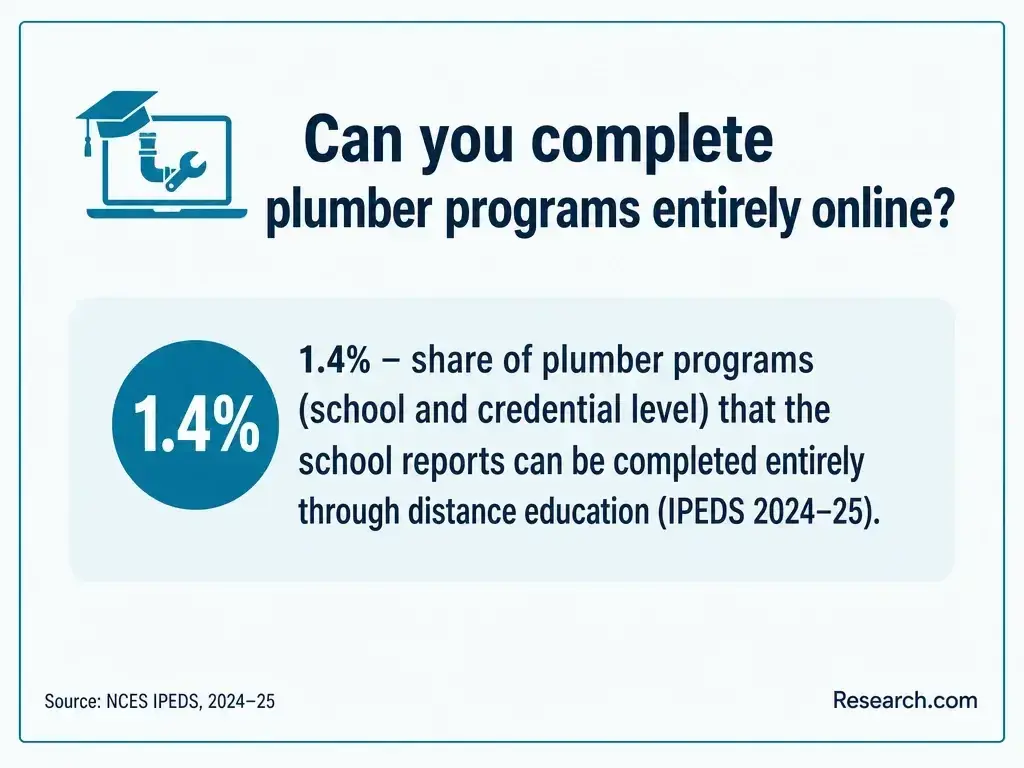
There is no reliable single average covering Los Angeles college programs, private training, and paid apprenticeships: they charge and compensate trainees in different ways. Compare an itemized cost to become job-ready, not a tuition figure alone. Include mandatory fees, books, tools, protective equipment, consumable materials, transportation to shops or jobsites, and earnings you might give up while attending. Add any applicable examination or application costs later in your career rather than treating them as an automatic school expense.
Ask each provider for a written total-cost estimate and whether tools are supplied or remain yours after training. Check eligibility for grants, workforce funding, and federal or state aid rather than assuming every course qualifies. If you are comparing online community colleges that accept FAFSA, verify aid eligibility for the specific plumbing program and remember that its hands-on components still require attendance. A paid apprenticeship may reduce borrowing, but compare its wages, entry requirements, and time commitment too.
It depends on the route. A school may award a course-completion certificate, occupational certificate, diploma, or associate degree; a registered apprenticeship has its own completion credential and documents supervised training. An industry training credential, where offered, is another distinct item. Ask the provider to name the exact award and explain which employers or apprenticeship sponsors recognize it.
These credentials are not contractor licenses. Institutional accreditation concerns the school; state school authorization concerns permission to operate; apprenticeship registration concerns the training arrangement; and a California C-36 license concerns eligibility to contract for plumbing work. Verify each claim with the responsible organization rather than treating one approval as proof of the others.
School and apprenticeship requirements differ. A school may request an application and evidence that you can handle its reading and math coursework. An apprenticeship sponsor may also use an aptitude assessment, interview, age and education criteria, and job-readiness requirements. Employers can set additional conditions for field positions. Get the current written requirements from the particular program or sponsor; do not assume admission to a school guarantees an apprenticeship.
Before applying, confirm the physical and scheduling demands of labs and worksites, including travel across the Los Angeles area. Ask whether you need tools or safety gear on day one and whether introductory coursework can strengthen a later apprenticeship application. If you need to keep earning while training, compare class times and the possibility of paid work before committing to a full-time schedule.
Core instruction should connect plumbing theory to tasks an employer can observe: interpreting drawings, measuring and cutting pipe, making joints, installing supply and drainage components, testing for leaks, and identifying faults. Safety, basic calculations, material selection, and the plumbing code used for local work matter alongside tool skills. The U.S. Bureau of Labor Statistics identifies installation, maintenance, and repair as central occupational duties.
Look closely at how the program teaches those skills. Ask for examples of completed shop projects, equipment available to each learner, and the way instructors evaluate a student's work. Field training adds constraints a shop may not reproduce, such as coordination with other trades and existing-building conditions. A program with a similar credential name but little supervised practice may leave you less prepared for the same entry-level role.
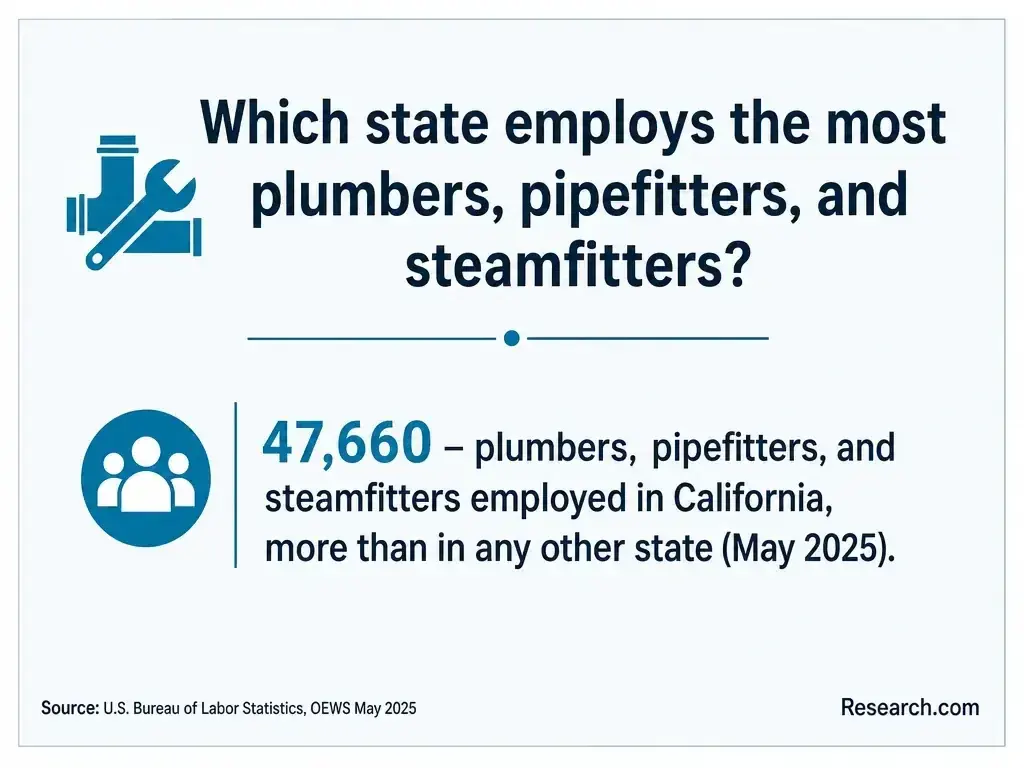
Do not confuse working in plumbing with independently contracting for plumbing jobs. California's Contractors State License Board (CSLB) regulates the C-36 plumbing contractor license. Applicants generally must document four years of qualifying journey-level experience within the previous 10 years and meet applicable examination and other CSLB requirements. A school certificate alone does not satisfy that experience requirement or grant a contractor license.
Someone entering as a helper or apprentice should ask the employer or apprenticeship sponsor what supervision, registration, and jobsite rules apply to the role. Los Angeles work may also involve local permits and inspections; check the authority governing the job rather than assuming a school credential covers them. If owning a contracting business is your goal, ask schools how their graduates obtain documented work experience, then verify current licensing rules directly with CSLB before making an enrollment decision.
Start with the job you want: helper, registered apprentice, service technician in training, or eventually licensed contractor. Then compare programs on evidence that connects training to that goal. Los Angeles Trade Technical College is one school option to investigate, but compare its current catalog, schedule, and practical training with available apprenticeships and employer-sponsored routes. A ranking can narrow the field; it cannot tell you whether a particular timetable or work placement fits your life.
Use these questions when speaking with a school or apprenticeship coordinator:
Be wary of guaranteed-wage claims, vague "license-ready" language, or a price that omits tools and fees. To judge return on investment, weigh completion likelihood, aid, debt, lost earnings, possible apprentice wages, and the time it may take to reach your target role. Broad affordability searches - including low cost doctoral programs - cannot answer the trade-specific question: whether this plumbing training buys practical skills and a credible path into paid field work.
An entry-level helper role can lead to an apprenticeship or other structured supervised training, followed by more independent service or installation work as skills and experience grow. Some workers specialize in residential repairs, commercial construction, or larger piping systems; others move into estimating, supervision, or contracting. Those later roles may require additional experience, employer selection, or a contractor license rather than another school certificate.
If you are comparing trade school jobs, distinguish the first job a program can realistically help you obtain from the occupation's experienced-worker earnings. Ask providers which plumbing positions their training targets and employers which tasks a new hire may perform under supervision. That comparison is more useful than treating every plumbing-related job title as an immediate outcome.
The U.S. Bureau of Labor Statistics projects 6.8% national employment growth from 2025 to 2035 for plumbers, pipefitters, and steamfitters. That is a combined-occupation, nationwide projection - not a prediction of openings for a particular Los Angeles graduate. Construction cycles, maintenance needs, and the type of piping work available can affect the opportunities you actually see.
Use the projection as a reason to investigate, not as proof that any program will pay off. Check current local postings and apprenticeship intakes for the roles you want, and note whether they ask for field experience, a driver's license, or specific scheduling availability. Compare those requirements with the training and employer contacts a provider offers before enrolling.
Investing in training is an important decision, especially when a plumbing certificate and a paid apprenticeship can lead toward the same occupation through very different experiences. Research.com compares programs with other programs in the same occupation and location. Its team checks multiple sources to improve the ranking's quality, credibility, and accuracy; the resulting comparison is a starting point, not a substitute for confirming a program's current requirements.
The best-programs ranking evaluates student outcomes; earnings and return on investment; costs and debt; and quality and recognition. Occupation-relevant programmatic accreditation or industry recognition carries 20% of the score, institutional accreditation 10%, and student support 10%. Completion and retention, earnings, tuition, attendance cost, debt, and loan-default indicators make up the remaining 60%, weighted by an entropy-based method that gives more weight to indicators that differ more across programs. Only programs with completions reported to IPEDS are included. Consequently, an apprenticeship's absence from the ranking does not mean it is unavailable or inferior.
The team used the following sources in developing its trade-program rankings. Some accreditation and credentialing sources apply to other trades rather than plumbing; their inclusion here does not indicate that they approve plumbing programs.
Research.com also produces most-affordable-program rankings, which score tuition, attendance cost, median student debt, and federal loan-default rate using entropy-based weights; accreditation and other quality measures are not part of that affordability score. Read more about how the rankings are created. Use the ranking to narrow your search, then compare each option's shop hours, apprenticeship connections, and total cost directly.
# 1 position
# 2 position
It can be if you need foundational shop practice or help qualifying for entry-level openings. If you can enter a paid, registered apprenticeship now, compare its wages and supervised hours with the school's cost and any credit the sponsor would grant for prior coursework.
Online coursework can teach theory, but plumbing requires in-person tool use and supervised practical experience. Ask where and how an online or hybrid provider delivers and assesses those components.
No. A certificate does not itself grant a California C-36 contractor license. Check CSLB requirements if your goal is to contract independently.
Choose based on the job and training you need, not the credential name alone. Compare shop time, total cost, schedule, and whether an apprenticeship sponsor recognizes the coursework; an associate degree includes additional coursework but is not automatically the faster route into paid plumbing work.
Get the exact credential, complete price, lab schedule, refund terms, and any apprenticeship-credit or job-placement claims in writing. Confirm applicable school authorization and any claimed accreditation or industry recognition with the responsible body.