# 1 position


Audited and Verified:
Our Editorial and Data Verification Process
Research.com uses government datasets, official education statistics and primary institutional information to support its career and degree guides. Our review process checks factual accuracy, occupational definitions, source dates and the requirements associated with the credentials discussed.
How This Article Was Fact-Checked
Our editorial team verifies salary estimates, employment projections, education requirements and program information against original data providers and official organizations. Salary figures are checked against the relevant occupational definitions and reporting periods. Information about licensure, accreditation and required in-person training is reviewed separately.
Fact-checked and verified on:

Co-Founder and Chief Data Scientist

Reviewed by Karolina Broda
Fact-Checker and Data Verification
Choosing plumbing training near Los Altos Hills means comparing more than schools: a short classroom program, a paid apprenticeship, and direct employment can lead to different levels of practical experience. The U.S. Bureau of Labor Statistics projects 6.8% national growth for plumbers, pipefitters, and steamfitters from 2025 to 2035. This guide explains local training options, costs, credentials, and California contractor rules. It also accompanies the Best Plumber Trade Schools in Los Altos Hills for 2027 ranking, created by the Research.com team of data scientists to help students identify programs worth considering.
Expect instruction in plumbing systems plus supervised practice, not an automatic route to independent contracting. A pre-apprenticeship may introduce tools, safety, and jobsite expectations; a certificate may add shop practice; a registered apprenticeship combines related classroom instruction with substantial paid work under experienced tradespeople. Direct entry as a helper is another possibility if an employer provides appropriate supervision and training.
The comparison below shows why similarly named credentials are not interchangeable. Confirm each provider's actual shop hours, placement arrangements, and award before enrolling.
| Pathway | Training and credential | Best fit and main limitation |
| Pre-apprenticeship or short certificate | Introductory coursework and, where offered, hands-on labs; usually a completion credential | Useful for testing the trade or preparing to apply; does not itself provide years of field experience |
| Trade or community-college program | Structured instruction and labs; credential depends on the program | Useful when foundational teaching is needed; check whether employers or sponsors award credit for it |
| Registered apprenticeship | Paid, supervised work plus related instruction; a recognized completion credential | Strong fit for learning while earning; admission, worksite travel, and multi-year commitment matter |
| Employer-sponsored helper route | Paid entry-level work and employer-directed learning; formal credential varies | May offer fast entry; ask how skills and experience will be documented |
Los Altos Hills residents should check programs and worksites throughout the surrounding county rather than assume a program must be inside town limits. Foothill College is a nearby public-college option to investigate, but confirm whether it currently offers plumbing-specific training before treating any of its offerings as a plumbing pathway.
Possible workplaces include residential service firms, construction contractors, commercial building maintenance teams, and employers working on water, drainage, or mechanical systems. Some positions specialize in plumbing; pipefitting and steamfitting involve related but distinct systems and may require different training (U.S. Bureau of Labor Statistics).
A resident may need to commute to jobsites across Santa Clara County. That matters when comparing programs: a placement that requires reliable transport and changing start locations can cost more than its tuition suggests. Ask whether employer contacts lead to supervised plumbing work specifically, rather than general construction labor.
The U.S. Bureau of Labor Statistics reports a $63,800 national median annual wage in May 2025 for plumbers, pipefitters, and steamfitters. This combined-occupation figure is a benchmark, not a Los Altos Hills wage or an apprentice starting offer. Pay can differ by specialty, experience, employer, hours, and the terms of a particular apprenticeship.
For a useful local comparison, request the current apprentice wage schedule and progression steps from each sponsor, then compare actual job offers with commuting costs and expected hours. Do not calculate a program's return on investment by assuming a new trainee immediately earns the national occupational median.
A short introductory course can take substantially less time than an apprenticeship, but speed to a classroom credential is not speed to experienced status. Registered apprenticeships generally extend over multiple years because they include progressive, supervised work and related instruction (U.S. Department of Labor, Apprenticeship.gov). A certificate's calendar length and lab hours depend on its provider; there is no single Los Altos Hills-wide clock-hour requirement for a plumbing-school certificate.
Before comparing advertised completion dates, ask for total classroom and shop hours, whether training is full-time or part-time, when paid fieldwork starts, and whether the apprenticeship sponsor grants advanced standing for prior training. Obtain any credit decision in writing; a certificate does not automatically shorten an apprenticeship.
Online instruction can cover code concepts, plan reading, calculations, and safety theory. It cannot replace supervised practice measuring and joining pipe, testing systems, using tools safely, or working on a jobsite. A hybrid program is credible only when it identifies where those practical competencies are assessed and who supervises them.
For someone working near Los Altos Hills, remote theory may reduce classroom travel, but shop sessions and worksites may still require a substantial commute. Ask for the in-person schedule before paying. An entirely online completion credential should not be mistaken for apprenticeship experience or eligibility to run a plumbing contracting business in California (California Contractors State License Board).
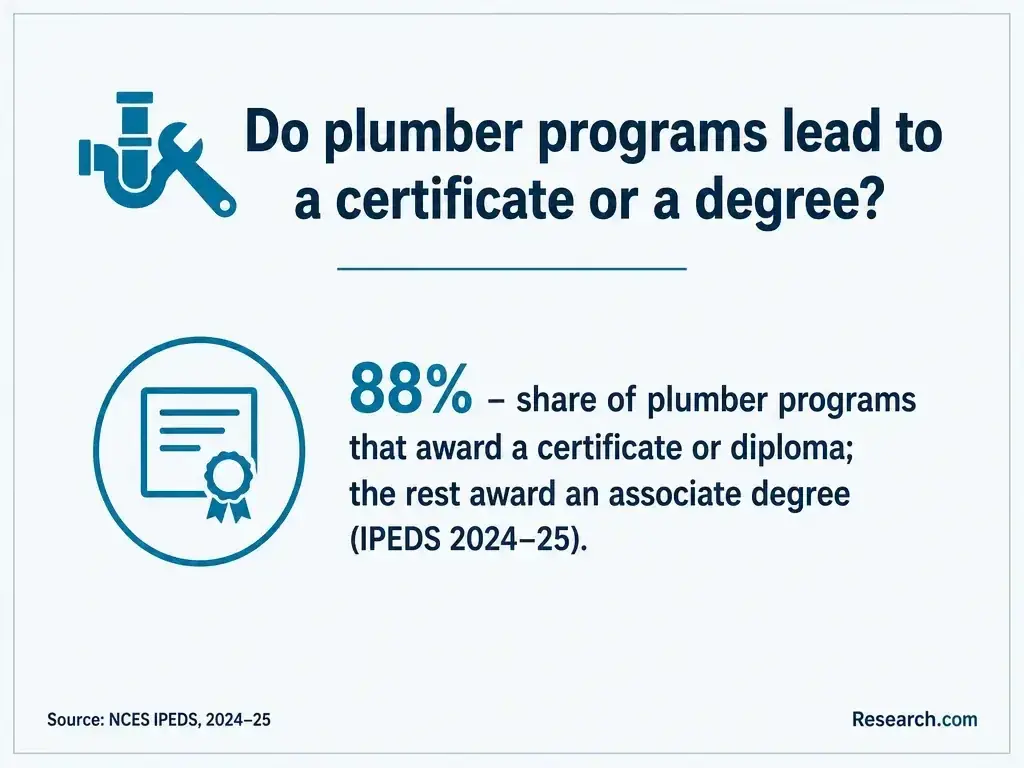
There is no reliable single average for Los Altos Hills plumbing training: a short course, a public-college offering, a private program, and a paid apprenticeship have different cost structures. Request a written, current estimate from each provider rather than applying a generic tuition figure to all four.
A job-ready budget should include tuition and mandatory fees, books or digital materials, tools, protective equipment, consumables, transportation to shops and jobsites, and any applicable screening or application charges. Also account for earnings forgone during unpaid study. Paid apprenticeship wages can offset costs, although worksite travel and tool purchases still matter. Eligible institutional programs may offer federal or state aid; eligibility depends on the institution, program, and student, so verify it with the provider and Federal Student Aid.
The cheapest advertised tuition is not necessarily the cheapest route into work. Compare net cost after aid or wages alongside completion prospects and the amount of supervised plumbing experience delivered.
Depending on the pathway, you may receive a course-completion document, a trade certificate, or a registered-apprenticeship completion credential. These awards describe different training. Ask for the exact credential name, issuing organization, documented practical hours, and whether a prospective employer or apprenticeship sponsor recognizes prior learning.
Institutional accreditation concerns a school; state authorization concerns permission to operate; apprenticeship registration concerns a work-and-instruction program. None is, by itself, a California C-36 contractor license. Industry certificates, including construction-training credentials where offered, may demonstrate specific skills but do not replace contractor licensing requirements (California Contractors State License Board; U.S. Department of Labor, Apprenticeship.gov).
Requirements differ by provider. A school may require an application and proof that the applicant can complete its coursework; an apprenticeship sponsor may also assess math, interview applicants, and require eligibility to work and travel to jobsites. Employers may set their own hiring, driving, or safety-related conditions. Check the current written criteria rather than assuming that admission to a class secures an apprenticeship position.
If you already have construction experience, ask whether a sponsor assesses prior skills or grants advanced standing. If you are new to the trade, an introductory course may help you prepare for an application, but compare its price with applying directly to apprenticeships or supervised helper roles.
Plumbing instruction typically addresses water-supply and drainage systems, pipe materials and joining methods, measurements, drawings, code use, testing, troubleshooting, and jobsite safety (U.S. Bureau of Labor Statistics). The decisive difference between programs is how much of that knowledge students apply with tools, mock-ups, and supervised fieldwork.
Ask to see the training sequence and equipment. A program focused mainly on residential fixtures may not fit a goal involving commercial piping or mechanical systems. For local work, familiarity with applicable California codes and the permitting process matters, but instruction in codes is not permission to perform work that requires a licensed contractor or permit.
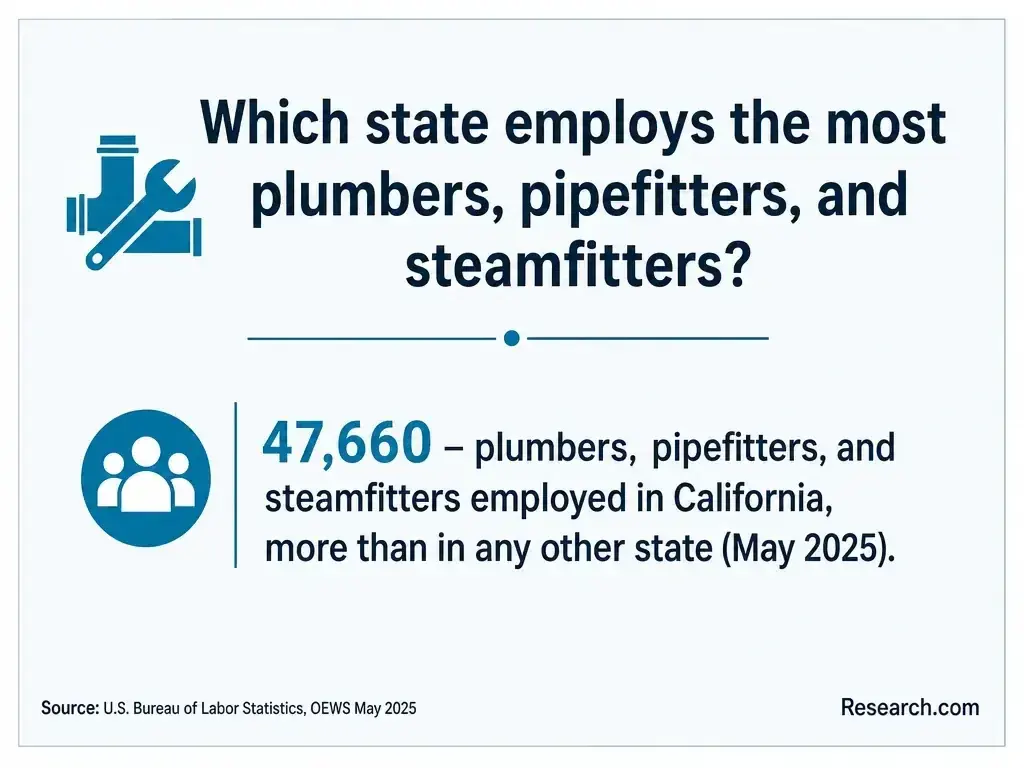
California's key distinction is between working under an appropriately licensed contractor and offering plumbing contracting services independently. The California Contractors State License Board (CSLB) regulates the C-36 plumbing contractor classification. A person qualifying for that license generally must document at least four years of journey-level or higher experience within the preceding 10 years and meet the board's other application and examination requirements; school completion alone does not confer the license (CSLB).
Apprenticeship registration, a school certificate, and optional industry certification serve different purposes from a contractor license. Before paying for training advertised as "license preparation," check CSLB's current experience-credit, examination, and application rules. Also verify who is responsible for permits on prospective jobs; employment under a licensed contractor is not the same as operating your own contracting business.
Start with the intended outcome: an entry-level helper job, admission to an apprenticeship, or eventual independent contracting. Then compare programs on evidence that advances that goal. A ranking can identify candidates, but it cannot establish whether an individual program's schedule, supervised practice, and cost fit your circumstances.
Ask each school or sponsor the following questions before committing money or time:
Be wary of promised wages, "fully online" claims that omit practical assessment, or statements that a certificate automatically produces a contractor license. For return on investment, consider completion likelihood, debt, lost earnings during training, apprentice wages, expected earnings changes over time, and how long you expect to work in the trade - not institution type or tuition alone.
A common progression is helper or apprentice, experienced plumber, and then specialist, supervisor, or contractor. Progression depends on documented work, demonstrated skill, employer opportunities, and, for independent contracting in California, CSLB requirements. A school credential can support entry, but supervised field experience is what develops the judgment needed to diagnose and complete work on real systems.
Residential service may appeal to people who like troubleshooting in occupied buildings; commercial construction can involve larger systems and changing jobsites. Compare apprenticeship and employer training content against the work you actually want. If self-employment is the goal, plan separately for qualifying experience, licensing, business costs, and customer acquisition rather than treating graduation as the final step.
National employment of plumbers, pipefitters, and steamfitters is projected to grow 6.8% from 2025 to 2035 (U.S. Bureau of Labor Statistics, Employment Projections). That suggests continuing opportunities across the occupation, but it is not a forecast of vacancies in Los Altos Hills or a guarantee of placement after training.
For a local decision, look beyond the town boundary: ask sponsors and employers where apprentices actually report, what specialties they hire for, and how frequently worksite assignments change. A nearby program with credible employer connections and manageable travel may be more useful than a faster classroom-only option without a clear route to supervised work.
Investing in training is an important decision, so Research.com designed this ranking to help readers compare plumbing programs against other programs serving the same location and occupation. The team evaluates reported outcomes, costs, and indicators of quality rather than treating a school's name or tuition alone as proof of value.
Only programs with completions reported to the Integrated Postsecondary Education Data System (IPEDS) are included. Best-program rankings consider completion and full-time and part-time retention; median earnings one year after completion and earnings relative to annual attendance cost; tuition, attendance cost, debt - including debt held by students who withdrew - and federal loan default rates; and accreditation, relevant industry recognition, and student support. Relevant programmatic recognition accounts for 20% of the score, institutional accreditation for 10%, and student support for 10%. Outcomes, earnings, and costs make up the remaining 60%, with weights distributed through an entropy-based method that gives more weight to indicators that differ more across programs. Most-affordable-program rankings instead score costs and debt only, using entropy-based weights.
The following databases and organizations are among the sources used to create the ranking. Occupation-specific recognition matters: a health-program accreditor, for example, is not evidence that a plumbing program meets trade requirements.
IPEDS does not comprehensively cover union apprenticeships, employer training, or every trade provider. A sponsor's absence from the ranking is therefore not a judgment about its quality. Use the ranking to shortlist reported programs, then compare them with paid training routes and verify current details directly. Research.com explains its broader approach on its methodology page.
# 1 position
# 2 position
Do not assume there is one within town limits. Search the surrounding Santa Clara County training and apprenticeship market, and verify that any nearby college currently offers plumbing-specific instruction.
Not necessarily. Sponsors set their own entry criteria. Apply directly where eligible, then judge whether a paid preparatory course would strengthen your application.
No. California's C-36 contractor pathway includes qualifying experience and other CSLB requirements. A training certificate does not replace them (California Contractors State License Board).
Online coursework may teach theory, but practical pipework and supervised jobsite competence require in-person training. Check exactly where and how a hybrid provider assesses those skills.
It can be if you want wages alongside supervised experience. A school program may be worthwhile when you need foundational skills or preparation to enter an apprenticeship; compare net cost, admission prospects, and actual field training.