
Most Affordable HVAC Technician Schools & Training in Uvalde for 2027
Audited and Verified:
Our Editorial and Data Verification Process
Research.com uses government datasets, official education statistics and primary institutional information to support its career and degree guides. Our review process checks factual accuracy, occupational definitions, source dates and the requirements associated with the credentials discussed.
How This Article Was Fact-Checked
Our editorial team verifies salary estimates, employment projections, education requirements and program information against original data providers and official organizations. Salary figures are checked against the relevant occupational definitions and reporting periods. Information about licensure, accreditation and required in-person training is reviewed separately.
Fact-checked and verified on:

Co-Founder and Chief Data Scientist

Reviewed by Karolina Broda
Fact-Checker and Data Verification
Choosing affordable HVAC training in Uvalde means looking beyond tuition: you need a place to practice repairs, a path to required credentials, and a schedule you can afford to finish. The U.S. Bureau of Labor Statistics projects 10.9% national growth for HVAC mechanics and installers from 2025 to 2035, making the decision timely. This guide explains local training choices, costs, credentials, and career prospects. It also features a Most Affordable HVAC Technician Trade Schools in Uvalde for 2027 ranking created by the Research.com team of data scientists to help students make an informed choice about programs worth considering.
Key findings about HVAC technician degrees in Uvalde
- Start with the total cost of becoming job-ready, not the lowest advertised tuition: ask whether required HVAC labs, tools, EPA Section 608 preparation, and travel are included.
- The national median annual wage for heating, air conditioning, and refrigeration mechanics and installers was $61,010 in May 2025; it is not an expected starting wage in Uvalde, according to the U.S. Bureau of Labor Statistics.
- In Texas, trade-school completion does not itself authorize refrigerant handling or replace the applicable state technician registration or contractor-licensing rules; verify the work you intend to perform with EPA and the Texas Department of Licensing and Regulation.
Table of Contents
- Most Affordable HVAC Technician Schools & Training in Uvalde for 2027
- What can I expect from an HVAC technician trade school program in Uvalde?
- Where can I work with an HVAC technician trade school training in Uvalde?
What can I expect from an HVAC technician trade school program in Uvalde?
Expect instruction in heating, air conditioning, refrigeration, electrical controls, troubleshooting, and safe use of tools. A useful entry-level program pairs classroom study with supervised work on actual equipment. Ask to see its current course sequence and lab schedule: two credentials with similar names may provide very different amounts of practice.
For a Uvalde resident, availability matters as much as the catalog description. Check Southwest Texas College's current HVAC offerings, which classes actually meet at the location you can reach, and whether labs or work placements require travel. Compare that route with paid employer training or a registered apprenticeship if earning while learning is essential. An overview of a 1 year master program concerns a different education decision; it is not a substitute for hands-on HVAC preparation.
Where can I work with an HVAC technician trade school training in Uvalde?
Potential workplaces include residential service contractors, commercial building maintenance teams, facilities departments, and employers servicing refrigeration equipment. The U.S. Bureau of Labor Statistics describes HVAC work as installation, maintenance, and repair across buildings and equipment; the employer determines the particular tasks and supervision.
Because Uvalde offers a smaller immediate job market than a large metropolitan area, ask programs where recent trainees found work and whether placements require driving to surrounding communities. A local employer relationship may be more useful than a broad placement claim that does not identify the worksite or job title.
The U.S. Bureau of Labor Statistics reports a May 2025 national median annual wage of $61,010 for heating, air conditioning, and refrigeration mechanics and installers. That midpoint includes experienced workers and jobs outside Uvalde. It should not be treated as a local wage quote or a new graduate's likely offer.
To judge affordability, request actual entry-level pay ranges from employers you could commute to, then compare take-home earnings with training debt and travel costs. Service work, refrigeration specialization, overtime, and experience can change pay, but none makes a particular salary certain. If you are also comparing low-tuition schools that accept financial aid, confirm the aid eligibility of the specific HVAC program rather than assuming it from another school's listing.
There is no single required trade-school duration for entry-level HVAC work in Texas. A short certificate emphasizes job-entry skills; a longer diploma or associate degree can allow more time for diagnostics and related technical study. A registered apprenticeship instead combines paid work with structured instruction over a longer period. The U.S. Bureau of Labor Statistics notes that many HVAC workers learn through postsecondary training or apprenticeships and continue learning on the job.
Ask for the published clock or credit hours, scheduled lab hours, start dates, and realistic completion time for a working student. Then compare how soon each path lets you apply for paid work, not just its advertised graduation date. Information about dual graduate degree programs addresses a different pathway and should not be used to estimate HVAC training time.
Online coursework can cover theory, diagrams, and some safety instruction. It cannot replace demonstrating electrical measurements, diagnosing a running system, using recovery equipment, or following safe procedures around refrigerants. A hybrid program can work if its in-person labs are accessible from Uvalde and provide enough supervised practice for the jobs you want.
Ask where practical assessments occur and who supplies the equipment. An entirely online course may be useful preparation, but do not assume it provides employer-ready field skills or satisfies any certification requirement. A campus option with dependable lab access may cost more in travel yet offer better value than remote study with no workable hands-on component.
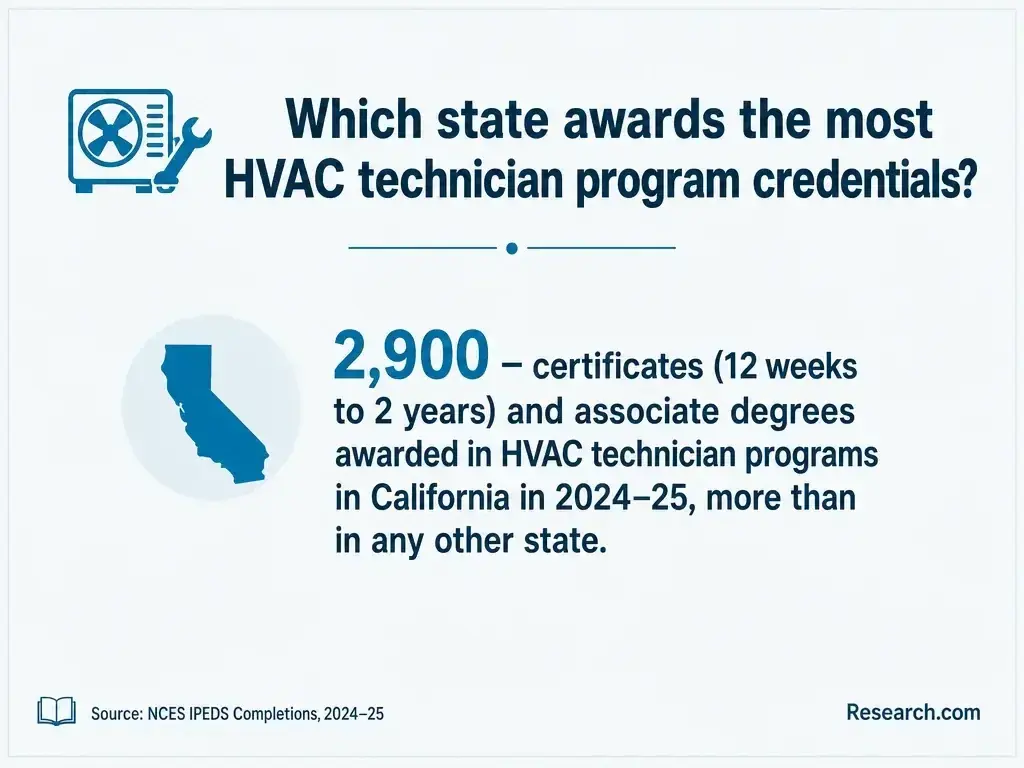
A reliable Uvalde-wide average for HVAC training is not available here. Published tuition alone would also understate what a student must spend to become job-ready. Obtain a written, program-specific cost estimate from Southwest Texas College and any alternative training provider you are considering.
This comparison separates school charges from expenses that can change your decision, especially if labs or work sites require a commute:
| Cost category | What to confirm |
| School charges | Tuition by residency status, mandatory fees, materials, and any repeat-course charges |
| Job-entry supplies | Tools, test equipment, protective gear, and items the employer may supply instead |
| Credential costs | EPA Section 608 exam preparation and testing fees, plus applicable state application fees |
| Time and travel | Trips to labs or worksites, work hours forgone, and the cost of a longer schedule |
Check program-level eligibility for federal aid, scholarships, and workforce assistance; paid employer training may reduce borrowing but offer a different pace of instruction. An article about how much an associate's degree costs online cannot establish the cost of an HVAC program with required in-person labs. For a meaningful return-on-investment estimate, consider aid, debt, completion likelihood, earnings before and after training, and how long it takes to recover costs - not tuition alone.
The award depends on the pathway: a school may offer a certificate, diploma, or associate degree; an apprenticeship has its own completion credential; and employer training may document skills without awarding a school credential. Confirm the exact award and whether credits can apply to further technical study.
Neither a school award nor apprenticeship completion is the same as EPA Section 608 technician certification, which applies to covered refrigerant-handling work under U.S. Environmental Protection Agency rules. Institutional accreditation, an industry credential, Texas technician registration, and a Texas contractor license are also separate matters. Ask the provider which, if any, exams its curriculum prepares students to take.
Requirements vary by provider and pathway. Request the current admissions checklist, including education prerequisites, any placement assessment, age or worksite conditions, and when tools or safety gear must be purchased. An employer or apprenticeship sponsor may also assess availability, driving ability, or suitability for field work; acceptance into a school does not ensure a job placement.
An open admission colleges comparison can explain one admissions model, but it does not establish that a particular HVAC cohort, lab, or apprenticeship has open entry. Confirm seat availability and the next practical-training start date directly.
Core skills include reading wiring diagrams, testing electrical components, understanding the refrigeration cycle, checking airflow, diagnosing faults, and communicating findings to customers or supervisors. The U.S. Bureau of Labor Statistics identifies installation, maintenance, troubleshooting, and repair as central HVAC duties. Refrigerant work also requires attention to federal handling rules.
Look beyond a course-title list. Ask students or instructors to describe equipment they diagnose in person, how faults are introduced and assessed, and whether they practice documenting a repair. Training that is mostly demonstrations may leave a new technician less prepared than supervised work on multiple systems.
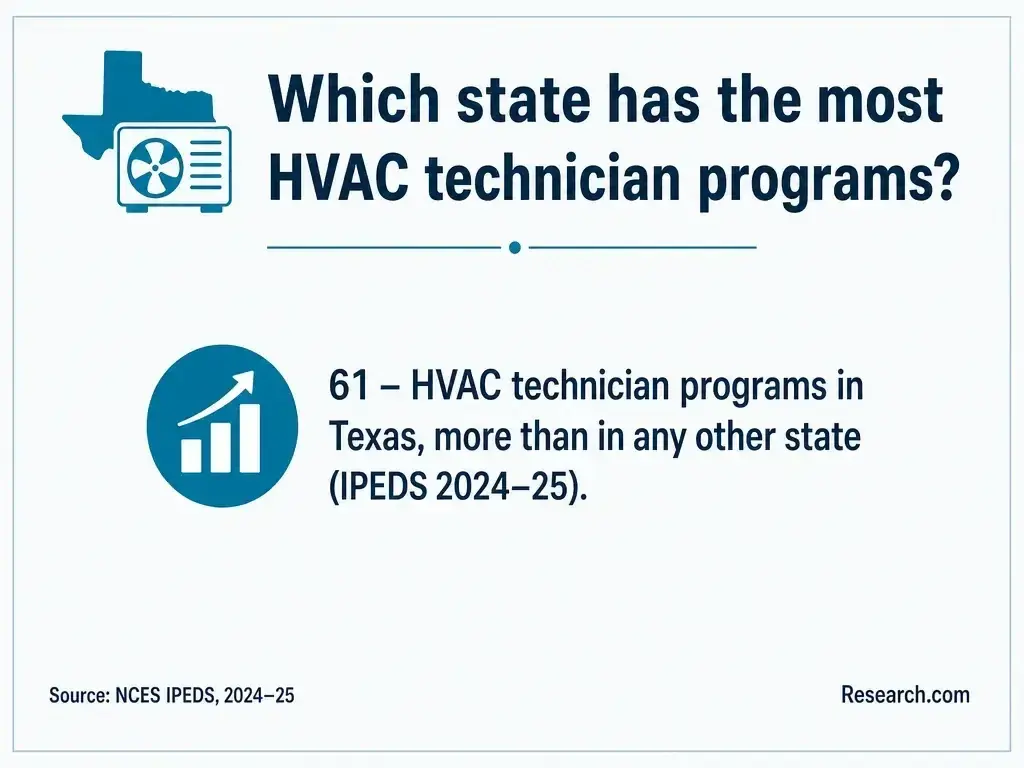
The requirements depend on the work. Under U.S. Environmental Protection Agency rules, technicians performing covered activities involving regulated refrigerants must obtain the appropriate Section 608 certification. Texas separately regulates air-conditioning and refrigeration work through the Texas Department of Licensing and Regulation (TDLR), including technician registration or certification and contractor licensing where applicable. A school certificate does not replace these credentials.
Before enrolling, tell the program whether you intend to assist a contractor, handle refrigerants, or eventually operate a contracting business. Ask how its training prepares you for Section 608 testing, then verify the current registration, supervision, experience, examination, and insurance rules applicable to your intended role with TDLR. Contractor licensing is a later, distinct step - not an automatic result of graduation.
Choose the least costly path that you can realistically complete and that provides the practical skills and credential preparation your intended job requires. The affordability ranking is a starting point, not a substitute for checking current program details. Use these questions when speaking with a school, apprenticeship sponsor, or employer:
- Where and when do HVAC labs meet, and how much supervised equipment practice is required?
- What is the full written cost after fees, tools, testing, travel, and available aid?
- Which credential is awarded, and how does instruction prepare me for EPA Section 608 testing and applicable Texas requirements?
- Can I see current completion and relevant job-placement information, including how those outcomes are defined?
- Will prior learning or work experience count, and can completed credits transfer into further technical training?
Red flags include a price that excludes required supplies, an online-only course marketed as equivalent to shop training, or a promise of licensure or employment without explaining the separate requirements. If immediate earnings matter more than a school timetable, compare a paid apprenticeship or employer route before taking on debt.
Training can lead toward supervised installation or service work, followed by more independent diagnostic work as skills grow. Some technicians specialize in commercial systems, refrigeration, or controls; experienced workers may move into supervision or pursue the separate requirements for contracting. The U.S. Bureau of Labor Statistics describes HVAC work across installation and service, but the tasks available to a new worker depend on the employer and applicable rules.
Match the first credential to your target role. A shorter, lab-intensive entry program may suit someone seeking an assistant or trainee position; broader technical study may appeal to someone who wants more diagnostic coursework. Neither replaces the experience and regulatory steps associated with running a contracting business.
The U.S. Bureau of Labor Statistics projects 10.9% national employment growth from 2025 to 2035 for heating, air conditioning, and refrigeration mechanics and installers. That projection supports looking seriously at the trade, but it does not measure vacancies in Uvalde or guarantee a local opening.
For a local decision, check current postings within your acceptable commute and compare their requirements with each program's labs and credential preparation. Ask employers whether they hire trainees and what skills make an applicant useful on day one. This gives a better picture of your immediate prospects than applying a national growth rate to a smaller labor market.
Most Affordable HVAC Technician Schools & Training in Uvalde for 2027
Education is a significant investment, and an affordability ranking should make its limits as clear as its results. Research.com compares programs within the same occupation and location so readers can evaluate relevant options. Only programs with completions reported to IPEDS are eligible; an apprenticeship or employer training program absent from the ranking may still be a worthwhile choice.
For most affordable rankings, the score uses tuition, cost of attendance, median student debt, and federal loan default rate. Indicator weights are assigned through an entropy-based method. Accreditation, student support, and other quality measures are not part of that affordability score. Readers should check those separately before enrolling.
The Research.com team uses the following sources across its trade-school ranking work. Some concern other occupations and should not be mistaken for HVAC-specific approval or certification:
- IPEDS database - program completions and institutional reporting.
- National Center for Education Statistics - federal education data and definitions.
- College Scorecard database - available college cost, debt, and outcome measures.
- Peterson's database - supplemental institutional information.
- Commission on Accreditation of Allied Health Education Programs - accreditation information for relevant health programs, not HVAC.
- Accrediting Bureau of Health Education Schools - accreditation information for relevant health programs, not HVAC.
- Commission on Dental Accreditation - accreditation information for relevant dental programs, not HVAC.
- Dental Assisting National Board - credential information for relevant dental programs, not HVAC.
- National Center for Construction Education and Research - construction-training and credential information relevant to some trade comparisons.
- Apprenticeship.gov Partner Finder - information for identifying apprenticeship alternatives.
The ranking can narrow a student's cost comparison, but it cannot establish that a particular schedule, lab, or employer placement fits that student. Research.com explains its broader approach on its methodology page.
# 2 position
Frequently asked questions about HVAC technician programs in Uvalde
Is HVAC trade school worth it if I can train with an employer?
It may be if supervised labs help you enter work faster or learn skills an employer cannot teach initially. Compare the school's full cost and completion time with the wages, instruction, and advancement structure of an employer or apprenticeship offer.
Can I become an HVAC technician entirely online?
Online study can teach theory, but it does not replace hands-on troubleshooting and safe equipment work. Confirm where a hybrid program's practical training takes place before paying.
Does finishing an HVAC program certify me to handle refrigerants?
No. For covered refrigerant work, the U.S. Environmental Protection Agency requires the appropriate Section 608 certification. Ask whether exam preparation and testing are included.
Does Texas require an HVAC contractor license for every trainee?
No. Trainee or technician work and operating as a contractor are different roles under Texas Department of Licensing and Regulation rules. Verify the requirements for the specific work and supervision arrangement you expect.
What should I check before choosing a program near Uvalde?
Confirm the actual lab location and schedule, full cost, equipment access, credential awarded, Section 608 preparation, and current Texas regulatory requirements. Ask for documented outcomes rather than relying on the ranking alone.
- U.S. Bureau of Labor Statistics - Heating, Air Conditioning, and Refrigeration Mechanics and Installers
Used to verify salary, employment outlook, and typical education requirements.
https://www.bls.gov/ooh/installation-maintenance-and-repair/heating-air-conditioning-and-refrigeration-mechanics-and-installers.htm - NCCER - Accredited Training
Used to verify programmatic accreditation or industry recognition of programs.
https://www.nccer.org/ - NATE - Certification
Professional certification reference for graduates of this occupation.
https://natex.org/ - Southwest Texas College - official website
Official school website (programs, tuition, admissions).
https://www.swtjc.edu/