
Most Affordable EKG Technician Schools & Training - Budget-Friendly EKG Tech Trade Programs in New York for 2026

Co-Founder and Chief Data Scientist
If you’re considering a career as an EKG technician in New York, choosing the right trade school is an important step. This article introduces the most affordable EKG technician trade schools for 2026 to help you find the best fit for your goals and budget.
The ranking featured here was carefully created by the Research.com team of data scientists, ensuring you have reliable information to make an informed decision. Earning a diploma or certification opens doors to rewarding healthcare opportunities and personal growth.
Explore your options and feel confident about starting your journey toward a fulfilling career.
Key benefits of finishing EKG technician trade school in New York
- Graduates of EKG technician trade schools in New York can expect an average annual salary around $46,600, with potential to earn up to $60,546 as they gain experience and work in higher-paying areas.
- Many graduates find rewarding careers in hospitals, clinics, and specialized cardiac centers, with success stories from popular schools like the New York Medical Career Training Center showcasing strong job placement rates.
- Completing an EKG technician program online offers flexibility and convenience, allowing students like those from Ultimate Medical Academy to balance work and study while still gaining accredited skills that employers value.
What can I expect from EKG technician trade schools in New York?
Enrolling in an EKG technician trade school program in New York means diving into a hands-on, skill-focused curriculum designed for quick entry into healthcare roles. Graduates from programs like Jefferson Community College, which requires 50 classroom hours, often describe feeling confident operating EKG machines and performing tests under supervision by the time they finish. Others from Westchester School for Medical and Dental Assistants, with its 80-hour course, appreciate the blend of theory and practice that covers heart anatomy, rhythm identification, and equipment maintenance.
Many students value programs with clinical hours, such as SUNY Orange's flexible online option, where they arrange local healthcare experience. This real-world practice helps students feel prepared and less anxious about their first job. Understanding how to record and interpret EKG results, schedule tests, and handle administrative duties are common skills graduates highlight as essential.
Overall, students in New York find these programs intensive but rewarding, with a strong sense of readiness for certification exams and job opportunities in hospitals and clinics across the state.
Where can I work after finishing EKG technician trade schools in New York?
After finishing an EKG technician trade school program in New York, graduates find strong job prospects in various healthcare settings. Many secure positions in major hospitals like NewYork-Presbyterian, Mount Sinai, or NYU Langone, where they perform electrocardiograms, assist with stress tests, and support cardiologists. Graduates often share how rewarding it feels to contribute directly to patient care in these fast-paced environments.
Outpatient clinics and diagnostic labs also frequently hire EKG technicians, offering opportunities to operate heart monitoring devices and assist with cardiovascular testing. Some graduates appreciate the variety in mobile EKG services, traveling to patient homes and facilities, which adds flexibility and real-world experience.
Physicians' offices, especially those focused on cardiology or internal medicine, employ many entry-level technicians to manage routine heart screenings and equipment maintenance. Specialty cardiology practices, urgent care, and long-term care facilities provide additional career paths, often valuing graduates from well-known New York trade schools for their hands-on training and professionalism.
Instructors with field experience may find rewarding roles teaching future EKG technicians at local trade schools or adult education centers, expanding their impact in the community.
How much can I make after finishing EKG technician trade schools in New York?
After finishing an EKG technician trade school program in New York, graduates typically start earning between $66,761 and $83,300 annually. Many recent graduates from well-known New York trade schools share how their starting salaries fall within this range, which feels rewarding as they begin their careers. For example, a graduate working at a busy hospital in New York City reported earning around $39 per hour, which matches the regional average and supports a comfortable lifestyle in the area.
Others starting in outpatient clinics or smaller medical centers might see hourly wages between $26 and $28, which still provides a solid income for entry-level roles. With experience, certifications, and shift differentials, these earnings can increase significantly. Some New York-based technicians even reach salaries above $100,000 as they advance.
Graduates often highlight how training at respected trade schools in New York gave them confidence and practical skills to quickly secure jobs with competitive pay. Knowing these realistic salary expectations helps new students feel optimistic about their investment in EKG technician education.
Most Affordable EKG Technician Schools & Training - Budget-Friendly EKG Tech Trade Programs in New York for 2026
# 1 position
Hudson Valley Community College - Electrocardiograph Technology/Technician.
certificate or diplomaHudson Valley Community College offers a fully online Electrocardiograph Technology/Technician program that trains students to perform EKG and ECG diagnostic tests under medical supervision. The curriculum covers anatomy, cardiovascular systems, medical terminology, patient care, equipment handling, and cardiac rhythm interpretation. The program is accredited by the Middle States Commission on Higher Education. Annual in-state tuition is $6,694, and median earnings one year after completion reach $69,242.
# 2 position
Niagara County Community College - Electrocardiograph Technology/Technician.
certificate or diplomaNiagara County Community College offers a Hybrid Electrocardiograph Technology/Technician program that prepares students to administer EKG and ECG diagnostic tests under medical supervision. The curriculum includes anatomy, physiology, cardiovascular system, medical terminology, and cardiac rhythm interpretation. Students learn patient care, equipment operation, and professional ethics. The program’s annual in-state tuition is $6,726 and is accredited by the Middle States Commission on Higher Education.
# 3 position
Rochester Institute of Technology - Electrocardiograph Technology/Technician.
certificate or diplomaThe Electrocardiograph Technology/Technician program at Rochester Institute of Technology offers a hybrid learning option. It prepares students to perform EKG and ECG diagnostic tests under medical supervision and report findings. The curriculum covers anatomy, cardiovascular systems, medical terminology, medications, patient care, equipment operation, cardiac rhythm interpretation, and professional ethics. Accredited by the Middle States Commission on Higher Education, the annual in-state tuition is $57,016, with median earnings of $65,028 one year after completion.
Key Findings
- Admission usually requires being at least 18 years old with a high school diploma or equivalent, plus background checks and immunization records for clinical placements.
- Programs combine classroom instruction and clinical training, ranging from 60 instructor-led hours up to 395 total hours including externships and practical exams.
- Costs vary, with some courses like Columbia-Greene Community College charging around $450 for New York residents, while others may cost about $2,000 including materials and exam fees.
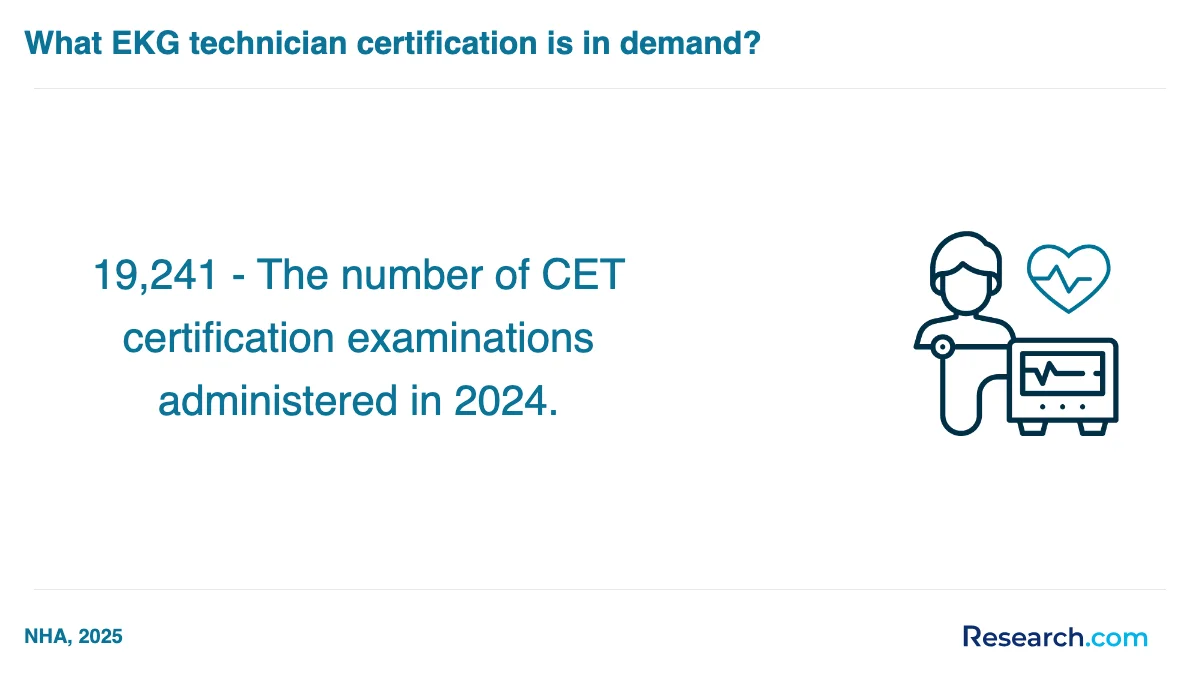
- Certification is not mandatory but recommended; the Certified EKG Technician (CET) credential improves job prospects and requires practical experience performing EKGs on live patients.
- The average annual salary for EKG technicians in New York is about $73,241, with certified and experienced technicians often earning more and having better job opportunities.
How long does it take to complete EKG technician trade schools in New York?
Completing an EKG technician trade school program in New York typically takes between 3 to 6 months, depending on the school and the course format. Many students find that the accelerated pace offered by popular trade schools in New York allows them to quickly gain the skills needed to start working in healthcare settings. For example, graduates often mention how their programs balance hands-on training with essential theory, making the learning process both engaging and practical.
Students appreciate the flexibility of evening or weekend classes, which lets them manage work or family commitments while advancing their careers. One graduate shared how finishing the program in just a few months made it possible to move swiftly from enrollment to employment, sparking excitement about entering the medical field without long delays.
Trade schools like those in New York City emphasize real-world experience through clinical practice, which builds confidence and readiness for certification exams. This focused approach helps many students feel prepared and motivated as they transition from the classroom to patient care roles.
What's the difference between online and on-campus EKG technician trade school programs?
Online EKG technician programs in New York, like Monroe Community College's Certified EKG Technician program, offer the convenience of remote learning through videos and virtual assessments. Graduates often appreciate the flexibility to study around jobs or family, but they share how securing their own clinical placements for hands-on practice can be a challenge. Many find this requires extra effort but also builds independence.
On the other hand, on-campus programs at schools such as TIA School of Allied Health or the Medical Training Institute of New York provide direct, in-person training with EKG machines. Students benefit from real-time feedback during labs and clinical sessions built into the curriculum, creating a supportive environment that helps build confidence quickly. Graduates frequently mention how this hands-on experience made them feel ready for certification exams and patient care from day one.
Cost and duration vary, with on-campus options sometimes pricier but including guaranteed clinical practice, while online paths can be more affordable but demand proactive planning for in-person training.
What is the average cost of EKG technician trade schools in New York?
The average cost EKG technician programs New York students typically encounter ranges from around $799 to $2,195 depending on the trade school and program length. Graduates often share that the tuition fees EKG technician schools New York charge reflect comprehensive training packages including textbooks, lab access, and exam preparation materials. For example, one graduate from the Medical Training Institute of New York recalled how the $1,395 fee covered not just the 80-hour course but also clinical practice essentials, providing great value and hands-on experience.
Another graduate who completed the 60-hour Certified EKG Technician course at TIA Medical Training noted the $799 tuition was affordable and included everything needed, such as procedure videos and an exam simulator, which helped them feel confident and well-prepared. Meanwhile, those who chose the City College of New York appreciated paying $2,195 for an online format that came with an official certification exam voucher, making it a convenient and well-rounded option.
Financial aid and scholarships are often available to help reduce these expenses, which can make pursuing certification more accessible. It's wise to explore the full costs before enrolling since fees might not include background checks or certification tests. For those researching their path, detailed guidance on ekg technician training requirements is available at ekg technician training requirements, offering clear steps to navigate this career path effectively.
What financial aid is available for EKG technician trade schools in New York?
Students pursuing EKG technician programs in New York often find financial aid options that can significantly ease tuition costs. For example, graduates from Columbia-Greene Community College mention that their $450 course fee was more affordable thanks to scholarships and grants offered directly by the school. These need-based awards and institutional support helped them focus on learning without financial stress.
At private centers like the New York Medical Career Training Center, many students successfully accessed federal and state aid by completing the FAFSA. This opened doors to Pell Grants and New York State TAP benefits, making their training manageable alongside flexible payment plans. Such options are a lifeline for those balancing work and study.
However, students in non-credit EKG programs, such as those at Jefferson Community College, often share that federal aid isn't available. They instead rely on workforce development grants or employer tuition reimbursement, which proved crucial in their journey toward certification.
Additionally, some students have benefited from Workforce Innovation and Opportunity Act (WIOA) funding, which supports training for in-demand healthcare roles. Checking eligibility before enrolling has helped many maintain financial stability while advancing their skills.
What are the prerequisites for enrolling in EKG technician trade schools in New York?
Enrolling in an EKG technician trade school program in New York typically requires a few straightforward prerequisites that help ensure you're ready to succeed. Most popular trade schools, such as those in the New York City area, expect applicants to have a high school diploma or GED. This baseline education ensures you have the fundamental skills needed for the technical training ahead.
Graduates from these programs often share that having a background in basic biology or health sciences made the coursework more approachable, but these are usually not mandatory.
Other common prerequisites include:
- Proof of immunizations and a recent physical exam to meet healthcare facility requirements for clinical practice
- Basic CPR certification, which some schools offer as part of their program if not obtained beforehand
- A clean background check, especially important for placements in hospitals or clinics
Many students find that meeting these requirements early on prevents delays and allows them to focus fully on mastering EKG technology. One graduate mentioned how preparing all documents ahead of time made the transition into hands-on training at their New York trade school smooth and confidence-building.

What are the typical courses in EKG technician trade schools in New York?
EKG technician trade school programs in New York focus on practical skills and essential knowledge to prepare students for certification and entry-level roles. Graduates often recall starting with courses on anatomy and physiology of the heart, where they learn to identify heart structures and electrical pathways-crucial for accurate EKG interpretation.
Students also study medical terminology related to cardiology and general healthcare, enabling clear communication in clinical settings. A major part of the curriculum is rhythm interpretation, where students recognize normal and abnormal heart rhythms, including arrhythmias and AV blocks.
Hands-on practice is fundamental. For instance, at Nassau Community College, students perform at least ten live 12-lead EKGs, building confidence in lead placement and machine operation. City College of New York's hybrid program adds troubleshooting and stress testing, reflecting real-world scenarios students will encounter.
Additional courses cover medical ethics, legal responsibilities, vital signs, and rapid response protocols, ensuring well-rounded readiness for the healthcare environment.
What are the available specializations in EKG technician trade schools in New York?
In New York, EKG technician trade school programs typically include specializations that focus on practical cardiac diagnostic skills sought after by local healthcare employers. Graduates often highlight how training in stress testing and Holter monitoring prepared them for real patient scenarios, such as setting up portable EKG devices or monitoring heart function during exercise-essential components of cardiac monitoring training programs New York offers.
Popular trade schools encourage hands-on clinical experiences or externships, giving students direct exposure to busy urban hospitals. These opportunities enable students to confidently apply their knowledge in high-pressure environments, boosting job readiness. Some programs also embed EKG coursework within broader Medical Assistant degrees, attracting students eager to expand their skill set.
Students appreciate programs that go beyond the basics by providing:
- Additional training modules focused on specific cardiac procedures
- Clinical rotations in diverse healthcare settings
- In-depth instruction on device interpretation and patient monitoring
For those wondering about broader career options, understanding whether do you need a degree to be a dialysis technician helps clarify educational pathways and specialization benefits within allied health fields.
How do you choose the best EKG technician trade school program in New York?
Choosing the best EKG technician trade school program in New York means focusing on programs that offer solid accreditation and hands-on training. Graduates from Lehman College praise its NHA-accredited curriculum, which directly prepares students for the Certified EKG Technician exam. Finding affordable EKG technician programs in New York often involves comparing tuition and fees; for example, the City College of New York offers a comprehensive course priced competitively with included vouchers, making the financial commitment clearer and manageable.
Consider programs that fit your schedule; many working students appreciate options like Westchester School for Medical and Dental Assistants' weekend classes, which allow balance between study and daily life. The best EKG technician schools in New York, such as BMCC, also provide certification preparation and career support services that graduates say boost confidence entering the job market. Additional resources, including job placement assistance and tutoring found at the Medical Training Institute of New York, can make a big difference. For learners seeking flexible choices, exploring online medical courses is a practical step.
What career paths are available for EKG technician trade school graduates in New York?
Graduates from EKG technician trade school programs in New York commonly find rewarding career opportunities in hospitals, outpatient clinics, diagnostic centers, and specialized cardiology practices. Many graduates from well-known New York trade schools share how they quickly secured positions by leveraging hands-on training and industry connections. Entry-level roles typically include performing EKG tests, monitoring heart activity, and assisting physicians with diagnoses, which are essential skills that open doors in New York's thriving healthcare market. These career opportunities for EKG technicians in New York are bolstered by the region's rising demand due to an aging population and cardiovascular health challenges.
Expanding beyond initial roles, graduates often pursue additional certifications to advance their careers. For example, some transition into positions as patient care technicians, phlebotomists, or specialized vascular technologists, increasing both responsibility and salary. Employers value graduates who pass the National Healthcareer Association's Certified EKG Technician exam, enhancing their appeal in the competitive job market.
Many graduates also diversify by gaining certifications in related fields such as EMT or CNA, providing alternative pathways into healthcare. Exploring these options can be a game-changer if immediate EKG technician jobs in New York healthcare settings are scarce. For students considering their options, resources like easiest medical degree programs to get into offer practical insights to help navigate career decisions effectively.
What is the job market for EKG technician trade school graduates in New York?
The EKG technician job outlook in New York is strong, driven by growing healthcare demands from an aging population and rising heart disease rates. Graduates from popular New York trade schools often find themselves quickly employed in major hospital systems like NewYork-Presbyterian, Mount Sinai, and NYU Langone Health, where certified technicians support vital cardiac care units. Others secure roles in outpatient clinics or diagnostic centers, reflecting diverse employment paths.
New graduates share experiences of job openings increasing post-pandemic due to greater needs for cardiovascular monitoring in acute and long-term care. Those who hold certifications often report competitive salaries, especially in metropolitan areas where the EKG technician salary in New York can reach up to $83,300 annually, well above the national average.
To maximize opportunities, graduates highlight the value of additional credentials like EMT or CNA. Many recommend exploring best 2 year medical degrees to enhance skills and marketability for various healthcare roles.
Frequently Asked Questions about EKG technician
After completing an EKG technician trade school in New York, preparing for the job market involves several key steps. First, obtaining certification such as the Certified EKG Technician (CET) credential can significantly improve employment prospects. Many employers in New York prefer candidates with nationally recognized certifications.
Networking is also important; joining local healthcare associations or attending job fairs can connect graduates with potential employers. According to the U.S. Bureau of Labor Statistics, New York offers a higher-than-average employment level for cardiovascular technologists and technicians, indicating steady demand in the region.
Finally, updating a resume to highlight clinical experience gained during training and practicing interview skills can help candidates stand out in a competitive job market.
Employers in New York seek several key skills from EKG technician trade school graduates. Proficiency in operating electrocardiogram equipment is essential, as accurate data collection directly impacts patient diagnosis and care. Strong knowledge of human anatomy and cardiac physiology is highly valued to interpret test results effectively.
Attention to detail and the ability to maintain precise patient records are critical for compliance with healthcare regulations. Good communication skills are also important, as technicians must explain procedures clearly to patients and collaborate with medical teams.
According to the U.S. Bureau of Labor Statistics and New York State Department of Labor, technicians with certification and hands-on training from accredited programs have higher employment prospects. Additionally, familiarity with electronic health records (EHR) systems is increasingly requested by employers in New York's healthcare facilities.
Finding internships relevant to an EKG technician trade school program in New York involves several practical steps. Start by contacting your trade school's career services office, as many have established partnerships with local hospitals and clinics. These facilities often offer clinical rotations or internships required for certification. Additionally, explore major healthcare providers in New York City, such as NewYork-Presbyterian and Mount Sinai Health System, which frequently offer internships for cardiovascular technician students.
Online platforms like the New York State Department of Labor's website also list healthcare internships, including those for EKG technicians. Networking through professional associations, such as the American Society of Electrocardiography, can provide leads and mentorship opportunities. According to the U.S. Bureau of Labor Statistics, internships improve job placement rates by up to 20% in allied health fields, making early engagement essential.
Obtaining a diploma from a New York EKG technician trade school significantly enhances career mobility and advancement opportunities. The New York State Department of Labor reports that certified EKG technicians earn a median annual wage of approximately $45,000, with demand expected to grow by 11% through 2030. A diploma demonstrates practical skills and knowledge, often a prerequisite for entry-level jobs in hospitals, clinics, and outpatient care centers.
Graduates can pursue certification exams such as those offered by the National Healthcareer Association, which further improve job prospects. Many employers in New York prefer or require formal training, which supports promotion into supervisory or specialized roles.
Students enrolled in EKG technician trade schools in New York have several part-time job opportunities that complement their education and enhance practical skills. Positions such as medical assistants, phlebotomy technicians, or patient care aides provide hands-on experience in clinical settings. According to the New York State Department of Labor, healthcare support roles are expected to grow by 18% through 2030, creating ample job openings for students.
Working in outpatient clinics or hospitals allows students to observe cardiac procedures and interact with patients, reinforcing their EKG training. Additionally, roles in medical offices often offer flexible hours suitable for balancing school commitments.
To choose the most affordable EKG Technician degree program near you, begin by researching local community colleges or technical schools, as they often offer these programs at a lower cost compared to four-year universities. For those specifically searching near New York, directories like Research.com can help identify accredited institutions and compare tuition costs. Consulting financial aid offices of programs near me can also provide information on scholarships, grants, and payment plans to assist with affordability.
Related EKG Technician Rankings for Nearby States
- Most Affordable EKG Technician Schools & Training - Budget-Friendly EKG Tech Trade Programs in Massachusetts for 2026
- Most Affordable EKG Technician Schools & Training - Budget-Friendly EKG Tech Trade Programs in Michigan for 2026
- Most Affordable EKG Technician Schools & Training - Budget-Friendly EKG Tech Trade Programs in Georgia for 2026
- Most Affordable EKG Technician Schools & Training - Budget-Friendly EKG Tech Trade Programs in Illinois for 2026
- Most Affordable EKG Technician Schools & Training - Budget-Friendly EKG Tech Trade Programs in Florida for 2026
- Most Affordable EKG Technician Schools & Training - Budget-Friendly EKG Tech Trade Programs in Louisiana for 2026
- Most Affordable EKG Technician Schools & Training - Budget-Friendly EKG Tech Trade Programs in Texas for 2026
- Most Affordable EKG Technician Schools & Training - Budget-Friendly EKG Tech Trade Programs in California for 2026
Top Trending Rankings
References
- EKG Technician Training Queens| EKG Training Manhattan, Brooklyn, Flushing https://www.nymedtraining.com/training-options/electrocardiography/
- EKG Technician Training Course in New York City, Manhattan, Queens, Brooklyn, Bronx, Staten Island - TIA Medical Training https://www.tiamedical.com/ekg_technician_training_course_nyc.html
- Electrocardiogram Certification Union New York — NPS https://npscerts.com/ekg-certification-union-new-york/
- EKG Technician Training in NY | WSMDA https://wsmda.edu/ekg/
- EKG Technician Training Program | SUNY Orange https://sunyorange.augusoft.net/info/landing/ekg-technician-training
- Online EKG Technician Certification Program (Self-Paced) https://www.uscareerinstitute.edu/online-ekg-technician-school
- EKG Technician Certification program Classes Manhattan, New York https://www.acs.edu/programs-offered/ekg-technician/
- EKG Certificate https://www.bryantstratton.edu/continuing-education/healthcare/ekg/
- EKG Certification | Earn your CET to become an EKG tech https://www.nhanow.com/certification/nha-certifications/certified-ekg-technician-(cet)
- What are My Career Options after an EKG Technician Bootcamp? | Health Tech Academy https://www.healthtechacademy.org/ekg-technician/career-options-after-ekg-bootcamp


