
2027 Most Popular Supply Chain Management Degree Programs Ranking in Texas

Co-Founder and Chief Data Scientist
Choosing the right supply chain management degree program in Texas can shape your future career in exciting ways. This article introduces the 2027 Most Popular Supply Chain Management Degree Programs Ranking in Texas, created by the Research.com team of data scientists. It's designed to help you discover which programs stand out and deserve your attention.
Exploring this ranking gives you a clearer view of quality options tailored to your goals. Earning a supply chain management degree opens doors to dynamic industries, growth opportunities, and the chance to make a real impact. Let this guide support your journey toward a rewarding career.
Key benefits of getting supply chain management degree in Texas
- Graduates with a supply chain management degree in Texas can earn strong salaries, with roles like Logistics Analyst and Supply Chain Planner averaging about $84,640 annually, offering great financial stability.
- Career paths often include positions such as Procurement Specialist and Transportation Analyst, reflecting versatile opportunities in industries statewide, as seen from Texas university alumni success stories.
- Online degrees in supply chain management provide flexibility and convenience, allowing students to balance work and study, which many Texas graduates find perfect for advancing their careers without relocating.
- 2027 Most Popular Supply Chain Management Degree Programs Ranking in Texas
- What can I expect from supply chain management degree in Texas?
- Where can I work with supply chain management degree in Texas?
What can I expect from supply chain management degree in Texas?
Understanding the cost of a supply chain management degree in Texas can challenge your assumptions about value and investment in education. Graduates from institutions such as the University of Texas at Austin or Texas A&M share that tuition alone for these programs usually ranges between $10,000 and $25,000 per year for in-state students, with out-of-state tuition markedly higher. But beyond numbers, students emphasize the return: the mix of rigorous academics and hands-on projects with local industries creates unparalleled opportunities.
These costs often cover more than traditional classroom time-they include access to cutting-edge ERP software training and real-world logistics challenges rooted in Texas's unique market dynamics. One graduate recalls collaborating with major energy sector companies right outside Houston, validating how costs translate into career-building experiences.
When weighing costs, keep in mind the strong job growth projection in Texas logistics and supply chain sectors. For many, investing in a Texas supply chain management degree is less about expense and more about unlocking doors in a rapidly evolving industry.
Where can I work with supply chain management degree in Texas?
Graduates from supply chain management programs at Texas universities like Texas A&M or the University of Texas often step directly into dynamic roles shaping the state's economy. Imagine managing complex logistics at the Port of Houston, the largest US port by foreign waterborne tonnage, where every decision impacts nationwide supply chains. This real-world influence drives excitement and purpose for many graduates.
Others find themselves nestled within manufacturing hubs in Austin or Dallas, coordinating supplier relationships and optimizing production schedules for automotive or aerospace companies. The thrill of streamlining these processes provides both challenge and fulfillment beyond textbook theory.
Retailers in Texas's booming e-commerce scene call upon supply chain experts to innovate warehousing and distribution strategies, offering graduates fast-paced environments with tangible results. Healthcare institutions also rely on these professionals to efficiently distribute critical medical supplies, instilling a deep sense of societal contribution.
Energy companies meanwhile demand precise procurement management to keep oil and gas projects on track, a field where responsibility feels both immediate and impactful. These varied paths demonstrate that a Texas supply chain degree doesn't just open doors-it empowers graduates to actively shape vital industries around them.
Graduates from supply chain management programs at Texas institutions like Texas A&M or the University of Texas often find themselves stepping into roles with salaries that challenge common expectations. In Texas, logisticians and supply chain planners typically earn around $84,640 annually, a figure that reflects the state's dynamic industrial base and extensive logistics network.
Entry-level graduates may be surprised to see starting salaries close to $55,000 to $65,000 in metropolitan hubs such as Houston or Dallas, where large corporations drive demand for skilled professionals. Meanwhile, roles like procurement specialists earn an average of $47,940, and inventory control specialists about $42,730, figures that often increase quickly with experience.
Graduates recount real-world challenges that empower them to command higher pay quickly-mid-career professionals with managerial duties can earn upwards of $100,000, thanks to Texas's growing ports and distribution centers. This data proves the tangible value of a supply chain degree in a state primed for logistics innovation and economic resilience.
- Texas offers supply chain management programs ranging from certificates to master's degrees at multiple universities.
- Undergraduate tuition at public universities is about $10,000 to $15,000 per year, while private schools may charge over $30,000 annually.
- Graduate program tuition typically ranges from $15,000 to $35,000 per year depending on the school.
- Entry-level salaries for bachelor's graduates start around $55,000 to $65,000, with mid-career earnings between $90,000 and $110,000.
- Major cities like Dallas, Houston, and Austin have a strong demand for supply chain specialists, with job growth projected to be faster than the statewide average.
- Many programs include internships and partnerships with local businesses, offering valuable hands-on experience and networking opportunities.
How long it takes to complete a supply chain management degree in Texas challenges many students' expectations. At institutions like Texas A&M University or the University of Texas at Dallas, an associate degree can be wrapped up in about two years, offering a quick pathway to enter the workforce with solid foundational skills in logistics and procurement. Graduates often describe a sense of accomplishment paired with readiness to take on industry challenges.
Meanwhile, pursuing a bachelor's degree at the University of Houston or similar universities usually requires around four years. Many students find this timeline rigorous yet rewarding, as it allows time to develop deeper expertise and build valuable networks. One graduate recalled balancing demanding coursework with internships that directly shaped their career trajectory.
For those who already hold a bachelor's degree, a master's in supply chain management can take as little as one year through accelerated programs like Texas A&M's or up to two years elsewhere. These graduates often highlight the intensity but also the tremendous career momentum gained.
Part-time and online options extend completion times but offer flexibility, enabling working professionals to pursue their goals without sacrificing their current roles. Reflecting on their journeys, many appreciate how these programs allow education to fit organically into their busy lives.
Choosing between online and on-campus supply chain management degrees in Texas challenges the assumption that one format simply fits all. Graduates from Texas A&M often recall the energizing buzz of in-person group projects and spontaneous conversations during campus events, which sparked ideas and forged valuable industry connections. This environment, common at universities like the University of Texas at Austin, immerses students in hands-on simulations and direct access to professors and local logistics companies, making theory come alive.
Conversely, alumni of online programs at Texas Tech emphasize the freedom to tailor their studies around demanding jobs or family life without sacrificing academic rigor. Their experiences speak to a different kind of engagement-virtual roundtables and discussion boards that create flexible yet meaningful interaction, often overlooked in traditional debates about education quality.
Cost and networking opportunities remain tangled variables. Online programs tend to lower financial barriers, but the deeper face-to-face connections available at Houston or Dallas-based campuses can be priceless for career momentum. Each path demands reflection on personal priorities rather than conventional wisdom.
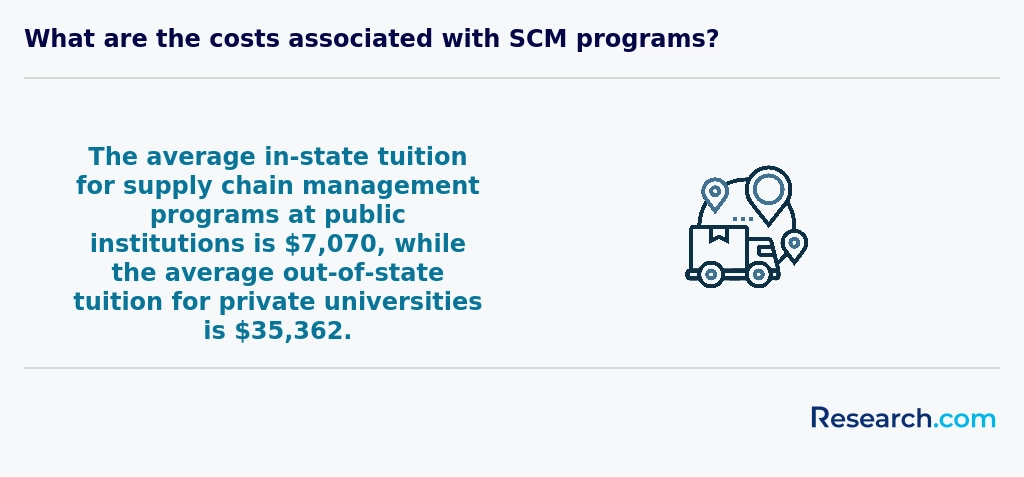
The average cost of a supply chain management degree in Texas varies widely depending on the type of institution and residency status, yet the median total cost for many students hovers around $13,154 for in-state residents. Graduates from public universities like Texas A&M and the University of Texas at Austin often share how their tuition investment feels directly aligned with the quality and opportunities they received-in-class connections with the industry that translated into meaningful job offers. Some describe managing costs strategically, taking advantage of scholarships or financial aid, recognizing that the sticker price is not always the net price they pay.
Private institutions challenge this norm with tuition that can spike significantly, sometimes nearing $50,000, presenting a tough but sometimes worthwhile decision. Those who choose private schools often highlight the personalized attention and access to cutting-edge resources as critical factors that justify the expense in their eyes. When considering the Texas supply chain management degree tuition fees, it's clear that flexibility in program type also affects costs; for instance, master's or executive programs often come with a heftier price tag, yet provide working professionals the chance to advance without stepping away from their careers.
The financial investment is only part of the equation. Many students find the true value comes from the immersive, real-world experiences Texas programs offer, which can dramatically enhance career trajectories. Moreover, those who explore an online bachelor's in business administration sometimes discover even more adaptable routes to managing costs while building essential skills in supply chain management, making the overall journey both accessible and rewarding.
As the supply chain sector evolves rapidly due to technological disruption and global market shifts, prospective students must be aware of emerging trends that can influence their educational and career trajectories. In Texas, academic institutions are increasingly integrating courses on advanced analytics, artificial intelligence, and sustainable practices into their supply chain management programs. These innovations ensure that graduates are not only prepared for conventional logistics roles but are also well-versed in cutting-edge strategies that drive industry transformation. Additionally, many universities are emphasizing experiential learning through virtual simulations and partnerships with leading organizations, enabling students to tackle real-time challenges. For those aiming to balance quality education with cost-effectiveness, exploring options at an affordable supply chain management school in texas could provide the competitive edge needed to succeed in this evolving field. This forward-thinking approach not only enhances academic rigor but also reinforces strong industry connections and continuous professional development, making it an essential consideration for future supply chain leaders.
Many supply chain management students in Texas quickly realize that navigating financial aid is more than just paperwork-it's a gateway to opportunity. Graduates from universities like Texas A&M and the University of Texas at Austin often recall how federal aid through FAFSA, including Pell Grants and federal loans, substantially eased their tuition burdens, especially given the average in-state tuition around $11,000 per year. This reality confronts the misconception that supply chain degrees are prohibitively expensive.
State aid through programs such as the TEXAS Grant has been a game changer for those enrolled full-time at public institutions, directly impacting supply chain management students balancing coursework and financial stress. It's not uncommon for students to combine these funds with university-specific scholarships, which can feel incredibly rewarding, providing recognition of both merit and need in demanding programs.
Even more inspiring are the scholarships offered by professional organizations like the Council of Supply Chain Management Professionals, which not only support studies but open doors to networking and career advancement. These layered financial supports make pursuing supply chain management in Texas not just affordable but empowering.
Enrolling in a supply chain management degree program in Texas demands more than just a high school diploma or GED; it requires mastering foundational concepts that prepare you for the complexities of this dynamic field. Graduates from top programs like the University of Texas at Austin often reflect on how their strong background in algebra, statistics, and economics gave them the confidence to tackle real-world logistical challenges early in their studies.
Many students recall submitting SAT scores with ranges between 1230 and 1480, affirming the competitive nature of these programs. Yet, some universities embrace test-optional policies, recognizing that practical skills and determination often speak louder than numbers.
At the graduate level, possessing a bachelor's degree in business, engineering, or a related discipline is common, but a willingness to engage with prerequisite coursework in business fundamentals or quantitative methods can truly differentiate candidates. Real-life internships in cities like Dallas and Houston shape students' understanding by connecting theory with hands-on experiences that fuel their passion for supply chain innovation.

Courses in Texas supply chain management degrees go far beyond the basics, blending theory with tangible skills used in bustling hubs like Houston and Dallas. Graduates from well-known Texas universities describe how foundational classes such as operations management and logistics quickly evolve into critical thinking exercises involving real supply disruptions seen in industries like oil and retail.
Core subjects cover procurement strategies, inventory control, and supplier relations, but students also dive into analytics and technology, gaining tools to predict and respond to market shifts. Imagine analyzing data from a Dallas-Fort Worth distribution center to optimize delivery routes - a common hands-on project that makes abstract concepts suddenly exciting and immediate.
Texas programs frequently emphasize quality and continuous improvement, reflecting the state's role in global trade. Ethics and sustainability aren't just buzzwords either; many students find themselves wrestling with real-world dilemmas, preparing them to lead resilient supply chains in volatile markets. This blend of practice and purpose leaves graduates feeling confident and deeply connected to Texas's dynamic economy.
Supply chain management degree specializations in Texas are deeply intertwined with the state's economic fabric, challenging students to think beyond textbook theories. Graduates from institutions like the University of Texas at Dallas consistently highlight how focusing on Logistics and Transportation Management transformed their understanding of Texas' role as a national logistics hub, from navigating sprawling highway networks to managing port operations. Meanwhile, Operations and Production Management draws on Texas' manufacturing strengths, enabling students to engage with industries such as aerospace production, making abstract concepts tangible through real-world process optimization projects.
Programs here also offer concentrations in Procurement and Sourcing, sharpening skills in strategic negotiations critical to the many corporate headquarters located in Texas. Supply Chain Analytics, a specialization gaining traction at Texas A&M University, equips students with data-driven decision-making skills-turning raw numbers into actionable insights within energy sector supply chains. For those curious about cross-border commerce realities, a Global Supply Chain Management focus sheds light on trading complexities at the U.S.-Mexico border, a vital commercial artery that graduates often describe as eye-opening. Choosing these best supply chain management concentrations Texas can catalyze career growth while fostering a connection to the state's economic pulse. Prospective students might also explore flexible pathways like MBA without GMAT online options to complement their specialization studies.
Choosing the best supply chain management degree in Texas means looking beyond generic rankings and diving into what truly shapes your future success. Graduates from well-known Texas universities often emphasize the value of programs with strong industry ties, particularly in logistics hubs like Dallas and Houston, where internships turn theory into tangible skills. This hands-on experience often trumps textbook learning in real-world job markets.
Consider programs that reflect Texas' economic strengths, such as oil and gas supply chains, which can offer specialized knowledge hard to find elsewhere. Affordable supply chain management programs Texas-wide may attract students initially, but graduates frequently note that investing in accredited programs with robust career services leads to better long-term outcomes.
Reflect on the lived realities of peers who balanced cost, curriculum, and job placement data before deciding. Also, don't underestimate the value of exploring related options, like the business schools in Atlanta, Georgia, for comparative insight if relocation or remote studies are possible.

Graduates with a supply chain management degree in Texas find themselves at the crossroads of a dynamic job market, ready to seize diverse career opportunities. From supply chain analysts who dive into data to uncover cost-saving insights, to logistics managers steering goods through Texas's expansive ports and highway networks, each path offers a chance to impact major industries firsthand. Many graduates from prominent Texas universities share how their roles as procurement managers or inventory control specialists challenge them to balance sourcing efficiency with real-world production demands, turning theory into critical business decisions. This perspective brings to life the abundant supply chain management career opportunities in Texas, where hands-on experience at institutions like The University of Texas or Texas A&M shapes leaders able to thrive in an expanding sector.
Notably, for those with ambition, moving into roles such as operations manager or supply chain director in the Dallas-Fort Worth or Houston areas unlocks leadership potential with salaries reflecting that elevated responsibility. Students often explore related fields through programs such as the top project management degrees, equipping themselves with complementary skills that broaden their career horizons.

The job market for supply chain management degree holders in Texas defies simple expectations, thriving amid the state's unique industrial diversity and strategic global position. Graduates from universities like Texas A&M and the University of Texas often find themselves at the crossroads of manufacturing, oil, and tech sectors, where their skills become indispensable. This dynamic environment shapes the Texas supply chain management job outlook, with companies like Amazon and ExxonMobil actively recruiting fresh talent to streamline increasingly complex logistics networks.
Employment opportunities for supply chain graduates in Texas extend beyond mere numbers; they involve engaging with cutting-edge distribution methods in bustling hubs such as Houston and Dallas. Graduates report a sense of optimism and practical fulfillment as they navigate roles like procurement manager or supply chain coordinator, often earning competitive salaries ranging from $65,000 to over $110,000 annually. For those weighing the cost of education, options abound, from public universities to more costly private institutions, with many students finding value in an affordable supply chain management school in texas that balances tuition and career prospects.
2027 Most Popular Supply Chain Management Degree Programs Ranking in Texas
Investing in your education is a significant decision that can shape your future, and the Research.com team understands the importance of making informed choices. To assist prospective students in Texas, we have meticulously crafted the "2027 Most Popular Supply Chain Management Degree Programs Ranking in Texas." Our commitment to quality, credibility, and accuracy is reflected in the extensive research and analysis conducted to compile this ranking.
We utilized the following reputable data sources to ensure a comprehensive evaluation of supply chain management programs:
By exploring this ranking, readers will gain valuable insights into the most popular and credible supply chain management degree programs in Texas, empowering them to make informed decisions about their educational paths. For more details on our methodology, please visit our Research.com methodology page.
# 1 position
Texas A&M University-College Station
Bachelor of Business Administration in Supply Chain Management


Frequently Asked Questions About supply chain management
Supply chain management degree students in Texas can maximize their learning experience by combining academic coursework with practical application. Many Texas universities offer strong partnerships with local industries, allowing students to engage in internships and co-op programs. For example, Houston, a major logistics hub, provides ample opportunities for hands-on experience in supply chain roles. According to the Texas Workforce Commission, supply chain employment in Texas is projected to grow by 8% through 2030, emphasizing the importance of experiential learning.
Students should also leverage networking events hosted by professional organizations such as APICS Dallas and the Texas Supply Chain Forum. These offer insights into industry trends and foster valuable connections. Additionally, utilizing Texas-based online resources and certifications can supplement traditional education and increase competitiveness in the job market.
The field of supply chain management is evolving rapidly, with several emerging niches gaining prominence. In Texas, where logistics and manufacturing play a vital economic role, areas like sustainable supply chains and digital supply chain analytics are expanding. According to Texas A&M's Supply Chain Institute, companies increasingly seek professionals skilled in using AI and blockchain to improve transparency and efficiency.
Another growing niche is e-commerce fulfillment management, driven by Texas's strategic location for distribution hubs. The demand for experts in cold chain logistics is also rising due to Texas's large food and pharmaceutical sectors. These niches offer new opportunities for graduates aiming to specialize beyond traditional supply chain roles.
After earning a supply chain management degree in Texas, graduates should focus on gaining practical experience to enhance employability. Internships and co-op programs offered through Texas universities provide valuable hands-on learning and industry connections in logistics, transportation, and procurement sectors.
Networking plays a crucial role; joining organizations like the Council of Supply Chain Management Professionals (CSCMP) Texas Roundtable helps students connect with local professionals. Additionally, certifications such as APICS Certified Supply Chain Professional (CSCP) boost credibility.
Texas hosts a robust supply chain job market, especially in Houston and Dallas. According to the U.S. Bureau of Labor Statistics, employment for logisticians in Texas is projected to grow by 9% from 2022 to 2032, indicating strong demand.
Employers in Texas highly value supply chain management graduates who demonstrate strong analytical and problem-solving skills. These abilities enable graduates to optimize logistics, reduce costs, and respond efficiently to disruptions in complex supply networks.
Communication skills are crucial as graduates must collaborate with suppliers, manufacturers, and retailers across diverse industries. Proficiency in data analysis software and supply chain technologies is also sought, reflecting the industry's growing reliance on digital tools to enhance operational efficiency.
According to the Texas Workforce Commission, demand for supply chain roles requiring technological and leadership skills is expected to grow 8% through 2028. Additionally, adaptability and critical thinking are essential in the dynamic Texas market, dominated by oil, manufacturing, and international trade sectors.
Finding internships in Texas for supply chain management students involves leveraging both university resources and local industry connections. Many Texas universities with supply chain programs, such as Texas A&M and University of Texas at Austin, offer dedicated career services that list internship opportunities and host job fairs. According to the Texas Workforce Commission, logistics and supply chain sectors are expanding rapidly, adding nearly 10% more jobs between 2018 and 2023, increasing internship availability.
Students should also explore Texas-based companies in manufacturing, oil and gas, and retail sectors, such as Walmart and Celanese, which commonly offer supply chain internships. Networking through professional groups like the Council of Supply Chain Management Professionals' Texas chapters can provide additional leads. Online platforms such as Handshake, specifically used by universities, and LinkedIn are valuable for discovering and applying to local internship positions.
Obtaining a supply chain management degree in Texas significantly enhances career mobility and advancement opportunities. Texas hosts many logistics hubs and multinational firms, creating demand for skilled supply chain professionals. According to the U.S. Bureau of Labor Statistics, employment for logisticians in Texas is projected to grow about 6% from 2022 to 2032, reflecting strong industry growth.
The degree equips graduates with expertise in operations, procurement, and logistics, preparing them for roles in diverse sectors such as manufacturing, energy, and retail. This specialization often leads to faster promotions and higher salaries compared to those without formal education.
Moreover, Texas universities' ties with regional industries offer internships and networking opportunities, further supporting career progression.
Studying for a supply chain management degree in Texas offers a strong foundation for interdisciplinary roles by combining business, logistics, technology, and data analysis skills. Texas universities often embed real-world case studies, industry partnerships, and internships that connect students with sectors like manufacturing, retail, and energy, fostering versatile competencies.
According to the Texas Workforce Commission, supply chain occupations are growing faster than average in the state, requiring professionals who can navigate cross-functional teams. Programs emphasize collaboration, problem-solving, and communication, essential for roles spanning procurement, transportation, and IT systems.
This multifaceted training equips graduates to adapt and lead in dynamic, integrated supply chains across industries.
When choosing between a thesis and a non-thesis supply chain management degree program in Texas, consider your career goals and time commitment. Thesis programs focus on research and are ideal if you plan to pursue a PhD or work in analytical roles requiring strong research skills. Non-thesis options emphasize practical skills and coursework, appealing if you seek immediate industry employment or professional certification.
Texas boasts numerous supply chain programs accredited by the AACSB or APICS, often aligning with regional industry needs in logistics and energy sectors. According to the Texas Workforce Commission, demand for supply chain analysts is projected to grow 10% by 2030, favoring hands-on experience.
Costs and duration may differ: thesis tracks typically take longer and may offer research assistantships, whereas non-thesis tracks can be completed faster. Speak with program advisors to clarify expectations. Understanding these factors will help tailor your choice to Texas's dynamic supply chain market.
Students in Texas interested in studying supply chain management abroad have several practical options. Many Texas universities with strong supply chain programs, such as Texas A&M and the University of Texas at Dallas, offer established exchange or study abroad programs in partnership with international institutions.
These programs often include destinations in Europe and Asia, regions central to global supply chains. Through these opportunities, students gain hands-on experience and insights into international logistics and procurement.
Additionally, Texas students can participate in short-term study tours or internships abroad, which are increasingly popular for building global expertise without a full degree program overseas.
The 2022 Texas Higher Education Coordinating Board report notes that nearly 15% of supply chain students at major Texas universities engage in study abroad activities, highlighting growing interest.
Part-time jobs in Texas can greatly enhance the education of students pursuing supply chain management degrees. Roles in logistics coordination, warehouse operations, or inventory control offer practical experience directly related to coursework. Texas, with major distribution hubs like Dallas and Houston, provides many such opportunities. According to the Texas Workforce Commission, logistics and transportation industries are growing by 4.5% annually, increasing part-time demand.
Retail positions focusing on supply chain processes also help students understand real-time inventory management. Furthermore, internships or assistant roles in manufacturing companies based in Texas can build critical skills in procurement and vendor communication. Such experiences improve employability after graduation.
Supply chain management students in Texas benefit from many networking opportunities through university partnerships, industry events, and professional organizations. Top public and private universities often host career fairs and supply chain-specific meetups, connecting students with leaders from prominent Texas companies such as Texas Instruments and Dell Technologies.
Professional groups like the Council of Supply Chain Management Professionals (CSCMP) and the Texas Supply Chain Forum offer local chapters and networking events. These platforms allow students to engage with practitioners, attend workshops, and gain mentorship.
Additionally, Texas's strategic location as a logistics hub supports internships and job placements in major ports and transportation centers, enhancing practical connections.
Alumni networks play a crucial role in supporting supply chain management degree students in Texas by offering valuable connections within the industry. Graduates often gain access to mentorship, internships, and job opportunities through these established networks.
Texas hosts numerous supply chain hubs such as Houston and Dallas, where alumni frequently work in logistics, manufacturing, and distribution sectors. According to the Texas Workforce Commission, supply chain occupations are projected to grow by 9% through 2030, emphasizing the importance of professional networks.
Additionally, many Texas universities with supply chain programs maintain active alumni associations that organize networking events, workshops, and career fairs, helping students transition smoothly into the workforce.
Customizing a supply chain management degree program in Texas to fit your career goals is increasingly feasible due to the flexibility offered by many institutions. Students can often select electives focused on areas such as logistics, procurement, or global supply chains, tailoring their education to specific interests. Some universities provide internship opportunities in Texas's robust industries-including energy, manufacturing, and retail-giving practical experience aligned with career aspirations.
Additionally, dual-degree options and certifications, like Six Sigma or APICS, can be integrated to enhance skills. According to the Texas Higher Education Coordinating Board, nearly 60% of supply chain graduates find employment within the state, highlighting strong local demand. This allows students to strategically align academic paths with Texas's economic sectors.
Supply chain management students in Texas face several common challenges during their studies. One major difficulty is mastering the complex logistics and technology systems that drive modern supply chains. Students must develop skills in data analysis, inventory management, and transportation planning, which can be demanding without prior experience.
Another challenge involves staying up-to-date with evolving industry standards and regulations, especially given Texas's role as a key logistics hub with significant cross-border trade with Mexico.
Additionally, securing relevant internships or practical experiences can be competitive, as top companies often seek candidates with prior hands-on knowledge. According to the Texas Workforce Commission, the demand for skilled supply chain professionals in Texas grew by over 10% from 2020 to 2023, intensifying competition among students for jobs and training opportunities.
Financial constraints and balancing coursework with part-time jobs remain notable hurdles for many students. These challenges require effective time management and support from academic advisors to ensure success.
With a supply chain management degree in Texas, pursuing professional certifications can significantly boost your career prospects. Common certifications include the Certified Supply Chain Professional (CSCP) offered by APICS, which is widely recognized in the industry.
The Certified Professional in Supply Management (CPSM) from the Institute for Supply Management is another valuable credential. It focuses on procurement and sourcing skills relevant in Texas's large manufacturing and logistics sectors.
Additionally, the Six Sigma Green Belt certification is popular for improving process efficiency, a critical skill in supply chain roles. These certifications help graduates stand out in Texas's competitive market, where supply chain expertise is in demand due to the state's significant role in trade and transportation.
Applying for a supply chain management program in Texas requires a clear, well-organized application. Start by highlighting your academic background with a strong GPA, especially in business, logistics, or related fields. Texas universities value practical experience, so emphasize internships, work experience, or volunteer roles linked to supply chain operations.
Personal statements should focus on your passion for supply chain management and knowledge of Texas's key industries, such as oil, manufacturing, and transportation, where supply chain skills are critical. Citing data from the Texas Workforce Commission, supply chain jobs are expected to grow by 12% through 2030, showing demand for skilled graduates.
Lastly, letters of recommendation from professionals familiar with your work ethic and leadership add credibility. Demonstrating understanding of current supply chain challenges in Texas will strengthen your application significantly.
Supply chain management careers have a significant global dimension, influenced by international trade, logistics, and technology. Professionals in this field support the movement of goods across borders, connecting suppliers, manufacturers, and consumers worldwide. According to the U.S. Bureau of Labor Statistics, supply chain jobs are growing faster than average, reflecting the increasing demand for skilled experts in global logistics.
Texas, as a major hub for trade with Mexico and Latin America, offers unique opportunities. Ports like Houston and Dallas/Fort Worth International Airport are critical nodes in worldwide supply chains, providing practical experience and local industry connections for graduates. This regional advantage prepares students for careers in multinational firms or global supply operations.
Gaining practical experience while studying for a supply chain management degree in Texas is essential for building job-ready skills. Many Texas universities encourage internships with local companies, such as those in Houston's large energy and logistics sectors or Dallas's retail and transportation hubs. These internships often provide hands-on exposure to inventory control, procurement, and distribution management.
Additionally, some programs offer cooperative education (co-op) options, allowing students to alternate semesters of study with full-time work in the industry. According to the Texas Workforce Commission, the state employed over 58,000 supply chain professionals in 2023, providing ample internship opportunities.
Student organizations and case competitions hosted by universities also help sharpen real-world problem-solving skills. These experiences complement classroom learning and increase a graduate's employability.
Choosing the right concentration within a supply chain management degree in Texas depends on your career goals and industry interests. Texas hosts a diverse economy with strong sectors like energy, manufacturing, and technology, each demanding specific supply chain skills. According to the Texas Workforce Commission, logistics and supply chain jobs are projected to grow by 12% through 2030, emphasizing the importance of specialized knowledge.
Popular concentrations include logistics, procurement, operations, and analytics. For example, logistics focuses on transportation and distribution, while procurement involves supplier relations and contract management. Consider your strengths and the local job market trends to align your focus effectively.
See What Experts Have To Say About Studying Supply Chain Management
Read our interview with Supply Chain Management experts

Tathagata Dasgupta
Supply Chain Management Expert
Adjunct Professor of Data Sciences and Operations
USC Marshall

Sampath Rajagopalan
Supply Chain Management Expert
Chair Emeritus in Distribution Management
USC Marshall

Steven Carnovale
Supply Chain Management Expert
Associate Professor
Florida Atlantic University

- Top Skills Employers Look for In Supply Chain Students https://scmtalent.com/top-skills-employers-look-for-in-supply-chain-students/
- Supply Chain Management Thesis Topics- Top 30 Ideas | Zaragoza Logistics Center https://www.zlc.edu.es/news/supply-chain-management-thesis-topics-top-30-ideas/
- Supply Chain Management (BBA) https://www.etamu.edu/programs/supply-chain-management-bba/
- EVENTS https://aiscrglobal.org/conferences-and-events/
- Supply chain certification programs https://www.scmr.com/article/supply-chain-certification-programs
- Advance Your Career in Logistics and Supply Chain Management | CCU Online https://www.ccu.edu/blogs/cags/category/business/advance-your-career-in-logistics-and-supply-chain-management/
- Alumni Network https://www.klu.org/professionals-organizations/engage-with-klu/alumni-network
- 2025 Most Affordable Online Supply Chain Management Degrees https://www.onlineu.com/most-affordable-colleges/supply-chain-management-degrees
- The Challenges of SCM and How to Overcome Them in 2025 | Jabil https://pscs.jabil.com/what-we-think/blog/the-challenges-of-scm-and-how-to-overcome-them-in-2025.html
- Management Supply Chain Management Concentration, Bachelor of Business Administration https://catalog.tamusa.edu/undergraduate/business/management-marketing/management-supply-chain-concentration-bba/


