2027 Sociology Degree Payback Report: Which Programs Deliver the Best Cost-to-Salary Return

Co-Founder and Chief Data Scientist
Choosing a sociology degree is a financial decision as much as an academic one. College Board's 2024 pricing data shows average published tuition and fees at $11,610 for in-state public four-year students and $43,350 at private nonprofit colleges, which makes payback time vary sharply by school choice.
This guide is for students, parents, transfer students, and working adults comparing sociology programs. You will learn how cost, format, salary outcomes, labor demand, and career planning affect ROI so you can choose a program that fits both your interests and your budget.
Key Things You Should Know
- The strongest sociology degree payback usually comes from low-cost public, transfer-friendly, or online completion programs that pair sociology with data analysis, research methods, social services, public policy, HR, or criminal justice coursework.
- According to BLS 2024 wage data, sociologists had a median annual wage of $101,770, but many bachelor's-level sociology graduates enter broader roles such as social services, HR, research assistance, case management, policy support, or community program work where salaries vary widely.
- Payback is often faster when total borrowing stays low: a student paying near the 2024-25 in-state public four-year tuition average of $11,610 per year has a very different break-even timeline than a student paying private-college sticker prices without substantial aid.
- What Is the Return on Investment of a Sociology Degree?
- Which Sociology Programs Deliver the Best Cost-to-Salary Return?
What Is the Return on Investment of a Sociology Degree?
The return on investment of a sociology degree depends less on the major name alone and more on the combination of total cost, career target, internships, quantitative skills, location, and whether the student uses the degree as a platform for graduate study or direct employment.
ROI means the financial return a student receives compared with the money, time, and opportunity cost invested in the degree. For sociology, the calculation is nuanced because the major is broad. A sociology graduate may work in nonprofit administration, public agencies, social research, human resources, education support, criminal justice, community outreach, user research, policy analysis, or continue to graduate school.
A sociology degree tends to deliver its best financial return when it is treated as an applied social science degree, not just a general liberal arts credential. Students who graduate with research design, statistics, Excel, SQL, GIS, survey methods, program evaluation, or data visualization skills usually have a stronger employment story than students who complete only theory-heavy coursework without applied experience.
The following table summarizes how different sociology degree paths typically affect payback. It is not a ranking of individual schools; it is a decision framework for comparing program types before you commit.
| Path | Typical Fit | ROI Strength | Main Financial Risk |
| Associate degree or transfer pathway | Students planning to complete lower-division credits at community college before transferring | Strong when credits transfer cleanly to a bachelor's program | Losing credits because of weak transfer planning |
| Bachelor's in sociology | Students seeking entry-level roles in social services, research support, HR, public agencies, or nonprofit work | Moderate to strong when cost is controlled and skills are applied | Graduating without internships, data skills, or a clear target role |
| Master's in sociology or applied social research | Students targeting research, policy, evaluation, teaching, or leadership roles | Strongest when employer demand or advancement requires graduate training | Taking on high debt for roles that do not require the degree |
| Doctoral study | Students pursuing academic, high-level research, or specialized policy careers | Variable; can be strong with funding, weaker without it | Long time to completion and uncertain academic job market |
For most students, the best ROI strategy is to choose the lowest-cost accredited program that still provides strong advising, internships, research training, transferable credits, and access to employers or graduate pathways.
Which Sociology Programs Deliver the Best Cost-to-Salary Return?
Programs with the best cost-to-salary return are usually not the most expensive or the most prestigious by default. They are programs that keep net price manageable while helping students build job-ready skills tied to real sociology-related careers.
Because program-level salary results are not consistently reported across all colleges in a comparable way, students should avoid assuming that any single national ranking can identify the best ROI program for them. A more reliable approach is to compare programs by measurable ROI features.
The table below shows the program characteristics that most often improve sociology degree payback. Use it as a checklist when comparing schools, especially if published salary data is incomplete or difficult to compare.
| Program Feature | Why It Improves Payback | Best-Fit Student |
| Low net price after grants and scholarships | Reduces borrowing and shortens the break-even period | Cost-sensitive students and families |
| Community college transfer agreements | Allows students to complete general education credits at a lower cost | Students who can plan transfer early |
| Applied research or data methods concentration | Connects sociology to research analyst, survey, policy, and evaluation roles | Students interested in data-driven work |
| Internship or field placement requirement | Builds experience before graduation and improves employability | Students entering the workforce after the bachelor's degree |
| Public policy, criminal justice, HR, or social services electives | Helps align the major with a specific job market | Students who want a defined career direction |
| Online completion option for transfer students | May reduce relocation, commuting, and work-disruption costs | Working adults and students with prior credits |
The highest-return sociology programs usually share three traits: they are accredited, affordable after aid, and structured around employable skills. A low-cost program with weak advising can still underperform, while a higher-priced program may be worth considering if it offers unusually strong aid, research opportunities, employer connections, or graduate-school placement.
Students considering advanced study should be especially cautious about unfunded graduate programs. An online PhD can appeal to working professionals who need flexibility, but doctoral ROI depends heavily on funding, career goals, time to completion, and whether the degree aligns with academic, research, or leadership opportunities.
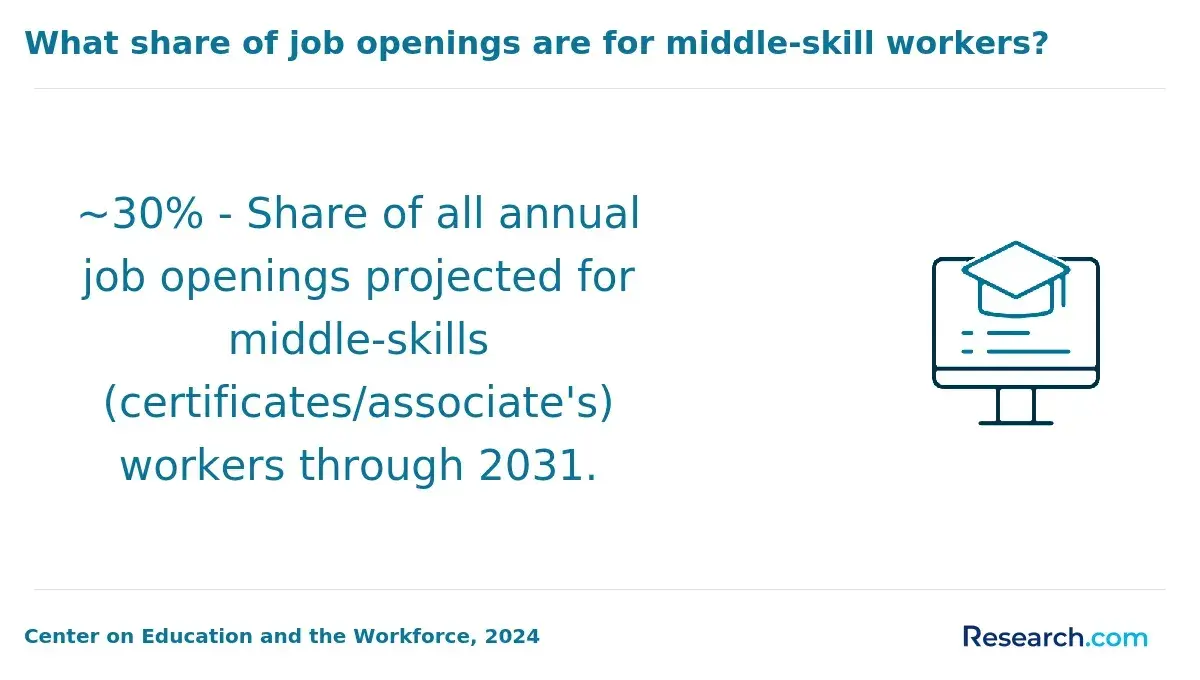
Tuition affects sociology degree payback because many entry-level sociology-related roles do not pay enough to absorb large debt comfortably in the first few years after graduation. This does not mean the degree lacks value; it means price discipline matters.
College Board's 2024-25 published tuition and fee averages show a large sticker-price gap: $11,610 for in-state public four-year students, $30,780 for out-of-state public students, and $43,350 for private nonprofit institutions. For sociology majors, that gap can matter more than small differences in program reputation unless the higher-cost option provides enough grant aid or career value to offset the price.
The table below shows how common cost categories affect payback. The key point is that students should compare total cost of attendance and net price, not tuition alone.
| Cost Factor | How It Affects ROI | What to Check |
| Tuition and fees | The largest direct academic cost for most students | Net price after grants, not just sticker price |
| Room and board | Can make a low-tuition campus program expensive | Whether commuting or online study lowers total cost |
| Transfer credit acceptance | Can reduce time and tuition if credits apply to the major | Written transfer evaluation before enrolling |
| Course load and time to degree | Extra semesters increase tuition and delay earnings | Degree map, course availability, and graduation rates |
| Internship requirements | Can improve career outcomes but may affect work schedule | Whether placements are paid, local, remote, or flexible |
| Graduate school plans | May increase earning potential but adds cost and time | Whether the target role actually requires a graduate degree |
Online and campus programs can both provide good ROI, but the better option depends on the student. Online degrees, such as affordable online executive MBA programs, may improve payback for working adults who can keep earning while enrolled. Campus study may offer stronger in-person research, faculty mentoring, internships, and networking. The best financial choice is the one that minimizes unnecessary cost without sacrificing the experiences needed for the student's target career.
The break-even point for a sociology degree is the point at which the financial benefits of the degree outweigh the cost of earning it. A simple way to think about it is: lower cost plus stronger early-career earnings equals faster payback.
There is no universal break-even timeline because students enter with different aid packages, living costs, transfer credits, work hours, and career goals. However, the logic is straightforward. A student who completes two years at community college, transfers credits cleanly, and graduates with limited debt may reach financial payback far sooner than a student who pays four years of high private tuition and enters a modest-paying role.
Use the following steps to estimate your own sociology degree payback before enrolling. These steps are more reliable than relying only on advertised rankings or broad salary averages.
- Calculate total net cost, including tuition, fees, books, housing, transportation, and expected interest on loans.
- Subtract grants, scholarships, employer tuition benefits, and savings that do not need to be repaid.
- Identify realistic first jobs connected to the program's curriculum, internships, and location.
- Compare likely earnings with what you would earn without the degree or with a lower-cost credential.
- Estimate how much annual income can reasonably go toward loan repayment after taxes and living expenses.
- Test multiple scenarios, including delayed graduation, unpaid internships, graduate school, relocation, or part-time enrollment.
Students should be conservative in this calculation. A sociology degree can open valuable doors, but salaries are not guaranteed, and early-career outcomes depend on experience, geography, industry, interview performance, and the student's ability to translate academic work into employer-relevant skills.
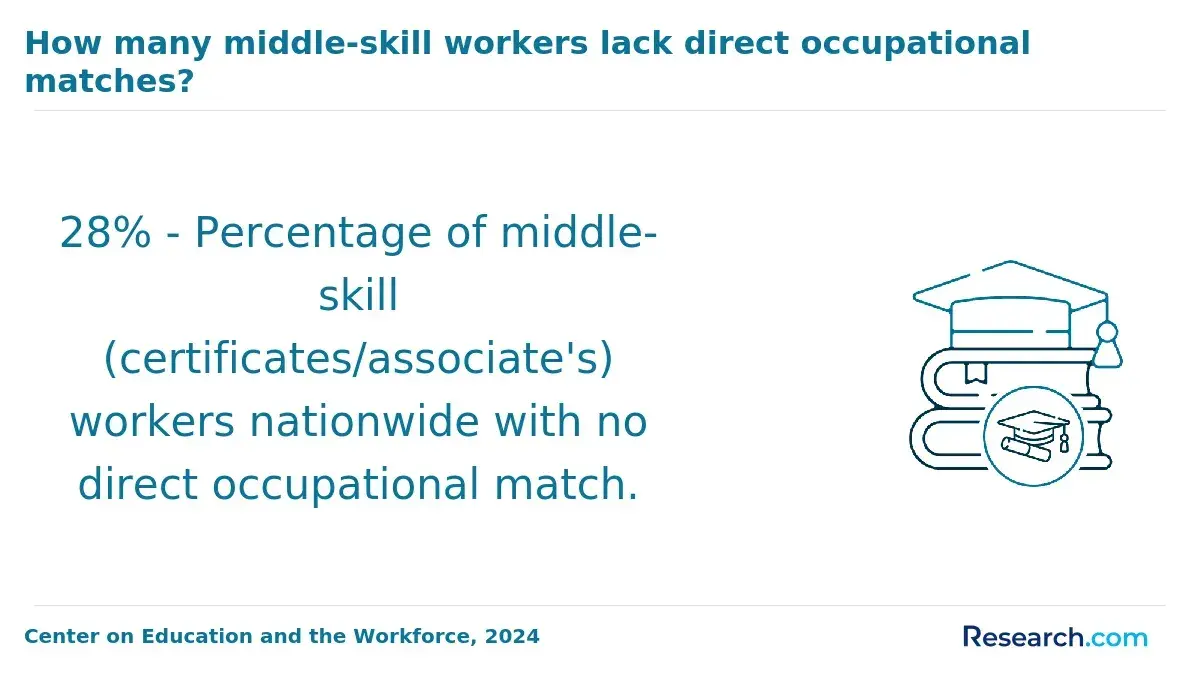
The biggest ROI drivers for a sociology degree are total cost, applied skills, career focus, experience, and geographic labor market. Institution type matters, but it should not be treated as the only factor. A public university can be expensive for out-of-state students, and a private nonprofit college can be affordable if it offers strong grants.
One important national benchmark is that BLS 2024 data continues to show higher earnings for workers with bachelor's degrees than for workers with only a high school diploma. For sociology students, the practical takeaway is that the degree can support upward mobility, but the payoff improves when the student connects the degree to specific job skills.
These are the factors that usually have the strongest effect on sociology degree ROI. Review them before choosing a school or committing to a loan package.
- Net price: Compare what you will actually pay after grants and scholarships, not the advertised tuition.
- Completion time: Extra semesters raise costs and delay full-time earnings, so course availability and advising quality matter.
- Transfer policy: Credits that do not apply to degree requirements can erase the savings of starting elsewhere.
- Quantitative training: Statistics, survey methods, data cleaning, and visualization can expand job options beyond entry-level service roles.
- Internships and fieldwork: Employers often value evidence that students can apply sociological thinking in real organizations.
- Career alignment: Sociology pays back better when paired with a target such as policy, HR, research, public health, criminal justice, or nonprofit management.
- Location: Government agencies, universities, healthcare systems, nonprofits, consulting firms, and research organizations are not evenly distributed across regions.
Common mistakes include choosing a program based only on brand name, assuming all sociology jobs require graduate school, ignoring total cost of attendance, and failing to ask whether internships are built into the curriculum. A better approach is to build a short list of accredited programs, compare net price, map each curriculum to target jobs, and ask for evidence of recent graduate outcomes.
Employer demand affects sociology degree value because sociology is rarely a single-track major. Graduates compete across several labor markets, including social services, research, policy, education support, HR, criminal justice, healthcare administration, and nonprofit work.
BLS employment projections released for the 2024-34 period indicate that many community, social service, and analytical occupations are expected to keep hiring, though growth varies by role. This matters because sociology students with flexible skills can pursue adjacent roles instead of relying only on the small formal "sociologist" occupation.
Current employer expectations are also changing. Many organizations want graduates who can interpret data, communicate with diverse populations, evaluate programs, understand social systems, and use technology responsibly. AI tools may automate parts of transcription, coding, literature review, and basic reporting, but they increase the value of human judgment in research design, ethics, context, interviewing, and interpretation.
Students can improve employment value by preparing for roles where sociology has a clear use case. For example, a student interested in public health should add statistics, epidemiology-related electives, or community health experience. A student interested in HR should add employment law, organizational behavior, and analytics. A student interested in policy should build writing samples, learn program evaluation, and complete an internship with a public agency or advocacy group.
Demand is strongest when the degree is paired with evidence of applied ability. A resume that says "B.A. in Sociology" is less persuasive than one that shows a survey project, internship, statistical analysis, community needs assessment, policy memo, or program evaluation report.
Students can maximize the financial value of a sociology degree by making program choice, course selection, and career preparation work together from the beginning. The goal is to graduate with lower debt and clearer evidence of employable skills.
Start by comparing programs with a cost-and-career checklist. These steps can help prevent overpaying for a degree that does not match your career plan.
- Choose an accredited institution and confirm that the sociology program is offered by a legitimate, recognized college or university.
- Compare net price after grants and scholarships, not only published tuition.
- Ask for a written transfer-credit evaluation before enrolling if you have prior college credits.
- Review the curriculum for statistics, research methods, data analysis, writing-intensive courses, and applied electives.
- Ask whether internships, field placements, research assistantships, or community-based projects are required or strongly supported.
- Build a career track by pairing sociology with a minor, certificate, or electives in data analytics, public policy, HR, criminal justice, public health, education, or business.
- Request recent graduate outcomes by major, including job titles and graduate-school placement when available.
- Limit borrowing to a level that fits realistic early-career earnings rather than best-case salary assumptions.
Online study can be financially smart for adults who need to keep working, avoid relocation, or complete a degree after stopping out. It can also help older learners explore flexible programs; resources on online degrees for seniors may be useful for adults comparing formats, support services, and realistic study loads.
Red flags include programs that cannot explain career outcomes, push students to borrow heavily without discussing alternatives, offer limited access to faculty advising, or lack applied coursework. Students should also be careful with programs that promise specific salaries, because outcomes vary by region, experience, employer, and graduate-school decisions.
Sociology can offer solid ROI, but it is not the best financial fit for every student. Its value is strongest for students who want to understand social systems and apply that knowledge in research, service, policy, HR, criminal justice, education, or community work. Students seeking the highest short-term salary may want to compare sociology with business, economics, data analytics, psychology, social work, public administration, or criminal justice.
The table below compares sociology with related fields from an ROI perspective. It focuses on decision factors rather than ranking fields by prestige.
| Field | Best ROI When | Potential Limitation | Who Should Consider It |
| Sociology | The student adds research, data, policy, HR, or community program experience | Career path can feel broad without deliberate planning | Students interested in social systems, inequality, organizations, and applied research |
| Psychology | The student plans for HR, research support, behavioral health support, or graduate study | Licensed clinical roles usually require graduate education | Students focused on behavior, mental processes, and counseling-related paths |
| Social work | The student wants a direct practice pathway and understands licensure requirements | Licensure and graduate education may be needed for clinical roles | Students seeking structured human-service careers |
| Criminal justice | The student targets law enforcement, corrections, courts, or public safety administration | Hiring standards vary by agency and location | Students interested in justice systems and public safety |
| Public administration or public policy | The student wants government, nonprofit management, policy analysis, or program evaluation | Many advanced roles prefer a master's degree | Students interested in systems-level decision-making |
| Business or management | The student prioritizes corporate roles, operations, HR, marketing, or analytics | May offer less depth in social theory and inequality research | Students seeking broader private-sector options |
For students mainly interested in management or executive advancement, business graduate programs may produce a clearer salary pathway than additional sociology study. Cost still matters, so comparing affordable online executive MBA programs can be useful for professionals deciding whether a business credential aligns better with their ROI goals.
Students who want a business degree with recognized accreditation should also compare cost carefully. A cheapest AACSB accredited online MBA pathway may be more appropriate than sociology graduate study for learners targeting management, finance, consulting, operations, or corporate leadership roles.
A sociology degree is worth it when it supports a clear academic and career strategy at a manageable cost. It is a particularly good fit for students who are curious about people, institutions, inequality, culture, social change, organizations, and data about human behavior. It can also be a strong foundation for graduate study in sociology, social work, law, public policy, public health, education, urban planning, criminology, or business.
The degree may be a weaker investment for students who want a direct occupational pipeline with licensing built in, expect high starting pay without specialized skills, or plan to borrow heavily without a defined career target. In those cases, a more career-specific major, a lower-cost transfer pathway, or a combined major-and-certificate plan may be safer.
Before deciding, ask schools practical questions that connect cost to outcomes. These questions help reveal whether a sociology program is built for student success or mainly selling a broad academic experience.
- What is the average net price for students with my financial profile?
- How many sociology majors complete internships, field placements, or research projects before graduation?
- What job titles have recent sociology graduates entered within six to twelve months of graduation?
- Which employers, agencies, nonprofits, or research centers regularly work with the department?
- Can I add a minor or certificate in data analytics, public policy, HR, criminal justice, public health, or business without delaying graduation?
- How many transfer credits will count toward major and graduation requirements?
- What support is available for graduate-school applications, writing samples, research portfolios, and career placement?
The best decision is not simply "sociology or not." It is whether a specific sociology program, at a specific net price, with a specific career plan, gives you a reasonable path to the life and work you want.
Sociology graduate earnings vary because the degree leads to many different job families. The highest salaries usually require specialized research skills, graduate training, management responsibility, or experience in sectors such as government, consulting, technology, healthcare, or policy organizations.
BLS 2024 wage data lists the median annual wage for sociologists at $101,770. That figure is useful, but it should not be read as the typical starting salary for every bachelor's graduate in sociology because the occupational category is specialized and often associated with advanced research roles.
The table below gives a practical view of sociology-adjacent career directions. It helps separate "sociologist" as a formal occupation from broader jobs where sociology training can be useful.
| Career Direction | How Sociology Applies | Typical Degree Fit | ROI Consideration |
| Social and community services | Understanding communities, inequality, institutions, and client needs | Bachelor's; master's for management advancement | Good mission fit, but payback depends strongly on debt level |
| Research assistant or survey research | Study design, interviewing, statistics, and data interpretation | Bachelor's with methods training; master's for stronger roles | Better ROI when paired with quantitative software skills |
| Human resources and workforce analytics | Organizations, group behavior, conflict, and labor systems | Bachelor's plus HR or analytics coursework | Can be strong if the student builds business and compliance knowledge |
| Public policy and program evaluation | Analyzing social programs, outcomes, and demographic patterns | Bachelor's for support roles; master's often preferred | Graduate study may be worthwhile if it leads to a defined role |
| Criminal justice and corrections-related roles | Crime, institutions, social behavior, and justice systems | Bachelor's with relevant electives or experience | ROI varies by agency, location, and civil-service requirements |
| User research or market research support | Interviewing, qualitative research, survey design, and behavior analysis | Bachelor's plus portfolio and data tools | Can improve ROI when paired with UX, statistics, or business skills |
Students should ask each program for recent graduate outcomes by major, not just college-wide employment rates. Useful information includes job titles, employers, graduate-school placement, internship participation, and salary ranges where available. If a school cannot provide major-specific outcomes, students should rely more heavily on cost control and transferable skill development.
Other Things You Should Know About Sociology
Sociology can lead to high-paying roles, especially in research, management, policy, analytics, or specialized graduate-level work. However, many bachelor's-level roles start in broader social service, nonprofit, HR, or research support positions, so salary depends heavily on skills, experience, location, and industry.
The best ROI usually comes from an accredited, low-net-price program with strong transfer policies, applied research methods, statistics, internships, and career-focused electives. A program is more valuable when it helps students connect sociology to specific roles.
An online sociology degree can be worth it if the school is accredited, the net cost is reasonable, credits transfer properly, and students can access advising, research support, internships, or career services. It is especially practical for working adults who need schedule flexibility.
Not always. Many sociology graduates enter the workforce with a bachelor's degree, especially in social services, HR, research support, nonprofit work, and public agencies. Graduate school makes more sense when the target role clearly requires advanced research, licensure, teaching, policy, or leadership preparation.
- Average Cost of College [2025]: Yearly Tuition + Expenses https://educationdata.org/average-cost-of-college
- Several Bay Area schools make list of grads that make the most money https://www.kron4.com/news/bay-area/several-bay-area-colleges-make-list-of-grads-that-make-the-most-money/
- Login https://www.britsoc.co.uk/what-is-sociology/sociologist-careers/
- Best Sociology Degree Jobs: 12+ Career Paths for 2026 | Extern https://www.extern.com/post/sociology-degree-jobs-career-guide
- When Does My Future Begin Student Debt and Intragenerational Mobility https://www.scirp.org/journal/paperinformation
- What is the typical debt load for graduates of four-year public universities - APLU https://www.aplu.org/our-work/4-policy-and-advocacy/publicuvalues/student-debt/
- Ivy League Cost of Attendance: 2025-2026 Tuition & Fees | Ivy Coach https://www.ivycoach.com/the-ivy-coach-blog/other-tidbits/ivy-league-tuition-costs/
- Tuition fees and costs - Bachelor's Sociology https://www.uva.nl/en/programmes/bachelors/sociology/tuition-fee/tuition.html
- International Universities: Comparing Systems, Degrees, And Costs https://eurotast.eu/international-universities-comparing-systems-degrees-and-costs
- What Jobs Can You Get With Sociology? | Oxford Learning College https://www.oxfordcollege.ac/news/what-jobs-can-you-get-with-sociology/