2027 Counseling Degree Payback Report: Which Programs Deliver the Best Cost-to-Salary Return

Co-Founder and Chief Data Scientist
A counseling degree can be meaningful work, but the financial question is real: will the salary justify the tuition, time, and supervised training required? The U. S. Bureau of Labor Statistics projects 17% employment growth for substance abuse, behavioral disorder, and mental health counselors through 2033, much faster than average.
This report is for students comparing counseling programs, online options, licensure paths, and alternatives. You will learn which degree levels tend to pay back fastest, what costs matter most, and how to choose a program that supports both career goals and financial stability.
Key Things You Should Know
- The strongest counseling degree ROI usually comes from a licensure-aligned master's program with low total tuition, strong field placement support, and eligibility for LPC, LMHC, LMFT, or school counseling credentials.
- According to BLS May 2024 wage data, the median salary for substance abuse, behavioral disorder, and mental health counselors was $59,190, so programs with total costs near or below one year of expected salary generally have faster payback.
- High-cost private or out-of-state programs can still be worthwhile, but only when they clearly improve licensure access, clinical placement quality, employer connections, or long-term earning options.
- Key Things You Should Know
- What Is the Return on Investment of a Counseling Degree?
- Which Counseling Programs Deliver the Best Cost-to-Salary Return?
- How Do Tuition Costs Affect the Payback of a Counseling Degree?
- How Long Does It Take to Break Even on a Counseling Degree?
- Which Factors Have the Biggest Impact on Counseling Degree ROI?
- How Do Employer Demand and Job Growth Affect Counseling Degree Value?
- How Can Students Maximize the Financial Value of a Counseling Degree?
- How Does a Counseling Degree Compare With Similar Fields for ROI?
- Is a Counseling Degree Worth It for Your Career Goals?
- Top Trending Counseling Rankings
- See What Experts Have To Say About Studying Counseling
What Is the Return on Investment of a Counseling Degree?
The return on investment of a counseling degree is the financial value you receive from the credential compared with what you spend to earn it. In practical terms, counseling degree ROI depends on total program cost, time out of the workforce, licensing requirements, expected salary, loan interest, and how quickly the degree lets you move into higher-paying roles.
For most students, the key distinction is between a counseling-related degree and a license-eligible counseling degree. A bachelor's degree in psychology, human services, or counseling studies may qualify graduates for case management, behavioral health technician, intake, or community support roles. However, independent clinical counseling roles usually require a master's degree, supervised post-graduate hours, and state licensure.
A useful ROI calculation starts with this simple formula: total education cost divided by expected annual salary gain after completing the degree. If a student spends $35,000 on a master's program and the credential helps them move from a $42,000 support role to a $59,190 median counseling role, the payback period may be several years before taxes, loan interest, and living costs are considered.
This table summarizes how different counseling education levels typically compare from a financial return perspective. It is meant to help readers match the degree level to the job they actually want, because ROI drops sharply when a program does not lead to the required credential.
| Degree path | Typical career use | ROI outlook | Main limitation |
| Associate degree or certificate | Peer support, behavioral health aide, recovery support, entry-level human services | Low cost and fast entry, but limited salary ceiling | Usually not enough for licensed counselor roles |
| Bachelor's degree | Case manager, mental health technician, community services coordinator, admissions or intake specialist | Moderate return when tuition is controlled and transfer credits are used | Often requires a master's degree for clinical advancement |
| Master's in counseling | Licensed professional counselor, mental health counselor, school counselor, marriage and family therapist track | Usually the best counseling-specific ROI if licensure requirements are met | Requires practicum, internship, exams, and supervised hours |
| Doctorate in counseling or counselor education | Faculty, supervisor, researcher, advanced clinical leadership | Best for academic or leadership goals, not usually needed for entry clinical practice | Longer timeline and higher opportunity cost |
Which Counseling Programs Deliver the Best Cost-to-Salary Return?
The counseling programs that deliver the best cost-to-salary return are usually not the most expensive or the most heavily advertised. They are the programs that meet licensure requirements at the lowest responsible total cost while helping students complete clinical training without delays.
In most cases, the best-value counseling program has several features working together. These features matter because a cheap program can become expensive if credits do not transfer, field placements are weak, or the curriculum does not satisfy a state licensing board.
- Licensure alignment: The curriculum matches the student's intended license, such as LPC, LMHC, LMFT, or school counselor certification.
- Recognized accreditation: CACREP accreditation is especially valuable for many professional counseling paths, while marriage and family therapy programs may use different relevant accreditation standards.
- Low total cost: The program keeps tuition, fees, residency expenses, technology fees, and commuting costs manageable.
- Reliable practicum and internship support: Strong placement coordination reduces the risk of delayed graduation.
- Flexible delivery: Online or hybrid coursework can preserve income while the student completes the degree.
- Employer relevance: The program prepares students for the settings hiring in their region, including community mental health, schools, hospitals, telehealth providers, and substance use treatment centers.
For many working adults, online counseling coursework can improve ROI because it reduces relocation and commuting costs. However, students should confirm that online courses, local internships, and residency requirements satisfy their state's licensing rules before enrolling.
The following table compares common program formats by their likely cost-to-salary return. The best option depends less on the label "online" or "campus" and more on whether the program fits licensure, budget, and schedule constraints.
| Program type | Best fit | Cost-to-salary return | Watch for |
| Public in-state master's in counseling | Students who can access resident tuition and local placements | Often strong because tuition is usually lower relative to counseling salaries | Competitive admissions or limited cohort seats |
| Online CACREP-aligned master's | Working adults who need flexibility and can complete local clinical hours | Strong when tuition is moderate and placement support is clear | State authorization, residency requirements, and internship coordination |
| Private nonprofit master's | Students seeking specific faculty, specialization, faith-based training, or regional employer ties | Can be worthwhile if outcomes and licensure support justify higher cost | Total debt compared with expected salary |
| Out-of-state public program | Students pursuing a unique specialization not offered locally | Mixed because nonresident tuition can reduce payback speed | Whether the degree meets home-state licensure rules |
| Bachelor's in counseling-related studies | Students testing the field or preparing for graduate school | Best when low-cost credits transfer into a master's path | Limited access to independent counseling roles |
Students considering broader health-care education may also compare counseling against fields with clearer clinical salary ladders, such as online pharmacy schools, but those paths have different prerequisites, licensure exams, and tuition profiles.
How Do Tuition Costs Affect the Payback of a Counseling Degree?
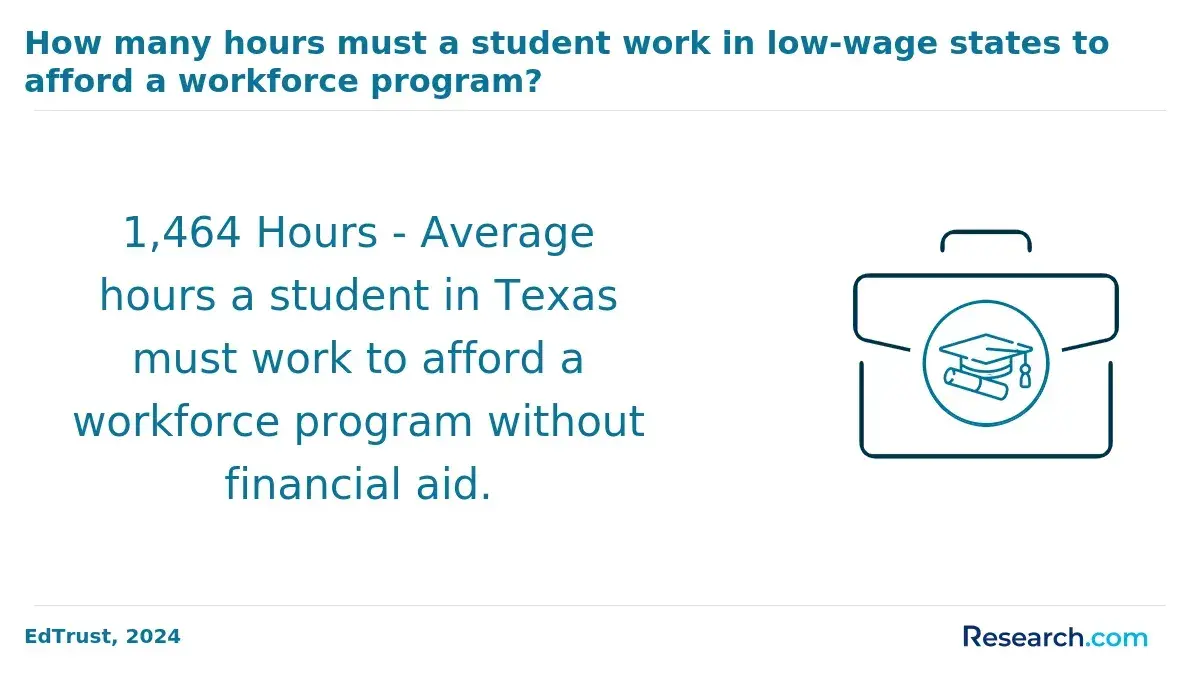
Tuition has a direct effect on counseling degree payback because counseling salaries are meaningful but not unlimited. A student who borrows heavily for a program that leads to a median-paying counseling role may spend years managing debt, while a student who controls costs can reach break-even faster.
One current cost signal is federal graduate borrowing. For the 2024-2025 award year, the fixed interest rate for Direct Unsubsidized Loans for graduate and professional students is 8.08%. That rate matters because counseling students often need graduate education for licensure, and interest can increase the real cost of a program beyond the tuition number advertised by the school.
When comparing programs, students should estimate total cost rather than tuition alone. A lower per-credit rate may not be the best deal if the program requires more credits, multiple campus residencies, unpaid internship time, or fees that are not obvious on the first admissions page.
Use the following cost categories to build a realistic payback estimate before applying. These items are the expenses most likely to change the final ROI calculation.
- Tuition and required fees: Multiply the per-credit cost by the total number of credits and add program, technology, graduation, and clinical placement fees.
- Books, software, and assessment tools: Counseling courses may require testing materials, documentation platforms, or specialized subscriptions.
- Residency or campus travel: Some online programs require in-person intensives, which can add airfare, lodging, meals, and missed work.
- Practicum and internship costs: Fieldwork may be unpaid and can reduce working hours during the final year of the program.
- Licensure costs: Budget for exams, background checks, applications, supervision, continuing education, and renewal fees.
- Loan interest: Include interest that accrues while enrolled and during repayment, especially for graduate loans.
The best financial choice is usually the lowest-cost program that still meets licensure requirements, has credible faculty, supports placements, and fits the student's life. Choosing the cheapest program without checking these factors can create delays that erase the initial savings.
How Much Can Counseling Graduates Expect to Earn?
Counseling earnings vary by specialty, state, setting, license, and experience. The best way to evaluate salary is to compare the specific role you want, not just the word "counselor," because school counseling, mental health counseling, marriage and family therapy, and substance use counseling can have different pay structures.
According to BLS May 2024 wage data, the median annual wage for substance abuse, behavioral disorder, and mental health counselors was $59,190. This gives prospective students a practical benchmark: if total debt approaches or exceeds expected first-year salary, payback may require a longer timeline unless the student has employer support, scholarships, or a higher-paying specialization.
The table below compares several counseling-adjacent career categories using recent BLS wage reporting. It helps students understand why program choice should be tied to a specific career target.
| Career category | Typical minimum education | Median annual wage, BLS May 2024 | ROI interpretation |
| Substance abuse, behavioral disorder, and mental health counselors | Bachelor's for some roles; master's often needed for licensure | $59,190 | Good return when graduate debt is controlled and licensure is achieved |
| Marriage and family therapists | Master's degree plus state licensure | $63,780 | Can offer strong ROI when the program supports clinical hours and private practice goals |
| School and career counselors and advisors | Master's often required for school counseling roles | $65,140 | Often attractive for students seeking school schedules, benefits, and stable public-sector employment |
| Social workers | Bachelor's or master's depending on role and license | $61,330 | Comparable helping-profession path with broader agency and clinical options |
Salary should be interpreted carefully. A licensed counselor in private practice may earn differently from a counselor in a community agency, and early-career salaries are often lower than median wages. Benefits, loan forgiveness eligibility, supervision support, and schedule flexibility can also change the overall value of a job offer.
How Long Does It Take to Break Even on a Counseling Degree?
The break-even point for a counseling degree is the point at which the added income from the credential has recovered the cost of the education. A master's degree may create strong long-term value, but the first few years after graduation can include exam fees, supervised hours, and entry-level clinical pay.
A practical break-even estimate uses this sequence. The goal is not to predict the future perfectly, but to compare programs using the same assumptions.
- Calculate the total program cost, including tuition, fees, books, travel, unpaid internship time, and estimated loan interest.
- Estimate the salary you could earn without the degree, using your current role or a realistic bachelor's-level helping-profession role.
- Estimate the salary for your target counseling role after graduation, using state wage data and local job postings.
- Subtract the pre-degree salary from the expected post-degree salary to find the annual salary gain.
- Divide the total program cost by the annual salary gain to estimate the break-even timeline.
For example, if a student spends $30,000 on a licensure-track master's degree and moves into a role that pays $15,000 more per year than their prior job, the simple payback period is about two years before taxes and interest effects. If the same student spends $80,000 for a similar credential and sees the same salary increase, the payback period becomes much longer.
Full-time study may shorten the calendar time to graduation, but it can also reduce income while enrolled. Part-time study may preserve income and employer benefits, but it delays the salary increase. The better ROI option depends on the student's current earnings, family responsibilities, loan needs, and whether the program allows steady progress toward internship completion.
Which Factors Have the Biggest Impact on Counseling Degree ROI?
The biggest drivers of counseling degree ROI are not always the most obvious. Tuition matters, but so do licensure fit, completion speed, field placement quality, state rules, and the student's ability to keep working while enrolled.
Students should evaluate the following factors before committing to a program. Each one can either improve the financial return or create hidden costs.
- State licensure compatibility: A program that does not meet your state's coursework or clinical-hour requirements can delay licensure or require extra classes.
- Accreditation and recognition: Accreditation can affect licensure portability, doctoral admissions, employer confidence, and eligibility for certain roles.
- Completion timeline: Programs that are too slow or poorly sequenced may increase opportunity cost, while overly compressed programs may be difficult to balance with fieldwork.
- Transfer credit policy: Accepting prior graduate credits can lower cost, but only if the credits count toward required competencies.
- Clinical placement support: Students should ask whether the school helps secure sites or expects students to find placements alone.
- Specialization: Areas such as addiction counseling, school counseling, marriage and family therapy, trauma counseling, or clinical mental health counseling can lead to different employers and salary ranges.
- Work flexibility: Evening, asynchronous, or hybrid classes may allow students to keep earning while completing coursework.
A common mistake is choosing a counseling program based only on brand reputation or convenience. A better approach is to start with the license and job you want, then work backward to the accredited programs that satisfy those requirements at the lowest sustainable cost.
Another red flag is vague placement language. If a school cannot clearly explain how practicum and internship sites are approved, supervised, and documented, students may face delays that increase both cost and stress.
Students comparing helping careers should also consider whether they prefer direct counseling, nursing support, administrative health data roles, or fitness and wellness pathways. For example, someone seeking a faster hands-on clinical route may research LPN programs near me, while someone committed to therapy and behavioral health should focus on counseling licensure alignment.
How Do Employer Demand and Job Growth Affect Counseling Degree Value?
Employer demand improves the value of a counseling degree because it increases the likelihood that graduates can find relevant work after completing the required training. Demand is especially strong in mental health, substance use treatment, schools, hospitals, community agencies, telehealth, and integrated primary care settings.
The BLS projects 17% job growth for substance abuse, behavioral disorder, and mental health counselors through 2033. For students, this means the labor market is expanding, but it does not remove the need to choose a program that meets licensure rules and prepares graduates for supervised clinical work.
Demand is also shaped by current health-care delivery trends. More employers are using team-based behavioral health models, telehealth platforms, electronic health records, and outcome measurement tools. Counselors do not need to become software engineers, but comfort with digital documentation, virtual sessions, privacy rules, and data-informed treatment planning is increasingly valuable.
Employer demand affects ROI most when it connects directly to the student's chosen setting. A school counseling student should examine district hiring and state certification rules, while a clinical mental health counseling student should compare local community mental health agencies, private practices, hospitals, and telehealth employers.
How Can Students Maximize the Financial Value of a Counseling Degree?
Students can improve the financial value of a counseling degree by treating enrollment as an investment decision. The goal is to reduce avoidable cost while protecting the quality and licensure value of the credential.
Before applying, use a structured decision process. These steps help students avoid expensive mistakes and compare programs on outcomes rather than marketing language.
- Identify the exact counseling role and license you want, such as LPC, LMHC, LMFT, addiction counselor, rehabilitation counselor, or school counselor.
- Check your state licensing board's education requirements before relying on an admissions representative's general statement.
- Prioritize programs that clearly publish accreditation, curriculum, internship requirements, total credits, and licensure disclosures.
- Calculate total cost of attendance, not just tuition per credit.
- Ask whether the school helps arrange clinical placements in your area and whether recent students completed internships on time.
- Compare local job postings to see which credentials, licenses, and specialties employers actually request.
- Look for scholarships, assistantships, employer tuition benefits, public service loan forgiveness eligibility, or paid behavioral health roles that can offset costs.
- Avoid borrowing more than the degree can reasonably support based on local salary expectations and your personal budget.
Students who are still deciding among health and wellness fields should compare counseling with related options before committing to graduate debt. For example, an online exercise science degree may fit readers more interested in fitness, rehabilitation support, wellness coaching, or preparation for allied health graduate programs than direct mental health counseling.
The most financially resilient students often combine cost control with career planning. They build relevant experience before graduate school, choose internships strategically, network with supervisors, and pursue settings that offer supervision toward licensure.
How Does a Counseling Degree Compare With Similar Fields for ROI?
A counseling degree can offer strong personal and professional value, but it does not always produce the fastest financial return compared with similar fields. The right comparison depends on whether the student values direct therapeutic work, medical care, school settings, administrative health systems, or broader human services roles.
The table below compares counseling with adjacent fields from an ROI perspective. It is not a ranking of which field is "best"; it shows how different education requirements and salary patterns affect payback.
| Field | Typical education path | ROI strength | Best for |
| Counseling | Master's degree for most licensed clinical roles | Strong when tuition is moderate and licensure is completed | Students who want direct mental health, school, family, or addiction counseling work |
| Social work | BSW or MSW depending on role and clinical license | Comparable to counseling, with broader agency and policy options | Students who want clinical, case management, advocacy, or community roles |
| Psychology | Bachelor's for support roles; doctorate for psychologist licensure | Mixed because doctoral training can be lengthy | Students interested in assessment, research, therapy, or academic work |
| Nursing | Practical nursing, ADN, BSN, or advanced practice degrees | Can be faster for some clinical roles, but work environment and duties differ greatly | Students who want medical patient care rather than counseling sessions |
| Health information management | Associate or bachelor's degree plus health data and compliance skills | Potentially strong for students who prefer administrative, analytics, or compliance work | Students who want health-care employment without direct therapy or bedside care |
Counseling tends to be most worth it for students who specifically want therapeutic work and are prepared for supervised practice after graduation. If the primary goal is the quickest credential-to-income path, nursing support, health information, or other allied health programs may deserve serious consideration.
Is a Counseling Degree Worth It for Your Career Goals?
A counseling degree is worth it when the program leads to the credential you need, the total cost is manageable, and the work aligns with your strengths. It is less likely to be worth it if you choose a high-cost program without confirming licensure eligibility, field placement support, or realistic salary outcomes in your state.
This degree is a strong fit for students who are patient, emotionally steady, ethical, culturally responsive, and interested in long-term client progress. Counseling work often involves assessment, treatment planning, crisis response, documentation, collaboration with other professionals, and careful boundary management.
Students should consider a different path if they want a short training period, minimal emotional labor, highly predictable hours, or immediate high income without graduate education. Counseling can be rewarding, but the path requires academic preparation, supervised experience, continuing education, and state-specific licensure compliance.
Before enrolling, ask admissions and program leaders these questions. The answers will reveal whether the program is likely to support a strong cost-to-salary return.
- Does this program meet the education requirements for my intended license in the state where I plan to practice?
- Is the program CACREP-accredited or otherwise recognized for my counseling specialty?
- What is the total number of credits, and what is the full estimated cost including fees and residency expenses?
- How are practicum and internship sites approved, and what happens if a student cannot find a placement?
- What percentage of recent students completed the program on time, and what support exists for those who fall behind?
- Which employers commonly hire graduates from this program?
- Does the program offer evening, online, hybrid, or part-time options that allow students to keep working?
- What licensure exam preparation, career advising, and alumni networking support are available?
The best decision is not simply "counseling degree or no counseling degree." It is whether a specific counseling program, at a specific price, for a specific license and labor market, makes sense for your goals. Readers still comparing service-oriented careers may also review alternatives such as online exercise science degree programs, but counseling remains the better match for those committed to mental health, school, addiction, or family therapy work.
Other Things You Should Know About Counseling
A low-cost, licensure-aligned master's degree in counseling usually has the best counseling-specific ROI. It provides access to licensed roles while avoiding unnecessary debt when tuition, fees, and fieldwork costs are controlled.
It can be worth it if it is affordable and prepares you for graduate school or entry-level behavioral health work. However, a bachelor's degree alone usually is not enough for independent clinical counseling licensure.
Online counseling degrees can be respected when they come from accredited institutions, meet state licensure requirements, and include supervised practicum and internship experiences. Students should verify state authorization and placement support before enrolling.
There is no single cutoff, but borrowing near or above expected first-year salary can make repayment difficult. Compare total debt with local counseling wages, loan interest, supervision costs, and your expected monthly budget before committing.
Top Trending Counseling Rankings
See What Experts Have To Say About Studying Counseling
Read our interview with Counseling experts

Charles Figley
Counseling Expert
Kurzweg Distinguished Chair in Disaster Mental Health
Tulane University

References
- What Global Employers Really Think About Online Degrees https://edutech.global/global-employer-view-on-online-degrees/
- College Affordability for Counseling Students https://www.counselingschools.com/blog/college-affordability-guide
- How does a college degree improve graduates’ employment and earnings potential? - APLU https://www.aplu.org/our-work/4-policy-and-advocacy/publicuvalues/employment-earnings/
- The Cost of Being a Therapist or Counselor - ALLYSSA POWERS https://www.allyssapowers.com/blog/blog-grad-school-costs
- Is College Worth It? A Comprehensive Return on Investment Analysis - FREOPP https://freopp.org/whitepapers/is-college-worth-it-a-comprehensive-return-on-investment-analysis/
- Masters In Counseling Salary: How Much Do Therapists Make? https://mastersincounseling.org/guide/average-salary/
- Labor Market | ELA https://ela.nauka.gov.pl/en/labor-market/who_earns_more_after_studies
- Counselor Salary https://onlinecounselingprograms.com/become-a-counselor/salary/
- The Payback Period for Individual Investments in Higher Education https://gnpje.sgh.waw.pl/Okres-zwrotu-indywidualnych-inwestycji-w-wyzsze-wyksztalcenie,101441,0,2.html
- How Long Until Your Degree Pays Off? A Timeline by Program https://blog.methodistcollege.edu/degree-pays-off-timeline