2027 Supply Chain Careers That Reward Strong Forecasting Skills

Co-Founder and Chief Data Scientist
Facing unexpected supplier delays or sudden demand surges, supply chain professionals struggle to maintain seamless operations without reliable forecasting. Companies that miss projections risk costly overstock or stockouts, eroding competitive advantage. Recent data from the National Center for Education Statistics reveals a 24% increase in adult enrollment in part-time and online business programs since 2023, driven by career pivoters seeking flexibility amid shifting job market demands.
This trend signals a growing emphasis on adaptable education formats that align with workforce readiness. This article examines supply chain careers where strong forecasting skills unlock opportunity and how targeted educational choices support real-world skill acquisition for measurable impact.
Key Things You Should Know
- Demand volatility requires forecasting professionals in supply chain management to balance advanced machine learning models' accuracy with interpretability, as McKinsey found that 37% of companies sacrificing transparency face higher operational risk.
- Employers prioritize candidates with cross-disciplinary skills combining forecasting analytics and supplier collaboration, with 68% of hiring managers surveyed by Gartner emphasizing communication ability alongside quantitative expertise.
- Obtaining specialized forecasting skills demands 12-18 months of focused training, per the Bureau of Labor Statistics, posing timing and cost tradeoffs for transitioning professionals amid tight labor markets.
What are the best supply chain careers for professionals with strong forecasting skills?
Strong forecasting skills differentiate supply chain roles by directly shaping operational decisions and mitigating costly imbalances like overstocks and stockouts. Demand planners in consumer electronics adjust weekly forecasts to align with product launches and market trends, which directly influence supplier orders and warehouse space allocation.
Similarly, logistics managers in automotive sectors leverage forecasting to time inbound shipments precisely, weighing the tradeoff between expensive expedited freight and the risk of halting production.
Key supply chain careers requiring strong supply chain forecasting skills include demand planners, supply chain analysts, and logisticians. Demand planners use quantitative models that impact inventory costs and production schedules. Supply chain analysts optimize sourcing and distribution through advanced analytics and forecasting software, enhancing responsiveness to market volatility.
Logisticians organize transportation and storage activities based on demand forecasts; notably, this occupation is projected to grow 17% from 2024 to 2034, reflecting data-driven logistics' rising importance across industries.
Entry points typically demand proficiency in statistical software, ERP systems, and data visualization, alongside interpreting historical sales and market data. Prospective professionals often pursue degrees emphasizing quantitative forecasting to meet employers' expectations for actionable insights that reduce supply chain disruptions.
For those considering educational options supporting this career path, evaluating the best online MBA in entrepreneurship can add versatile business acumen complementing forecasting expertise in supply chain management.
How does demand forecasting fit into modern supply chain management roles and responsibilities?
Effective demand forecasting techniques in supply chain management are pivotal for balancing inventory levels against unpredictable market needs. For example, fresh food retailers face stringent waste reduction mandates, requiring highly precise forecasts to avoid perishables spoilage, whereas electronics manufacturers must manage the reverse risk of costly overproduction.
These contrasting scenarios highlight the operational tradeoff between forecast accuracy and agility-professionals must generate predictions solid enough for procurement yet adaptable for last-minute supply or demand fluctuations.
Roles like demand planners, supply chain analysts, and operations managers depend on a mix of historical sales patterns, market indicators, and external variables such as seasonality or economic shifts to refine forecasts. Their ability to integrate diverse data inputs and rapidly update models is essential, underscoring the role of demand forecasting in supply chain management careers that prioritize scenario planning and iterative decision-making over static projections.
The Association for Supply Chain Management's 2025 Salary Report reinforces the market value of these skills, showing that U.S. professionals holding multiple certifications in analytics and planning can command up to 46% higher median salaries. This premium reflects employer demand for data-driven forecasting expertise to minimize carrying costs and optimize service levels.
Practical challenges include keeping pace with evolving forecasting software and coordinating inputs across functions like marketing and procurement. For working professionals, pursuing targeted upskilling sometimes through streamlined options like a 1 year online MBA no GMAT can accelerate acquisition of relevant analytics capabilities while balancing current job demands.
Which supply chain job titles rely most on data analysis and forecasting expertise?
Roles demanding strong forecasting expertise-such as sales and operations planning (S&OP) managers, demand planners, and supply chain analysts-directly influence cost reduction and service reliability. For instance, an S&OP manager in automotive must balance fluctuating supplier capacities with volatile consumer demand, using quantitative forecasting models paired with market intelligence to minimize excess inventory and prevent stockouts. This illustrates the complex intersection of data-driven forecasts and real-world operational constraints.
Demand planners focus on highly detailed SKU-level forecasts, leveraging statistical software and historical sales data to navigate uncertainty in retail markets. Supply chain analysts combine procurement, logistics, and sales data to detect inefficiencies and forecast disruption risks, informing better strategic decisions.
These supply chain data analyst roles with forecasting responsibilities require proficiency in advanced Excel, Python or R, and enterprise resource planning systems to work efficiently with large datasets.
The 2025 ASCM Salary and Career Report finds U.S. supply chain professionals in management, including S&OP and planning roles, earn a median total compensation of $119,000, which significantly exceeds the general workforce median.
Lack of these forecasting skills typically leads to operational bottlenecks and stalled career progression. Continuous upskilling in predictive analytics and scenario planning remains essential as the supply chain environment grows more complex and volatile.
Prospective candidates should weigh educational programs' quantitative rigor and software training to maximize employability. For those evaluating options, reviewing the cheapest AACSB accredited online MBA offerings can clarify costs and outcomes associated with advanced qualifications relevant to forecasting and demand planning positions in supply chain careers.
What degrees or certificates prepare you for forecasting-focused supply chain careers?
Degrees in supply chain management with a focus on demand forecasting must deliver advanced quantitative and modeling skills to meet the rigorous expectations of employers seeking precision in inventory and logistics. Those with backgrounds in industrial engineering frequently have an edge in sectors like automotive supply chains due to their expertise in process optimization and simulation.
Choosing between a comprehensive degree or a certification involves weighing curriculum depth against immediate applicability: certificates in supply chain analytics and demand planning rapidly fill technical gaps-especially in SQL, Python, and forecasting tools-but generally require supplementary experience to secure mid-level forecasting roles.
The supply chain sector's predicted 11.1% annual growth through 2030 accentuates the premium placed on candidates who integrate data science capabilities with forecasting expertise.
In high-stakes retail environments, such as consumer electronics, inaccurate forecasting can translate directly into substantial revenue losses, causing employers to prioritize educational pathways focused on algorithmic accuracy and scenario planning over generalized supply chain knowledge.
Prospective students should assess programs for their quantitative rigor and practical software applications, recognizing that bridging theory with iterative, hands-on experience remains critical for workforce readiness.
Certifications for forecasting skills in supply chain careers serve as targeted pivots for professionals transitioning from fields like finance or IT but rarely replace the depth offered by degrees.
For those balancing time constraints, exploring a fast track construction management degree program may offer structured alternatives for related operational roles. Evaluation of educational pathways must consider both market demands and real-world friction in skill acquisition to optimize strategic career moves.
How do online supply chain programs compare with campus programs for learning forecasting tools?
Supply chain programs diverge significantly in how they prepare students for forecasting roles crucial to sectors like manufacturing and retail. Campus-based offerings provide immersive, hands-on labs and live team projects that develop proficiency with complex forecasting models and predictive analytics platforms, enabling graduates to tackle supply chain disruptions and geopolitical volatility through faculty-led case studies.
This depth fosters skills essential for roles that Sigmar Recruitment identifies as increasingly risk-focused, with over half of such roles requiring scenario planning expertise.
In contrast, online programs maximize flexibility and accessibility through asynchronous modules and simulation software, suiting working professionals who apply forecasting skills directly in their current roles. However, these formats often do not replicate real-time collaboration or deliver integrated internships, potentially limiting experience in collaborative problem solving-a critical competency in supply chain resilience. Online students should seek capstone projects partnered with companies to mitigate this gap.
Employers prioritize demonstrated forecasting competence over general supply chain knowledge, often giving measurable weight to internships, co-ops, or applied project experience. Choosing campus versus online affects credential recognition and networking opportunities; campus routes favor career pivots requiring deep engagement and industry connections, whereas online formats suit ongoing professional development within organizations supported by employers.
Key considerations include balancing immediate tool application against exposure to complex scenarios and peer collaboration, which directly influence employability in a labor market increasingly sensitive to supply chain risk and resilience.
What core courses build strong forecasting, planning, and analytics skills in supply chain majors?
Effective supply chain education prioritizes quantitative skills and practical analytics to meet employer demand for precise forecasting and resource allocation. Core courses typically focus on statistical analysis, predictive modeling, and operations research techniques like linear programming, which are essential for optimizing inventory and capacity under variability.
Risk management training now must include supplier-risk forecasting intertwined with ESG criteria, as these competencies are increasingly sought after-and strongly rewarded-in procurement roles. For example, graduates able to integrate ESG factors with scenario planning are better positioned to manage disruptions from regulatory shifts or sustainability challenges, a capability that makes them highly competitive in retention and counteroffer situations.
Industry-specific demands highlight diverging skill emphases: automotive supply chains require advanced demand sensing and buffer strategies to handle longer lead times, whereas retail emphasizes short-term promotional forecasting and omni-channel logistics responsiveness. This differentiation affects how students should tailor their learning to align with targeted sectors.
Practical application through ERP system training and real-company data projects is critical to bridge theory and operational decision-making. Graduates must also master communication of analytics via data visualization to influence cross-functional teams effectively, balancing forecast accuracy with agility.
What are the typical entry requirements, program length, and costs for supply chain degrees?
Supply chain educational pathways necessitate balancing academic rigor with tangible career outcomes. For example, mid-career professionals aiming for logistics planner roles in technology-driven retail environments often need master's degrees with forecasting specializations rather than general bachelor's credentials, which may fall short of employer expectations for advanced data analysis abilities. Conversely, associate degrees cater well to entry-level roles in warehouses or distribution centers by focusing on operational fundamentals.
Entry requirements typically demand a high school diploma or equivalent; bachelor's programs often require SAT or ACT scores, though test-optional approaches are growing. Associate degrees and certificates offer more flexible admissions, appealing to working adults enhancing specific skills.
Program durations vary: two years for associate degrees, four years for bachelor's, and one to two years for master's degrees. Accelerated and part-time options provide flexibility, while short-term certificate programs, often lasting six months to a year, concentrate on niche skills like forecasting and inventory management analytics.
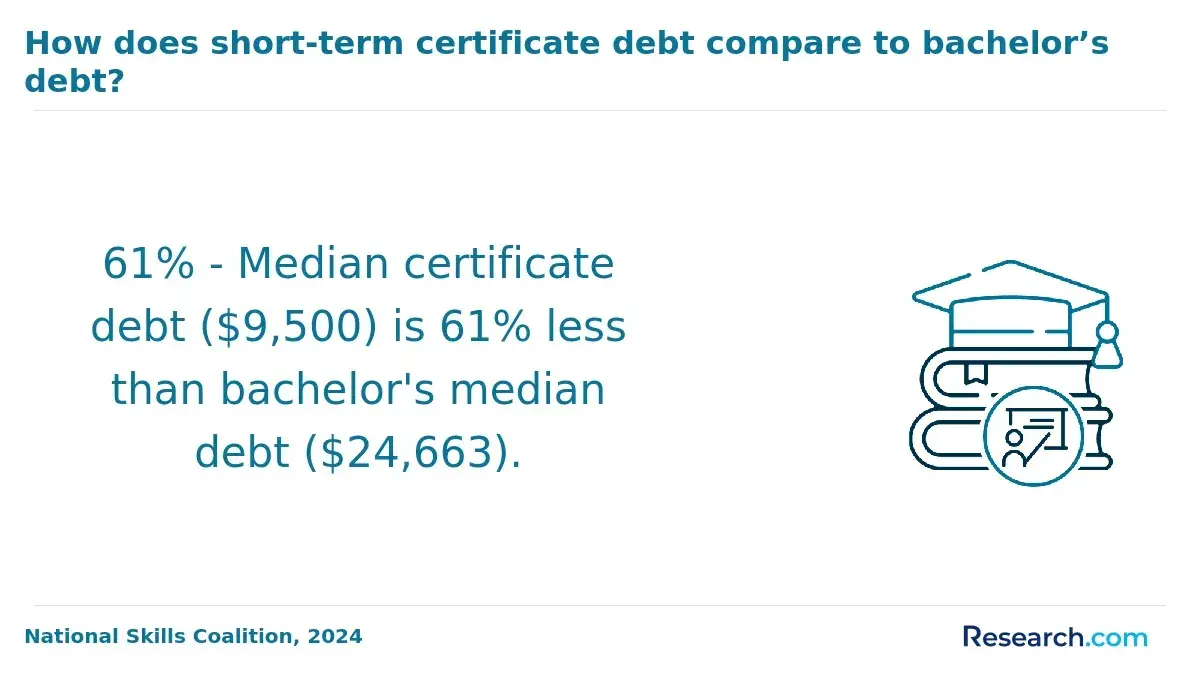
Cost considerations are significant-public in-state tuition averages $10,000 to $15,000 annually for four-year degrees, whereas private institutions can exceed $40,000 per year. Certificates might range from $2,000 to $8,000, depending on program depth and reputation. Employer sponsorship and federal aid can offset expenses but require scrutiny regarding long-term return on investment.
- Prioritize alignment between credential type and targeted job function to avoid underqualification or overspending.
- Consider time commitment against existing work responsibilities and career timelines.
- Evaluate program reputation critically, especially relative to the 17% projected logistics job growth emphasizing e-commerce and tech skills per Arkansas State University and U.S. Bureau of Labor Statistics data.
What salary ranges and advancement paths can forecasting-focused supply chain professionals expect?
Forecasting roles within supply chain management in 2026 present a clear stratification of compensation linked to experience and sector specialization. Entry-level professionals command $65,000 to $85,000, while mid-career planners earn $90,000 to $120,000 annually.
Senior managers driving complex network redesigns, especially in manufacturing, life sciences, and FMCG, typically surpass $130,000. These figures underscore a labor market increasingly valuing agility and technical forecasting expertise amid ongoing supply chain volatility.
Career progression often moves from tactical analyst roles to strategic leadership positions, requiring mastery in predictive analytics and network optimization. For example, a manufacturing forecasting analyst may advance to regional demand planner and then to global forecasting lead, contingent on managing erratic demand signals and integrating AI-driven forecasting models. This trajectory demands ongoing skill adaptation; failure to evolve may cap salary growth and job security.
Key tradeoffs exist between contract and permanent employment: interim roles offer higher pay per hour but less continuity, whereas permanent positions require continuous skills upgrades but provide steadier advancement. Employers prioritize actionable forecasts that minimize inventory costs and stockouts, with expectations increasingly tied to CFO-level financial outcomes.
- Advanced training incorporating statistical and machine learning applications yields stronger employment results.
- Sectors undergoing rapid supply chain reconfiguration offer heightened demand for forecasting specialists.
- Cross-functional communication and predictive tool proficiency become essential for leadership roles.
What industry certifications strengthen a supply chain career centered on forecasting skills?
Certification in supply chain forecasting is a measurable investment that directly influences professional credibility and operational effectiveness. Credentials such as the Certified Supply Chain Professional (CSCP) and Certified in Production and Inventory Management (CPIM) enhance technical skillsets by advancing knowledge in demand planning, inventory control, and supply chain integration.
Employers prioritize these certifications because they tangibly improve forecast accuracy and inventory turnover, vital in roles like demand planning and supply chain analysis where forecast-based decision making is non-negotiable.
Different industries apply these certifications in distinct ways. For instance, CPIM holders in consumer goods manage SKU-level forecasts to minimize stockouts amid complex assortments, while CSCP-certified professionals in manufacturing focus on aligning cross-functional forecasts with production schedules and market trends.
The SAP Integrated Business Planning (IBP) certification adds value for those involved in predictive analytics and scenario modeling, supporting digital transformation initiatives within supply chains.
However, these certifications require considerable time and experience, limiting near-term access for new graduates. Professionals transitioning from procurement or logistics can accelerate credibility by targeting CSCP or CPIM, thus aligning with employer expectations for forecast-driven strategy.
Caution is warranted with software-focused certifications, which may constrain career flexibility compared to those combining foundational theory with analytics.
For candidates evaluating these credentials, critical factors include curriculum relevance to industry-specific forecasting complexities and coverage of statistical methods, demand sensing, and supply-demand balancing. Programs with rigorous, exam-based assessments tied to real-world case studies offer stronger validation of candidate capability during competitive hiring processes.
How can students evaluate accredited supply chain programs that emphasize forecasting and planning?
Supply chain programs that lack rigorous integration of advanced forecasting and planning analytics leave students exposed to significant employability risks. Accreditation alone does not guarantee readiness; candidates must scrutinize course syllabi for concrete training in scenario modeling, predictive analytics, and strategic decision tools embedded within hands-on, technology-driven modules.
For example, programs emphasizing only traditional supply chain concepts without AI or machine learning applications fail to align with projected workforce transformations.
By 2030, over 60% of planning roles will evolve to prioritize skills in advanced analytics and AI-augmented forecasting, according to Accenture's research. This shift demands that students select curricula offering practical exposure to these methodologies alongside real-world case studies.
Employer expectations now heavily favor graduates who demonstrate proficiency in current technologies and strategic scenario analysis.
Other critical evaluation factors include reviewing graduate placement rates specifically for analytics-focused roles, which serve as a practical indicator of market relevance. Faculty expertise in forecasting-evidenced through industry collaborations or publications in scenario analysis-is another essential measure of program quality.
Given sector-specific forecasting challenges, students targeting retail or manufacturing should emphasize demand variability and production scheduling in their coursework. Meanwhile, those aiming for logistics or distribution roles will find value in programs concentrated on network optimization and real-time forecasting.
Other Things You Should Know About Supply Chain Management
Supply chain professionals must avoid overreliance on historical data patterns that may not reflect future market shifts or disruptions. A practical approach involves regularly validating forecasting models against new data and incorporating qualitative inputs, such as supplier feedback or market intelligence. Prioritizing adaptable models over purely statistical fits reduces the risk of costly forecast errors and inventory misallocations.
Early specialization in forecasting can position candidates for technical roles but may limit exposure to other essential supply chain functions like procurement or logistics. Building a broad base initially helps professionals understand end-to-end workflows and improves decision-making context for forecasting applications. A phased approach-starting broad and narrowing focus-offers greater long-term adaptability and leadership potential.
Employers value both technical proficiency with forecasting tools and the ability to interpret results within strategic business contexts. Prioritizing software skills without understanding the implications of forecast scenarios risks producing outputs that lack actionable insight. Candidates should focus on building a balanced skill set, ensuring that technical capabilities support sound decision-making under real-world constraints.
References
- Supply Chain Forecasting: How to Win with Data and AI https://www.gooddata.ai/blog/supply-chain-forecasting-how-to-win-with-data-and-ai/
- Supply Chain Careers in 2026: Market Trends and Skills in Demand | DSJ Global https://www.dsjglobal.com/en-us/industry-insights/career-advice/supply-chain-careers-in-2026-market-trends-and-skills-in-demand
- Roles and Responsibilities of Demand Planning | QAD Blog https://www.qad.com/blog/2025/03/roles-and-responsibilities-of-demand-planning
- What is Demand Management in Supply Chain Planning? | ICRON https://www.icrontech.com/resources/blogs/what-is-demand-management-in-supply-chain-planning
- CourseCareers https://coursecareers.com/blog-posts/3-supply-chain-job-titles-for-beginners
- Supply Chain Jobs Salary: What to Expect https://www.ism.ws/careers/supply-chain-jobs-salary/
- Develop These In-Demand Supply Chain Skills for 2025 https://cpscp.org/develop-these-in-demand-supply-chain-skills-for-2025/
- Supply Chain Skills for AI: What Actually Matters in 2026 https://www.scoperecruiting.com/blog/supply-chain-skills-ai
- Why Demand Forecasting is Critical for Effective Supply Chain Management in Manufacturing https://www.deskera.com/blog/demand-forecasting-supply-chain/
- 10 In-Demand Supply Chain Jobs You Should Know https://www.controlhub.com/blog/10-in-demand-supply-chain-jobs