2027 Brokerage Leadership Roles You Can Target With a Real Estate Degree

Co-Founder and Chief Data Scientist
Professionals aiming to leverage a real estate degree into leadership roles often face a bottleneck: balancing timely credential acquisition against evolving industry demands. With the U. S. Department of Education reporting a 25% surge in adult enrollment in online bachelor's completion programs since 2022, many candidates must navigate increasingly flexible yet complex educational formats. This trend signals a workplace in transition-where accessible credentials no longer guarantee immediate leadership access without strategic alignment to market needs. Understanding which brokerage leadership positions align realistically with these educational pathways is critical for making informed choices that minimize career disruption and optimize advancement.
This article outlines prominent brokerage leadership roles achievable with a real estate degree, targeting actionable decision criteria to guide prospective students and professionals through practical career planning.
Key Things You Should Know
- Brokerage leadership roles demanding a real estate degree see a 23% higher median salary but require navigation of licensing plus four-year degree costs, with the National Association of Realtors noting 47% of leaders held formal degrees in 2024.
- Employers prioritize practical asset management and negotiation experience over advanced academic credentials, intensifying competition as 38% of managerial hires in 2024 had substantial field tenure outweighing academic pedigree, increasing reliance on combined education-workforce models.
- Strategic timing is critical as a 2024 U.S. Bureau of Labor Statistics forecast shows a 9% growth in brokerage management jobs by 2030, but delays in degree completion can limit early leadership access in market-volatile urban hubs.
What brokerage leadership roles can a real estate degree qualify you for?
Brokerage leadership positions for real estate degree holders typically require more than foundational market knowledge; they demand a blend of strategic management skills and operational expertise. For instance, a graduate entering as an assistant operations manager at a commercial brokerage must quickly develop competencies in process optimization, regulatory compliance, and personnel oversight to advance to regional or executive roles. Median salaries for C-level executives in commercial real estate firms range between $183,000 and $342,000, illustrating the financial premium placed on leaders who can guide firm growth and manage diverse portfolios.
Top brokerage management roles with a real estate degree, such as CEO or chief operating officer, involve responsibilities in corporate strategy, capital allocation, and stakeholder engagement, extending beyond technical real estate knowledge. The Bureau of Labor Statistics projects a 6% growth rate through 2033 for general and operations manager roles in the sector, driven by increased market complexity and evolving regulatory demands.
Students must weigh the investment of time and resources required to acquire leadership and financial management skills alongside real estate expertise. Practical steps include augmenting education with internships, certifications, or mentorships focused on project management and market analytics integration. This approach contrasts with narrower roles concentrating exclusively on sales or property management.
For those assessing educational options, especially considering accelerated pathways, it is critical to understand how different programs align with practical career objectives. Reviewing accelerated business programs may offer insights into alternatives that combine efficiency with market relevance.
What real estate degree should you choose for brokerage careers?
The optimal real estate degree for brokerage careers emphasizes applied business and regulatory expertise essential for leadership positions like managing or designated broker. A bachelor's in real estate or closely related fields such as finance or business administration with real estate concentrations equips candidates with market analysis, contract law, and property management skills necessary to supervise broker operations. This degree level significantly improves access to roles demanding legal compliance and strategic oversight compared to associate degrees or certificates.
Employers prioritize candidates who demonstrate comprehensive knowledge beyond sales, given that brokers earn a median annual wage of $72,280 as of May 2024, notably higher than $56,320 for sales agents. Brokers must navigate state licensing laws, manage transaction workflows, and lead teams effectively. Those focused on brokerage leadership often consider the best real estate programs for brokerage leadership roles that integrate risk management and updated licensure exam preparation.
For instance, a candidate targeting a managing broker role in a metropolitan area benefits from curricula focused on real estate law, finance, and negotiation, plus experiential learning through internships with brokerages. Conversely, specialized certifications paired with on-the-job training often suit smaller regional firms but limit initial earning potential and advancement speed.
Choosing the right program affects salary growth and stability. Practical considerations include program content aligned with current market regulations and analytic skills-a balance often absent in general business degrees. Students should also explore educational pathways such as an accelerated project management degree for complementary leadership training within complex brokerage environments.
Do accredited online real estate programs help with brokerage careers?
Accredited online real estate programs provide a foundational credential but rarely suffice for direct entry into brokerage leadership, particularly in commercial sectors where employers expect extensive industry experience and proven management skills. For instance, Commercial Real Estate Managing Directors with two decades of experience command base salaries between $250,000 and $450,000, with total compensation up to $900,000-levels that reflect sustained deal-making success and deep professional networks rather than education alone.
These programs are most valuable for working professionals formalizing their expertise or seeking to pivot careers by building core knowledge in property valuation, finance, market analysis, and negotiation. Candidates aiming for brokerage leadership must supplement online learning with practical engagement in deal management, client relations, and regulatory compliance-areas rarely replicable in coursework. Employers prioritize demonstrated ability to navigate complex institutional deals and lead teams effectively.
Practically, those pursuing accredited online real estate programs for brokerage careers should combine education with on-the-ground roles to accumulate relevant career capital. This alignment optimizes advancement into leadership over time. A comparable pathway appears in fields like construction, where flexible degrees, such as an online masters in construction management, balance education and workforce demands.
What brokerage-focused courses are in a real estate curriculum?
Programs offering brokerage management courses in a real estate degree must prioritize advanced competencies that align with employer expectations for leadership roles such as market leaders or regional brokerage directors. These roles demand proficiency in real estate finance-particularly commercial property valuation and investment analysis-that directly influence portfolio management and deal structuring. Mastery of real estate law is also essential, covering contracts, negotiation tactics, agency relationships, and regulatory compliance to mitigate risk and maintain ethical oversight.
The real estate brokerage curriculum and leadership training often emphasize practical operational skills including team management, sales strategy development, and the integration of technology like CRM systems and data analytics. These capabilities are critical for mid-to-senior management positions tasked with improving productivity and responding to shifting market conditions. For example, managing client pipelines amid regional market fluctuations demonstrates how such expertise loops directly into compensation ranges reported by employers like Mohr Partners, where market leaders earn between $72,000 and $108,000 annually.
Specialized coursework in marketing and negotiation sharpens strategic communication aimed at client and talent acquisition, while risk management and ethics courses prepare students to navigate complex regulatory environments and foster client trust across agent networks. Real estate degrees often culminate in capstone projects or practicums simulating brokerage scenarios, fostering decision-making under real-world pressure to reduce onboarding lag after graduation.
Prospective students should weigh these educational investments against their career goals and the timing to enter leadership roles. Considering related fields, one can explore programs like the online CAHIIM accredited health information management degree for alternative professional pathways that require similarly rigorous operational training.
What admissions requirements do real estate programs usually have?
Academic credentials in real estate provide necessary foundation but rarely suffice for leadership roles without concurrent, substantial industry experience. Employers seeking heads of real estate or brokerage consistently require a decade of progressive brokerage involvement, including at least five years in management or team leadership. This practical experience often outweighs purely scholastic achievements when advancing to senior positions.
Admission prerequisites typically demand a high school diploma or equivalent, with bachelor's programs expecting prior college credits or associate degrees. Core courses frequently focus on business, finance, or economics to build critical analytical skills. Graduate programs mandate completed undergraduate degrees and may emphasize professional experience and minimum GPA thresholds around 2.5 to 3.0 to ensure candidates can manage academically rigorous material.
Licensing requirements differ by state but often parallel academic studies, requiring state exams and background checks. Prospective leaders must navigate timing conflicts between educational milestones and career progression, balancing part-time or online study with gaining relevant work experience.
Practical considerations include:
- Choosing programs offering practicum or industry partnerships to compensate for limited brokerage experience
- Aligning admissions with state licensing timelines to avoid delays in career advancement
- Pursuing certifications or continuing education to fill specific skill gaps identified by employers
Ultimately, successful real estate leadership demands synchronized progression on educational and experiential fronts, with firms prioritizing candidates demonstrating both academic preparation and verifiable, relevant field competence.
How long does a real estate degree take and what does it cost?
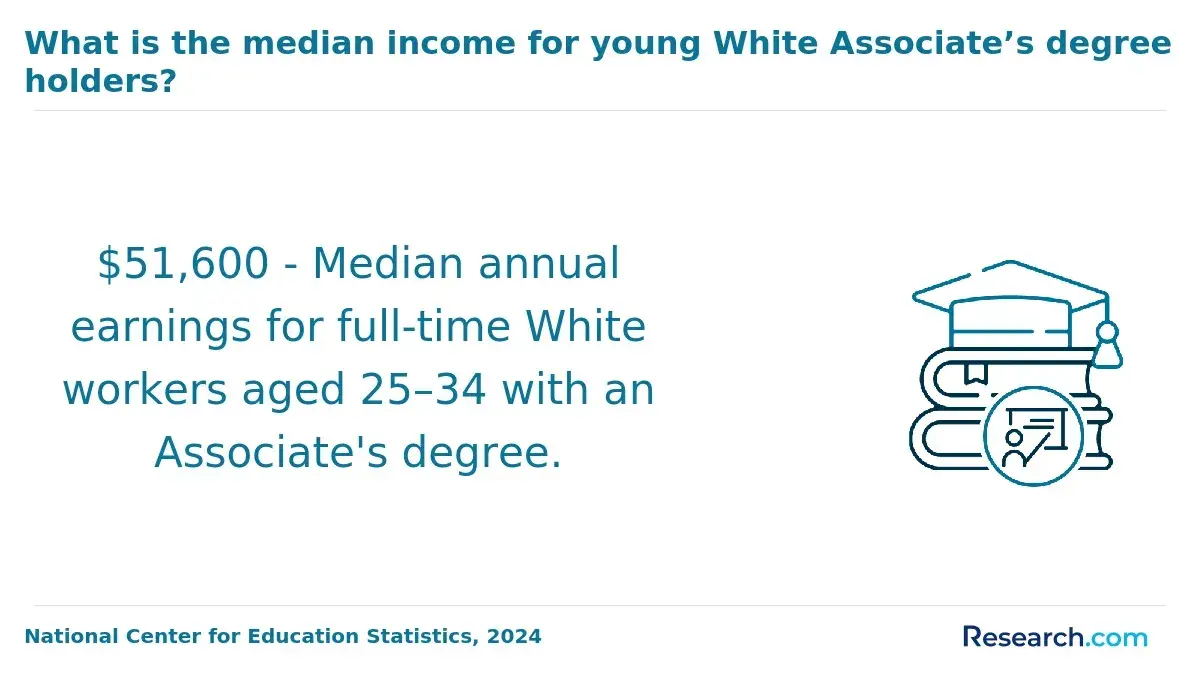
Pursuing a real estate degree requires balancing time, cost, and career objectives against the realities of a competitive job market. While an associate degree may offer entry points into brokerage roles, most commercial real estate management positions now demand at least a bachelor's degree coupled with relevant experience. The U.S. Department of Labor forecasts an increase of over 227,000 jobs in this sector by 2032, intensifying competition and employer expectations.
Program duration varies: associate degrees require approximately two years, bachelor's degrees four years, and graduate degrees add one to two years. Accelerated formats shorten timelines but are academically demanding and less accessible to working professionals. Cost structures show a broad range: community colleges charge $6,000 to $10,000 for two years of in-state tuition, while private institutions can reach $30,000 to $60,000 annually for bachelor's level education. Opportunity costs related to time off work and lost income are significant and often overlooked when weighing full-time study.
Key considerations include:
- Accreditation and alignment with employer preferences
- Geographic tuition variance and available financial aid
- The increasing importance of technological and financial literacy in real estate operations
- Strategic network-building alongside formal education for leadership roles
Part-time and online programs offer flexibility but extend completion time, requiring realistic assessment of personal commitments. Ultimately, the choice of degree and delivery mode must reflect not only immediate career goals but also longer-term market positioning and the escalating demands of leadership in real estate brokerage and management roles.
What licensing or certifications are needed for brokerage leadership roles?
Progressing to brokerage leadership in 2026 involves more than just gaining a broker license; it requires navigating a layered credentialing process tied closely to practical experience and regulatory compliance. Candidates must first secure a sales agent license and fulfill substantial post-licensing education, often amounting to 1,000-2,000 supervised sales hours dictated by state law. Passing a broker licensing exam confirms proficiency in legal frameworks, finance, contract law, and management skills essential for overseeing transactions and ensuring adherence to complex regulations.
Additional certifications such as Certified Residential Broker (CRB) or Accredited Buyer's Representative (ABR) are increasingly valued by employers as indicators of specialization and managerial capability. These credentials demand ongoing education and ethical commitments, preparing candidates to handle intricate client scenarios and team leadership. Attempting a leadership path without balancing time between client work, education, and mentorship risks licensing lapses or inadequate preparation for managerial challenges.
Given the U.S. Bureau of Labor Statistics projects about 46,300 openings for brokers and agents combined over the next decade, primarily due to turnover, the licensing and certification hurdles serve as effective gatekeepers for leadership roles. Employers gravitate toward individuals demonstrating not only credential completion but also demonstrated regulatory compliance and operational competence in real-world brokerage environments.
- Meeting rigorous supervised experience requirements entails tightening client scheduling and coordinating employer oversight.
- Failure to maintain active licensure halts leadership momentum and can lead to suspension.
- Supplemental certifications differentiate candidates amid a competitive, experience-weighted job market.
What salary can brokerage leaders expect with a real estate degree?
Brokerage leadership roles tied to a real estate degree show wide compensation disparities depending on market scale and sector focus, with asset management-adjacent roles generally offering the highest earnings. Associates in commercial real estate asset management typically receive total pay between $150,000 and $250,000, while managing directors can earn up to $550,000 annually. These figures reflect the importance of incentive-based pay, including bonuses and carried interest, over fixed salaries.
Leaders in smaller or residential-focused brokerages usually see pay closer to $100,000 to $180,000, often supplemented by commissions, whereas executives in large commercial or institutional firms command upwards of $300,000 due to higher deal volumes and team oversight. For instance, a managing director in New York's commercial market may earn significantly more than the same role in a regional city, illustrating geographic and firm-size impacts on compensation.
Advancement in these roles requires not just a real estate degree but practical expertise in negotiation, asset valuation, and capital markets. Candidates must weigh the longer trajectory toward peak earnings against initial moderate pay and invest in networking and specialized certifications to remain competitive. Understanding these tradeoffs is critical for professionals aiming to navigate the brokerage career path efficiently.
What job outlook exists for brokerage and real estate leadership roles?
The brokerage and real estate leadership job market in 2026 demands expertise beyond transactional roles, emphasizing financial modeling, market risk analysis, and regulatory navigation in often volatile metropolitan sectors. Employers seek leaders with advanced capital markets knowledge and portfolio management skills to handle complex, large-scale projects and investment decisions.
Entry-level development analysts earn about $75,000 annually, but the significant compensation increase to managing directors nearing $670,000 reflects the premium placed on advanced leadership and investment capabilities. This disparity illustrates a steep learning curve and strategic positioning required to access senior roles.
Real-world hiring trends show professionals lacking specialized credentials in real estate finance or development strategy frequently plateau in brokerage-focused positions, while those who pursue these competencies experience notably faster career growth. Leadership candidates must demonstrate project management experience to efficiently oversee multidisciplinary teams from acquisition through disposition.
Key workforce considerations include:
- Competition intensifies for roles combining brokerage with development and investment expertise.
- Specialized coursework or certifications become nearly mandatory to remain competitive.
- Operational demands require nuanced negotiation skills and oversight of value generation across asset life cycles.
Aligning educational paths with these market realities can prevent underpreparedness and ensure that candidates meet employer expectations for leadership within real estate brokerage.
How do you choose a reputable real estate program for brokerage careers?
Selecting a real estate program requires prioritizing measurable career outcomes over standard academic prestige. Programs with verifiable placement in brokerage-related leadership, especially in commercial property and leasing management, provide a clearer ROI. Executives in these fields earn up to $450,000 and $600,000 respectively, indicating where industry demand and compensation align.
Prospective students should verify curricula that emphasize advanced brokerage topics, commercial leasing, property management, and essential leadership competencies for high-level roles. Affiliations with reputable research bodies and recognized accreditation signal academic rigor tied to labor market needs.
Program flexibility matters for distinct career paths: professionals targeting property management leadership must find training in regulatory compliance and portfolio oversight, while those aiming for leasing executive positions benefit from expertise in negotiation, tenant relations, and financial analytics.
Real-world application trumps theory-only approaches; employers want graduates ready to manage complex transactions immediately. Assess whether experiential elements like internships or capstone projects connect students to industry partners, thereby enhancing employability and networks.
Cost evaluation should be grounded in comparative placement success and starting salaries reflecting current market data. Alumni progression into leadership roles offers the strongest signal of enduring program value.
Other Things You Should Know About Real Estate
Brokerage leadership roles typically demand higher accountability, longer hours, and responsibility for team performance, compliance, and operational efficiency. Unlike standard agent roles focused on transactions, leaders must balance client services with administrative and strategic tasks. Candidates should prepare for a more complex workload that requires strong multitasking and delegation skills, often making leadership a less flexible but more impactful position.
Supplementing a real estate degree with business-focused education, such as finance or management courses, significantly improves one's effectiveness in brokerage leadership due to the diverse skill set required. Leaders must interpret financial reports, drive growth strategies, and manage teams-capabilities not always fully covered in real estate programs. Prioritizing this cross-disciplinary knowledge strengthens strategic thinking and increases employability in more competitive or corporate brokerage settings.
Transitioning from agent roles to brokerage management involves shifting from individual sales focus to overseeing team performance, compliance, and operational systems, which requires distinct leadership skills. Many new managers underestimate the administrative burden and complexity of regulatory compliance. Successful transition demands deliberate development of people management and organizational skills; without these, leaders risk underperformance despite strong sales backgrounds.
References
- Real Estate Agent & Real Estate Broker Salary in All 50 States https://www.vaned.com/blog/real-estate-agent-salary
- RESO Education Courses: Working with Real Estate Data https://www.reso.org/reso-education-course-working-with-real-estate-data/
- How Much Does a Real Estate License Cost? | Champions School https://www.championsschool.com/resources/career-hub/real-estate-license-cost-national/
- Careers in Real Estate https://www.nar.realtor/membership/careers-in-real-estate
- Real Estate Degrees | What Degree Will You Need? (Full Guide) https://www.allbusinessschools.com/real-estate/degrees/
- Colorado Real Estate School | Real Estate License Course Online https://creschool.com/how-much-does-it-cost-to-get-a-real-estate-license-in-colorado/
- How Long Does It Take to Become a Realtor? - Charles Rutenberg Realty https://gocrr.com/how-long-does-it-take-to-become-a-realtor/
- How to Become a Real Estate Broker: Step-by-Step Guide https://www.colibrirealestate.com/career-hub/blog/how-to-become-a-real-estate-broker/
- Careers - Vault https://vault.com/professions/investment-banking-sales-brokers/requirements
- Real Estate Jobs: What Careers Require a Real Estate License? https://www.360training.com/blog/real-estate-jobs