2027 Real Estate Careers Most Resilient to Automation

Co-Founder and Chief Data Scientist
Facing rapid technological change, many real estate professionals grapple with job security as AI threatens traditional roles like transaction processing and market analysis. The Bureau of Labor Statistics reports that while automation could disrupt up to 25% of real estate clerical work by 2030, positions requiring nuanced client interaction and complex negotiations remain less vulnerable.
This disparity pushes agents and students to identify where human judgment still outperforms algorithms, especially as flexible online programs now enable mid-career pivots without sacrificing current employment. This article examines careers within real estate most resistant to automation, guiding readers toward sustainable, future-proof paths in the evolving market landscape.
Key Things You Should Know
- Automation-resistant real estate careers, like commercial brokerage, show a 12% wage premium tied to complex negotiation demands, implying a tradeoff of extended credentialing time versus long-term income stability.
- Employers increasingly prioritize hybrid skill sets combining local market knowledge with AI literacy, with 67% of firms reporting enhanced retention where agents use predictive analytics tools.
- Entry barriers, including $12,000 average licensing and compliance costs over two years, disproportionately affect career pivoters under 30, constraining access despite strong automation resilience.
Which real estate careers are most resilient to automation and long-term technology disruption?
Leasing agents, property managers, and commercial real estate brokers demonstrate the most resilience to automation and long-term technology disruption in the real estate field. These roles require skills-such as interpersonal negotiation, conflict resolution, and adaptive decision-making-that algorithms cannot replicate effectively.
For instance, property managers must resolve on-site emergencies and tenant disputes, relying on judgment and situational awareness beyond automated systems. This practical complexity anchors these positions against displacement. Market analysis and valuation specialists also withstand automation pressures due to their need for contextual understanding and ethical deliberation amid fluctuating economic conditions.
PwC data reveals a 13% drop in entry-level roles for easily automatable jobs by 2025, highlighting the importance of strategic and relationship-driven competencies in durable careers. Developers and real estate investment analysts who use technology as an analytical tool-anticipating regulatory changes or zoning impacts-maintain a competitive advantage. Conversely, data entry and listing management positions face declining prospects.
To navigate these shifts, candidates must enhance skills in negotiation, conflict management, and regulatory knowledge rather than only pursuing technical certifications. Employers increasingly prioritize emotional intelligence and judgment grounded in real-world experience over mere software proficiency.
Those seeking a strategic education pivot should consider programs with practical frameworks. An accelerated business program that balances technical and interpersonal training can address these nuanced workforce demands in real estate professions.
What education, degrees, or training are required for real estate careers least likely to be automated?
Positions in real estate least vulnerable to automation demand a nuanced blend of licensed certifications and advanced education, reflecting complex problem-solving and interpersonal negotiation skills AI cannot replicate. Meeting education requirements for real estate careers least affected by automation often means pursuing degrees in urban planning, property law, or business administration alongside licensure.
For example, commercial brokerage or real estate development management roles typically require a bachelor's degree in real estate, finance, or related fields plus early completion of state licensing exams and coursework. Employers prefer candidates with expertise in market dynamics, legal risk assessment, and client relationship management-skills that go beyond transactional routine and emphasize judgment in uncertain contexts.
Property managers handling extensive portfolios must integrate human-centered crisis response and bespoke lease negotiations, tasks ill-suited for automation. In these roles, degrees and training needed for real estate jobs resistant to automation include adaptive soft skills such as emotional intelligence and conflict resolution.
Educational pathways combining practical internships with technology-focused coursework equip professionals to leverage AI tools effectively rather than be replaced. Choosing programs offering real-world case studies and industry partnerships is essential because automation pressures primarily target routine tasks, limiting those without such preparation.
For individuals considering deeper specialization, exploring the best online master's in finance can provide a strategic advantage in analytical and financial competencies within real estate.
Which real estate roles offer the best salary and job stability despite increasing automation?
Real estate careers with high salary and job stability increasingly center on roles that resist automation pressure, specifically appraisers and property managers. While brokers and sales agents face automation risks of 97% and 86% respectively, appraisers rely on analytical skills, local market expertise, and regulatory knowledge that AI cannot replicate fully.
Property managers engage daily in tenant relations, maintenance coordination, and compliance tasks demanding interpersonal judgment and timely problem-solving beyond algorithmic capabilities. U.S. Bureau of Labor Statistics data (2024) show median annual wages of $63,000 for appraisers and $58,000 for property managers, highlighting ongoing demand that outpaces declining broker incomes.
Employers seek candidates with formal appraisal certifications or property management accreditations paired with 2-5 years of practical experience, emphasizing real-world competence rather than theoretical credentials alone. For those targeting the best real estate roles resilient to automation, key practical steps include:
- Pursuing state-approved certification programs in valuation techniques or property management regulations to fulfill licensing requirements.
- Gaining hands-on experience through internships or assistant roles to understand local market trends and tenant-law frameworks.
- Developing strong communication and conflict-resolution skills critical to resolving tenant disputes and negotiating with vendors.
- Mastering specialized software tools for digital property management and appraisal reporting as complementary skills, not substitutes.
These pathways differ sharply from brokerage sales by combining human expertise, regulatory complexity, and nuanced interpersonal work that automation cannot replace. Additionally, professionals exploring advanced managerial education may consider online MBA programs healthcare management for transferable leadership skills relevant to property management challenges in health-focused facility portfolios.
How is artificial intelligence changing real estate jobs, and which responsibilities remain human-driven?
Artificial intelligence is reshaping real estate jobs by automating roughly 37% of tasks within REITs and commercial real estate firms, projecting $34 billion in efficiency gains by 2030. This shift notably affects routine functions like data entry, market trend analysis, lease abstraction, and basic financial modeling, where AI-driven tools reduce manual workload and quicken turnaround times.
For example, commercial brokers now generate comparable market reports instantly through AI, bypassing traditional data compilation. This dynamic exemplifies the tangible operational impact on real estate roles as automation expands. Still, human roles in real estate automation remain indispensable in complex negotiations, strategic planning, and relationship management-areas where AI falls short of replicating nuanced judgment or adapting to irregular deal structures.
Asset managers must actively interpret AI insights with contextual knowledge of local markets and tenant behaviors, contrasting algorithmic outputs with practical realities. Candidates able to synthesize AI data with emotional intelligence and ethical reasoning gain an advantage in increasingly hybrid workflows. Prospective professionals should prioritize skills that complement automation, such as advanced negotiation and financial literacy beyond standardized models.
Unlike technology, a skilled analyst weighs intangible factors like community impact and zoning trends that AI cannot fully assess. Educational programs emphasizing scenario-based training aligned with these demands enhance employability amid the evolving labor market.
For those seeking specialized credentials, exploring an online CAHIIM-accredited health information management degree can offer a framework for integrating technical proficiency with sector-specific expertise in a similarly data-intensive field.
What licenses and certifications strengthen real estate professionals' resistance to automation risk?
Advanced licensure and specialized certifications carve out a labor niche for real estate professionals that resists automation by emphasizing expertise and responsibilities machines cannot easily assume. For instance, holding a broker's license allows individuals to handle complex transactions and lead teams, requiring nuanced judgment and legal accountability beyond algorithmic reach.
Commercial designations such as Certified Commercial Investment Member (CCIM) or Society of Industrial and Office Realtors (SIOR) demonstrate mastery over intricate deal structures and client management in sectors demanding deep market insight. Property management certifications like Certified Property Manager build resilience through ongoing tenant relations and regulatory compliance-skills grounded in interpersonal negotiation and dynamic problem-solving rather than repetitive patterns.
Employers increasingly prefer combinations of licenses and certifications that signal control over regulatory complexities and strategic asset management. For example, a broker with an SIOR credential managing industrial properties navigates adaptive risk assessments and complex negotiations that algorithms poorly replicate.
Without such credentials, practitioners face real displacement risks, aligning with World Economic Forum projections that cite 92 million jobs displaced globally by 2030, with real estate among rapidly transforming sectors. Though advanced licensure and certifications demand significant study and professional prerequisites, they embed uniquely human skills and legal responsibilities that enhance employability and signal irreplaceability in a labor market shifting toward automation.
How do online real estate programs compare to campus-based options for automation-resilient careers?
Campus-based real estate programs deliver practical immersion and mentorship critical for skill sets that withstand automation pressures, unlike many online alternatives. Roles like licensed brokerage or commercial real estate development depend heavily on interpersonal negotiation and localized market insights-competencies less effectively developed in virtual settings. For instance, direct in-person internships and real-time market engagement build nuanced abilities that automated tools cannot replicate.
Estimates from Goldman Sachs identify 6% to 7% of U.S. jobs susceptible to AI displacement, with routine administrative real estate tasks especially vulnerable. Online programs often cater to these entry-level, repetitive functions, while campus offerings integrate analytics, urban planning, and client relationship management, which remain resistant to automation.
Working professionals pursuing accelerated credentials via online formats should anticipate additional effort securing experiential learning externally. Employers increasingly value demonstrable real-world project involvement, a challenging element for wholly remote study unless strong local industry partnerships exist.
Key decision factors to consider:
- Access to sustained in-person mentorship focused on automation-resistant competencies
- Immersive networking opportunities tied to localized market dynamics
- Compliance with regional licensing and hands-on practice requirements
- Convenience of online courses balanced against limitations in applied experiences
In sectors like commercial real estate, where judgment and complex problem-solving surpass transactional tasks, campus programs better prepare candidates to adapt amid ongoing AI-driven workforce shifts.
What should students look for in an accredited real estate program focused on future-proof skills?
Job displacement in real estate education is a pressing concern due to AI's rapid automation of routine tasks, affecting nearly 50,000 jobs in 2025 alone according to Challenger, Gray & Christmas. Students must therefore focus on programs that emphasize skills AI cannot replicate-such as complex negotiation, adaptive market analysis, and emotional intelligence.
For instance, negotiating a commercial lease in a transforming urban zone requires navigating competing stakeholder interests and regulatory complexity beyond current AI capabilities. Key program elements include simulated negotiation exercises across residential, commercial, and industrial markets to develop reflexive decision-making, plus analytical training in interpreting zoning laws, demographic trends, and economic indicators for localized strategic advising.
Practical exposure to client advisory roles enhances conflict resolution abilities critical for securing high-value deals. Programs overly reliant on clerical or transactional skills produce graduates vulnerable to automation's shifting demands. Selection should hinge on demonstrable job placement records, state licensing pass rates, and active employer partnerships rather than theoretical or outdated curricula.
Balancing technology fluency with human-centric skills remains vital. Without robust employer connections and relevant experiential learning, graduates risk underperformance in a labor market that values versatility and strategic insight over rote processing.
Which real estate specializations and niches are projected to have the strongest long-term demand?
Roles in commercial real estate brokerage, property management, and appraisal retain strong resilience against automation, primarily because they depend on nuanced judgment, relational trust, and situational problem-solving that technology cannot fully emulate. For example, commercial brokers managing mixed-use developments must interpret market dynamics and tenant mix strategically to protect investment returns, a process ill-suited to AI substitution.
Property managers continually negotiate tenant relations and ensure regulatory compliance on-site, tasks demanding human interaction and adaptability beyond automated systems. Appraisers combine localized market insights with field inspections to produce valuations critical for credit and investment decisions, where AI tools serve as supplements rather than replacements.
Conversely, entry-level residential brokerage is increasingly vulnerable to AI-driven marketplaces, resulting in hiring slowdowns and a premium on advanced credentials and demonstrable asset management skills. Professionals pivoting into real estate should weigh these dynamics carefully. Obtaining commercial brokerage licenses, property management certifications, or appraisal credentials aligned with sectors like logistics or multifamily housing targets niches less exposed to automation-induced hiring volatility.
Employers increasingly favor candidates who combine certification with sector-specific expertise and proven negotiation outcomes. These realities reflect broader workforce implications: prioritizing seasoned judgment and interdisciplinary skills over entry-level roles means strategic credentialing paired with practical experience shapes employability and career durability.
How do program length, tuition costs, and financial aid options vary for resilient real estate pathways?
Speed and financial aid availability are decisive factors in choosing educational pathways for resilient real estate careers. Short certificate programs, lasting 3 to 12 months, provide rapid entry but often lack substantial financial support, making them a practical option for those seeking quick workforce reentry-such as a professional pursuing real estate brokerage licensing costing $1,000 to $3,000.
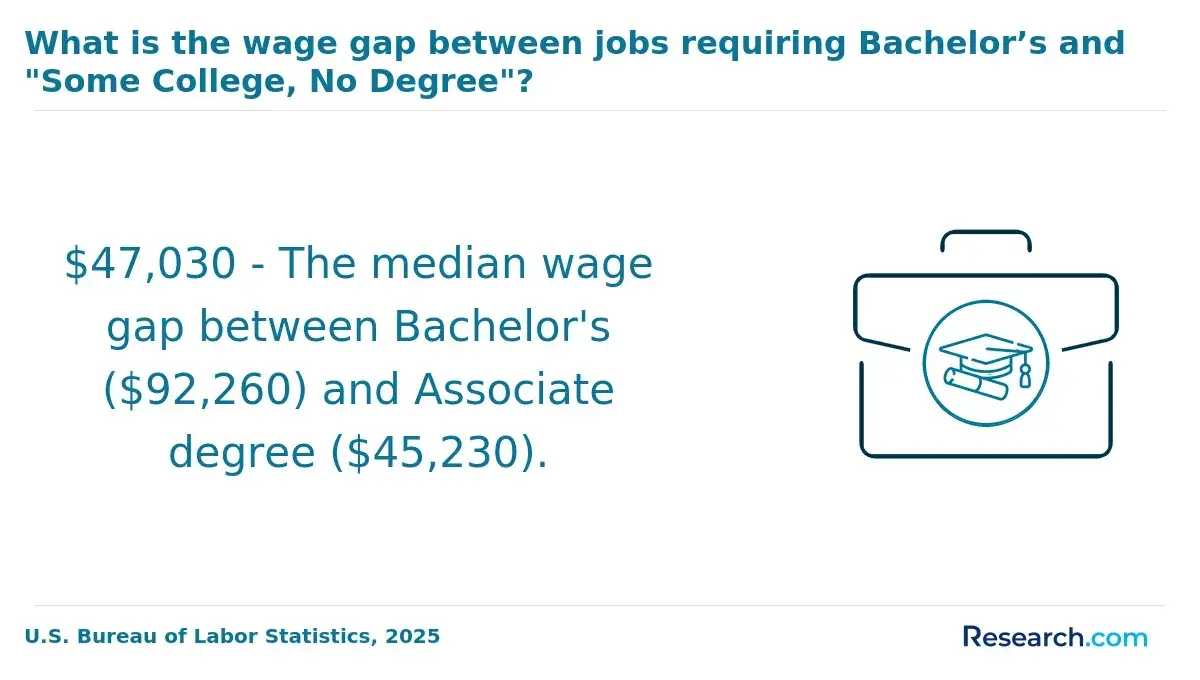
In contrast, associate degrees typically span 18 months to 2 years with more robust aid through community colleges, striking a balance between cost and duration. Bachelor's degrees require a significant investment of time and money-$20,000 to $60,000 annually-and, while offering wider scholarship opportunities, delay immediate earnings. A candidate aiming to transition into specialized real estate finance roles must weigh this long-term payoff against upfront expenses and the potential burden of student debt.
Financial aid trends favor accredited degree programs over certificates, creating a practical barrier for those needing quick upskilling. Meanwhile, declining demand for bookkeeping and auditing clerks-predicted to fall 5% by 2033 due to automation-highlights the urgency of selecting educational routes emphasizing durable, automation-resistant skills. Selection between brief certificates and longer academic programs should be informed by employer preferences, wage premiums, and realistic expectations for financial aid eligibility.
What early-career steps help new real estate graduates build a technology-resilient career path?
A clear disparity is emerging between real estate graduates who integrate digital analytics and AI literacy early and those relying on traditional market knowledge alone. Employers are increasingly focused on candidates proficient in automated valuation models, geographic information systems (GIS), and predictive analytics-tools that produce insights manual methods cannot match. According to PwC's AI Jobs Barometer, positions with strong AI exposure pay a 25% premium.
Entry-level roles that involve property management software, CRM systems, and blockchain applications provide practical exposure that distinguishes new analysts. For instance, a commercial firm analyst able to automate tenant behavior modeling or lease abstraction gains measurable advantages in performance and compensation growth over peers using conventional techniques.
Technical fluency extends beyond data analytics; project management within tech-driven, cross-functional real estate teams reduces operational friction and accelerates deal closures. However, the pathway is not without hurdles: programs merging real estate fundamentals with cutting-edge digital skills remain limited, while tech-specific roles often favor seasoned professionals.
Graduates and career changers should therefore consider hybrid positions combining client relationship management with data analytics to enter the field and hedge against task commoditization and automation risk. Continuous upskilling is essential given the rapid evolution of technology platforms.
Other Things You Should Know About Real Estate
Remote work is feasible for many real estate roles, particularly in research, consulting, and investment analysis. However, client-facing positions such as agents and brokers require in-person interaction for property showings and negotiations, which limits full remote effectiveness. Successful remote work depends on integrating digital tools that support communication and data access without compromising relationship-building or on-site evaluations.
In 2027, careers like real estate negotiation experts and property managers are most resilient to automation. These roles require nuanced interpersonal skills and adaptive problem-solving that technology cannot easily replicate, ensuring their continued relevance in the real estate sector.
Commercial real estate typically involves longer sales cycles, more complex transactions, and larger client portfolios, demanding sustained project management and negotiation skills over weeks or months. Residential real estate offers faster transactions but requires working irregular hours and frequent client contact. Choosing between them depends on tolerance for workload intensity versus transaction complexity and preferred work-life balance.
Interpersonal skills are irreplaceable in client interactions, trust-building, and conflict resolution, areas where automation cannot match human nuance. Nonetheless, technical proficiency in data analysis, real estate software, and market tools enhances decision-making and efficiency. Professionals should prioritize interpersonal capabilities while maintaining adequate technical skills to leverage technology as a complement, not a replacement, in their workflow.
References
- The 4 Best Online Real Estate Schools for 2025 https://www.housingwire.com/articles/best-online-real-estate-school/
- Exploring AI in Real Estate: Transformative Use Cases and Examples https://www.icertglobal.com/blog/ai-in-real-estate-transformative-use-cases-and-strategy
- Explore a New Niche When You Need to Boost Your Income https://www.nar.realtor/news/real-estate-news/sales-marketing/explore-a-new-niche-when-you-need-to-boost-your-income
- Choosing a Real Estate Course: Key Factors to Consider https://reaa.com.au/how-to-choose-right-real-estate-course/
- Artificial Intelligence Certification https://www.crs.com/education/Certifications-and-Certificates/ai-certification/
- Top Real Estate Niches: Strategies for Targeted Market Success https://wisepelican.com/top-real-estate-niches/
- Top 15 Careers Most Likely to Be Affected by AI in 2026 (With Real Data) https://prepoai.com/article/top-15-careers-most-likely-to-be-affected-by-ai-in-2026-with-real-data-mmi6mgl1
- Should You Specialize? The Pros and Cons of Real Estate Niches https://kwikteams.com/blog/should-you-specialize-the-pros-and-cons-of-real-estate-niches/
- Choosing Your Real Estate Specialization: Finding Your Niche https://www.seacoastrealestateacademy.net/choosing-your-real-estate-specialization-finding-your-niche/
- The Future of Real Estate Education: Online vs. In-Person https://realtyschool.com/the-future-of-real-estate-education-online-vs-in-person/